Uttanasana (Standing Forward Bend)
What is Uttanasana (Standing Forward Bend)?
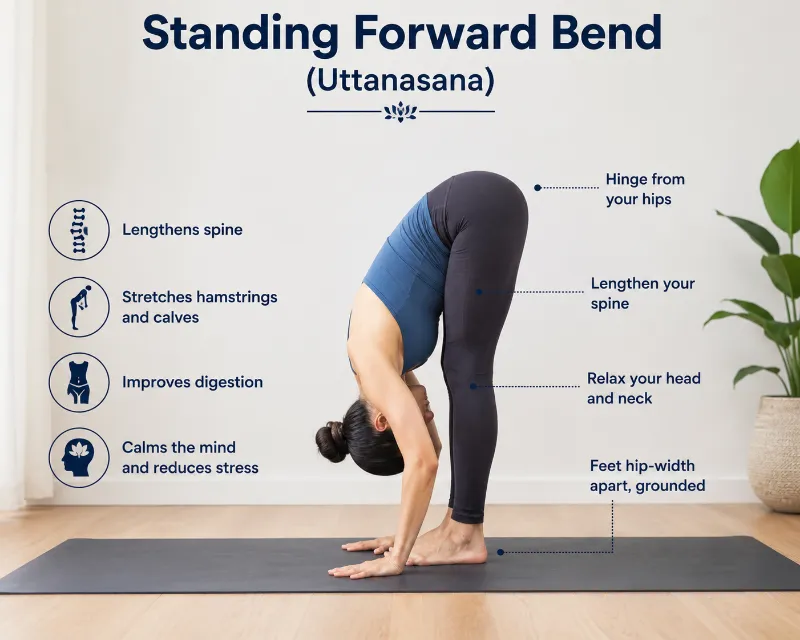
- Uttanasana, also called Standing Forward Bend, is a simple yoga asana that stretches the hamstrings, calves, hips, and lower back. Practice it slowly and avoid forcing the stretch, especially if you have back or hamstring problems.
- It involves hinging at the hips, moving your chest toward your legs, maintaining a long spine, and breathing evenly.
- It is renowned for its ability to relax the nervous system, stretch the back and hamstrings, and create a safer hip-hinge pattern for regular movement. Sun salutations frequently use it.
- Despite its apparent simplicity, this basic yoga stance has profound mental and physical advantages. It calms the nervous system and helps relieve tension in the body by combining an inversion effect with a mild forward bend.
Uttanasana: Overview and Meaning of Standing Forward Bend
- The Sanskrit term “Uttanasana” means “intense stretch pose” and is derived from the words “ut” (intense), “tan” (to stretch), and “asana” (pose). The position promotes letting go by folding inward while maintaining a firm footing. Uttanasana is traditionally linked to introspection, surrender, and mental relaxation.
- Uttanasana is frequently taught as “touch your toes” in modern yoga, but the true objective is to prioritise a long, supported spine and fold from the hips. Because of this, many educators advise students to bend their knees gently, particularly if they have stiff hips or tight hamstrings. The pose is also used to combat prolonged sitting and switch between standing and floor-based poses.
- Anatomically, Uttanasana softly decompresses the lower back while stretching the hips, hamstrings, calves, and spine. It enables the spine to safely stretch when practised with bent knees. Its relaxing effect is also enhanced by the moderate inversion, which boosts blood flow to the head.
At a Glance
- Primary name: Uttanasana
- This pose is also called the Standing Forward Bend or Standing Forward Fold.
- Stretches the hamstrings, calves, hips, and spine primarily.
- Typical props: chair, wall, and yoga blocks
- Hold times typically range from 30 to 60 seconds for novices to 1 to 3 minutes for lengthy holds.
- Bending the knees to maintain the fold in the hips rather than the low back is the best beginner advice.
Muscle Work During Uttanasana:
Because Uttanasana is a full-body stretch, many various muscles are engaged when practising this position, although there is a strong emphasis on the following muscles:
- Back Muscles
- Abdominal muscles
- Hamstring Muscle
- Spine Muscles
Benefits of Uttanasana (Standing Forward Bend)
Benefits from Uttanasana extend well beyond flexibility. It is regarded as one of the most holistic standing positions in yoga since it simultaneously works on the muscles, spine, neurological system, and internal organs. It promotes mental clarity and bodily relaxation when done correctly and consistently.
Physical Benefits
- Deep hamstring and calf stretch: The hamstrings and calves, which are often contracted by prolonged sitting, driving, and repeated activities like cycling or running, are efficiently lengthened by uttanasana.
- Improves spinal flexibility and gently decompresses the spine: Gravity helps with the forward fold, which reduces tension between vertebrae and creates natural traction through the spine.
- Enhances posture: Uttanasana gradually aids in the posterior chain’s rebalancing and enhances posture. Slouching and lower back pain are often caused by tight hamstrings that pull the pelvis out of alignment.
- Strengthens legs and joint stability: The position strengthens the thighs, ankles, and feet while shielding the knees. The quadriceps must be used vigorously and with little support from the core.
- Relieves tension across the entire back body: Because uttanasana stretches the entire posterior line, which includes the calves, hamstrings, hips, neck, and soles of the feet, it is especially helpful after prolonged desk labour.
Mental & Nervous System Benefits
- Calms the nervous system: Uttanasana’s forward fold naturally draws attention inward and triggers the parasympathetic (or “rest and digest”) response, which helps lower anxiety and tension.
- Reduces mental fatigue: By increasing blood flow to the brain, the modest inversion effect (head below heart) might help you feel renewed and cognitively sharp without being overstimulated.
- Promotes emotional release: When held with slow, steady breathing, Uttanasana is perceived by many practitioners as stabilising and emotionally calming.
- Enhances focus and mindfulness: Maintaining the stance while paying attention to your breath and sensations helps you become more aware of your body.
Digestive & Circulatory Benefits
- Stimulates digestive organs: The intestines, liver, and kidneys are all gently massaged by abdominal compression, which may aid in digestion and reduce bloating.
- Promotes good circulation: When done frequently, uttanasana helps with venous return, which is the flow of blood from the legs back to the heart.
Functional & Everyday Benefits
- Teaches safe hip-hinge mechanics: Bending, lifting, and reaching are all safer everyday motions when one learns to fold from the hips instead of rounding the lower back.
- Counteracts the effects of prolonged sitting: By stretching shortened muscles and reintroducing mild spinal movement, Uttanasana helps reverse stiffness in sedentary lifestyles.
- Lays the groundwork for more complex forward bends: Deeper poses like Paschimottanasana, Padahastasana, Ardha Uttanasana, and Eka Pada Uttanasana are made possible by this stance.
Therapeutic Applications (Supportive, Not Medical)
When performed properly and with the appropriate modifications, Uttanasana can assist with:
- Chronic hamstring tightness
- Tension-related lower back discomfort
- Stress, anxiety, and mild insomnia
- Digestive sluggishness
- Fatigue from prolonged sitting
- To get the most out of your practice, schedule a free one-on-one consultation right now!
Part 1: Setting Yourself Up
- Practice two to three hours after meals on a light or empty stomach.
- If your hands are unable to comfortably reach the floor, use yoga blocks.
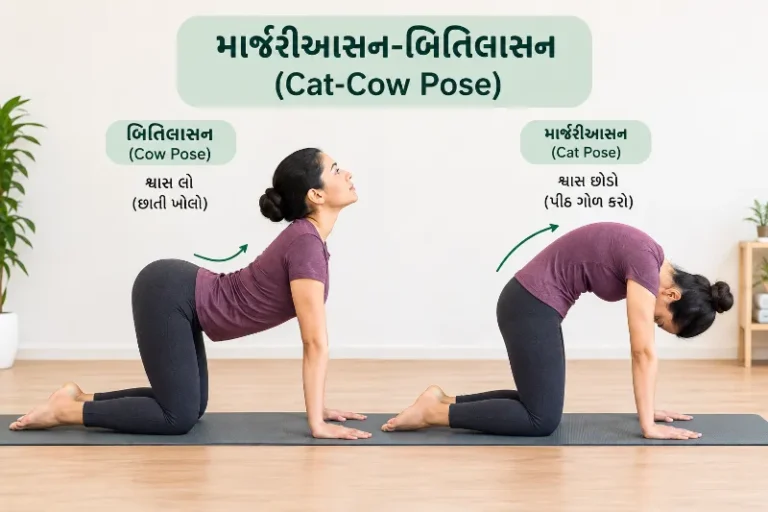
- Warm up with gentle gestures like Cat-Cow or a little “Sun Greetings.”
- Recall that bowed knees are proper and not a sign of inexperience.
Part 2: How to Do Uttanasana
- Start by placing your feet hip-width apart in Mountain Pose (Tadasana).
- Evenly grind the base of the big toes, the heels, and the outer borders of the feet.
- In order to relax, lengthen your spine, soften your shoulders, and take two to three deep breaths.
- Lift your chest slightly and make room in the front of your body when you inhale. As you exhale, hinge forward from the hips instead of the lower back. Bend your knees as much as necessary and let your body move toward your thighs.
- Depending on how flexible you are, let your hands touch the floor, yoga blocks, shins, or thighs. Instead of letting the weight fall into your hands, keep it anchored in your feet. Tension in the jaw and shoulders can be released by letting your head and neck completely relax.
- Gently expand your spine with each breath; picture your torso moving forward. Soften the fold more deeply with each exhale without pushing. Ease and release are more important than depth.
- For 30 to 2 minutes, maintain the posture while breathing steadily and gently. Feel the spine and back of your legs stretch while keeping your lower back comfortable.
- To get out, flex your knees a lot, tighten your core, and apply pressure with your feet.
- One vertebra at a time, slowly raise yourself to a standing position, starting with the head. Before continuing, pause in Mountain Pose for a few breaths.
Key Alignment Cues for Uttanasana
- Keep knees bent if hamstrings feel tight
- Fold from the hips, not the waist
- Let the head hang heavy without strain
- Distribute weight evenly through the feet
- Breathe slowly—never hold the breath
Common Mistakes to Avoid
- Forcing straight legs
- Rounding sharply through the lower back
- Locking the knees
- Pulling the head toward the shins
- Rushing in or out of the pose
Uttanasana Variations
One of the reasons Uttanasana (Standing Forward Bend) is so popular is because of its versatility. While developing flexibility and awareness of appropriate variations and props, this position can meet novices, seasoned practitioners, and people with physical restrictions exactly where they are.
Beginner-Friendly Modifications
Uttanasana with Bent Knees (Foundational Modification)
- Teaches a secure hip hinge while safeguarding the hamstrings and lower back.
- Bend your knees wide and swing forward from your hips when standing.
- Allow the torso to lie nearer the thighs.
- Put your hands on your shins, thighs, blocks, or the floor.
- Maintain a long back and a relaxed head.
Uttanasana with Hands on Yoga Blocks
2. Lessens the load on tense hamstrings while preserving spinal length.
- Put one or two blocks at a comfortable height beneath the hands.
- Bend your knees as necessary and fold forward.
- With each breath, extend your spine.
- On exhales, soften more deeply without straining.
Chair-Supported Uttanasana
3. Adds stability and support to enable forward folding.
- Place yourself just behind a chair.
- Put your hands on the back or seat of the chair and bend forward.
- Maintain a long spine and keep your weight in your feet.
- Take deep breaths, then slowly get up to leave.
- Check out this comprehensive guide for more chair yoga positions!
Rag Doll Pose (Baddha Hasta Uttanasana)
4. Releases neck, shoulder, and upper-back tension.
- Fold forward with knees bent.
- Leave the head hanging while holding opposing elbows.
- Gently sway side to side if comfortable.
- Relax the jaw and breathe slowly.
Key Variations (Common in Sequences)
Ardha Uttanasana (Standing Half Forward Bend)
5. Strengthens the back and builds postural awareness.
- From Uttanasana, lift the torso halfway.
- Place hands on shins or blocks.
- Lengthen the spine forward, and gaze down.
- Keep core engaged and neck long.
Hasta Uttanasana (Raised Arms Pose)
6. Creates spinal length and opens the chest before folding.
- Stand tall in Mountain Pose.
- Inhale and raise arms overhead.
- Lift through the chest while grounding the feet.
- Exhale to transition into Uttanasana.
Intermediate Variations
Wide-Legged Uttanasana (Prasarita Padottanasana)
7. Reduces hamstring intensity while engaging inner thighs.
- Step feet wide apart, toes slightly in.
- Hinge forward from the hips.
- Place hands on the floor or blocks.
- Let the head relax downward.
Uttanasana with Ankle or Calf Hold
8. Deepens the forward fold for flexible practitioners.
- Fold forward with knees straight or softly bent.
- Gently hold ankles or calves.
- Lengthen the spine before deepening.
- Avoid pulling—use breath to soften.
Advanced Variations
Padahastasana (Hand-to-Foot Pose)
9. Adds wrist extension and strengthens the hamstring stretch.
- Slide your hands beneath your feet, palms up, and fold forward.
- Wrists are where toes rest.
- Soften the torso toward the legs.
- If necessary, keep knees soft.
Eka Pada Uttanasana (One-Legged Forward Bend)
10. Combines hamstring stretch with balance and hip stability.
- Shift weight into one leg and fold forward.
- Lift the opposite leg straight back.
- Keep hips level and spine long.
- Lower the lifted leg to switch sides.
Using Props to Customise Your Practice
- Yoga blocks: Reduce reach and support spinal length
- Chair: Adds stability and accessibility
- Wall: Assists balance and alignment
- Strap: Extends reach in modified versions
In personalised sessions, teachers often adjust variations based on goals, flexibility, and body type, helping you choose the Uttanasana variation that supports progress without strain.
Book a free one-on-one today!
- Slide your hands beneath your feet, palms up, and fold forward.
- Wrists are where toes rest.
- Soften the torso toward the legs.
- If necessary, keep knees soft.
FAQs
What are the benefits of Uttanasana?
Benefits of Standing Forward Bend (Uttanasana)
decreases tension in the lower back, eases tense muscles, and offers therapeutic advantages.
Benefits include relieving sleeplessness, enhancing digestion, and fortifying the liver and kidneys.
What are common mistakes in Uttanasana?
Uttanasana has some dangers, just like any other yoga practice. In this pose, the most common errors are: folding not from the hips but from the waist and jerking or bouncing into the position. Knees that are overextended.
Can Uttanasana improve blood flow?
The body’s blood circulation is enhanced by Uttanasana. Blood flows to your brain when you bend over, revitalising the cells. It gives you a sense of comfort and energy.
Is Uttanasana good for back pain?
This simple standing yoga pose helps to relax the lower back muscles and relieve back discomfort. Maintain a hip-distance gap. Take a deep breath, then raise your arms above your head and out to your sides in a single, smooth motion.
Which disease is cured by Uttanasana?
Uttanasana kneads and squeezes the abdominal organs to aid with digestion. By promoting regular bowel movements and enhancing general gut health, this action lessens bloating, constipation, and other digestive issues.
References:
- Allen, W. (2025c, December 29). Uttanasana. https://myyogateacher.com/yoga-asana/uttanasana
- Yoga Journal. (2025h, March 23). Standing forward bend. https://www.yogajournal.com/poses/standing-forward-bend-2/
- Uttanasana (Standing Forward Bend): Steps, Benefits, Variations & More – Fitsri Yoga. https://www.fitsri.com/poses/uttanasana
7 Comments