Yoga for Tight Hip Flexors: Easy Poses to Improve Flexibility
Introduction
Almost one-fourth of American people spend more than eight hours a day sitting down, which may cause serious damage to your hips. When you’re not moving, they may get overly tight, which can cause uncomfortable motions and restricted range of motion.
Luckily, gentle stretches and hip-opener exercises can help relieve some of the strain, allowing you to move more freely and feel more comfortable.
Your hip joints’ range of motion is maintained by the main muscle groups that surround your hips. Walking, standing, and climbing stairs may become easier as your physical fitness improves if you strengthen and stretch these regions.
Work your way slowly into your range of motion when extending your hips. Take note of what aches or doesn’t feel right after holding each posture for five to eight breaths. Get in touch with a physical therapist who can evaluate the issue if you have severe, targeted pain or if it lasts more than a few hours.
Hip Flexor Muscles
The word “hip flexor” describes a set of muscles that extend from the lower back to the knee. These muscles facilitate lower body motions. Hip flexor muscles are used in walking, running, kicking, and squatting.
The hip flexor group consists of the following muscles:
- Iliopsoas muscle. The psoas and iliacus muscles, together known as the iliopsoas, are two distinct muscles that aid in lower back stabilization. The psoas muscle joins to the femur (thigh bone) after passing through the pelvis and the lumbar spine (lower back). The iliacus muscle rotates the thigh and connects the pelvis to the femur.
- Rectus femoris muscle. The rectus femoris connects the knee to the pelvis. Additionally, the quadriceps muscle is used for lunges and squats.
- Sartorius muscle. The sartorius muscle, which also extends from the pelvis to the knee, is utilized to flex the leg and knee.
- Pectineus muscle. The pectineus, sometimes referred to as the groin muscle, is involved in hip flexion. Additionally, it is utilized for adduction and thigh rotation.
What Causes a Tight Hip Flexor?
Those who spend a lot of time sitting are one group of people who are more likely to develop tight hip flexor muscles. This includes those who work at desks all day. Long-distance drivers, including truck drivers, fall under this group.
Hip flexor tightness may also occur in clients who engage in activities that require them to raise their knee nearer their body. This kind of movement is used by dancers, runners, and martial artists. As a result, individuals could experience greater hip and upper thigh problems.
Tight hips might also result from sitting for extended periods of time during athletic events. Rowers and cyclists are two to think about. It might be beneficial to work with these people to help them relax their hip muscles.
Sometimes the body’s structural imbalances are the source of a tight hip flexor. For example, the structure and function of the hip flexor may be affected if the left leg is shorter than the right.
Hip flexor muscles can also become stiff due to poor posture. For example, if you lean more toward your right leg when bending forward, the hip flexor may constrict.
Benefits of Yoga for Tight Hips
For individuals who suffer from hip pain or stiffness from tense muscles, regular yoga practice offers several benefits. Some of the postures help with hip opening at first. They provide a hip stretch due to the position of the hip joint.
Hip flexor muscles are also strengthened by yoga. Holding specific positions for 30 to 60 seconds at a time develops this muscular power. The more powerful these muscles are, the more they can help the body move and operate normally.
Yoga also helps you achieve your aim of increased hip flexor mobility.
Hip-opening poses for tight hips
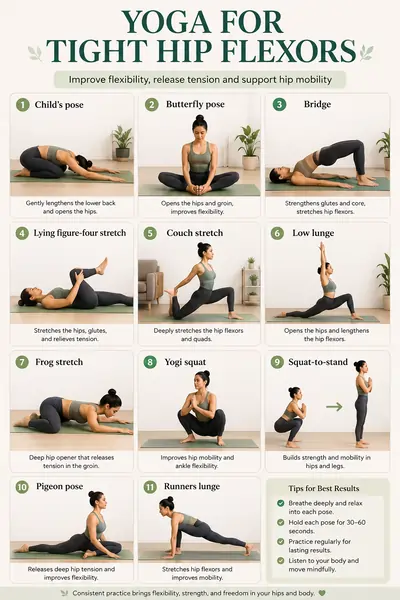
Balasana (Child’s pose)
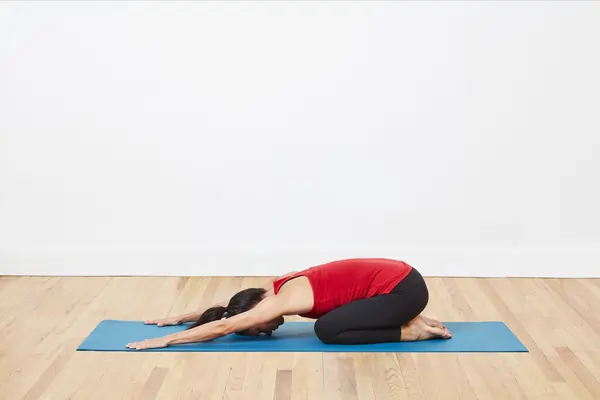
- Start on your knees, pressing the tops of your feet into the floor or a yoga mat.
- Widen your hips as much as you feel comfortable while touching your big toes together.
- Slowly return your hips to your heels while extending your arms in front of you until your forehead touches the ground. To maintain a straight neck, you can place your forehead on a yoga block if you can’t rest it on the floor.
- The insides of your thighs and hips should feel stretched. Slowly rise to a sitting posture after holding this position for as long as it feels comfortable.
Butterfly pose
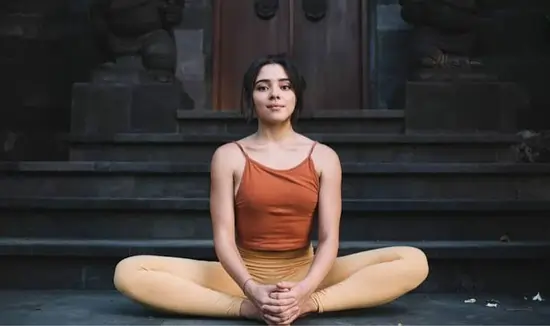
- With your knees pointing apart (like a butterfly’s wings) and your feet squeezed together, take a seat on a mat or the floor.
- Maintain a straight back, raise your head, and support yourself by holding onto your feet.
- Lean forward slowly until your hips and inner thighs start to stretch.
- Use your elbows to bring your legs down for a deeper hip-opener gently.
- Continue in this position as long as it makes you feel comfortable.
Setu Bandhasana (Bridge Pose)
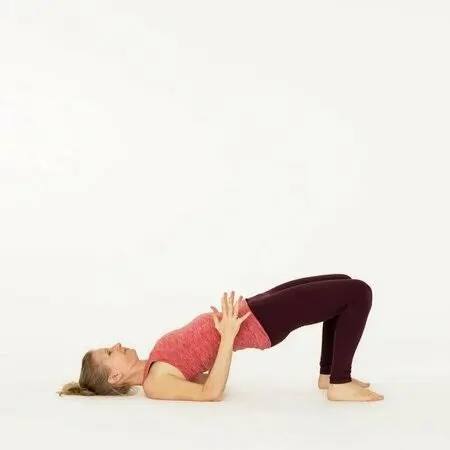
- With your legs shoulder-width apart and your feet on the ground, lie on your back.
- Raise your hips slowly toward the ceiling.
- Keep your elbows planted and place your hands behind your butt or lower back for further support.
- Before going back to the floor, hold this pose for five to eight breaths.
- Do this three to five times.
Lying figure-four stretch
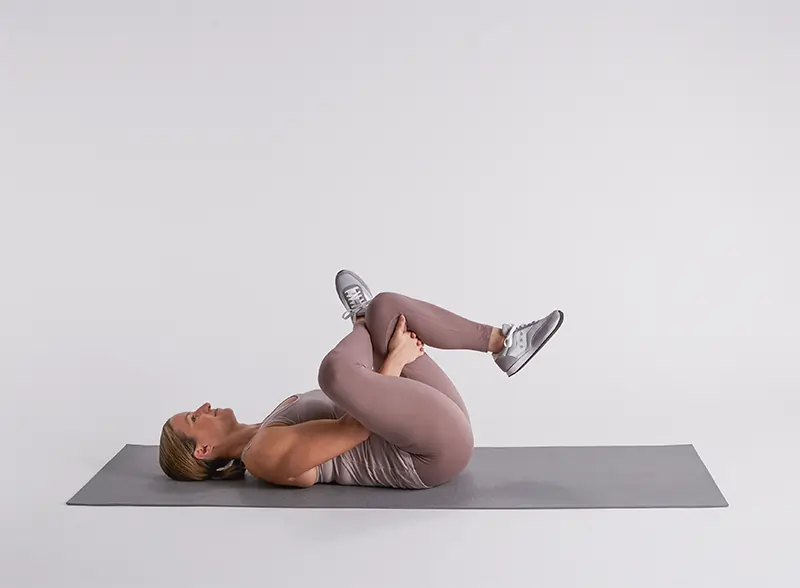
- Turn your feet outward at a 45-degree angle while standing so that your heels are near each other.
- Squat down and bring your hands together in front of your chest.
- Put your elbows between your knees and press into them to extend your hips and lengthen your spine. Continue in this position as long as it makes you feel comfortable.
- Put a yoga block under your butt if you require more support.
- Move side to side for a more full hip stretch.
Couch stretch
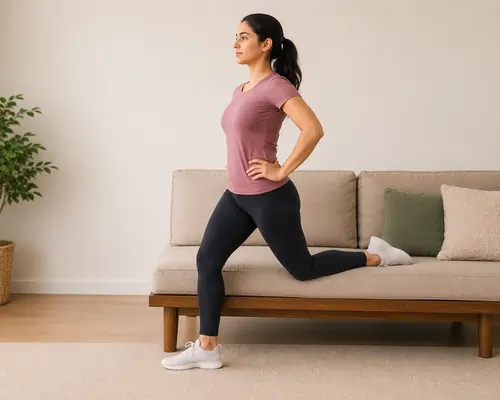
- With a sofa or an attached bench behind you, begin standing.
- Raise your right leg, bend your right knee, and place the top of your right foot on the bench or sofa behind you.
- Sink your hips and lower your right knee to the floor, keeping your left knee over your left ankle until your calves and thighs begin to stretch.
- Having a pillow or other support under your right knee might assist if your hips are really stiff.
Low lunge
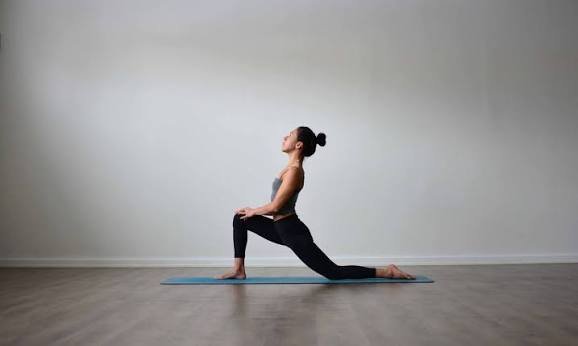
- Move forward with your right leg while standing, maintaining a vertical knee over your ankle.
- With your knee on the floor and your toes loose, extend your left leg backward.
- Place your hands on your right leg and slowly raise your chest.
- Bend your hips forward till your left hip starts to stretch while keeping your right knee under your toes.
- To prevent your lower back from overhanging, pull your tailbone downward.
- Keeping your right foot flat on the ground, slightly tilt your right leg an inch or two to the right for a more powerful hip-opener.
- Before changing sides, hold this posture for as long as it seems comfortable.
Frog stretch
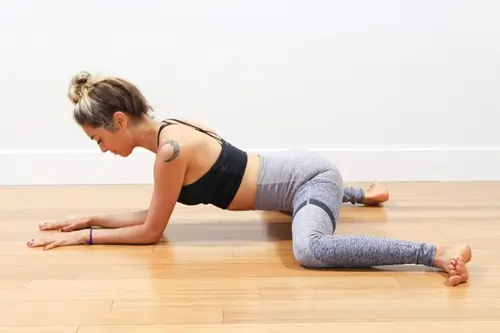
- Beginning on your hands and knees, slowly expand your knees to a 90-degree angle as much as you can without straining.
- With your feet pointing away from your body, keep the insides of your calves and feet firmly on the ground.
- As in a plank posture, lower your forearms to the floor in front of you.
- Press your palms into the floor while keeping your shoulders just above your elbows.
- Stretch your head and neck forward and press your tailbone back to lengthen your spine.
- Hold in this posture.
- Your inner thighs and hips should feel stretched.
Yogi squat
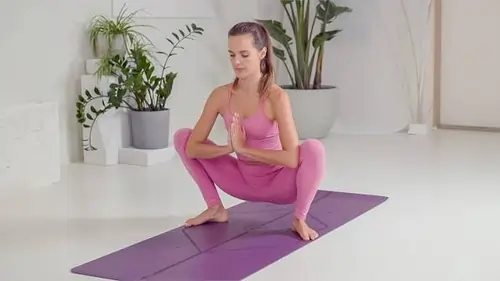
- Turn your feet outward at a 45-degree angle while standing so that your heels are near each other.
- Squat down and bring your hands together in front of your chest.
- Keep your elbows between your knees and press into them.
- Hold this posture.
- Put a yoga block beneath your butt if you require more support.
- Sway side to side for a more thorough hip stretch.
Squat-to-stand
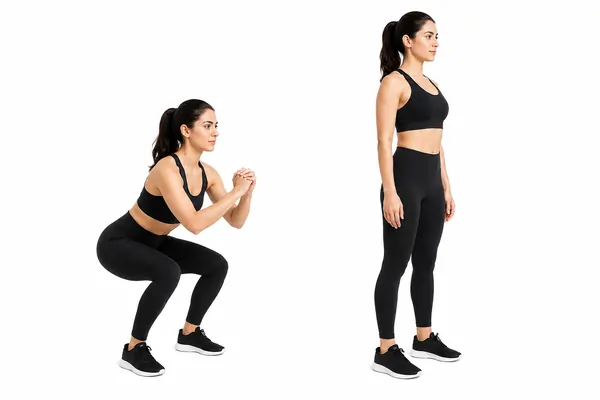
- Start standing with your feet hip-width apart.
- Reach your hands to your ankles or toes while hinging forward at the waist.
- Lower your hips gradually and squat as low as you feel comfortable while holding onto your feet. If you are unable to hold onto your feet, you can squat while gripping the back of a chair or a stable surface.
- To expand your hips, keep your elbows on the inner of your legs.
- After three seconds of holding this position, straighten your legs and stand back up.
- Do this five to ten times.
Pigeon pose
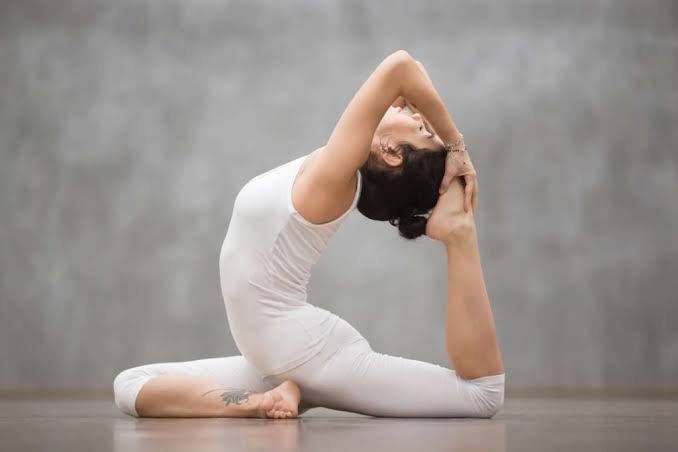
- Start in a high-plank position with your feet hip-width apart and your hands directly under your shoulders.
- Bring your right leg forward and bend your knee so that your right shin is flat on the ground and your right leg is perpendicular to your chest.
- Hold this position for five to eight long breaths while keeping your left leg stretched behind you.
- Return to the high-plank posture slowly, then change sides.
Runners lunge
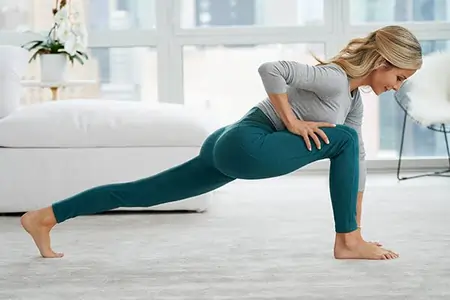
- Start in a high-plank position, much like in pigeon pose.
- Step forward till your right foot is on the inside of your right hand while bending your right knee.
- For five to eight breaths, maintain an extended left leg.
- Reposition your body so that your hands are squarely under your shoulders, take a step back with your right foot, and then repeat on the opposite side.
How Can Yoga Prevent Tight Hip Flexors?
- Avoid pushing deep stretches and shortening your posture.
- To increase stability, strengthen your hip and core muscles.
- Instead of deepening your poses, concentrate on good posture and regulated breathing.
- Adjust difficult positions, such as selecting Reclined Pigeon instead of Full Pigeon.
- Avoid overstretching of hip flexor muscles, especially if they hurt or create discomfort.
FAQs:
Will yoga help with tight hip flexors?
Yes, yoga is excellent for releasing tight hip flexors. Poses that target the psoas and iliopsoas muscles help stretch the contracted fibers caused by prolonged sitting. Frequent stretching of these muscles improves mobility, reduces lower back pain, and corrects pelvic alignment issues.
How do I loosen tight hip flexors?
Combine half-kneeling stretches with glute stimulation to release tense hip flexors. To extend the front of your hip, tuck your pelvis, squeeze your glutes, and move your weight forward. Take movement breaks if you spend a lot of time sitting down, and strengthen your glutes and core to keep stiffness from coming back.
What is a symptom of tight hip flexors?
A persistent dull aching or tightening feeling in the front of the hip or lower back is one of the main signs of tight hip flexors. This stiffness frequently results in pelvic misalignment, limits your range of motion, or makes you feel “locked up” or pinched while getting out of a chair.
How long does it take to untighten hip flexors?
After two to four weeks of regular daily stretching, the majority of people start to see significant relief from tight hip flexors. However, it usually takes three to six months of focused mobility and strengthening treatment to achieve long-lasting structural change and repair the connective tissues.
References:
- Moodley, L. (2002c). The relative effectiveness of spinal manipulative therapy combined with transcutaneous flurbiprofen versus spinal manipulative therapy combined with either menthol or non-medicated placebo patches in the management of sacroiliac syndrome. https://doi.org/10.51415/10321/288
- Liu, A., Chu, I., Lin, H., Liang, J., Hsu, H., & Wu, W. (2021). Training benefits and injury Risks of standing yoga applied in musculoskeletal problems: Lower limb Biomechanical analysis. International Journal of Environmental Research and Public Health, 18(16), 8402. https://doi.org/10.3390/ijerph18168402