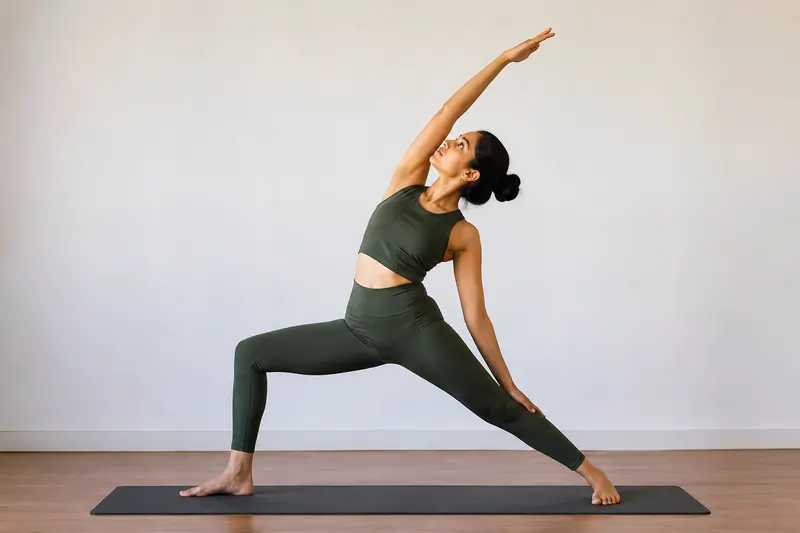
Viparita Virabhadrasana (Reverse Warrior Pose)
Introduction
Viparita Virabhadrasana, also called Reverse Warrior, is pronounced vip-par-ee-tah veer-ah-bah-DRAHS-anna. Yoga frequently employs this standing position. Its name is derived from the Hindu warrior Virabhadra, who is a manifestation of Shiva. “Viparita” is Sanskrit for “reverse.”
Stretching the groin, hips, legs, and obliques; expanding the chest and shoulders; and strengthening the hips, quadriceps, arms, shoulders, torso, and neck are just a few of the many advantages of doing reverse warrior. The position also improves flexibility in the chest, inner thighs, ankles, and spine.
By increasing blood flow throughout the body, reverse warrior can lessen fatigue and enhance mental clarity. Additionally, low back pain can be relieved using reverse warrior exercises.
How to reach that place
- Start in a Warrior II position with your arms by your sides and your feet hip-distance apart. Turn to the left and place both feet four to five feet apart.
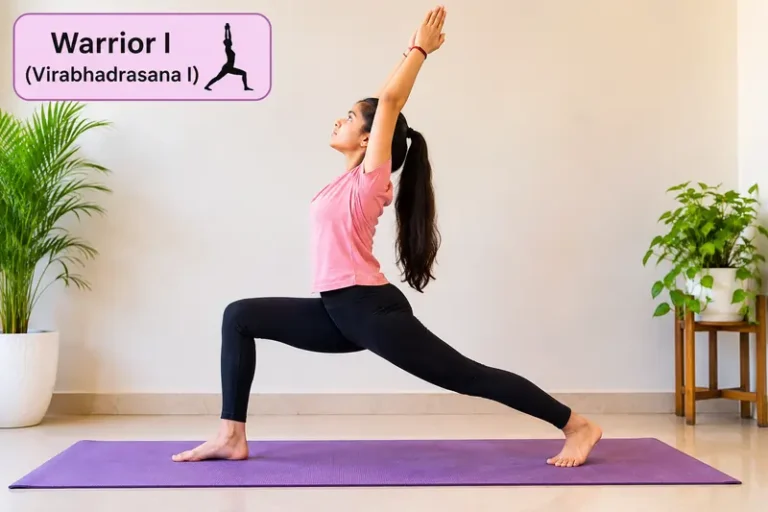
- Turn your front foot 90 degrees while pointing your toes toward the top of the mat. Turn your back foot a little inward.
- Raise your arms sideways, parallel to the floor, to shoulder height. Make sure your arms are positioned exactly over your legs. Reach energetically from fingertip to fingertip while keeping your palms down.
- Exhale while bending your front knee. Place your knee exactly over your front foot’s ankle. Eventually, bring your front thigh parallel to the floor after lowering your hips. Warrior II is this.
- As you inhale, straighten your front arm and either drop or bind your back hand to the back of your left leg. Reach up to the ceiling with your fingertips. Your ear should be near your front bicep. Keep your front knee bent and your hips low as you lengthen through your side waist. You can bind and take a small backbend, or you can move your back hand farther down the leg.
- Stretch your side waist while keeping your hips down and your front knee bent. You can slip your back hand further down the leg or bind to form a little backbend.
- Focus on your front hand’s fingertips while tilting your head slightly.
- Maintain relaxed shoulders, an elevated chest, and long sides of the waist.
Beginner Tips
- Create your pose from the ground up.
- Spread your weight across the four corners of your feet, then use that solidity to find lightness in your spine.
- Lift your chest and spread your collarbones instead of bending too far.
Try out these alignment suggestions the next time you’re on your mat to see what suits you the best. Since each person is unique, your reverse warrior position is just as distinctive as your friend’s or teacher’s.
Variations of Reverse Warrior Pose
Hand-on-Hip Reverse Warrior (Difficulty: Beginner) is the first variation.
Beginners and people with shoulder difficulties can place the back hand on the hip rather than down the back leg, which reduces the extra strain on shoulder mobility while still providing side body stretch and leg strengthening.
Hold for shorter intervals at first (20–30 seconds). For individuals who are still getting used to the deep front leg bend of warrior postures, this variant is perfect.
Bound Reverse Warrior, Variation 2 (Difficulty: Intermediate to Advanced)
The bound form combines a shoulder-opening bind with Reverse Warrior by having the rear hand extend behind the back and the front arm loop around to grab the opposing hand or wrist.
This significantly deepens the chest opening and makes shoulder mobility challenging. Practice only if the basic position is comfortable for a minute and shoulder flexibility has been gained through preparatory practice.
Reverse Warrior to Extended Side Angle Flow
(Difficulty: Intermediate) Is the third variation.
When Reverse Warrior exhales, it naturally transitions into Extended Side Angle (Utthita Parsvakonasana), where the back arm stretches overhead, and the front arm rotates down to lay the forearm on the front knee.
One of the most well-liked Reverse Warrior posture variations in Vinyasa flows is this dynamic combination, which explores complementary lateral positions and generates heat.
Reverse Warrior with Block Support (Difficulty: Beginner—Knee Sensitivity) is the fourth variation.
Longer holds and less strain on the front knee are possible for those who have knee sensitivity by placing a yoga block under the rear thigh. In addition to standing postures, members who prioritise knee health frequently combine their work with yoga for knee strength.
Common Mistakes to Avoid in Reverse Warrior Pose
Mistake 1: Letting the Front Knee Collapse Inward
A common error is when the front knee moves out of alignment over the ankle and inward toward the body’s midline. In addition to causing severe medial knee strain, this can eventually result in pain or injury.
Mistake 2: Collapsing Weight into the Back Hand
Many practitioners move themselves sideways by utilising their rear hand as a support, leaning their weight into it. What to do instead: The side bend is produced by the front arm’s upward reach and the side body’s extension; the back hand slides gently down the rear leg without bearing weight.
Mistake 3: Losing Engagement in the Back Leg
The back leg—knee bending, foot elevating, or hip collapsing—often loses engagement when attention is directed toward the side bend. The stability and benefits of the overall position are compromised as a result. Instead, keep the back quadriceps active, keep the strong warrior base, and consistently push through the outside edge of the rear foot.
Mistake 4: Compressing the Lower Back
Instead of extending the side of the body, pushing the hips forward or arching mostly through the lumbar spine compresses the lower back. Instead, what to do: Before bending sideways, lengthen upward through the side body; softly contract the abdominals; allow the lateral movement to originate from the ribs rather than the lumbar spine.
Mistake 5: Using Neck Limitations to Force the Look Upward
Despite neck pain or restriction, many practitioners urge attention upward toward the front hand, which causes cervical strain. Instead, what to do: The benefits of the stance don’t involve gazing up; instead, keep your gaze forward or slightly downward if looking up makes you uncomfortable.
Mistake 6: Holding the Breath
Practitioners may unintentionally hold their breath due to the deep leg engagement and side bend. Instead, what to do: Throughout, continue to breathe steadily through your diaphragm; if your breathing becomes limited.
Variations of Reverse Warrior Pose
Variation 1: Hand-on-Hip Reverse Warrior (Difficulty: Beginner)
Beginners and individuals with shoulder restrictions can place the back hand on the hip rather than down the back leg, which reduces the load on shoulder mobility while still providing side body stretch and leg strengthening.
Hold for shorter intervals at first (20–30 seconds). For individuals who are still getting used to the deep front leg bend of warrior postures, this variant is perfect.
Variation 2: Bound Reverse Warrior
(Difficulty: Intermediate to Advanced)
The bound form combines a shoulder-opening bind with Reverse Warrior by having the rear hand extend behind the back and the front arm loop around to grab the opposing hand or wrist.
Practice only if the basic position is comfortable for a minute and shoulder flexibility has been gained through preparatory practice.
Variation 3:
Reverse Warrior to Extended Side Angle
(Difficulty: Intermediate)
When Reverse Warrior exhales, it naturally transitions into Extended Side Angle (Utthita Parsvakonasana), where the back arm stretches overhead, and the front arm rotates down to lay the forearm on the front knee.
One of the most well-liked Reverse Warrior posture variations in Vinyasa flows is this dynamic combination, which explores complementary lateral positions and generates heat.
Variation 4: Reverse Warrior with Block Support
(Difficulty: Beginner — Knee Sensitivity)
A yoga block can be placed under the rear thigh to provide support for those who have knee sensitivity. This will lessen the strain on the front knee and enable longer holds. Members who focus on promoting knee health, in addition to standing poses, frequently combine their work with yoga to strengthen their knees.
Include Reverse Warrior Pose in Your Daily Routine
- Reverse Warrior Pose (Viparita Virabhadrasana), a standing yoga pose that combines the energizing elements of warrior poses with strong leg engagement, deep side body stretching, and chest opening, is something you’ve just mastered.
- Lateral fascia release, intercostal stretching, leg and glute strengthening, increased respiratory capacity, and the mental toughness that challenging standing poses strengthen are all advantages of the reverse warrior pose.
- This posture is approachable with the right adjustments, regardless of your level of experience—whether you’re an athlete addressing typical stiffness patterns, an experienced practitioner looking to improve alignment, or a total beginner. No matter your level of flexibility or past yoga experience, you may start safely right away thanks to the hand-on-hip variant, block support, and shorter-hold choices.
- The most effective method for mastering Reverse Warrior Pose is in-person instruction with real-time adjustments from a trained teacher, especially considering the need for front knee alignment and the fine line between lumbar compression and appropriate side bending.
Who Should Practise Reverse Warrior Pose?
Adults Seeking Side Body Flexibility and Spinal Mobility
Reverse Warrior is very beneficial for adults whose everyday activities rarely include side bending, such as the majority of adults and most contemporary desk workers. The position primarily targets the intercostal constriction and lateral fascia that are caused by extended sitting and forward-facing activities. For increased flexibility, members frequently combine their work with yoga.
Athletes and Active Practitioners
Reverse Warrior’s mix of leg strengthening, side body extending, and chest opening is beneficial for runners, bikers, and field athletes whose training produces regular stiffness patterns.
The position improves the rotational stability necessary for athletic performance while addressing the muscular imbalances caused by endurance sports.
Conclusion
Reverse Warrior Pose, also known as Viparita Virabhadrasana, stands tall among upright yoga poses, blending muscular effort with a calm breath. Instead of just holding still, it asks you to stretch sideways while your legs bear weight, lifting the ribcage skyward. This motion widens the torso’s front even as the ankles press down into firm contact with the floor.
Over time, doing this regularly shapes better alignment in daily stance and builds staying power through movement sequences. Confidence grows quietly – not loud or forced – just present, like morning light creeping across a room. Growth hides where stability meets soft openness.
FAQs
Who can practice Viparita Virabhadrasana (Reverse Warrior Pose)?
Viparita Virabhadrasana (Reverse Warrior Pose) can be practised by beginners and experienced yoga practitioners. People with injuries should consult a healthcare professional before practising.
How long should you hold Viparita Virabhadrasana (Reverse Warrior Pose)?
Viparita Virabhadrasana (Reverse Warrior Pose) is usually held for 20 to 30 seconds on each side. Deep and steady breathing is recommended during the pose.
Does Viparita Virabhadrasana (Reverse Warrior Pose) help improve flexibility?
Yes, Viparita Virabhadrasana (Reverse Warrior Pose) stretches the waist, shoulders, and chest. Regular practice can increase overall flexibility.
Can beginners do Viparita Virabhadrasana (Reverse Warrior Pose)?
Yes, beginners can safely practice Viparita Virabhadrasana (Reverse Warrior Pose) with proper alignment.
References:
- https://modernyogacle.com/reverse-warrior-pose-viparita-virabhadrasana/?srsltid=AfmBOoro_FpzVleGtpYu-xG420JyN7n8RqdG3cFK8L1abBSQZjzljY09
- Reverse Warrior – Viparita Virabhadrasana – The Yoga Collective. (2020, April 10). The Yoga Collective. https://www.theyogacollective.com/poses/reverse-warrior-viparita-virabhadrasana/
- InFlow, S. (2022, July 4). Viparita Virabhadrasana: Reverse Warrior pose. Gaia. https://www.gaia.com/article/viparita-virabhadrasana-reverse-warrior-pose
- Peetham, K. Y. V. (2026, March 28). Viparita Virabhadrasana (Reverse Warrior pose). Karuna Yoga Vidya Peetham, Bangalore. https://karunayoga.in/viparita-virabhadrasana-reverse-warrior-pose/
- Lifted Lotus Online Yoga School. (n.d.-a). How to do reverse warrior pose: Practising Viparita Virabhadrasana. https://courses.onlineyoga.school/pages/how-to-do-reverse-warrior-pose-practicing-viparita-virabhadrasana
- Reverse Warrior – Viparita Virabhadrasana – The Yoga Collective. (2020b, April 10). The Yoga Collective. https://www.theyogacollective.com/poses/reverse-warrior-viparita-virabhadrasana/