Ardha Matsyendrasana (Half Lord of The Fishes)
What is Ardha Matsyendrasana?
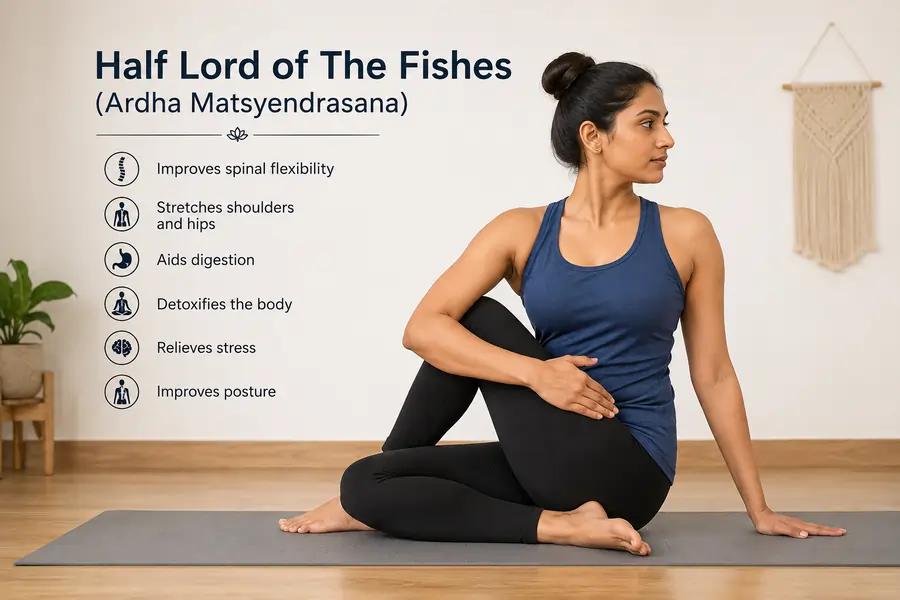
A traditional sitting spinal twist in yoga, Ardha Matsyendrasana (Half Lord of the Fishes Pose) improves posture, increases spinal flexibility, and stimulates the abdominal organs.
This simple twist is ideal for supporting healthy digestion, easing back and shoulder pain, increasing spinal mobility, and calming the abdominal organs after extended sitting.
Overview of Ardha Matsyendrasana:
Half Lord of the Fishes is an acronym for Ardha Matsyendrasana, which is pronounced ar-dah mat-syen-DRAHS-anna. After hearing Lord Shiva, the sage Matsyendra, a former fisherman, is said to have gained yogic wisdom. It is taught under the water and is revered by its name. Despite its difficult moniker, the Seated Spinal Twist is a beginner-friendly pose that may be adjusted on the floor or in a chair.
The Seated Twist is a traditional stance that is said to aid digestion and prepare the body for meditation, according to the Hatha Yoga Pradipika. The “half” version was developed to increase inclusivity and accessibility to the position. In the past, it served as a more complex twist.
The Seated Spinal Twist is now widely taught because it promotes a healthy digestive system, prevents excessive sitting, and preserves spinal mobility—all of which are crucial for contemporary desk workers and anybody leading a busy lifestyle.
The thoracic and lumbar spine are gently rotated, the hips and outer legs stretch, the shoulders and chest open, and the core and obliques are stretched. The twist’s flow for fresh circulation to the stomach, liver, and intestines, which produces a minor “wringing” effect in the abdomen, may lessen bloating, gas, and digestive issues.
At a Glance
- Sanskrit Name: अर्ध मत्स्येन्द्रासन (Ardha Matsyendrasana)
- Pronunciation: ar-dah mat-syen-DRAHS-anna
- Half Lord of the Fishes Pose & Seated Spinal Twist are English names.
- Others include Half Spinal Twist & Sitting Spinal Twist.
- Pose Type: Seated twist, gently detoxifying pose
- Level: Beginner to Intermediate
- Hold for 30 to 2 minutes on each side.
Muscle Work During Ardha Matsyendrasana:
- Arm and Shoulder Muscles
- Back Muscles
- Core Muscles
- Gluteal Muscle
- Hamstring Muscle
- Hip Muscle
- Psoas Muscle
Best Time to Practice:
- Morning to support digestion
- After long sitting sessions
- Benefits: Supports digestion, improves posture, relieves back tension
- Strengthens: Core and back muscles
- Stretches: Spine, shoulders, hips, neck
- Preparatory Poses: Easy Pose (Sukhasana), Staff Pose (Dandasana)
- Counter Poses: Gentle forward fold, soft backbend
Ardha Matsyendrasana: Benefits
Ardha Matsyendrasana, sometimes referred to as Half Lord of the Fishes or Seated Spinal Twist, provides a unique set of digestive, spinal, and energy advantages. Whether you want to promote digestion, relieve back stiffness, or counteract prolonged sitting, this mild twist can drastically change how your body feels.
Physical Benefits
- Increases spinal mobility and rotation
- Opens the chest and lengthens the spine to improve posture.
- Reduces lower back tension and stiffness without causing strain.
- Opens the shoulders and neck, reducing “tech neck” and upper-body weariness.
- Strengthens overall postural support by improving the core.
- Increases hip flexibility by extending the glutes and outer hips and lightly contracting the hip flexors.
- By expanding the rib cage and deepening the breath, the mild twist increases breathing capacity.
Digestive & Detoxification Benefits
- The digestive fire (agni) is stimulated, and circulation and warmth in the digestive organs are increased by gently compressing the abdomen.
- Promotes natural peristalsis, which massages the intestines to assist in maintaining regular bowel motions.
- Reduces gas and bloating: After prolonged sitting or heavy meals, the “wringing-out” effect can help release trapped air and relieve discomfort.
- Improves circulation in the liver and kidneys: The body’s natural detox processes are enhanced by enhanced blood flow.
- Improved organ motion can facilitate digestion, making it easier for your body to absorb nutrients.
- Because of these benefits, the pose is especially valuable for those who experience slow digestion, afternoon heaviness, or digestive discomfort brought on by stress or prolonged sitting.
Mental & Emotional Benefits
- Reduces stress and anxiety: The parasympathetic nervous system activates, and deep breathing and gentle twisting are combined.
- Twists may help emotional tension by symbolically “cleansing” the abdomen, which is a common place for stress to accumulate.
- Mental balance: Gently rotating while anchoring through the hips produces a centred, balanced sense.
Energetic & Therapeutic Benefits
- Activates the Solar Plexus Chakra (Manipura) and is linked to confidence, willpower, and digestion.
- Opens the Heart Chakra (Anahata): Compassion and emotional flow are encourages on soft chest expansion.
- Prana is harmonious by twisting, which harmonises the flow of energy between the body’s left and right sides.
- Opens the Heart Chakra (Anahata): The soft expansion of the chest promotes emotional flow and empathy.
- Reduces fatigue: It’s stimulating but not exhausting, so it is perfect for lunchtime practice.
- To learn the pose with the guidance of an expert, book a free one-on-one.
Part 2: How to Do Ardha Matsyendrasana
Step-by-Step Guide
- The entire sequence is provided here; it is intended for novices, although intermediate practitioners may find some useful tips.
- Asana Pose with Shoulder Rolls (1 minute): Relaxes tension in neck and upper back.
- To start, sit tall, extend your legs forward, and extend your spine in Staff Pose (Dandasana). Use a folded blanket for support if you have a round back.
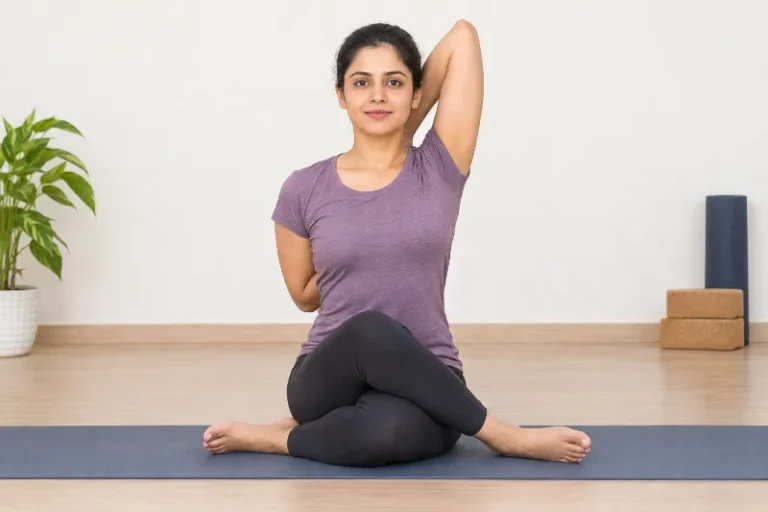
- Bend your right knee by placing your right foot on the ground outside of your left leg. If your hips feel tight, bend your left leg instead of keeping it extended.
- Begin the twist by extending your torso with an inhale, then rotate to the right on an exhale. Hug your right knee if it feels better, or hook your left elbow outside of it.
- Put Your Right Hand Behind You: While keeping your shoulders level, place your right fingertips on the floor behind your hip for gentle support.
- Each exhale should be deeper by twisting from the belly up, allowing the shoulders and chest to follow. Keep both sitting bones equally planted.
- Add the Gaze Last: If it’s more comfortable, bend your head to glance over your right shoulder or maintain a neutral neck position.
- Hold and Breathe: Hold for 30 to 2 minutes while slowly inhaling to deepen and prolong the twist.
- Release with Control: To slowly unwind from the top down, return to the focus, extend your right leg forward, and inhale a breath.
- To balance the spine, digestion, and overall energy, repeat on the left side.
Common Mistakes
- Twisting from the Shoulders Instead of the Spine: This causes the neck and limits movement.
- Fix: Let the shoulders follow the belly if you initiate the twist.
- Holding Your Breath: Holding your breath restricts rotation and creates tension.
- Fix: To extend and deepen the twist, inhale and exhale.
- Forcing the Elbow Outside the Knee: Overpowering reaching can strain the shoulder and cause the spine to collapse.
- Fix: It’s safer and equally effective to hug the knee.
- Lifting One Hip Off the Floor: Uneven hips put stress on the lower back and lessen the benefit of twist.
- Fix: Make sure both sitting bones are stable.
- Lower Back Rounding: A rounded spine compresses the discs and blocks rotation.
- Fix: Lengthen your spine and elevate your hips on a blanket.
- Cranking the Neck Too Far: When the neck is rotated too far, it can produce misalignment and neck pain.
- Fix: Only turn your head as far as is comfortable, and do so last.
Ardha Matsyendrasana Variations
There is a variation that will suit your demands, whether you’re practising at home, at the office, or to help with hip or back stiffness.
You can safely twist at any stage in your practice by using these options to customise the pose for comfort, mobility, or digestion.
Beginner Modifications
Chair Seated Spinal Twist
- Best for: Seniors, office workers, anyone with limited mobility, & anyone who cannot get down to the floor.
- Put your right hip near the backrest on a chair and sit sideways.
- Place both hands on the chair’s back.
- Inhale to sit upright and exhale to twist to the right.
- Hold for 30 to 60 seconds, then switch.
- This variation is very supportive, doesn’t require floor work, and is perfect for digestion breaks during the workday.
Easy Cross-Legged Seated Twist
2. This gentle version is perfect for people with extremely tight hips or beginners who require additional support.
- Sit with legs crossed (Sukhasana).
- Place the left hand behind you and right hand on a knee.
- Gently twist without forcing.
Supine Version of Reclined Spinal Twist
3. This variation is excellent for releasing stress in digestion and is very gentle on the spine.
- Bend your knees and lie on your back.
- Drop knees to the right and make a T and arms.
- If it is comfortable, look gently to the left.
Block Supported Twist
- This version supports better spin for stiff hips and makes for better spinal alignment.
- Put a block on your sitting bones on the side that is twisting.
- This keeps your spine upright and reduces hip strain.
Intermediate Variations
Seated Twist with Bind
- This variation deepens the twist and enhances shoulder opening without forcing the spine.
- Reach your right arm behind your back after you enter the twist.
- To clasp your hands, reach your left arm inside the bent knee.
Matsyendrasana II
- For experienced practitioners, this pose increases hip opening and twisting potential.
- In a more complex seated position, bend both legs, stack or cross the shins.
- Twist from the spine while grounding both hips.
Marichyasana III
- This version incorporates a hamstring stretch and a spinal twist.
- While the top leg bends, the bottom leg stays straight.
- Use the elbow-to-knee connection to deepen the rotation.
Matsyendrasana (Lord of the Fishes Pose)
- A deep, classical twist that offers maximum hip opening and rotation.
- Bottom leg folds into half-lotus.
- Top foot hooks over the bottom thigh.
- Hands bind behind the back.
Revolved Head-to-Knee Pose Twist
- Intensely stretches the obliques and stimulates digestion.
- One leg extended, twist toward the bent knee.
- Combines a side bend with a twist.
Standing Spinal Twist
- This version helps in converting twisting into daily movement.
- Practice twisting principles in a standing position.
- Good for improving balance and functional rotation.
Contraindications
Ardha Matsyendrasana, like all spinal movements, generally feels accessible and safe, and it works best when done with care. If you understand when to modify, when to avoid the pose, and how to practice safely, you may benefit without experiencing pain or strain.
Avoid Seated Spinal Twist If You Have:
- Recent abdominal surgery (within the last 3–6 months)
- Pregnancy (2nd–3rd trimester) — avoid compressive twists
- Severe spinal stenosis
- Recent spinal surgery or spinal fusion
- Acute sciatica or active flare-ups
- Severe osteoporosis or history of spinal fractures
- Active inflammatory bowel disease (during flare-ups)
- Hiatal hernia (twists may aggravate symptoms—consult your doctor)
- Choose gentler alternatives, such as a simple side stretch or a reclined spinal twist, if any of these apply.
Critical Safety Guidelines
DO’s
- To prepare the core and spine, gently warm up before twisting.
- To create space for a safe rotation, lengthen each breath.
- Only deepen on the exhale, allowing the twist to unfold naturally.
- For a stable, balanced alignment, keep both sitting bones grounded.
- To avoid tension or strain, breathe steadily and slowly.
- Go thoughtfully out of the twist after unwinding from the top down.
- A counterpose, like a forward fold or a gentle backbend, should come next.
- Practice both sides evenly to maintain spinal balance.
DON’Ts
- The twist can strain the abdomen or spine if it is forced or cranked.
- Bypassing the mid-spine and core, twist from the shoulders or neck.
- Holding your breath builds tension and restricts your range of movement.
- To make the twist deeper for the spine to become unstable, raise one hip.
- Twist immediately after eating, as this may disturb digestion or cause tightness.
- Sharp or radiating pain, especially in the back or legs, should be disregarded.
- If experiencing severe discomfort, flare-ups, or acute injuries, do deep twists.
Ardha Matsyendrasana: Related Yoga Poses
Whether you’re standing, standing, or lying down, these poses offer different opportunities to explore spinal rotation. Each provides slightly different support for mobility, posture, and digestive comfort.
Revolved Triangle (Parivrtta Trikonasana)
- A standing twist that twists the spine deeply and strengthens the legs.
- With your front foot pointing forward, take a wide stance.
- Place the opposite hand on the shin.
- Lift your arm while pressing into both feet and rotate your torso toward the front leg.
Revolved Chair Pose (Parivrtta Utkatasana)
- A twist that enhances balance, strengthens the core, and produces heat.
- Sit back in Chair Pose and bend your knees.
- Hunch forward a little and raise your hands in prayer.
- Keeping your hips level, hook one elbow outside the opposite knee and twist.
Supta Matsyendrasana (Supine Spinal Twist)
- A soft, healing twist that eases lower back pain and promotes digestion.
- Draw your legs close to your chest while lying on your back.
- Lower both knees to one side as you extend your arms into a T form.
- Breathe a deep breath and turn your head to the opposite side.
Marichyasana III (Sage Marichi’s Pose)
A deeper seated twist that strengthens the core and opens the shoulders.
- One knee bent and one leg outstretched, take a seat.
- Hook the elbow outside the bent knee or around it in the opposite arm.
- Twist in the plane of the bent knee with your back hand behind you.
FAQs
What is Adha Matsyendrasana good for?
In addition to revitalising the body, Matsyendrasana also promotes better digestion, lowered stress levels, and increased flexibility.
What are the different preparatory poses in Adha Matsyendrasana?
Baddha Konasana, Parsvottanasana, and Bharadvajasana are excellent ways to get ready for Matsyendrasana. In order to do the twisting action, practitioners must first open their lower body and stimulate their spine and sides.
What are the different variations in Adha Matsyendrasana?
Matsyendrasana A, B, C, and D are a few more versions of Matsyendrasana that you might incorporate into your practice if you’re feeling really daring.
Who should avoid performing Adha?
Matsyendrasana?
Exercise should be done carefully and under strict supervision by people who have severe neck or back discomfort. If you have disk issues, you should obviously avoid performing Matsyendrasana.
References:
- Allen, W. (2026e, February 27). Matsyendrasana. https://myyogateacher.com/yoga-asana/matsyendrasana
- Yoga Journal. (2025f, February 27). Half Lord of the Fishes pose. https://www.yogajournal.com/poses/half-lord-of-the-fishes-pose/
- Ardha Matsyendrasana Yoga(Half Lord of the Fishes pose)| Yoga sequences, benefits, variations, and Sanskrit pronunciation | Tummee.com. (n.d.). Tummee.com. https://www.tummee.com/yoga-poses/half-lord-of-the-fishes-pose