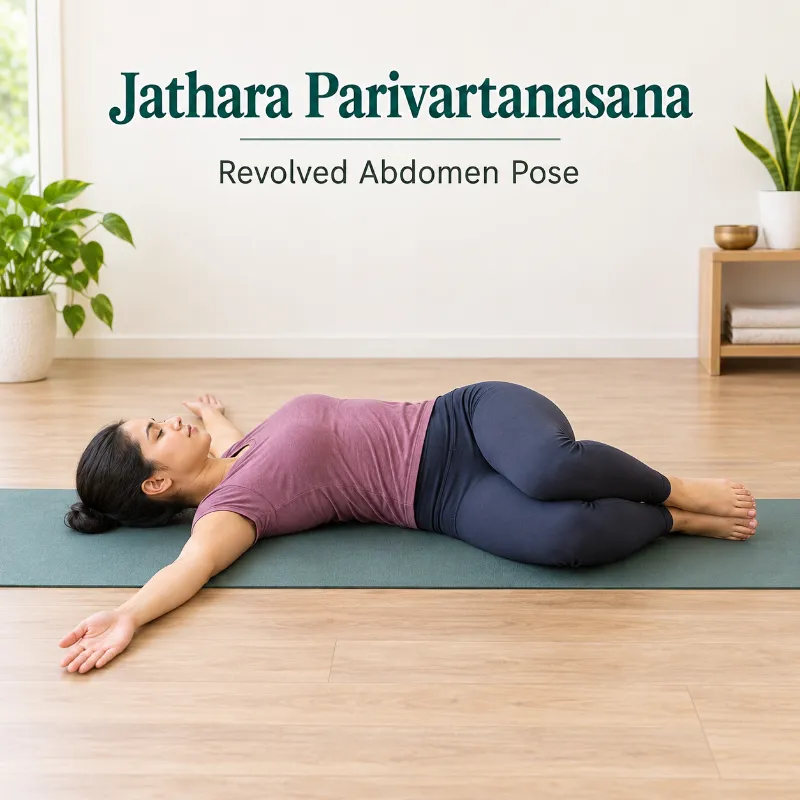
Jathara Parivartanasana (Revolved Abdomen Pose)
What is Jathara Parivartanasana (Revolved Abdomen Pose)?
Jathara Parivartanasana, also known as Revolved Abdomen Pose, is a gentle yoga posture that may help release tension in the lower back and promote greater spinal mobility. It’s also known as the master revolved abdomen stance, belly twist, or spinal twist.
To begin the pose, lie comfortably on your back and stretch both arms outward along the sides of the yoga mat. As you spin or rotate your torso in the other direction, it’s crucial to keep your legs parallel to your arms, whether they are bent or completely flexed.
Overview & Etymology
In Sanskrit, Jathar means “Belly” or “Abdomen,” Parivarta means “Revolving” or “Turning,” and Asana means “Pose.” This is how the name Jathara Parivartanasana originates.
No ancient literature of hatha yoga mentions this pose. Rather, it was originally detailed in B.K.S. Iyengar’s 20th-century book “Light on Yoga”; therefore, we can refer to it as a modern yoga asana.
- Sanskrit Name: ञठर परिवर्तनासन
- Pronunciation: JUT-ah-are-uh par-ree-VAR-tuh-nuh-suh-nuh
- Pose Type: Spinal Twist
- Strengthens the hamstrings, tailbone, obliques, lower back, and spinal column.
- Stretches the shoulders, obliques, pelvis, and spine. Glutes, too
Muscles Worked
Jathara Parivartanasana primarily involves:
- Abdominal muscles
- Obliques
- Transverse abdominis
- Rectus abdominis
- Erector spinae
- Hip flexors
- Gluteal muscles
- Muscles surrounding the lower back and pelvis
Health Benefits of Jathara Parivartanasana
- Enhances blood flow to the spine.
- Boosts your legs, obliques, and low back.
- Stretches and eases the tailbone and spine.
- Opens up the upper body and lengthens the shoulders.
- Helps reduce depressive, anxious, and stressed emotions.
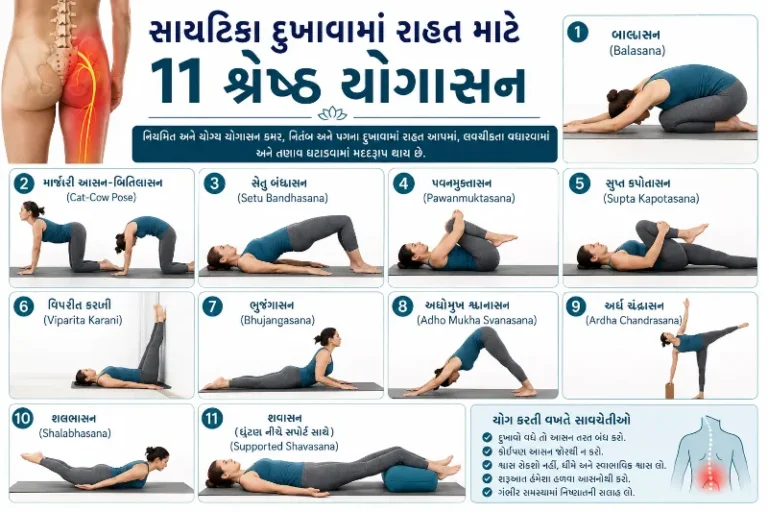
- Aids in the healing process for sciatica, neck, and back pain.
- Has a therapeutic, calming, and relaxing effect on menstrual cramps.
- Improves the function of the abdominal organs and activates the Manipura Chakra.
When to Avoid Performing Jathara Parivartanasana
- If you’ve recently had surgery or been injured, stay away.
- Avoid if you have arthritis in your knee, hip, or back.
- Avoid if you have a herniated disk or a slipped disk.
- Avoid it both during and after pregnancy.
How to do Jathara Parivartanasana (Revolved Abdomen Pose)
Warm-up, posture steps, alignment cues, and relaxation postures are the four main components of the Revolved Abdomen Pose practice. You can also attempt many variations and alterations of this posture.
Part 1 – Preparatory Poses for Jathara Parivartanasana
Warm up your legs, core, and low back before attempting the Revolved Abdomen Pose. Try these stances to get you started:
Ardha Matsyendrasana (Half Lord of the Fishes Pose)
- Sit down to activate your spine and obliques just a little bit. Now raise your left leg off the mat and place it on top of your right bent knee.
Feel a slight stretch in the side of your abdomen while simultaneously wrapping your right arm around your left leg. Hold this position for two minutes on each side to help lengthen your spine.
Supine Windshield Wipers
- Put your foot flat on the mat while bending your knees. Make sure the distance between your feet is somewhat greater than shoulder-width.
Now begin to move your legs side to side and open and close them. Do this dynamic exercise for two to five minutes to deeply hydrate the sacrum and to energize the lower back, pelvis, and legs. For the sacrum’s deeper hydration and the lower back, pelvis, and legs’ activation.
Part 2: Step-by-Step Instructions to Perform Jathara Parivartanasana
The belly twist, sometimes referred to as the revolved abdomen stance, can be performed as follows:
- Step 1: Lie on your yoga mat in Corpse Pose and relax your spine.
- Step 2: Bring your knees near to your chest and inhale several times deeply to activate the deep connective tissues in your lower back.
- Step 3: Tighten your core and extend both arms at your sides in a “T” shape while taking a deep breath. Additionally, ensure that your tailbone is level with the surface.
- Step 4: Now release your breath and rotate your torso to the right. Legs can remain straight or bent. Hold the stretch until your obliques and lower back begin to extend significantly.
- Step 5: Return to the center and take a few long breaths in and out to relax your spine.
- Step 6: Lastly, bend to the left, hold, and repeat this motion in a dynamic manner for many minutes.
Breath Awareness:
- Using your core and bending your knees, take a deep breath.
- Exhale: When you rotate your core or shift the position of your legs.
- Beginner’s Performance Duration: Hold Jathara Parivartanasana for five to ten seconds on each side.
- Advanced Performance Duration: Hold Jathara Parivartanasana for ten to thirty seconds on each side.
Part 3: Things to Keep in Mind
If you are just beginning to practice Jathara Parivartanasana, be mindful of these alignment signals.
- Maintain a tight core: It’s crucial to keep your entire core active if your objective is to improve your obliques. This can assist you in keeping the pose for a longer period of time in addition to toning and reducing side belly fat.
- Do not raise your arms; instead, keep your shoulder blades in contact with the floor. When you rotate your torso, try to maintain your arms near the floor. By doing this, you’ll be able to prevent needless tension on your shoulders, neck, and upper back.
- Don’t lower your knees below your pelvis; instead, keep your legs parallel. For a deeper stretch in your obliques and spine, make sure your legs are parallel to your arms when performing the Revolved Abdomen Twist stance. This will help you maintain the healthy alignment of this pose.
Part 4: Relaxing Poses After Jathara Parivartanasana
The abdominal twist pose requires the torso muscles to relax.
Your lower back can be deeply relaxed with a few counter-positions.
Supta Baddha Konasana (Reclining Bound Angle Pose):
- Flex your arms upward and stretch your legs into a butterfly stance shortly after completing the Revolved Abdomen pose.
Make sure your arms are stretched, your spine is extended, and your knees are near the floor. Close your eyes and focus on breathing deeply. For one to five minutes, hold this posture. Any tension in your upper body and around your tailbone will be released with this counterpose.
Apanasana (Wind-Relieving Pose):
- Use Apanasana to further ease your lower back after the Reclining Bound Angle pose. Bring both knees close to your chest, wrap your legs with both arms, and begin taking deep breaths.
Rock slowly back and forth while in this position. This will facilitate the full relaxation of your spine by stimulating the connective tissue in your lower back.
Jathara Parivartanasana Variations to Consider
Here are some useful variants of the Revolved Abdomen pose that you may include to your daily yoga practice:
Revolved Abdomen Pose with Low Legs Variation:
- If your core isn’t strong enough to keep your knees parallel to your arms, you can keep your legs lower than your pelvis.
For people with less flexibility and strength in their core, this variation is suitable for beginners. This will prevent tears to your lower back and obliques.
Revolved Abdomen Pose with High Legs Variation:
- If you have a strong core and are a skillful yogi, take your Jathara Parivartanasana practice to the next level.
Gently straighten both legs and raise your feet to your arms while keeping your core active. Your obliques will become even stronger as a result.
Tips for Beginners
- Instead of pushing your shoulders down, keep them firmly planted.
- Avoid abruptly dropping your knees; instead, move them slowly.
- If the knees are not comfortable on the floor, place a folded blanket or bolster beneath them.
- Deeper twists aren’t always preferable, so keep them mild.
- Keep your breathing easy and fluid.
- Keep your head facing up if turning your head hurts your neck.
Common Mistakes
- Raising the other shoulder off the ground
- Pushing the knees down to the ground
- Entering the twist too fast
- Keeping the breath in
- Letting the knees drift too far apart
- Rotating the neck by force
- Seeking a more profound twist at the price of comfort
Precautions
If you have a recent spinal or abdominal injury, severe back pain, recent surgery, or serious hip issues, avoid or alter Jathara Parivartanasana. Before performing twisting positions, expectant mothers should see a trained prenatal yoga instructor or medical expert.
Best Time to Practice
Jathara Parivartanasana can be practiced as part of:
- A gentle morning yoga routine
- An evening relaxation sequence
- A post-workout cool-down
- A spinal mobility sequence
- A restorative yoga practice
- It is generally best practiced on a relatively light or empty stomach, particularly when the twist feels strong around the abdomen.
FAQs
What is Supta Jathara Parivartanasana?
Supta Jathara Parivartanasana, a belly twist pose, is performed on your back. The sole distinction between it and the Revolved Abdomen pose is where your legs are positioned. It is also called the Supta Matyendrasana 2 stance. Instead of using both legs at once, stretch one leg at a time on each side.
What kinds of variation postures are there in Jathara Parivartanasana?
Jathara Parivartanasana variants can be performed by beginners with their legs bent sideways, lower than their hip flexors. As a result, their obliques and tailbone won’t be excessively stressed. If you are an intermediate yogi with powerful core muscles, you can also attempt reaching your toes to your arms and straightening both legs.
What are the benefits of Jathara Parivartanasana?
Some significant health advantages of Jathara Parivartanasana are as follows:
Strengthens the spine.
strengthens the upper abs and obliques.
Manipura Chakra (Naval).
Reduces and eases lower back discomfort.
Enhances the health of the reproductive and digestive systems.
Can beginners perform Jathara Parivartanasana pose?
Jathara Parivartanasana pose is suitable for beginners; however, be careful not to attempt any advanced posture variants with a twisted spine.
Take your time, build up your core gradually, and keep modifying the primary stance. In this manner, you can begin the Jathara Parivartanasana stance and continue to develop over time.
How to perform Ardha Jathara Parivartanasana?
To execute Ardha Jathara Parivartanasana, follow these instructions:
Breathe in, lie on your back, maintain your arms in a “T” form at your sides, and pull your legs close to your chest.
Take your time, build up your core gradually, and keep modifying the primary stance.
On one side, hold and breathe for five to ten seconds.
Return to the middle, unwind for a short while, take a breath, and then do it again on the opposite side.
References
- Allen, W. (2025j, August 26). Jathara parivartanasana. https://myyogateacher.com/yoga-asana/jathara-parivartanasana
- Jathara Parivartanasana—The Abdominal Twist. (2015, August 31). https://yogainternational.com/article/view/jathara-parivartanasanathe-abdominal-twist/?srsltid=AU7gw4UwBxK1VnJ-bnIEzSRIVOuwHXco0rinx0M2DADDLffKaZXiQuCQ
- Little, T. (2026, March 2). Master Revolved Abdomen Pose. Yoga Journal. https://www.yogajournal.com/practice/beginners/how-to/master-revolved-abdomen-pose/