Salamba Bhujangasana (Sphinx Pose)
What is Salamba Bhujangasana (Sphinx Pose)?
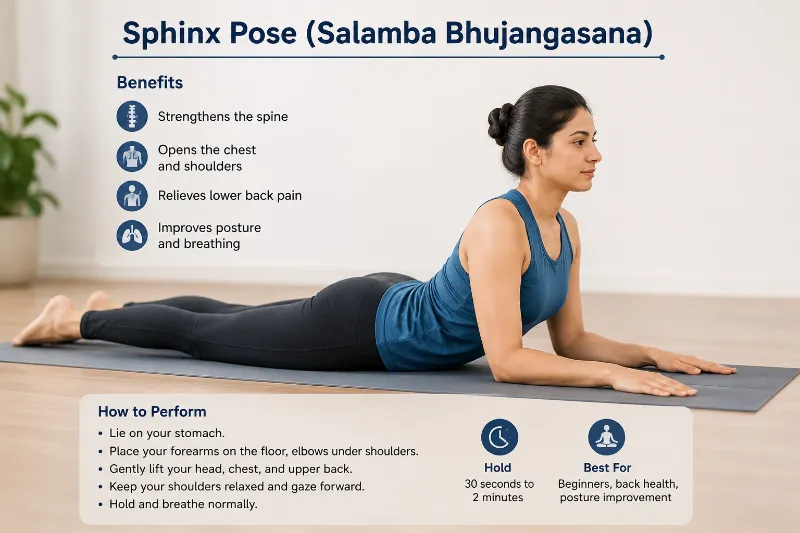
The Sphinx Pose, or Salamba Bhujangasana, is a mild backbend that raises the chest while maintaining a firm grip on the mat with the forearms. This pose, which is used in Hatha, Yin, and Restorative Yoga, opens the chest, strengthens the spine, and makes backbending safe and simple for the body.
Sphinx Pose: Overview and Meaning of Salamba Bhujangasana
- The Sanskrit terms “salamba” (supported), “bhujanga” (cobra or serpent), and “asana” (position) combine to form Salamba Bhujangasana, or the supported cobra pose. It is called Sphinx Pose in English because it mimics the Egyptian sphinx with the forearms anchored and the chest raised in a serene, upright posture. When combined, these characteristics describe the shape and quality of the posture, which is solid, supported, and softly expanded via the front body.
- The Sphinx Pose, a modern yoga pose, has gained popularity as a gentle backbending introduction since it opens the chest while supporting the forearms. In Hatha, Yin, restorative, and therapeutic yoga, Sphinx Pose is frequently practised as a calming pose in and of itself as well as a precursor to deeper backbends. Its current relevance is especially noticeable in those with rounded shoulders, tight chests, and stiffness from extended sitting.
- Anatomically speaking, Sphinx Pose is a modest backbend in which the forearms, pelvis, and legs are on the ground. This support makes it less intense and more stable than deeper backbends. The posture softly strengthens the back and upper spine while stretching the chest, abdomen, shoulders, and hip flexors. Because of this, Sphinx Pose is frequently used to enhance backbends, posture, and spinal awareness.
At a Glance
- English Name: Sphinx Pose
- Sanskrit Name: सालम्बा भुजंगासन
- Pronunciation: sa-LOM-ba boo-jahn-GAHS-uh-nuh
- Pose Type: Gentle backbend, chest opener, prone pose
- Level: Beginner
- Depending on the practice style, it could take one to five minutes.
Muscle Work During Salamba Bhujangasana:
- Biceps and Triceps Muscles
- Chest Muscles
- Lower Back Muscles
What is Salamba Bhujangasana (Sphinx Pose)?
- Sphinx Pose
Sphinx Pose, also known as Salamba Bhujangasana, is a gentle backbend that lifts the chest forward and up while the forearms stay grounded on the mat. This beginner-friendly position, which is frequently used in Hatha, Yin, and Restorative yoga, helps open the chest, strengthen the spine, and safely and easily introduce the body to backbending. - Salamba Bhujangasana, which means Supported Cobra position, is derived from the Sanskrit words “salamba” (supported), “bhujanga” (cobra or serpent), and “asana” (position). With the forearms anchored and the chest raised in a serene, upright posture, it resembles the Egyptian Sphinx, hence the English name, Sphinx Pose. When taken as a whole, these titles describe the posture’s quality and shape: it is solid, supported, and gently expansive through the front body.
- The Sphinx Pose, a contemporary yoga pose that opens the chest while supporting the forearms, has gained popularity as a mild introduction to backbending. Sphinx Pose is widely utilised in contemporary Hatha, Yin, restorative, and therapeutic yoga as a stance that prepares for deeper backbends and as a soothing position on its own. For those who have rounded shoulders, tight chests, and stiffness from prolonged sitting, it is especially relevant today.
- From an anatomical perspective, Sphinx Pose is a slight backbend in which the knees, pelvis, and forearms are on the ground. It is less severe and more stable than deeper backbends because of this support. The posture stretches the chest, abdomen, shoulders, and hip flexors while gently strengthening the back and upper spine. Sphinx Pose is so frequently used to strengthen backbends, enhance posture, and develop spinal awareness.
Benefits of Sphinx Pose
Sphinx Pose is a soft yet powerful backbend that is very beneficial to both the body and the mind. Because it produces supported spinal extension without requiring deep flexibility, it is one of the easier positions for beginners and a useful exercise for seasoned yogis.
Physical Benefits of Sphinx Pose
- Engaging the muscles along the back without placing the body into a severe backbend helps to gently strengthen the upper back and spine.
- Improves posture and combats slouching brought on by extended sitting by opening the chest and front shoulders.
- Supports lower back comfort when practised with proper alignment and without forcing the lift.
- Gently and easily stretches the hip flexors, front body, and abdomen.
- As the forearms press down to support the chest, this strengthens the arms and shoulders isometrically.
- Keeps the back of the neck long and the shoulders relaxed, which eases tension in the neck and upper body.
- Prepares the body for more challenging backbends such as Cobra Pose, Seal Pose, and Upward-Facing Dog.
Mental and Emotional Benefits
- Helps soothe the nervous system and alleviate tension, especially when held longer in yin or restorative yoga or when practised with steady breathing.
- Increases bodily awareness and calm, which enhances attention and concentration.
- The uplifting effect of a mildly heart-opening posture subtly elevates mood.
- Provides a secure and accessible introduction to backbends, which boosts confidence.
- Promotes patience and lessens mental strain, particularly during quieter, longer holds.
- Helps some practitioners let go of their emotions, especially when they’re holding tension in their shoulders and chest.
Energetic Benefits
- Creates a feeling of emotional spaciousness and gently opens the chest to activate the Heart Chakra (Anahata).
- Promotes stability, self-assurance, and inner power to support the Solar Plexus Chakra (Manipura).
- Extends the front of the neck and chest, opening the Throat Chakra (Vishuddha).
- Encourages a balanced energy flow that is uplifting to the upper body and grounding to the lower body.
- Schedule a free one-on-one session with a qualified Indian yoga instructor to fully benefit from Sphinx Pose with individualised support.
Step-by-Step Guide to Practising Sphinx Pose (Salamba Bhujangasana)
Setting up Sphinx posture is easy, but the way your lower body, shoulders, chest, and forearms are positioned can have a big impact on how the posture feels. When done with steady support and controlled breathing, it can become a strengthening backbend as well as a peaceful restorative pose.
Part 1: Preparing for the Pose
Before performing a Sphinx Pose, see if you can sit comfortably on your stomach and then slowly raise your chest without straining your neck, shoulders, or lower back. If you wish to practice the posture with greater support, you might require props like a yoga mat, a folded blanket or bolster, and a small towel under the forearms.
Simple Warm-Up
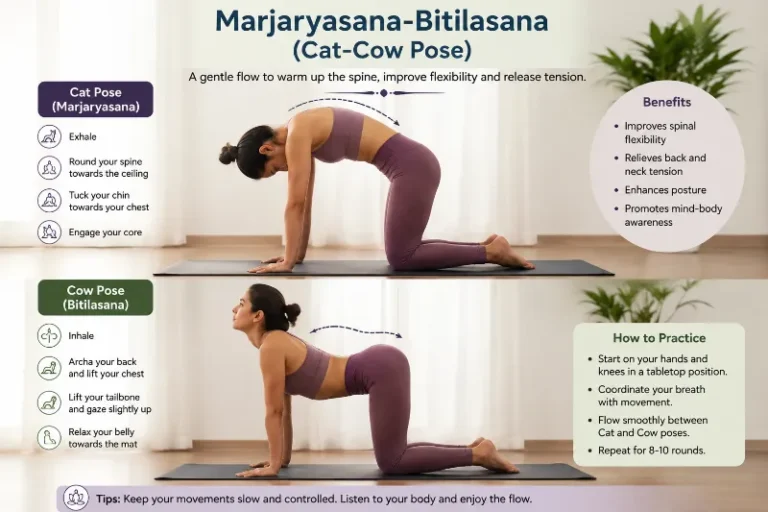
- Cat-Cow Pose
- Child’s Pose
- Gentle shoulder rolls
- Prone rest on the belly with relaxed breathing
Step-by-Step Instructions
- Start by lying flat on your stomach with your forehead on the mat and your legs out in front of you. Allow the body to relax for a short while.
- Depending on what is more comfortable for your lower back, keep the legs hip-width apart or together.
- Place your forearms parallel to one another on the floor and slide your elbows beneath your shoulders. Keep your fingers relaxed and your palms gently pressing down.
- Lift the chest up and forward by pressing onto the forearms. Instead of being pushed, let the lift feel wide and organic. Keep the lower ribs and pelvis grounded.
- Widen across the collarbones and pull the shoulders away from the ears. Maintain a long neck while looking forward or slightly ahead at the ground.
- Keep your legs long and anchored while pressing the tops of your feet down. The lower abdomen and legs can remain slightly engaged in an active version. The lower body might continue to be softer in a restorative version.
- Stay in the pose with smooth, steady breathing. While a restorative or Yin yoga version may be held for three to five minutes if comfortable, beginners can hold for thirty seconds to one minute.
- Lower the chest back down to the mat gradually to release. Turn the head to one side, slide the forearms away, and take a few deep breaths to relax. After that, you can perform a gentle counter-stretch in Child’s Pose.
- In Salamba Bhujangasana, you could experience a slight opening through the chest, abdomen, and front shoulders as well as a slight strengthening of the back muscles. Instead of feeling sharp or compressed, the pose should feel steady and supportive.
- There should be no pressure in the shoulders, tension in the neck, or pinching in the lower back.
Common Mistakes and Fixes
- For greater support, keep the elbows stacked under the shoulders rather than too far forward.
- Draw your shoulders down and spread them out across your chest rather than elevating them toward your ears.
- Keep the lift light and allow the forearms to hold the shape instead of pushing the backbend too much.
- Keep the gaze gentle and the back of the neck long rather than tossing the head back.
- Instead of holding your breath, breathe smoothly and let your breath determine the pose’s depth.
Salamba Bhujangasana Variations
Sphinx Pose can be modified in a variety of ways based on your comfort level, flexibility, and practice style. These variants make the posture more supportive for restorative practice, more dynamic for novices experimenting with deeper backbends, or approachable for novices.
Beginner Variations
Sphinx Pose with Forearms on a Blanket
- If the elbows or forearms are unpleasant on the ground, this version provides additional support and padding.
- Place a folded blanket beneath your forearms while lying on your stomach.
- Keep your forearms horizontal and your elbows beneath your shoulders.
- Lift the chest into Sphinx Pose by lightly pressing onto the forearms.
- Breathe steadily while letting your shoulders drop.
Restorative Variations
Restorative Sphinx Pose with Bolster
2. This supported version of Sphinx Pose, which is frequently utilised in restorative yoga, makes it more calming.
- Under the chest, place a folded blanket or bolster lengthwise.
- With your forearms securely resting on the ground or another surface, lie on your stomach.
- Let the chest rise effortlessly and gently.
- Soften your shoulders, loosen your jaw, and take a few deep breaths.
Yin Yoga Sphinx Pose
3. This longer-held variation promotes deeper release throughout the front body and calm.
- With your forearms grounded and your elbows beneath your shoulders, assume the Sphinx Pose.
- Gently raise your chest while keeping your lower body relaxed.
- Hold the stance with steady, calm breathing for three to five minutes.
- Step out carefully, then take a moment to relax in child’s pose.
Intermediate to Advanced Variations
Cat Sphinx Pose
4. While altering the stretch’s angle, this more vigorous variation strengthens the shoulders and core.
- Start in Sphinx Pose with your forearms firmly planted.
- Lift your hips back and up while tucking your toes under.
- Keep a strong shoulder over the elbows as the chest lifts off the floor.
- After a few moments of holding, carefully descend again.
5. From Sphinx Pose, Seal Pose is a more profound pose that strengthens the backbend through the back.
- Lift your chest to start in Sphinx Pose.
- The hands should be somewhat wider than the shoulders.
- Keeping the pelvis planted, extend the arms as far as it feels comfortable.
- Breathe steadily while raising your chest.
Sphinx to Cobra Flow
6. This dynamic variation aids in increasing awareness of the distinction between Cobra Pose and Sphinx Pose.
- Place your forearms on the mat to begin in Sphinx Pose.
- Place the palms next to the chest after lowering yourself a little.
- Using your hands and back muscles, raise your chest as you inhale into Cobra Pose.
- Breathe out, then slowly repeat the pose in Sphinx Pose.
Sphinx Pose: Precautions and Contraindications for Salamba Bhujangasana
Sphinx Pose is a gentle backbend, but if the lower back, shoulders, neck, or abdomen are sensitive, it may occasionally cause discomfort. By practising mindfully and making the appropriate adjustments, the pose can be safer and more beneficial.
Avoid Salamba Bhujangasana If You Have:
- Serious back injuries, such as a spinal fracture, acute herniated disk, or excruciating lower back discomfort.
- Recent surgery on the abdomen.
- Recent break or injury to the ribs.
- Backbending can cause sharp or severe back pain.
- Severe headaches or migraines that get worse as the head and chest are raised
Practice With Caution and Modifications
- If you have mild lower back sensitivity, start with a very slight raise, keep your forearms anchored, and, if necessary, tuck a folded blanket or bolster under your chest.
- Neck discomfort: Avoid lowering the head back, extend the back of the neck, and keep your eyes slightly forward rather than upward.
- Shoulder sensitivity: Use padding under the forearms if necessary, maintain the chest wide, and make sure the elbows remain behind the shoulders.
- Pregnancy: Belly-down poses are usually avoided later in pregnancy, albeit they may feel doable in the first trimester with assistance. See our comprehensive guide to prenatal yoga here.
- Newcomers to backbends: Instead of attempting to lift higher, start with brief holds and concentrate on comfort and alignment.
- Many people can perform Sphinx Pose easily during their periods, but depending on their comfort and energy levels, a softer or more restorative variation could feel preferable.
General Safety Guidelines
- For stable support, keep the elbows beneath the shoulders.
- Draw the shoulders away from the ears.
- Lift the chest gently without forcing depth.
- Keep the neck long and the breath smooth.
- If you experience intense discomfort, pinching, or compression, release the stance.
- After the pose, relax in Child’s Pose or another neutral position.
When to Consult a Healthcare Provider
Speak with a healthcare professional before practising Sphinx Pose if you have:
- Chronic back pain
- Spinal conditions
- Recent surgery
- Severe osteoporosis
- Herniated discs
- Sciatica
- Chronic shoulder issues
Salamba Bhujangasana Related Yoga Poses
Try these comparable yoga poses if you like the Sphinx Pose.
Crocodile Pose (Makarasana)
1. Provides profound relaxation and slight spinal support, which is a calming counterpoint to the Sphinx Pose’s soft backbend.
- Stretch your legs comfortably behind you while lying on your stomach.
- Place one hand on top of the other while folding your arms in front of you.
- Place your forehead or chin on your hands.
- Relax the shoulders, soften the belly, and breathe slowly.
Locust Pose (Salabhasana)
2. Helps develop the spinal strength required for deeper backbends and strengthens the back body more vigorously than Sphinx Pose.
- With your arms by your sides and your hands facing inward or downward, lie on your stomach.
- Maintain extended legs and a light forehead on the mat.
- Breathe in and raise your arms, legs, and chest as comfortably as you can off the ground.
3. Builds on the chest opening and spinal extension presented in Sphinx Pose to produce a deeper front-body stretch and a stronger backbend.
- Bend both knees while you lie on your stomach.
- Extend your hands back to grasp your feet or ankles.
- Take a breath, raise your chest, and put your feet in your hands.
- Breathe firmly and keep your eyes forward, then slowly release.
FAQs
What is the Salamba Bhujangasana?
One backbending yoga pose that is suitable for beginners is the Sphinx Pose. It is incredibly relaxing for the spine and stretches the chest, lungs, and lower back. Because it is done on the forearms, the Cobra Pose is a useful variation for people with carpal tunnel syndrome or wrist issues. The terms “with support” (Salamba) and “cobra” (Bhujanga) refer to the Sphinx Pose. Because posture mimics the mythological Egyptian statues, it is known in English as the Sphinx Pose.
What are the benefits of the Salamba Bhujangasana?
Salamba Bhujangasana, also known as the Sphinx posture, is a mild backbend that elongates the front of the body. The chest, hip flexors, and abdomen are all stretched and extended. The posture enhances the range of motion, strength, and flexibility of the spine. Additionally, it is quite tranquil and quiet, which adds to the system’s general relaxation. It reduces weariness, calms the nervous system, and invigorates the body.
What are the contraindications of Salamba Bhujangasana?
Pregnant women should refrain from striking the Sphinx position. Your lower back may feel slightly constricted, but if you have a sharp pain, twinge, or pinching feeling, loosen up and adjust your posture. You should avoid this position if you have a recent or continuing injury to your back, shoulders, or arms.
How to do the Salamba Bhujangasana?
Start by lying on your stomach in the prone position. Keeping your forearms on the ground, raise your chest a little. The elbows ought to be lower than the shoulders. To keep the shoulders away from the neck, retract them. Allow the shoulder blades to travel down your back to experience a slight lift in your chest. Take a deep breath into your abdomen. Stay here for a short while. To break out of the stance, lower your chest and bring your body down. Take a few minutes to unwind in Makarasana, the crocodile posture.
Is the Salamba Bhujangasana good for beginners?
This is the ideal exercise to counterbalance a rounded spinal position, whether from deadlifting, desk work, or other physical activities. It’s an excellent way to strengthen your back and train your abdominal muscles.
References:
- MyYogaTeacher. (2026, April 13). Salamba Bhujangasana. https://myyogateacher.com/yoga-asana/sphinx-pose
- Yoga Journal. (2025b, March 22). Sphinx pose. https://www.yogajournal.com/poses/sphinx-pose/
- Sphinx Pose Yoga Pose (Salamba Bhujangasana). Tummee. https://www.tummee.com/yoga-poses/Salamba Bhujangasana.