Gomukhasana (Cow Face Pose)
What is Gomukhasana (Cow Face Pose)?
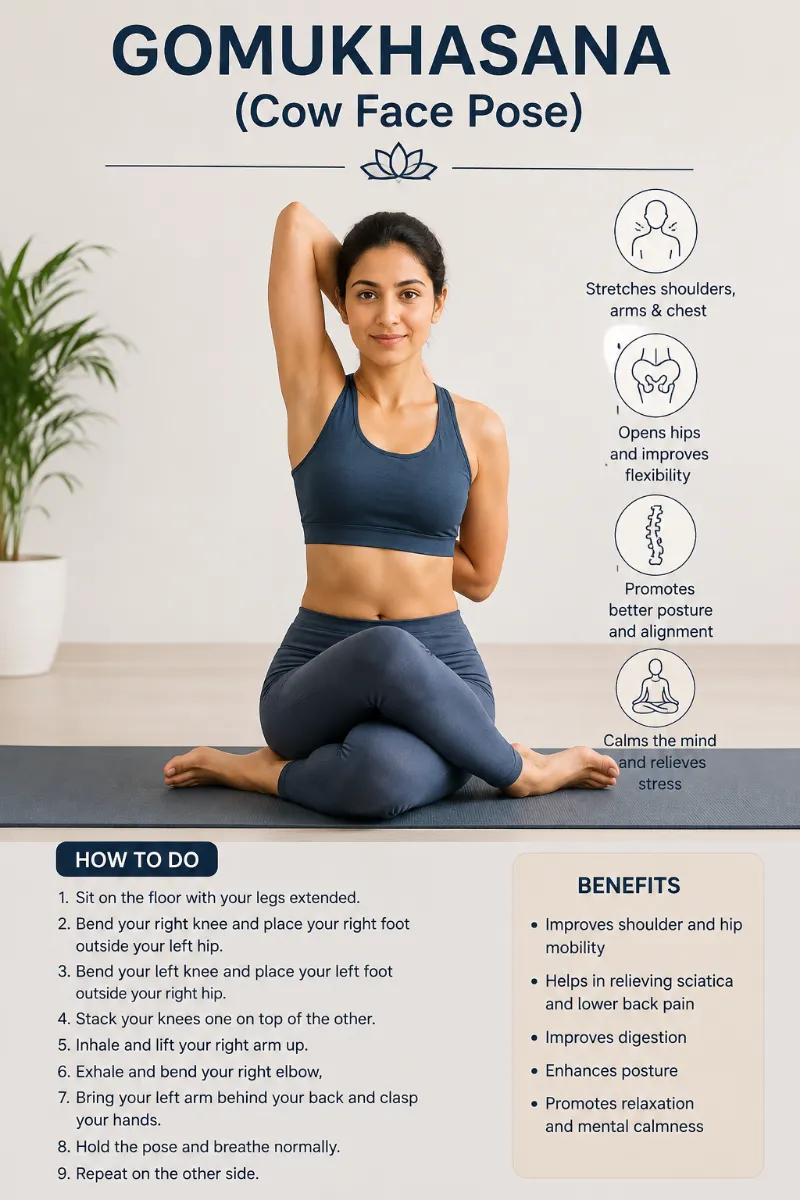
Gomukhasana is a traditional sitting Hatha Yoga pose that is well-known for its benefits in expanding the pelvis and relaxing the upper body. You may improve your leg flexibility, extend your upper body, and align your back by adopting this sitting position.
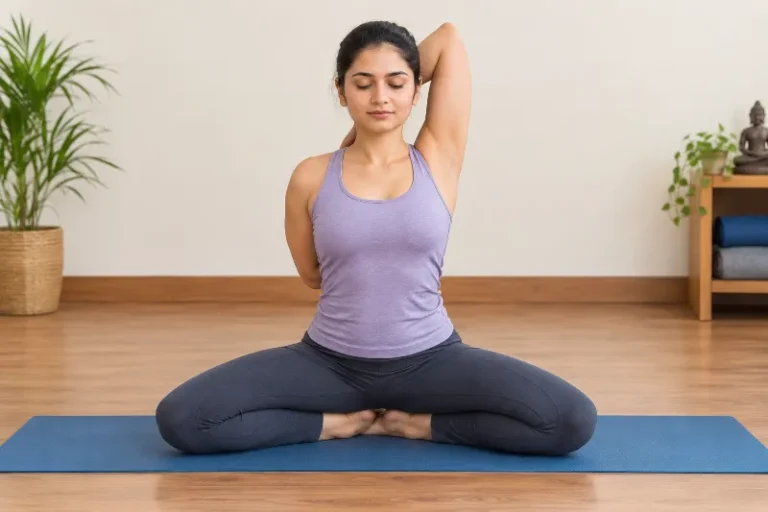
The Cow’s Face posture involves clasping both legs in a manner that mimics a cow’s face and holding the arms at the back in a manner that mimics a cow’s ears.
Overview & Etymology
- Gomukhasana is a mixture of several Sanskrit terms, such as Go, which means “cow,” Mukha, which means “face,” and Asana, which means “pose.”
- This ancient stance was initially described in the fourth-century Darshana Upanishad, which also described Kundalini principles and classical yogic phases.
- In India, a cow is worshipped as a sacred animal, Kamadhenu. Kamadhenu seems like a cow, and she is the mother of all cows.
- Hindu mythology claims that “Kamadhenu” is the daughter of Daksha, the earth’s founder. Vedas also shed light on facts, like the four legs of Kamadhenu symbolising the four main Vedas.
- Kamadhenu’s shoulders are a symbol of Agni (god of fire), her horns symbolise the gods, and she’s the nurturer of the divine. This sacred animal soul is home to all of the Hindu gods.
- Sanskrit Name: गौमुखासन
- Pronunciation: go-moo-KAHS-anna
- This sacred animal soul is home to all of the Hindu gods.
- Strengthens: Lower Body and Upper Back
- Stretches: Spine, Shoulder, Arms, Pelvis, and Ankles
Which muscles are used?
- Pectoralis major and minor
- Latissimus dorsi
- Rhomboids
- Trapezius
- Biceps
- Triceps
- Forearms Muscles
- Gluteus maximus, medius, and minimus
- Hip flexors
- Adductors
- Quadriceps
- Hamstrings
- Calves
- Eore muscles
- Erector spinae
Health Benefits of Gomukhasana
- Strengthens the hip joints.
- Strengthens the arms and spine.
- Reduces chronic pain around the knees and lower back.
- This pose helps ease sciatica discomfort with consistent practice.
- Enhances blood flow to the upper body and pelvis.
- Enhances posture by correcting the position of the neck and spine.
- Long periods of meditation in this stance can help lower anxiety and tension.
What is the Cow Face Pose’s Respiratory Recognition?
In Gomukhasana, bend and cross your legs while placing your feet deeply into the posture to lengthen your spine. Holding onto your palms, extend your arms past yourself to reenergize yourself. Next, let go of the other arm. Stretch more into the stance and let go of the stimulus with each breath.
When to Avoid Performing Gomukhasana
- Steer clear if you have excruciating hip or knee pain.
- If you have persistent neck or spine pain, stay away from this pose.
- After spine, back, neck, or pelvic surgery, stay away from this pose.
- This stance can increase pressure around the sciatic nerve, so if you have sciatica, avoid crossing your legs.
What are the Modifications in Cow Face Pose?
Let’s change this stance or search for more straightforward solutions:
- Tension on the hips and lower back can be lessened by placing a high-quality blanket beneath the buttocks.
- Sitting on a block below and bringing your knees closer to the floor can make it easier to overlap your thighs.
- If your elbows aren’t strong and flexible enough to support your palms behind you so they join, you can use a yoga elastic band or strap between your hands.
- Alignment is necessary for the Cow Face Pose since it calls for balance between the two sides of the body. It is crucial to practice on the weaker side of the body because certain poses, such as gomukhasana, can help balance the two sides of the body.
- Holding your palms together behind you should prevent your head from falling. Verify that the chin is in line with the collarbone and chest.
- Take care not to overlap the thighs as you slowly fold each leg independently. Start with just one leg and one folded elbow and work your way up to the full position after many repetitions.
Contraindications for the Cow Face Pose
In the following situations, you shouldn’t perform the Cow Face Pose:
- If any soft tissues, such as muscles, ligaments, or tendons, have been harmed
- If you have a damaged thigh
- If you have bleeding haemorrhoids, commonly referred to as piles
- If spondylitis, another name for spine arthritis, has been diagnosed in you
- When your shoulders are unpleasant, painful, or frozen
- If you are experiencing knee pain
How to do Gomukhasana (Cow Face Pose)
One therapeutic yoga pose that might help you relax your pelvis, shoulders, and spine is Gomukhasana. There are four distinct stages to the Gomukhasana practice. Let’s examine each one individually.
Part 1 – Preparatory Poses for Gomukhasana
Prior to beginning the Cow Face position, the chest, shoulders, spine, and glutes must all be opened. The list of warm-up yoga poses is provided below.
Surya Namaskar (Sun Salutations)
- For Gomukhasana, this yoga practice is ideal for engaging all of the key body regions and muscles.
Your shoulders, neck, spine, pelvis, and ankles might all have better blood circulation after just five to ten rounds of Surya Namaskar.
Sukhasana (Easy Pose)
- The basis of all sitting yoga poses is another name for this position. In addition to strengthening the knee and ankle joints, this simple pose gives novice yogis the confidence to sit with their legs crossed.
Because of the internal rotation of the glutes, holding this pose for five to ten minutes can assist in developing stability in the legs, pelvis, and vertebral column.
Baddha Konasana (Cobbler’s Pose)
- Your inner thigh muscles can be activated by switching from Sukhasana to Cobbler’s Pose.
Just shift your crossed legs and bend them while touching your feet together in Namaste formation to enter this pose. Hold this pose for five minutes. To further stretch your thighs and glutes, you can also lean forward and maintain the position for an additional five minutes.
Part 2: Step-by-Step Instructions to Perform Gomukhasana
To practice the Cow Face position, follow these steps:
- Step 1: In the centre of your yoga mat, sit upright with your head, neck, and spine balanced evenly.
- Step 2: Start with Seated Staff Pose. Maintain a straight line of stretched legs.
- Step 3: From your knees, bend both legs. Place your right thigh on top of your left thigh after moving your right leg over it.
- Step 4: Place both feet on opposing sides, equally spaced from the hips, and stack your knees on top of each other.
- Step 5: Concentrate on taking a few deep breaths. Take a deep breath, extend your right arm, bend it at the elbow, and place your right hand behind your back.
- Step 6: Now extend your left arm behind your back from the side of your left oblique, bending it from your elbow.
- Step 7: As you clasp both hands together, take a deep breath out and then in again.
- Step 8: Hold your breath for a few seconds while you straighten your spine, interlock both hands, open your chest, engage your pelvis, and close both eyes.
- Step 9: Breathe out and slowly take your hands off behind your back.
- Step 10: Take a breath, release your legs from the stacked position, and return to the staff position.
Breath Awareness:
- Inhale steadily while engaging the muscles.
- Exhale deeply while releasing the posture.
- Beginner’s Performance Time: Maintain this position for 30 to 60 seconds.
- Advanced Performance Duration: Maintain this stance for one to five minutes.
Part 3: Things to Keep in Mind
Before beginning the Gomukhasana practice, it’s crucial to remember the following:
- Pay attention to your alignment because it’s crucial in this pose. You will find it difficult to open and relax your body if your neck, spine, and tailbone are not in a straight line.
- Don’t over-push: You don’t need to force this posture on your body if you don’t feel flexible enough to cross your legs or put your hands behind your back. You should only flex as much as your body permits.
Part 4: Relaxing Poses After Gomukhasana
You can perform the following simple, calming yoga stretches following Gomukhasana:
Paschimottanasana (Seated Forward Bend Pose):
- Start your relaxation process with the Staff position after your practice. Lean down onto your legs and raise both arms in the air over your head.
Flex both arms straight in front of you and maintain a tight core as you bend forward. Until your spine is totally relaxed, hold this pose for a few minutes.
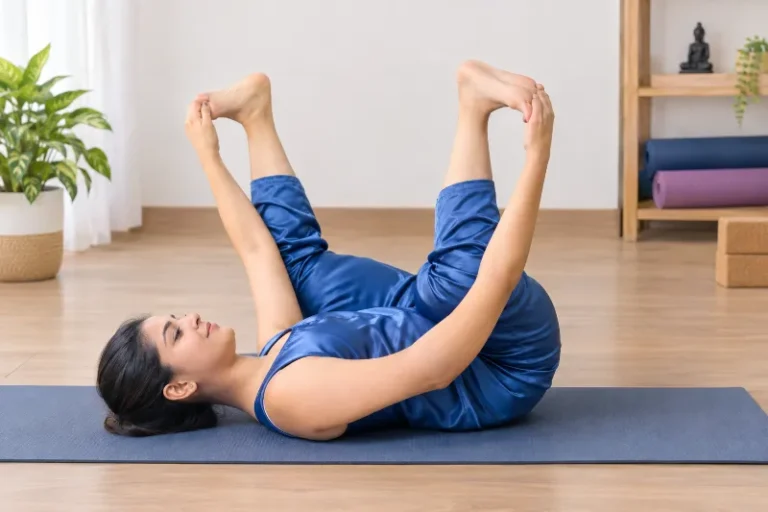
Pawanmuktasana (Wind-Releasing Pose):
- Now bend your legs while lying down on the mat with your back on the floor.
Raise your neck and use your arms to embrace both of your legs. Allow your tailbone to release any tension after holding this pose for a few minutes.
Balasana (The Child’s Pose):
- Take a breath, then slowly extend both arms forward while sitting on a table. Now, sit back, placing your torso between your legs, exhale, and extend your upper body forward.
Release this pose after holding it until your arms, shoulders, and spine feel relaxed.
Gomukhasana Variations to Consider
Here are some variants of Cow Face poses for all kinds of yoga practitioners. You are free to include any modification into your present yoga practice.
Ardha Gomukhasana (Half Cow Face Pose):
- This is not the full Cow Face stance, as the name implies. You’ll be better prepared for the last stance with this option.
Yogis of all skill levels can practice Half Cow Face posture since it teaches them how to develop strength in sitting yoga poses.
Bend just one leg as opposed to both, as in the Cow Face stance. You can also feel a deep stretch in your legs, lower back, and spine by bending forward and extending your arms forward.
Shoelace Pose:
- Try this variant if you have trouble forming your arms behind your back in the Cow Face stance.
It’s a sitting position with stacked legs that resembles the Cow Face pose, but both arms are by your sides, supporting your feet.
Supta Gomukhasana (Reclined Cow Face Pose):
3. Try this reclining form of Gomukhasana if you want to deepen your practice. Just practice the Shoelace posture while lying on your back on the yoga mat.
With this variant, you’ll be able to flex your thighs and glutes more deeply, which will improve blood circulation and lower body mobility.
FAQS
What is the benefit of Gomukhasana?
The Cow Face position improves blood flow around the shoulders and spine and awakens the dormant muscles in your upper back, armpits, and chest. The most popular use of Gomukhasana is for better sitting posture.
What Are the Steps for Practising Gomukhasana (Cow Face Pose)?
The following are steps for practising the Gomukhasana pose:
Sit in the centre of your yoga mat. Make sure that your spine is upright.
Place your left leg over your bent right leg.
On your thighs, your legs should be stacked on top of one another.
Now raise your right arm, bring it behind your back, and bend it at the elbow.
Bend your left arm behind your back from underneath, then put both hands together.
Interlock your fingers and legs as you sit straight.
Hold this pose for 1 to 5 minutes.
What muscles does the Gomukhasana work?
Gomukhasana aids in strengthening the pelvic and upper body muscles. For instance, the Cow Face posture greatly stretches the glutes, ankles, thighs, triceps, chest, shoulder blades, and spine.
What are the different Gomukhasana preparatory poses?
Several Gomukhasana preparatory positions, such as Surya Namaskar (Sun Salutation), Sukhasana (Easy Pose), Baddha Konasana (Cobbler’s Pose), and Garudasana (Standing Eagle Pose), assist in stimulating your body’s muscles for a more seamless practice.
Who should not do Gomukhasana?
Gomukhasana should be avoided for those who have recently had surgery or who have injuries to their neck, spine, back, or pelvis. Additionally, you should avoid this yoga pose if you have piles, spondylitis, or ulcers.
Why is it called Cow Face Pose?
The combined Sanskrit terms “Gomukhasana” are literally translated as “Cow Face Pose.” In this stance, the arms are linked at the back like a cow’s ears, the torso represents the cow’s nose, and the crossed legs mimic a cow’s mouth.
References:
- Allen, W. (2025b, August 26). Gomukhasana. https://myyogateacher.com/yoga-asana/gomukhasana
- Yoga Journal. (2025e, February 25). Cow face pose. https://www.yogajournal.com/poses/cow-face-pose/
- Dr.Kruti Sorathiya. (2024). Gomukhasana (Cow Face Pose) – Benefits, How to do?. Mobile Physiotherapy Clinic. https://mobilephysiotherapyclinic.in/gomukhasana-yoga-pose/
- Gomukhasana Yoga (Cow Face Pose)| Yoga sequences, benefits, variations, and Sanskrit pronunciation | Tummee.com. (n.d.). Tummee.com. https://www.tummee.com/yoga-poses/cow-face-pose

One Comment