Yoga For Carpal Tunnel Syndrome
Introduction
Carpal tunnel syndrome may be the cause if you or someone you know wakes up on a typical workday with an odd tingling sensation in your fingertips and finds it difficult to perform basic tasks like typing, holding a cup, or even putting on clothes.
The disease known as carpal tunnel syndrome, or CTS, can result in pain and discomfort in the hands and wrists. The median nerve in the wrist is strained by repetitive actions, such as texting or manual labor. If CTS symptoms are not treated, they can become crippling. Fortunately, you may strengthen your muscles and improve your flexibility by using particular yoga methods for carpal tunnel syndrome.
What is carpal tunnel syndrome?
The part of our wrist where the nerve enters the hand is called the carpal tunnel. The thumb, index finger, and medial part of the middle finger receive their sensory and motor supplies from the median nerve. Because the carpal tunnel is so thin, even a small amount of swelling can compress the nerve or put pressure on the median nerve, resulting in pain, tingling, numbness, weakness, or muscle atrophy in the supply area. We refer to this ailment as Carpal Tunnel Syndrome (CTS). It is more common in women than in men and typically affects those between the ages of 30 and 60.
People who frequently use the mouse, type on a computer, or perform repetitive hand and wrist motions, such as when playing an instrument or participating in sports, are more likely to develop CTS. CTS can also result from using vibrating hand tools. CTS can also be brought on by several other conditions, such as alcoholism, bone fractures, arthritis, obesity, infections, or fluid retention after menopause.
A person with CTS experiences numbness or tingling in the supply area, sometimes up to the elbow, as well as a weak and awkward grip. Pain is momentarily relieved by medications. Surgery is performed if necessary to make an incision in the ligament that is pressing against the nerve. However, most of the time, simple adjustments to our work habits and regular exercise greatly aid in the management of this syndrome.
By increasing circulation, increasing flexibility, and releasing tension in the hands and wrists, yoga can alleviate CTS symptoms. To manage and avoid symptoms, incorporate yoga for CTS into your daily regimen.
Signs of Carpal Tunnel Syndrome
Millions of Americans suffer from a neurological condition called carpal tunnel syndrome. It occurs when the median nerve inside the wrist is compressed by enlarged flexor tendons.
Typical signs and symptoms include pain, numbness, burning, soreness, tingling (pins and needles), weakness (loss of grip strength), and electric shocks
Typically, symptoms impact the thumb, middle finger, index finger, and a portion of the ring finger, but not the pinky finger.
Benefits of Yoga for Carpal Tunnel Syndrome
Yoga offers numerous advantages for general health and well-being, and it can be especially beneficial for treating the symptoms of carpal tunnel syndrome. Here are a handful of the advantages:
Pain relief: Some yoga positions can help strengthen and stretch the wrist and hand muscles, which may reduce stiffness and pain.
Increasing flexibility: Yoga can help increase flexibility and mobility, but tight tendons and muscles in the hand and wrist can make the symptoms of carpal tunnel syndrome worse.
Reducing stress: Yoga can help lower stress levels and encourage relaxation, but tension and stress in the body may worsen the symptoms of carpal tunnel syndrome.
Warm-Up Exercises: Carpal Tunnel Yoga
You can perform some preparation exercises before your yoga practice if you have carpal tunnel syndrome or exhibit early symptoms.
Wrist Rolls
This exercise increases the range of motion and strengthens the wrist joints.
- Start by putting your arms out in front of you with your palms facing down.
- Move your wrists in slow, deliberate circles, first clockwise and then counterclockwise.
Finger Fan
This exercise improves blood circulation and helps the fingers become more flexible.
- As if you were closing a fan, spread your fingers wide apart and then slowly draw them back together.
- Focus on stretching and moving each finger as you repeat this motion multiple times.
Fist to Finger Extension
- Make a soft fist with your hands at first, then slowly spread your fingers wide.
- To increase the flexibility and range of motion in your fingers and wrists, repeat this motion from a fist to an open hand.
Wrist Flexion and Extension
- Put your palms on your thighs, facing up, and take a comfortable seat.
- With your fingertips pointed toward the ceiling, extend your wrists back after gently flexing them to bring them closer to your inner wrists.
- Focus on stretching and contracting the wrist muscles as you repeat this motion.
Finger Taps
This practice improves finger dexterity and stimulates the nerves in your fingertips. This practice improves finger dexterity and stimulates the nerves in your fingertips.
- Lightly place your fingertips on a level surface, like a yoga mat or table.
- Start by tapping each finger separately into the surface, working your way down from the thumb to the other fingers. Lightly place your fingertips on a level surface, like a yoga mat or table.
- Start by tapping each finger individually into the surface, working your way down from the thumb to the other fingers.
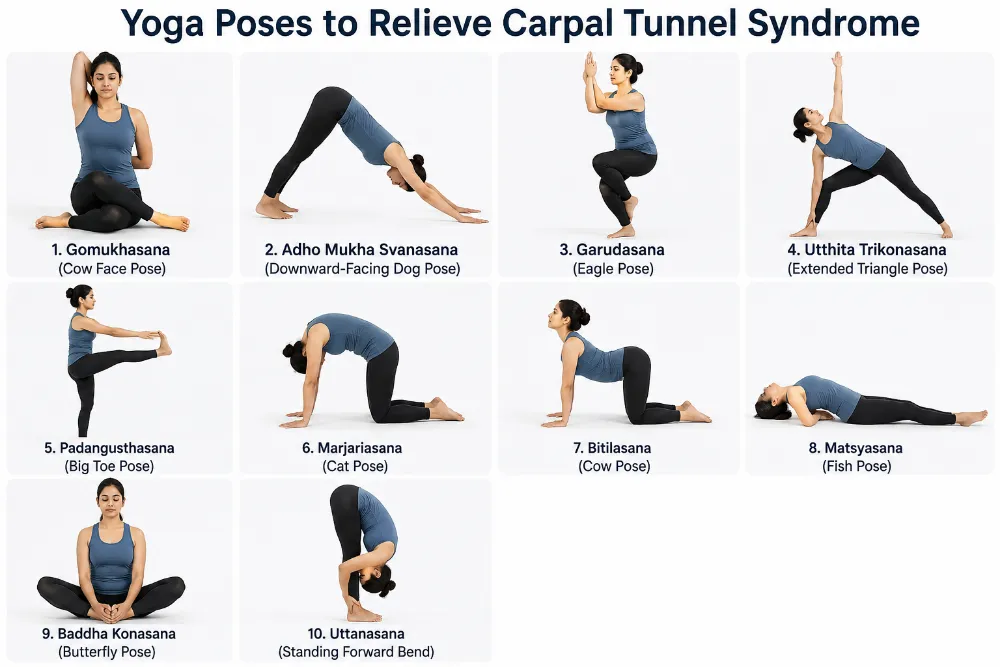
Yoga Poses to Relieve Carpal Tunnel Syndrome
Asanas, or yoga positions, can be an effective way to treat the symptoms of carpal tunnel syndrome. Try these poses:
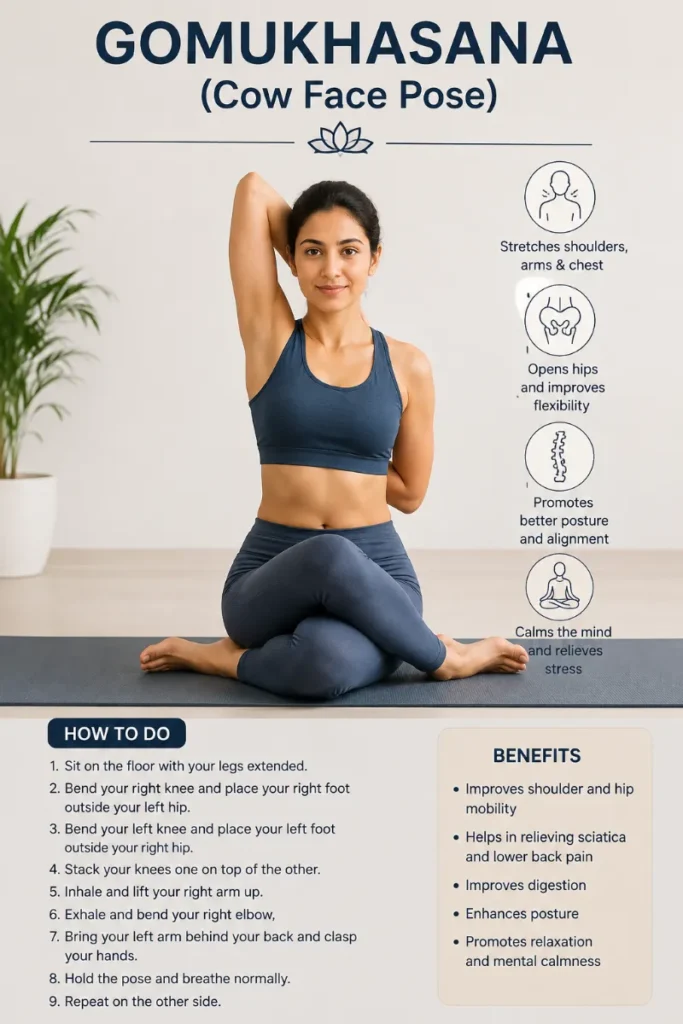
Gomukhasana (Cow Face Pose)
This position helps ease stiffness and soreness by stretching the forearms and wrists.
How to do it?
- Stretch your legs out in front of you while sitting on the floor to execute this position.
- Put your right foot on the ground outside of your left leg and bend your right knee.
- Move your left heel in the direction of your right buttock.
- Bring your hands together and fold your left arm over your right.
- Change sides after holding for five to ten breaths.
Adho Mukha Svanasana (Downward-Facing Dog Pose)
This position helps increase flexibility and reduce pain by stretching the muscles in the arms, wrists, and hands.
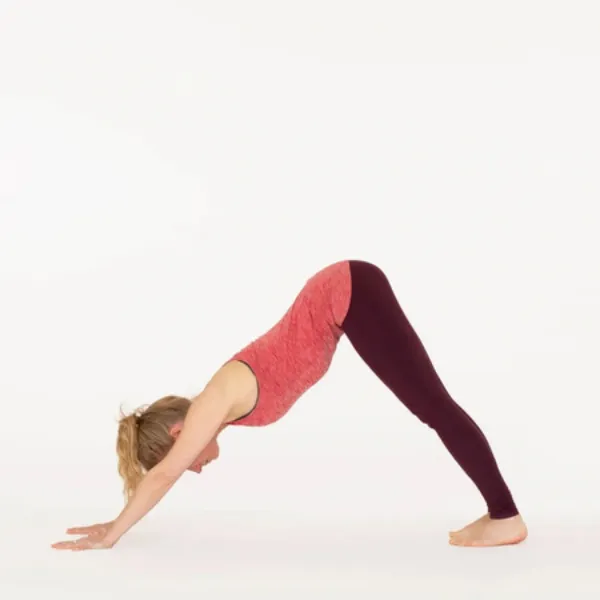
How to do it?
- Begin on your hands and knees, placing your knees close to your hips and your wrists beneath your shoulders.
- Straighten your arms and legs while raising and lowering your hips.
- Lengthen your spine while pressing your hands into the ground.
- Hold for five to ten breaths.
Garudasana (Eagle Pose)
This pose can strengthen the hand and wrist muscles, which may improve grip strength and reduce pain.
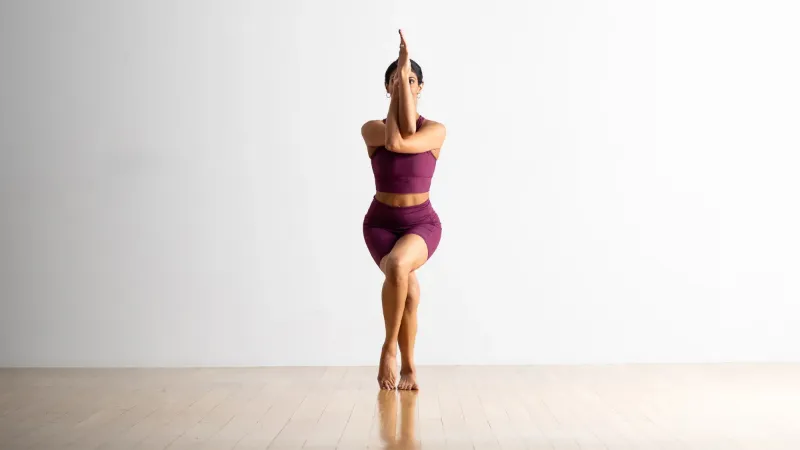
How to do it?
- Stand with your feet hip-width apart and your arms by your sides to execute this position.
- Bend both elbows to bring your palms together while bringing your right arm under your left.
- Cross your right leg over your left.
- For five to ten breaths, balance on your left foot, then switch sides.
Utthita Trikonasana (Extended Triangle Pose)
This pose can help increase flexibility and reduce pain by stretching the forearms and wrists.
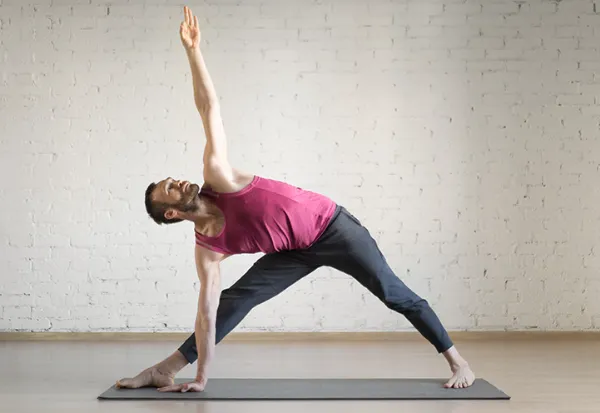
How to do it?
- Place your feet three to four feet apart to do this position.
- Turn your left foot slightly inward and your right foot 90 degrees outward.
- To stretch your right hand toward your right shin or the floor, extend your right arm forward and bend at the hip.
- Keep your left arm straight up.
- Change sides after having maintained for five to ten breaths.
Padangusthasana (Big Toe Pose)
This position helps increase flexibility and reduce pain by stretching the muscles in the arms, wrists, and hands.
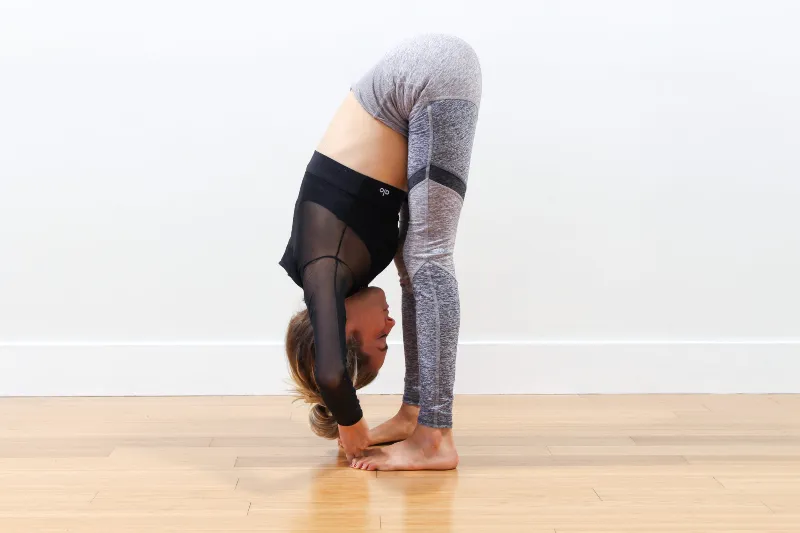
How to do it?
- Place your feet hip-width apart to do this stance.
- Raise your arms above your head and take a deep breath.
- Breathe out and bend forward, using your hands to grab your big toes.
- Hold for five to ten breaths.
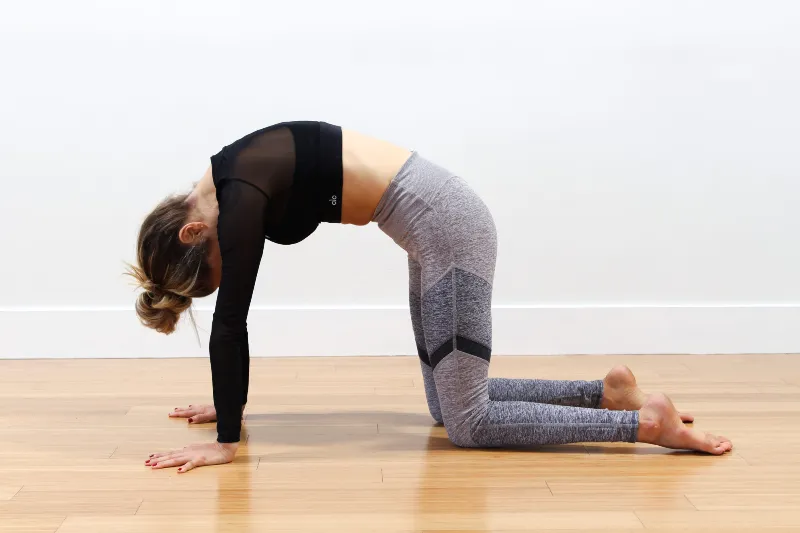
Marjariasana (Cat Pose)
By stretching and moving the wrists, this pose helps reduce stiffness and increase flexibility.
How to do it?
- Starting on your hands and knees, place your knees precisely beneath your hips and your wrists directly under your shoulders to execute this pose.
- Take a breath, arch your back, raise your tailbone, and lower your stomach.
- Breathe out, tuck your chin into your chest, and round your back.
- Continue for a few breaths.
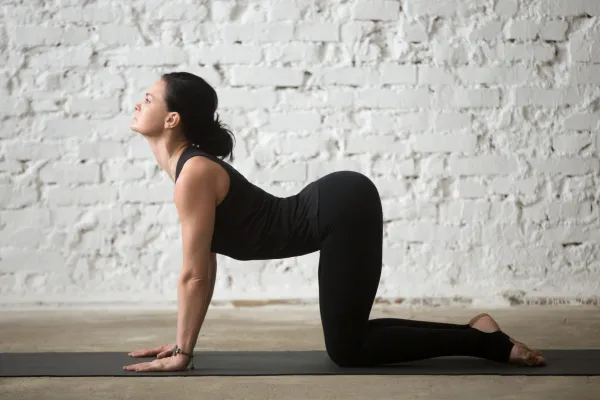
Bitilasana (Cow Pose)
This position assists in reducing wrist stiffness and increasing flexibility by stretching and moving the wrists.
How to do it?
- Starting on your hands and knees, place your knees precisely under your hips and your wrists beneath your shoulders to perform this pose.
- Taking a breath, raise your tailbone and lower your belly while arching your back.
- After holding for a few breaths, return to a neutral posture.
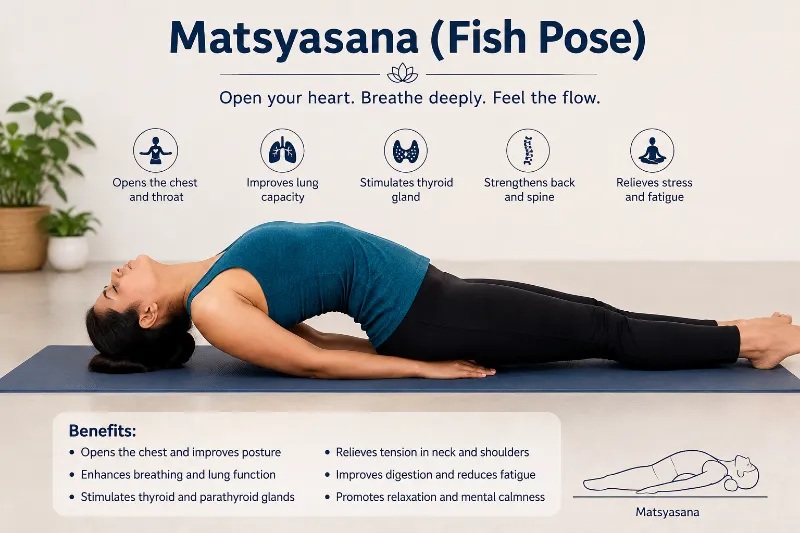
Matsyasana (Fish Pose)
This position may relieve upper body tension and reduce symptoms of carpal tunnel syndrome by stretching the shoulders and chest.
How to do it?
- Bend your knees and place your feet flat on the floor while lying on your back to execute this pose.
- Put your hands under your buttocks, palms down, and raise your hips.
- Lift your chest and press your elbows and forearms into the ground.
- Hold for 5–10 breaths.
Baddha Konasana (Butterfly Pose)
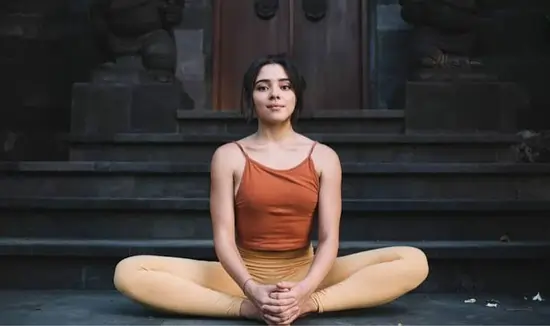
Stretching the inner thighs, hips, and groin can assist in relieving pressure on the hands and wrists.
How to Do it?
- Sitting on the floor with your knees bent out to the sides and your foot soles together is how you do this pose.
- Gently press your knees toward the floor while holding your feet or ankles in your hands.
- For five to ten breaths, hold.
Uttanasana (Standing Forward Bend)
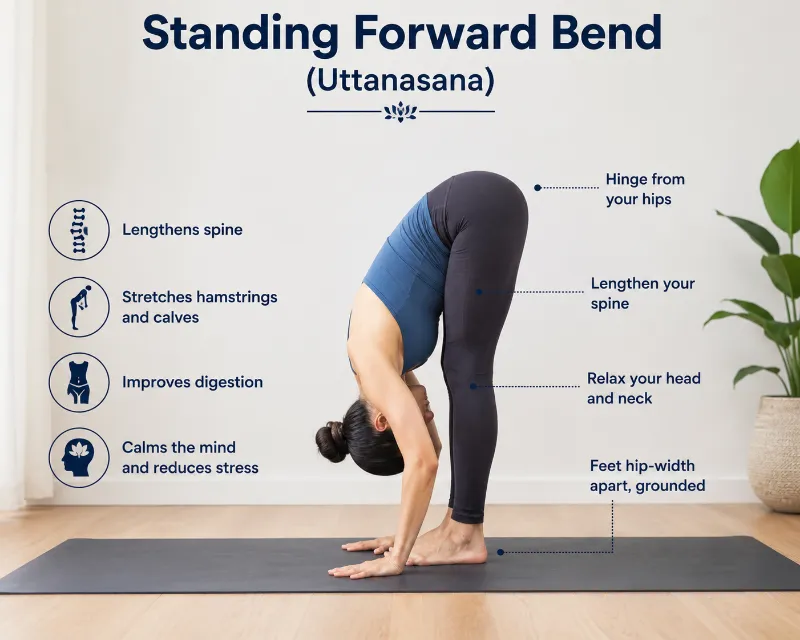
This position can help reduce stiffness and increase flexibility by stretching the muscles in the hands, wrists, and arms.
How to Do It?
- To do this position, place your feet hip-width apart.
- Take a breath, then raise your arms above your head.
- Breathe out and bend forward, your hands reaching for the floor.
- Hold for 5–10 breaths.
- You can put your hands on blocks or a chair seat if you have trouble getting to the floor.
Techniques for Breathing and Meditation to Reduce Carpal Tunnel Syndrome
Carpal tunnel syndrome symptoms can be managed using yoga positions, breathing techniques, and meditation. Here are some exercises to try:
Deep Breathing: Breathing deeply and slowly can assist in relieving the body’s tension and stress, which can exacerbate the symptoms of carpal tunnel syndrome.
Guided Meditation: By promoting relaxation and lowering tension, guided meditations may reduce the symptoms of carpal tunnel syndrome.
Visualization: Imagining the body recovering and repairing itself helps reduce pain and encourage wrist and hand healing.
How Yoga Helps Prevent Carpal Tunnel
- Yoga treats carpal tunnel syndrome’s underlying causes as well as its symptoms.
- The median nerve in the wrist can be compressed by tight muscles in the neck, shoulders, and forearms as well as by bad posture and repetitive strain.
- Yoga increases muscular balance, flexibility, and circulation, which lessens nerve strain and strengthens the hands and wrists to avoid injury.
- Additionally, yoga’s breathing and mindfulness practices can lower stress, which can worsen symptoms.
FAQs:
Can you reverse a carpal tunnel naturally?
Yes, if diagnosed early, carpal tunnel syndrome is frequently curable or efficiently controlled without surgery. Although severe or persistent compression may still necessitate medical attention, natural and non-surgical approaches concentrate on lowering swelling and relieving pressure on the median nerve.
What is stage 4 carpal tunnel?
The most severe and advanced stage of median nerve compression in the wrist is known as stage 4 carpal tunnel syndrome. It is characterized by severe loss of hand strength or coordination, persistent numbness, and obvious muscle atrophy at the base of the thumb (thenar atrophy).
Should I massage my carpal tunnel?
Yes, you can relieve mild to moderate carpal tunnel pain by gently massaging the palm and forearm. However, you must avoid applying pressure directly on the middle of the wrist, as this could pinch the median nerve and exacerbate symptoms.
What sleeping position is best for carpal tunnel?
Sleeping on your back with your arms straight at your sides and your wrists neutral and unbent is the ideal way to prevent carpal tunnel syndrome. Avoid sleeping on your stomach or curling into a tight fetal posture, which bends the wrists and compresses the median nerve
Which finger hurts the most with a carpal tunnel?
The thumb, index finger, and middle finger, which correspond to the sensory distribution of the compressed median nerve, are most severely affected by carpal tunnel syndrome. It never affects the pinky finger.
What time of day is carpal tunnel the worst?
The symptoms of carpal tunnel syndrome are usually worse at night or early in the morning. Numbness, heat, or tingling pain frequently awakens people from sleep or greets them as soon as they wake up.
References:
- Rushali. (2026). Yoga for Carpal Tunnel: Top 10 Yoga Poses, Benefits, FAQs. MyYogaTeacher. https://myyogateacher.com/articles/yoga-for-carpal-tunnel-syndrom
- Dr. Z. (2026). Carpal Tunnel Yoga: 8 Poses & Stretches For Relief. carpalrx.com. https://www.carpalrx.com/carpal-tunnel-yoga
- The Yoga Institute. (2022, July 4). Yoga for Carpal Tunnel Syndrome: Hand and wrist exercises to alleviate pain. The Yoga Institute. https://theyogainstitute.org/yoga-for-carpal-tunnel-syndrome