Natarajasana (Dancer Pose)
What is Natarajasana (Dancer Pose)?
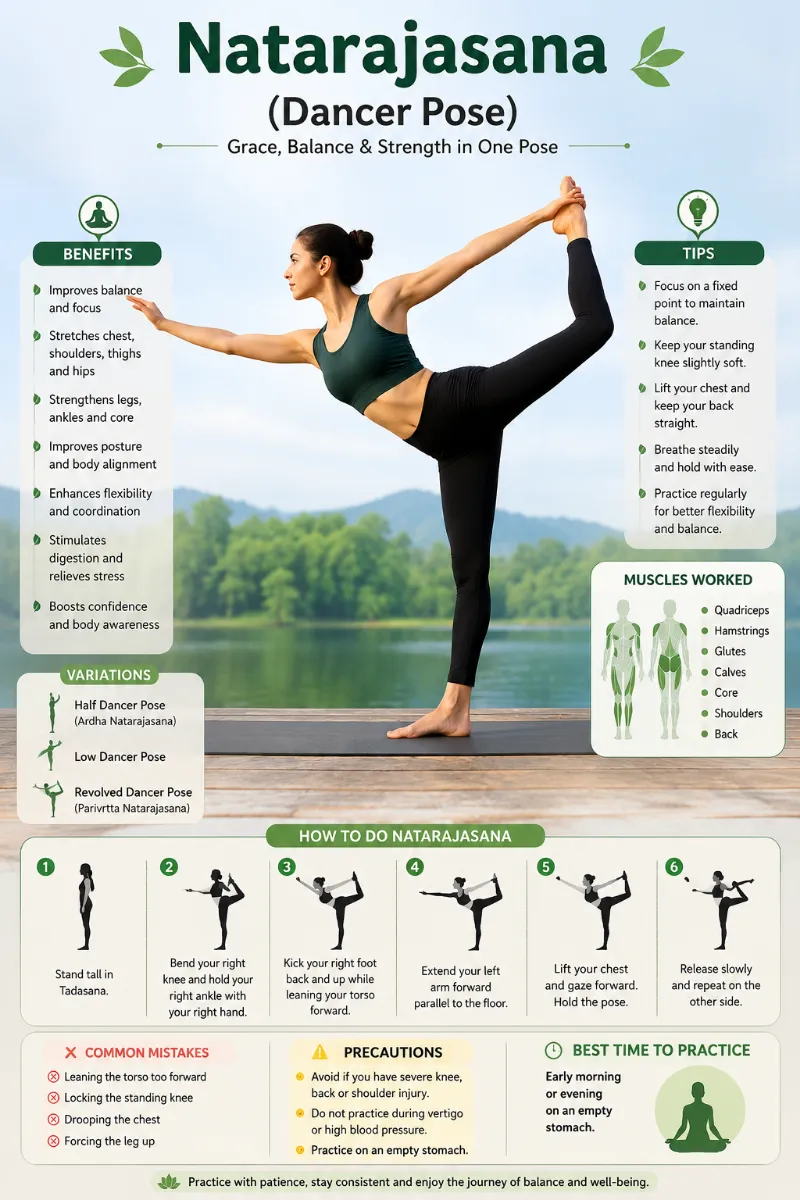
Natarajasana is a standing yoga pose that focuses attention and promotes balance. Your concentration and balance are improved by this standing backbend. It helps generate grace in the body by strengthening the legs, glutes, ankles, knees, and chest.
Additionally, it promotes inner serenity and awareness of how our surroundings are changing. Hindu mythology describes Nataraja, also referred to as “Lord Shiva,” as the father, ruler, or Lord of Indian classical dance.
Overview & Etymology
Overview
The Sanskrit word ‘Nataraja’ refers to a demigod from Hindu mythology, ‘Lord Shiva’ in his cosmic dancer form, and ‘Asana’ means ‘Posture’ or Seat.’
This attitude is observed in Bharatanatyam dance statues from the 13th to the 18th centuries at the Eastern Gopuram, Nataraja Temple, Chidambaram; around 20 different asanas are shown here.
Elliott Goldberg, a yoga scholar, claims that neither medieval hatha yoga sources nor artistic depictions of yoga, like the Mahamandir or the Sritattvanidhi, mention Natarajasana.
According to Goldberg, T. Krishnamacharya brought this pose—along with many others—to modern yoga at the beginning of the 20th century. His pupils, such as B. K. S. Iyengar, adopted it and made it a hallmark of the style.
- Sanskrit Name: नटराजासन
- Pronunciation: Not-ah-raj-ahs-anna
- Pose Type: Backbend & Standing Balance
- Also referred to as: Lord of the Dance Pose or Dancer Pose
- Strengthens: Legs, Ankles, Core & Back
- Stretches: Shoulder, Chest, Thigh, Thorax, Abdomen, & Back
Health Benefits of Natarajasana
- Improves core balance.
- Activates thyroid glands.
- Aids in weight loss and obesity.
- Reduces tension, stress, and anxiety.
- Improves concentration and mental awareness.
- Increases your arms, legs, back, and core’s strength and flexibility.
- Improves the pancreas, kidneys, and reproductive systems’ hormonal processes.
When to Avoid Performing Natarajasana
- Avoid during pregnancy.
- Avoid during menstruation.
- Avoid if you have knee arthritis.
- Avoid if experiencing body pain.
- If you are new to yoga, avoid this exercise.
- Steer clear if you recently had surgery or an injury.
How to do Natarajasana (Dancer Pose)
The Ananda Tandava, or “dance of pleasure,” is the name of Nataraja’s dance. In this dance form, Lord Shiva is shown in a circular frame, symbolizing the cosmic fire that is in charge of both creation and transformation.
The four stages of starting your Natarajasana practice are as follows.
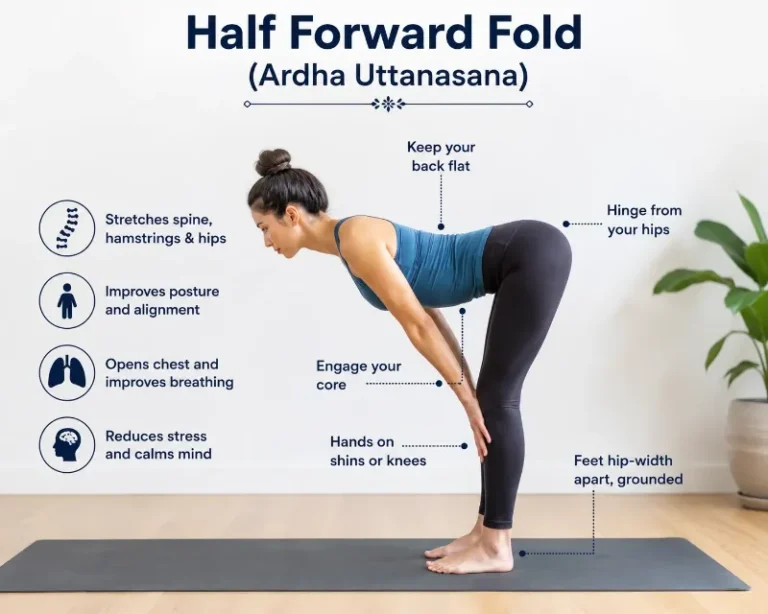
Part 1 – Preparatory Poses for Natarajasana
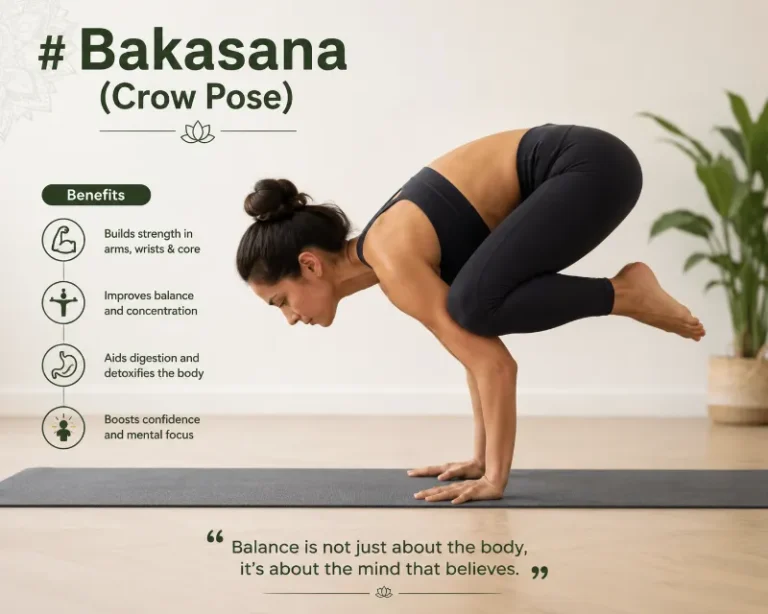
Since the Dancer Pose is a balancing pose, the body must be warmed up with basic balancing yoga poses that strengthen the legs and core. The following yoga positions should be mastered prior to performing Natarajasana:
- Stretch your spine, lie on your stomach, and take a few deep breaths to help you relax. Take a breath and bring your feet together to tense your entire body, from your hips to your toes.
This stretch prepares the entire leg and lower back for Natarajasana. One’s lower back, core, and legs will all be stronger the deeper they stretch with their legs pointing upward.
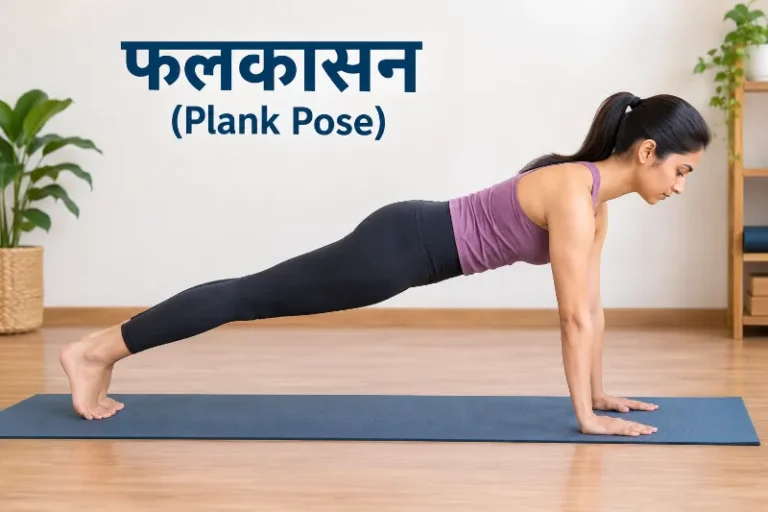
Phalakasana (Plank Pose)
- As the name suggests, the body is kept in a long, engaged, plank-like stance. Plank Pose places a lot of emphasis on the shoulders and core. This position is primarily intended for those who wish to strengthen their arms, shoulders, and core so they can execute more difficult balancing yoga poses.
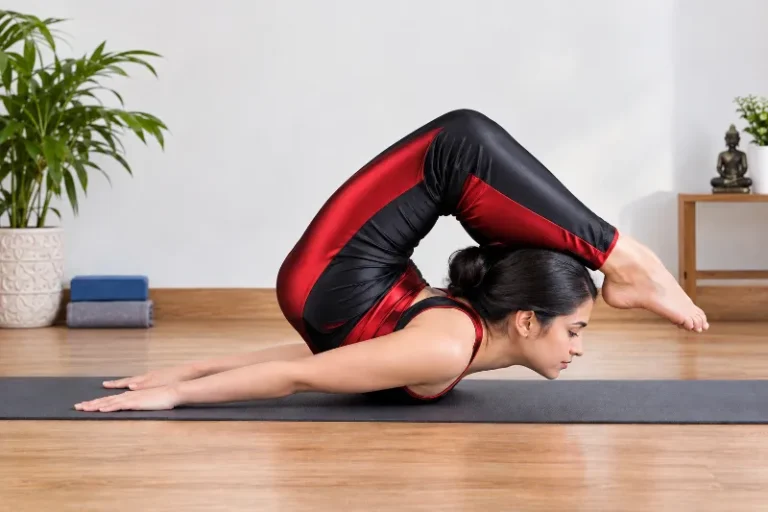
Dhanurasana (Bow Pose)
3. This posture, which involves curling the legs upward while lying on the tummy, helps to expand the lower back and hamstrings. This pose, which deeply stretches the lower back, hamstrings, and abdomen, will offer good support when performing Natarajasana.
Try to get more endurance in this pose and practice bow poses frequently to get deeper.
Eka Pada Rajakapotasana (One-Legged King Pigeon Pose)
- This pose falls into both the hip opener and demanding poses categories. By twisting the sides of your hips, bending your back slightly, opening your chest, pressing your thighs toward the floor, balancing your body to one side of your hips and thighs, stretching your arms backward while holding your toes, and flexing your neck beautifully while dropping backward, your entire body continues to receive the required stretch.
This posture gives you a deep stretch in the shoulders, chest, hamstrings, hips, lower back, and arms, providing a solid foundation for Natarajasana.
Part 2: Step-by-Step Instructions to Perform Natarajasana
- Step 1: Take a position in the center of the mat with your arms at your sides and your weight evenly distributed between your feet.
- Step 2: Lift your right heel toward your buttocks while bending your right knee.
- Step 3: Extend your left arm toward the sky, transfer your weight to your left foot, and grasp your right ankle with your right hand.
- Step 4: Bend at the waist and steadily lean forward until your right leg and left arm are in line with each other.
- Step 5: Raise your right leg as high as you can while maintaining the stance by using your core.
- Step 6: For three to five deep breaths, maintain this standing balance position. If you are having trouble staying balanced, try to focus your attention on a single place in front of you and make sure your core is securely engaged.
- Step 7: Now carry out the same actions on the opposite side.
Breath Awareness:
This pose requires mindfulness of the breath while balancing the body; therefore, let’s go through the breathing exercises.
- Breathe in, stand with your feet together, then release the breath and extend your back.
- Breathe in, lift your right foot behind you, bending at the knee, and then release the breath while holding it from behind with your right hand.
- With your left arm extended long in front of you, raise your right foot high in the air while you inhale, exhale, and curl your thumb and index finger to place the toes between them.
- Breathe in and bring your chest back; release the breath, raise your leg, and stretch your left arm to its fullest.
- Breathe in and out slowly for four rounds, loosening the chest with each inhalation and expanding the legs and chest with each exhalation.
- Exhale fully while maintaining a straight spine after taking a slow breath and bringing the body to Tadasana.
- Here, take a few breaths. Then, repeat the action with the left leg, being mindful of the breath as the body moves. Relax and return to Tadasana after leaving the pose, making sure your breathing returns to normal.
- Performance Length for Beginners: On each leg, maintain the dancer pose for 20 to 60 seconds.
- Duration of Advanced Performance: On each leg, hold the stance for two to three minutes.
Part 3: Things to Keep in Mind
One of the hardest but most beneficial balance yoga positions is Dancer Pose (Natarajasana). When you begin practicing the dancer position, have the following in mind.
Get your mind ready for the balance by concentrating on the four sides of your feet from Tadasana. Start an open-eye meditation by locating your Drishti, a fixed spot where you can concentrate your gaze.
Move your entire weight onto your right foot and extend its bones as much as you can if you wish to flex your left leg up first. Your left foot should feel lighter and almost lift off the ground. As your core tightens, slowly bend your left knee and hold your left ankle with your left hand.
The standing knee should be supported since the Lord of the Dance stance makes it easy to hyperextend the standing knee. Hyperextension happens when the knee bends more than its typical range of motion when it is straight. To prevent locking the knee joints, this should be prevented by first using the quad muscles and then microbending the knee on the standing leg.
Kick some more: Bend at the hips and reach from your tailbone to the top of your head as you kick your left foot into your left hand. The power of the kick determines the strength of this stance; the more forcefully you kick, the more solid your dancer’s pose will be. As you practice kicking, you can use a wall as support.
Hips ought to be square. Aim to maintain your hips square and your left knee in line with your torso rather than spreading out to the left.
Part 4: Relaxing Poses After Natarajasana
Near the end of the backbend sequence of yoga positions, practitioners usually perform Natarajasana, which is the last backbend stance in a series. Giving the middle back and chest space to stretch, calm down, and unwind after a lengthy backbend practice is crucial.
- Stretching: After completing the sequence, stand upright and take a few deep breaths to regulate your body and mind. Next, extend your legs by kicking them from the knee, or sit and twist your back and shoulders. To relieve any excess tension that may have formed in your chest or middle back, perform these exercises two or three times.
- Bow Down Yoga Mudra: Sit in Vajrasana (Thunderbolt Pose) and do the bowing yoga mudra after stretching your upper body. In Vajrasana, extend your arms, elbows out behind you, and interlock your fingers behind you.
Now take a breath, extend your arms above your shoulders, then reach for the floor with an arched back as you pull your upper body forward and downward. Place your head on the ground to unwind. This pose will calmly lengthen your spine and release all of the tension in your shoulders and chest.
- In order to perform Prasarita Balasana, also known as Wide Child Pose, remain seated in Vajrasana and spread your knees wider than your hips. Take a breath, extend your entire upper body forward, and reach for the floor with your face and chest while extending your arms in front of you on the ground. This pose helps the back muscles relax more rapidly by extending the middle and lower back while maintaining a straight and relaxed spine.
Natarajasana Variations to Consider
Depending on your body’s requirements and capacity, you can perform any of the basic versions of Natarajasana listed below.
- Stretch your standing quadriceps by standing on one leg and placing your hand on the wall if you need help staying balanced. Stretch your front thigh by reaching behind you, grabbing your foot, and pulling it toward your buttocks. For thirty to two minutes, maintain this posture.
- Dancer Pose with Chair: If you still have a lot of trouble balancing during your practice, you might choose to add a chair in front of you for greater core stability. The chair will support your complete body as you continue to bend your arms and legs behind you.
- Bowing Lord of the Dance Pose: This is an intermediate-level yoga pose that may be performed while standing.
This variation involves strength, forward-bend stretch, and balance. For a firmer and more stable foundation, beginners who find it challenging to balance while holding one foot up might place the opposing arm on the ground.
FAQs
What is Natarajasana good for?
Dancer Pose enhances balance, focus, body awareness, proprioception (the ability to sense your body’s position and movement in space), and postural awareness. It can boost your confidence, battle exhaustion, and give you more energy. It stretches your shoulders and chest while fortifying your back and core muscles.
What does Natarajasana represent?
Lord of the Dance, or Nataraja, is shown as a yoga stance to honor and give devotion to Lord Shiva.
The arch of flames in the sculpture Nataraja (Nataraj) represents Shiva as the origin of all motion in the universe. The goal of the dancer position is to free people from their misconceptions regarding their physical surroundings and “self.”
What is the king Natarajasana?
The identical yoga pose is known by two different names: King Dancer Pose and Natarajasana.
What are the benefits of Natarajasana?
Natarajasana enhances your capacity to concentrate and focus.By balancing, backbending, and retaining calm energy, you will learn to concentrate your mind. This will help you keep your grace and elegance in everyday situations.
What does Natarajasana Yoga mean?
Dancer posture yoga is a contemporary kind of yoga that incorporates backbending, standing, and balance. It is modeled after a pose from the ancient Indian dance style known as Bharatanatyam, which is shown in temple statues at the Nataraja Temple in Chidambaram.
What are the different types of Natarajasana variations?
There are no advanced-level postures that follow the dancer pose since it is the most advanced variation of a standing backbend. However, by incorporating the dancer pose into your backbend yoga flow practice, you may deepen this pose and increase your flexibility and burn more calories.
References:
- Allen, W. (2025f, August 26). Natarajasana. https://myyogateacher.com/yoga-asana/natarajasana
- Panigrahi, G. V. (2026b, August 13). Natarajasana (Dancer Pose): Benefits & Balance Tips. Vinyasa Yoga Academy Blogs. https://vinyasayogaacademy.com/blog/natarajasana/
- Yoga Journal. (2025, March 21). Dancer pose | Lord of the dance pose. https://www.yogajournal.com/poses/lord-of-the-dance-pose/