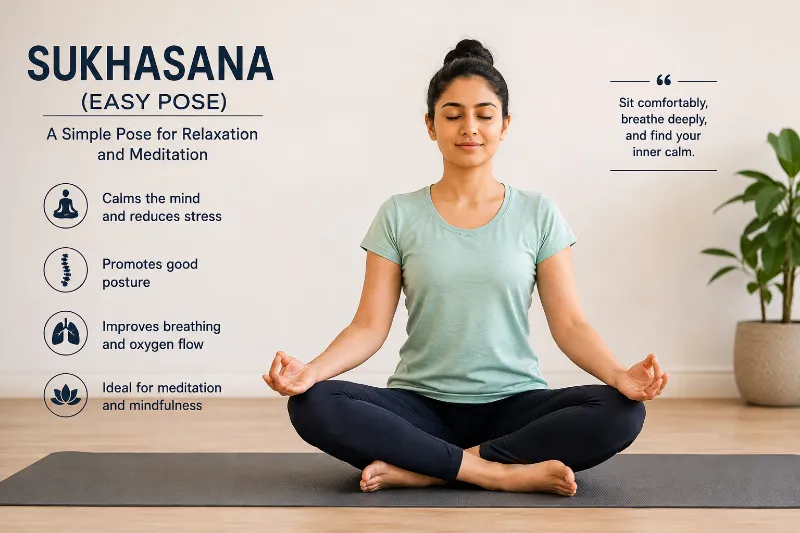
Sukhasana (Easy Pose)
What is Sukhasana (Easy Pose)?
Sukhasana, also known as Easy Pose, is a simple seated yoga posture that promotes relaxation, improves posture, and encourages mindful breathing. It is commonly used for meditation and can help gently stretch the hips, knees, and lower back.
- Sukhasana: Origin and Meaning of Easy Pose
- Sukhasana comes from the Sanskrit words Asana, meaning posture or seat, and Sukha, meaning ease, comfort, or happiness. The Sukhasana pose, as its name suggests, promotes effortless sitting, allowing you to find stability and ease during breathwork and meditation.
- The Darshana Upanishad, written in the 4th century CE, describes one of the oldest references to Sukhasana, which describes it as a place for spiritual practice. Sukhasana is 1 of 122 Hatha yoga poses documented in the Sritattvanidhi, a 19th-century Karnataka classic.
- Sukhasana pose is a foundational seated posture used for mantra chanting, meditation, and pranayama. A straight spine, relaxed shoulders, and an open chest are all encouraged by a simple and effective alignment, and it encourages inner peace and mindfulness.
At a Glance
- Sanskrit Name: सुखासन
- Soo-kaah-SUN-ah is the pronunciation.
- Type in Pose: Hip Opener, Seated
- Also known as: Easy Pose
- Strengthens: Hips, Back, & Mind
- Stretches in the spine, knees, groin, & legs
Muscles
- Hip muscles: Gluteus maximus, gluteus medius, and hip rotators
- Thigh muscles: Adductors and quadriceps
- Core muscles: Abdominals and deep core stabilisers
- Back muscles: Erector spinae help maintain an upright posture
- Pelvic floor muscles: Help support seated stability and posture
- Lower-leg muscles: Calves and ankle stabilisers are gently engaged
Benefits of Sukhasana (Easy Pose)
Sukhasana, known as Easy Pose, serves as the body and mind several benefits:
Physical Benefits
- Improves Posture: By encouraging sitting with an upright spine, this pose reduces slouching and improves posture.
- Opens the Hips: Cross-legged sitting improves flexibility in key areas to reduce pain and stiffness and open the hips, inner thighs, and groin.
- Relieves Lower Back Tension: By strengthening the spine, sitting up upright relieves lower back pain, as it is often caused by long hours of sitting.
- Enhances Core Stability: Sukhasana promotes stability, balance, and body awareness by having you engage core muscles while sitting.
Mental Benefits
- Reduces Stress and Anxiety: This pose naturally aligns the diaphragm and lungs by encouraging deep, calm breathing, which enhances oxygen flow and lowers anxiety.
- Enhances Focus and Awareness: By minimising distractions, stable posture helps the mind stay engaged and engaged, which improves concentration.
- Promotes Relaxation: Sitting comfortably reduces muscle tension and prompts your nervous system to shift into a state of rest.
Spiritual Benefits
- Enhances Mind-Body Connection: By encouraging awareness of posture, breath, and body sensations, the posture promotes inner balance and mindfulness.
- Promotes Groundedness: The body is anchored by the cross-legged position with an aligned spine, which promotes a sense of calm and stability that enhances spiritual awareness.
How to Do Sukhasana: Step-by-Step Guide
Part 1: Preparing for Sukhasana
It’s important to stretch your body gently before sitting in Sukhasana (Easy Pose) to lengthen your spine, open your hips, and ease any stiffness. Here are some warm-up poses:
Baddha Konasana (Butterfly Pose)
- Sukhasana is practised to hold more comfortably by opening the hips and inner thighs with this pose.
- While you sit, extend your legs in front of you.
- Bring the soles of your feet together and bend your knees.
- Let your knees drop to the floor, and hold your feet with your hands.
- Lengthen your spine by sitting up straight.
- Hold for 30 to 60 seconds.
Paschimottanasana (Seated Forward Bend)
2. This pose is excellent in a stretch the hamstrings and spine, making it easier to sit tall with the legs crossed while doing the Easy pose.
- When you sit, keep your legs straight in front of you.
- Inhale and exhale, and extend your arms over your head.
- Exhale, bend forward from your hips, and grab your feet.
- Avoid rounding your back and keep a long spine.
- Hold for 30 seconds.
Anjaneyasana (Low Lunge)
3. Sukhasana can be more comfortable to release tight hip flexors with this pose.
- Keeping the other knee on the floor, forward one foot into a lunge position.
- Keep an erect posture while lowering your hips.
- Hold each side for 20 to 30 seconds.
Part 2: Step-by-Step Instructions
- Place a folded blanket or cushion underneath and sit on a yoga mat. By using props to support your hips, you can support your lower back and maintain it in the proper alignment.
- Put each foot beneath the opposite knee and cross your legs at the shins. Ensure both knees are in a comfortable position on the ground.
- Use cushions or yoga blocks under your knees for support if your hips feel tight or if your knees lift off the ground.
- With your spine naturally elongated, sit in a tall seat. Avoid arching or slouching in your lower back.
- To keep yourself stable, slightly engage your core.
- Allow your shoulders to relax away from your ears by gently rolling them up and back.
- Keep your neck in line with your spine and your chest open.
- Put your palms on your knees, facing up for openness or down for a more grounded feel.
- Shut your eyes or keep your eyes softly fixed on whatever is in front of you.
- Inhale deeply through your nose and exhale gently, and breathe naturally. To calm the body and mind, focus on breathing steadily and rhythmically.
Part 3: Tips for Proper Alignment and Safety
- Elevate the Hips: You can avoid rounding your back by sitting on a cushion or a folded blanket.
- Relax Your Knees: If you are too high, use blocks to support your knees.
- Turn on the Core: Lightly contract your core muscles to maintain an erect posture.
- Let the Shoulders Relax: Keep your shoulders away from your ears to prevent strain.
- Cool Down: To ease out of the pose, do counter poses. These include:
- Stretching a Side While Seated
- Matsyendrasana Ardha (Seated Twist)
- With a coach, learn Sukhasana step-by-step! Schedule a free, one-on-one trial session today.
Sukhasana Variations
Supported Sukhasana
- A bolster, folded blanket, or yoga cushion is positioned beneath the hips during Supported Sukhasana. This can help maintain an upright spine by raising the pelvis a little. Beginners and those with stiff hips will find it very helpful.
Sukhasana with Forward Bend
2. This variation modifies the standard seated position by adding a slight forward bend. Lean forward gradually from Sukhasana while maintaining a comfortable posture. It can promote relaxation and offer a light stretch to the shoulders, hips, and back.
Sukhasana with Hands in Anjali Mudra
3. In this variant, place your palms together in front of your chest while sitting comfortably in Sukhasana. Maintain a lofty spine and relaxed shoulders. This version is frequently used at the start and finish of a yoga practice, during breathing exercises, or during meditation.
Sukhasana with Gyan Mudra
4. With your hands on your knees, sit in Sukhasana. Keeping the other fingers relaxed, touch the thumb with the tip of the index finger. This version is frequently used when practising mindful breathing and meditation.
Sukhasana with Side Stretch
5. Raise one arm above your head and slowly bend your torso to the other side while still sitting cross-legged. On both sides, repeat. This version keeps the Sukhasana foundation while adding a light stretch to the side body.
Sukhasana with Gentle Twist
6. Rotate the torso carefully to one side while sitting tall in Sukhasana. Don’t force the twist; instead, keep the action under control. Continue on the other side. Gentle spinal movement is encouraged by this variant.
Elevated Sukhasana
7. Sitting on a hard cushion, yoga block, or folded blanket is how elevated sukhasana is done. The additional height may facilitate the maintenance of a neutral spine and lessen strain on the knees and hips.
Sukhasana with Meditation
8. Sukhasana is maintained for meditation in this classic and straightforward variant. Sit comfortably, maintain an upright posture, ease your shoulders, close your eyes if it’s comfortable, and concentrate on taking deep, steady breaths.
Sukhasana with Breath Awareness
9. This version places more emphasis on the breath than on movement. Take a comfortable seat and, without straining the breath, watch each inhale and exhale. It can be included in mindfulness or relaxation exercises.
Dynamic Sukhasana
10. While seated, Dynamic Sukhasana introduces mild movements. The arms, neck, and shoulders can all be carefully moved throughout a comfortable range of motion. Before engaging in seated yoga or meditation, this might serve as a mild warm-up.
Sukhasana with Arm Raise
11. While keeping your spine straight, carefully raise both arms overhead while sitting in Sukhasana. Controllably lower your arms, then repeat many times. In this variation, the seated position is combined with mild upper-body and shoulder movements.
Sukhasana with Different Leg Position
12. The legs can be positioned slightly differently while yet keeping a comfortable sitting posture if the conventional cross-legged position is uncomfortable. Instead of pushing the legs into a specific position, the focus should be on a sturdy base, relaxed hips, and an upright spine.
Sukhasana (Easy Pose) Precautions and Contraindications
Sukhasana is a typically safe and mild seated yoga pose; however, it might not be appropriate for everyone. Additionally, some situations may need adjustments or substitutes to avoid pain or strain.
Who Should Avoid Easy Pose?
- For individuals who have knee pain, sitting cross-legged may worsen pain by applying pressure on the knees. Instead, try these yoga poses for knee pain.
- Individuals with hip stiffness or injuries may have joint and muscular strain when sitting cross-legged due to reduced hip movement.
- For those with sciatica or lower back problems, prolonged sitting in Sukhasana may exacerbate sciatic nerve pain or strain.
- Patients who have recently undergone hip, knee, or spine surgery may consult a doctor before attempting Sukhasana.
Tips to Practice Easy Pose Safely
- Practice Gentle Warm-Ups: To increase your comfort and flexibility and get ready for Sukhasana, stretch your hips and knees.
- Use Props: Take a seat on a cushion, folded blanket, or yoga block to relieve hip and knee pain.
- Keep Your Posture Correct: To keep your posture tall, keep your back straight and slightly contract your core.
- Take Breaks: Try not to hold the pose for too long if you experience pain or numbness in your legs.
- Try Variations: Practice on a chair with your feet flat on the ground if sitting on the floor hurts.
- By taking these safety measures, you can practice safely and comfortably, avoiding needless strain while yet reaping the benefits of the position.
Sukhasana (Easy Pose): Related Poses
Here are other similar sitting or hip-opening positions that offer fresh challenges and share the advantages of Sukhasana if you like it:
Padmasana (Lotus Pose)
- This pose is perfect for meditation since it strengthens the spine and deeply expands the hips.
- Place each foot on the opposing thigh while you sit with your legs crossed.
- Put your hands on your knees and extend your back.
- Keep your shoulders relaxed and chest open.
- Hold the posture while breathing deeply and evenly.
- Hero Pose improves posture for sitting practice while stretching the thighs, knees, and ankles.
- Place your feet slightly wider than your hips while kneeling on the mat.
- Maintaining a tall spine, sit back between your heels.
- Relax your shoulders
- Keep your hands on your thighs.
- Breathe steadily and maintain an upright posture.
FAQs
Is Sukhasana good for beginners?
Yes! Sukhasana, also known as Easy Pose, is among the simplest seated yoga poses for novices. It gently enhances posture, flexibility, and attention while offering a steady and cosy position for breathwork and meditation. For greater support, novices might place pillows or blocks beneath their hips.
How long should I hold Sukhasana?
During meditation or breathwork sessions, you can maintain Sukhasana for five to fifteen minutes. However, it’s crucial to pay attention to your body; if you experience pain in your lower back, hips, or knees, change positions or take breaks as necessary.
What are the other names of Sukhasana?
Easy Pose, Cross-Legged Pose, and Meditation Pose are other names for Sukhasana. Its ease of use, comfort, and appropriateness for seated meditation techniques are reflected in these names.
Sukhasana vs Siddhasana: What’s the difference?
Despite being sitting contemplative positions, they differ in the following ways:
Sukhasana, also known as Easy Pose, is a basic cross-legged sitting pose that is perfect for meditation and novices. There is no rigorous alignment requirement; the legs are crossed loosely.
In the more organised meditative pose known as Siddhasana (Accomplished Pose), one heel is positioned near the perineum while the other foot is pressed up against the opposing ankle. It is frequently seen as more sophisticated and offers a deeper stretch.
Can I meditate in Sukhasana?
Yes! The cross-legged meditation pose known as Sukhasana promotes a calm yet attentive stance. It encourages deep breathing and upright sitting, which enables longer meditation periods with less discomfort.
Can I practice Sukhasana during pregnancy?
Yes, but with modifications. Pregnant women should sit on a cushion and refrain from holding the posture for too long, but Sukhasana can be an excellent prenatal pose for breathwork and relaxation. Before performing Sukhasana while pregnant, make sure you speak with a medical expert or a prenatal yoga instructor.
References:
- Allen, W. (2025g, November 19). Sukhasana. https://myyogateacher.com/yoga-asana/sukhasana
- Yoga Journal. (2025m, March 14). Easy pose. https://www.yogajournal.com/poses/easy-pose-3/
- Dr.Kruti Sorathiya. (2022). Sukhasana: Health Benefits, Variations, How to Do?. Mobile Physiotherapy Clinic. https://mobilephysiotherapyclinic.in/sukhasana-yoga-pose/
- Sukhasana Yoga(Easy Pose)| Yoga sequences, benefits, variations, and Sanskrit pronunciation | Tummee.com. (n.d.). Tummee.com. https://www.tummee.com/yoga-poses/easy-pose



4 Comments