Baddha Padmasana (Bound Lotus Pose)
What is Baddha Padmasana?
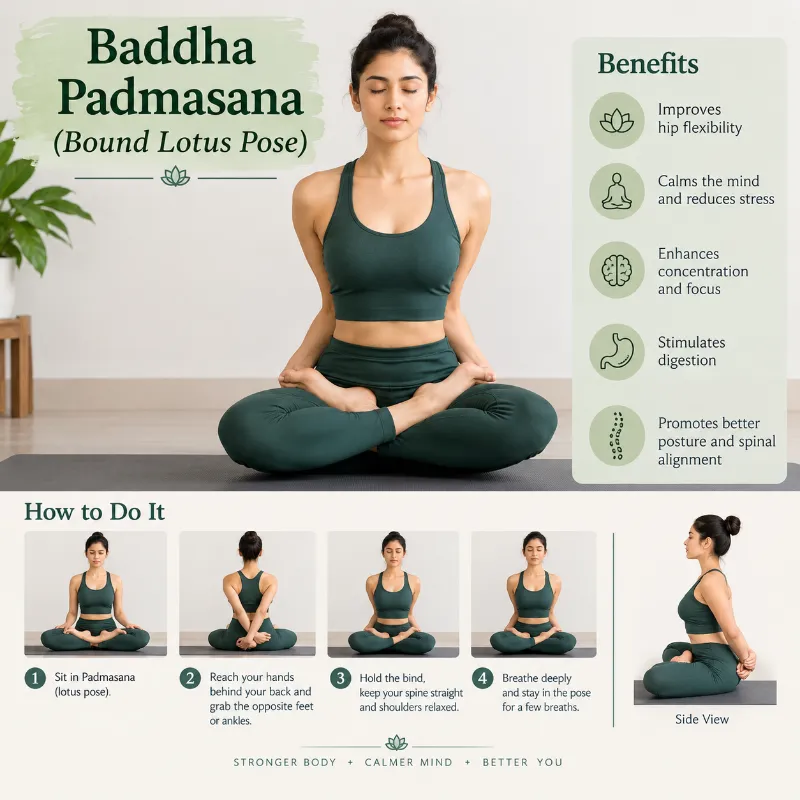
Baddha Padmasana (Bound Lotus Pose) is an advanced seated yoga posture that combines the traditional Lotus Pose with a bind behind the back.
Pronounced bah-dha pad-mah-sa-na, Baddha Padmasana means “Bound Lotus Pose.” “Bad means bound; it refers to the lotus. Hip opening, shoulder mobility, and meditation stillness are all combined in this advanced binding posture, which entails sitting in full lotus and then crossing the arms behind the back to clasp the toes of the opposing feet.
Texts such as the Hatha Yoga Pradipika include baddha padmasana, which is traditionally regarded as one of the traditional seated poses in hatha yoga. Deep meditative focus, energetic balance, and spinal alignment for prolonged sitting are all linked to the bound lotus stance.
Baddha padmasana is prized by contemporary practitioners for its ability to induce calm. Once established, the pose forms a stable, confined shape that facilitates extended periods of pranayama or meditation.
This is not a posture for beginners. Achieving the full Baddha Padmasana pose requires considerable flexibility in the hips, knees, and shoulders. The majority of practitioners begin with half-bound lotus pose and padmasana (regular lotus).
Key Highlights
- Combines complete lotus with crossed arms behind the back to clasp the toes of the opposing foot.
- Recorded in the Hatha Yoga Pradipika as one of the traditional sitting poses.
- Most practitioners proceed through conventional Padmasana and half-bound lotus initially.
- The spine nearly arranges itself into a healthy vertical line once the bind is set.
- It is clearly not a beginner pose and requires a lot of hip, knee, and shoulder movement.
- The enclosed bound shape facilitates prolonged meditation and pranayama once
Baddha Padmasana Benefits
Physical Benefits
Deeply Opens the Hips and Inner Thighs
The lotus pose requires substantial outward rotation of the hip joints. Baddha padmasana advantages include progressive deepening of hip mobility, particularly beneficial for folks who sit at computers all day.
Improves Shoulder Mobility and Posture
The arm binding behind the back counteracts the rounded forward posture typical of modern life by stretching the shoulders and chest into deep external rotation.
Stimulates the Abdominal Organs
By gently compressing the abdomen, the combination seated and bound shape promotes healthy digestion and abdominal organs.
Improves Spinal Alignment
Once the bind is established, the posture naturally lengthens the spine into a tall seated position, and the spine nearly arranges itself into a healthy vertical line.
Cultivates Stillness and Meditative Focus
Baddha Padmasana helps practitioners maintain a calm, steady posture during meditation. Once you’re within the bound, you’re inside the body.
Reduces Restlessness and Promotes Calm
The nervous system is instructed to calm by the deep, enclosed shape. There are a lot of practitioners who describe a profound experience.
How to Do Baddha Padmasana Step-by-Step Instructions
Key Principles
This posture is advanced. Be patient, start with mastering padmasana, and never push the bind. Back off right away if your knees protest.
Step 1: Starting Position
Sit in complete lotus, or Padmasana. Both feet rest on the opposite thighs with their soles facing upward. Hands on the knees and a tall spine.
Step 2: Reach the Right Arm Behind
Inhale gently and extend your right arm behind your back. The left foot moves in the left hand.
Step 3: Catch the Right Big Toe
Reach further till you are able to catch the right foot’s big toe, which is resting on the left thigh in lotus. Hook the toe with your middle and index fingers.
Step 4: Reach the Left Arm Behind
Inhale again, bring your left arm around your side, and reach behind your back toward your right foot.
Step 5: Final Position and Hold
Grasp your left big toe with your left hand. Now both arms connect over the back. Expand your chest, lengthen your back, and soften your look. Depending on the level, hold for 5–30 breaths.
Step 6: How to Come Out
Slowly release the left hand first, then the right. Bring the arms back to the knees. Carefully unwind the lotus top leg first, then the other. Straighten your legs in front of you and gently wiggle them to release tension.
Breathing in Baddha Padmasana
Slow, deep ujjayi breathing. The contained nature of the pose makes the breath the only “movement” available; let it deepen and lengthen.
Preparatory Poses Before Baddha Padmasana
- Sukhasana (Easy Pose) Builds the basic seated foundation.
- Padmasana (Lotus) The non-negotiable prerequisite.
- Baddha Konasana (Butterfly) Opens the hips for lotus.
- Gomukhasana arms: Prepares the shoulders for the binding action.
- For hip-opening preparation, see our hip-opening yoga poses guide.
Variations of Baddha Padmasana
Variation 1: Half Bound Lotus Pose (Ardha Baddha Padmasana)
Bring one foot into Half Lotus, then reach the same-side arm behind your back to grasp it. Significantly more accessible than full baddha padmasana; most practitioners spend years here before progressing.
Variation 2: Yoga Mudra in Bound Lotus (Intermediate)
From Baddha Padmasana, slowly hinge forward at the hips, guiding your forehead down toward the floor. Adds a deep forward fold to the bind.
Variation 3: Bound Lotus with Strap (Modification)
If your hands cannot comfortably reach your feet, loop a yoga strap around each foot for support during the pose. Builds toward the full bind safely.
Common Mistakes to Avoid in Baddha Padmasana
- Mistake 1: Forcing the lotus. Cranking the knees into lotus when the hips aren’t ready.
- Correction: Master padmasana first. If knee pain occurs, exit immediately.
- Mistake 2: Forcing the bind. Twisting the shoulders aggressively to reach the toes.
- Correction: Use a yoga strap for assistance or practice Half Bound Lotus until your shoulders develop enough flexibility.
- Mistake 3: Holding the breath. The contortion makes breathing harder; many people hold the breath.
- Correction: If you can’t breathe deeply, the pose is too deep; back off.
- Mistake 4: Slumping the spine. Once bound, many practitioners collapse forward.
- Correction: The bind should support a tall spine, not pull you down.
- Mistake 5: Holding too long too soon. Long holds before the body is ready.
- Correction: Start with 5 breaths; build over months.
Who Should Practise Baddha Padmasana?
Intermediate to Advanced Practitioners
This advanced posture is best suited to those with well-developed hip, knee, and shoulder flexibility, ideally after one to two years of regular yoga practice.
Meditators Seeking a Stable Seat
When practiced comfortably, Baddha Padmasana provides a steady seated position for extended meditation sessions.
Those Wanting Deeper Hip Opening
The pose itself is a deep hip opener. Pair with our yoga for flexibility programme.
Is Baddha Padmasana Good for Beginners?
Beginners can build up gradually by practicing Sukhasana first, progressing to Padmasana, and then trying Half Bound Lotus. This journey may take several months or longer, so begin with a suitable routine from our yoga guide for beginners.
Precautions
Baddha Padmasana is an advanced posture. Avoid forcing yourself into the final position.
- Use particular caution if you have:
- Knee pain or a recent knee injury
- Hip injury or significant hip stiffness
- Ankle injury
- Shoulder injury
- Recent surgery
- Significant joint instability
- Pain is not a requirement for progressing in yoga.
- If you feel sharp, pinching, or joint pain, come out of the posture.
Contraindications
Avoid or modify the pose if you have:
- Acute knee injury
- Significant knee pain
- Recent hip surgery
- Acute hip injury
- Ankle injury
- Significant shoulder injury
- joint stiffness
- If pain occurs, particularly sharp or localized joint pain, stop rather than trying to push deeper.
FAQs
What is Baddha Padmasana?
The “bound lotus pose”: sit in full lotus, then cross the arms behind the back to grasp opposite toes. An advanced classical seated meditation posture.
Is Baddha Padmasana Good for Beginners?
Beginners should practice Sukhasana first, develop the flexibility needed for Padmasana, and only then progress to binding variations.
What Are the Benefits of Baddha Padmasana?
Deep hip opening, shoulder mobility, abdominal stimulation, spinal alignment, and a profoundly stable seat for meditation.
How is Half Baddha Padmasana Different?
Half bound lotus binds only one side at a time, significantly more accessible. Most practitioners spend years here before progressing to full bound lotus.
Can I Do Baddha Padmasana at Home?
Yes, if your hip and shoulder mobility allow. Always under guidance; improper form risks knee injury.
References
- Yogshala, R. (2026, January 1). Baddha Padmasana (Locked Lotus pose) – Top 7 Excellent Health Benefits – Rishikul Yogshala. Rishikul Yogshala. https://www.rishikulyogshala.org/blog/top-7-health-benefits-of-baddha-padmasana-locked-lotus-pose/
- Indigiseo. (n.d.). How to do Baddha Padmasana: Steps, Benefits & More | MultiFit. https://multifit.in/blog/how-to-do-baddha-padmasana-steps-benefits-and-more/