Yoga for Runners
Introduction
If you’re a runner, you are aware of the excitement that comes from achieving a new personal best, running farther or faster than you have ever done. You are also aware of some of the disadvantages of running, such as a lack of flexibility, tight quadriceps and calves, and possible muscular imbalances. You may be more at risk of damage as a result of all of these factors.
For runners, yoga is a game-changer for increasing strength, releasing tense areas, and accelerating recuperation. Try these post-run stretches and pre-run yoga positions to keep your body feeling renewed and prepared to go farther than before.
Is Yoga Good for Runners?
Yes, provided that it aids in your running rather than turning into an additional exercise that requires recuperation.
This is when yoga can justify being included in a running regimen:
- Mobility: Yoga can help you identify areas where you lack control and where you feel stiff. They are not necessarily the same issue.
- Balance: If you stand on one leg for a short while, your weaker side will usually become apparent quite quickly.
- Awareness: When you stop moving, you become conscious of which side feels exhausted, unstable, or different.
- Relaxation: You may prevent feeling like you’ve been running all day by taking a few quiet minutes after a tough run.
When the rest of your training makes sense, yoga is most beneficial.
Why Yoga for Runners is Better Than Stretches
There are different types of stretches you can do on your body. As its name implies, dynamic stretching enables the joints to move through a range of motion. It warms your entire body by lengthening and shortening the muscles and connective structures. Stretching your legs dynamically before a run helps prevent injuries and warms them up.
In contrast, static stretching allows muscles to reach their full range of motion and maintain it for a prolonged period of time. After running, static stretching is used to help reduce the pain in your muscles by reducing lactic acid.
Dynamic and static stretching are combined in yoga. The dynamic element is provided by changing poses, while the static element is provided by maintaining a constant pose. This is precisely why yoga is so helpful for runners.
Benefits of Yoga for Runners
Builds Balance and Stability: While yoga focuses on the tiny, frequently disregarded muscles that support your hips, knees, and ankles, running primarily trains the larger muscles. By strengthening these areas, you can keep your balance and reduce your risk of injury.
Improves Flexibility and Mobility: A runner’s worst enemy is tight hips, calves, and hamstrings. Yoga helps you move more freely and pleasantly by gently stretching and loosening these muscles. This increased range of motion can lead to smoother strides and reduced pain both during and after your run.
Promotes Muscle Recovery: Yoga teaches your mind and breath in addition to your body. Your nervous system is calmed, stress is decreased, and muscle healing is aided by the focused breathing and relaxation practices.
Before You Start
You’ll need a clean area of floor, a mat, or a folded towel.
A few rules before you start:
- Move slowly and stay in control. Do not bounce or force your way deeper.
- You should feel tension, not a fight.
- You are using too much force if you are unable to breathe properly.
- Use the wall. Bend the knee. Grab a block. Modifying the pose is not cheating.
- If you experience burning, electrical, acute, pinching, or intensifying pain, stop.
Common Yoga Mistakes Runners Make
I used to treat every tight region as if it were a stretching issue. After stretching it for an hour, I would feel better and then wonder why it returned.
I learned that the hard way.
Trying to Stretch Away Every Tight Feeling
Feeling tight does not always mean you should stretch more.
Fatigue, weakness, slow recovery, and overtraining can all lead to a stiff feeling in a particular area. Stretching might help ease the pain, but it may not address the underlying cause of the tightness.
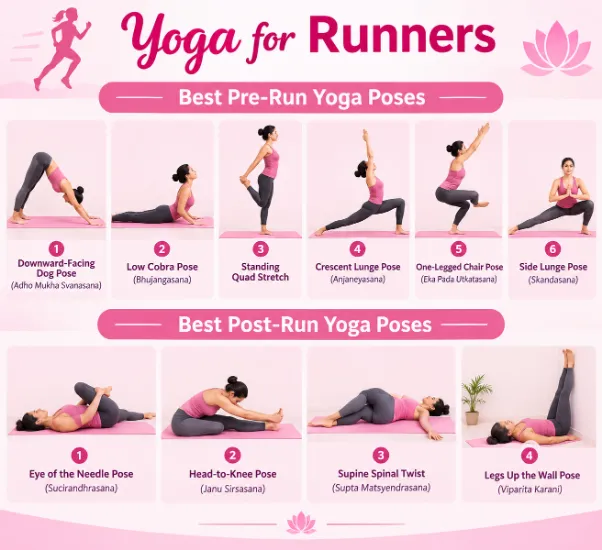
Best Pre-Run Yoga Poses
Stretch carefully before you go for a run. Incorporate positions that release your hamstrings, hips, quadriceps, and groin muscles to prepare your legs for exercise.
Adhomukh Swanasana (Downward-Facing Dog Pose)
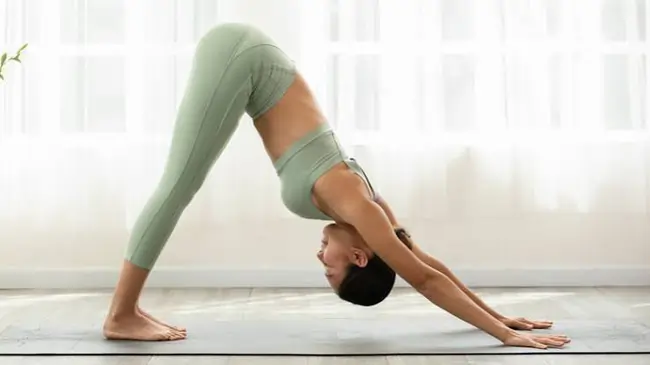
Sanskrit Meaning: Adho (Down) Mukha (Face) Svana (Dog) Asana (Pose)
Yoga Level: Beginner
Pose Type: Standing
Why This Pose Matters: It has earned its place as a timeless favorite for good reason! Your entire body is stretched in a downward dog. The back, shoulders, hamstrings, and calves are all engaged.
Steps:
- Get on your hands and knees. Make a table so that your hands and feet serve as the table’s legs and your back acts as its top.
- As you exhale, raise your hips, straighten your knees and elbows, and arrange your body into an inverted V.
- Feet are parallel to each other, hip-distance apart. Hands are shoulder-width apart. Toes point directly forward.
- Put your hands firmly on the ground. Extend your arms across your shoulder blades. Bring ears and inner arms together to keep a long neck.your ears and inner arms together to keep your neck longPut your hands firmly on the ground. Extend your arms across your shoulder blades. Bring ears and inner arms together to keep a long neck.
- Take deep, long breaths while maintaining the downward dog pose. Take a look at the belly
- Reverse into the table yoga position by bending your knees. Let go.
Standing Quad Stretch

Yoga Level: Beginner
Pose Type: Standing
Why This Pose: A crucial component of a running warm-up, albeit perhaps not strictly a yoga posture. Additionally, standing on one leg at a time strengthens your core and enhances your balance.
- Lift yourself up and shift your weight to your right leg.
- Raise your left foot and use your left hand to grasp it.
- Pull the left foot in the direction of your butt until your quadriceps start to stretch.
- Hold the stretch for 30 seconds, then switch legs and repeat on the other side.
Anjaneyasana (Lunge Pose)
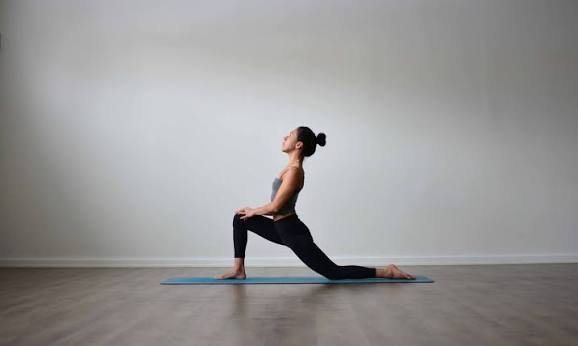
- Sanskrit Meaning: Anjani (Hindu Goddess) Asana (Pose)
- Yoga Level: Beginner
- Pose Type: Standing
Why this Pose: It’s time to stretch your groin and hip flexors.
- Put your right knee on the mat and step your left foot forward to perform a low lunge.
- To perform this, place your hands on the floor.
- You can either leave it over your ankle or bend it deeper into your front knee, depending on what feels more comfortable.
- For extra support, consider putting a yoga mat under your knee.
- Do the same on both sides.
Eka Pada Utkatasana (One-Legged Chair Pose)

Sanskrit Meaning: Eka (One) Pada (Foot) Utkata (Powerful) Asana (Pose)
Yoga Level: Intermediate
Pose Type: Standing
Why This Pose: Simultaneously activate your glutes and extend your outer thighs. If you start to feel unstable, back up against a wall.
- Start in the chair position.
- Put your weight on your left leg and raise your right foot off the ground without shifting your hips.
- Over your left thigh, cross your right ankle.
- Let your right knee drop to the ground.
- On the opposite side, repeat.
Skandasana (Side Lunge Pose)

Sanskrit Meaning: Skanda (Hindu War Deity) Asana (Pose)
Yoga Level: Intermediate
Pose Type: Standing
Why This Pose: Stretch your lateral muscles. If it looks excessive, you don’t have to strike the entire position. Alternatively, you might adopt a broad stance and alternatively bend each knee.
- With your feet parallel, spread your legs widely apart.
- Your left knee should be bent.
- Keeping your right foot straight and leaning toward the floor, stretch your left toes 45 degrees to go farther.
- It’s possible that your right toes will separate from the mat.
- Continue on both sides.
Best Post-Run Yoga Poses
Taking time to stretch and cool down after running can help your body recover more effectively. Going a little further into the same muscle group you worked during your warm-up may be suitable at this point.
Sucirandhrasana (Eye of the Needle Pose)
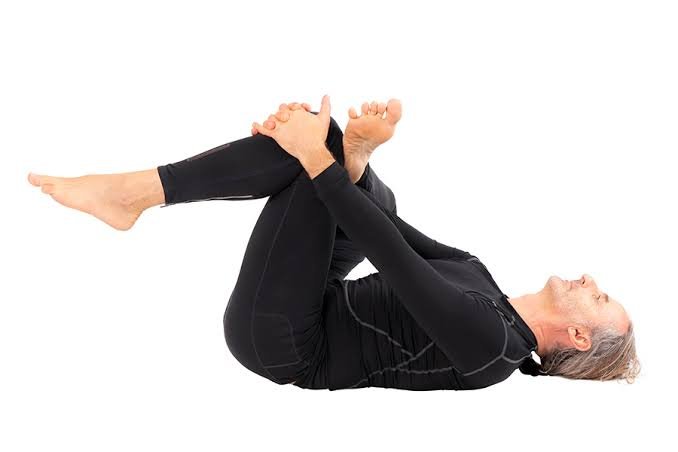
Also Known As: Reclined Pigeon Pose
Sanskrit Meaning: Suci (Needle) Randra (Opening) Asana (Pose)
Yoga Level: Beginner
Why this Pose: By repeating the Figure-4 stretch while lying down, Eye of the Needle Pose provides a mild yet powerful hip opening. It allows for a controlled release of tension, is more comfortable than the pigeon pose, and works the hips and lower back.
Steps:
- Lie on your back with your feet firmly planted on the ground and your knees crossed.
- As you would when standing upright, keep your upper body straight. Keep your spine from conforming to the floor’s contours. Specifically, keep your lower back off the ground.
- Now raise your right leg and wrap your hands around the center of your hamstring.
- Put your left arm behind your left leg and cross your left ankle over your right knee.
- Now, without raising your sitting bones, press your right leg against your hands as far away from your body as you can while maintaining an elevated lower back. Your lower back should feel stretched.
- Now, slowly bring your legs closer to your torso without allowing your lower back to come into contact with the floor. Feeling the stretch in your hips will be beneficial.
- On the opposite leg, repeat the pose.
Janu Sirsasana (Head-to-Knee Pose)

Sanskrit Meaning: Janu (Knee) Sirsa (Head) Asana (Pose)
Yoga Level: Beginner
Why this pose: It’s a traditional yoga-style hamstring stretch. This entails maintaining a long spine and deepening the position with each exhale.
- Sit cross-legged, with back straight. A blanket or bolster may be used to prop up the seat bones if this helps you to sit upright.
- Bend the right knee and lift the inner left thigh towards the instep of the right foot.
- Breathe in to stretch your spine, then exhale to extend your left leg.
- You don’t need to use your hands to access your feet. For support, place your hands on the carpet beside your leg or surround your foot with a strap or piece of fabric.
- Perform both sides.
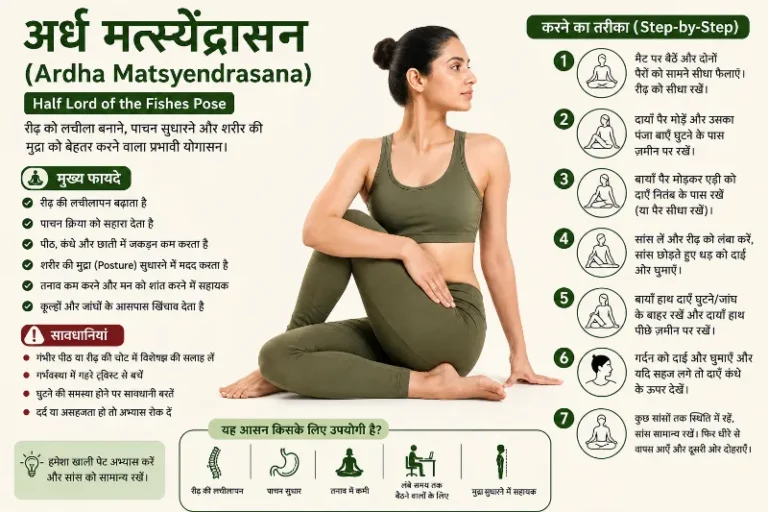
Supta Matsyendrasana(Supine Spinal Twist)
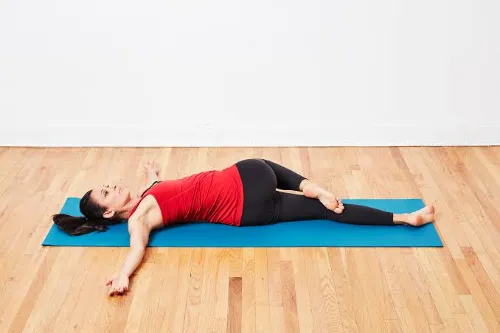
- Sanskrit Meaning: Supta (Supine)
- Matsyendra (Lord of Fishes)
- Asana (Pose)
- Yoga Level: Beginner
Why This Pose: Give your hips one last stretch and relax your spine.
- Rest on your back in a supine position.
- Bring your right knee into a bent position. Cross your right leg over your left knee. Stretch your right leg out beside your left knee, placing your heel against it.
- Use your left hand to gently press your right knee downward toward the floor.The supine twist will be produced as a result.
- As you stretch your right shoulder and arm to the right, stay in the middle of your right chest.
- To achieve the greatest amount of twist, keep slowly lowering your right knee till it meets the ground.
- Remember to take deep breaths into your spine.
- Perform the twist on the opposite side after holding your position for thirty seconds.
Viparita Karani (Legs Up the Wall Pose)
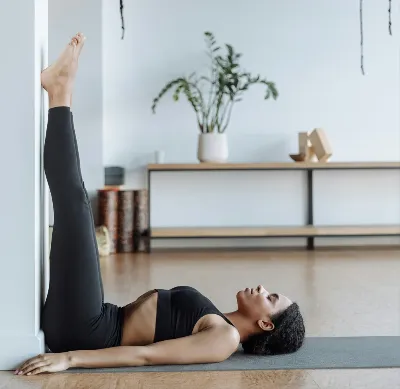
- Sanskrit Meaning: Viparita (Inversion) Karani (to do)
- Yoga Level: Beginner
- Pose Type: Inversion, Supine
Why this Pose: After a run, there’s nothing better than raising your feet!
Precautions: If you have glaucoma, stay away from inversions.
- Take a side seat next to a wall.
- Swing your legs gently up against the wall while lying on your back.
- Straighten your legs and let your arms drop to your sides.
- Take calm breaths and maintain the position for one to five minutes.
- Before sitting up, roll to one side and gently bend your knees.
Safety precautions
Warm up before practising: Before doing more difficult yoga positions or deeper stretches, start with five to ten minutes of light walking, running, or dynamic movements. When your muscles are cold, avoid stretching them suddenly and forcefully.
Avoid overstretching: Only stretch to a comfortable, gentle tension. Avoid comparing your flexibility to that of other practitioners, bouncing, or pushing the joints to their limit. If you experience pinching, intense pain, or growing pain, stop.
Breathe normally: Continue to breathe comfortably and slowly. When performing challenging positions, avoid holding your breath or straining. Forceful breathing techniques should be avoided by beginners, especially if they produce soreness or vertigo.
Make use of assistance and a secure setting: Practice on a non-slip mat with lots of space surrounding you. For balance poses, use a wall or chair. Until you receive proper guidance, stay away from difficult poses.
Conclusion
Including yoga in your running regimen helps you develop a more sustainable, well-rounded approach to your training, rather than just increasing your flexibility. As you get more comfortable, progressively increase the number of positions you practice. Start with these fundamental poses.
Enjoy the process of using yoga to become a stronger, more aware runner by paying attention to your body and being patient with your progress. Remember that consistency is more important than intensity and that even a brief practice session can have a significant impact on your running performance and recovery.
- Eight weeks of yoga significantly increase runners’ hip mobility, hamstring flexibility, and balance, all important aspects of injury prevention.
- Yoga breathing (pranayama) improves HRV, an important measure of recovery and endurance fitness.
- The low lunge, reclined pigeon, downward dog, warrior III, and sitting spinal twist are the top five poses for runners.
- The best recovery benefits come from rest-day yoga sessions and post-run calm yoga.
- Over a 12-week running cycle, even two or three yoga sessions per week result in considerable injury reduction.
FAQs:
Is yoga good for runners?
Regular yoga practice will help you strengthen and stretch the muscles you use to run down the trail or sidewalk, regardless of your level of experience. Additionally, yoga helps runners focus better and learn how to breathe more effectively.
How many days a week should runners do yoga?
Two to three days a week. Additionally, restorative or slow flow yoga courses can help you relax both physically and mentally if you want to incorporate some movement into your recuperation days. According to Kristin, doing yoga two to three days a week is generally recommended. She suggests a 45-minute yoga class and two 20- or 30-minute sessions.
Will yoga help runners’ knees?
Bend your knees, sit your hips back as though in a chair, stand with your feet together, and raise your arms. This improves support for the knee joint and stabilises the knees by strengthening the quadriceps and glutes. Stand with your feet spread wide, bend one knee, and shift your body sideways while keeping the opposite leg straight.
Is it better to do cardio or yoga?
Takeout. Try a balanced strategy that incorporates both exercise and yoga if you want to reduce weight and improve your health. While yoga offers flexibility, stress relief, and strength-building advantages that support long-term wellness, aerobic exercises effectively burn calories and improve cardiovascular health.
Which food increases stamina for running?
Vitamins, minerals, and antioxidants can be found in fruits and vegetables. Fish, poultry, beans, lentils, and tofu are examples of lean protein. Nuts, avocados, and olive oil are examples of healthy fats. Rice, whole-grain breads and pastas, and oatmeal are examples of healthy carbohydrates.
References:
- Maher, L., & Konstantinovsky, M. (2025, July 9). The key benefits of yoga for runners—and 7 poses to try. https://www.onepeloton.com/blog/yoga-for-runners
- Umel, A. U. (2024, March 26). The 10 best yoga poses for runners. Liforme. https://liforme.com/blogs/blog/yoga-for-runners-essential-poses-for-pre-run-and-post-run?srsltid=AU7gw4Vyp6kZ06V3zrbK8_7aH__KtOA_fiHRVRb5TmaFPJVjj4uDcx4P
- Houseworth, K. (2026, April 6). Runners, these stretches will help you experience your best Run—And recovery. Yoga Journal. https://www.yogajournal.com/practice/yoga-for-athletes/yoga-and-running/yoga-for-runners/
- Rows, S., & Rows, S. (2024, December 5). Yoga for runners: Essential poses and recovery techniques. Yoga Pose Mastery. https://www.yogaposemastery.com/yoga-poses/yoga-for-runners-essential-poses-and-recovery-techniques/