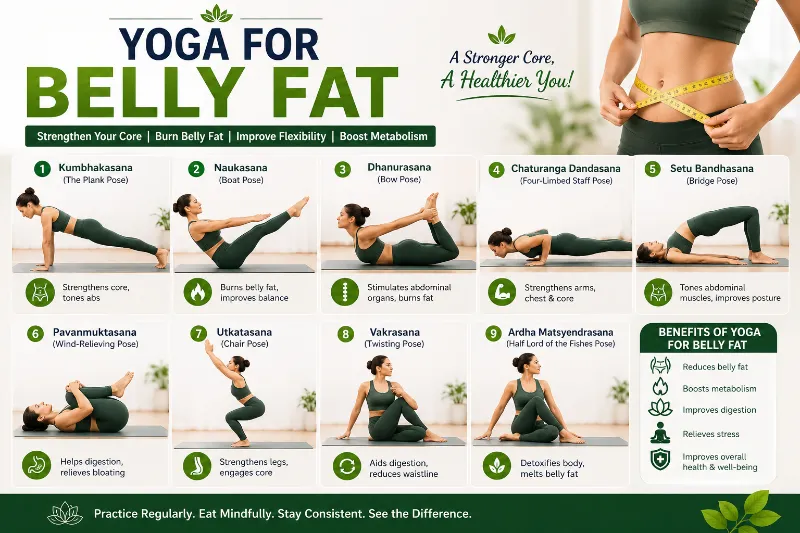
Top Yoga for Belly Fat Reduction
Does Yoga Really Help to Reduce Belly Fat?
“Does yoga help to reduce belly fat?” Before starting yoga, most people ask themselves this question. In a nutshell, the answer is definitely yes. But the “calories in versus calories out” calculation is only one aspect of the mechanics.
- Regulation of Cortisol:
- An excessive amount of stress causes “stress belly.” By lowering cortisol levels, yoga stops the body from storing fat in the middle as a survival strategy.
- Increased Metabolism:
- You may burn calories even while you’re not on the mat thanks to dynamic sequences and prolonged holds that raise the basal metabolic rate.
- Eating with awareness
- A stronger mind-body connection is fostered by yoga. You naturally make better food choices and identify “fullness” signals earlier when you are more aware of your bodily feelings.
- Toning of the Core:
- The transverse abdominis, the body’s core muscle, must be deeply stabilized during several postures to provide a harder, flatter image.
- How Yoga Targets Belly Fat
- Knowing the “how” enables you to carry out the “what” more successfully. Here’s how yoga reduces belly fat both mechanically and physiologically:
- Internal Organ Massage:
- The liver and digestive system are stimulated by twisting and compressing positions such as Ardha Matsyendrasana. This lessens bloating, which frequently resembles fat, and helps with detoxification.
The Ideal Time to Do Yoga to Lose Belly Fat
Your body’s capacity to access fat reserves and increase metabolic efficiency can be greatly impacted by timing.
Evening (before dinner): After a demanding workday, it can help calm the nervous system and reduce cortisol, which helps avoid stress-related overeating at night.
Brahma Muhurta, or early morning, is the “gold standard.” The body can burn stored fat instead of previously eaten glucose while practicing on an empty stomach (fasting). Your metabolism is also accelerated for the remainder of the day.
Before Meals: Wait at least two to three hours after eating before practicing. Before supper, a quick exercise might help control your appetite in the evening.
Best Yoga Asanas to Reduce Belly Fat
- Tadasana
- Kumbhakasana (The Plank Pose)
- Naukasana (Boat Pose)
- Dhanurasana (Bow Pose)
- Chaturanga Dandasana
- Ustrasana
- Vasisthasana
- Virabhadrasana
- Setu Bandhasana (Bridge Pose)
- Bhujangasana
- Pavanmuktasana (Wind-Relieving Pose)
- Utkatasana (Chair Pose)
- Vakrasana (Twisting Pose)(Four-Limbed Staff Pose)
- Ardha Matsyendrasana (Half Lord of the Fishes Pose)
- Balasana
- Shavasana
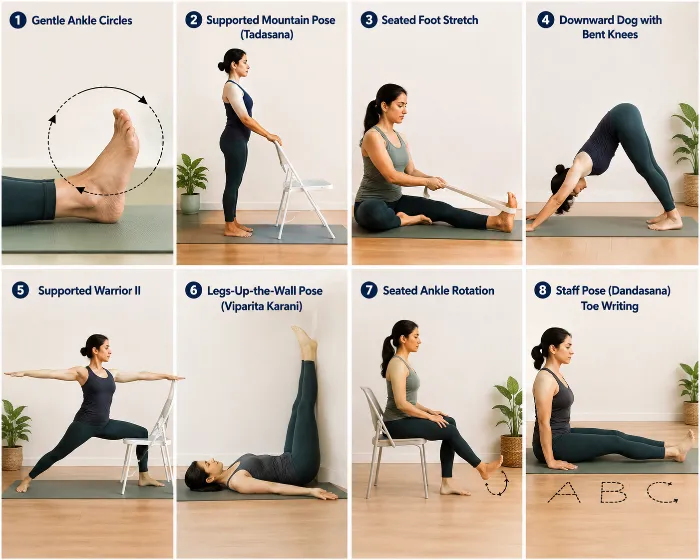
Tadasana(mountain pose)
The warm-up pose is this one. This stance, often called mountain pose, helps your body prepare for the next poses and enhances blood circulation. Here’s how to do it:
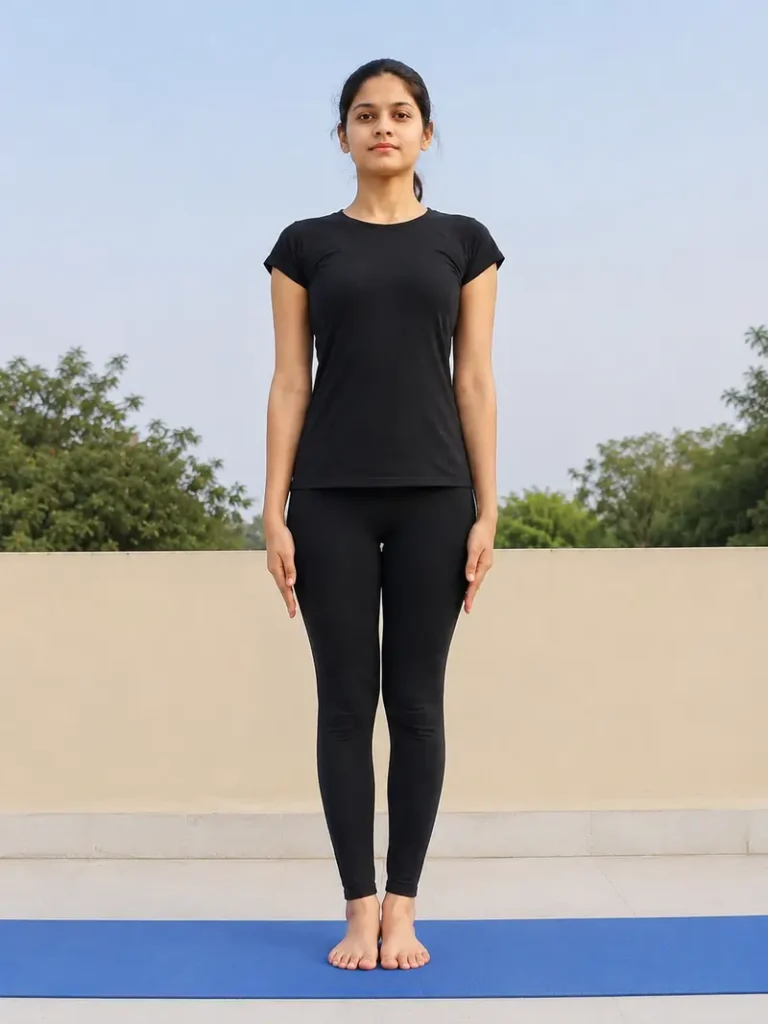
How to Do:
- Place your feet flat and spread your heels slightly.
- Bring your palms closer to one another as you extend your hands forward. Take a breath and extend your spine.
- Stretch as much as you can while raising your folded-up body above your head.
- Stretch and stand on your toes while attempting to raise your ankles. Inhale and exhale while gazing at the ceiling.
- After holding this position for 20 to 30 seconds, softly relax and return your feet to the floor as you exhale.
- Increase the time gradually and repeat this at least ten times.
Kumbhakasana (Plank Pose)
Because it focuses mostly on the core, this is one of the easiest and greatest yoga positions for losing weight and fat in the stomach. This pose will strengthen your arms, back, shoulders, thighs, and butt in addition to toning your abs!
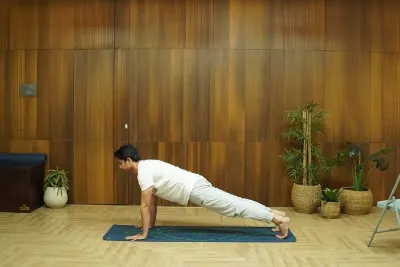
How to Do:
- Place your palms close to your face while lying flat on your stomach.
- Bend your feet such that the ground is being pushed by the toes.
- Push your hands off the ground to begin lifting your body.
- Maintain a straight posture with your wrists directly beneath your shoulders.
- Spread your fingers and apply pressure to your hands if you sense your chest compressing. Look directly between your hands.
- Make sure your abdominal muscles are stretched in the direction of your spine.
- Keep your thighs raised, align your body, tuck in your toes, and take a stride back with your feet. Maintain this posture.
It is intended for all practitioners, from novices to experts. You may do the Dolphin Plank on your forearms if you have carpal tunnel syndrome.
Naukasana (Boat Pose)
One of the finest yoga poses for flat bellies is this classic core position. It dissolves stubborn belly fat and tones the muscles of the abdomen.
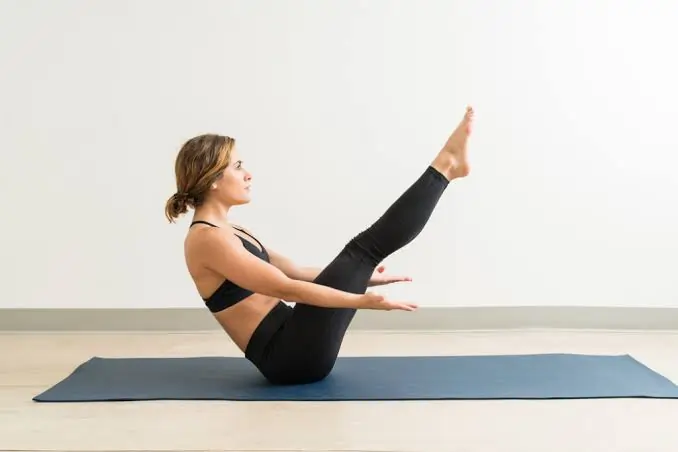
How to Do:
- Arms by your sides and legs outstretched, lie flat on your back.
- Breathe in and raise your legs and upper body off the ground at the same time, keeping them straight.
- Reach for your toes with your arms extended forward and parallel to the ground.
- Maintain an open chest and a straight spine while balancing on your sitting bones.
- Breathe steadily while you hold the stance for 15 to 30 seconds.
- Breathe out and gently bring your legs and body back down.
- As comfortable, repeat 3–5 times.
Dhanurasana (Bow Pose)
Stretching the entire body, especially the abdomen, and strengthening the core muscles are two benefits of the bow pose.
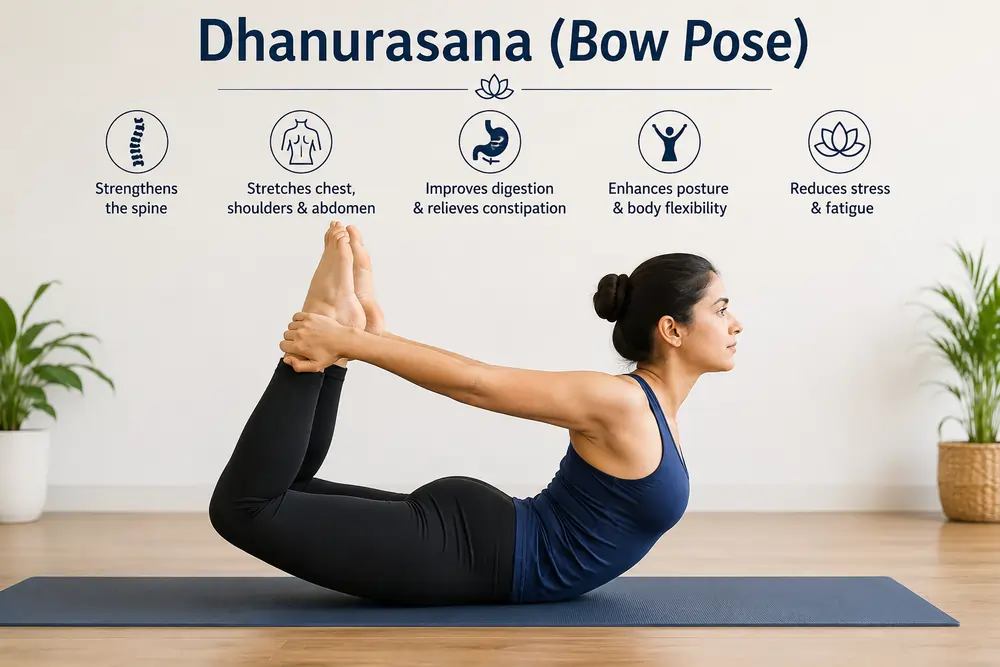
How to Do:
- With your arms and hands by your sides and your legs and feet together, lie flat on your stomach.
- Bring the heels near the buttocks while bending the knees. Hold onto the ankles with your hands.
- Throughout the exercise, keep your arms straight and your knees and thighs firmly planted on the ground.
- Put your chin on the ground.
- As you raise your head and chest as high off the ground as you can without straining, tense your legs and raise your feet back.
- While keeping the back muscles passive, use the backward movement of the legs to help raise the body. In the final posture, the neck is not compressed, and the gaze is upward.
Chaturanga Dandasana
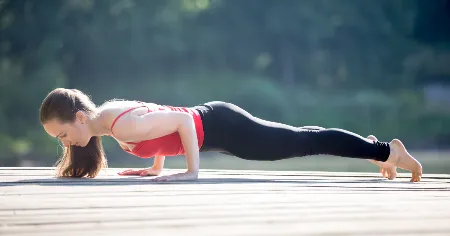
How to Do:
- Take a seat in Vajrasana.
- Put your hands beneath your shoulders and walk forward into Dandasana, or plank posture.
- With your toes facing inward, straighten your legs until they are parallel to the ground and a few inches above it.
- Bend your elbows as you exhale until your shoulders and elbows are at the same height.
- Breathe out. Get into the plank position. Breathe out.
- Take a seat in Vajrasana.
Pro Tip: Make sure you are utilizing top-notch equipment to maximize your outcomes. Deep core engagement requires stability, which is provided by an eco-friendly, non-slip yoga mat. When attempting to hold a challenging plank, you shouldn’t have to worry about your hands slipping!
Ustrasana
When performed correctly, this yoga pose tones the abdominal muscles and provides your body with a nice stretch! Therefore, make sure you execute this yoga stance if your goal is to reduce belly fat. Your back muscles will be strengthened by this stance as well.
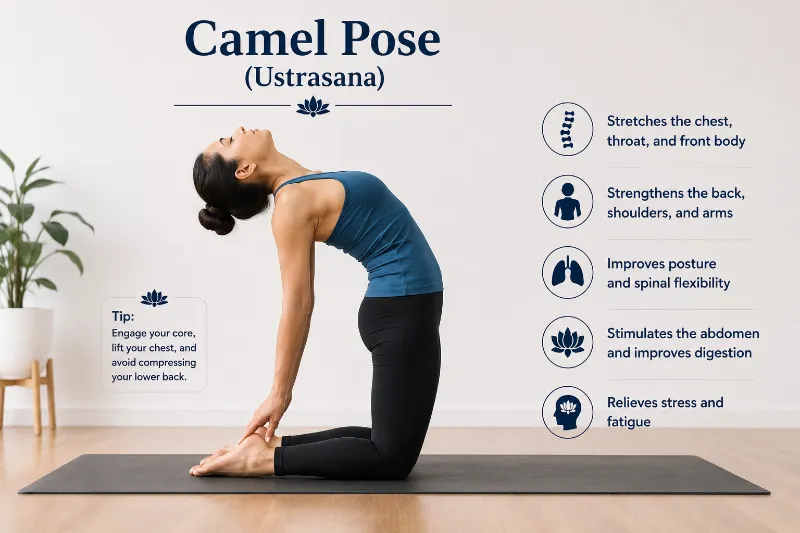
How to Do:
- Sit in the Vajrasana position to start.
- Gently raise your body off your knees such that your entire body weight is supported by your knees.
- Make sure the line formed by your heels is perpendicular to the ground.
- Take a long breath out and arch your back.
- Attempt to grasp each of your ankles individually by bringing your hands behind your body.
- Stretch backward and angle your head behind you. Your stomach should feel stretched.
- For 20 to 30 seconds, maintain this position.
- You can extend that to 60 seconds as you practice.
- Breathe out and slowly return to Vajrasana.
- After a 15-second pause, repeat five times, increasing the count each time.
Caution:
Do not attempt this posture if you have high blood pressure, lower back or neck injuries, or heart-related conditions.
Vasisthasana
Once you are completely at ease with the basic positions, you must move on to this posture if you routinely practice yoga for stomach fat. You can lose fat around your waist and tummy by doing this stance.
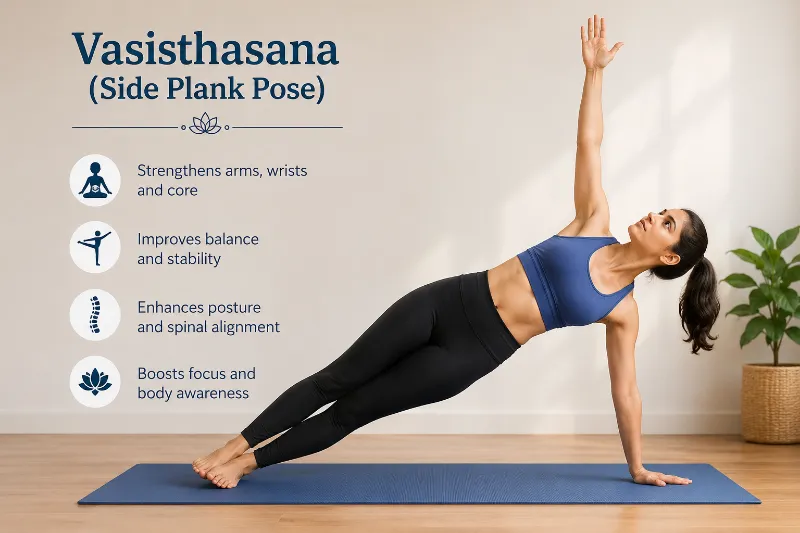
How to Do:
- Place your weight progressively on the outside edge of your left foot while maintaining the downward-facing dog stance.
- Maintain contact between the foot and the ground.
- Keep your right foot above your left while lifting it off the ground.
- Raise your right hand off the ground, raise it, and rotate your torso to the right.
- Make your neck turn so that it faces the lifted hand.
- Using your left hand and foot, balance your entire body. For 15 to 30 seconds, maintain the posture.
Virabhadrasana
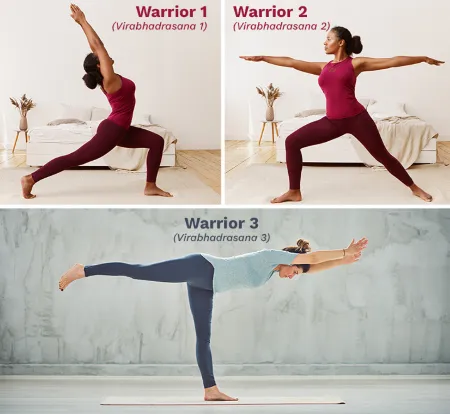
How to Do:
- Keep your legs wide apart and stand erect. One foot should be turned 90 degrees outward, while the other should be turned inward.
- Make sure this foot’s heel is in line with the other foot’s center and turned in.
- Turn your shoulders and chest forward while placing your hands on your hips.
- Take a breath, raise your arms over your head, and hold them in Namaste.
- Maintain a solid back leg while lowering your shoulders. Exhale, bend the back knee, and maintain alignment with the other ankle. Ensure that your thigh is in line with the floor. Drop your head back, arch your back, and look up at your arms.
- Your weight will be able to move backward if you ground down the front foot. Engage your abdominals and draw your tailbone toward your pelvis.
- Hold the posture for ten to twenty seconds.
- Breathe in, straighten your back leg, then release your arms and bring your feet together. For the opposite side, repeat these steps.
Setu Bandhasana (Bridge Pose)
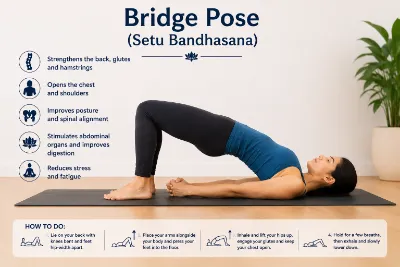
How to Do:
- Lift your hips toward the sky while pushing your lower back down while lying on your back with your knees bent and your feet flat.
- Repeat three repetitions while holding five breaths.
- Bridge pose builds the posterior chain support that is essential to true core stability by simultaneously strengthening the glutes, lower back, and lower abdominals.
Bhujangasana

How to Do:
- With your legs slightly apart and your toes in contact with the floor, lie with your chest facing down. With your palms toward the ground, keep your hands on either side of your body.
- Put your hands under your shoulders.
- Take a deep breath, then slowly raise your head and torso off the ground. Keep your eyes fixed on the ceiling.
- Keep your buttocks stiff and tuck your pubis toward your navel.
- While breathing normally, hold onto this for 15 to 30 seconds. Breathe in, lower yourself gradually, then release the breath and unwind.
- After 15 seconds of relaxation, begin the second set.
- Start by performing this pose at least ten times, then extend the time to thirty times.
Pavanmuktasana (Wind-Relieving Pose)
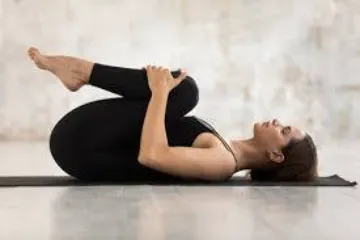
How to Do:
- With your feet spread out and heels in contact, lie face up with your arms on each side.
- Your knees should be bent. Breathe deeply, then pull your bent knees to your chest and encircle them with your arms as you exhale.
- Take another breath, then raise your head so that your chin touches your knees as you exhale.
- Maintain this posture while breathing continuously for 60 to 90 seconds. Breathe out and return to the starting position gradually.
- Unwind! Perform this pose seven to ten times, pausing every fifteen seconds.
Caution:
If you have heart problems, blood pressure problems, spinal problems, or are pregnant, do not do this.
Utkatasana (Chair Pose)
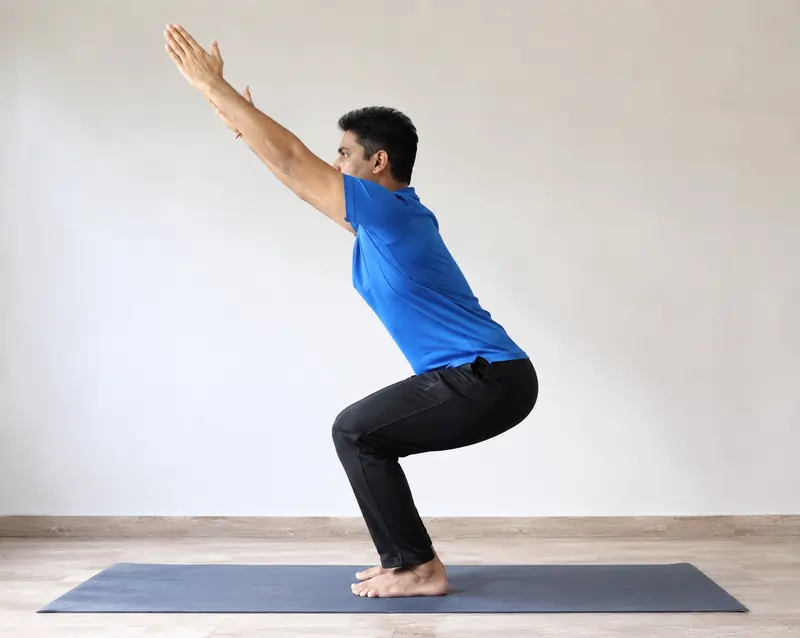
How to Do:
- Place your feet hip-width apart.
- Take a breath and lift your arms over your head.
- Breathe out and drop your hips as tho you were sitting in a chair while bending your knees.
- Maintain your knees behind your toes and your weight on your heels.
- In the direction of your spine, draw your belly button.
- Hold for thirty to sixty seconds.
- Repeat three to five times.
Vakrasana (Twisting Pose)(Four-Limbed Staff Pose)
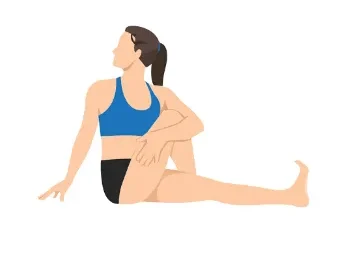
How to Do:
- With both legs extended straight ahead of you, take a seat on your yoga mat.
- Maintain a straight back and flat palms next to your hips. Just take a moment to relax and breathe here.
- With your right knee pointing up, gently bend it and lay the foot flat on the floor next to your left knee.
- Keep your left leg stretched and at ease.
- With your fingers pointing away from your body, place your right hand on the floor behind you.
- This serves as your anchor, providing you with stability and support during the twist
Ardha Matsyendrasana (Half Lord of the Fishes Pose)
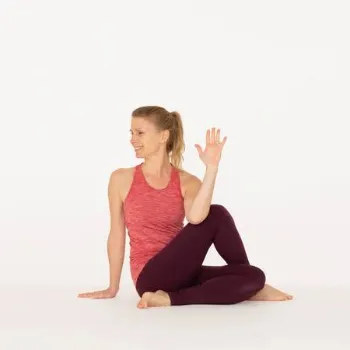
How to Do:
- Take a seat with your legs straight and let your whole body unwind. Place the left heel close to the right buttock while bending the left leg.
- Place the right foot’s sole flat on the ground away from the left knee.
- You should keep both butts on the mat.
- You may use a foam block or a blanket.
- The back should be straight and at ease.
- Holding the right ankle, place the left arm outside the right knee.
- It’s okay if you can’t hold your ankle; beginners may proceed slowly.
- To the extent that it is comfortable, turn the upper body to the right. Look over your right shoulder as you place your right arm across your back.
- Breathe regularly and relax your entire body while you remain in this posture for a few minutes.
Balasana
The ideal stance to relax your body after a demanding workout is the child pose
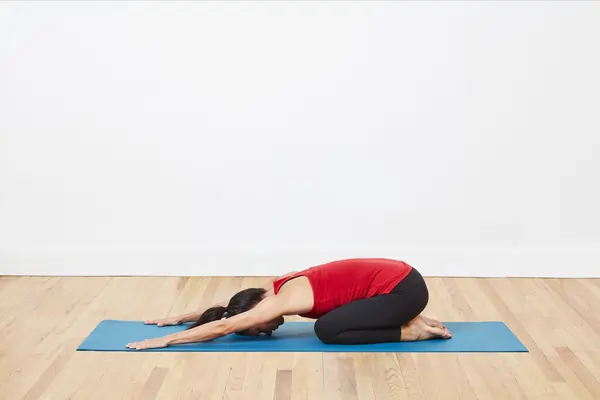
How to Do:
- With your buttocks almost touching the floor and your heels slightly apart, take a kneeling position.
- Maintain an upright posture and place your hands on your knees.
- Breathe in, gently raise your arms, then release the breath and slowly lean forward, placing your forehead and palms on the ground.
- Remain there for a while. Keep your stomach tucked in and breathe properly.
- Take a breath and slowly rise. Breathe out and return to your starting posture. Prepare yourself for the shavasana.
Be careful: If you are pregnant, don’t perform.
Shavasana
Your body can unwind in the corpse pose following a strenuous workout.
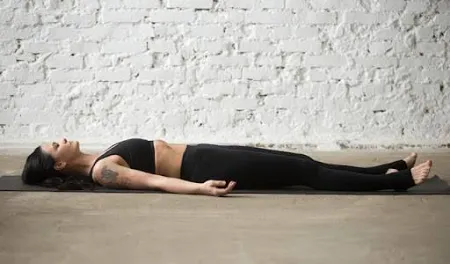
How to Do:
- Keep your feet together or spread them apart while lying with your face up.
- Your hands should remain on either side of your body. Shut your eyes.
- Breathe in and out deeply so that your body may fully relax.
- Remain there till your body feels normal.
Common Mistakes That Block Belly Fat Reduction
- Keeping Your Breath In:
- When a position becomes challenging, a lot of individuals hold their breath. Increased tension and improper muscle activation result from this “fight or flight” reaction. Use deep nasal breathing, or Ujjayi, at all times.
- Back Arching:
- Allowing the lower back to droop (lordosis) during planks or boat postures transfers the weight from the abs to the spinal disks. Maintain a tucked tailbone.
- Inconsistency
- You can’t change your metabolism or hormonal profile by practicing once a week. Even if the sessions are brief, try to get in at least three to five each week.
- Disregarding Nutrition
- A bad diet cannot be overcome by yoga. Although yoga is a potent catalyst, it is most effective when combined with healthy, unprocessed foods and lots of water.
Who Should Avoid Certain Asanas?
- Pregnancy: Avoid twisting, deep abdominal contractions, and prone (lying on the stomach) positions. Pay attention to prenatal-safe motions.
- After recent abdominal surgery, wait three to six months for the tissues to fully recover before performing intense asanas that strengthen the core.
- Hernia Patients: Poses like Boat or Bow that raise intra-abdominal pressure might worsen a hernia. An expert should always be consulted first.
- Severe Back Pain: Unless instructed by a licensed yoga therapist, stay away from deep backbends and strong forward folds if you have a herniated disk.
FAQs
How long does it take for yoga to help with abdominal fat?
Within four to six weeks, most people experience increased muscle tone and noticeably less bloating with a regular 30-minute practice four times a week and a balanced diet. After three months, significant fat reduction typically occurs.
Can yoga help you lose tummy fat?
Yoga can help reduce weight, especially belly fat, but it’s important to realize that it’s a holistic strategy rather than targeted fat loss. Yoga can produce the calorie deficit needed for weight loss when paired with a nutritious diet and way of life. Certain yoga positions can improve the overall appearance of the belly area by toning and strengthening the abdominal muscles. Yoga can also be an effective way to manage stress, which is frequently connected to weight gain and the buildup of belly fat.
Which five foods are the worst for tummy fat?
Avoid fried foods, sugar, packaged and processed foods, dairy, and alcohol if you’re attempting to lose belly fat.
To maximize weight loss, how many days a week should I do yoga?
To maximize weight loss, how many days a week should I do yoga?
To increase metabolism, the blog suggests practicing regularly—ideally every day or at least four or five times a week—along with a healthy diet
Does cobra position or bhujangasana help reduce abdominal fat?
Although it may not directly reduce belly fat, Bhujangasana, sometimes called the Cobra Pose, is a great yoga pose with many health advantages. It is crucial to remember that fat loss typically happens evenly across the body, making targeted fat loss—also referred to as spot reduction—impossible. Bhujangasana, on the other hand, is an excellent pose for strengthening the muscles in your shoulders, belly, and back, which can enhance your overall appearance and support the maintenance of a healthy body.
Reference
- Sukriti Rijhsinghani. (2018). 13 Yoga Asanas To Reduce Belly Fat. Be Beautiful India. https://www.bebeautiful.in/wellbeing/fitness/6-yoga-asanas-that-promise-to-reduce-belly-fat
- Dr. Hiral Parmar. (2025). 12 Best Yoga For Abdominal Fat – Samarpan Weight Loss Clinic. samarpanweightlossclinic.com. https://samarpanweightlossclinic.com/yoga-for-abdominal-fat/
- Sanya Anand. (2026). Yoga Asanas to Reduce Belly Fat: Best Poses for Weight Loss. Be Beautiful India. https://www.bebeautiful.in/wellbeing/fitness/yoga-asanas-to-reduce-belly-fat
- Abhinav. (2026). 6 Best Yoga Poses for Weight Loss and Belly Fat Reduction: Benefits, Tips and Guide – Habuild Blog. Habuild Blogs. https://habuild.in/habitology/asana-mudra/yoga-for-weight-loss-and-belly-fat-reduction/
- Dr Aaksha Shukla. (2025). 8 Effective Yoga Poses For A Flat Belly | International Yoga Day 2025. Dr. B. Lal Clinical Laboratory. https://blallab.com/blogs/yoga-poses-for-flat-belly