Virasana (Hero Pose)
What is Virasana (Hero Pose)?
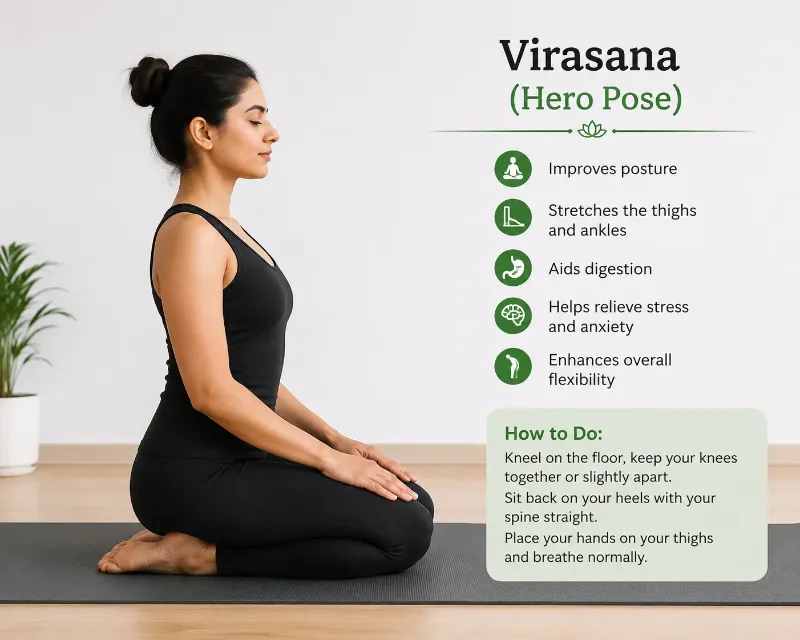
In everyday yoga practice, Virasana, also known as Hero Pose, is a seated pose that typically goes as a warm-up or rest pose. It benefits yogis of any ability as this pose relaxes, reenergizes, and stretches the front thighs, ankles, and knees.
To start, practitioners kneel on the mat with their spine straight and feet slightly out. Practitioners can rest their glutes by being seated comfortably in hero pose, with their hands on their knees, or bring them to their heart in a prayer position, between the calf muscles on the ground.
Virasana, a resting meditation position, requires a high degree of flexibility in the ankles, knees, and hips. Thus, you should only strike this pose to the extent it makes you feel comfortable.
Overview & Etymology
The Sanskrit words “Vira,” which means hero or warrior, and “Asana,” which means pose, are the sources of the name Virasana.
In Hindu mythology, the god Shiva created Virabhadra in vengeance for Sati, his bride, death. It is said that when Sati died, Shiva was so consumed in grief and rage that he tore out a lock of his own hair, which transformed into the fierce warrior Virabhadra.
Virasana thus appears for the courage, strength, energy, and competence of a warrior.
The hero pose was first seated as a seated meditation pose in the 8th-century text Patanjalayogashastravivarana and the 13th-century medieval classic Vasishthasamhita.
When B.K.S. Iyengar recommended the hero pose as a quadriceps lengthening exercise in his 20th-century book Light on Yoga, it became an essential kneeling pose in modern yoga.
- Sanskrit Name: Pronunciation: veer-AHS-anna
- Pose Type: Seated. Also known as: Hero Pose
- Strengthens: Feet, Ankles, Spine, Core, Groin, and Glutes
- Stretches: Spine, Quadriceps, Knees, and Ankles
Muscle Work During Virasana:
- Hip Muscles
- Knee Muscles
- Quadriceps Muscle
Meaning:
The Sanskrit term Vira, which comes from the root Virya, which means vitality, courage, and energy in the body, implies “brave,” “strong,” or “heroic.”
In yogic mythology, a hero is someone who not only acts bravely but also overcomes internal conflicts. As we sit in Virasana, we are reminded of this harmony between surrender and strength. When practised mindfully, it calms the mind, stabilises breathing, and helps awaken the inner hero and controlled thoughts and wants.
Health Benefits of Virasana
- Activates your Root Chakra.
- Improves digestion and gut health.
- Relieves symptoms of menopause.
- Strengthens and lengthens the spine.
- Improves blood circulation in the lower body.
- Enhances flexibility in the ankles, knees, and thighs.
- Has therapeutic effects on clients with asthma and high blood pressure.
When to Avoid Performing Virasana?
- Avoid during migraine.
- Avoid if you have a slipped disc.
- Avoid on the plain of the back if you have severe neck or back pain.
- If you have inflammatory knee arthritis, avoid clear.
- Avoid clear if you recently got surgery or an injury.
- Avoid sitting up for a while if you have swollen feet in the final trimester of pregnancy.
What is Virasana (Hero Pose)?
Virasana (Hero Pose)
Virasana, known as Hero Pose, is a seated pose and is typically practised as a warm-up or rest pose in everyday yoga practice. Yogis of any level will find this pose’s ability to relax, reenergize, and stretch the front thighs, ankles, and knees.
To start, practitioners kneel on the mat with their spines straight and feet slightly turned out. Once resting in a seated hero pose, practitioners may place their hands on their knees or bring them to their heart in a prayer position, with the glutes resting between the calf muscles on the ground.
Virasana is a resting meditation position with high flexibility in the hips, knees, and ankles. Thus, you should only strike this pose to the extent that it helps you feel comfortable.
How to do Virasana (Hero Pose)?
To make the practice of Virasana less complicated, we have divided it down into a few easy parts, including a warm-up, posture cues, cool-down, and much more.
Get your yoga mat as we start the hero pose practice.
Part 1 – Preparatory Poses for Virasana
Before starting your Virasana practice, practice the warm-up poses to activate your legs, core, and glutes:
Surya Namaskar (Sun Salutation)
- Before Virasana, practising Surya Namaskar can be an excellent way to strengthen and improve your flexibility as you prepare the whole body for this kneeling pose.
- Start in Tadasana and work through a series of poses, including Cobra Pose, Upward-Facing Dog Pose, Downward-Facing Dog Pose, Standing Forward Fold, and Chaturanga Dandasana.
- As you perform Surya Namaskar, remain in each pose and focus on your breath. 10 to 12 repeated runs of the full step are probable.
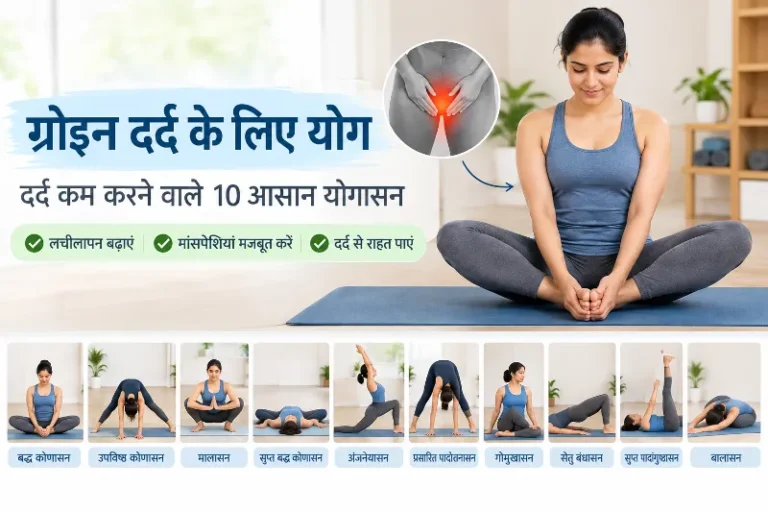
Baddha Konasana (Bound Angle Pose)
2. Baddha Konasana is an excellent way to prepare your body for the hero pose. It can help your thighs and glutes improve flexible and stable.
- Bend your legs and pull the soles together; you are seated with your legs in front of you. Ensure the knees are on the ground, holding the feet with your palms. You can lift your knees toward the floor with your hands.
- Also, keep a straight back and a lifted chest and open your hips. Hold this pose for 3 to 5 minutes, of complete flex the lower body and spine.
Part 2: Step-by-Step Instructions to Perform Virasana
To practice the Hero Pose, follow the steps:
- Step 1: Sit on the floor with the spine straight and your legs stretched in front of you.
- Step 2: Bend your knees back one at a time so you are sitting between your calves.
- Step 3: Close your eyes and focus on extending your spine.
- Step 4: After that, place your palms on your kneecaps and focus on breathing deep breaths.
- Step 5: After a minute of holding this position, straighten your legs into the staff pose to release.
Breath Awareness:
- Inhale: Inhale a breath & bend the legs back into the hero posture.
- To exhale, lift the head to the sky, and the spine will extend.
- Inhale and exhale while holding the hero pose for a prolonged duration as duration.
- Hold the hero pose for 60 to 90 seconds as a beginner.
- Advanced Performance Duration: Hold the hero pose until it feels comfortable.
Part 3: Things to Keep in Mind
Practice the following posture cues to discover how to posture properly for a safe Virasana practice:
- Don’t rush: To lean into a hero pose too quickly, your lower body may not be activated, and it can end in severe injury during prolonged holds.
- Also, it is essential to pay attention to your body; if you feel discomfort in Virasana or have concerns regarding ways to perform the pose properly, seek a qualified yoga instructor.
- Keep a straight back; bending over can lead to more. You sit in Virasana, back straight and chest lifted. This will help you maintain better posture and lessen the strain on your lower back.
Part 4: Relaxing Poses After Virasana
Practice these counteryoga poses to relax and reestablish blood circulation in your legs and hip muscles after a long Virasana practice:
Adho Mukha Virasana (Downward Facing Hero Pose)
- Start in the Virasana position, slowly lower your head and torso toward the floor, keeping a straight back and a lifted chest.
- Keep your hips anchored and your legs and core active as you lower. For deep spinal relaxation, raise your arms above your head and stretch your upper back muscles.
- Slowly sit back up in Virasana once you are ready to release the pose. Until your back muscles are completely relaxed, hold the pose.
Paschimottanasana (Forward Fold Pose)
2. Paschimottanasana is an excellent pose to practice after Virasana as it helps stretch and release tension in the back and leg muscles. Post-practice the hero pose, unwind by extending your legs in front of you and keeping a straight back and a straight chest.
- As you lower your torso toward your legs and reach for your toes or shins, inhale and exhale slowly exhale. You can use your hands to hold your shins or toes.
- Keep a straight back for the prolonged stretch. Hold the pose for 2 to 5 minutes for deep relaxation in the lower back and hamstrings.
Virasana Variations to Consider
Practice these different Hero Pose variations to challenge your body and raise your yoga practice.
Parivrtta Virasana (Revolved Hero Pose)
- Simply adding a twisting motion to this pose is an excellent way to increase flexibility in your shoulders, legs, and spine.
- To start, adopt the hero pose. Your right hand will be on the floor behind you. Place your left palm on your right knee and slowly start to twist your spine and gaze over your right shoulder.
- Keep a straight back and a lifted chest as you twist. As you become more comfortable and your flexibility improves, gradually extend the pose’s duration. As long as it feels comfortable, stay in this position.
- When you’re ready to release the pose, return to the hero pose and slowly untwist your spine.
Supta Virasana (Reclined Hero Pose)
- This restorative variation involves reclining in hero pose & reclining back on your forearms. As it may seem easy, a more advanced variation of virasana may only be suitable for some practitioners.
- After you’ve performed virasana, raise your elbows to the outside of your knees and place your hands on the floor behind you. First, raise your chest toward the sky while leaning back on your forearms and keeping a straight back.
- Once you’ve given your back and shoulder muscles rest, gradually lie back completely on the ground. Shift your arms over your head to improve the flexibility of your knees, quadriceps, shoulders, and spine.
FAQs
Can beginners perform Virasana?
Yes, with the right adjustments and direction, novices may perform Virasana. But it’s important to pay attention to how your body feels.
If sitting on your heels is difficult for you as a beginner, you can use props like blankets or blocks to support your hips.
What is Virasana good for?
If you’re feeling really exhausted, nervous, or stressed, you should practice Virasana. This pose gives you energy and improves your lower body’s flexibility.
The hero position is also thought to cultivate a strong sense of courage, which can assist practitioners in accessing their inner warrior and effortlessly overcoming daily challenges.
What are the benefits of Virasana?
While the advantages of Virasana may differ based on a person’s degree of flexibility and general physical state, the following are some possible advantages that everyone can experience:
Improves sitting posture.
Improves cognitive stability.
Enhances focus and concentration.
Reduces stress and promotes relaxation.
Boosts your sense of inner strength and courage.
Helps to improve digestion and alleviate constipation.
Relieves mild backache, sciatica, and menstrual discomfort.
What are the different preparatory poses in Virasana?
The following are a few poses that can assist in getting the lower body ready for Virasana:
Balasana (Child’s Pose)
Malasana (Garland Pose)
Uttanasana (Standing Forward Bend)
Baddha Konasana (Bound Angle Pose)
It is easier to sit comfortably in Virasana when the hips, thighs, and ankles are stretched and opened by these poses.
What are the different variations in Virasana?
Depending on your degree of comfort and flexibility, you can try a variety of Virasana poses. Some variations include:
Virasana with a block
Virasana with a bolster
Parivrtta Virasana (Revolved Hero Pose)
Supta Virasana (Reclined Hero Pose)
You can adjust or improve your yoga practice by using these variations. But keep in mind that it’s crucial to pay attention to your posture and only go as far in these variants as is comfortable for you.
Who should avoid performing Virasana?
Due to the following physical restrictions or health issues, some practitioners are unable to perform Virasana.
Those with low back pain or injuries.
Those who suffer from plantar fasciitis or other ankle ailments.
Those who suffer from disorders including rotator cuff problems or accidents to their spines.
Those who have hip replacements or injuries like bursitis.
It is easier to sit comfortably in Virasana when the hips, thighs, and ankles are stretched and opened by these poses.
People who have rheumatoid arthritis, osteoarthritis, or other illnesses that affect their knees.
References:
- Allen, W. (2025c, August 26). Virasana. https://myyogateacher.com/yoga-asana/virasana
- Dr.Nidhiphysio. (2022). Virasana: Health Benefits, Types, How to do? – Mobile Physiotherapy Clinic. Mobile Physiotherapy Clinic. https://mobilephysiotherapyclinic.in/virasana-health-benefits-steps-types/
- Yoga Journal. (2025f, February 27). Hero pose. https://www.yogajournal.com/poses/hero-pose/
- Hero Pose Yoga(Virasana)| Yoga sequences, benefits, variations, and Sanskrit pronunciation | Tummee.com. (n.d.). Tummee.com. https://www.tummee.com/yoga-poses/hero-pose

4 Comments