Yoga for Flat Feet
Introduction
A large percentage of Indian adults have flat feet, which result from the collapse of the medial longitudinal arch. The altered biomechanical chain that starts when the arch is unable to sustain its load-bearing function results in foot arch pain, ankle instability, knee malalignment, and lower back tension.
Most individuals use orthotic insoles to treat flat feet; however, they passively support the arch without developing the muscle strength necessary for the foot to support itself. Yoga for heel pain helps with flat-footed walking by targeting the plantar fascia, which is most commonly overused during this gait.
Through focused weight-bearing exercises that gradually strengthen these tiny but vital muscles, yoga for flat feet develops the tibialis posterior and intrinsic foot muscles, which are the main active supports of the medial arch. Yoga may help restore some active arch support, which lessens the cascade of compensation that flat feet cause throughout the lower limb, when combined with ankle stability and calf strengthening. Yoga for leg pain relieves the calf and shin stress that flat-footed walking frequently causes, providing additional lower limb support.
Types of flat feet
Flexible flat foot
The most prevalent kind is the flexible flat foot. Your soles fully touch the ground when you set your feet on it, and the arches in your feet only show up when you lift them off the ground.
This type is typically not harmful and begins in childhood.
Tight Achilles tendon
Your calf muscle and heel bone are joined by your Achilles tendon. Walking and running may hurt if it’s too tight. When you run or walk, this issue causes the heel to elevate too soon.
Posterior tibial tendon dysfunction
This kind of flat foot develops in maturity as a result of an injury, swelling, or tearing of the tendon that joins your calf muscle to the inside of your ankle. You will have pain on the inside of your foot and ankle as well as on the outside of your ankle if your arch is not supported. You may have the condition in one or both feet, depending on the underlying cause.
What causes flat feet?
The tissues and bones in your feet and lower legs are connected to flat feet. Because it takes time for the tendons to tighten and form an arch, the disease is typical in infants and young children. A child may occasionally feel pain when their foot bones join.
Flat feet may result from incomplete tightness. The tendons in one or both feet may deteriorate with age or accidents. Additionally, the disorder is linked to conditions including muscular dystrophy and cerebral palsy.
Who is at risk?
If flat feet run in your family, your chances of having them are increased. You are more vulnerable to foot and ankle problems if you are really athletic and physically active.
Additionally, older adults are more vulnerable to physical harm or falls. Individuals who suffer from muscular disorders, such as cerebral palsy, are also at higher risk.
Obesity, hypertension, and diabetes mellitus are additional risk factors.
Can Yoga Really Help with Flat Feet?
Yes, by strengthening the foot muscles that actively support the medial arch, yoga can improve its capacity to support weight during walking and standing. The intrinsic foot muscles—the small muscles inside the foot itself—create the active arch support that orthotic insoles cannot in response to the weight-bearing and toe-spreading demands of yoga practice.
Yoga practice may lessen foot arch pain, ankle rolling, and secondary knee and back problems that flat feet frequently cause when combined with increased ankle stability and calf flexibility. It takes weeks or months of consistent practice to see results.
Benefits of Yoga for Flat Feet
Strengthens the Intrinsic Foot Muscles That Support the Medial Arch: The main active supports of the medial longitudinal arch are the flexor digitorum brevis, abductor hallucis, and other intrinsic foot muscles. These muscles are weak and have poor activation patterns in flat feet. These tiny muscles are specifically targeted by yoga postures that demand toe spreading, foot dome activation, and single-leg balance. These poses gradually develop the active arch support that insoles passively replace.
Builds Tibialis Posterior Strength for Dynamic Arch Support: The main dynamic supporter of the arch during walking and running is the tibialis posterior, a deep calf muscle that attaches along the medial arch bones. The main cause of medial ankle pain in many adults with flat feet is tibialis posterior tendinopathy, a degradation of this tendon caused by prolonged stress. The tibialis posterior may be strengthened, and its tendon stress reduced via yoga poses that test this muscle through medial arch raises and single-leg calf raise patterns. Additional lower limb support is provided by yoga for leg pain.
Improves Ankle Stability to Reduce Rolling and Injury Risk: Pronation, or the inward rolling of the ankle during the stance phase, is caused by flat feet and strains the lateral ankle ligaments, increasing the risk of ankle sprains. Yoga’s single-leg balance exercises strengthen the peroneal muscles and proprioceptive response, which prevents ankle rolling on uneven surfaces and during fast direction changes.
Reduces Knee and Lower Back Pain Through Biomechanical Correction: Secondary discomfort in the knee, hip, and lower back results from the collapse of the medial arch, which also causes excessive knee valgus (inward knee deviation), internal tibial rotation, and compensatory hip rotation adjustments. The knee and back pain that results from the flat-footed loading pattern at the ground level may be alleviated by increasing arch strength through yoga.
Improves Balance and Proprioception in the Foot and Ankle: Impaired proprioception in the foot and ankle is linked to flat feet, which lessens the body’s capacity to detect ground contact and make the small changes necessary to avoid ankle sprains and falls. The single-leg balance poses of yoga improve reflexive ankle stability, which lowers the chance of injury in daily activities and sports. It also challenges and develops foot and ankle proprioception.
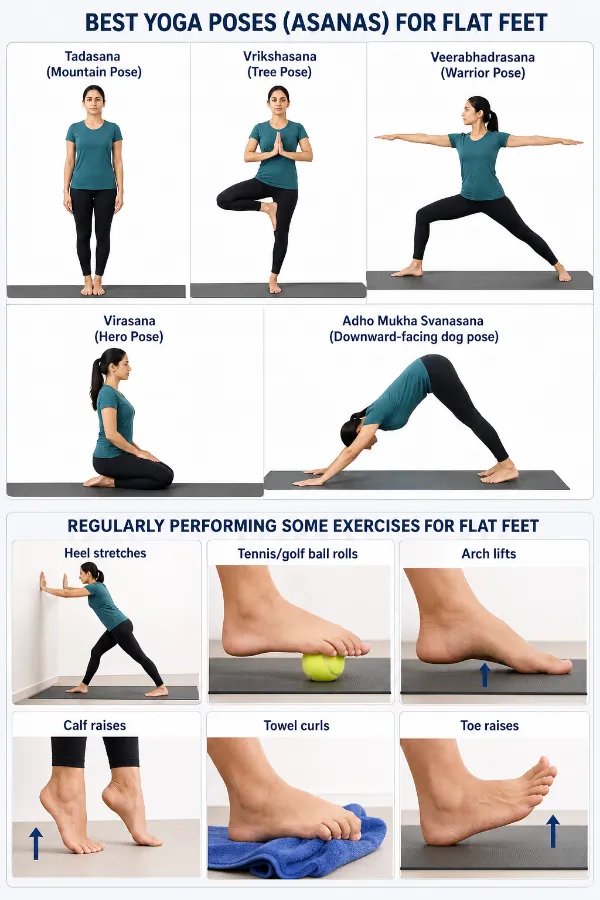
Best Yoga Poses (Asanas) for Flat Feet
Tadasana (Mountain Pose)
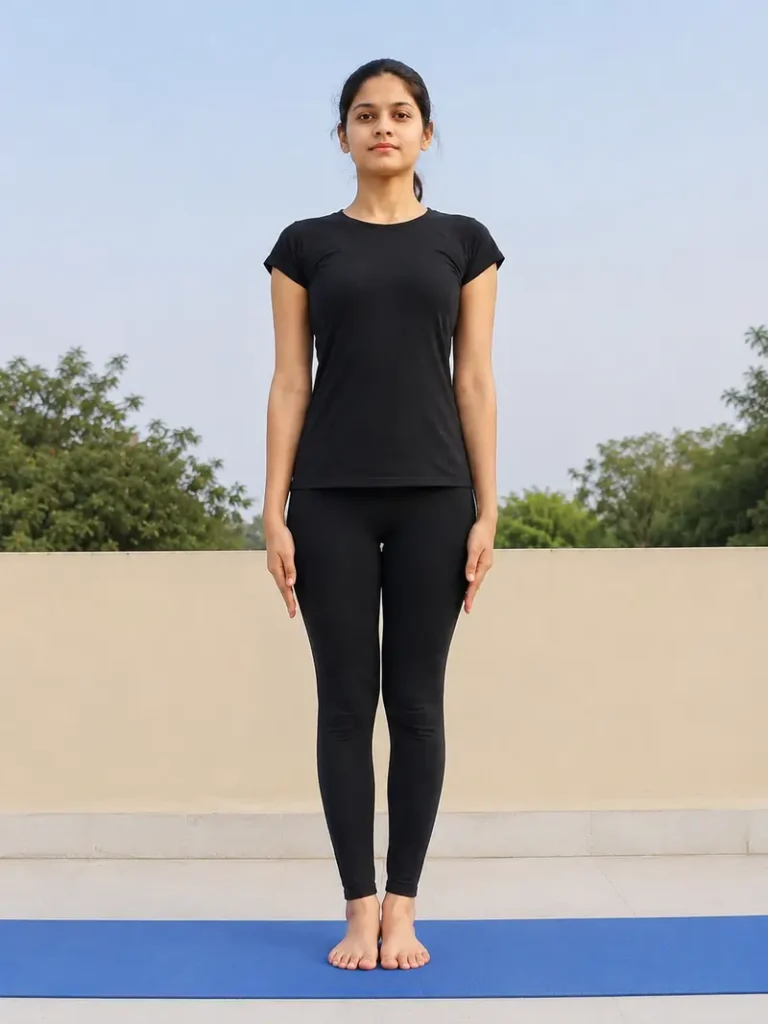
- Place your feet slightly apart and stand upright on the ground with your heels touching.
- Always keep your hands straight on either side and your soles grounded.
- For five minutes, keep your focus forward.
- After pausing for a minute, repeat three to four times.
Benefits: This is one of the simplest yoga poses and is very beneficial for improving blood circulation, alleviating tension, increasing breathing, and stretching the entire foot. It strengthens the knees, works the calf muscles, and aggressively involves the thighs. Frequent practice of this pose also opens the hip, shoulder, and spinal joints and strengthens the body’s long muscles.
Vrikshasana (Tree Pose)
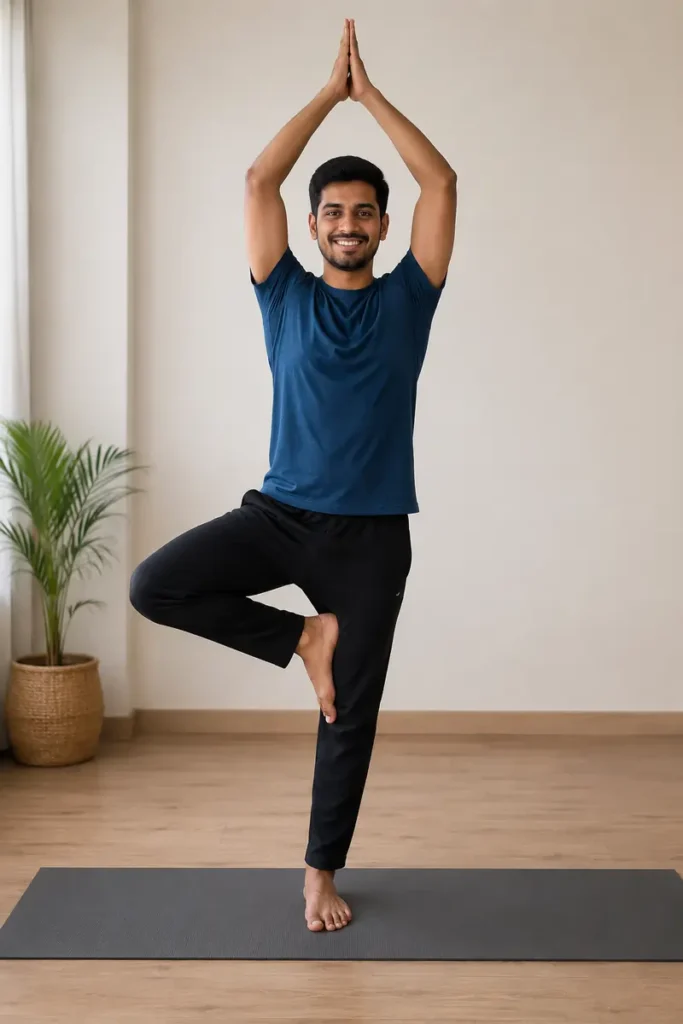
- Take a straight position on the ground.
- Pray by bringing both arms to your chest and joining the palms.
- Now extend both of your arms upward while maintaining your palms together.
- Place the sole of your right foot on the inside of your left leg while bending your right knee.
- Hold the stance for as long as you can while maintaining a straight left leg.
- After a minute of relaxation, repeat the exercise with the left foot on the other side. Do this five times.
Benefits: There are many advantages to the tree pose. In addition to strengthening the calf and foot muscles and strengthening the spinal column, it also widens the shoulders and improves balance and stability. Regularly doing this improves blood flow and prevents heart problems.
Veerabhadrasana (warrior pose)

- Maintain a straight posture on the ground while facing ahead.
- Step forward with your feet spaced about 4 inches apart.
- Make a 90-degree turn with your left foot and a 15-degree turn with your right.
- Raise both arms sideways until they are level with the shoulders. Bend your left knee as you exhale.
- Turn your head slowly to the left. Stretch your hands farther apart while continuing to breathe.
- With the resolve of a warrior, gently lower your pelvis and maintain the pose. Put your right foot forward and repeat with the opposite side.
- Take a minute to rest between each of the three to four repetitions.
Benefits: The warrior position boosts endurance and improves total body balance. Additionally, it strengthens the tendons and ligaments in the feet and relieves tension in the heels. It also relieves stress and lowers the risk of arrhythmic disorders by controlling heart rate.
Virasana (Hero Pose)
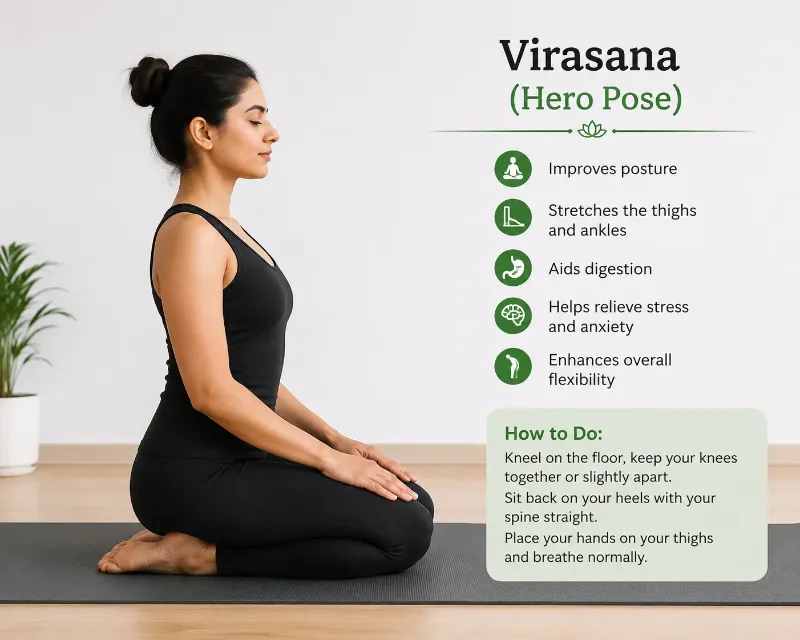
- With your knees bent and your toes pointing back, take a seat between your feet.
- Put your hands on your thighs, palms down, and straighten your spine.
- Instead of using your knees to shift your weight, use your hips.
- Let go of your legs and roll to one side.
- Throughout, continue to breathe normally.
- After a minute of rest, perform the pose five times.
Benefits: Stretching the entire inner line of the leg muscles all the way to the feet is made much easier by the Hero Pose. Additionally, it fortifies the tendons that maintain the arches drawn up into the feet. It relaxes fatigued legs and helps to improve general circulation in addition to stretching the hips, thighs, knees, ankles, and feet.
Adho Mukha Svanasana (Downward-facing dog pose)
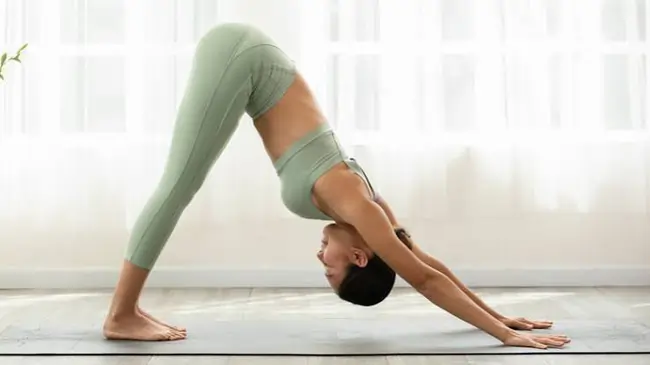
- Put yourself on all fours with your hands shoulder-width apart and your knees hip-width apart.
- Now straighten your knees and elbows while gradually raising your hips off the ground. Make sure your body is shaped like an inverted “V.”
- Now place your hands on the floor, extend your neck so that your ears are in contact with your inner arms, and look down at your navel.
- After holding this posture for five to eight breaths, return to the starting position.
Benefits: One of the best yoga poses for stretching the gastrocnemius muscle is the downward-facing dog pose. It stimulates the body and releases imprisoned energy in addition to lengthening the spine and calming the mind. Additionally, it is quite helpful for boosting heart function and general blood circulation.
Regularly performing some exercises for flat feet
Heel stretches
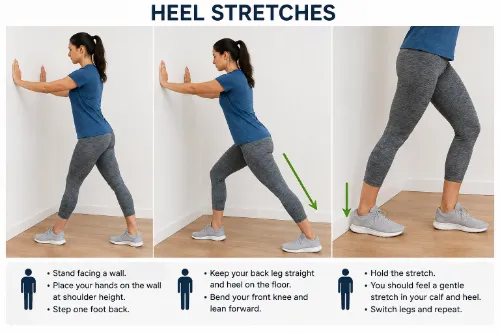
- Place your hands at shoulder or eye level on a chair, wall, or railing.
- Maintain one leg out in front of you while extending the other leg behind you.
- Firmly plant both heels on the ground.
- Feel a stretch in your Achilles tendon and back leg as you bend your front leg and press yourself into the wall or support while maintaining a straight spine.
- For thirty seconds, maintain this posture.
- Repeat on each side four times.
Tennis/golf ball rolls
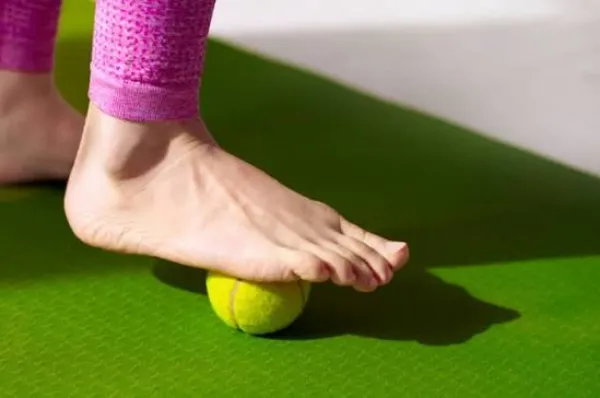
- Place a tennis or golf ball under your right foot while seated in a chair.
- As you roll the ball beneath your foot, keep your back straight and concentrate on the arch.
- Spend two to three minutes doing this.
- Next, use the other foot.
Arch lifts
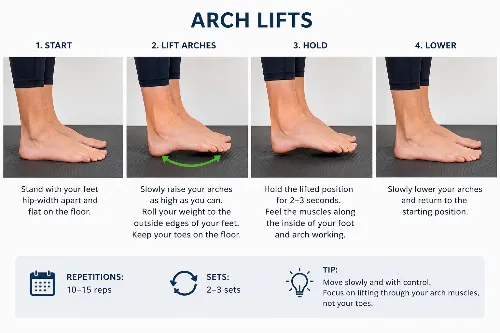
- Place your feet exactly under your hips as you stand.
- As you raise your arches as high as you can, roll your weight to the outside borders of your feet, being careful to keep your toes in contact with the floor the entire time.
- Then let your feet drop once more. The muscles involved in lifting and supinating your arches will be worked.
- Do ten to fifteen repetitions in two or three sets.
Calf raises
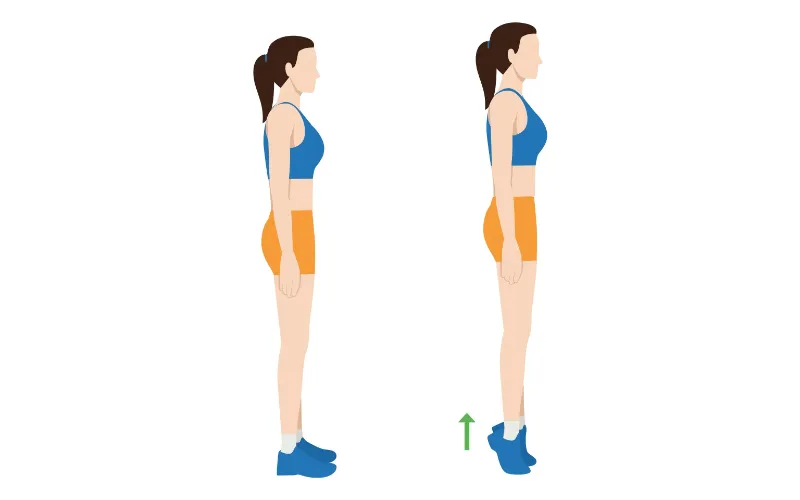
- Raise your heels as high as you can while standing.
- You can assist your balance by using a wall or a chair.
- After five seconds of holding the upper posture, return to the floor.
- Do 15 to 20 reps.
- 2 to 3 sets.
- After that, maintain the upper posture while vibrating up and down for thirty seconds.
Towel curls
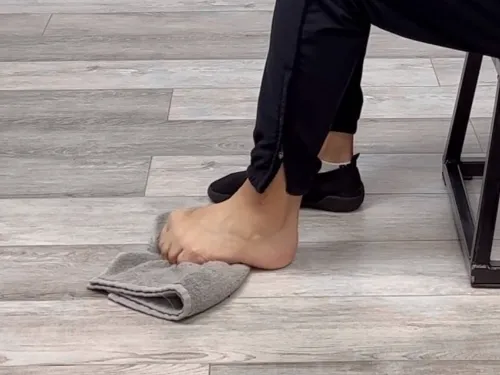
- Place a towel under your feet as you sit in a chair.
- Curl your toes to scrunch up the towel, rooting your heels into the ground.
- Toes should be pressed into your foot.
- Release after a brief moment of holding.
- The ball of your foot should remain pressed into the towel or the floor. Continue to be conscious of your foot’s strengthened arch.
- Perform 2–3 sets of 10–15 reps.
Toe raises
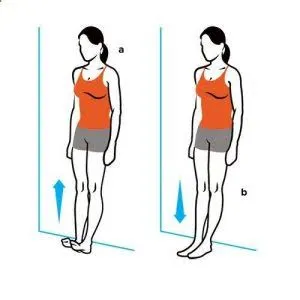
- Lift your other four toes while standing and press your right big toe into the ground.
- Next, raise your big toe and press your four toes into the ground.
- Hold each lift for five seconds while you perform each method five to ten times.
- Next, perform the exercise with your left foot.
Preventing flat feet
It is impossible to prevent inherited causes of flat feet.
However, by adopting preventative measures like wearing well-fitting shoes and giving the required foot support, you can stop the disease from getting worse and causing severe suffering.
FAQs:
Can you fix flat feet with yoga?
People with flat feet may benefit from yoga’s variety of poses that strengthen the calf muscles, heel, or arch area. On the other hand, by strengthening the foot arch, it might even strengthen the feet in some situations.
Can I naturally fix flat feet?
Rigid flat feet’ structural bone structure cannot be permanently altered, but you can increase strength, improve muscle control, and reduce discomfort. Specific exercises can strengthen your lower arch and increase stability if your flat feet are flexible or the result of weak muscles.
What worsens flat feet?
Activity may exacerbate pain. When trying to push off or stand on the toes, the foot could feel weak. Walking barefoot or in shoes with little support, such as sandals, may make pain worse.
Do flat feet get worse with age?
Yes, flat feet can worsen with age. The tendons and ligaments supporting the foot arch naturally weaken and elongate with age. Over time, arches may collapse or flatten due to regular wear and tear, which may result in new or worsened lower back, knee, ankle, or foot pain.
Can flat feet go back to normal?
These individuals are considered to have a pathological flat foot. Stretching exercises, orthoses (shoe inserts), and supportive footwear usually alleviate the symptoms. Surgery may be recommended if conservative treatment is unsuccessful for the patient.
What do flat feet indicate?
When arches collapse or fail to form, it can indicate loose ligaments, tendon dysfunction (such as posterior tibial tendinitis), aging, or an injury. Flat feet are frequently merely a typical, benign physical variation or a familial feature.
Are flat feet genetic?
Flat feet can indeed run in families. You are more likely to inherit the same foot structure if both of your parents have flat arches. Your arches are shaped by characteristics like tendon strength, loose ligaments, and bone alignment that are affected by genetics.
References:
- Giorgino, R., Alessandri-Bonetti, M., Del Re, M., Verdoni, F., Peretti, G. M., & Mangiavini, L. (2024). Google Bard and ChatGPT in Orthopedics: Which is the better doctor in sports medicine and pediatric orthopedics? The role of AI in patient education. Diagnostics, 14(12), 1253. https://doi.org/10.3390/diagnostics14121253
- Urooj, H. S., Ranjan, A., Ramteke, M. B., K, V., & Sahni, C. (2026). Prevalence and Functional Impact of Flat Foot among Medical and Nursing Students: Evaluation of Yoga and Ayurvedic Interventions. International Journal of Ayurvedic Medicine (Hyderabad). https://ijam.co.in/index.php/ijam/article/view/7206
- Hopple, C., & Graham, G. (1995). What Children Think, Feel, and Know about Physical Fitness Testing. Journal of Teaching in Physical Education, 14(4), 408–417. https://doi.org/10.1123/jtpe.14.4.408
- Evans, A. M., & Rome, K. (2011). A Cochrane review of the evidence for non-surgical interventions for flexible pediatric flat feet. PubMed, 47(1), 69–89. https://pubmed.ncbi.nlm.nih.gov/21448121