Ananda Balasana (Happy Baby Pose)
What is Ananda Balasana (Happy Baby Pose)?
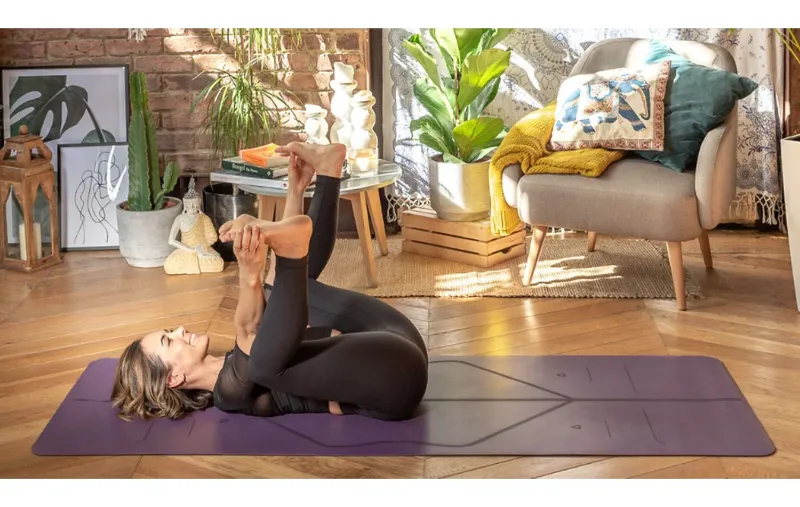
Ananda Balasana (Happy Baby Pose) is a gentle yoga pose that helps stretch the hips, inner thighs, and lower back. It promotes relaxation, improves hip flexibility, and can help release tension in the lower body.
One of the easiest hip-opening yoga postures for beginners, it helps release tension in the lower back, stretches the hamstrings and inner thighs, and calms the mind with steady, deep breathing.
Happy Baby Pose encourages relaxation, increases flexibility, and supports better posture, making it perfect for beginners, evening routines, or anybody with tight hips. In order to relieve stress and get the body ready for relaxation, it’s frequently done after the conclusion of a yoga practice.
Overview & Meaning
Ananda means “bliss” or “happiness” in Sanskrit. Asana means “pose” or “posture,” and Bala means “baby or child.” When combined, Ananda Balasana means “Pose of the Blissful Baby.” We are reminded to approach practice with tenderness rather than strain by the name, which nicely captures the sensation of relaxation, surrender, and playful inquiry that this pose conveys.
Happy Baby Pose is a relatively new addition to modern yoga, in contrast to many other positions. It was inspired by the organic motions of a baby clutching its feet, a universal representation of happiness, purity, and bodily freedom. Happy Baby became a favorite for encouraging relaxation and emotional release as yoga developed in the 20th century to include more approachable, healing poses.
Because of its relaxing influence on the nervous system and gradual opening of the hips and spine, it is now commonly employed in Hatha, Restorative, and Yin Yoga sessions.
At a Glance
- Sanskrit Name: आनन्द बालासन (Ananda Balasana)
- Pronunciation: ah-NAHN-dah bah-LAHS-anna
- Happy Baby Pose, Joyful Baby Pose, and Happy Baby Pose in English
- Pose Type: Stress-relieving, restorative, supine hip opener
- Level: Novice (most practitioners may access)
- Time frame: 30 to 5 minutes
Benefits of Ananda Balasana
This position has something to offer everyone, whether you’re relaxing down after work, beginning your day with moderate movement, or getting ready for deeper stretches.
Physical Benefits
The consequences of sitting and everyday stiffness are countered by the potent yet gentle hip opener known as Happy Baby Pose.
- Hip flexors, adductors, and inner thighs are stretched to release tense hips.
- Reduces stress in the lower back: The soft tugging action produces spinal traction, which releases compression.
- Enhances flexibility: Frequent exercise expands the range of motion in the hamstrings and hips.
- Promotes improved posture by lengthening the spine and aligning the pelvis.
- Sciatica relief: When done thoughtfully, a small hip opening may lessen nerve pressure.
- Opens the shoulders: Promotes relaxation of the shoulder blades and upper back.
Mental & Emotional Benefits
Happy Baby Pose promotes mindfulness and emotional health in addition to physical relaxation.
- Relaxation and deep breathing trigger the parasympathetic nervous system, which calms the nervous system.
- Lessens tension and anxiety: Promotes relaxation by being physically open.
- Encourages happiness and playfulness: The carefree stance eases stress and creates a more joyful atmosphere.
- Enhances the quality of your sleep: Ideal for restorative yoga or bedtime practice.
- Increases bodily awareness by teaching you to compassionately identify patterns of stress.
Therapeutic Applications
In therapeutic and restorative yoga, Happy Baby Pose is frequently utilized because it releases tension without requiring too much effort.
- Relieving lower back pain: Chronic tightness is relieved with mild spinal decompression.
- Sitting-related tight hips: An ideal counter-stretch for desk workers.
- Insomnia or restlessness: When done before bed, it encourages deep relaxation and improved sleep.
- Anxiety and emotional strain: Soothing and grounding the mind.
- Menstrual discomfort: Gently moves the pelvis to relieve tightness.
- Mild sciatica: Relieves the pain by gradually expanding the hips.
- Support for digestion: Applying mild pressure to the abdomen can help with digestion.
- Prenatal and postpartum support: helpful for hip healing (with modifications) and safe during the first stages of pregnancy.
- Get these advantages with one-on-one coaching. Today, learn Happy Baby Pose!
How to Do Ananda Balasana (Happy Baby Pose): Step-by-Step Guide
Part 1: Preparing for the Pose
Warm up your back and hips for three to five minutes before entering the posture.
Supine Knee-to-Chest Pose (Apanasana)
- Calms the mind and releases lower back stiffness and strain.
- Stretch your legs out while lying on your back.
- Draw one or both knees toward your chest and give them a gentle hug with your hands as you exhale.
- Breathe deeply into your lower back while keeping your shoulders relaxed.
Reclined Butterfly Pose (Supta Baddha Konasana)
- Promotes deep relaxation and grounding by opening the inner thighs and hips.
- While lying on your back, let your knees drop open to the sides and bring the soles of your feet together.
- Breathe slowly into your hips while placing your hands on your tummy or at your sides.
- If you require support, place props under your thighs.
Wind-Relieving Pose (Pavanamuktasana)
- Helps with digestion, relieves bloating, and softens the lower back and hips.
- Bend one knee toward your chest while lying on your back, then wrap your hands around your shin.
- As you release the breath, press your lower back into the mat and gently draw the knee closer.
- For a deeper stretch, switch sides or embrace both knees.
Gentle Hip Circles
- Enhance mobility and lubricate the hip joints before more extensive stretches.
- With your feet flat on the floor and your knees bent, lie on your back.
- With your knees together or one at a time, draw gentle, tiny circles while maintaining fluid, controlled motions.
- Breathe steadily while coordinating the movements.
Part 2: Step-by-Step Instructions
- On your yoga mat, lie flat on your back. Let your arms, neck, and shoulders relax. To relax, take a few slow breaths.
- Breathe out and lower both knees to your chest. Feel your lower back press into the mat as you give it a gentle hug.
- Draw your knees toward your armpits, separating them wider than your body. Point the soles of your flexed feet toward the ceiling.
- Grab the outside borders of your feet (the pinky-toe side) by threading your hands inside your thighs. If you find it challenging, try holding your thighs or ankles or using a yoga strap.
- Make a 90° angle with your legs by gently placing your ankles just above your knees. Press your feet gently into your hands while aggressively flexing them.
- Maintaining a grounded lower back, bring your feet closer to the floor. Allow your spine to stretch and your hips to expand.
- Inhale deeply into your abdomen while maintaining the position. You can massage your spine by rocking from side to side.
- Beginners: 30 seconds – 1 minute
- Intermediate: 1–3 minutes
- Restorative practice: 3–5 minutes
- Hug them to your chest after letting go of your feet and bringing your knees together.
- Lay your legs flat on the mat, then take a few deep breaths.
Alignment & Safety Tips
- Don’t push your knees to your armpits; instead, keep your lower back on the mat.
- To shield your hips and knees, flex your feet.
- If you are unable to reach your feet, hold your ankles or thighs; never stretch.
- Throughout, keep your neck and shoulders relaxed.
- After the first trimester of pregnancy, do not lie flat.
- Release gently and take a break if you experience pain (not from light stretching).
- Schedule a free session now to master the posture with professional one-on-one instruction!
Ananda Balasana Variations
Whether you’re a total novice or an experienced yogi, Happy Baby Pose (Ananda Balasana) can be modified for any body type, degree of flexibility, and purpose. With these variants, you can safely experiment with the pose, release tension at your own pace, and make it more dynamic or restorative.
Beginner Modifications
Strap-Assisted Happy Baby
- Ideal for novices or people with tight hamstrings. The stance is now accessible without strain thanks to this alteration.
- Put a yoga belt or strap around each foot while lying on your back.
- Gently bring your knees closer to your chest while holding the strap ends.
- Breathe deeply to ease into the stretch while maintaining a grounded lower back.
Hold Ankles, Calves, or Thighs Instead of Feet
- Perfect for people who aren’t very flexible. It lessens the strain on your knees and maintains a neutral spine.
- Bend your knees and pull them close to your chest while lying back.
- Instead of reaching for your feet, reach for your ankles, calves, or the backs of your thighs.
- Without arching your back, gently bring your legs down to your torso.
One-Legged Happy Baby
- Excellent for novices or those with inconsistent hip discomfort. It securely releases one hip at a time.
- Hold the opposite foot in the Happy Baby position while extending one leg flat on the mat.
- Maintain a grounded lower back and a relaxed extended leg.
- After evenly breathing, switch sides.
Intermediate Variations
Rocking Happy Baby
- Excellent for reducing tightness in the spine. This rendition incorporates a lively rhythm and dance.
- Rock your spine gently from side to side once you’re in Happy Baby Pose.
- Breathe normally and move slowly and deliberately.
- Allow the motion to soothe your thoughts and work the muscles in your back.
Extended Leg Variation
- Ideal for strengthening flexibility. This version opens the hips and extends the hamstrings.
- Holding the opposite foot, extend one leg straight toward the ceiling from Happy Baby.
- Maintain an active extended leg and a flat back on the mat.
- After taking a few breaths, switch sides.
Half Happy Baby with Twist
- Combining hip opening with a light twist, it’s great for spinal mobility.
- Extend the opposite leg across your body while holding one foot in the Happy Baby position.
- As you turn slightly, keep your shoulders firmly planted.
- After 3–5 breaths of holding, switch sides.
Advanced Variations
Bound Happy Baby
- Intended for skilled professionals. It intensifies hip opening and fortifies the core.
- Holding your feet together, move your knees closer together from Happy Baby.
- To steady your position, slightly activate your core.
- As you hold, keep breathing deeply and evenly.
Happy Baby to Shoulder Stand Transition
- Excellent for skilled yogis. This variant helps prepare for inversions and strengthens the core.
- Gently rock back onto your shoulders after letting go of your feet from Happy Baby.
- Raise both of your legs to the ceiling.
- During the transition, use your core for stability and control.
Precautions & Contraindications
Even though Happy Baby Pose is one of the safest and easiest yoga poses for beginners, it still calls for mindfulness, particularly if you are pregnant, have specific medical conditions, or have joint problems.
To find out how to modify Happy Baby Pose for your body, schedule a free one-on-one session with a qualified Indian yoga instructor!
Avoid Ananda Balasana If You Have:
- Recent knee or hip surgery: Healing tissues may be stressed by the deep bend.
- Acute knee injury: Inflammation may worsen if the knee is bent.
- Severe injuries to the neck or shoulder: The supine position may be uncomfortable.
- Uncontrolled high blood pressure: Circulation may be impacted by mild inversion.
- Lying flat on your back can limit blood flow during the second or third trimester of pregnancy.
- Groin tear or strain: The pose greatly stretches the inner thighs.
- Advanced osteoporosis: There is a chance of a fracture due to hip rotation and compression.
Practice with Caution or Modifications If You Have:
- Beforehand trimester of pregnancy: Props are generally safe, but always get advice from a prenatal yoga instructor or your doctor beforehand.
- Tight hamstrings: Hold your thighs rather than your feet, or use a strap.
- Sensitivity of the lower back: Avoid pulling too much and make moderate motions.
- If you have knee pain, keep your feet flexible and your ankles stacked over your knees.
- Hip replacement: Exercise caution; unless your surgeon has given the all-clear, avoid deep external rotation.
- Practice lightly if you have sacroiliac (SI) joint problems. Depending on alignment, Happy Baby may assist or worsen them.
- While it’s generally safe to lie flat during menstruation, some practitioners prefer not to.
Safety Guidelines
To ensure that your practice is both injury-free and effective:
- Let gravity and time do the work; never push yourself to stretch.
- Don’t overarch your lower back; instead, keep it grounded.
- To protect your knees, flex your feet.
- For support, feel free to use bolsters, blankets, and straps.
- Continue to breathe; relaxed, deep, and smooth breaths improve release.
- If you get sharp or pinching discomfort, stop right away.
Ananda Balasana: Related Yoga Poses
Reclined Pigeon Pose (Supta Kapotasana) or Figure-4 Stretch
- opens the glutes and outer hips deeply, which is excellent for releasing tension from sitting.
- With your feet on the floor and your knees bent, lie on your back.
- Make a figure-four formation by crossing your right ankle over your left thigh.
- Holding the back of your leg, slowly bring your left knee to your chest.
- Breathe deeply into your right hip while maintaining a relaxed posture.
Reclined Hand-to-Big-Toe Pose (Supta Padangusthasana)
- Promotes hip mobility and stretches the hamstrings, making it perfect for increasing flexibility.
- Stretch your right leg toward the ceiling while lying on your back.
- Hold your big toe with your palm or loop a yoga strap around it.
- Keep the opposing leg firmly planted on the mat.
- Take a deep breath and slowly, without straining, bring the elevated leg closer.
Reclined Spinal Twist (Supta Matsyendrasana)
- Releases tension in the shoulders and back and balances spinal mobility.
- Hug your right knee close to your chest while lying on your back.
- With your knee resting on the ground, cross it over to the left side of your body.
- Stretch your right arm to the side and look at it.
- Breathe deeply into your spine and maintain a solid posture.
FAQs
What is Ananda Balasana good for?
Ananda Balasana, or Happy Baby Pose, reduces tension in the lower back, opens the hips softly, and stretches the hamstrings and inner groin. It’s great for increasing flexibility, reducing stress, and encouraging rest before bed.
How long should you hold Ananda Balasana?
Your degree of fitness and familiarity with hip-opening positions will determine this. Begin slowly and work your way up.
Beginners: 30 to 60 seconds
1-3 minutes in the middle
Yin/restorative: at least three to five minutes with props
The hip release and calmness increase with the length of time you hold while breathing steadily.
Can you do Ananda Balasana when pregnant?
During the first trimester, Happy Baby Pose is usually safe, especially if done carefully or one leg at a time.
After the first trimester, try not to lie flat on your back, as this could impair blood flow.
Schedule a free appointment here for one-on-one pregnancy guidance!
Is Ananda Balasana good before bed?
Yes. It’s among the most effective poses for calming the nervous system and getting ready for sound sleep.
Before going to bed, holding Happy Baby for two to three minutes relieves hip tightness, eases lower back pain, and reduces mental tension.
Is Ananda Balasana good for lower back pain?
Yes, when done properly. Lower back tension and compression are released by the mild traction on the spine. Start with the Knees-To-Chest stance and advance under supervision if your pain is severe.
Can beginners do Ananda Balasana?
Definitely! For beginners, Happy Baby Pose is ideal. It’s straightforward, healing, and simple to adjust using straps or props.
References
- Allen, W. (2025ac, December 10). Ananda Balasana. https://myyogateacher.com/yoga-asana/happy-baby-pose-ananda-balasana
- Yoga Journal. (2025v, March 14). Happy baby pose. https://www.yogajournal.com/poses/happy-baby-pose/
- Yogapedia. (2023b, December 21). Ananda Balasana. Yogapedia. https://www.yogapedia.com/definition/6413/ananda-balasana