Upavistha Konasana (Wide-Angle Seated Forward Bend)
Introduction
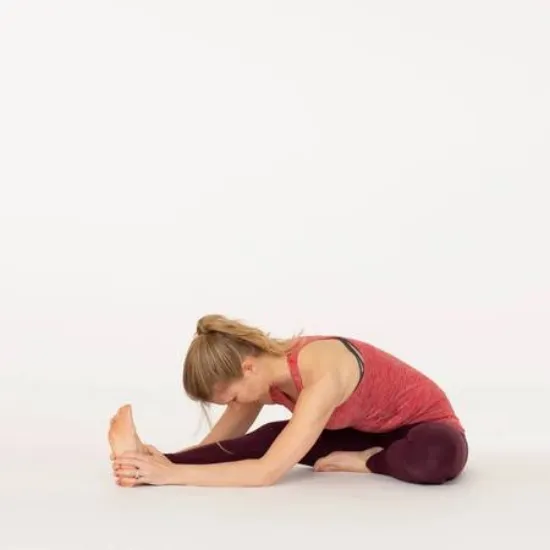
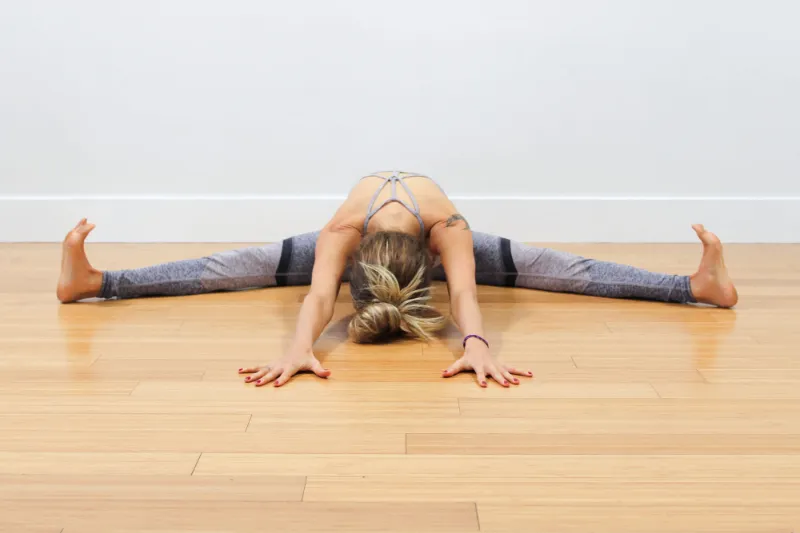
Upavistha Konasana (Wide-Angle Seated Forward Bend) is a seated yoga pose that involves spreading the legs wide and gently bending the torso forward.
Some yoga texts refer to it as the Seated Straddle position. This position promotes flexibility and strength in the legs and glutes and is a great way to open the hips while seated.
In this posture, your upper body is bent forward. This is how your spine extends from the neck to the tailbone.
You will experience a surge of calming energy throughout your body when striking this pose, as though every cell in your body is becoming active.
Overview & Etymology
Sanskrit terms are combined to form the name Upavistha Konasana. Kona is “Angle,” Upavistha is “Open,” and Asana is “Posture” or “Seat.”
It is difficult to locate any mention of this yoga pose in old Hatha Yoga books. However, this pose is referred to as Hastapadasana or Hand-to-Foot Pose in Swami Vishnudevananda’s 1960 book, Complete Illustrated Book of Yoga.
Iyengar wrote a detailed description of this pose in his book “Light on Yoga: Yoga Dipika” later in 1966.
Many Ashtanga Yoga classes now employ this pose as a foundational pose.
- Sanskrit Name: उपविष्टकोणासन
- Pronunciation: oo-pah-VEESH-tah cone-AHS-ah-nah
- Pose Type: Seated Hip Opener
- Alternatively known as: Wide-Angle Seated Forward Bend
- Strengthens: Legs, Lower Back, and Spinal Column
- Hamstring, gluteal, shoulder, and spinal stretches
Muscles Worked in Upavistha Konasana
Primary Muscles:
- Hamstrings
- Adductor muscles (inner thighs)
- Hip flexors
- Gluteal muscles
Secondary Muscles:
- Lower back muscles
- Core muscles
- Calf muscles
- Pelvic floor muscles
- Spinal erector muscles
Health Benefits of Upavistha Konasana
- Lessens tension and anxiety.
- Aids in developing mindfulness.
- Enhances standing and sitting positions.
- Expands the leg joints’ range of motion.
- Extends, strengthens, and lengthens the body.
- Increases prana flow and eases bodily tension.
- Stimulates the reproductive and digestive systems.
- Promotes healing in low back pain and arthritis.
- Promotes hormonal balance by activating the root, sacral, and solar plexus chakras.
When to Avoid Performing Upavistha Konasana?
- Avoid if you have spondylitis.
- If your disk has slipped, stay away.
- Do not if you suffer from inflammatory arthritis.
- If you have a lot of lower back pain, stay away.
- If you recently had surgery or an injury, stay away.
- Avoid bending forward too much if you are pregnant.
- Steer clear if you can’t breathe while bending forward.
How to do Upavistha Konasana?
Upavistha Konasana is a great way to relieve lower back discomfort and strengthen the legs. The four phases of this posture are as follows.
Part 1 – Preparatory Poses for Upavistha Konasana
To increase the range of motion in inactive muscles, start with some basic stretches for your legs and lower back. For a more profound activation of the legs, start with a vigorous yoga flow sequence, such as sun salutations, and then proceed to the following hip openers:
Dandasana (Staff Pose)
- Upavistha Konasana is a type of yoga pose that is performed while seated. To sit upright in the staff posture, it is essential to develop spinal strength and pelvic stability.
For two to five minutes, sit in Dandasana while closing your eyes. Your spine will become stronger for your impending wide-angle stance the longer you maintain this staff-like alignment.
Baddha Konasana (Bound Angle Pose)
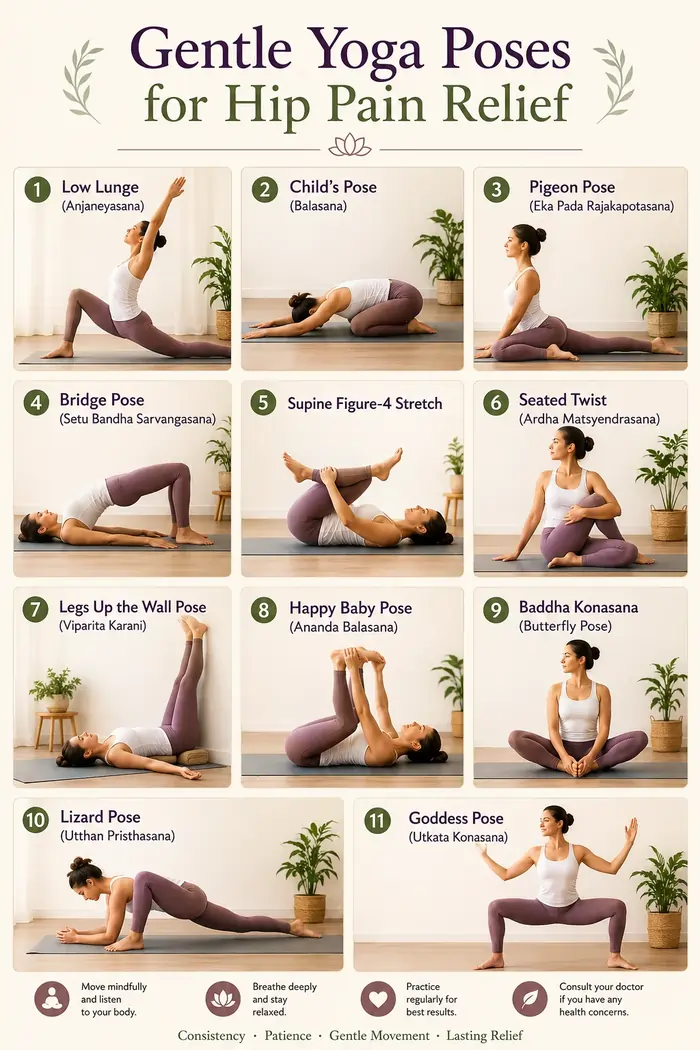
- Enter Baddha Konasana from the staff posture. Here, construct a Namaste pose by bending your legs and touching your feet. Keep your knees close to your yoga mat while holding both feet in your palms.
As you hold this stance, take a breath, let it out, and close your eyes. Your thighs will feel a little stretched. This stance can be held for two to five minutes.
Bound Angle Forward Bend Pose, or Baddha Konasana Uttanasana
- Try bending your upper body forward for a deeper stretch in upright Baddha Konasana if you can’t feel your legs stretching.
Another option is to bend forward and rest your head on the ground. For a few minutes, maintain this stance. Make sure your knees are near the mat and that you exhale as you descend.
Section 2: Detailed Instructions for Upavistha Konasana
The Wide-Angle Seated Forward Bend can be practiced by following these steps:
- Step 1: Sit upright on top of your pelvic bones and begin with staff posture.
- Step 2: Assume the Staff stance by sitting with your arms relaxed at your sides and your legs outstretched. Here, inhale and exhale for a short while.
- Step 3: Put your hands flat on the mat and slowly spread your legs as wide as you can.
- Step 4: Extend your back to the top of your head while taking a deep breath.
- Breathe out, bend at the waist, and apply pressure through the backs of your legs.
- Step 5: Proceed as far as you can with your hands. Keep your spine parallel to the floor and your back straight.
- Step 6: Gently exit the pose by standing up in the staff stance after holding it for a few deep breaths.
Breath Awareness:
- Breathe in while extending your back and spreading your legs.
- Bend your upper body forward and exhale.
- Beginners should perform Upavistha Konasana for one minute.
- Advanced Performance Duration: Maintain Upavistha Konasana for five to ten minutes.
Part 3: Things to Keep in Mind
Every yoga pose requires alignment, and before beginning the Upavistha Konasana practice, consider the following posture advice for beginners:
- Avoid overstretching your legs: It is true that you will grow more flexible and powerful the more you attempt to stretch your legs wide.
- However, overstretching as a novice without the required hip and leg range of motion can result in abductor and hip flexor muscle tears. Don’t push yourself too far; only go as far as it will help you progress.
- You don’t have to lean all the way down: If your tailbone and hip flexors are weak, you may find it difficult to lean forward. Don’t immediately bend your upper body forward.
- You can attempt to bend your upper body halfway till it becomes painless. As your back becomes more flexible over time, you’ll be able to lean forward to the floor if it’s comfortable for you.
Part 4: Relaxing Poses After Upavistha Konasana
A wide-angle seated forward bend can put a lot of strain on your back, thighs, and core in addition to making you extremely tired. For this reason, after practicing Upavistha Konasana, it’s crucial to do the following relaxed poses:
Paschimottanasana (Seated Forward Bend):
- Continue the seated forward bend as you finish your Upavistha Konasana exercise in Staff posture.
Breathe deeply from Dandasana and lift both arms above your head. Now place your head on your knees, bow forward, and release your breath. Hold this position until your glutes and low back start to feel less tense.
- Put yourself in the Child’s position if your low back and upper torso are still excessively taut. Bend your upper body in the direction of the mat while sitting on your knees.
Place your forehead on the mat and flex your shoulders and arms in front of you. Hold this position with your head down for three to five minutes, continuing to exhale deeply.
Ananda Balasana (Happy Baby Pose):
- Try the Happy Baby stance to further relax your low back, thighs, and pelvic bones.
As if you were a newborn, lie on your back and grasp your feet with your hands. As you enter this pose, exhale and close your eyes. Continue taking deep breaths and work to ease any residual tension in your body.
Upavistha Konasana Variations to Consider
You can experiment with the following Wide-Angle Seated Forward Bend posture modifications, depending on your level of mental awareness and physical flexibility:
Wide-Angle Seated Pose Neck Drop Variation:
- For people who wish to unwind their neck and spine following a demanding workweek, this is an intermediate-level posture variation.
Carefully lower your neck at the back while spreading both legs wide. This pose puts your neck in a vulnerable position, so avoid holding it for longer than 30 to 60 seconds.
Parivrtta Janu Sirsasana (Revolved Head to Knee Pose):
- Janu means knee, Sirsasana means head, and Parivrtta means revolved.
This is a more difficult version of Upavistha Konasana in which you bend one leg and flex deeply onto one side. Stretch your arms upward till your head reaches your knee while rotating your ribcage to one side.
Parivrtta Upavistha Konasana (Revolved Seated Angle Pose):
- This pose is Parivrtta Janu Sirsasana’s replacement. Your leg location is all that has to be adjusted.
One leg was bent in the prior position. Now, rotate your upper body, lean down on one side, and keep both legs wide open. Don’t overstretch and just hold this stance when you’re comfortable.
Common Mistakes to Avoid
- Rounding the back excessively.
- Locking the knees too tightly.
- Letting the feet roll inward.
- Forcing the body into a deeper stretch.
- Holding the breath.
Contraindications and Precautions
Steer clear of or alter the stance if you have
- Hamstring injury.
- Groin injury.
- Hip injury.
- Lower back pain or slipped disc.
- Recent pelvic surgery.
- Sciatica (practice gently with guidance).
Pregnant practitioners should keep the torso lifted and avoid compressing the abdomen.
Conclusion
A great sitting yoga pose for increasing flexibility, opening the hips, stretching the inner thighs and hamstrings, and soothing the mind is Upavistha Konasana. For both novice and seasoned practitioners, the position is safe and beneficial when practiced with appropriate alignment and controlled breathing.
FAQs
What are the benefits of Upavistha Konasana?
Some advantages of Upavistha Konasana are as follows:
It promotes mental relaxation.
increases hip and knee joint mobility.
Enhances both sexual health and digestion.
Stretches the shoulders and spine.
extends the glutes and hamstrings.
strengthens the spine, hamstrings, legs, and ankles.
burns more fat around the core and thighs.
promotes bodily relaxation and increases the flow of prana.
What is Parivrtta Upavishta Konasana Iyengar?
An improved form of Upavistha Konasana is Parivrtta Upavishta Konasana Iyengar. The deep muscles surrounding your obliques, shoulders, hamstrings, and glutes can be stretched with this pose. You can also get a brief energy boost from this variant. It’s a great way to stretch your chest, hips, and abductors.
How do you perform Parsva Upavishta Konasana?
Use these steps to execute Parsva Upavishta Konasana:
Enter Baddha Konasana after starting from Staff Pose.
When performing Baddha Konasana, focus on your breath.
Take a deep breath and flex your legs as much as you find comfortable.
Maintain the flexion of your legs while concentrating on your breathing.
Now take a breath, flex your arms to one side, and gradually rotate your lower ribcage.
When you reach down, let your breath and hold the pose until it feels comfortable.
Let go of the posture and unwind. On the opposite side, do the same.
How do you do Upavistha Konasana for beginners?
All you need to accomplish Upavistha Konasana for beginners is a few adjustments to your stance. For novices, there are two approaches to alter Upavistha Konasana:
If you are unable to flex your legs, try doing Baddha Konasana to increase your leg flexibility.
If you are unable to bend forward completely, consider utilizing front bolsters to support your upper body.
References
- Allen, W. (2025, August 26). Upavistha konasana. https://myyogateacher.com/yoga-asana/upavista-konasana
- S.Caldwell. (2022, April 14). How to do wide-angle forward bend in yoga. Purple Lotus Yoga | Yoga Teacher Training. https://www.purplelotusyoga.com/how-to-do-wide-angle-forward-bend-in-yoga/
- Yoga Journal. (2025ah, March 22). Wide-Angled seated forward bend. https://www.yogajournal.com/poses/wide-angle-seated-forward-bend/