Shavasana (Corpse Pose)
What is Shavasana (Corpse Pose)?
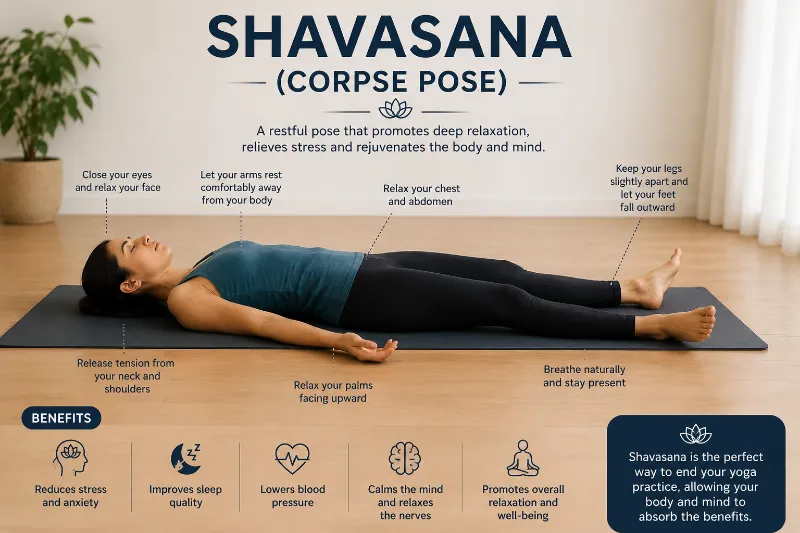
Shavasana, sometimes referred to as Savasana or Corpse Pose, is a healing yoga pose that is performed while lying flat on one’s back with relaxed arms and legs. After movement and breathwork, this last relaxation pose, pronounced shah-VAHS-uh-nuh, helps the body settle down, release tense muscles, and transition out of a stress state.
This pose is great for:
- Anyone dealing with stress, burnout, or mental fatigue.
- Those who, after a hard day, are physically exhausted or tense.
- Novices seeking a straightforward stance with significant relaxing effects.
- Anyone looking for a reliable method of relaxation, improved sleep, or deeper relaxation.
Shavasana: Overview and Meaning of Corpse Pose
Shavasana is translated as Corpse position since it is derived from the Sanskrit terms shava (corpse) and asana (position). The posture’s stillness, in which the body rests entirely effortlessly, is reflected in the name. In reality, this stillness is about remaining conscious while the body rests rather than sleeping.
Shavasana has long been utilised in yoga as a relaxation and integrating pose. It is typically positioned near the conclusion of a lesson in contemporary practice, although its purpose extends beyond that. It is now commonly used in Hatha, Vinyasa, and Restorative yoga because it eases tension, calms the mind, and promotes healing—particularly for those who are experiencing exhaustion or overstimulation.
Shavasana is an anatomically neutral resting position that allows the body to release tension in its muscles. Breathing becomes easier and slower, the limbs relax outward, and the spine rests naturally. This promotes relaxation and recovery without requiring physical exertion by enabling the nervous system to transition into a calmer state.
At a Glance
- Sanskrit Name: शवासन (Shavasana)
- Pronunciation: shah-VAH-suh-nuh
- English Names: Corpse Pose, Final Relaxation Pose
- Also Spelt: Savasana
- Pose Type: Resting pose, relaxation pose, meditative posture
- Level: Beginner-friendly
- Duration: 5–20 minutes
- Ideal Time: Following a yoga, pranayama, or meditation session
- Deep relaxation, nervous system reset, stress alleviation, and integration following practice are the main advantages.
- Chakras: Crown (Sahasrara), Root (Muladhara)
Benefits of Shavasana (Corpse Pose)
After an activity, shavasana helps you release tension, slow down mentally, and enter a calmer, more balanced condition. It functions as a kind of mental and physical reset.
Physical Benefits
Lying motionless in a completely supported position gives the body a unique opportunity to recuperate effortlessly.
- Tension in the entire body is released: Tightness in the jaw, shoulders, chest, belly, hips, and legs is softened.
- Helps the body feel less exhausted after yoga or long workdays, which promotes recuperation and lessens weariness.
- Promotes steadier, slower breathing: This naturally enhances breath quality without the need for force.
- Reduces postural strain: Relieves tension caused by extended sitting, screen usage, and regular stressful activities.
- Encourages profound physical relaxation: Enables joints and muscles to completely rest and recharge.
Mental & Nervous System Benefits
Shavasana is very effective for stress management and mental relaxation.
- Relaxes the nerve system: Assists in transitioning from “always-on” to a more relaxed state.
- Reduces mental exhaustion and stress: Perfect for relaxing after hectic schedules or emotional strain.
- Enhances concentration and clarity: Makes the mind feel calmer and more rejuvenated.
- Promotes emotional equilibrium: Assists in lowering feelings of overload, agitation, and mental burden. Develops the capacity to unwind without interruptions by promoting meditative quiet.
Energetic & Holistic Benefits
Shavasana is the yoga pose where the practice calms and unifies.
- Helps the body and mind absorb the benefits of movement and breathwork, which promotes integration following practice.
- Encourages internal balance: Makes the body feel steady and at ease.
- Bridges into meditation: Readies the mind for more profound awareness and silence.
- Produces space and grounding: the mind softens and grows, and the body feels supported.
- Shavasana is easy, yet executing it correctly has a significant impact. Many people either don’t attend it or don’t stay long enough to really benefit from it.
Want to experience deeper relaxation and guided recovery? Engage in Shavasana with knowledgeable Indian yoga instructors who will help you relax and rejuvenate. Make your free one-on-one appointment right now.
How to Do Shavasana (Corpse Pose): Step-by-Step Guide
You may practice Shavasana in a way that is genuinely restorative, pleasant, and supported with the guidance of this detailed tutorial. Even though the stance appears straightforward, the proper setting has a big impact.
Part 1: Preparing for the Pose
When the body feels completely supported, shavasana is most effective.
Use a blanket under your head if your neck feels stiff, support your knees if your lower back hurts, and cover your body if you are cold. These minor modifications will help you rest comfortably while lying on a comfy surface.
Select a peaceful area where you won’t be disturbed so you may remain still and at ease uninterrupted for a short while.
Part 2: Shavasana: Step-by-Step Instructions
- With your legs comfortably outstretched, lie on your back. Allow the feet to open organically and effortlessly.
- With the palms facing up, place the arms slightly away from the body. Let the fingers unwind.
- To make the chin somewhat lower than the forehead, gently extend the rear of the neck. If necessary, support the head.
- Shut your eyes and soften your face. Let go of your tongue, jaw, and any stiffness surrounding your eyes.
- Allow your breath to return to its natural pace after taking a few calm breaths to get comfortable.
- Allow the body to gain weight. Let go of your hips, legs, shoulders, chest, and abdomen.
- Depending on your practice, remain motionless for 5 to 20 minutes. Being attentive but at ease is the aim.
- Breathe a little deeper to come out. Roll onto one side, bend your knees, and move your fingers and toes. After pausing, carefully sit up.
Part 3: Breathing Technique
- Begin with 2–3 slow, steady breaths.
- Then allow the breath to become natural.
- Let each exhale soften the body further.
- Avoid controlling or forcing the breath.
Common Mistakes and Alignment Tips
- Holding tension in the body: Prevents full relaxation
- Tip: Soften the face, jaw, and shoulders consciously
- Keeping the legs controlled: Creates subtle effort
- Advice: Allow your feet and legs to naturally open.
- Ignoring discomfort: Leads to restlessness
- Tip: Use props to support the body fully
- Trying to “force” relaxation: Creates mental tension
- Tip: Focus on stillness, not achieving a feeling
- Getting up too quickly: Disrupts the calming effect
- Tip: Roll to one side and rise slowly
What You Should Feel
When practised well, Shavasana may create:
- A feeling of relaxation and weight in the body
- Slower, quieter breathing
- A calm, settled mind
- Reduced physical and mental tension
- Your neck and lower back should not be uncomfortable. Modify your configuration if you do.
Shavasana becomes more than just relaxation when practiced with the proper support; it becomes a dependable method to reset the body, quiet the mind, and achieve profound, conscious relaxation.
Shavasana Variations
Shavasana can be modified to accommodate various bodies, comfort levels, and recuperation requirements. Finding a position where the body may rest deeply without tension is the aim rather than forcing one flat shape.
Beginner-Friendly Modifications
Bolster or Pillow Under the Knees
- Helps alleviate tension in the hip flexors and lower back while supporting the legs.
- On your back, lie flat.
- Lay a pillow, rolled blanket, or bolster beneath the knees.
- Allow the feet to drop outward and the legs to get heavy.
- Rest the arms comfortably and settle into stillness.
Blanket Under the Head
- lessens tension if the chin tilts upward and aids in maintaining a neutral neck.
- Shavasana is lying down.
- Only the head, not the shoulders, should be covered with a tiny, folded blanket.
- Ensure that the forehead is somewhat higher than the chin.
- Relax the throat, jaw, and face.
Restorative Variations
Supported Shavasana with Blanket Covering the Body
- makes the body feel cosy, secure, and at ease, which encourages deeper relaxation.
- Set up in your most comfortable Shavasana position.
- Cover the body with a light blanket.
- Let the arms and legs relax fully.
- Remain motionless and let the breath grow silent.
Eye Pillow or Covered Eyes
- helps the mind relax more rapidly and lessens sensory stimulation.
- Lie comfortably in Shavasana.
- Cover your eyes with a soft cloth or an eye cushion.
- Let the forehead and eye muscles soften.
- Rest with gentle awareness.
Side-Lying Variation
Side-Lying Shavasana
- Provides a more comfortable choice for those who are pregnant, have lower back pain, or find it difficult to lie flat.
- With your knees slightly bent, lie on one side.
- If necessary, sandwich a blanket or pillow between the knees.
- Support the head with a blanket or cushion.
- Let the top arm rest comfortably and breathe softly.
Props and Accessibility
- If you have a sore lower back, place a pillow or bolster under your knees.
- If the chin rises or the neck feels constricted, place a folded blanket beneath the head.
- If you are pregnant or find it uncomfortable to lie flat, try a side-lying variation.
- If you are prone to feeling chilly when at rest, cover your body with a blanket.
- To encourage deeper relaxation and lessen stimulation, use an eye cushion.
- Start with a few slower breaths and then let the breath return to normal if the mind is restless.
- When these changes are applied correctly, Shavasana becomes more, not less, relaxing. The version that lets your body totally release effort is the greatest one.
Shavasana (Corpse Pose) Precautions & Contraindications
Even though shavasana is one of the gentlest yoga postures, it should be comfortable and supportive. If lying flat causes strain, restlessness, or pain, modify the pose rather than push through it.
Practice with caution and modifications in case of:
- Lower back pain: To ease tightness in the lower back and hip flexors, use a pillow, bolster, or rolled blanket beneath the knees.
- Tension in the neck: Use a small, folded blanket to support the head so that the throat may relax and the forehead is slightly higher than the chin.
- Pregnancy: Many practitioners find that side-lying is more comfortable than lying flat on their back for extended periods of time after the first trimester. Click here to read the whole prenatal yoga guide.
- If you have trouble resting when sleeping flat, try side-lying, bending your knees, or placing your legs on a chair to help your body settle more quickly.
- Anxiety or restlessness: To aid the nervous system transition into rest, use a blanket, an eye cushion, or a few slower breaths at first.
When to Modify
Choose a supported version of Shavasana if you notice:
- Pinching in the lower back
- Tightness in the neck or throat
- Numbness in the arms or legs
- Breath feeling restricted
- Mental agitation caused by physical discomfort
- These indicate that rather than greater effort, the body needs more assistance.
General Safety Guidelines
- Set up the pose so the body feels fully supported
- Use props freely if they help you relax
- Let the arms and legs rest naturally
- Keep the breath soft and unforced
- Come out of the pose slowly and gradually
- Prioritise comfort over symmetry if needed
- Practice with a qualified Indian yoga instructor who can assist you in determining the ideal support for your body to make Shavasana more healing and genuinely comfortable. Book a free 1-on-1 session today!
Related Yoga Poses
These related and supplementary yoga poses might enhance relaxation and aid in healing if you like Shavasana:
Supine Spinal Twist (Supta Matsyendrasana)
- A soft twist that helps the body relax and relieve tension in the lower back before resting.
- Hug one knee to your chest while lying on your back.
- Twist the knee by guiding it across the torso.
- Extend the opposite arm out and relax the shoulders.
- Hold and breathe, then switch sides.
Legs Up the Wall (Viparita Karani)
- A healing inversion that soothes the nervous system and increases circulation.
- Lying back with your legs raised, take a seat near a wall.
- Place your hips on a pillow or the ground.
- Let your arms relax by your sides.
- Stay still and breathe softly.
- A grounded forward fold that encourages relaxation and gradually extends the back.
- Bring your big toes together as you kneel on the mat.
- Sit back on your heels and fold forward.
- Place your forehead on a prop or a mat.
- Arms should be relaxed in front of or next to the legs.
Reclined Bound Angle Pose (Supta Baddha Konasana)
- A very calming position that promotes full-body release and expands the hips.
- Bring your foot soles together while lying on your back.
- Let the knees fall open to the sides.
- Place support under the thighs if needed.
- Rest your arms comfortably and breathe slowly.
FAQs
How long should Shavasana last?
After a yoga session, five minutes is a healthy minimum, but ten to fifteen minutes is usually better. Conventional relaxation can last even longer, particularly in Yoga Nidra or restorative yoga. Generally speaking, a lengthier Shavasana practice is more beneficial the more dynamic or challenging it is.
Is it Shavasana or Savasana?
Both spellings are correct. Shavasana and Savasana refer to the same pose. Typically, regional spelling and pronunciation choices account for the discrepancy rather than actual variations in posture.
Why is Shavasana called the most difficult pose?
Shavasana is frequently said to be the hardest pose since it presents a mental rather than a physical challenge. The mind may continue to plan, think, or oppose rest while the body remains still. It can take a lot of practice to stay awake, conscious, and at ease all at once.
Can you fall asleep during Shavasana?
Yes, it happens—especially if you are tired. However, intentional relaxation, not sleep, is the desired goal of Shavasana. The practice is most effective when the mind remains quietly alert while the body rests profoundly.
What is the difference between Shavasana and Yoga Nidra?
The resting pose itself, Shavasana, is typically performed in stillness at the conclusion of a yoga practice. Lying in Shavasana is a common position for Yoga Nidra, a lengthier, guided relaxation technique. To put it another way, Yoga Nidra is the guided technique used in Shavasana, which is the pose.
References:
- Dr.Manasvi Patel. (2025). Savasana (Corpse Pose) – How to Perform?, Benefits. Physiotherapy Treatment and Exercises at Home. https://homephysiotherapyexercises.com/savasana-corpse-pose/
- MyYogaTeacher. (2026c, May 28). Shavasana. https://myyogateacher.com/yoga-asana/shavasana
- Yoga Journal. (2026, April 20). Corpse pose | Savasana. https://www.yogajournal.com/poses/corpse-pose-2/
- Stephen. (2023b, March 31). Savasana Benefits & Yoga pose breakdown. Adventure Yoga Online. https://adventureyogaonline.com/savasana-benefits/
6 Comments