Mayurasana (Peacock Pose)
What is Mayurasana (Peacock Pose)?
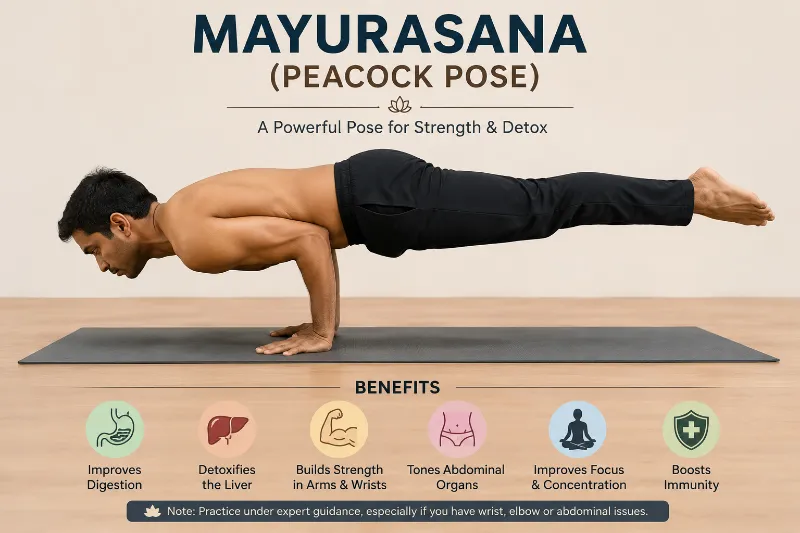
Mayurasana, also called Peacock Pose, is an advanced arm-balancing yoga pose. Because it demands a strong core and concentration, this pose is only appropriate for experienced yogis.
Starting with your palms on the front yoga mat, you will perform either Padmasana or Virasana. After that, gently bend forward and place your upper abdominal muscles against the back of your bent arms. Your legs will lift off the mat and into the air when your core is strong and your eyes are concentrated.
An age-old Hatha yoga practice that is ideal for conditioning your arms and abdomen is mayurasana. This is a step-by-step guide for those who are unfamiliar with this stance.
Overview & Etymology
Asana denotes attitude or posture, and Mayura is the Sanskrit word for peacock. The Vimanarcanakalpa, a 10th-century prose work on Hatha yoga, contains the first description of this pose.
Vasishtha Samhita, Mayurasana is defined as a yoga pose that eliminates all faults in the ancient Hatha yoga treatise from the thirteenth century.
In addition to helping the practitioner become more physically balanced, Mayurasana also helps to increase mental strength, willpower, and self-esteem. Mayurasana is a symbol of patience, beauty, and harmony.
- Sanskrit Name: मयूरासन
- Pronunciation: muh-uu-raa-suh-nuh
- Pose Type: Arm Balance
- Also known as: Peacock Pose
- Strengthens: Forearms, Shoulders, Back, and Core
- Stretches: Forearms and Wrist
Health Benefits of Mayurasana
Enhances Core Strength
The core muscles, which include the obliques and abdominals, are greatly strengthened by Mayurasana. These muscles must be used intensely to hold the body parallel to the ground, which enhances stability and balance in general. A strong core improves performance in a variety of physical activities, promotes better posture, and lowers the risk of back injury.
Frequent Mayurasana practice increases these muscles’ endurance, resulting in a toned stomach and decreased abdominal fat. Better coordination and body awareness, which are necessary for both everyday motions and challenging yoga poses, are further benefits of this enhanced core strength.
Improves Digestion
The stomach, intestines, liver, and pancreas are among the digestive organs that mayurasana is known to activate. These organs are massaged by the pressure placed on the belly during the position, which improves their function and encourages effective digestion. Constipation, bloating, and indigestion are common digestive problems that can be relieved by this.
Better metabolism and nutrient absorption are also facilitated by improved digestion. Regular Mayurasana practice can improve general gastrointestinal health, energy levels, and digestive system health.
Detoxifies the Body
Mayurasana’s tight pressure on the abdomen stimulates the lymphatic system, which aids in the body’s detoxification process. This detoxifying impact enhances circulation and aids in the cleaning of internal organs.
Improved blood flow in the abdomen region supports cellular health, strengthens the immune system, and helps remove pollutants. Regular Mayurasana practice supports the body’s natural detoxifying processes, which can lead to better skin, less inflammation, and more vigour.
Enhances Wrist and Arm Strength
Because the wrists, forearms, and upper arms hold the full body weight, Mayurasana requires a great deal of strength and stability from these muscles. Joint stability, muscle tone, and endurance are all improved by this vigorous activity.
This stance can strengthen your grip and lower your risk of wrist injuries over time. Better performance in various yoga postures, physical activities, and everyday jobs requiring upper body strength and coordination is also supported by stronger wrists and arms.
Boosts Mental Focus and Concentration
Mayurasana balancing demands a high level of focus and mental clarity. In order to hold the pose steadily, practitioners must remain focused, which improves cognitive function and fosters mindfulness. This mental practice promotes present-moment awareness, which lowers stress and anxiety.
Overall focus, memory, and mental toughness can all be enhanced with consistent practice. This concentrated practice has a relaxing impact that encourages emotional equilibrium, making it a great tool for mental health and wellbeing.
Stimulates the Endocrine System
The abdomen region, which houses important endocrine glands including the pancreas and adrenal glands, is compressed by mayurasana. This stimulation can influence metabolism, stress response, and energy levels by regulating hormone production and balance.
Better immunological response, mood management, and general vigour are all supported by enhanced endocrine function. Regular Mayurasana practice may improve hormonal balance, which is important for preserving both mental and physical well-being.
Improves Blood Circulation
Mayurasana’s inverted position promotes improved blood flow to the heart and brain as well as the upper body. This increased circulation promotes cardiovascular health and helps oxygenate tissues more effectively. Increased blood flow also lessens fatigue and accelerates healing. Frequent exercise can improve vascular health, lower blood pressure, and boost vitality. In addition to increasing circulation throughout the body, the pose’s requirement for muscular activation promotes general well-being.
Promotes Shoulder Stability and Flexibility
Strong and flexible shoulders are necessary for Mayurasana in order to support the body weight and preserve balance. The position enhances shoulder joint stability and strengthens the rotator cuff muscles. Furthermore, it increases flexibility and decreases stiffness by stretching the shoulder girdle.
Strength and flexibility work together to improve upper body mobility and prevent injuries. Regular Mayurasana practice can help with posture and reduce shoulder and neck strain brought on by extended sitting or bad ergonomics.
Supports Weight Management
Mayurasana raises metabolic rate and calorie expenditure by working many muscle groups at once. The stance requires a lot of physical effort to maintain, which increases lean muscle mass and, even when at rest, increases metabolism.
This increased metabolic activity promotes good weight management and helps burn extra body fat. Mayurasana’s benefits for detoxifying and better digestion also enhance its ability to support general physical fitness and maintain a balanced body weight.
Enhances Detoxification of the Liver
Mayurasana stimulates the liver’s activity and aids in detoxifying by applying direct pressure on the liver area. This position enhances the liver’s effectiveness in filtering contaminants and metabolising nutrients. Better liver health aids in digestion, hormone balance, and blood composition regulation.
Frequent practice can help lower liver-related problems like slow metabolism and fatty liver disease. Mayurasana promotes improved health, more vitality, and a more robust immune system by strengthening liver detoxification.
When to Avoid Performing Mayurasana
- Avoid if you are pregnant.
- Avoid during menstruation.
- Avoid if you have elbow arthritis.
- Avoid during migraines and vertigo.
- Avoid if you have tension in your neck.
- Steer clear if you’ve had major surgery or injuries.
How to do Mayurasana (Peacock Pose)
The simplest way to learn this pose is to break it down into four easy steps:
Part 1 – Preparatory Poses for Mayurasana
You must engage and warm up your entire body to develop your upper body and bring balance to your core muscles:
- Start on all fours, place your knees beneath your hips, and place your hands shoulder-width apart on the mat to achieve this pose. To raise your chest a little, squeeze your hands and shoulders.
Next, while keeping your core tight, raise your knees and stretch each leg individually. Look either slightly forward or down between your hands. To prepare your core and upper body for arm balancing, hold this stance for three to five minutes.
Chaturanga Dandasana (Four-Limbed Staff Pose)
- Start in the plank posture, then lower your body to a low plank position by bending from the elbows at a 90-degree angle. To maintain this arm balance, make sure your body is parallel to the floor and that you are using your upper body strength.
To strengthen your shoulders, upper back, traps, and wrists, hold this position for 30 seconds for three to five repetitions.
Hamsasana (Swan Pose)
- Swan posture is an alternative if you lack the wrist flexibility and core strength to maintain Peacock stance.
Reverse your hold and rest your abs on your elbows as you continue from Plank stance. Make sure your elbows are just below your ribs and close to one another. Hold this stance for one to five minutes without lifting your legs. Instead, keep your eyes forward.
Swan posture strengthens the required muscular groups without putting too much strain on them, which helps beginners transition to Peacock pose more quickly.
Part 2: Step-by-Step Instructions to Perform Mayurasana
The following are steps to practice Peacock pose:
- Step 1: Take a seat in the centre of your mat and perform Virasana or Hero Pose. Focus on your breathing while sitting up straight for a little while.
- Step 2: Now position both palms shoulder-width apart on the mat with your fingers pointed down at your lower torso.
- Step 3: Maintain a strong core, shoulders, and upper back.
- Step 4: Bend your arms to a 90-degree angle, ensuring that your elbows are near to one another while maintaining a gap between your palms.
- Step 5: Breathe in and out, bend forward, put your head on the floor, and position the middle of your abdomen on your elbows.
- Step 6: Hold your breath while you complete the major arm balance. Raise your legs into the air and extend them straight, pointing all of your toes.
- Step 7: Lastly, keep your body straight from head to toe, gently raise your head off the mat, and look forward.
- Step 8: Return your legs to the mat in Virasana position as you exhale and release the pose.
Key Principles
Make sure your core is engaged and your wrists are well warmed before attempting Mayurasana. The entire position revolves around the elbows, which must squeeze together and rest against the lower abdomen. Keep your gaze slightly forward and downward. Never attempt this pose on a full stomach. Move slowly and deliberately through each stage.
Common Mistakes to Avoid in Mayurasana
Elbows Too Wide Apart
To provide a firm platform, the elbows must push together or as close to one another as feasible. The danger of wrist injuries rises if the elbows spread outward, collapsing the structural support. To train the elbows into the proper alignment, thread a yoga strap around your upper arms.
Looking Too Far Forward
The cervical spine becomes unstable, and the body’s horizontal alignment is thrown off when the neck is turned forward. Maintain a gentle, downward look about 30 centimetres forward of the hands. The head should not feel like a counterbalance, but rather like a natural extension of the spine.
Breath Awareness:
- Hold your breath during the balancing act.
- When you are ready to leave the primary position, exhale.
- Place your palms on the mat in front of you and take a breath.
- Inhale & Exhale: While sitting in Hero position and right before you’re about to place your core on your elbows.
- Beginner’s Performance Duration: Hold Mayurasana for ten to twenty seconds.
- Performance Duration for Advanced: Hold Mayurasana for 30 to 90 seconds.
Part 3: Things to Keep in Mind
When beginning this powerful arm balance, keep an eye out for these important posture signs.
- Grip your yoga mat: When you execute any kind of arm balancing, you are probably putting your hands on the mat, which puts a lot of strain on your wrists. Spread your hands and press your fingers into the mat as if you were holding the ground with your front fingers to prevent wrist pain during extended arm balance holds.
- Avoid releasing your legs too quickly. It may be difficult to achieve this pose if you release your legs before your body is prepared to balance itself. Spend some time. First, allow your head, elbows, and wrists to settle and form a solid base. After that, concentrate on your breathing while keeping your upper body and core active. Then, release your legs while keeping your eyes forward.
- Avoid bending forward too much. Some yogis raise their heads near the ground or place their legs too high in the air. Your body becomes a see-saw because one side is heavier than the other when you lean in too far forward. To align your elbows and ensure that both sides are parallel to the floor, find the midline of your body.
Part 4: Relaxing Poses After Mayurasana
Yoga positions that require arm balancing can be taxing and intimidating. After practising Mayurasana, take some time to relax with the following sequences:
Adho Mukha Svanasana (Downward Facing Dog Pose)
- Keep your legs together while lying on your abdomen with your hands near your chest. Breathe in, raise yourself off your chest, and press your palms into the mat.
Raise your knees off the mat and tuck your toes into it. With your hands and feet flat on the mat, slowly assume a triangle-like position while pointing your pelvis toward the ceiling. Lastly, release the tension in your arms, neck, shoulders, and upper back by holding this counter stance for a few minutes.
Balasana (The Child’s Pose)
- Bend your knees and return them to the floor to continue from the Down-Dog position. Place your head on the floor, raise your pelvis onto your heels, and assume the tabletop posture.
With both palms facing the ceiling, you can either maintain your arms at your sides or extend them forward. Hold until your arms, neck, core, and spine all return to their neutral positions.
Mayurasana Variations to Consider
You might pick a posture variant that challenges you or that you feel most at ease with. We frequently take diverse paths in our learning journeys.
Padma Mayurasana (Lotus Peacock Pose):
- Take a few deep breaths in Padmasana. Move your whole weight to your knees and palms by bringing your hands forward.
Fit your elbows beneath your ribs, bend at the elbows, and point all of your fingers back. As you elevate your knees off the mat in a sustained Padma leg configuration, gradually shift your body weight over your elbows.
For 30 to 90 seconds, hold this variation while remaining parallel to the ground. Then, relax by putting your knees back on the floor.
For intermediate yogis who struggle to raise their legs straight into the air, this is a good variant.
Pungu Mayurasana (Wounded Peacock Pose):
- When you practice the peacock posture, do you feel incredibly strong? This one-arm Peacock posture will continue to test your arm balance.
Maintain an active core as you begin, just as you would in the fundamental Peacock position. Place your right elbow just below your rib cage or near the side of your navel.
Make sure your shoulders and upper back muscles are fully engaged as you spread your right palm fingers to hold onto the yoga mat. Your other hand should remain near your chest.
To balance on your right elbow, now raise your legs. Remove your resting hand from the ground gradually and align it with your legs. Hold this variation by focusing your attention on one spot for a short while, then switch to the other side.
Importance of Mayurasana
- Boosts Core Strength: Mayurasana greatly increases the stability and endurance of the abdominal and core muscles.
- Boosts Digestion: By stimulating the digestive organs, this pose helps improve metabolism and eliminate toxins.
- Enhances Coordination and Balance: Mayurasana practice improves overall balance control and body awareness.
- Strengthens Arm and Wrist Muscles: By providing weight-bearing support, it strengthens the forearms, shoulders, and wrists.
- Boosts Mental Focus: Maintaining this difficult stance fosters mental discipline and focus.
- Detoxifies the Body: Internal organs are massaged by the pressure on the belly, which encourages detoxification.
- Increases Circulation: Mayurasana increases blood flow, particularly to the head and upper body.
- Encourages Courage and Confidence: Acquiring proficiency in this difficult stance increases mental toughness and self-worth.
- Enhances Posture: Maintaining correct spinal alignment requires strengthening the muscles in the upper body and core.
- Promotes Joint Health: The position improves shoulder, elbow, and wrist strength and flexibility.
Side Effects of Mayurasana
- Wrist Strain: Pain or discomfort during and after practice may result from applying too much strain to the wrists.
- Elbow Pain: When the arms are positioned incorrectly, the elbow joints may become strained or uncomfortable.
- Shoulder Pain: Shoulder stiffness or injury may be caused by overextension or improper alignment.
- Neck Strain: When the head is positioned incorrectly, the neck muscles may become tense or uncomfortable.
- Lower Back Stress: Excessive pressure on the lumbar spine might result from a lack of core engagement.
- Muscular Fatigue: Especially for novices, holding the pose for an extended period of time can lead to muscular fatigue.
- Balance Problems: Minor bruising or injuries may arise from falling or losing your balance.
- Blood Pressure Fluctuations: Sensitive people should exercise caution because inverted posture may momentarily alter blood pressure.
- Joint Instability: If you practice without enough strength, your elbows and wrists may become unstable.
- Worsening of Current Conditions: People who have arthritis or carpal tunnel syndrome should stay away because their symptoms could get worse.
Conclusion
The peacock posture, or mayurasana, has significant health advantages that go beyond improving physical fitness. It boosts the digestive system and encourages detoxification by strengthening the core muscles and improving balance, which enhances metabolism and general vitality.
Additionally, by stimulating the abdominal organs, this difficult posture improves digestion and reduces constipation. Regular Mayurasana practice can also promote a harmonious mind-body connection by lowering stress and improving mental focus. It’s a great activity for holistic wellness because it increases flexibility and strengthens the upper body.
Mayurasana is an important pose for people looking for overall well-being since it promotes both physical and emotional resilience when incorporated into a regular yoga practice.
FAQs
What are the key health advantages of practising Mayurasana regularly?
Mayurasana, also known as Peacock Pose, is a yoga pose that balances the arms and strengthens the arms, core, and wrists. It helps digestion, cleanses the body, and sharpens focus and equilibrium.
How does Mayurasana improve digestion?
By gently pressing the abdominal organs, this pose increases digestive fire, relieves constipation, and improves metabolism for optimum digestive health.
Can Mayurasana help in detoxifying the body?
Yes, Mayurasana supports the body’s natural detoxification processes by stimulating internal organs like the liver and kidneys, improving blood circulation, and assisting in the removal of toxins.
Does Mayurasana strengthen the upper body?
Regular Mayurasana practice increases upper body stability and endurance by strengthening the wrists, forearms, shoulders, and core muscles.
How does Mayurasana affect mental health?
By requiring balance and control, Mayurasana enhances focus and concentration while lowering tension and anxiety and fostering mental clarity and relaxation.
Disclaimer: This content is intended solely for educational reasons and provides broad information about Mayurasana’s health benefits. It doesn’t take the place of expert medical advice, diagnosis, or care. It is not appropriate to use the material as a replacement for individualised medical advice. Please consult a trained healthcare provider for advice on any major health issues or conditions.
References
- Allen, W. (2025e, August 26). Mayurasana. https://myyogateacher.com/yoga-asana/mayurasana
- Yoga Journal. (2025m, February 28). Feathered Peacock pose | Forearm balance. https://www.yogajournal.com/poses/feathered-peacock-pose/
- Yoga India Foundation. (2026, August 19). Mayurasana – How to master it & which benefits you gain. Yoga India Foundation. https://yogaindiafoundation.com/mayurasana-peacock-pose/