Gentle Yoga Routine for Piriformis Syndrome
Introduction
One little muscle that can cause a lot of pain is the piriformis. On both sides of your pelvis, these muscles link your upper thigh bone to your lower spine. They are located deep in your buttocks and cooperate with the other hip muscles to stabilize and move your thigh.
The piriformis muscles may become weak and tight as a result of prolonged sitting, but the reverse may also be true. Active athletes who overuse these muscles, such as runners, may have comparable discomfort and sensations.
However, your piriformis may produce pain because of being close to your sciatic nerve.
What is piriformis syndrome?
The sciatic nerve is a big nerve that runs from your low back to your legs, passing below your piriformis. A tight piriformis may worsen sciatic nerve pain and result in piriformis syndrome. The primary symptoms are pain and numbness in the buttocks that go down one or both sides of your leg.
People who sit for extended periods of time are more likely to develop piriformis syndrome. However, this painful illness can also affect cyclists and sportsmen who spend a lot of time in the weight room.
Benefits of yoga for piriformis syndrome
When the piriformis muscle deep in the buttocks weakens as a result of overuse, it is known as piriformis syndrome. The weak muscle starts to spasm, resulting in hip discomfort, sciatica-like leg pain, and buttock pain. Weak buttock muscles can have a descending effect on the back muscles, which over time may become weak and uncomfortable.
Due to this, strengthening and extending the muscles in both of these areas can be beneficial overall and lead to a better course of therapy. Yoga helps enhance general mind-body awareness and relaxation in addition to strengthening the gluteal and lower back muscles. Maintaining calm, deep breaths and concentrating on the body area being stretched are essential components of a successful yoga practice.
Other buttock muscles, such as the large gluteus maximus and gluteus medius muscles, are strengthened with yoga for piriformis syndrome.
Best Piriformis Syndrome Stretches And Yoga Poses
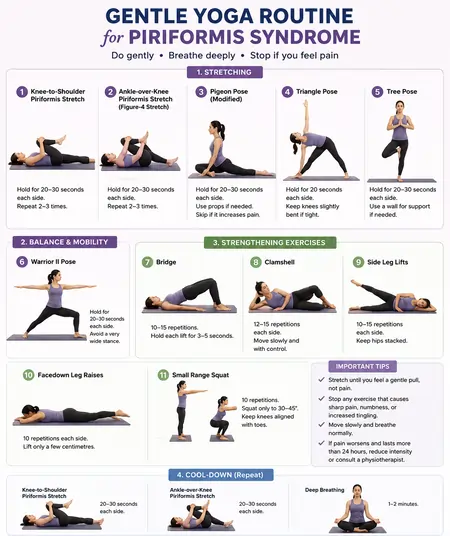
Eka Pada Rajakapotasana(Pigeon pose)
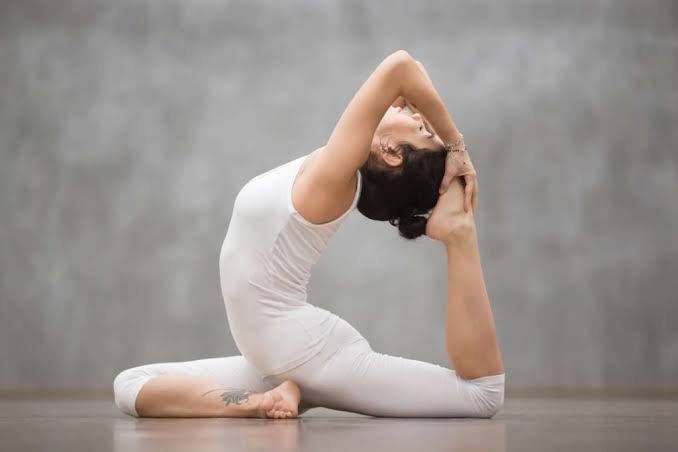
Both the deep gluteal muscles, such as the piriformis muscle, and the hip extensor muscles, such as the hamstrings and gluteus maximus, are stretched by the pigeon pose.
- Tuck the leg under your body while bending one knee.
- Over the bowed leg, fold your body.
- With the toes pointed toward the ground, keep the opposing leg straight and extended.
- As much as you can, reach forward painlessly.
- After five deep breaths, carefully return to the starting position. One set of three stretches on each side should be your goal.
Trikonasana (Triangle pose)
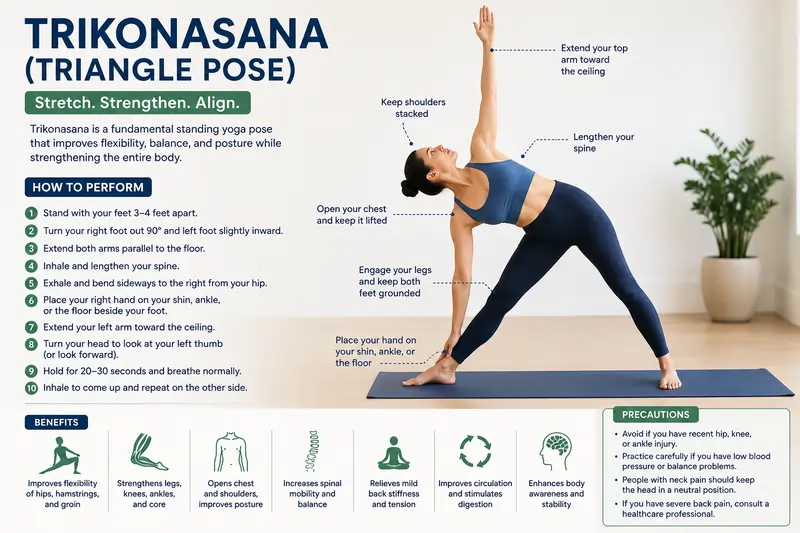
The goal of the triangle pose is to keep the feet wide apart while extending the back in a side-bent position. The triangle posture lengthens the back muscles, increases spinal mobility, and decreases hip and lower back stiffness. Stand with your feet three to four feet apart, your left foot at a 90-degree angle, and your arms extended horizontally to execute the triangle posture.
- Breathe deeply, then as you release the breath, bend your upper body laterally toward your left side until your right hand is stretched upward with the fingers pointing toward the sky and your left hand is resting on your left shinbone.
- Make sure your hips are not twisted and are looking forward.
- Pull the shoulder bones back to extend the spine.
- If it is challenging to place the hand on the shin. Put your hand on one or two yoga blocks that are close to your left foot.
- Repeat on the other side after holding the posture for 30 seconds while breathing deeply and slowly. One set of three stretches on each side should be your goal.
Vrikshasana (Tree pose)
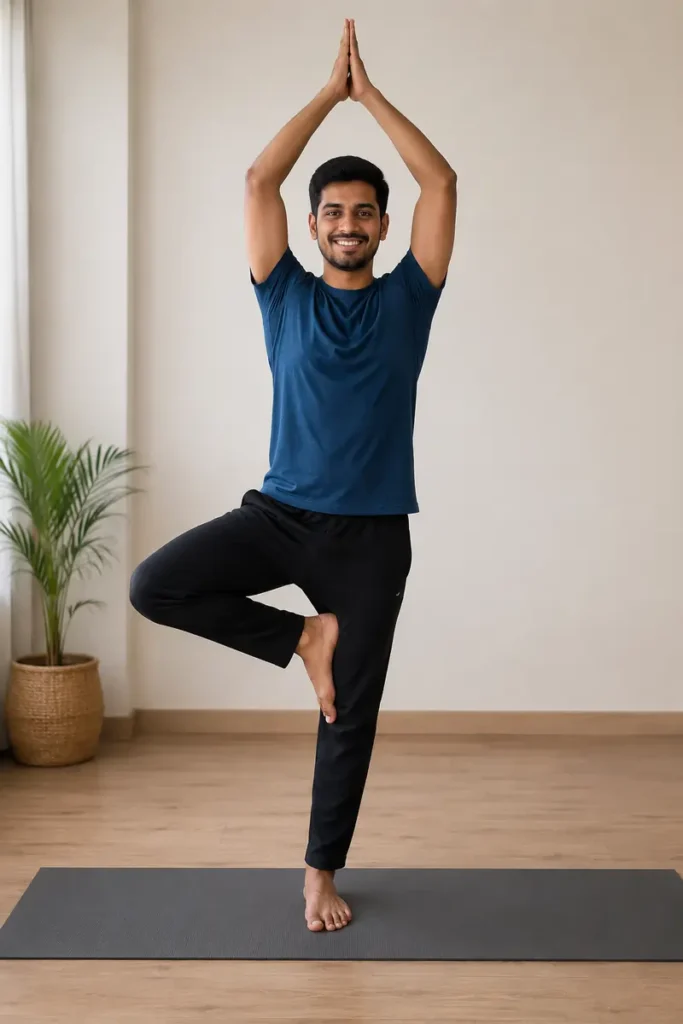
The tree pose helps maintain balance and equilibrium in the body by concentrating on the larger gluteus maximus and gluteus medius muscles of the buttocks. Stand upright with your palms facing your body to perform the tree pose.
Vrikshasana (Tree pose) steps:
- Stand upright with your palms facing your body to perform the tree position. Place your palms close to your chest.
- Gently raise your right foot off the ground and rest its sole on the inside of your left leg while shifting your weight to your left.
- Depending on what is most comfortable, you can put your right sole close to your left ankle, left knee, or left thigh.
- As far as you can without losing your balance, turn your knee outward.
- Make sure your hips are not twisted and are looking forward.
- Repeat on the other side after holding the posture for 30 seconds while breathing deeply and steadily. One set of three stretches on each side should be your goal.
Virabhadrasana (Warrior pose)

The buttock muscles are strengthened and activated by the warrior position.
Stand upright and place your feet three to four feet apart to perform the warrior position.
- Facing the proper way, turn your right toes outward.
- Lean to the right and bend your right knee carefully over your right ankle.
- Lift your left knee straight.
- With the palms facing down, raise both arms until they are parallel to the ground.
- Turn your neck to the right to help stretch your spine.
- Keep your spine straight and long while contracting your abdominal muscles.
- Hold the position for 30 seconds while breathing deeply and steadily, then repeat on the opposite side. The goal should be to perform one set of three stretches on each side.
Knee-to-shoulder piriformis stretch
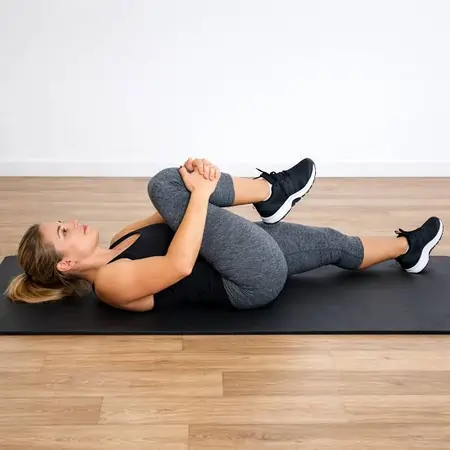
- With your legs straight, lie flat on your back.
- Bend your knee and raise your leg. Pull your knee in the direction of your opposing shoulder using your opposing hand.
- Hold for thirty seconds.
- Do this twice a day, three times on each side.
Ankle-over-knee piriformis stretch
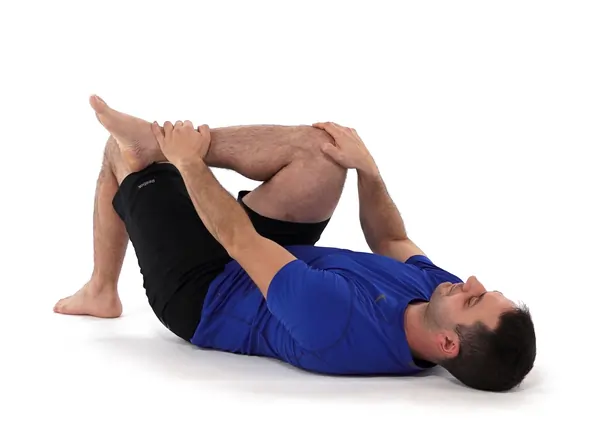
- Bend both knees while lying flat on your back.
- Cross your ankle over the knee on the other side.
- Reach behind your opposing knee and grab the back of your thigh.
- Gently pull your thigh toward your chest.
- Hold for thirty seconds.
- Do this twice a day, three times on each side.
This exercise may also be performed while seated, which is practical if you work in an office:

- Place both feet on the ground while seated in a chair.
- Cross your ankle over the knee on the other side.
- Keeping your ankle in place, let your knee drop.
- To feel the stretch in your buttocks, softly push your leg down or bend forward.
- Hold for thirty seconds.
- Do this twice a day, three times on each side.
Setu Bandha Sarvangasana(Bridge Pose)
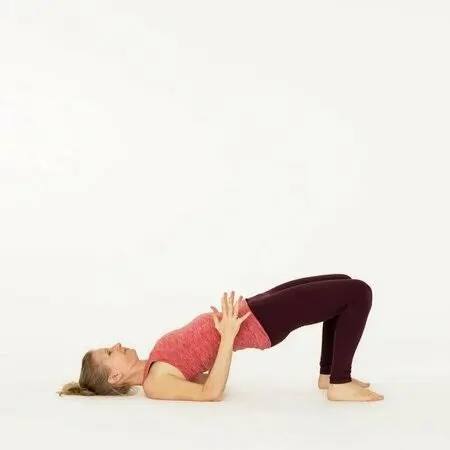
- Bend both knees while lying flat on your back.
- Lift your hips off the ground by contracting your core.
- At the peak of the action, squeeze your buttocks.
- Return your hips to the floor slowly.
- For each set, repeat ten times.
- Perform three sets, either once or twice a day.
Side leg lifts
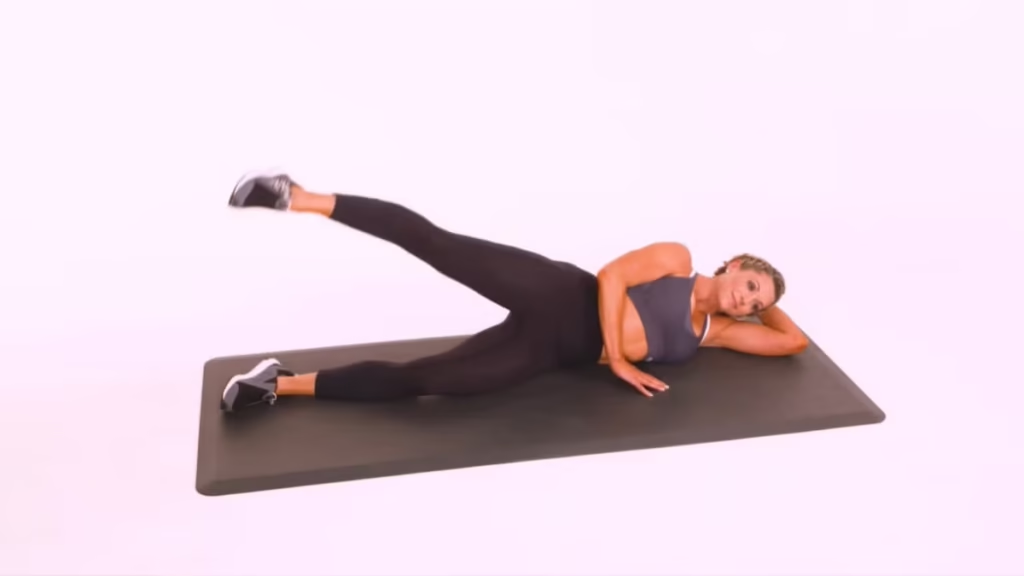
- Place your ankles on top of each other while lying on your side. You can use your arm or a pillow to support your head.
- Keeping your knee locked, steadily raise your leg while tightening your upper thigh.
- Return your leg to its starting position slowly.
- For each set, repeat ten times on both sides.
- Once or twice a day, perform three sets.
Clamshell
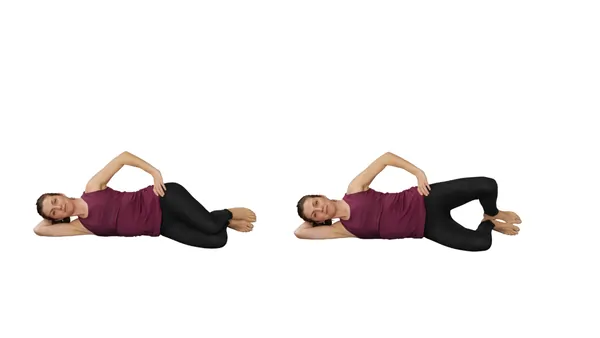
Clamshell steps:
- With your knees bent in an “L” form and your ankles crossed, lie on your side.
- Lift your upper knee as though you were opening a clamshell while keeping your heels together.
- Return your knee to its initial position gradually.
- For each set, repeat ten times on both sides.
- Once or twice a day, perform three sets.
Facedown leg raises
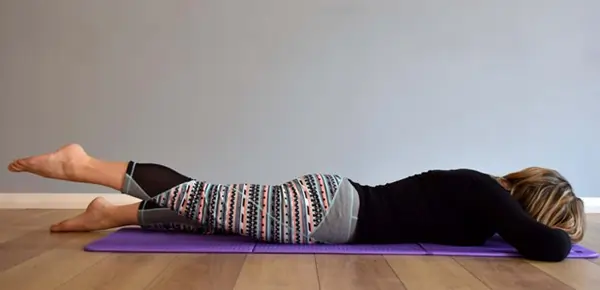
- Stretch your legs out while lying flat on your stomach.
- Keeping your knee locked, raise one leg off the ground while contracting your thigh muscles.
- Return your leg to its starting position slowly.
- For each set, repeat ten times on both sides.
- Once or twice a day, perform three sets.
Small range squat
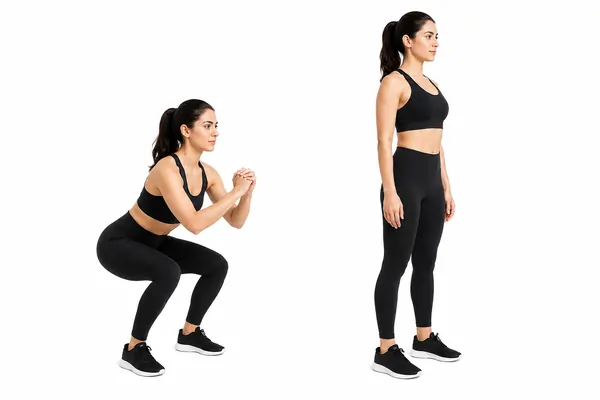
- Place your heels wider than your shoulders and stand straight.
- Squat as low as is comfortable by hinging your hips and pushing your buttocks back.
- Return to a standing posture slowly.
- For each set, repeat ten times.
- Once or twice a day, perform three sets.
How to Prevent Piriformis Syndrome?
Frequent yoga practice can lower the chance of developing Piriformis syndrome. For muscles to remain strong and healthy, they require physical exercise. The following actions should be taken to avoid piriformis syndrome:
Before running or doing a hard workout, warm up and practice stretches.
Avoid running up and down hills or over uneven conditions; gradually increase the intensity of any physical activity or sport; and avoid sitting or lying down for extended periods of time without doing something.
FAQs:
Does yoga help piriformis syndrome?
Yes, piriformis syndrome benefits greatly from yoga. Yoga can lengthen the tense piriformis muscle, relieve tension, and lessen uncomfortable pressure on the sciatic nerve by combining hip-opening exercises and moderate, focused stretches.
What is the fastest way to heal piriformis syndrome?
A combination of deep tissue release, alternating cold and heat therapy, and activity adjustment is the quickest way to treat piriformis syndrome. Stretching the piriformis muscle, such as by performing a figure-four stretch, and avoiding extended sitting or hard lifting can provide immediate symptom relief.
Is piriformis syndrome a permanent condition?
Simple therapies and lifestyle modifications can quickly resolve piriformis syndrome. In a matter of days or weeks, symptoms frequently get better. However, the illness frequently recurs, particularly in those who disregard the advice of their healthcare expert.
What is the new name for piriformis syndrome?
Deep Gluteal Syndrome (DGS) is the current medical name for piriformis syndrome. Because sciatic nerve compression in the buttock can also be caused by entrapment by the hamstring muscles, fibrous bands, or the gemelli-obturator internus complex, experts prefer this term.
What not to do with piriformis syndrome?
Keep clear of hard activity like running, cycling, or deep squats while flared up, as well as prolonged sitting and forceful deep-tissue rolling directly over your glutes. Additionally, until the muscle spasm and nerve irritation subside, stop doing severe hip-opening stretches or external rotation exercises, such as clamshells.
References:
- Newman, D. P., & Zhou, L. (2021). Piriformis syndrome masquerading as an ischiofemoral impingement. Cureus, 13(9), e18023. https://doi.org/10.7759/cureus.18023
- Siddiq, M. A. B., Khasru, M. R., & Rasker, J. J. (2014). Piriformis syndrome in fibromyalgia: clinical diagnosis and successful treatment. Case Reports in Rheumatology, 2014, 1–5. https://doi.org/10.1155/2014/893836
- Mick, I., Freger, S. M., Van Keizerswaard, J., Gholiof, M., & Leonardi, M. (2024). Comprehensive endometriosis care: a modern multimodal approach for the treatment of pelvic pain and endometriosis. Therapeutic Advances in Reproductive Health, 18, 26334941241277759. https://doi.org/10.1177/26334941241277759