Virabhadrasana I (Warrior I): A Journey into Strength, Focus, and Surrender
Introduction:
Virabhadrasana I (Warrior I) is a powerful standing yoga pose that helps build strength, balance, and stability throughout the body.
Strength lives in this shape, along with steady intent and quiet daring. Though rooted in movement, its real depth lies beyond muscle. A sense of readiness grows there, built on persistence, balance, and unseen toughness.
From an ancient word called Sanskrit comes the word Virabhadrasana. Hero or warrior – that is what “Vira” stands for. Noble or blessed – that’s the meaning behind “Bhadra.” As for “Asana,” it simply refers to a position held by the body. Put them together, and you get the stance of a respected fighter.
Strong legs, steady breath, one foot forward – many know this form on mats across continents. It builds more than muscle; focus grows here too, along with stability and stretch.
Origins and Myths
A strong story from ancient India gives meaning to this stance. There, her father spoke against Shiva with open scorn.
Out of fury, a strand torn from his head hit the ground hard. That violent motion birthed Virabhadra – a fierce fighter built for one purpose only. Into Daksha’s gathering he charged, confronting every hand that played a part.
Out of the ground he surges; that is what Warrior One shows. This stance, born from myth, holds the instant defiance takes form. From ancient tales comes a pose rooted deep in resolve. Every line of the body speaks of a challenge met without stepping back.
Stillness meets power where legend becomes posture.
Meaning and Symbolism
Standing tall, Warrior I reaches beyond movement alone. Inside each person lives a strength that this pose reflects. Challenges show up daily – doubt, fear, unknown paths ahead. From this stance comes a quiet power: hold steady when everything pulls at you.
Ground down, breathe, keep eyes forward even when balance wavers. Standing tall, arms reaching high, eyes fixed ahead – this stance builds inner trust. A forward gaze meets outstretched hands, shaping clear intent.
Challenges show up differently here, seen not as walls but paths. Power rises from thought, breath, feeling – not just muscle. Growth hides in effort, revealed slowly.
How to Practice Virabhadrasana I
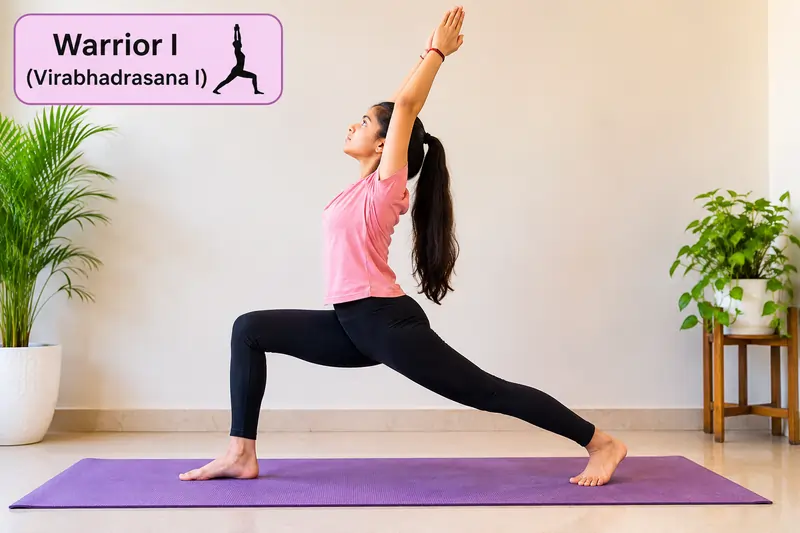
- To get into position, step one foot back while keeping balance through focus. A steady spine matters – line it up carefully as you shift weight. Instead of rushing, breathe slowly each time muscles engage. For safety, move only when breath flows without strain.
- Start on your feet near the top edge of the mat. Position changes happen slowly here – angle opens now toward the edge. A quarter turn forms part of the base setup. Foot pivots follow body alignment without force. Movement stops once placement feels balanced.
- Start by easing into the movement – your front knee moves forward just enough so it lines up above the ankle. That position feels steady when you shift your weight there slowly.
- From the rear, let that leg stay locked, firm like a post holding steady. A solid line runs down from hip to heel – no bend, just power held in place.
- Facing forward on the mat, align your hips squarely. Reach through the top of your head while drawing your shoulders back. Hold the base of your skull tall as ribs float upward.
- Look ahead, or tilt your eyes up just a bit. Take a long breath while staying in position for multiple inhales and exhales. Then remain still, letting air move slowly in and out until time passes without rush.
- Let go slowly, then do the same on the other side. Staying steady matters most while holding the position.
- From there, the forward knee stays behind the heel line. Instead of tensing up, the shoulders hang loose, far from the earlobes.
Warrior I Strengthens Legs and Opens Chest
Standing strong in Warrior One brings gains for body and health alike. Legs grow steady through practice, and balance improves without effort. Joints find support where tension once sat heavy. Breathing moves more easily as posture lifts the chest wide open. Each session builds resilience quietly over time.
Strengthens the Legs
- Front thigh fires first when you settle into position. Muscles along the calf tighten as balance shifts forward. That extended rear limb works just as hard behind the scenes. Glutes lock in without calling attention to themselves.
- Endurance builds quietly through sustained hold. Strength shows up not in bursts but in stillness. Better alignment follows, along with steadier movement through daily tasks.
Opens Chest and Shoulders
Up above, arms stretch out, opening up the shoulder and chest space. When held there, tightness from slouching slowly releases.
Enhances Hip Flexibility
Back leg stretched long, hips open wider with time. Each session eases tightness, and movement grows smoother day by day.
Stronger Ankles and Feet
- From the ground up, balance begins with steady pressure across each foot. Over time, doing it often helps you feel more sure in your movements. This pose makes you notice where your limbs are without looking.
- Each session adds quiet strength to your sense of control. Stability grows not by force but through repeated stillness.
Increases Stamina
- With legs pressing into the floor and arms reaching skyward, Warrior I strengthens stamina through combined effort. Each breath deepens the hold, linking motion to steady power.
- Muscles fire together – calves, quads, shoulders – not one alone but each feeding the next.
Builds Confidence
Standing tall tends to spark a sense of inner strength. As people hold themselves straight, they usually feel more sure about who they are.
Enhances Focus
Staying centred begins with a quiet focus. Yet each shift demands noticing what slips away. A steady posture grows when awareness stays close. Even small adjustments keep thoughts from drifting off.
Reduces Stress
- Slow breaths followed by gentle motion help quiet the mind and ease stress. When air moves deep into the belly, muscles start to relax on their own.
- Movement that pays attention slows down a racing head. Each inhale stretches inward, while awareness rides along. Tension slips out when rhythm joins sensation. Nerves settle without effort after a few steady cycles.
Encourages Determination
Even when muscles burn, staying put builds quiet strength over time. That stubborn calm tends to show up outside the studio, too.
Promotes Emotional Stability
- Feet flat on the floor, the pose brings calm when pressure builds. Stability shows up quietly, not with force. Emotions settle simply because the body feels held.
- When everything shifts, this stance stays firm – almost like an anchor working without notice.
Breathing in Warrior I
- When you move into Warrior I, let your breath flow without force. This pose works best when air moves steadily through each inhale and exhale.
- Upward reach of the arms brings a full breath, stretching the spine gently. During the stance, calm breaths hold the balance in place. Shoulders let go when air leaves the body, followed by the neck and jaw relaxing too.
- Breathing with attention shifts how you hold yourself, turning movement into something that ties motion to awareness.
- Neither form nor position is important; rather, what really matters is the connection between breathing and balance that will differ for each person.
Common Mistakes to Watch Out For
Newbies often make mistakes related to posture while learning to perform the Warrior One Pose.
- Wrong hip angles show up a lot when starting. Twisted shoulders pop up without notice, too. Leaning forward sneaks in quietly among new students. Standing too far apart throws balance off more than expected.
- Bent back knee slips by many, unaware. Each small fix adds up steadily over time. Watch how far your front knee travels. If it creeps past the ankle, extra pressure builds there instead of spreading through the leg.
- Being too bent over the waist creates problems. If one contracts the abdominal muscles, then they can keep their spine fixed, hence avoiding any pain. Some people find themselves lifting their shoulders to their ears while doing it. When the shoulders stay loose, it helps improve stance and airflow.
- Some wobbles in the hips might weaken how well the pose works. Aim to keep them facing straight ahead when you can. Facing forward helps hold things steady without tipping too far either way. When the feet lack solid contact, standing steady gets harder. Stay rooted by pressing both feet flat on the surface.
Modifications for Beginners
- Starting strong, this pose bends to match your strength. Flexibility shifts it further. The body needs to shape how far you go. Effort changes form slowly. Balance matters more than speed ever could.
- For those just starting, bringing the feet closer helps stability.
- For anyone feeling pain in their shoulders, try leaving space between the hands instead of pressing them together.
- When knees feel sore, going less deep can help. Trying a shallow angle eases pressure without losing value. Starting gently keeps things working smoothly.
- Being close to the wall may not only help balance but also increase your confidence.
Contraindications and Precautions
- As far as the pose is concerned, the Warrior I is usually not contraindicated – yet certain people should be careful with it.
- People with specific conditions might find themselves needing extra attention during the stretch. Looking up might not feel right for those managing high blood pressure. Instead, they often find it better to keep their eyes ahead.
- A pro can guide if movement is safe right now. Jumping in too soon might slow healing. Safety shows up in small choices, like asking first.
- Healing needs space, not speed. Someone who knows anatomy could help spot risks early. Moving well means knowing when to wait.
- Pregnancy means listening closely to someone who knows prenatal poses well – proper form matters, as does staying at ease. A teacher with real experience helps keep things steady, plus makes sure movements feel right.
- Comfort comes first when trying positions that support both body and baby. Guidance like this shapes a practice that moves safely through each stage.
- Bodies speak when stretched too far, so stepping back keeps practice safe. Pain shouts stop – honour that signal without question. Each pose should feel like a steady breath, never a fight.
Warrior I in Today’s Yoga
- Currently, Warrior I can be found in many forms of yoga, such as Hatha Yoga, Vinyasa, Ashtanga, and even Power Yoga.
- The pose lends itself easily to sequences such as Surya Namaskar and standing sequences. From here, balance begins to tie muscle effort to quiet attention.
- Though legs engage and spine extends, breath slows – drawing thought inward instead of outward. A shift happens quietly, where movement meets stillness without announcement.
- Standing tall in Warrior I, many yoga instructors point out how power shows up when pushing hard meets staying soft. This stance reveals persistence, sitting quietly beside stillness and poise.
- From the ground up, it teaches that drive does not need to shout. Instead, quiet confidence holds space just as much. Each breath there weaves firm intent with gentle release.
- Not every strong thing looks tense. Sometimes strength wears a relaxed face.
Conclusion
Standing tall like a figure from an old tale, Virabhadrasana I shows power, bravery, and balance. Born from legend, shaped by generations of movement and breath, this pose holds deep value today among those who practice yoga.
One foot forward, hips open, gaze lifted – it asks for effort and attention at once. With time spent here, bodies grow steady, thoughts slow down, and confidence rises without words.
Standing tall, this stance shows how each individual holds a fighter within, ready to meet challenges head-on. Not just for experts but also for those starting, Warrior One teaches quiet strength through steady effort and self-awareness.
With feet rooted, breath flowing slowly, and focus clear, people often find deep shifts in body and mind. A single position, yet it speaks volumes when held with purpose.
FAQs
What is the primary purpose of Warrior I?
It is a powerful pose that builds strength in the legs, improves balance, and enhances core stability.
It also serves to open the chest, shoulders, and hip flexors for better posture.
What should be the position of the hips in Warrior I?
Aim to square your hips toward the front of your mat as much as your flexibility allows. This helps to correctly align the pelvis and creates a deeper stretch in the psoas and hip flexors.
What is a key safety tip for the front knee?
Ensure your front knee is stacked directly above your ankle to protect the knee joint.
Avoid letting the knee collapse inward; keep it aligned over the centre of your front foot.
References:
- Yoga Journal. (2025e, February 25). Warrior 1 Pose. https://www.yogajournal.com/poses/warrior-i-pose/
- Yogateket. (n.d.-c). Warrior I Pose – Virabhadrasana I – YOGATEKET. Yogateket. https://www.yogateket.com/blog/warrior-pose-1-virabhadrasana-i
- The Art of Living. (2023, February 15). Veerabhadrasana / Virabhadrasana (Warrior pose). Art Of Living (Global). https://www.artofliving.org/yoga/yoga-poses/warrior-pose-virbhadrasana
- Warrior Pose I Yoga(Virabhadrasana I)| Yoga sequences, benefits, variations, and Sanskrit Pronunciation | Tummee.com. (n.d.). Tummee.com. https://www.tummee.com/yoga-poses/warrior-pose-i
- Jain, K. H. (2025, March 17). Yoga’s 5 Warrior Poses: Benefits & Tips For Perfect Form. Arhanta Yoga Ashrams. https://www.arhantayoga.org/blog/yoga-warrior-pose-guide/
- Allen, W. (2025, August 26). Virabhadrasana. https://myyogateacher.com/yoga-asana/virabhadrasana
- Allen, W. (2025c, August 26). Virabhadrasana. https://myyogateacher.com/yoga-asana/virabhadrasana

2 Comments