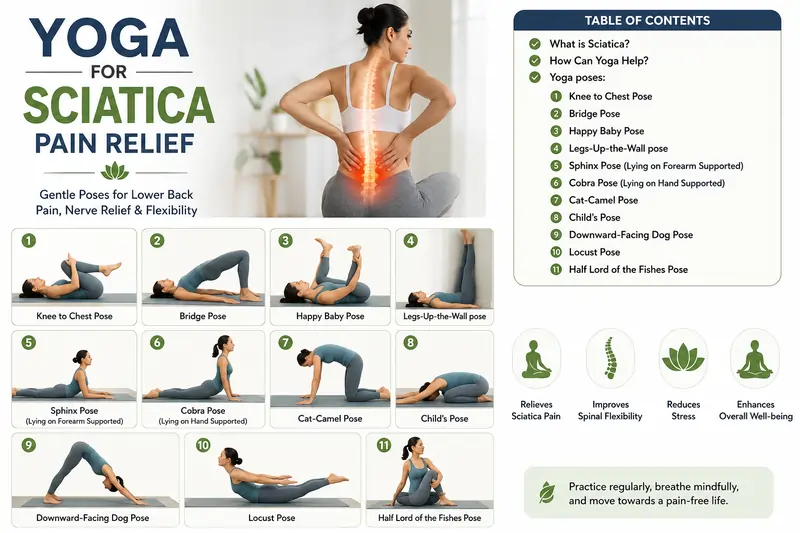
11 Top Yoga Poses For Sciatica Pain Relief
Sciatica can cause pain, tingling, or numbness that radiates from the lower back through the buttock and down the leg, making everyday activities uncomfortable. Practicing gentle yoga poses can help reduce pressure on the sciatic nerve, improve flexibility, strengthen supporting muscles, and promote better posture.
What is sciatica?
The longest nerve in the body, the sciatic nerve, gets compressed or irritated when it leaves the lower spine or passes through the pelvis, resulting in sciatica. The pain is frequently characterised as intense, shooting, tingling, or numb, and it can radiate anywhere from the buttocks down the back of the leg. Even routine activities like sitting or standing for long periods of time can make many people feel more uncomfortable.
What Are the Risk Factors for Sciatica?
The most frequent direct cause of sciatica is a herniated disc.
Additional sciatica risk factors include:
- Obesity
- Jobs that Require Heavy Lifting
- Sedentary Lifestyles
- Arthritis
- Previous Spine Injuries
- Pregnancy
- Genetic Factors
How Can Yoga Help?
- If a herniated or protruding disk is the cause of your sciatica, you can strengthen your lower back with a yoga practice that builds from mild poses to fundamental foundational asanas like standing poses and downward-facing dog.
- Surgery is not always necessary for a herniated disk, and yoga can help you manage and lessen the issues caused by the herniation—sometimes even lessening the herniation itself. However, it’s crucial to discuss the extent of the herniation with your physician.
- If a short, tight piriformis is the cause of your sciatica, concentrate on stretching this muscle to relieve pressure on the nerve. Since the piriformis may cause deep buttock pain and spasms, which may or may not be accompanied by sciatic pain, your approach should be moderate and progressive.
Yoga poses:
Pavanamuktasana (Knee to Chest Pose)
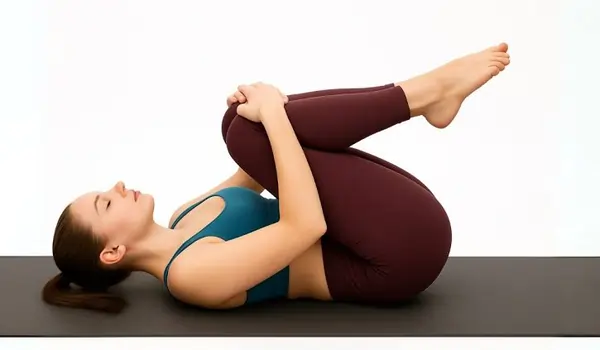
In addition to stretching the spine, this position gives your back a body-weighted massage.
How to do it:
1. Place yourself on your back.
2. Bend your knees with your chest.
3. Rock your body slowly to the left and right.
Maintain this position for one to two minutes
Setu Bandhasana (Bridge Pose)
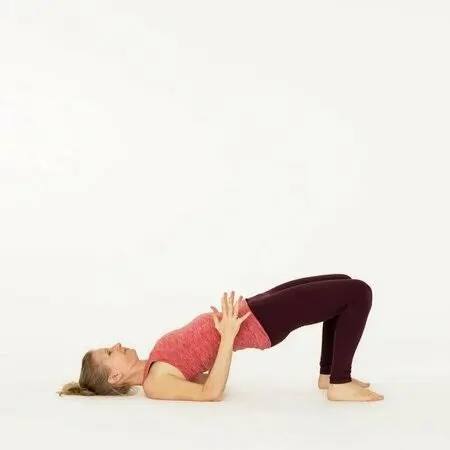
This pose is used to enhance the muscles of the back and strengthen the back extensors
How to do it:
- Start by lying down on a mat.
- Keep your feet flat on the ground
- Bend your knees.
- Gradually raise the hip upwards.
- Lean into your shoulders and maintain a tight core.
- Raise your hips to a comfortable level. Try to tighten your core and glutes.
- Hold for twenty to thirty seconds
Anandabalsana (Happy Baby Pose)
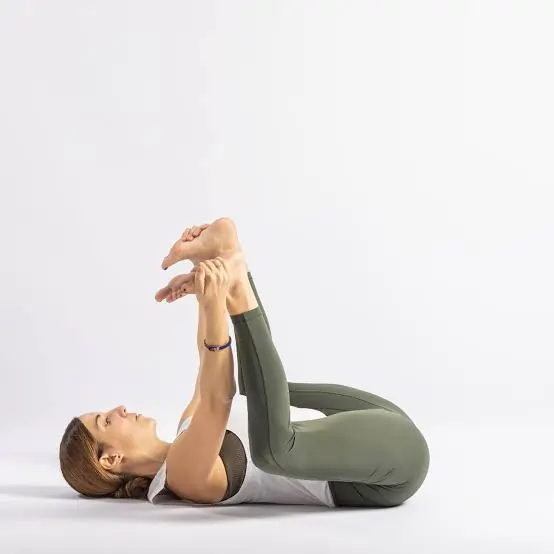
This yoga pose is used to relieve back pain and strengthen core muscles.
How to do it:
- Lie on your back.
- As far as you can, bend both knees.
- Let your knees drop to the floor
- Gradually bring your feet to your chest.
- Hold a flat back on the ground.
Hold for one to two minutes.
Viparita Karani (Legs-Up-the-Wall pose)
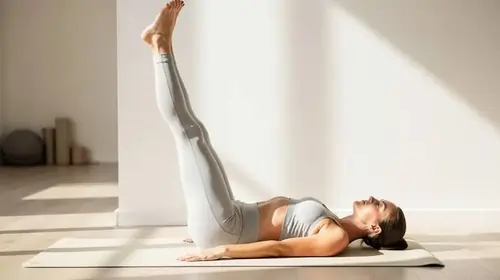
Your body can rest, relax, and heal in this ultimate restorative pose.
How to do it:
- Place your right side up against the wall as you sit.
- Swing your legs up along the wall while lying back, getting your hips as near to the wall as is comfortable.
- Put a folded blanket or cushion beneath your head.
- Hold this position for two to ten minutes.
Hold this position for two to ten minutes.
Salamba Bhujangasana (Sphinx Pose)
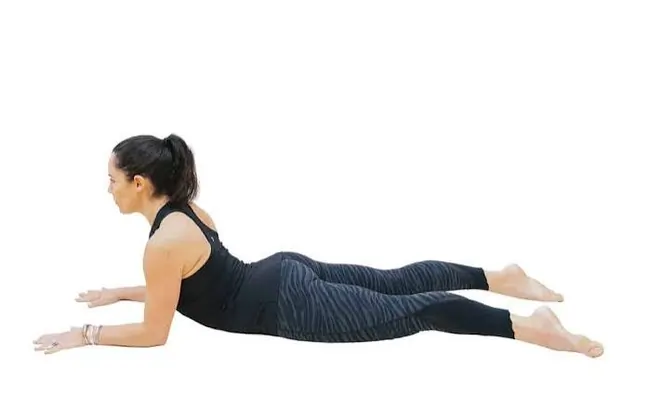
Your abdomen, shoulders, and chest are all stretched. Your buttocks and spine get strengthened by this simple backbend.
How to do it:
- Lying on your stomach.
- With your hands facing down and your forearms on flat ground, place your elbows beneath your shoulders.
- Raise your head and upper body slowly.
- Be sure that rather than slumping into your lower back, you are raising up through your spine and out through the crown of your head.
- As you completely relax in this pose, keep your eyes forward while yet being active and involved.
Hold this position for a maximum of five minutes.
Bhujangasana (Cobra Pose)
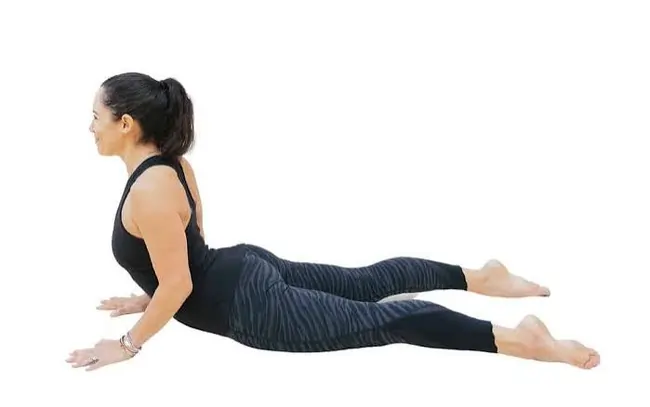
How to do it:
- Lie flat on your stomach.
- Place your palms on the ground next to you, about level with the bottom of your ribcage. Keep your elbows close to your sides.
- Push through your arms
- Gradually raise your chest off the floor.
- Your lower body and hips should be placed toward the floor, but your back should be arched.
- Breathe deeply and slowly while holding this position for ten to twenty seconds.
- Return your upper body to the floor gently.
- Repeat 2 or 3 times.
Cat-Camel Pose:
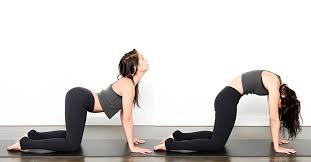
The majority of yoga routines use this pose, which is among the most common.
How to do it:
- Place yourself on your palms and knees.
- Breathe gently while slowly extending your neck upward and your tummy downward.
- To achieve the full cow stance, slightly arch your back and release all of your breath. Raising your spine and lowering your neck in line with your spine (without dropping your chin to your chest) can help you achieve a cat stance when you inhale.
Do each of these two exercises five times or more at a slow pace.
Balasana (Child’s Pose)
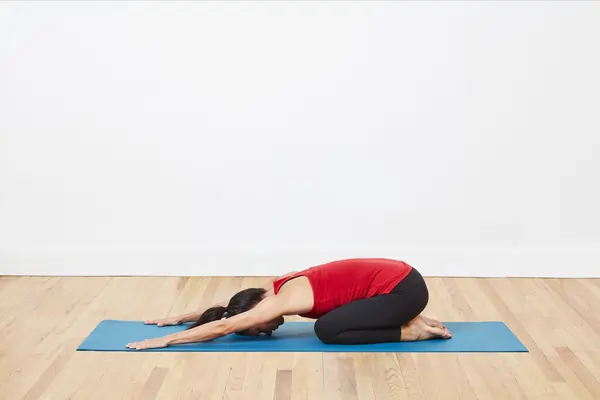
Child’s Pose’s goal is to relieve pressure on your lower back by lengthening and straightening your spine, which in turn causes it to decompress.
How to do it:
- On your mat, bow.
- Breathe deeply.
- Keep your arms far in front of you on your mat
- Rest your chest over your thighs.
- Draw your ribs away from your tailbone and extend your neck onto the floor.
Hold the pose for one to two minutes.
Adhomukh Swanasana (Downward-Facing Dog Pose)
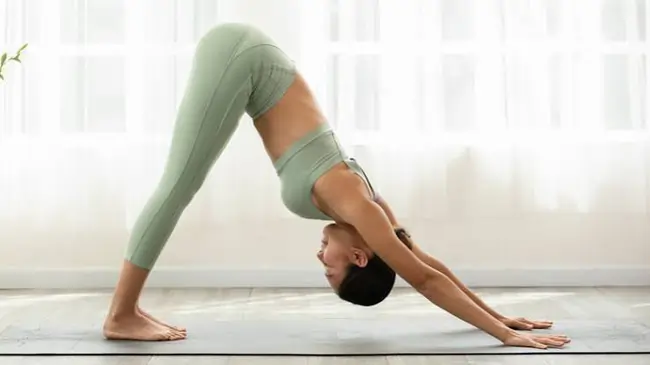
This classic forward bend can be calming and revitalising.
How to do it:
- Begin on your hands and knees.
- Put your hands with your wrists and your knees behind your hips.
- Lift your knees, tuck your toes under, and press into your hands.
- Raise your sitting bones toward the direction of the ceiling.
- Lengthen your tailbone and spine while maintaining a small bend in your knees.
- Maintain the position of elevation on your heels.
- Firmly press into your hands.
- Pay attention to how your shoulders and hips are positioned as you divide your weight equally between the two sides of your body.
- Keep your chin slightly tucked in or align your head with your upper arms.
Maintain this position for a maximum of one minute.
Salabhasana (Locust Pose)
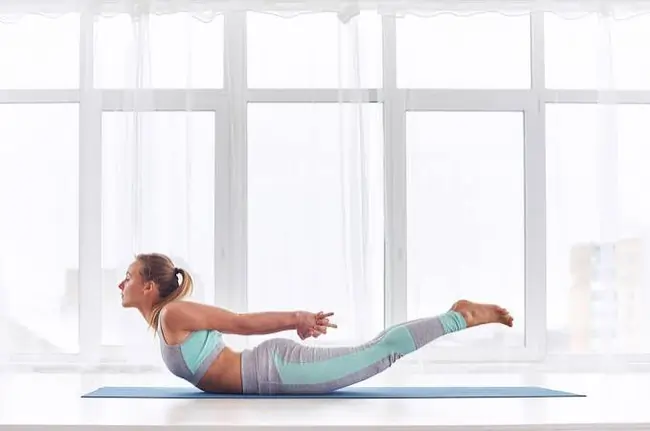
Your lower back and core are stabilized by it. Additionally, it increases hip flexibility and circulation.
How to do it:
- Lie on your stomach.
- Keep your fingers interlinked at the back.
- Raise your arms, head, and chest as high as you can while moving slowly.
- Lift your arms and pull them away from your body.
- To go deeper, raise one leg at a time or both.
- Work your abdominal muscles, lower back, and glutes.
- Hold for a maximum of thirty seconds.
- Release the stance and return to the starting position.
- Move your hips softly from side to side while you take a few deep breaths to rest.
Do this one or two times.
Ardha Matsyendrasana (Half Lord of the Fishes Pose)
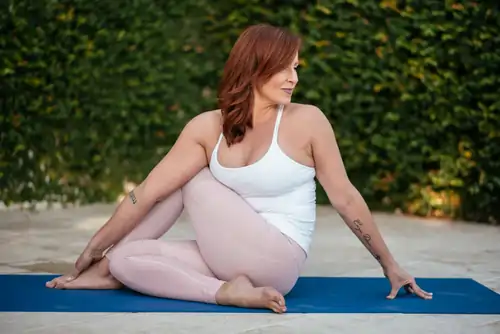
How to do it:
- Take a seat on a mat to begin.
- Bring your right foot to the outside of your left hip while keeping your knee pointed either forward or sideways.
- Put your left foot outside of your right thigh.
- With your fingertips supporting you, bring your left hand to the floor behind you.
- Wrap your right arm around your left leg or bring it to the outside of your left leg.
- Lift and extend your spine with each breath.
- With each exhale, twist a bit further to deepen the position.
- You can turn your head to gaze side by side.
- Hold for a maximum of one minute.
On the other side, repeat.
Precautions while performing yoga:
Yoga must be avoided or done under a therapist’s supervision if you use sedative medications or have a medical condition that makes your ligaments and joints more flexible than normal (hypermobile).
An efficient, low-impact method of relieving sciatica is yoga. One person may benefit from a certain stance, but others may not find it beneficial. You may need to try out numerous poses to locate the most effective yogic stretch for relief from your sciatica.
Avoid these yoga positions if you have sciatica.
Certain yoga poses can worsen sciatica symptoms, so you should avoid them. Without forcing yourself into any uncomfortable poses, pay attention to your body and respect how it feels.
Try a variety of options to see what works best for you on any given day. Avoid any asana that is painful or hurts.
Except for Downward-Facing Dog, forward bends when seated and standing should be avoided since they can worsen pelvic and lower back pain. From the supine posture (lying down, face up), you can perform forward bends. Your lower back and hips are supported by this.
You could discover that you can only perform specific positions on one side of your body because sciatica typically affects just one leg. This is alright. You can bend your knees in any position. In any uncomfortable sitting position, place pillows beneath your knees.
Avoid performing yoga positions that squeeze or strain your stomach if you have sciatica. Stay away from tight backbends, twists, and belly-pressing postures. When necessary, adjust positions with bolsters and cushions.
Suggestions from the author:
The poses listed above might relieve your sciatica discomfort. Above all, put ease, tenderness, and safety first.
If you can, set up a private practice or go to a yoga class. Seeing a professional at least once a month is a good idea to ensure you’re on the right track. Even if you don’t have a private session, you can speak with your yoga instructor before or after class.
If your sciatica pain is severe, lasts more than a month, or shows any odd symptoms, consult a physician or physical therapist.
FAQs
Can yoga get rid of sciatica?
Yoga cannot “cure” sciatica because the underlying cause decides the treatment, but it is extremely beneficial in managing and reducing pain. Yoga reduces sciatic pain by stretching tight muscles and strengthening the lower back and hips.
What is the fastest cure for sciatica?
The fastest, non-surgical way to cure sciatica is to address the underlying problem with skilled medical care. While moderate flare-ups recover in 4-6 weeks with conservative home care, urgent, professional therapies, such as focused physical therapy or an epidural steroid injection, provide the quickest relief for severe, immobilising nerve pain.
Is sciatica 100% curable?
Sciatica is rarely “100% curable” in the sense that it will never occur again, but it is extremely treatable. Approximately 90% of cases recover entirely without surgery, typically within four to six weeks, thanks to a combination of physical therapy, anti-inflammatory medicines, and mild movement.
What yoga poses should you avoid with sciatica?
With sciatica, the golden rule of yoga is to avoid poses that create lower back rounding, force straight-leg hamstring stretches, or perform deep spine twists. These actions severely compress your lumbar discs or directly stretch the irritated sciatic nerve, which can significantly increase your pain.
What exercise worsens sciatica?
Sciatica is a prevalent type of back and leg pain. It is caused by sciatic nerve compression, which most commonly begins in the lower back. High-impact exercises, as well as frequent bending and twisting, can aggravate sciatica. These movements put additional strain on the spinal discs and may cause nerve compression.
What positions worsen sciatica?
Positions that compress or strain the lower spine are common causes of sciatica. Common causes include slouching, extended sitting, crossing your legs, and lying on your stomach. Bending forward and certain stretches, such as hamstring stretches, also put strain on the nerves.
Can I do Surya Namaskar with sciatica?
Yes, you can perform Surya Namaskar (Sun Salutation) with sciatica; however, you must make adjustments to avoid forward bending with straight legs and deep backbends. Before beginning any yoga regimen, consult with your doctor or physical therapist to ensure that it is appropriate for your unique condition.
References:
- 7 poses to soothe sciatica. (2013, June 4). https://yogainternational.com/article/view/7-poses-to-soothe-sciatica/?srsltid=AfmBOoriKkueZOrWM1_jPEBvNtc0FdN84BAyERsj7yEUUpHyVlhfwdc5
- Cpt, D. R. M. C. (2020, May 28). Best yoga poses for sciatica relief. Spine health. https://www.spine-health.com/blog/best-yoga-poses-sciatica-relief
- Cronkleton, E. (2019, July 24). 10 yoga poses for sciatica pain relief. Healthline. https://www.healthline.com/health/yoga-for-sciatica