11 Gentle Yoga Poses for Hip Pain Relief
Introduction
If you’re struggling with chronic hip pain—age-related, from sitting for long hours, from prior injuries, or from arthritis—you don’t need intense stretches or strenuous workouts to feel better. A little yoga can be beneficial!
Yoga for hip pain involves conscious movement, gentle stretching, and strengthening to decrease joint stiffness, promote mobility, and reduce inflammation. Without making pre-existing disorders worse, these nine therapeutic poses address common hip problems including bursitis, arthritis, and age-related stiffness.
Why do the hips need strength and flexibility?
You now understand that the shape of your bones may be the cause of your tight hips, which is why it’s important to pay attention to your body during a yoga session. When it comes to yoga positions, there is no “one size fits all,” so never attempt to push yourself into an impossible form.
Our hips require a balance between strength and flexibility, which is another reason to avoid overstretching them. The hips are essentially the center of the body and provide support for our legs and back. If you spend a lot of time sitting and not utilizing your hip muscles, then the hip muscles that feel “tight” are also likely to be weak.
Tightness and weakness in the hip muscles are frequently the cause of sciatica, sacroiliac joint pain, strained muscles, lower back pain, knee discomfort, and ankle problems. A weak muscle usually “grips” and retains extra tension, leading other parts of the body to compensate. Problems usually go away on their own when our hips are strong and balanced.
Most Common Hip Pain-Related Conditions and How Yoga Poses Help
Yoga is a safe, all-natural technique to relieve hip pain without pushing through discomfort or putting your body in difficult positions.
By focusing on simple stretches, easy pain-free movement, and joint-friendly poses, you can gradually regain pain-free movement and mobility in your hip joint.
However, it’s crucial to remember that not all hip pain is created equal. In the first position in the first place, the first place. Here’s a quick, beginner-friendly overview of the most frequent causes of hip pain and how mild yoga might help:
Hip Arthritis and Joint Stiffness
Arthritis results from the hip joint’s cartilage naturally weakening with age. This generally shows up as stiffness and dull pains. Yoga provides natural relaxation without severe impact by lubricating joints and reducing stiffness with slow, deliberate movements.
Hip Bursitis and Inflammation
Hip bursitis occurs when the hip’s small, fluid-filled sacs get inflamed, sometimes as a result of bad posture or repeated movements. Yoga poses that are gentle can help relieve joint stress, enhance circulation, and reduce inflammation.
Tight Hip Flexors from Sitting
Hip flexors, which tighten the front of the hips, strain the lower back and hips when you lead a sedentary lifestyle. These tense muscles are focused on by yoga’s hip openers, which help comfort and balance.
Age-Related Wear and Tear
- Our joints naturally lose some strength and flexibility as we age. Yoga stretches that are gentle and controlled help you maintain your independence and level of activity by maintaining your hips strong, flexible, and strong.
- Within six weeks, hip discomfort can be reduced by 30 to 50% with yoga. Without hurting sensitive joints, slow, careful motions enhance circulation, reduce stiffness, and relieve pain.
- Therefore, if you’re still unsure whether yoga helps with hip discomfort, the answer is definitely yes! Yoga helps strengthen the muscles that support your joints, increase mobility, and lessen hip discomfort when done carefully.
Gentle Yoga Poses for Hip Pain Relief
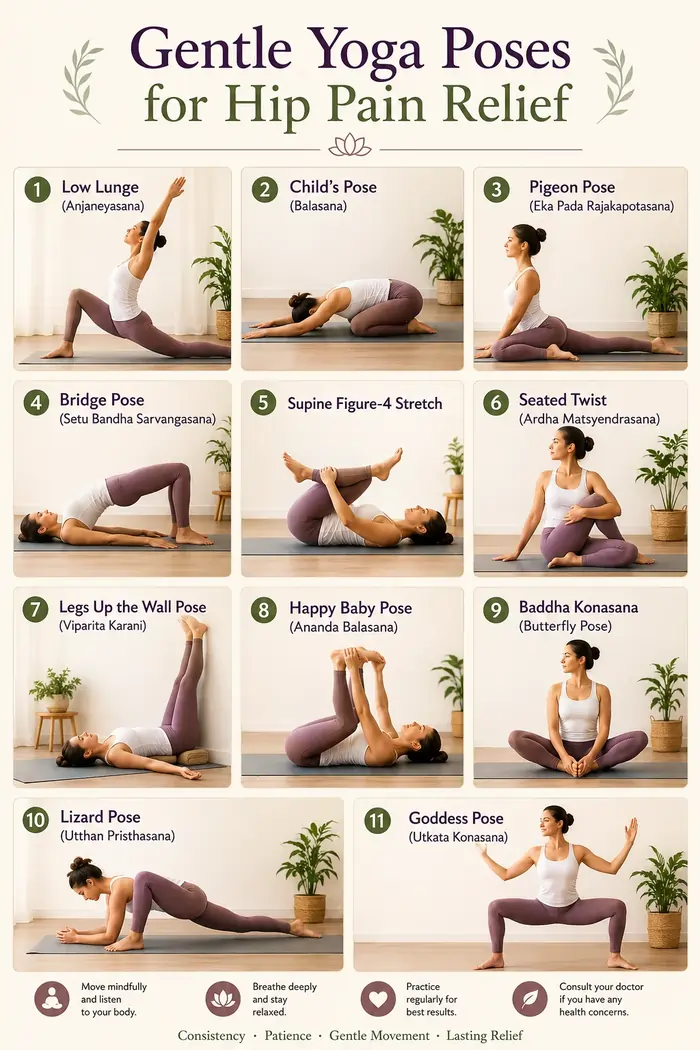
These easy yoga positions are perfect for reducing hip discomfort and are safe for beginners:
Low Lunge (Anjaneyasana)
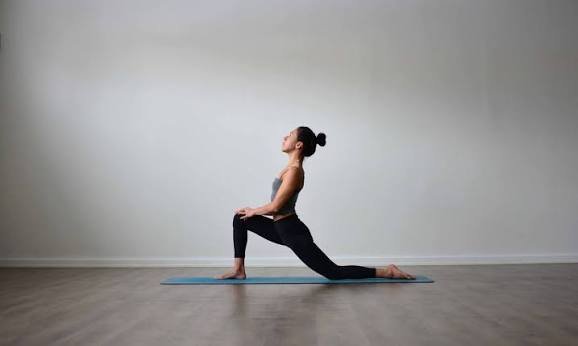
By gently stretching the thighs and hip flexors, this posture improves hip alignment and relieves tension from sitting.
- Place your hands and knees on the mat to begin in a tabletop posture.
- Align your knee over your ankle as you take a forward step with your right foot between your hands.
- Slide your left knee back until it touches the floor, then place the top of your left foot on the mat.
- Take a breath, raise your chest, and if you want a deeper stretch, raise your arms overhead.
- Keep your hips square, shoulders relaxed, and avoid arching your lower back.
- Hold for 30-45 seconds, then change sides.
Child’s Pose (Balasana)

This is a great hip flexor release that raises the hips gently and leads to relaxation.
- Place your knees wide apart on a mat.
- Reposition yourself in relation to your heels.
- Put a pillow or bolster under your chest.
- Place your forehead on the pillow and extend your arms forward.
- Take a deep breath and let your hips relax.
- Hold for 30 to 60 seconds.
Pigeon Pose (Eka Pada Rajakapotasana)
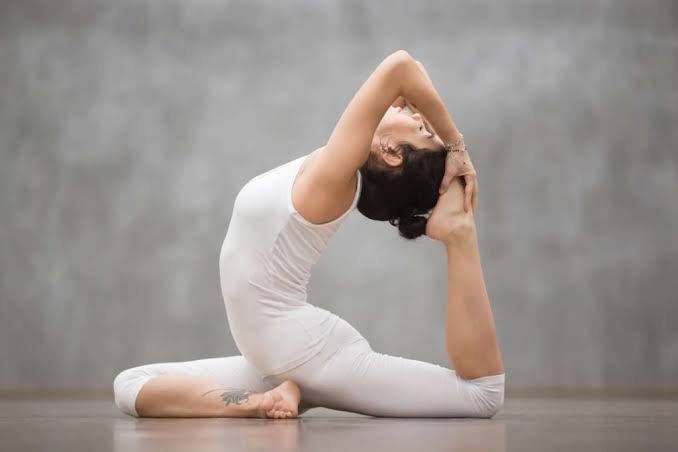
This position works the outer hip muscles and relieves deep hip stress.
- On your hands and knees, begin.
- Move your right knee in the direction of your right hand.
- Keeping your hips level, slide your left leg back.
- For support, place a bolster below your right hip.
- With your forearms resting on the mat or a cushion, gently fold forward.
- After 30 to 45 seconds of holding, switch sides.
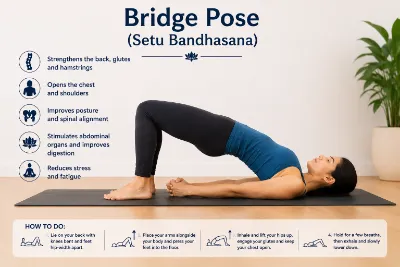
Bridge Pose (Setu Bandha Sarvangasana)
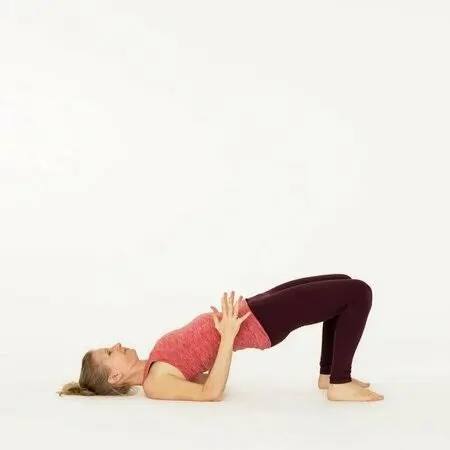
This position relieves front-hip stress and strengthens the glutes.
- Bend your knees and place your feet flat on the floor while lying on your back.
- With your hands facing down, keep your arms at your sides.
- Gently raise your hips while pressing into your feet.
- After a few breaths of holding at the highest point, slowly descend.
- Do this three to five times.
Supine Figure-4 Stretch
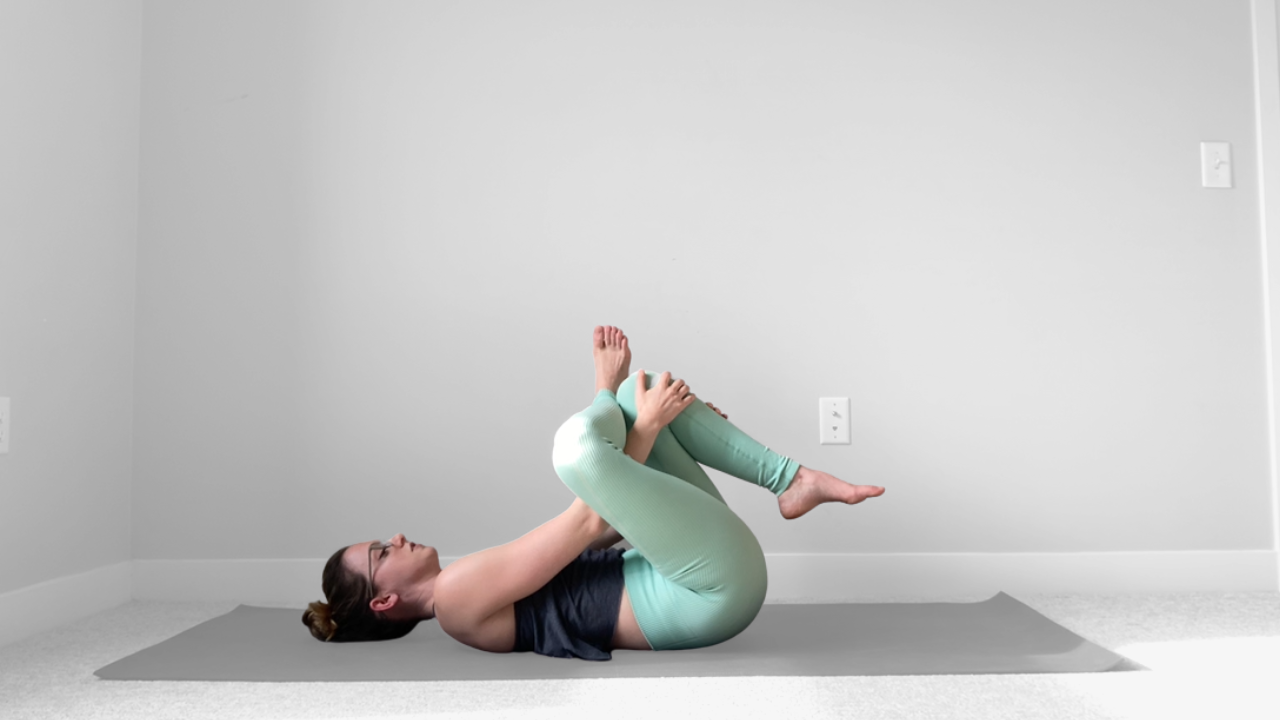
This therapeutic hip stretch reduces stress in the lower back and expands the hips.
- Raise your knees and lie on your back.
- Over your left thigh, cross your right ankle.
- Gently move the left thigh in your direction by reaching through your legs.
- Maintain a relaxed head and shoulders.
- After 45 to 60 seconds, switch sides.
Seated Twist (Ardha Matsyendrasana)
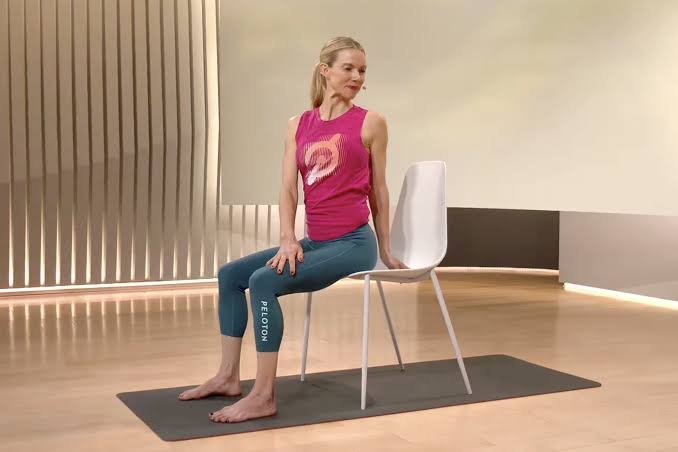
This twist provides mild rotation and is an excellent way to increase hip and spine mobility.
- Take a seat on a chair or cushion with your legs crossed.
- Put your left hand on your right knee and your right hand behind you.
- To stretch your spine, inhale; to gradually twist right, exhale.
- After 30 seconds of holding, go back to the middle.
- On the opposite side, repeat.
Legs Up the Wall Pose (Viparita Karani)

This healing position promotes deep relaxation, enhances circulation, and reduces hip stress.
- Next to a wall, take a sideways seat.
- Lying back, swing your legs up the wall.
- For comfort, change the distance from the wall.
- With your palms facing up, place your arms by your sides.
- For three to five minutes, close your eyes and relax.
Happy Baby Pose (Ananda Balasana)

Deep hip tension is released, inner thighs are softly stretched, and full-body relaxation is recommended in this ultimate restorative position.
- Lie on your back
- Keep your knees bent while your feet are flat on the floor.
- After bringing your knees closer to your chest, spread them apart just a little bit wider than your body.
- Keeping your arms on the inside of your knees, grasp the outside of your shins or feet.
- Maintaining a relaxed head and shoulders, gently bring your knees closer to the floor.
- You can rock side to side for a gentle massage while you let your lower back relax into the mat.
Baddha Konasana (Butterfly Pose)
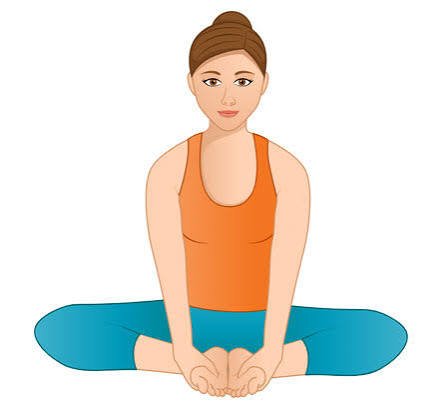
- Take a straight seat on the ground. As you exhale, fold your legs close to your body until the soles of both feet make face-to-face contact.
- Allow your knees to fall to the sides. Holding the thumb of your foot, make sure the soles of your feet are always pushed against the ground and remain in contact with one another.
- Make sure the shoulder blades are firmly pressed to the back, and the torso is extended into the top of the sternum after you are comfortable in the position.
- Now take regular breaths in and out. Repeat five times after holding this for a minute and taking a 30-second break.
Lizard Pose (Utthan Pristhasana)
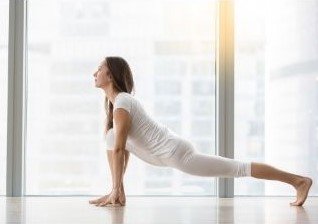
By focusing on the groin and hip flexors, this posture releases tension in the hips. It increases flexibility so you can bend or squat more easily.
- Put your right foot ahead and start with a low lunge pose.
- As you descend, place your elbows and forearms on the mat and bring both hands to the inner part of your right foot.
- Feel the stretch in your hips and groin as you lower your hips closer to the floor.
- After 30 to 60 seconds of holding, switch sides.
Goddess Pose (Utkata Konasana)
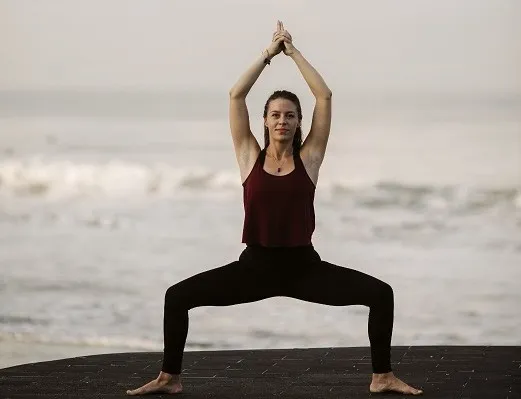
Goddess Pose strengthens the legs and improves posture while stretching the hips, inner thighs, and groin. For people who stand or walk a lot during the day, it’s ideal.
- Place your feet widely apart and point your toes at a 45-degree angle.
- Maintaining your knees in line with your toes, lower your hips into a deep squat.
- With your hands facing in front, extend your arms to shoulder height.
- Hold for 30 to 60 seconds.
A 10-Minute Daily Routine to Reduce Hip Pain
Consistency matters while using yoga to relieve hip pain. The good news is that you can begin to notice a difference with just ten minutes every day. This easy exercise helps your hips feel more open, relaxed, and pain-free by combining mobility, mild strengthening, and gentle stretching. It’s ideal for novices and anyone with hip problems.
Your Simple 10-Minute Schedule
Two minutes of warm-up
- Low Lunge (30 seconds per side)
- Child’s Pose (one minute)
Take six minutes to stretch.
- Pigeon Pose (one minute per side)
- Figure 4 Stretch in the supine position (1 minute each side)
- Angle Bound (2 minutes)
Improve (one minute)
- Bridge Pose (one minute)
Restore (one minute)
- One-minute Happy Baby Pose
Chair Yoga for Hip Pain: Senior-Friendly Variations:
Everyone should be able to practice yoga, including those with restricted mobility, balance problems, or a preference for sitting. Chair yoga is safe, beneficial, and simple to practice while providing all the advantages of gentle hip stretches.
For the elderly or anybody who requires a more gentle approach, these chair-friendly postures are ideal.
4 Easy Chair Yoga Poses to Reduce Hip Pain:
Seated Leg Circles
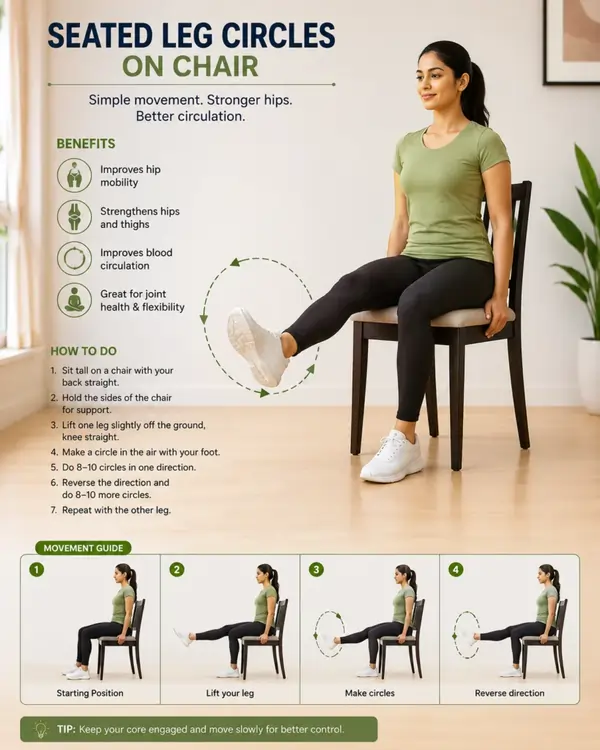
This is a great workout to increase circulation, loosen up tight joints, and move the hips.
- With your feet flat on the ground, take a high seat on a firm chair.
- With your knee bent, raise your right foot a few inches off the ground.
- Moving from the hip joint, slowly make little circles in the air with your knee.
- Make eight to ten clockwise circles, followed by a counterclockwise one.
- On the left side, repeat.
Seated Twist
The hips and spine have more rotational movement in this position.
- With your feet planted, choose a lofty seat.
- Put your right hand on the seat or back behind you.
- Put your right knee on your left hand.
- Exhale to gently rotate your torso to the right, and inhale to stretch your spine.
- After 30 seconds of holding, switch to the left.
Seated Pigeon Pose
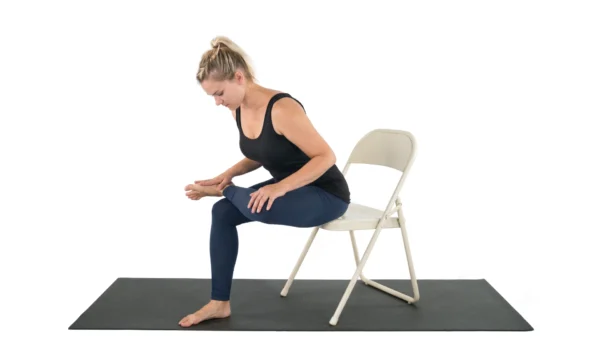
Particularly after sitting, this position relieves tension in the outer hips.
- Cross your right ankle across your left thigh while sitting erect.
- To keep your knee safe, flex your right foot.
- Lean forward a little from your hips while maintaining a straight back.
- Feel your outer hip gently stretch as you take a deep breath.
- After 45 to 60 seconds of holding, switch sides.
Seated Figure 4 Stretch
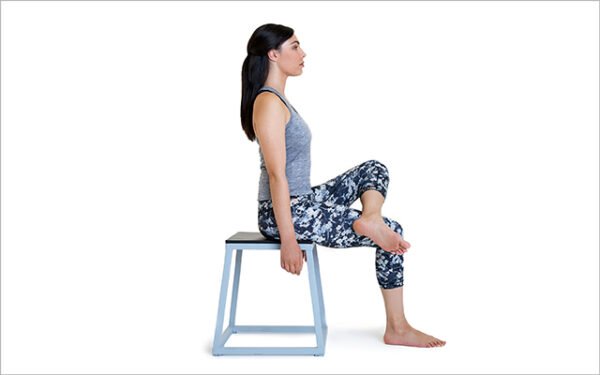
This mild stretch relieves lower back and hip stress.
- Place your feet flat on the ground while you sit.
- As in Pigeon Pose, cross your right ankle over your left thigh.
- To deepen the stretch, gently press your right knee down while maintaining a tall spine.
- You can even slightly bend forward to get better.
- After 45 to 60 seconds of holding, change legs.
5 Daily Habits for Hip Pain Relief
- Small daily routines can significantly improve the way your hips feel, in addition to mild yoga poses for hip pain relief. You may lessen stiffness, increase mobility, and help avoid hip pain flare-ups by taking easy steps every day.
- Avoid prolonged sitting: Spending a lot of time in a chair causes joints to stiffen and hip flexors to tighten. Every thirty minutes, spend two to five minutes walking, stretching, or standing up.
- Standing and making little hip circles can also be quite beneficial.
- Improve Your Sleep Position: Your hips may be stretched if you sleep incorrectly. To maintain hip alignment, sleep on your side with a pillow between your knees or on your back with a little cushion between your knees.
- Do Light Daily Activity: Mild exercises maintain hip flexibility and lubrication. To keep your hips active and stress-free, incorporate 10-minute yoga sessions, swimming, or walking into your daily routine.
- Keep Your Weight in Check: Being overweight puts additional strain on your hip joints. To avoid restrictive diets, concentrate on modest, long-lasting adjustments like portion management and regular exercise.
- Handle Stress Carefully: Stress may worsen pain perception and cause tense muscles. To keep your body relaxed and your hips at peace, practice yoga breathwork (slow, deep breaths) or take brief mindfulness pauses.
FAQs:
What position relieves hip pain?
Try some therapeutic poses that relax tight muscles and adjust the joints to immediately cure hip discomfort. The Knee-to-Chest Stretch and the Figure-Four Stretch release tension in the deep hip rotators and gluteal muscles by pulling the lower leg in and crossing one ankle over the opposing knee.
Is yoga good for lymph nodes?
Yes, yoga is great for your lymphatic system! The lymphatic system depends only on gravity, deep breathing, and muscular activity to transfer fluid because it does not have its own pump. All three are combined in yoga, which helps to remove toxins and reduce swelling.
Can yoga improve high blood pressure?
Yes, yoga may greatly reduce hypertension, or high blood pressure. Consistent practice can reduce systolic blood pressure by an average of 3–8 mmHg, according to studies. It does this by reducing stress hormones like cortisol and relaxing the sympathetic nervous system (“fight or flight”).
What sleeping position opens your hips?
Sleep on your back with pillows under your knees or on your side with a pillow between your knees to release tension in your hips. These postures relieve pressure points, promote proper spinal alignment, and relax the hips.
How to release tight, painful hips?
Focus on specific stretches and self-massage to relax your piriformis, glutes, and psoas muscles to rapidly relieve tight, painful hips. Complete Figure 4 while seated. To stretch, sit up straight, place your painful ankle over the knee on the other side, and gently press the bent knee down. Hold for thirty seconds. To keep your balance, repeat on both sides.
What not to do with hip pain?
Pushing through hip pain may aggravate conditions including arthritis, bursitis, and labral tears. Steer clear of heavy lifting (deadlifts, barbell squats), high-impact workouts (running, leaping), and excessive stretching, and make sure you avoid spending too much time sitting motionless.
References:
- MyYogaTeacher. (2026, May 19). 9 Gentle yoga poses for hip pain relief (Therapeutic Guide). https://myyogateacher.com/articles/yoga-for-hip-pain-relief
- Felstead, A., Bishop, D., Fuller, A., Jewson, N., Yeadon-Lee, T., & Unwin, L. (2006). Moving to the music: Learning Processes, training and Productive Systems – The case of Exercise to Music Instruction: Learning as Work Research Paper, No. 6 June 2006. Huddersfield Research Portal (University of Huddersfield). https://pure.hud.ac.uk/en/publications/fffae340-2337-401d-9a6c-0f57c26d30be
- Smith, E. N., & Boser, A. (2013b). Yoga, Vertebral Fractures, and Osteoporosis: Research and recommendations. International Journal of Yoga Therapy, 23(1), 17–23. https://doi.org/10.17761/ijyt.23.1.b46687q87m790745