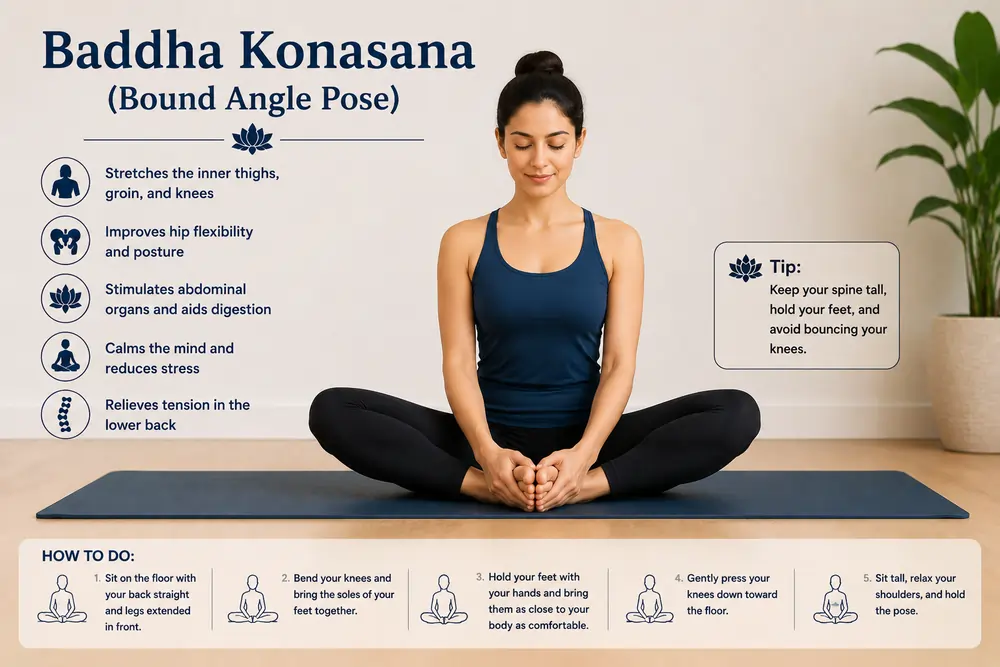
Baddha Konasana (Bound Angle Pose)
What is Baddha Konasana (Bound Angle Pose)?
Baddha Konasana, also known as Bound Angle Pose, is a seated hip pose for beginners. This pose is usually practised for meditation, deep hip opening, or pelvic warming.
Because you open your legs like a butterfly’s wings, you may access the deep pelvic tissues and target your groin muscles for flexibility, which is why this position is also called the Butterfly pose.
Lower back pain can be alleviated by folding forward during this pose. Plus, it’s an excellent pose to do for a natural birth during pregnancy.
Overview & Etymology
The Sanskrit terms “Baddha” (meaning bound), “Kon” (meaning angle), and “Asana” (meaning posture) are combined to form the name Baddha Konasana.
The Hatha Yoga Pradipika, a traditional 15th-century Hatha Yoga text, cites Bhadrasana (Throne Pose) as a meditative pose.
- Sanskrit Name: बद्ध कोणासन
- Pronunciation: BAH-dah cone-AHS-ah-nah
- Pose Type: Seated Hip Opener. Also called Bound Angle Pose or Butterfly Pose
- Strengthens: Lower Back, Pelvis, Groin, and Abductors
- Stretches for lower back, spine, hip flexors, abductors, and pelvis
Health Benefits of Baddha Konasana
- Helps to relax the whole body.
- Improves digestion and kidney function.
- Increases concentration and mindfulness.
- Improves blood circulation in the lower body.
- Opens the lower body for deep hip-opening asanas.
- Eases mild stress, depression, and anxiety symptoms.
- Calms the nervous system and enhances brain function.
- Lessens stiffness near the tailbone and lower back pain.
- Activates Muladhara, Manipura, and Swadisthana Chakras.
- Enhances hormonal balance and fights hormonal disorders.
- Opens the vaginal walls and aids in labour for expectant mothers.
- Soothes the reproductive system and improves its functioning.
How to do Baddha Konasana (Bound Angle Pose)
The four sections of the Baddha Konasana practice process are defined below: Preparation, Steps, Alignment Tips, and Relax Asanas.
Part 1 – Preparatory Poses for Baddha Konasana
Your thighs, glutes, spine, and low back all need to be activated for the bound angle pose.
You can increase blood circulation in your spine and pelvic muscles by performing the static and dynamic warm-up exercises listed below.
- This is a sitting yoga practice in a crossed-leg pose that is generally used for meditation. Bend your knees and interlock your feet in a cross to begin the staff pose.
Try to line your sit bones with the ground for a firm foundation. Ensure your knees are on the ground and your spine is straight. Hold this pose for 1 to 5 minutes, close your eyes, and focus on deep breathing.
Hindolasana (Seated Leg Cradle Dynamic Movement)
- Use this hip-opening sitting yoga stance if you’re a beginner. From Staff Pose, draw one knee toward your chest and gently wrap your arms around the leg.
Now gently raise the leg as though you were holding a baby. While gently extending the deep muscles surrounding the pelvis, holding this position for one to two minutes on each side helps engage the glutes.
Seated Windshield Wiper Dynamic Movement
- You can do this task to activate your stiff inner thighs. Lean slightly while sitting in a butterfly position, keeping your hands on the ground for support.
It is wise to rotate one leg internally and externally. Repeat the process on the reverse leg. You can do this for a few minutes until your inner thighs and glutes warm up.
Part 2: Step-by-Step Instructions to Perform Baddha Konasana
The Bound Angle Pose is practised by following the steps:
Step 1: Begin in Dandasana (Staff Pose) with your legs extended straight in front of you and your arms resting comfortably by your sides. Inhale deeply and focus on securely positioning your sit bones on the yoga mat.
- Step 2: Place your hands on your shins, bend your knees, and bring your feet closer to your sitting bones. Avoid touching your knees on the mat if you feel pressure, pain, or discomfort there.
- Step 3: Press your sitting bones and the outside edges of your feet into the mat if you are comfortable flexing your lower body.
- Step 4: Let out a breath, place your knees on the floor, and take a moment to concentrate on your breathing.
- Step 5: Breathe in and out to bend from the waist and lean forward while placing your head, chest, and forearms on the floor.
- Step 6: Return to Dandasana after holding this pose for three to five complete breaths.
Breath Awareness:
- Inhale: While sitting in the pose and using your hands to hold your feet.
- Breathe out as you lower your knees toward the floor and softly bend forward.
- For beginners, hold Baddha Konasana for thirty to sixty seconds.
- Advanced Performance Duration: Hold Baddha Konasana for one to five minutes.
Part 3: Things to Keep in Mind A
few alignment pointers to keep in mind when executing Bound Angle Pose are listed below:
- Maintain an erect posture: Maintain an upright posture and relaxed shoulders. Try practising this position with a wall behind your back if you feel that sitting in it puts additional strain on your spinal column.
- Pay focus on your breath: When doing Bound Angle Pose, try to remain in the meditative state. Close your eyes and focus on every breath to benefit from the benefits of this pose for mental health. Try chanting some beej mantras to improve focus if you find meditation challenging.
- Avoid overextending or straining when you bend down. If you are pressing your knees too near to the floor and your inner thighs are in pain, you put undue strain on your muscles; this could result in a tear.
- Additionally, when bending forward, avoid hurrying. This may result in a sprain for novices with a tight low back. Therefore, it’s important to be aware of your movements.
Part 4: Relaxing Poses After Baddha Konasana
Your pelvic muscles must rest and revert to their natural structure following an extended session of the Bound Angle Pose. Here are some soothing poses to help your pelvic area heal.
- Cross your knees and stack them on top of one another after striking the Butterfly Pose. Your legs will resemble a cow’s face in shape.
Bring one arm from the side of your oblique and the other from your shoulder behind your back. Reach for your fingers now and interlock them. After a minute of holding this pose on one side, change the position of your arm and knee.
Paschimottanasana (Seated Forward Bend):
- With your arms extended and resting on top of your head, take a deep breath while sitting upright in Staff Pose.
As you bend from the waist to the legs, take numerous deep breaths and release them. While your head is at rest, keep a straight low back, flex your arms forward, and keep breathing.
Supta Baddha Konasana (Reclining Bound Angle Pose):
- Supta, or “reclining,” has your lower body in the same position as Bound Angle Pose. Rest in the corpse pose while gently lying down on the yoga mat.
Long periods of sitting in Butterfly posture can cause strain in your low back, tailbone, and sitting bones. This posture will assist in releasing that tension.
Baddha Konasana Variations to Consider
Beginner and intermediate yogis can push themselves in their Bound Angle Pose with the following posture variations:
Baddha Konasana Semi Forward Bend:
- Grip the mat with your pelvic sitting bones as you begin in the seated butterfly pose. Close your eyes and inhale deeply while keeping both feet together.
After taking a few deliberate breaths in this position, start to lean forward onto the floor and exhale deeply. Do not lean down completely. Start by feeling your low back while keeping your elbows on your shins. Continue breathing while holding this stance for a few minutes.
Baddha Konasana Full Forward Bend:
2. Continue feeling your inner thighs and low back. In this form, avoid overextending your legs if it hurts.
If you feel comfortable and prepared to extend, place your head on the mat, extend your arms out in front of you, and exhale deeply. Shut your eyes, inhale deeply, and experience a powerful lower body stretch. Once you’ve held this pose for a few minutes, let your pelvis totally relax.
Modifications
Take a seat on a support if you struggle to keep your back straight or have severe hip and groin discomfort. You can also use your thighs for support if you are unable to place your knees on the ground.
Preparatory poses
Virasana, Supta Padangusthasana, Vrksasana
Follow-up poses
As follow-up postures, any standing position, forward bend, or seated twist will work.
Getting into the posture
- Sit with your legs wide apart and your back straight.
- Bend your legs now, bringing your feet as close to your groin as you can. Join the soles of the feet together.
- Hold the feet or toes firmly with your hands. If you require additional support, you can lay your hands beneath your feet on the mat. Make sure your back stays upright.
- Now, if you can, slowly try to get the feet closer to the groin.
- If it feels comfortable, you may also try lightly pushing your thighs and knees toward the mat. Always remember to be kind and give it your all.
- To maintain the posture, contract your core. Pay close attention to the back, inner thighs, and groin.
- Stay here for a few slow, deep breaths. This will help you relax in the posture.
Getting out of the posture
- Slowly, exhale and release the toes or feet.
- Relax in the staff pose (Dandasana) by extending your legs forward.
Counter poses
- Shashankasana, or child’s pose, is a useful pose to practice since it relaxes the muscles in the thighs, hips, and groin. After the vigorous stretch, the back will also experience a countermovement.
- Another option is to spend some time sitting in the staff pose (Dandasana). Leg stretches can aid with muscle relaxation. To relieve any tension that has accumulated, gently shake your legs after holding the pose for a moment.
When to Avoid Performing Baddha Konasana?
- Avoid if you have kidney problems.
- Avoid if you have inflammatory arthritis.
- If you are having trouble breathing, do not stoop.
- Steer clear if you recently underwent hip, spine, or knee surgery.
- Avoid going if you are currently experiencing severe physical discomfort or an injury.
- Steer clear of it in the early stages of pregnancy since it can result in miscarriage.
FAQs
What are the benefits of Baddha Konasana?
The following are the benefits of Baddha Konasana
Aids in easing stress.
Alleviates low back pain.
Improves flexibility in the lower body.
Increases blood flow in the pelvic region.
opens the hip flexors, inner thighs, and pelvic muscles.
What is the right position for Baddha Konasana?
Keep your feet together, your knees near the floor, and your hands clasped around both feet as you sit with your legs spread wide like wings.
What muscles does Supta Baddha Konasana stretch?
A reclining form of Seated Baddha Konasana is called Supta Baddha Konasana. It stretches the muscles in the lower body, including the glutes, hip flexors, abductors, and groin.
Can beginners perform the Baddha Konasana pose?
The Baddha Konasana Pose is indeed simple for novices to do. Just be careful not to overextend your abductors or flexors.
If you feel that this stretch is becoming too strenuous, either stop doing it or keep it simple and progressively increase your pelvic flexibility. Otherwise, you can tear your lower body muscles.
What are the different Supta Baddha Konasana poses?
One form of seated Baddha Konasana is called Supta Baddha Konasana. “Asana” means posture, “Kon” denotes angle, “Supta” indicates reclining, and “Baddha” implies bound.
It’s a relaxing yoga pose because you’re lying on your back with your legs at a bound angle. As a variant, Supta Baddha Konasana.
REFERENCE]
- Allen, W. (2025a, August 26). Baddha Konasana. https://myyogateacher.com/yoga-asana/baddha-konasana
- Yoga Journal. (2025b, February 25). Bound angle pose. https://www.yogajournal.com/poses/bound-angle-pose-2/
- Baddha Konasana Yoga(Bound Angle Pose)| Yoga sequences, benefits, variations, and Sanskrit Pronunciation | Tummee.com. (n.d.). Tummee.com. https://www.tummee.com/yoga-poses/bound-angle-pose

4 Comments