Yoga for Snapping Hip Syndrome
What is Snapping Hip Syndrome?
There are three types of snapping hip syndrome:
- External Snapping Hip Syndrome
- Internal Snapping Hip Syndrome
- Intra-Articular Snapping Hip Syndrome
The most common type is external snapping hip, which produces a snapping sensation along the lateral or outside part of the hip. This results from the gluteus maximus or iliotibial (IT) band snapping over the greater trochanter during hip flexion and extension.
The groin region has a cracking feeling due to internal SHS. It occurs when the iliopsoas (hip flexor) tendon snaps over one of the local bony prominences, either the femoral head or the iliopectinal prominence.
Although it is frequently regarded as deeper, intra-articular SHS also produces a cracking feeling in the groin region. A disruption within the joint, such as an intra-articular labral tear, causes this, the rarest of the three kinds. This article does not focus on this form of snapping hip since it is the least prevalent and, if diagnosed, is frequently further differentiated according to the disease inside the joint.
How Do We Get Snapping Hip Syndrome?
Traumatic injuries are rarely the cause of either internal or external SHS. They are often caused by excessive and repetitive hip flexion and extension. This is frequently observed in sports like soccer, kickboxing, dance, and jogging.
Even though these activities may help SHS grow, it frequently does so for no apparent cause or change in activity. In actuality, most patients with SHS do not feel any discomfort or limitations. You shouldn’t be concerned or feel the need to treat a hip-cracking feeling if there is no accompanying pain.
There are other methods to cope with a painful cracking hip, though.
How to Manage Painful Snapping Hip Syndrome?
An overuse injury is frequently the cause of a painful snapping hip. An overuse injury, to put it simply, happens when you expose your hip to a load for which you were unprepared. This indicates that you either performed the exercise for too many repetitions, with too much weight, too rapidly to control, or a combination of these.
In any event, lowering this burden is essential to treating the discomfort. This only indicates that you may have to modify one of the factors mentioned above in order to reduce the amount of discomfort you experience; it does not imply that you must completely cease the irritating activity.
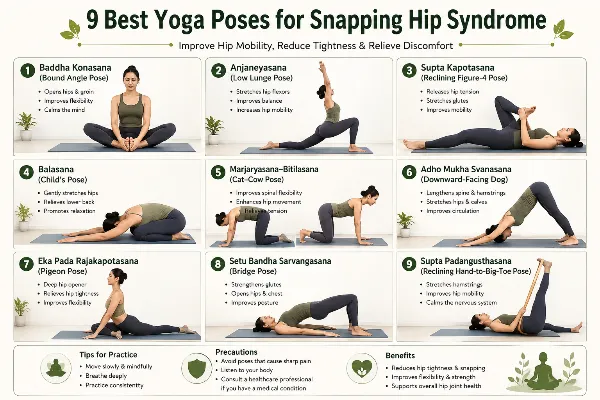
9 Best Yoga Poses for Snapping Hip Syndrome
Baddha Konasana (Bound Angle Pose)
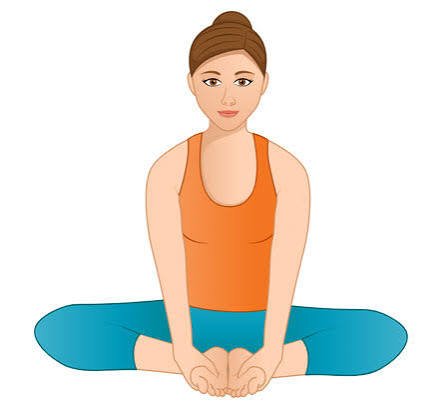
- Sit on the floor with your legs straight out.
- Bring the soles of your feet together while bending both knees.
- Using both hands, grasp your ankles or feet.
- Draw your heels as comfortably as possible near your pelvis.
- Maintain a straight back, relaxed shoulders, and an elevated chest.
- Don’t push your knees; just let them fall toward the floor.
- Hold for 20 to 30 seconds while taking calm breaths.
- To release the posture, slowly straighten your legs.
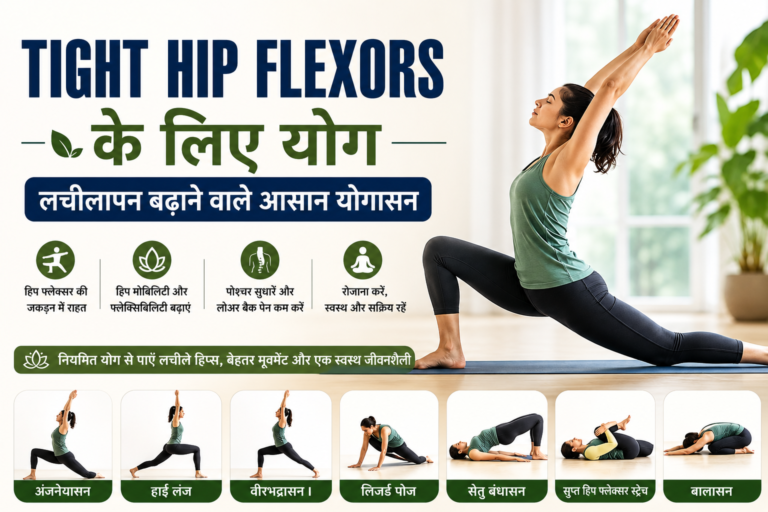
Anjaneyasana (Low Lunge Pose)
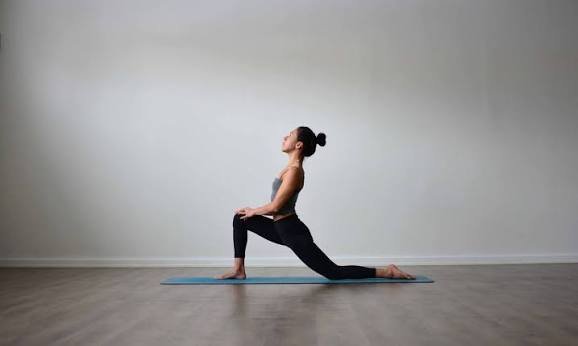
- Begin by getting on your knees.
- Place your right foot flat on the ground as you step forward.
- Extend your left leg behind you while lowering your left knee to the mat.
- Maintain your right knee just above your ankle.
- Raise your hands aloft or place them on your front thigh while lifting your chest.
- Move your hips forward gently until the front of your left hip starts to expand.
- Hold while breathing normally for 20 to 30 seconds.
- Repeat on the other side after returning to the starting position.
Supta Kapotasana (Reclining Figure-4 Pose)
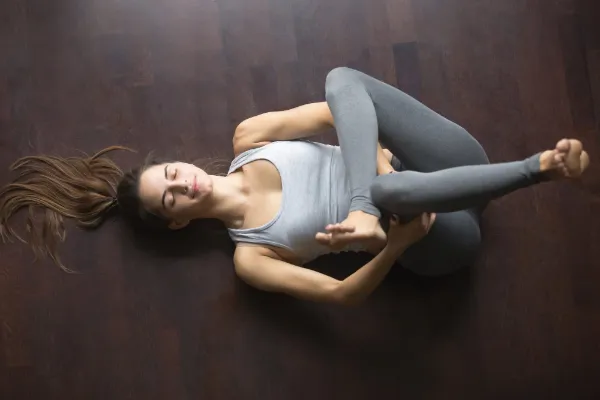
- Lying on your back, bend your knees and rest your feet flat.
- Cross one ankle across the other thigh to form a “4.”
- Place a pillow or cushion under the supporting leg if needed.
- Keep your head, neck, and shoulders relaxed.
- Gently hold the stretch without forcing the knee down.
- Breathe slowly and relax for 30–60 seconds.
- Repeat on the other side.
Balasana (Child’s Pose)
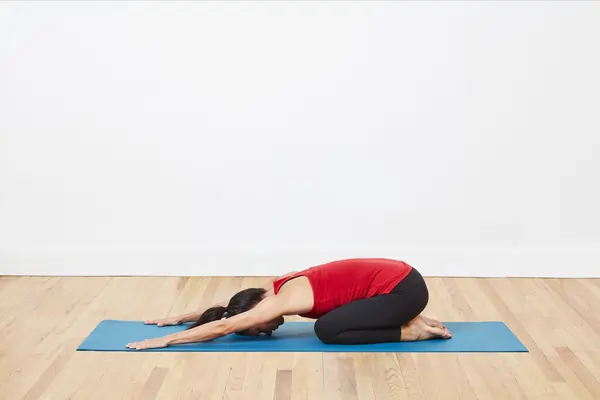
- Place your knees wide apart on a mat.
- Reposition yourself in relation to your heels.
- Put a pillow or bolster under your chest.
- Place your forehead on the pillow and extend your arms forward.
- Take a deep breath and let your hips relax.
- Hold for 30 to 60 seconds.
Marjaryasana–Bitilasana (Cat–Cow Pose)
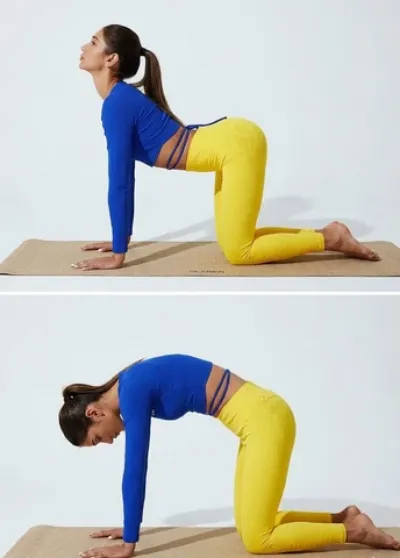
- The spine is gently stretched, and this flowing action strengthens the core muscles.
- The rhythmic motion is completely adaptable to your comfort level and relieves neck and back tightness.
- Only move within a pain-free range and at a gentle level.
- Take a tabletop posture and begin on your hands and knees.
- Inhale, lift your head, and create a cow pose by bending your back.
- Tuck your chin in and circle your back (Cat Pose) after exhaling.
- Do this five to ten times while breathing.
- Take a neutral position again and relax.
Adho Mukha Svanasana (Downward-Facing Dog)
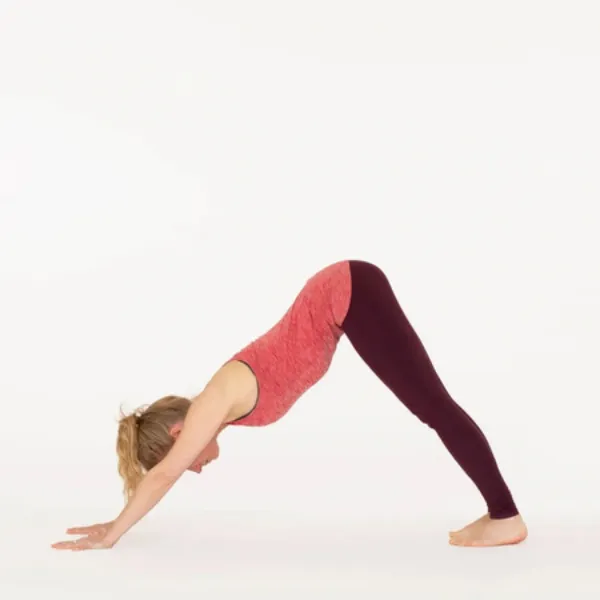
- Start on your hands and knees.
- Tuck your toes under and lift your hips toward the ceiling.
- Straighten your arms and legs as comfortably as possible.
- Press your heels toward the floor while maintaining a straight spine.
- Relax your neck and look toward your feet.
- Hold for 20–30 seconds while breathing deeply.
- Slowly lower your knees to return to the starting position.
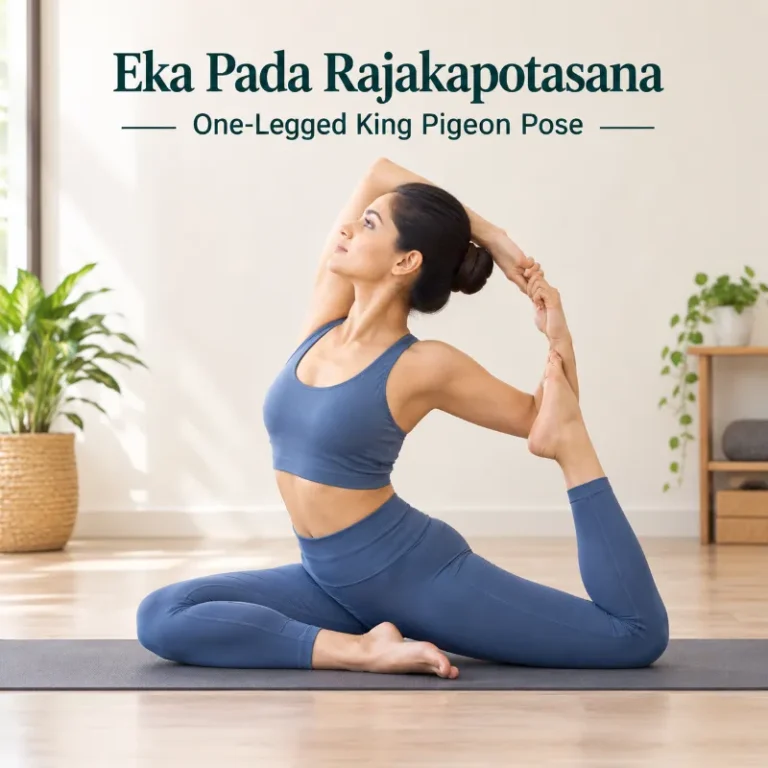
Eka Pada Rajakapotasana (Pigeon Pose)
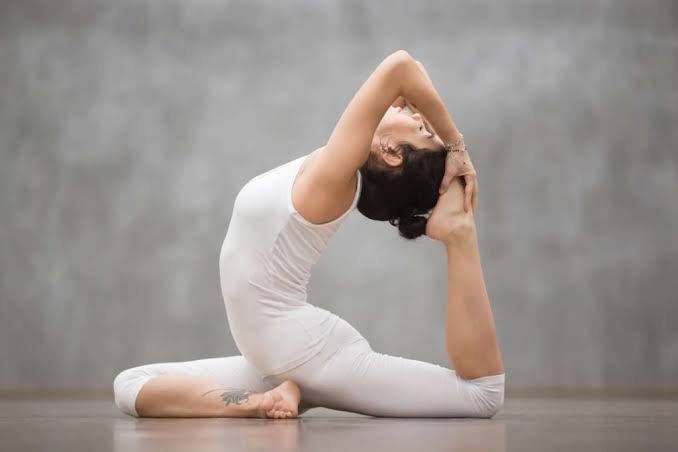
- On a yoga mat, start in a straight-arm plank posture, keeping your head, shoulders, hips, and toes aligned.
- Bend one leg in front of your body, bringing your ankle to your hip on the other shoulder and your knee to your elbow.
- With your head toward the ground and your upper body resting on your bent knee, slowly extend your hands in front of you.
- Hold this posture for 30 to 60 seconds.
- Inhale through your nose and exhale through your mouth as you take many deep belly breaths.
- Similarly, repeat the exercise on the opposite side after returning to the starting position.
Setu Bandha Sarvangasana (Bridge Pose)
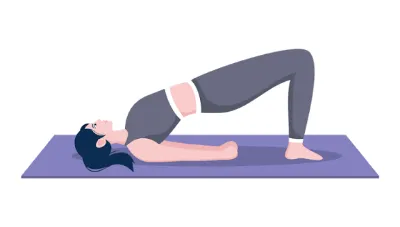
- First, lie on your back on the floor with your feet flat and your knees bent.
- Maintain the proper alignment of your spine, shoulders, and neck.
- Put your arms by your sides after that.
- Contract your abdomen, then push from your heels to elevate your hips.
- Once more, maintain this posture for a few deep belly breaths, inhaling through your nose and exhaling through your mouth.
Supta Padangusthasana (Reclining Hand-to-Big-Toe Pose)
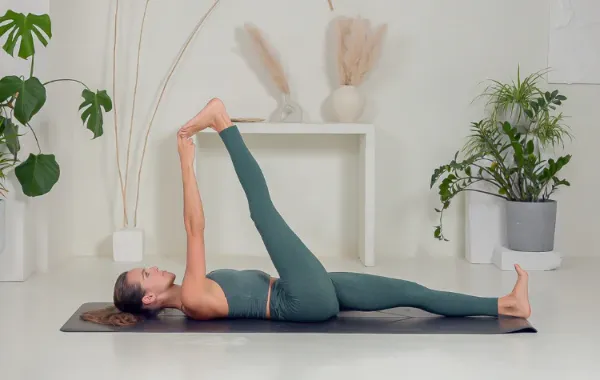
- Extend both legs while lying on your back.
- Tie a yoga strap over your right foot (or, if more comfortable, your big toe) while bending your right knee.
- Straighten your right leg slowly in the direction of the ceiling.
- Maintain your left leg extended and firmly planted on the ground.
- Maintain a neutral lower back while letting your shoulders drop.
- Hold while breathing regularly for 20 to 30 seconds.
- Repeat on the other side after slowly lowering your leg.
Precaution :
Stay clear of any yoga posture that hurts or replicates an uncomfortable cracking or clicking feeling. Exercise shouldn’t repeatedly cause painful cracking.
Avoid repetitive exercises like lunges, deep squats, and dynamic hip rotations that aggravate snapping. One of the main elements of conservative management is activity moderation.
Avoid severe hip ranges of motion, particularly deep hip flexion, excessive abduction, and repetitive internal/external rotation, if these motions create issues. Symptomatic snapping is linked to extreme hip postures and repeated hip motions.
Deep stretches should not be forced. Rather than forceful or bouncy, stretching should be calm and soft.
FAQs:
How to reverse snapping hip syndrome?
Stretch tight hip flexors and the IT band, strengthen your core and glutes, and take a break from strenuous activities to reverse snapping hip syndrome. Without requiring surgery, the majority of patients recover with regular at-home rehabilitation and physical therapy.
Does snapping hip ever go away?
Yes, depending on the underlying reason, snapping hip syndrome may resolve. If it doesn’t hurt, it could remain a harmless oddity for all time. Physical therapy, stretching, and rest can eliminate the discomfort and cracking if it is caused by inflammation or tense muscles.
What triggers snapping hip syndrome?
Snapping hip syndrome can result from a muscle or tendon rubbing or snagging on a hip bone. When you move, this produces a popping sound or a cracking sensation. It is frequently associated with physical strain, repeated motions, and tight soft tissues.
What can be mistaken for snapping hip syndrome?
Because they produce comparable popping, clicking, or catching sensations, several structural hip problems can be confused with or coexist with snapping hip syndrome. Acetabular labral tears, trochanteric bursitis, loose bodies in the joint, and femoroacetabular impingement are the main ailments.
How do I immediately stop the snapping of my hip externally?
The triggering action should be stopped, the leg should be rested, and the tight outer tissue should be gently stretched to instantly prevent an external hip snap. The snap occurs as the gluteus maximus tendon or iliotibial (IT) band passes across the greater trochanter, the upper bone of the thigh.
Does snapping hip require surgery?
No, surgery is rarely necessary for snapping hip syndrome. Conservative treatments such as rest, physical therapy, and anti-inflammatory drugs help the majority of patients. Only when non-surgical treatments are ineffective in relieving chronic pain is surgery taken into consideration.
References:
- Walker, P., Ellis, E., Scofield, J., Kongchum, T., Sherman, W. F., & Kaye, A. D. (2021). Snapping hip Syndrome: A comprehensive update. Orthopedic Reviews, 13(2), 25088. https://doi.org/10.52965/001c.25088
- Holtzman, S., & Beggs, R. T. (2013). Yoga for Chronic Low Back Pain: A Meta‐Analysis of Randomized Controlled Trials. Pain Research and Management, 18(5), 267–272. https://doi.org/10.1155/2013/105919
- Allen, W. C., & Cope, R. (1995). Coxa Saltans: The Snapping Hip revisited. Journal of the American Academy of Orthopaedic Surgeons, 3(5), 303–308. https://doi.org/10.5435/00124635-199509000-00006
- Walker, P., Ellis, E., Scofield, J., Kongchum, T., Sherman, W. F., & Kaye, A. D. (2021b). Snapping hip Syndrome: A comprehensive update. Orthopedic Reviews, 13(2), 25088. https://doi.org/10.52965/001c.25088