Yoga For Menopause
Introduction
Menopause in women is a transitional period. However, different women have different experiences. Some may find it difficult; however, many feel more free and look forward to their personal growth. In developed countries, menopause usually occurs between the ages of 40 and 58. Indian women tend to go through menopause at the age of 46. The age of menopause is important as it determines how much fertility will be lost and the chances of health problems in midlife.
Across the menopausal period, women can experience various physiological and psychological issues. Many of these can be avoided by using alternative therapies such as lifestyle changes, hormone therapy, and other vitamins (calcium, vitamin D, and micronutrients). Due to yoga promoting a healthy lifestyle, it is acknowledged to play an important role in modern culture, especially for menopausal women.
Most women will suffer from symptoms throughout their lives once they have gone through menopause (naturally between the ages of 45 and 55). Yoga has been used as a therapy to improve mental and physical well-being.
Menopause Made Easier: How Yoga Supports Balance, Calm, and Vitality
Menopause is an important transition in a woman’s life. It’s common to feel a bit more emotional, anxious, tired, unable to sleep, experience hot flushes, and experience weight gain during this time. You cannot simply push through these symptoms.
However, by making some positive lifestyle changes, such as gentle exercise, eating a wholesome diet, getting good quality sleep, and mind-body practices such as yoga and meditation, menopause can actually be a time of grounding, clarity, and feeling great again.
Understanding Menopause: A Natural Life Transition
Menopause is a natural process that happens when your ovaries stop producing eggs, and therefore your monthly cycle stops. This will happen to every woman at different times in their life but usually occurs between the ages of 45-55.
Many women will experience both physical and mental symptoms due to their estrogen levels dropping. These can include:
- Night sweats and hot flushes
- Anxiety, irritability, and mood swings
- Sleep disorders
- Changes in weight and metabolism
- Pelvic pain or vaginal dryness
- These can affect the overall quality of life; however, holistic practices such as yoga can provide constant compassionate support.
Why Yoga Helps During Menopause
There are many benefits to practicing yoga. Yoga is rooted in thousands of years of wisdom. It uses movement (asana), breathing techniques (pranayama), and meditation to create balance within your body, mind, and emotions.
You can gain so much from doing yoga during menopause.
- Reduce tension and calm your nervous system
- Encourage hormonal balance
- Improve your sleep
- Keep your joints healthy, flexible, and strong.
- Encourage self-awareness and emotional strength.
- A dependable friend that will help you to move with more ease.
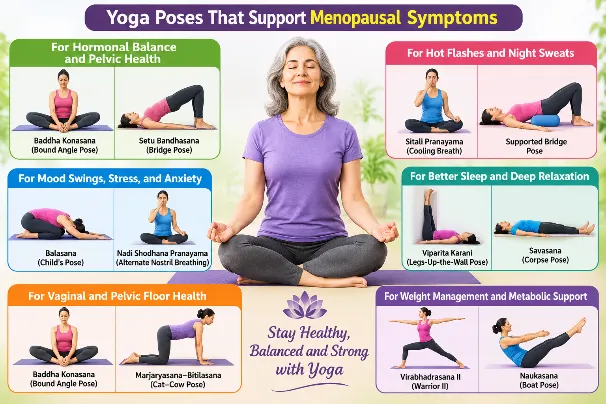
Yoga Poses That Support Menopausal Symptoms
For Hormonal Balance and Pelvic Health
Baddha Konasana (Bound Angle Pose)
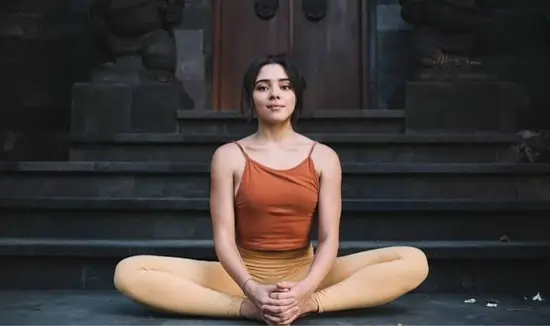
Benefits: May help to balance hormones and gently widen the pelvis and hips.
Steps:
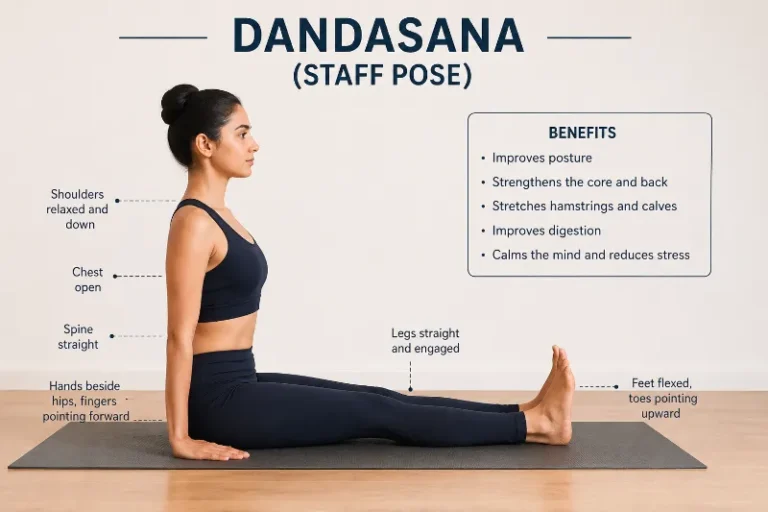
- Sit in Dandasana with your arms relaxed at your sides and your legs outstretched. Take a deep breath and concentrate on planting your sit bones firmly on the yoga mat.
- With your hands on your shins, bend your knees and move your feet closer to your sitting bones. Avoid touching your knees on the mat if you experience pain or pressure.
- Press your sitting bones and the outside edges of your feet into the mat if you feel comfortable flexing your lower body.
- Exhale and place your knees on the floor. Focus on your breathing.
- Inhale and exhale as you bend forward from the waist so that your head, upper body, and forearms are resting on the floor.
- Return to the Dandasana position to come out of the pose. Hold for 3-5 breaths.
Setu Bandhasana (Bridge Pose)
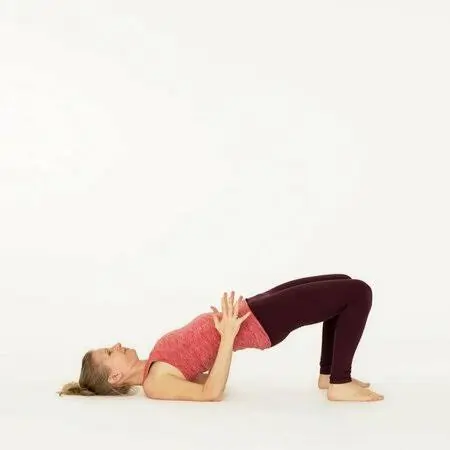
Benefits: Supports energy levels and metabolism by stimulating the thyroid and providing support to the lower back.
Steps:
- Lie on your back and bend your knees so that your feet are flat on the mat. Ensure that your legs are hip-width apart.
- Bring your arms down to your sides and move your heels inwards until your fingers just touch your heels.
- Align your feet with your toes pointing forward and your ankles directly above your knees. Press your shoulder blades and upper arms into the mat by placing your palms face down.
- As you inhale, ensure that you’re pressing evenly through both of your feet. Gently draw your lower ribs down towards the mat to stabilise your spine and lightly engage your inner thighs and glutes.
- Begin lifting your hips and breathe out. Bring your spine off the mat one vertebra at a time beginning from the tailbone. Raise them only until your thighs are approximately parallel with the floor.
- Breathe into your chest by rolling your shoulders slightly under. If you would like a gentler variation, then keep your palms flat or tuck your fingers together under your torso and press your arms down.
- Hold the position, engaging your core slightly, keeping your breath even, knees strong, and your head still. Do not move your head and keep your neck neutral.
- Beginner: 2-3 rounds x 20-30 sec
- Intermediate: 3-5 rounds x 30-45 sec
- Restorative (assisted bridge): 3-5 mins, placing a block under the sacrum.
- As you exhale, begin to lower your spine down from the upper back to the tailbone. To return your spine to neutral, take a few breaths whilst pulling your knees into your chest.
For Hot Flashes and Night Sweats
Forward bending and cooling can help you regulate your body temperature and to reduce excess heat.
Sitali Pranayama (Cooling Breath)
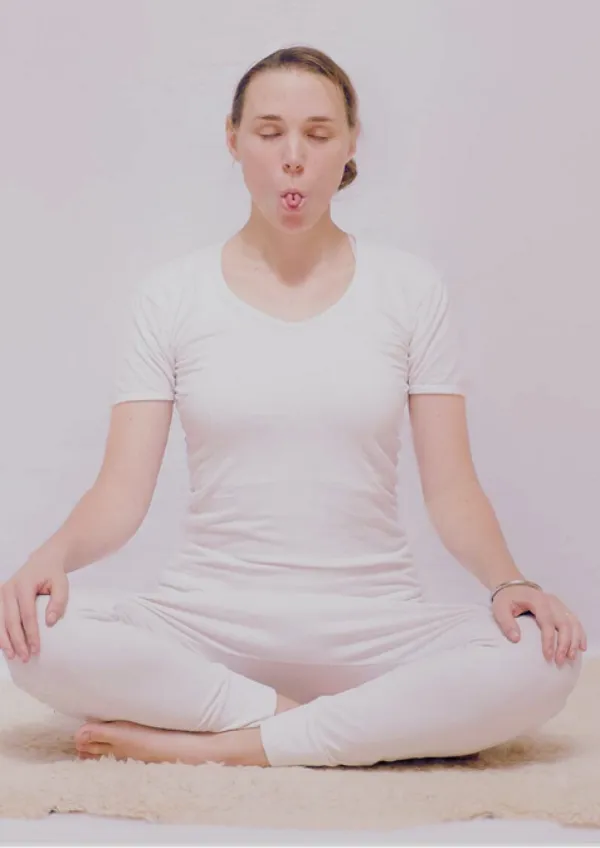
Benefits: Inhale using your lips/vocabulary rolled up to cool down, which can relieve the flushing.
Steps:
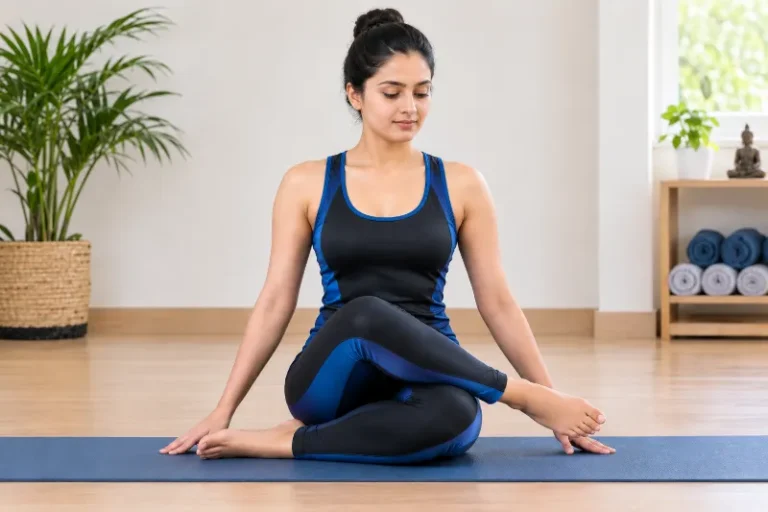
- Sit down comfortably with your legs crossed, keeping your back straight and shoulders loose.
- Close your eyes and take some deep, natural breaths
- Now roll your tongue into a tube shape by rolling the sides of your tongue up.
- Inhale very slowly through the rolled-up tongue.
- Take your tongue back out and close your mouth, allowing the air to leave your nostrils.
- Repeat this 5-10 times at a comfortable pace.
- Take normal breaths and notice how your whole body feels cool.
Supported Bridge Pose
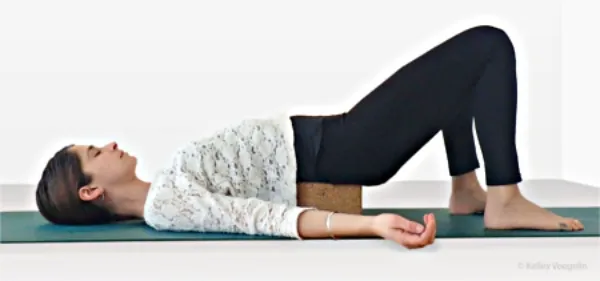
Benefits: Cooling of the body can be done gently by inverting and relaxing with the yoga block under your sacrum.
Steps:
- Squat down and place your feet flat on the mat, hip-distance apart.
- Place your palms down, and have your arms by your sides.
- Push up through your hips and press your feet into the floor.
- Place a firm cushion or yoga block under your sacrum.
- Take a few deep breaths and let your body relax.
- Hold this position for between 30 and 60 seconds, as long as it is comfortable.
- Lower your hips onto the mat and carefully take out your cushion. Let go and relax.
For Mood Swings, Stress, and Anxiety
Emotional changes can occur at menopause, and breathwork and yoga can help with grounding.
Balasana (Child’s Pose)
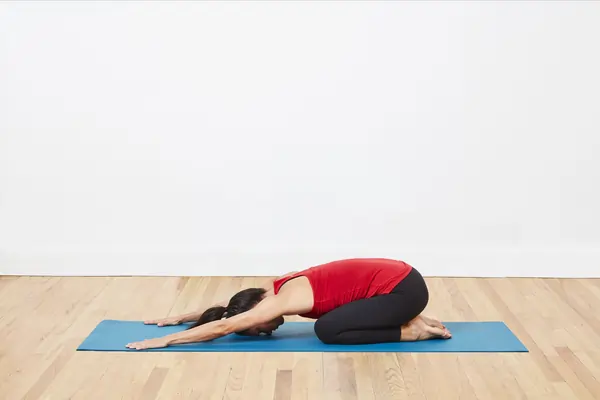
Benefits: relieves tension in the nervous system and calms the mind.
Steps:
- Make sure your wrists are tucked under your shoulders. Align your knees so that they are hip-width apart, and ensure your toes are pointing directly backwards so that the tops of your feet stay gently on the mat.
- Ensure your knees remain apart and your big toes gently touch. This will help your chest and stomach to fold forwards.
- Exhale slowly and move your hips towards your heels. Be mindful of your thighs and knees and only move as far as feels comfortable.
- Rest your head on the mat or cushion and let your chest naturally fall between/over your thighs.
- Longer Spinal Extension with Arms Extended
- To lengthen your spine, extend your arms forwards with palms facing downwards.
- Shorter Relaxation with Arms by Side
- Place your arms by your sides and turn your palms upwards.
- Allow your shoulders to relax and move away from your ears, and allow your chest to relax towards the mat.
- Inhale to lengthen your sides and back. Exhale to release any tension. Hold for between 30 seconds and a few minutes, depending on your comfort.
- Keeping your spine long, slowly lift your torso into an upright position, walking your hands back towards your knees.
Nadi Shodhana Pranayama (Alternate Nostril Breathing)

Benefits: Promotes emotional balance by bringing the left and right hemispheres of the brain into balance.
Steps:
- Sit comfortably and keep your shoulders relaxed and back straight, and keep a soft smile.
- Place your left hand, with your palms facing up or in the Chin Mudra (the tip of your thumb and index finger lightly touch each other), on your left knee.
- Place your thumb on your right nostril, your ring finger and little finger on your left nostril, and the tips of your index and middle finger on your right hand between your eyebrows. Your thumb will go on your right nostril, and your ring and little finger will go on your left nostril.
- Release air through your left nostril while pushing your right thumb down.
- Inhale through your left nostril and gently push with your little and ring fingers.
- Gently exhale through your right nostril while releasing your thumb from it.
- Inhale through your right nostril and release through your left nostril. This completes one cycle of Nadi Shodhan pranayama. Alternate nostrils for your next inhalation and exhalation.
For Better Sleep and Deep Relaxation
Getting good quality sleep during menopause is very important, and yoga can help your body prepare for relaxation.
Viparita Karani (Legs-Up-the-Wall Pose)
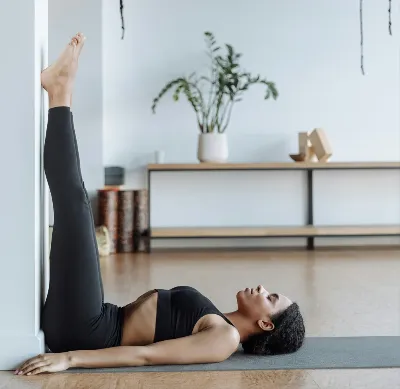
Benefits: Calm the nervous system and reduce tiredness.
Steps:
- Place your yoga mat perpendicular to the wall (or place the bolster 6- 12 in. away from the wall).
- Sit so your right hip touches the wall. This will help to make the flow easier.
- Lower your body down to the floor, gently lifting your legs and leaning back onto your forearms.
- Move your hips slightly in or out until you are comfortable. Focus on being comfortable rather than aligning properly.
- Rest the sacrum (not lower back) onto the bolster. The legs should feel supported by the wall.
- Your arms can be comfortably in a ‘goalpost’ position by your sides with your palms facing up or above your head. To give relief to your neck, tuck your chin slightly into your chest.
- This reduces stimulation of the nervous system.
- A soft blanket will help to keep you warm and relaxed during long holds.
- Begin with 5-10 deep breaths to relax your body. Then return to normal breathing.
Savasana (Corpse Pose)
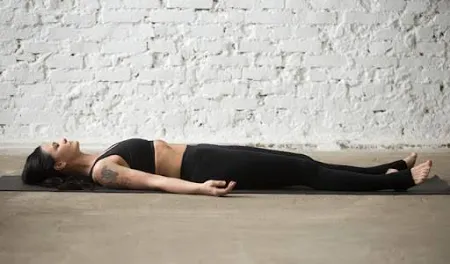
Benefits: signals to your body that it is safe to relax and allows you to feel relaxed throughout your whole body.
Steps:
- Lie on your back on the yoga mat with your legs spread wide enough to be comfortable.
- Place your hands palm upwards and your arms by your body.
- Close your eyes and relax your entire body.
- Breathe normally but slowly to help release any tension in your muscles. Keep your body still.
- Allow your hands, feet, shoulders, and face to fully relax.
- Stay in this position for between 5 and 10 minutes, focusing on your breathing.
For Vaginal and Pelvic Floor Health
Yoga can help improve pelvic muscle tone, flexibility, and blood flow.
Baddha Konasana (Bound Angle Pose)
Benefits: Enhances the pelvic region’s blood flow.
Steps:
- Sit in Dandasana with your arms relaxed at your sides and your legs outstretched. Take a deep breath and concentrate on planting your sit bones firmly on the yoga mat.
- With your hands on your shins, bend your knees and move your feet closer to your sitting bones. Avoid touching your knees on the mat if you experience pain or pressure.
- Press your sitting bones and the outside edges of your feet into the mat if you feel comfortable flexing your lower body.
- Exhale and place your knees on the floor. Focus on your breathing.
- Inhale and exhale as you bend forward from the waist so that your head, upper body, and forearms are resting on the floor.
- Return to the Dandasana position to come out of the pose. Hold for 3-5 breaths.
Marjaryasana–Bitilasana(Cat–Cow Pose)
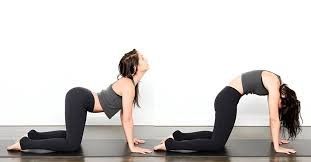
Benefits: Supports pelvic health with gentle movement of the pelvis and spine.
Steps:
- Begin by spreading your fingers wide and having a long neck. Bring your spine into neutral and come onto your hands and knees with your wrists beneath your shoulders and your knees beneath your hips. Take a few deep breaths.
- Lower your belly, lift your chest, broaden your collarbones, draw your shoulders down and away from your ears, lift your sitting bones, and gaze gently up. Inhale through your nose (Cow Pose).
- Hold for a moment at the top of your inhale, feeling your chest open and your back naturally curve. You are now ready to exhale.
- Exhale fully, tucking your chin, tailbone, pulling your belly button in, pushing through your hands, rounding your back up towards the ceiling (Cat).
- As you inhale into Cow and exhale into Cat, imagine that you are creating a wave across your body from your tailbone to the top of your head.
- Focus on the rhythm rather than the number of repetitions. Repeat 5-8 times (1-2mins), 8-12 times (2-3 mins), or 15-20 times (3-5 mins). If your breathing becomes uneven, stop.
- Finish in a neutral tabletop position and take 2-3 deep breaths. You can then rest for a short time in Child’s pose if you wish.
For Weight Management and Metabolic Support
Hormonal fluctuations can affect metabolism, but yoga can increase awareness and muscle tone.
Virabhadrasana II(Warrior II)
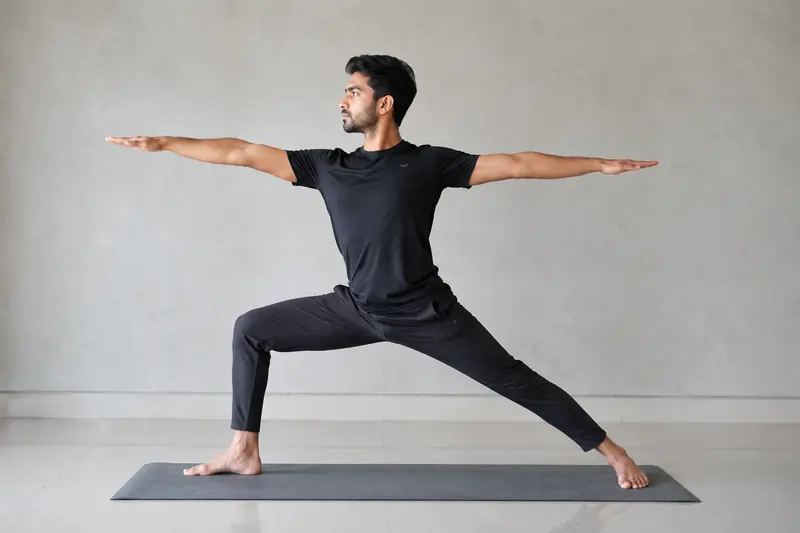
Benefits: strengthens and stabilizes the legs.
Steps:
- Begin from Tadasana / Mountain pose at the front of your mat. Step your left leg back into a wide lunge and point your toes slightly inwards to form a Warrior 2 position.
- Engage your legs by lifting them strongly and pushing through the 4 corners of your feet.
- Lower your shoulders and extend your long neck. Lift your arms so they are parallel with the floor.
- Bend your right knee, ensuring it stays above your ankle as you exhale. Adjust your legs and feet slightly to create a stable base.
Naukasana (Boat Pose)
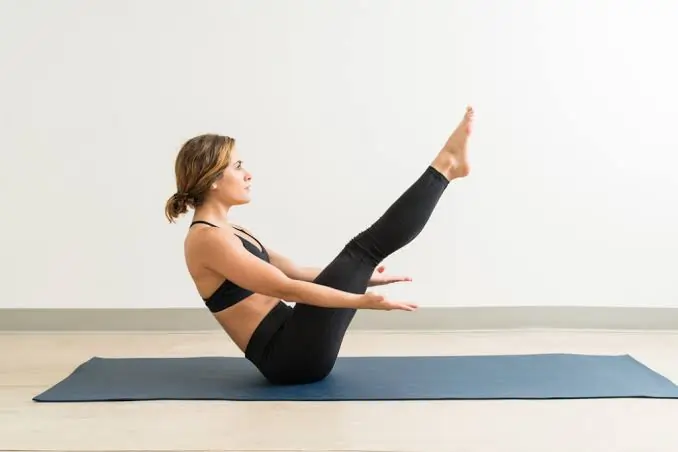
Benefits: Builds digestive fire and strengthens the core muscles.
Steps:
- Place your arms at your sides and lie on your back with your feet together.
- Inhale deeply, then release the breath by raising your feet and chest off the floor and extending your arms in the direction of your feet.
- You should line up your fingers, toes, and eyeballs.
- When your abdominal muscles tense, feel the tightness in the vicinity of your navel.
- As you hold the pose, continue taking deep, easy breaths.
- As you release your breath, return to the floor gradually and relax.
Safety Tips
- Listen to your body. If you experience dizziness, chest pain, unusual breathing problems, or intense pain, then stop immediately and, if needed, get some medical help.
- Avoid poses that cause any problems with balance, joints, or symptoms. Choose safe and comfortable modifications.
- Practice regularly. Start with short sessions and aim to create a routine to improve flexibility, balance, and strength, and improve your mood.
- Don’t compare yourself to others. Everyone will experience menopause differently, so practise what works for you and your abilities.
Conclusion
Studies have shown that yoga can have positive effects on menopausal symptoms. Therapeutic yoga can help women deal with challenging situations, adapt to change, and enable them to continue moving forward during their midlife.
FAQs:
Which type of yoga is best for menopause?
Restorative yoga helps provide relief from fatigue, lack of sleep, and stress. Yin yoga provides relief from muscle and emotional tension. You can also look for a class specific to menopause to help incorporate different types of yoga to help relieve your symptoms.
How to manage menopause symptoms naturally?
One of the methods used to help manage menopausal symptoms is to ensure that we are getting the right amount of nutrition in our diets. Symptoms can also be reduced by exercising regularly, such as taking short walks or doing quick yoga poses.
Can yoga increase estrogen levels?
Yes! The Physiological Society states that yoga can help postmenopausal women balance their hormones such as progesterone and estrogen. Studies have shown that practicing yoga for a period of one month can increase parasympathetic activity, therefore regulating hormone levels.
What are the top 3 vitamins for menopause?
What are the best three vitamins for menopause? The strongest evidence supports vitamin D, calcium, and vitamin B12. As we get older than 50, our bodies do not absorb as much from the foods we eat; therefore, we need to take B12. Vitamin D and calcium help us maintain our bones through the years when we lose more bone due to less estrogen.
What are the 7 stages of menopause?
Stage 1 – Early Reproductive Stage
Stage 2 – Peak Reproductive Stage
Stage 3 – Late Reproductive Stage
Stage 4 – Early Perimenopause
Stage 5 – Late Perimenopause
Stage 6 – Menopause
Stage 7 – Postmenopause
What is the final age of menopause?
Ova are no longer produced by the ovary. A woman’s menstrual cycle can vary greatly during her reproductive years. However, many women around the world will go through natural menopause between the ages of 45-55.
References:
- Pletzer, L. (2026, January 29). Menopause Made Easier: How yoga supports balance, calm, and vitality. Art of Living Retreat Center. https://artoflivingretreatcenter.org/blog/yoga-for-menopause/
- Kandasamy, K. K. M. K., & Kandasamy, K. K. M. K. (2021). YOGA FOR MENOPAUSE. IDC International Journal, 8(3). https://doi.org/10.47211/idcij.2021.v08i03.015