8 Best Yoga for Foot Strength
Introduction
Foot strength can be improved by focused exercises and purposeful movement. It is essential for balance, stability, injury prevention, and general lower-body function. The ability of your foot muscles to sustain proper structure and function while performing daily tasks like walking, jogging, and standing is referred to as foot strength.
Proper alignment of the ankles, knees, and hips is supported by strong feet, which reduce strain on these joints and protect against accidents. Weak foot muscles can cause lower back, hip, or knee pain, and big toe weakness is a major risk factor for falls in older persons. Strong feet also improve athletic performance, stability, and balance.
How Your Feet Create Balance and Stability
The distribution of your weight across the bases of your large and little toes, inner and outer heels, and the four corners of your feet is the first step toward stability. The arches and toes can actively promote balance and effective movement when these locations cooperate. In order to maintain alignment and flexibility, the body needs strong, responsive feet to transfer force from the ground upward.
Proprioceptors are specialized sensory receptors present in the joints, muscles, tendons, and fascia that direct this process. Proprioceptors can be compared to the body’s internal guidance system. They assist in coordinating movement, modifying posture, and reacting to change by continuously transmitting and receiving information between the feet and the brain. Your body can remain sensitive, stable, and mobile in daily life because of this connection.
Proprioception is demonstrated, for example, when you abruptly step off a curb, and your foot, ankle, knee, and hip automatically adjust to continue walking smoothly. If, on the other hand, your ankle stiffens, your range of motion is reduced, and you become unstable, this shows how a restricted proprioceptive response can exacerbate instability.
What Are the Intrinsic Foot Muscles?
A collection of small muscles found only inside the foot is known as the intrinsic foot muscles. Intrinsic muscles start and finish inside the foot, in contrast to bigger muscles that start in the lower thigh and link to the foot.
These muscles are useful:
- Promote the foot’s arches.
- When running and walking, keep your toes straight.
- Boost your coordination and balance
- When moving, absorb and transfer forces.
- Build a stronger base for the body as a whole.
Consider these muscles to be the “core” of your feet. Strong intrinsic foot muscles provide effective movement from the ground up, much as a strong core facilitates effective movement of the trunk and pelvis.
Why Foot Strength Matters
Improved Balance and Stability
The body’s main point of touch with the ground is the feet. Powerful intrinsic muscles aid in foot stability and improve the body’s capacity to respond to changes in movement, direction, and surface.
Both athletes and non-athletes can benefit from increased foot strength since it can lead to greater balance and postural control.
Better Arch Support
When walking or running, the foot arch stores and releases energy like a spring. This arch is supported, and excessive collapse is avoided by the intrinsic foot muscles.
The foot may become less effective at controlling forces when these muscles are weak, which could lead to fatigue and overuse problems.
Improved Running and Athletic Performance
The transfer of force from the ground to the rest of the body can be increased by strong feet. Running, jumping, and changing directions may become more efficient as a result.
Stiffness and elastic energy return are concepts that are frequently discussed in sports science. Athletes can move more effectively and possibly lose less energy with each step if they have a stronger, more stable foot that serves as a better spring.
Reduced Risk of Common Foot Problems
Stronger feet could reduce the chance of several overuse conditions, such as the following, even if no training regimen can totally prevent injury:
- Plantar fasciitis
- Metatarsal stress injuries
- Achilles tendon overload
- Arch pain and fatigue
- Some forms of shin splints
Excessive loading and inadequate force management through the foot and lower extremities are linked to several of these disorders.
Why Developing Foot Strength Is Ideal in the Summer
Naturally, there are more options for barefoot activities throughout the summer. Your feet frequently have the opportunity to move more organically while you’re taking walks on the beach, relaxing in the lawn, or engaging in outdoor activities.
Many of the intrinsic foot muscles may become less active when we wear supportive shoes for most of the day since the shoe is taking care of some of the stabilizing tasks.
The foot is challenged by barefoot exercise to:
- Stabilize itself
- Adapt to uneven surfaces
- Improve sensory feedback
- Activate muscles that may otherwise remain underutilized
Barefoot training is a natural technique to strengthen the feet in many different ways.
The Benefits of Barefoot Activity
Increased Muscle Activation
The intrinsic foot muscles must exert more effort to support the foot and preserve balance in the absence of shoes.
Strength adaptations may eventually be stimulated by this increasing demand.
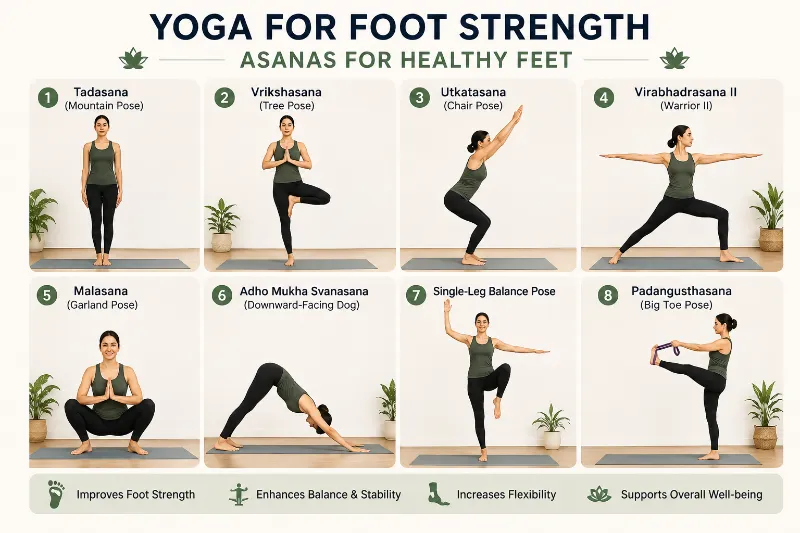
Yoga for Foot Strength: Asanas for Healthy Feet
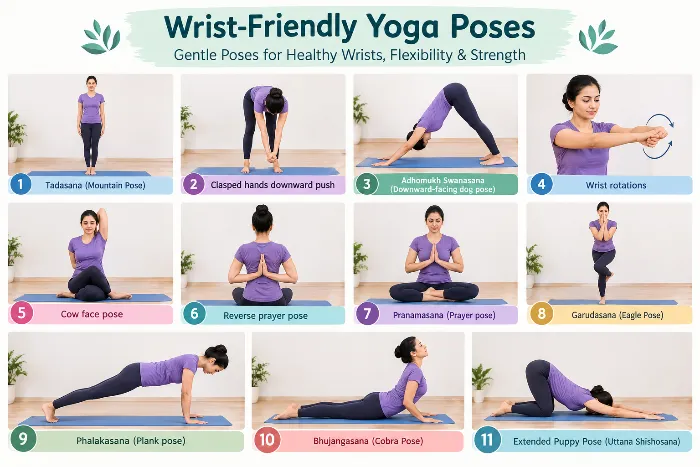
Tadasana (Mountain Pose)
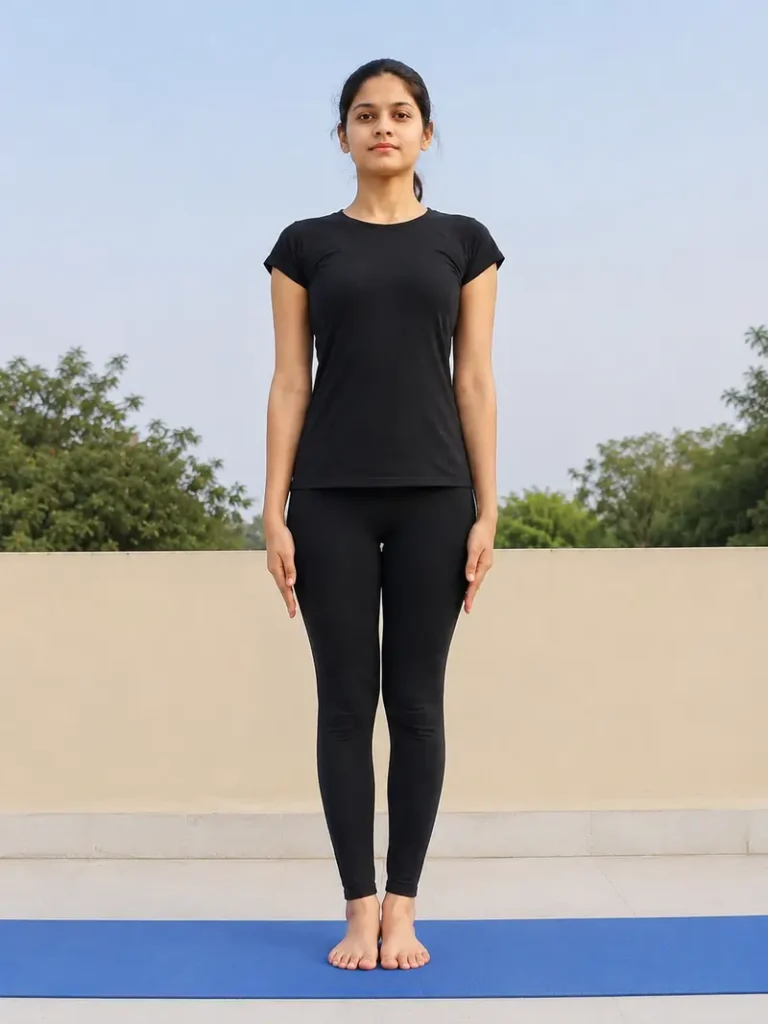
- Place your feet hip-width apart and stand barefoot.
- Make sure your toes are pointing forward.
- Place your heel, big toe base, and little toe base firmly on the ground after gently spreading your toes.
- Without curling your toes, gently raise and support the arch.
- Maintain an erect posture and keep your knees relaxed.
- Breathe regularly and let your shoulders drop.
- Repeat two or three times after holding for 20 to 30 seconds.
Benefits:
- Promotes the activation of the foot muscles.
- Improves the control of the arch.
- Boosts the foot’s ability to distribute weight.
- Improves body awareness and standing posture.
Vrikshasana (Tree Pose)
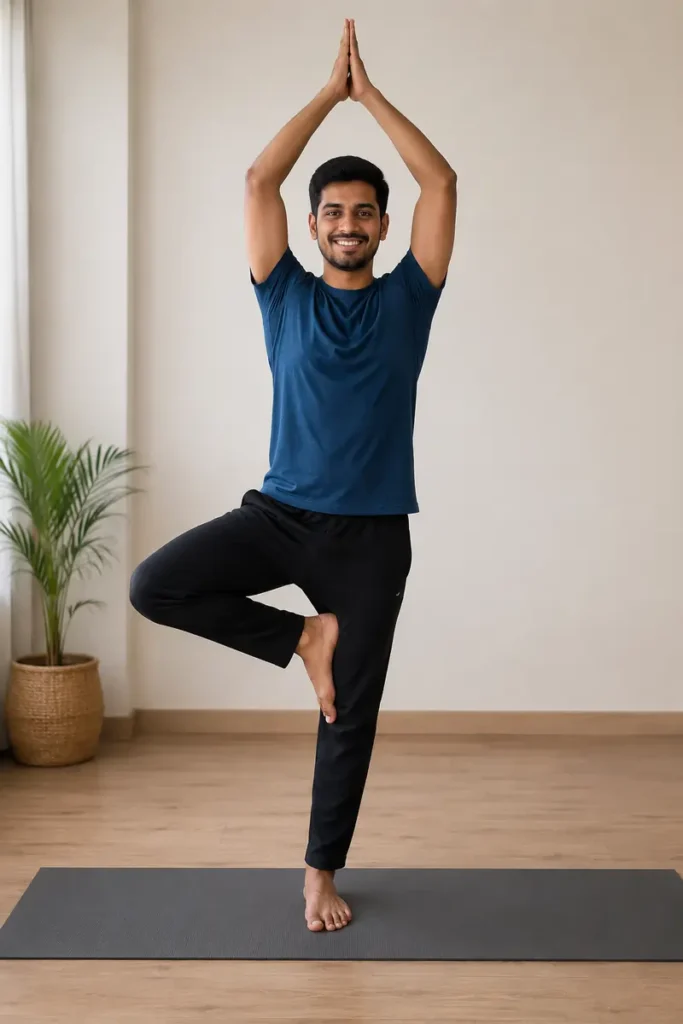
- Keep both feet firmly planted on the ground while standing erect.
- Transfer your weight to your right foot.
- Place your left foot against your inner right thigh or calf while bending your left knee.
- Avoid putting your foot right up to your knee.
- Maintain a steady arch while spreading the toes of your standing foot.
- Bring your hands together overhead or in front of your chest.
- Hold for 15 to 30 seconds.
- On the other side, repeat.
Benefits:
- strengthens the ankle and foot that provide support.
- enhances balance on one leg.
- improves proprioception.
- increases the stability of the foot and ankle.
Utkatasana (Chair Pose)
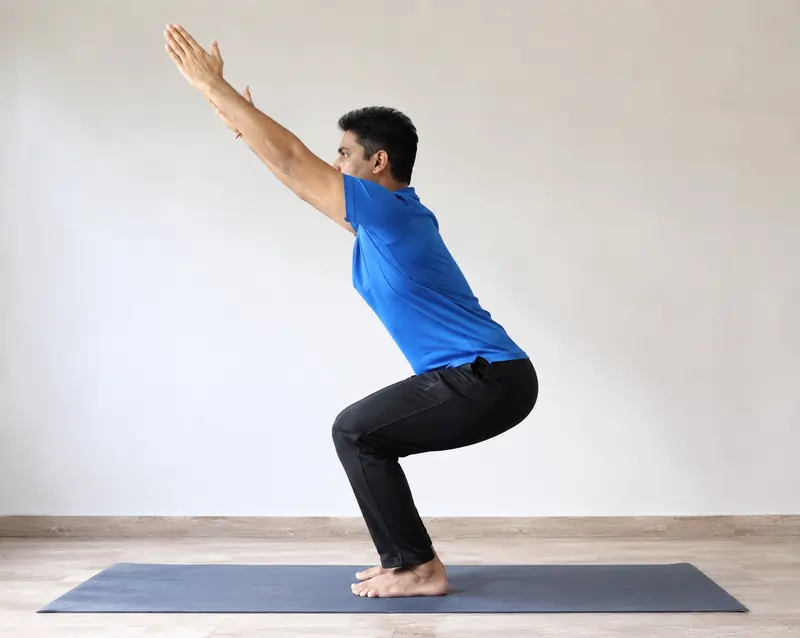
- Place your feet hip-width apart as you stand.
- Make sure your toes are facing forward.
- As if you were sitting in a chair, bend your knees and push your hips back.
- Maintain a neutral spine and an elevated chest.
- Evenly press your feet into the ground.
- Maintain your knees in line with your toes.
- Hold for 15 to 30 seconds.
- Return to standing slowly.
Benefits:
- Strengthens the ankles and feet.
- Increases the strength of the gluteal and quadriceps muscles.
- Increases the stability of the lower limbs.
- Allows the feet to bear weight in a regulated manner.
Virabhadrasana II (Warrior II)
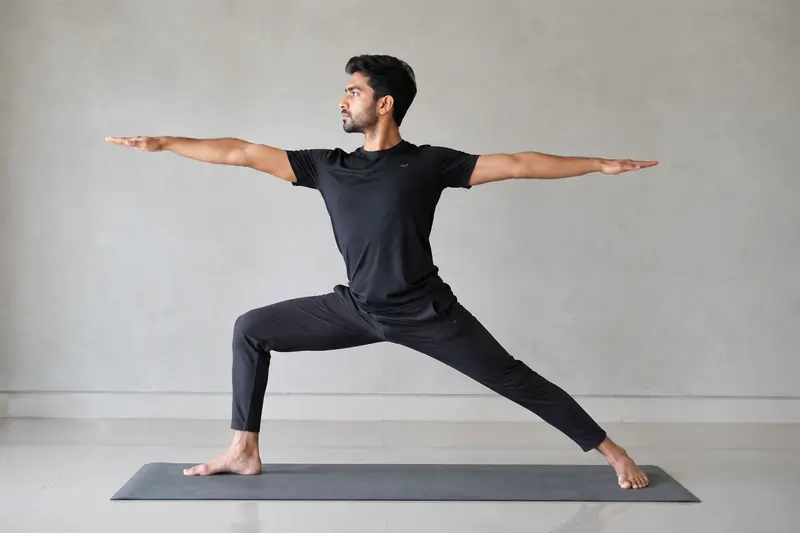
- Place your feet widely apart as you stand.
- Make a 90-degree turn with your right foot.
- Slightly turn the left foot inward.
- Maintain alignment with the right ankle; bend the right knee.
- Press the rear foot’s outside edge into the ground while maintaining a straight back leg.
- Maintain active foot contact while spreading your toes.
- Raise your arms to shoulder height.
- Repeat on the opposite side after holding for 20 to 30 seconds.
Benefits:
- Increases the stability of the ankle and foot.
- Makes the lower limbs stronger.
- Promotes active control of the arch.
- Enhances awareness of one’s body and balance.
Malasana (Garland Pose)
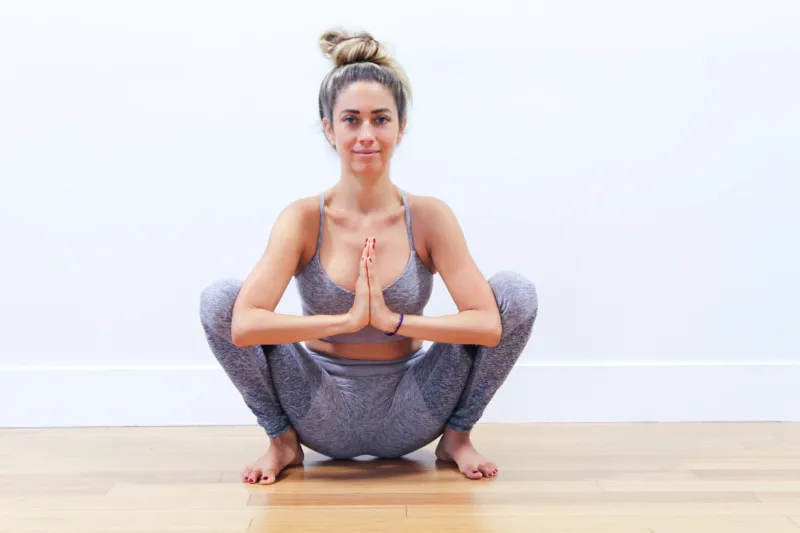
- You want your feet to be a little bit wider than your hips.
- Toes should be turned slightly outward.
- Lower yourself into a comfortable squat by slowly bending your knees.
- If your mobility permits, keep your heels on the ground.
- Maintain an elevated chest.
- In front of your chest, place both of your hands.
- Place your feet gently on the ground.
- Hold for 15 to 30 seconds.
Benefits:
- Increases the range of motion in the feet and ankles.
- Promotes the feet’ controlled loading.
- Enhances the mechanics of the squat.
- Makes the lower limbs stronger.
Adho Mukha Svanasana (Downward-Facing Dog)
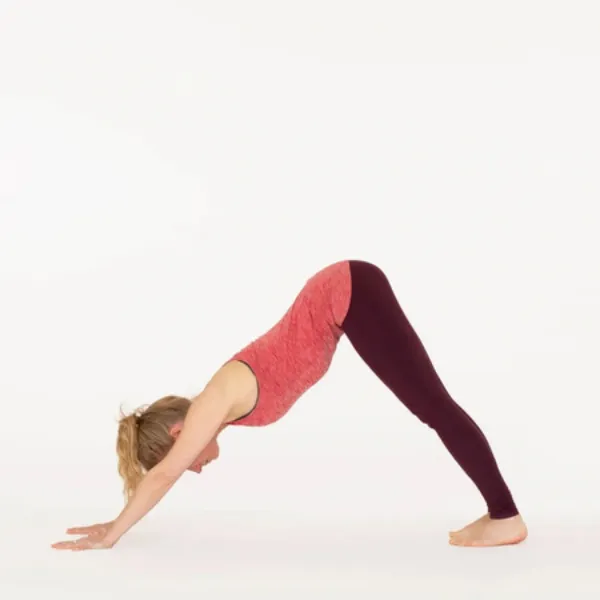
- Start on your hands and knees.
- Your hands and shoulders should be slightly wider.
- Raise your hips and tuck your toes under.
- Just straighten your legs as much as is comfortable.
- Apply pressure with your hands and feet.
- Without pushing them, keep your heels going in the direction of the floor.
- Instead of holding onto the mat, keep your toes loose.
- For 20 to 30 seconds, hold.
Benefits:
- Increases ankle range of motion.
- Gives the calf and plantar foot a stretch.
- Promotes the placement of active feet.
- Increases the posterior lower limb’s range of motion.
Single-Leg Balance Pose
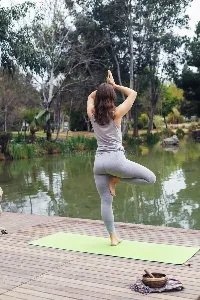
- Stand barefoot close to a strong chair or wall.
- Evenly distribute your weight across one foot.
- Keep the natural arch while gently spreading your toes.
- Lift the opposing foot off the ground slowly.
- Maintain an upright posture and keep the pelvis level.
- Don’t use your toes to hold the floor.
- Hold for 15 to 30 seconds.
- On the other leg, repeat.
Benefits:
- strengthens the stabilizers in the foot and ankle.
- enhances equilibrium.
- improves proprioception.
- enhances functional control of the foot.
Padangusthasana (Big Toe Pose)
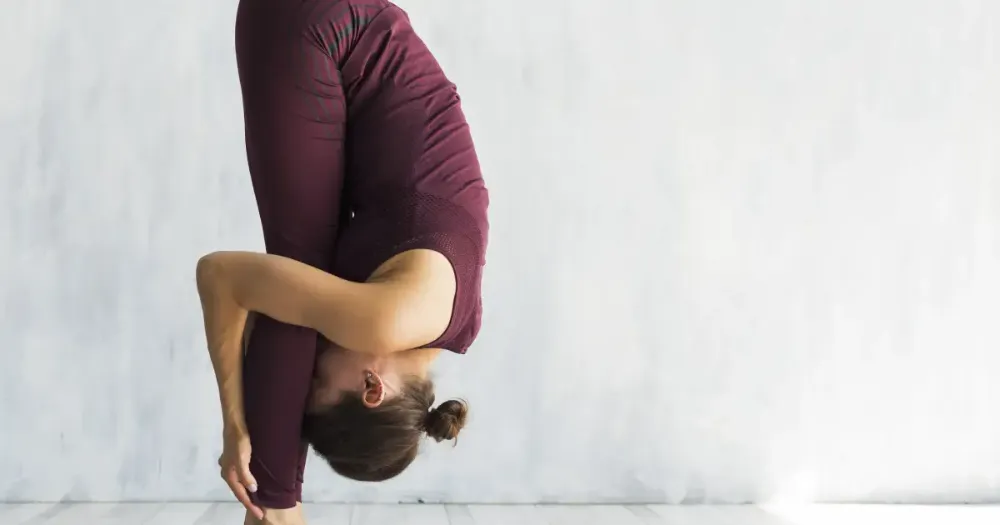
- Stand up straight with your feet parallel to each other.
- Maintain a little softness in your knees.
- From your hips, bend forward.
- If it seems comfortable, hold your big toes with your thumb and first two fingers.
- Avoid excessive toe gripping and keep your feet busy.
- Let your neck and head unwind.
- Hold for 15 to 30 seconds.
- Return to standing slowly.
Benefits:
- Increases the suppleness of the toes and feet.
- Raises awareness of the position of the big toe.
- The posterior chain and calf are stretched.
- Helps preserve functional foot mobility.
Precaution:
- If you have weak feet, start with simpler positions.
- Don’t grasp your toes too tightly.
- When doing single-leg poses, use a chair or wall.
- If you have severe or worsening foot discomfort, stop right away.
- Before beginning strengthening exercises, see a physician if you have a recent fracture, severe sprain, extreme edema, or an acute foot injury.
FAQs:
Can yoga strengthen feet?
Yes, you can strengthen your feet with yoga. The tiny intrinsic muscles, tendons, and ligaments in the arches and toes—which are frequently restricted by shoes—are activated when practicing barefoot. The feet must microadjust when standing and balancing, which increases strength and stability.
How can I strengthen my weak feet?
High-repetition core exercises are the best way to strengthen your weak foot in football. Try wall passing with a locked ankle, juggle just with your non-dominant foot, weave around cones while dribbling, and improve your standing leg balance. Raw power is not as crucial as consistency.
What are the signs of weak feet?
Early exhaustion during quick walks, poor balance or difficulty standing on one foot, obvious arch collapse or flat feet when standing, frequent toe or arch cramps, and irregular shoe wear patterns are all indicators of weak feet.
What foods make your feet stronger?
Eat foods high in calcium, vitamin D, and protein to strengthen the 26 bones and muscles in your feet. Dairy products, leafy greens, fatty salmon, and eggs are important options.
Does walking a lot strengthen feet?
Walking does really strengthen your feet because it forces your tiny muscles, tendons, and ligaments to lift off the ground with each step and stabilize your body weight.
Does yoga strengthen your feet?
Yoga is true to strengthen the feet. The tiny intrinsic muscles and stabilizers in your arches, toes, and ankles must constantly contract as you practice barefoot on a mat.
References:
- Dahlander, L., O’Mahony, S., & Gann, D. M. (2014). One foot in, one foot out: How does individuals’ external search breadth affect innovation outcomes? Strategic Management Journal, 37(2), 280–302. https://doi.org/10.1002/smj.2342
- Holowka, N. B., Wallace, I. J., & Lieberman, D. E. (2018). Foot strength and stiffness are related to footwear use in a comparison of minimally- vs. conventionally-shod populations. Scientific Reports, 8(1), 3679. https://doi.org/10.1038/s41598-018-21916-7
- Martindale, R. J. J., Collins, D., & Abraham, A. (2007). Effective Talent Development: The Elite Coach Perspective in UK Sport. Journal of Applied Sport Psychology, 19(2), 187–206. https://doi.org/10.1080/10413200701188944
- Alfieri. (2010). Functional mobility and balance in community-dwelling elderly: multisensory versus strength exercises. Clinical Interventions in Aging, 5, 181. https://doi.org/10.2147/cia.s10223
- Beaudart, C., Rolland, Y., Cruz-Jentoft, A. J., Bauer, J. M., Sieber, C., Cooper, C., Al-Daghri, N., De Carvalho, I. A., Bautmans, I., Bernabei, R., Bruyère, O., Cesari, M., Cherubini, A., Dawson-Hughes, B., Kanis, J. A., Kaufman, J., Landi, F., Maggi, S., McCloskey, E., . . . Fielding, R. A. (2019). Assessment of muscle function and physical performance in daily clinical practice. Calcified Tissue International, 105(1), 1–14. https://doi.org/10.1007/s00223-019-00545-w