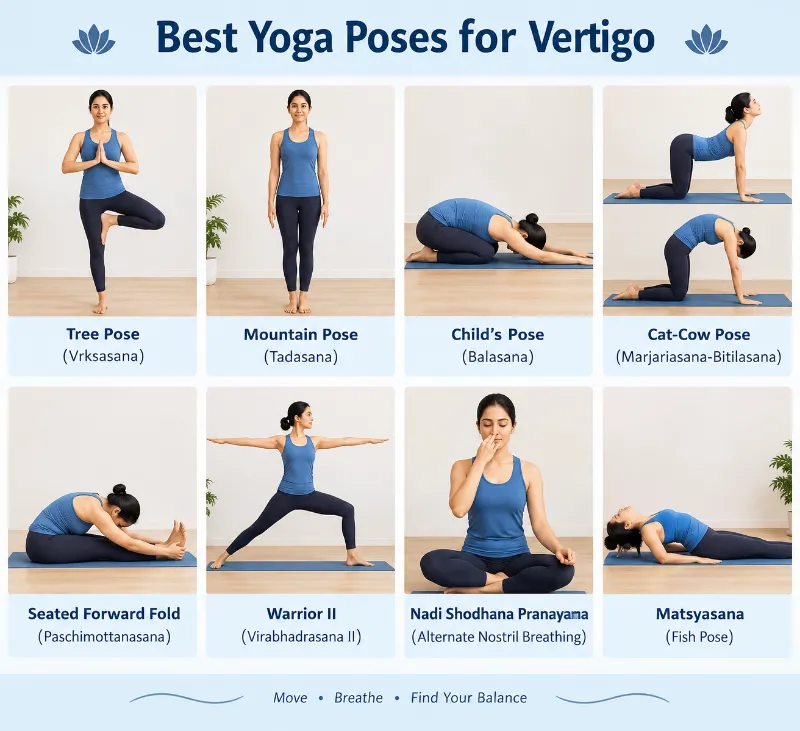
Yoga for Vertigo
What is Vertigo?
A disruption in the brain’s sense of balance and equilibrium causes vertigo, a form of dizziness marked by a feeling of spinning and instability. It is caused by a buildup of calcium or fluid, or possibly a virus, and affects the inner ear, which is responsible for monitoring motion directions.
However, it has been shown that certain yoga positions improve balance and stimulate the nervous system, which eliminates vertigo permanently.
Causes and Symptoms
The main cause of vertigo or dizziness is insufficient blood flow to the inner ear. The inner ear and its nerve connections to the brain can be attacked by viruses, such as those that cause the common “cold” or “flu,” which can also cause severe vertigo.
Extremely severe vertigo, nausea, and hearing loss can result from any injury or damage to the skull. The condition may also be brought on by certain foods or airborne particles that one is allergic to, such as dust, molds, pollens, dander, etc.
Balance can also be impacted by neurological conditions including multiple sclerosis, syphilis, tumors, etc.
The delusion that you or your surroundings are spinning or moving while everything is perfectly still is known as vertigo.
Vertigo-related sudden dizziness, spinning feelings, and loss of balance can be frightening and disturbing, interfering with everyday tasks like working and driving. Millions of Indians suffer from vertigo, which is often caused by inner ear problems, stiffness in the neck, or nerve system sensitivity difficulties that may only be partially resolved by conventional therapies.
Regular yoga practice addresses these underlying problems by enhancing vestibular function, reducing cervical spine stress, and retraining the nervous system’s balance controls.
Why Do People Get Vertigo?
Vertigo by itself is not an illness. This symptom appears when there is an issue with the inner ear, the balance nerve, or certain brain regions that regulate balance.
Benign Paroxysmal Positional Vertigo, or BPPV, is a frequent cause. Tiny calcium crystals inside the inner ear become misaligned in this disorder. They whirl suddenly when you tilt your head because they move.
The other reason is vestibular migraine, which is characterized by a distorted nerve impulse in the brain that causes vertigo. Even without a headache, it can happen.
This disorder, known as Ménière’s disease, is brought on by an accumulation of fluid in the inner ear. Possible consequences include ringing in the ears, vertigo, and hearing loss.
The disorder known as vestibular neuropathy affects the balance nerve that connects the ear to the brain and gets inflamed when a person has sudden, acute vertigo.
The various causes of vertigo make a proper diagnosis highly important. Neuro Equilibrium vertigo centres perform a variety of balance tests, including Video nystagmography to track eye movements, Dynamic Visual Acuity tests to measure the coordination between the eyes and the ears, balance platform tests, as well as specific positional testing to pinpoint the exact location of the inner ear lesion that is causing the vertigo.
Following testing, physicians at recognized vertigo centers like Neuroequilibrium create a personalized treatment plan. Repositioning (including the Epley technique) to correct BPPV, Vestibular Rehabilitation Therapy (VRT) to practice balance, virtual reality balance training, medication prescriptions when necessary, stress counseling or cognitive behavioral therapy for chronic dizziness, and lifestyle/diet education are some examples.
Yoga can help with recuperation, particularly in terms of stress management, balance, and self-assurance.
Can Yoga for Vertigo Really Provide Relief?
Yes, by enhancing inner ear function, promoting neck health, and assisting with nervous system balance, yoga practice can significantly reduce the frequency and severity of vertigo episodes.
Yoga manages vertigo through three main avenues: decompressing and mobilizing the cervical spine (which relieves neck tightness that constricts blood supply to the balance system), utilizing targeted balance poses (which train the brain to better integrate visual and body movement signals), and incorporating controlled breathing exercises (which soothe an overactive nervous system that can intensify vertigo symptoms). You can review our fitness resources for a deeper look into how yoga fosters overall balance and vestibular health.
Although conditions like benign paroxysmal positional vertigo (BPPV) may need the Epley maneuver alongside yoga, and Meniere’s disease demands ongoing medical supervision, most balance issues caused by vertigo improve noticeably with four to eight weeks of regular, targeted yoga practice.
How Yoga Helps Vertigo
Yoga facilitates better mental-body synchronization. When practiced consistently and gently, yoga can:
- Increase stability and balance.
- Reduce the anxiety and tension that could make vertigo worse.
- Use the muscles in your neck.
- Improve blood flow to the brain and inner ear.
- While you heal, keep your equilibrium system in place.
- People may find that their dizziness is not as prevalent as they previously thought and can be successfully cured when yoga is paired with the right medical treatment.
Benefits of Yoga for Vertigo
Improves Vestibular Function and Balance: Balancing on one leg, practicing eye-tracking movements, and gradually increasing head motion work together to train the inner ear balance system. These exercises help your body process position signals more accurately, which decreases the faulty spinning sensations that trigger vertigo.
Relieves Cervical Tension That Triggers Vertigo: Cervicogenic vertigo, which stems from neck issues, is one of the most common yet often overlooked types of vertigo. By decompressing the cervical spine, releasing tension in the upper shoulders, and gently rotating the neck, targeted yoga poses relieve this particular problem.
Reduces Nervous System Sensitisation: Ongoing vertigo gradually overstimulates the nervous system, which heightens balance issues and causes anxiety that only makes vestibular symptoms worse. Incorporating breathing exercises into a vertigo-focused yoga routine directly calms this heightened response by stimulating the body’s rest-and-digest system. Explore our well-being guide to discover additional methods for calming and regulating your nervous system.
Reduces the Anxiety That Accompanies Vertigo: Anxiety about experiencing a vertigo episode often leads people to avoid exercise and everyday movement, creating a cycle of physical weakness that degrades balance even further. Practicing yoga tailored for vertigo helps restore a calm, confident relationship with physical activity, effectively putting an end to this cycle.
Improves Gaze Stability and Visual-Vestibular Integration: Targeted yoga gaze techniques (drishti) combined with controlled head movements enhance visual-vestibular integration—the neural mechanism coordinating eye movement with body position that vertigo directly disrupts.
Best Yoga Poses for Vertigo
Vrikshasana (Tree pose)
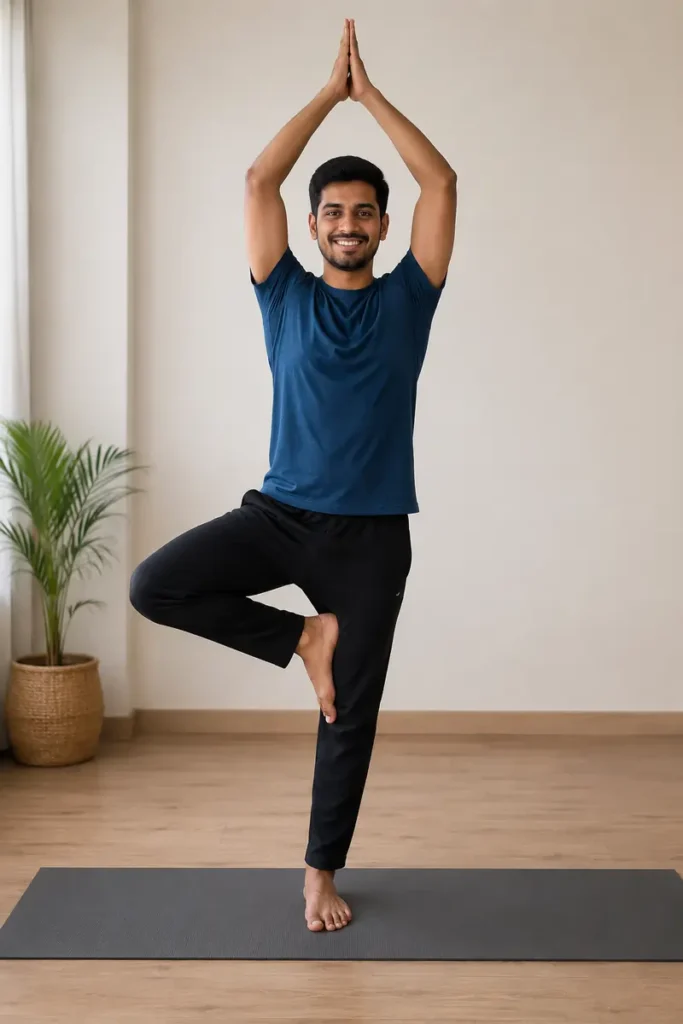
Tree Pose (Vrksasana) directly challenges and trains the vestibular-proprioceptive system through single-leg balancing. Place the foot of the lifted leg against your inner calf—never directly on the knee joint—and feel free to use a wall for extra support. Consistent daily practice gradually strengthens the balance pathways impaired by vertigo. Explore our yoga for headache guide to learn how to address this closely related neurological issue.
Steps:
- Stand upright with your feet side by side.
- Position the inside of your left thigh on the sole of your right foot while bending your right knee.
- Keep your left leg balanced.
- In a prayer position, place your palms together at your chest.
- If it appears comfortable, extend your arms straight up overhead.
- Repeat on the other side after holding the position for a few breaths.
Tadasana (Mountain Pose)
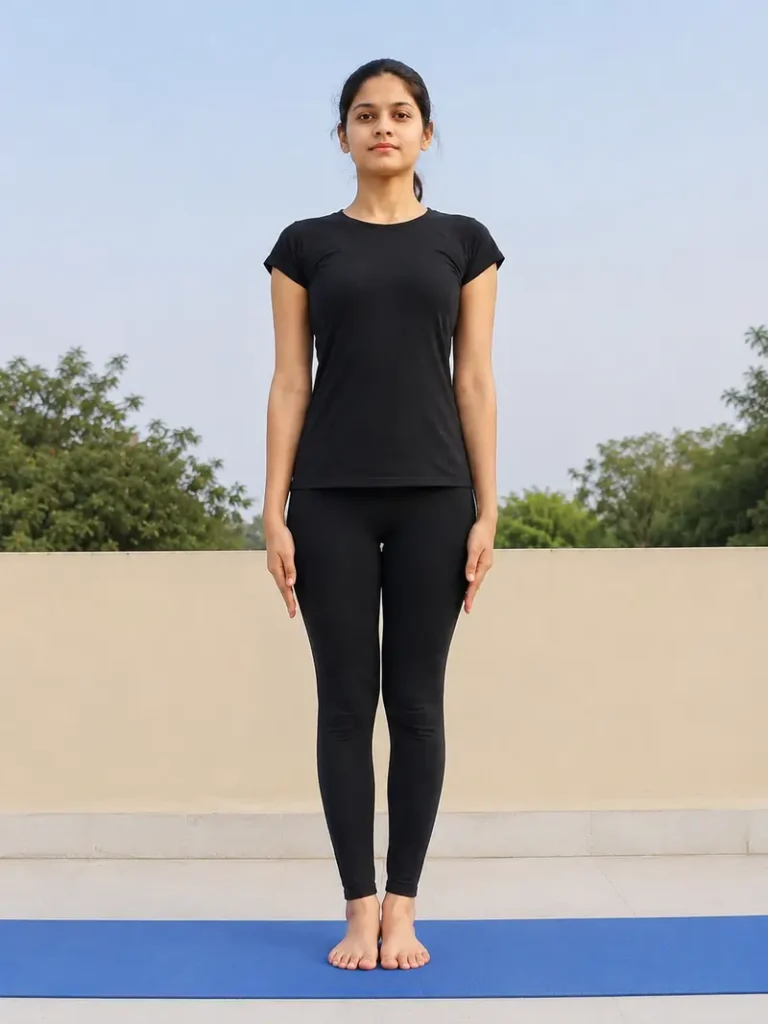
Training the gaze stabilization mechanisms impaired by vestibular dysfunction involves standing with feet hip-width apart and practicing controlled, gradual head movements while keeping a fixed drishti (gaze point). Start with the lowest range that is comfortable and increase it gradually.
Steps:
- Take a high pose with your feet together.
- Let your arms fall to your sides naturally.
- Divide your weight equally between the two feet.
- Extend your spine and let your shoulders drop.
- Breathe slowly and deeply.
- Hold the pose for a few breaths.
Balasana (Child’s Pose)
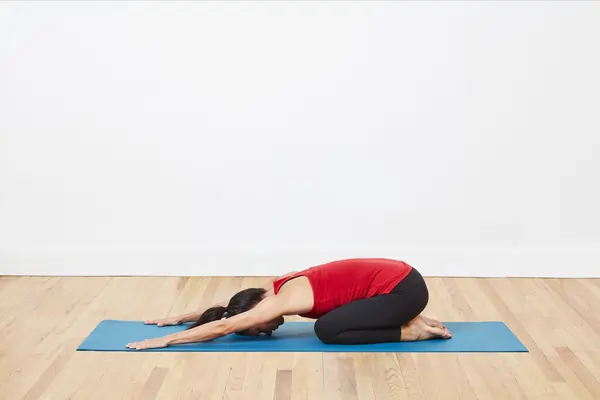
During acute bouts of vertigo, the grounded, forward-folded position of Balasana offers instant relief; the posture’s full physical anchoring calms the nervous system and lessens the feeling of spinning. The safest posture to take during an episode.
Steps:
- Put your knees together or slightly apart while kneeling on the ground.
- Lower your hips back onto your heels.
- Exhale as you fold your chest forward, resting your forehead against the floor.
- Reach your arms out in front with palms face-down, or lay them beside your body with palms face-up.
- Soften your shoulders, neck, and jaw.
- Take calm, deep breaths, allowing your stomach and back to totally relax.
- For as long as it is comfortable, stay in the position for 30 to 2 minutes.
- To exit, walk your hands back gradually and lift your upper body upright.
Marjariasana-Bitilasana (Cat-Cow Pose)
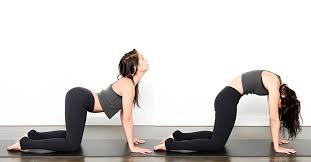
The persistent cervicogenic tension that underlies cervicogenic vertigo can be released with a gentle, controlled mobilization of the cervical spine. In addition to improving vertebral artery blood flow to the vestibular system, the gentle, breath-coordinated movement gradually decompresses the cervical vertebrae.
Steps:
- Begin on your hands and knees, positioning your wrists directly beneath your shoulders and your knees under your hips.
- Maintain a straight back and keep your eyes fixed on the ground.
- Cow Pose (Bitilasana): Inhale as you lower your belly toward the ground, opening your chest, lifting your tailbone, and gazing softly forward.
- Cat Pose (Marjariasana): Exhale as you arch your spine toward the ceiling, tucking your chin to your chest and pulling your navel toward your spine.
- Flow smoothly between Cow and Cat, matching each transition to your breathing.
- Perform 5 to 10 repetitions, or as feels right for your body.
- Return to a neutral tabletop position to complete the movement.
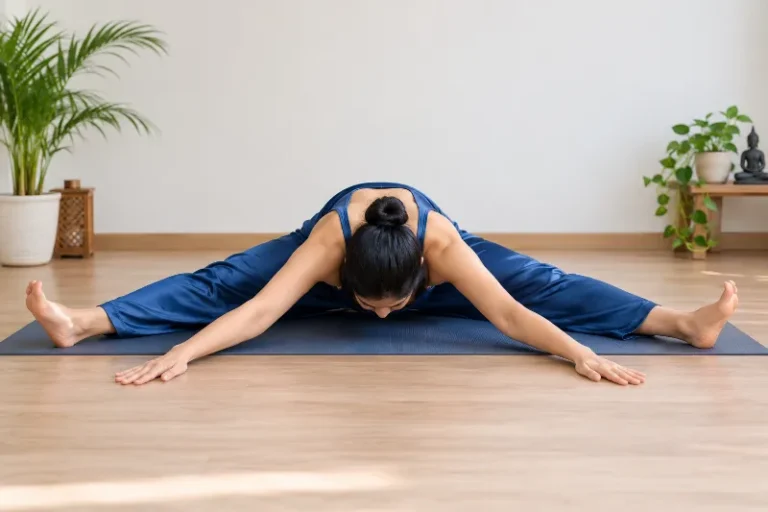
Paschimottanasana (Seated Forward Fold)
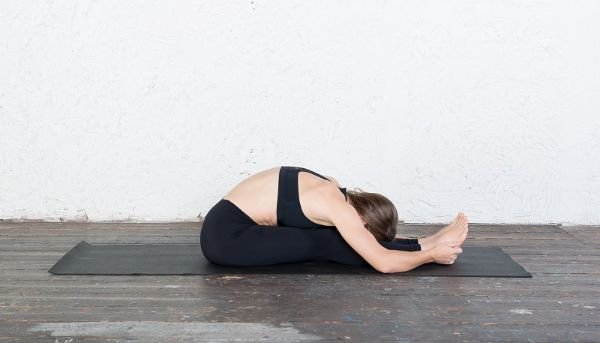
When paired with the enhanced cerebral blood flow of the moderate head-below-heart inversion, a prolonged forward fold that concurrently decompresses the cervical and thoracic spine directly treats the vascular aspects of vertigo.
Steps:
- With your toes pointed up and your legs extended in front of you, take a seat on the floor. Sit up tall on your sit bones; if you feel yourself slouching backward, sit on a folded towel or blanket.
- Take a deep breath in and lift your arms high above your head.
- Lean forward from your hips while maintaining a straight back and leading with your chest as you exhale.
- Put your hands wherever they comfortably land, like on your knees, shins, or feet.
- Look down at your legs while maintaining a relaxed neck and shoulders.
- Take slow, steady breaths and stay here for 1 to 3 minutes, letting your body loosen up a bit more every time you breathe out.
Virabhadrasana II (Warrior II)
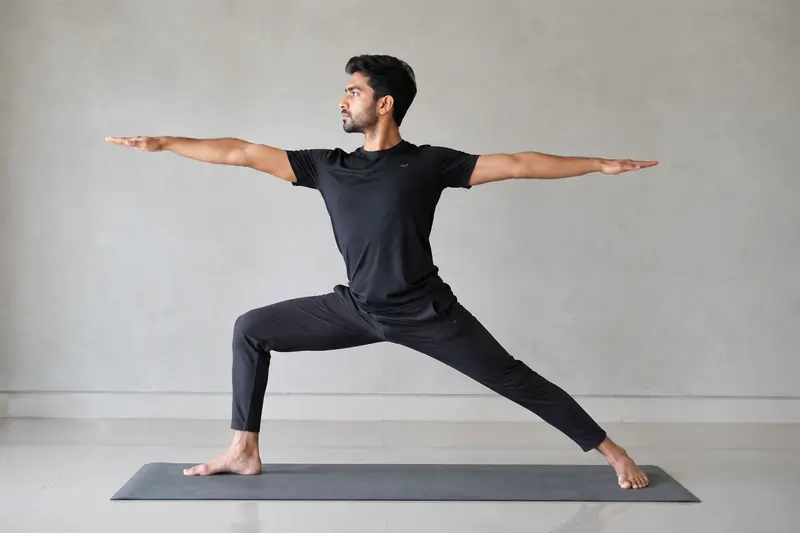
The basis of stable bilateral standing, which comes before single-leg balance training, is a standing balancing posture that tests the vestibular system with a larger base than single-leg postures. Also see yoga for tinnitus, a disorder that frequently coexists with vestibular impairment.
Steps:
- Place your feet wide apart for Warrior II Pose. Your back foot should be almost parallel to the mat’s short end, with the toes slightly twisted inward, while your front leg’s toes should point toward the mat’s short end. The middle of the inner part of your back foot should be where a line from the heel of your front foot comes to.
- Point in the same direction toward the long end of the mat with your face, stomach, and front thigh bones. Bend your front knee in the direction of the centre of your front toes. Make sure the angle between your thigh and shin, or your front knee, is no more than 90 degrees by going as deep as you can.
- Pull the kneecap up to engage the leg after pressing the outside edge of the back foot onto the ground.
- Stretch your arms out to the side and straighten your body while keeping your hands down.
- To increase the size of your lungs, take a breath and raise your arms, shoulders, armpits, and ribcage.
- To stretch the arms farther away from you, exhale.
- Keep your face in line with your sternum and keep your eyes fixed.
- You may also see over your front hand’s middle finger by turning your head.
- Release the pose while exhaling.
Nadi Shodhana Pranayama (Alternate Nostril Breathing)

Alternate nostril breathing, the most immediately helpful pranayama for vertigo, balances the left and right hemispheres of the neurological system, reduces the autonomic sensitization of chronic vertigo, and creates the profound parasympathetic calm that ends the anxiety-vertigo loop.
Steps:
- Take a high pose with your feet together.
- Let your arms fall to your sides freely.
- Divide your weight equally between the two feet.
- Extend your spine and let your shoulders drop.
- Breathe slowly and deeply.
- Hold the pose for a few breaths.
Matsyasana (Fish Pose)
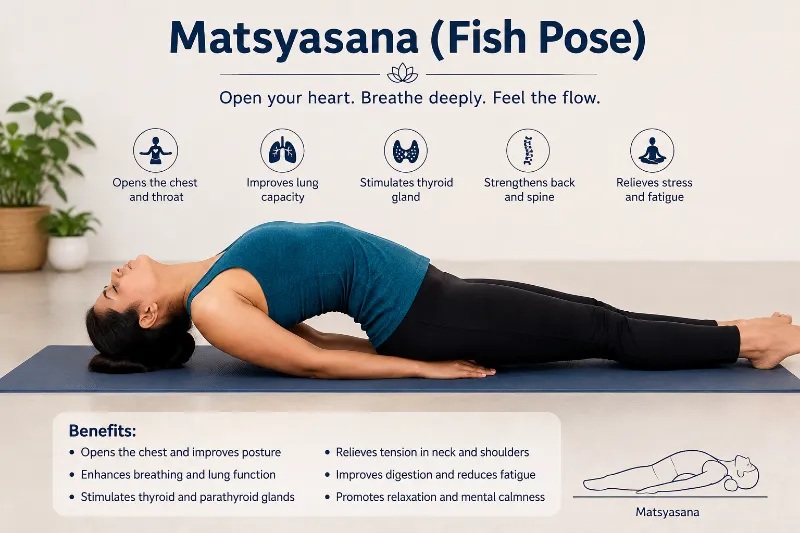
Increases oxygen flow and opens the chest.
Steps:
- Take a deep breath and begin by sitting in the Lotus or Staff position. Inhale deeply many times.
- Lower yourself all the way onto the yoga mat to begin.
- Place your palms on the mat just behind your tailbone and bring your arms under your lower back.
- Keeping the top of your head on the ground, inhale deeply once again.
- With each subsequent breath, keep contracting your chest muscles and slowly raise your chest, neck, and spine off the mat as though a thread were dragging them all up to the ceiling.
- While your elbows and palms press into the yoga mat to support your spine, make sure your back stays curved.
- Holding Fish Pose, take long breaths and exhale to relax your body.
- After a few seconds of holding this position, slowly release your neck, spine, and chest in that sequence.
Benefits: Helps with breathing and reduces stress in the body.
Fall-Safety Precautions
Falls or a sense of impending falls can be caused by balance issues. NIDCD advises talking about exercise safety, staying out of dimly lit areas while unsteady, and using the proper assistance when necessary.
While practicing yoga:
- On a level floor, use a non-slip mat.
- Take out any sharp objects and furniture that are close by.
- Avoid practicing next to glass tables, stairs, or unlocked doors.
- Keep a sturdy chair or wall nearby.
- Avoid loose carpets and slippery socks.
- Make use of sufficient illumination.
- If you have just fallen, don’t practice by yourself.
- Stay clear of making quick changes from the floor to the standing position.
- After lying, sitting, and standing, pause.
- Never rely solely on a mirror for support.
- Stop before your balance is compromised by muscle exhaustion.
- Ask a physiotherapist to suggest sitting or assisted alternatives when standing poses a risk.
What Level of Dizziness Is Acceptable During Yoga?
Rapid rotation should not be induced by yoga meant for general relaxation. A vestibular therapist should prescribe the dosage for a customized rehabilitation exercise that purposefully causes a moderate, controlled rise in symptoms.
Important Safety Note
The most important factor is accurate diagnosis because vertigo can be caused by a wide range of diseases. Simple dizziness medications or home cures can only provide temporary relief; they typically don’t deal with the underlying source of the problem.
Antihistamine medications should only be taken temporarily. Long-term use of these could impede the brain’s natural healing process. Additionally, the exercises and movements should be performed carefully because rapid head movements might cause vertigo.
BPPV can be successfully treated with repositioning techniques like the Epley Maneuver, but only after a correct diagnosis. Symptoms may worsen if the maneuver is performed poorly.
If any of the following causes vertigo, get emergency medical attention right away:
- A sudden, severe headache
- Double vision or blurriness
- Speaking difficulties
- Numbness or weakness across the body
- Abrupt difficulty walking or a lack of coordination
- These could indicate a serious illness.
FAQs:
How did I cure my vertigo naturally?
Using head-repositioning techniques like the Epley Maneuver or the Half Somersault Maneuver, you may frequently treat typical positional vertigo at home.
What emotion is linked to vertigo?
The two main emotions most strongly associated with vertigo are anxiety and fear, which have a strong, reciprocal neurological relationship with the body’s balance system.
What to drink to stop vertigo?
The greatest initial measure to prevent or reduce vertigo caused by dehydration is to drink simple water.
What are the top 3 causes of vertigo?
Vestibular neuritis (also known as labyrinthitis), Ménière’s disease, and benign paroxysmal positional vertigo (BPPV) are the top three causes of vertigo. The inner ear, which regulates your sense of balance, is the source of all three.
How to reduce vertigo with yoga?
By soothing the nervous system and enhancing blood circulation, gentle yoga poses like the Child’s Pose and Legs-Up-The-Wall Pose can help reduce vertigo.
What is the fastest home remedy for vertigo?
Benign Paroxysmal Positional Vertigo (BPPV), the most prevalent kind of vertigo, may be quickly and effectively treated at home with the Epley technique.
References:
- Bothra, S. (2026, September 17). Yoga for vertigo. Habuild. https://habuild.in/yoga-condition/yoga-for-vertigo
- Pillai, A., & Pillai, A. (2026, September 21). 7 Effective yoga poses for vertigo relief: Balance your mind and body naturally. Neuroequilibrium. https://www.neuroequilibrium.in/7-yoga-poses-for-vertigo-relief-natural-balance-dizziness-recovery/
- Rakshak & Rakshak. (2024, October 25). Yoga for Vertigo | Pranayama and simple yoga Exercises for Vertigo – The Art of Living. The Art of Living – Making Life A Celebration. https://www.artofliving.org/in-en/yoga/yoga-sequences-for/treatment-for-vertigo-naturally