Yoga for Ankle Sprain Recovery
What is a sprained ankle?
When the ligaments surrounding the ankle joint are stretched or ruptured as a result of a sudden twist, roll, or abnormal movement, the ankle is sprained. Activities requiring running, jumping, or abrupt direction changes frequently result in this injury.
Pain, swelling, bruises, and trouble bearing weight on the affected foot are typical symptoms. Sprains can be as minor as ligament stretching or as serious as a total ligament tear.
Introduction
Ankle sprains are more frequent than most people realize, whether they result from sports, a fall while walking, or a straightforward twist on a rough surface. The good news? Recovery can be greatly aided by yoga. Yoga is a safe and efficient way to heal the body and mind because it emphasizes awareness, alignment, and gentle movement rather than vigorous exercise.
Understanding an ankle sprain
Common Causes of Ankle Sprain
Ankle injuries can result from broken bones or sprained ligaments for several reasons.
- Sports like basketball, soccer, and running
- Tripping or slipping on uneven ground
- Wearing unsuitable footwear
- Weak lower leg muscles or restricted range of motion
Symptoms Not to Be Ignored
Swelling, bruising, restricted range of motion, soreness, and trouble bearing weight are all indicators of an ankle injury. Healing may take longer if these symptoms are ignored.
Benefits of Yoga for Healing
The Significance of Gentle Motion
Yoga promotes micro-movements that improve circulation, ease stiffness, and gradually strengthen joints.
Flexibility vs. Strengthening in Recovery
Both are essential: flexibility avoids re-injury, while strength offers stability. Naturally, yoga combines the two.
Ankle Healing: The Mind-Body Connection
Yoga helps you connect with your body through attentive breathing and mindfulness, which can lessen anxiety and frustration as you heal.
Ankle Mobility
Think about this: when your foot touches the ground, the ankle is the first major joint to absorb trauma. It supports your entire body weight and prepares you for the subsequent action. This is the reason it’s crucial to have complete ankle mobility.
The flexibility of the ankle joint and the muscles and tendons that surround it is referred to as ankle mobility. Your range of motion (ROM) during activities is increased when these joints are flexible. Additionally, you’ll walk with a more organic motion when, well, basically, everything above (back, hips, and knees) is in order.
In addition to impairing your balance, a weak ankle raises your risk of injury and may result in long-term instability. Sprains, strains, fractures, and dislocations can result from weak ankles.
How Does Your Ankle Move?
These are the five ways your ankle may move:
Dorsiflexion is the elevating of the forward part of the foot, such as when you stoop down toward the ground or rock back on your heels with the balls of your feet raised.
Pushing the forward part of the foot down, such as when you lift your heels off the ground and stand on the balls of your feet, is known as plantarflexion.
Turning the foot’s sole toward the direction of the body’s midline or center is known as inversion or supination.
Moving the foot’s sole away from the body’s center is known as eversion or pronation.
Rotation is the movement of the ankle in a circle. You can rotate your foot medially (internal rotation) and laterally (external rotation) by sitting with your heel on the ground and raising the ball of your foot slightly off the ground.
Among these five, research indicates that loss of ankle dorsiflexion is one of the best indicators of deteriorating balance and rising falls in older persons.
Why Does Dorsiflexion Matter?
Walking normally involves dorsiflexion. It happens right before you push off the ground in the middle of your stride. This mobility is restricted by age-related ankle joint stiffness, which increases instability and the risk of a fall. Additionally, it makes regular tasks like walking, climbing stairs, and getting up and down from a chair more challenging. Strong and flexible ankles are essential.
Yoga Poses for Healing an Ankle Sprain
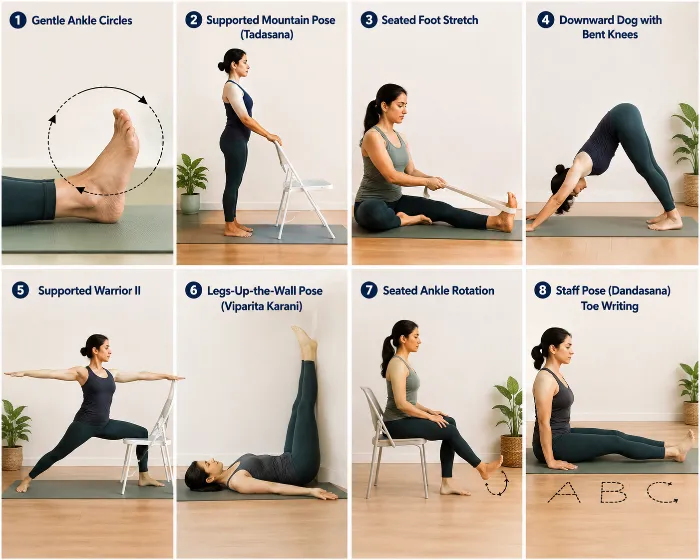
Gentle Ankle Circles
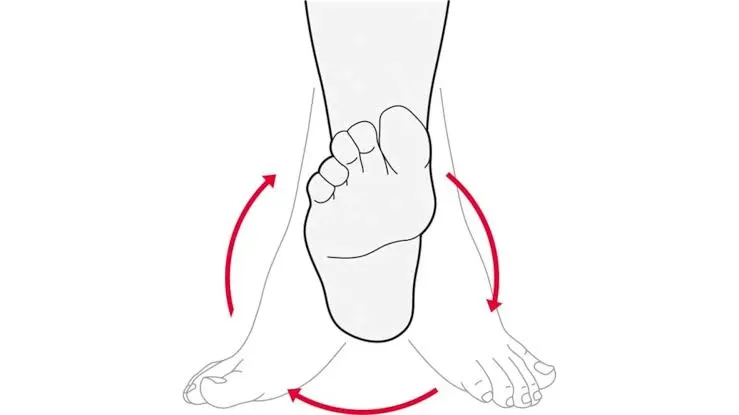
Range of motion is improved by ankle circles. Ankle circles can be performed while sitting or lying down.
- To begin, slowly rotate your ankle in circles to the left and then to the right.
- You could even find it simpler to try using your foot to sketch the letters in the air. Use your big toe to lead.
- Use only your foot and ankle, not your complete leg, and keep your movements small.
- Try performing 10 circles with each foot in each direction. Perform two sets of this exercise on each foot if you’re working on the alphabet. Range of motion is enhanced by ankle circles. Ankle circles can be performed while sitting or lying down.
Benefits:
- Restores mobility
- Improves blood circulation
- Reduces stiffness
Supported Mountain Pose (Tadasana)
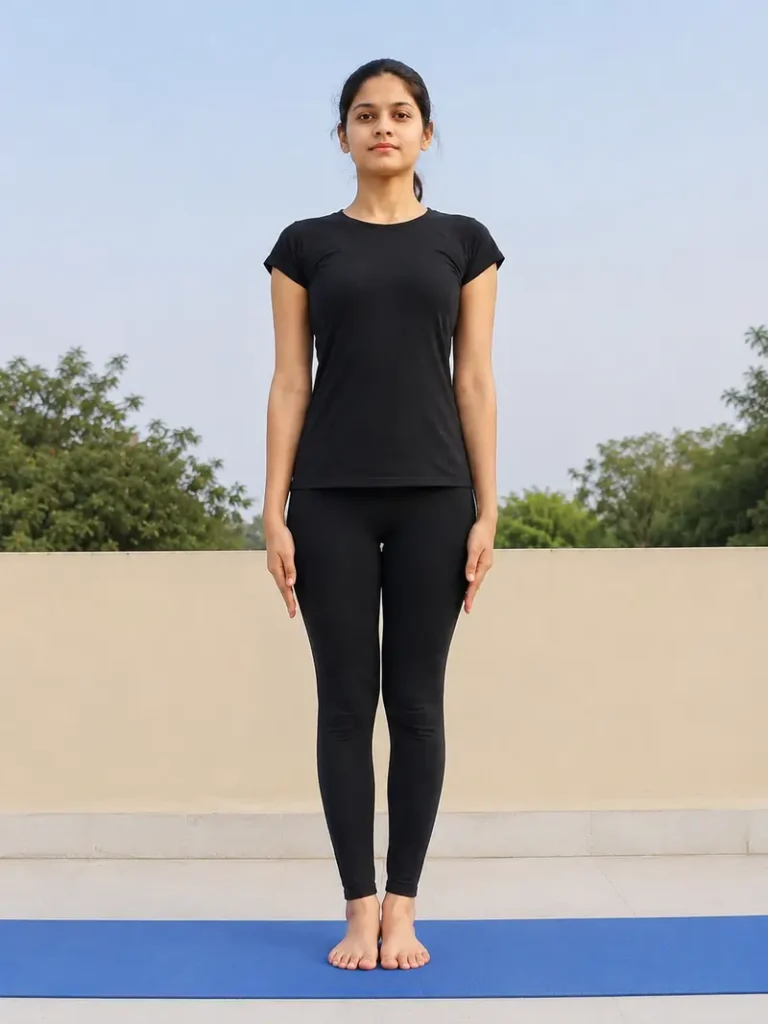
- Place your heels slightly apart and your big toes in contact.
- After lifting and spreading your toes, return them to the mat.
- Make a straight line with your hips, knees, ankles, and shoulders.
- With your palms facing ahead, let your arms drop to your sides.
- Look directly forward. Take a breath.
Benefits: By stacking your shoulders, hips, knees, and ankles, Mountain Pose enhances your posture and body awareness. By reminding you of the sensation of releasing your shoulders away from your ears, it may reduce the negative consequences of extended computer use.
Seated Foot Stretch
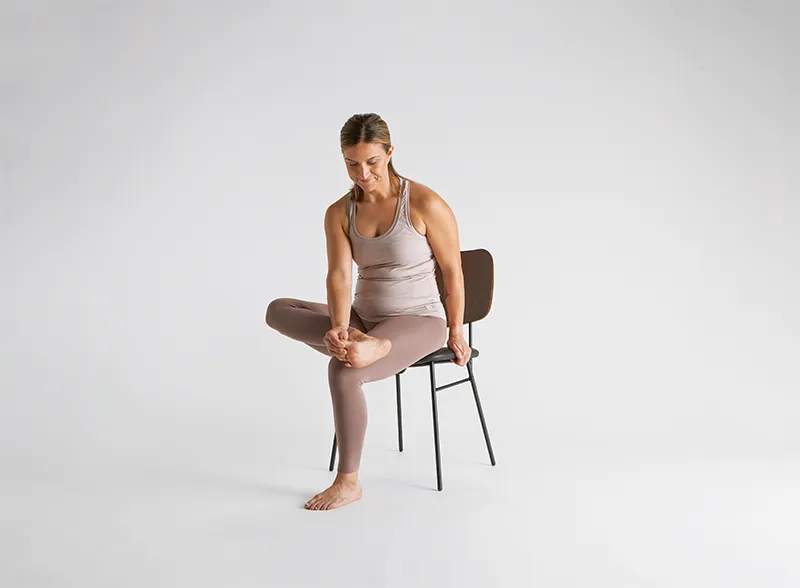
- Sit down on a chair.
- Keep both feet flat on the floor.
- With the heel on the ground, extend one leg forward.
- Pull the toes gently in your direction until the foot and arch start to stretch.
- Hold for 15 to 30 seconds.
- Repeat two to three times on each foot while relaxing.
Benefits:
- Stretches ankle joints
- Relieves tension from stiffness (Joint Stiffness Relief)
- Improves flexibility
Downward Dog with Bent Knees
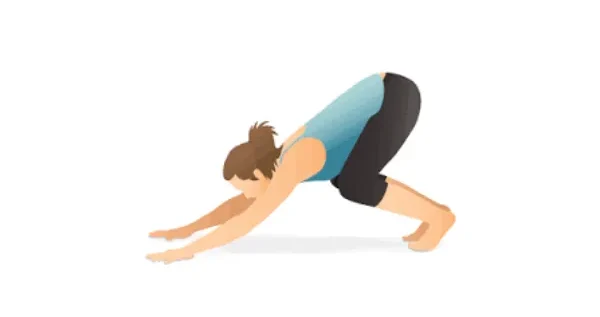
- Begin at the tabletop.
- Return to the downward dog position by raising your hips.
- Your knees should remain slightly bent.
- Lengthen your spine and press your hands into the floor.
- Hold while breathing normally for 20 to 30 seconds.
Benefits: helps reduce stress and moderate depression by calming the brain. Gives the body energy. Stretches the hands, arches, calves, hamstrings, and shoulders. Strengthens the legs and arms.
Supported Warrior II
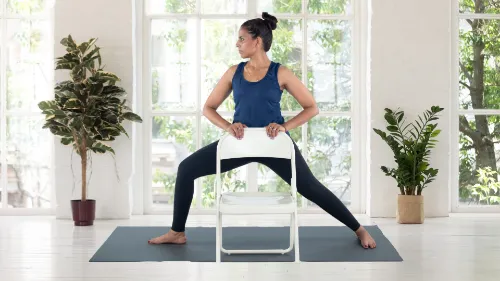
- Place your feet widely apart.
- Bend that knee and turn one foot outward.
- Maintain a straight and planted back leg.
- For balance, use a chair, wall, or other support.
- At shoulder height, extend your arms sideways.
- Keep your chest up and look straight ahead.
- After holding for 20 to 30 seconds, switch sides.
Benefits:
- increases ankle stability
- strengthens the legs
- boosts self-assurance in weight-bearing positions
Legs-Up-the-Wall Pose (Viparita Karani)
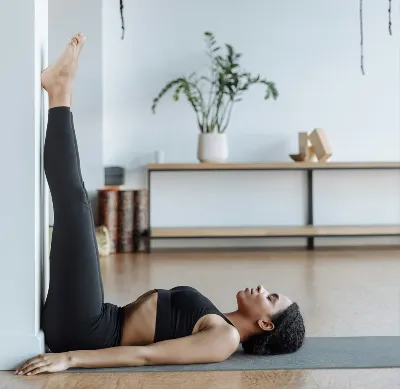
- Place your feet widely apart.
- Bend that knee and turn one foot outward.
- Maintain a straight and planted back leg.
- For balance, use a chair, wall, or other support.
- At shoulder height, extend your arms sideways.
- Keep your chest up and look straight ahead.
- After holding for 20 to 30 seconds, switch sides.
Benefits:
- Releases stress in the ankles and hips
- Encourages the healing of the nervous system by promoting relaxation.
- Promotes mental and emotional recovery. (Emotional Health Yoga)
Seated ankle rotation
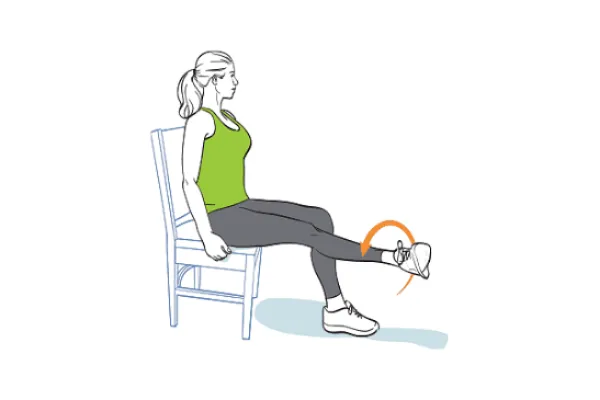
You may perform these easy motions whether sitting in a waiting area, watching TV, or traveling by air. They enhance circulation in the lower body and preserve the range of motion of the ankles.
- Sit down on the floor or in a chair.
- Extend one leg and do five clockwise circles around your ankle.
- Work your ankle’s full range of motion by moving slowly.
- Then flex your foot, pointing your toes away after bringing them closer to your ankle.
- Do this four times.
- After pausing, repeat both motions with the opposite leg.
You may also include these motions in your regular habits. For example, slowly stand on your toes and rock back on your heels while standing at the kitchen sink (grip the counter for more support).
Staff pose (Dandasana) toe writing
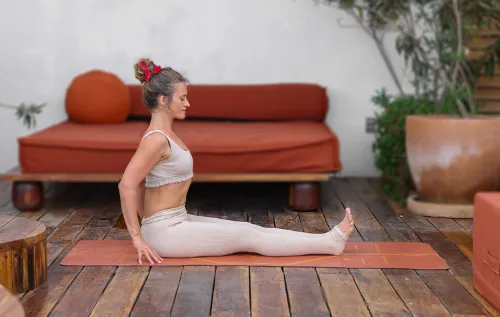
By using your toes to follow your name or signature, you may increase the range of motion in the ankle joint and stretch the muscles around it.
- Stretch one leg forward while sitting.
- If you’re sitting on the floor, you may want to raise your foot and ankle off the ground by placing a pillow or yoga block under your calf.
- Next, visualize signing your name on a document with your big toe.
- Move slowly and deliberately, focusing on how each letter is formed.
- When finished, take a moment to observe how your toes, feet, and ankles feel before switching to the other foot.
Precautions
Before moving on to supported standing, strengthening, and finally unsupported balancing exercises, begin with sitting or lying positions and mild ankle motions. Proprioceptive training and balance are crucial elements of ankle-sprain recovery that may reduce recurring sprains.
When doing standing or balance poses, a wall, chair, yoga block, or other sturdy support may reduce the chance of losing your balance.
Reduce the intensity, length, or quantity of weight-bearing poses if pain or edema significantly worsens or increases after yoga.
Stay away from standing yoga postures and heavy stretching if the ankle is very swollen, bruised, painful, or difficult to bear weight on.
FAQs:
What’s the quickest way to heal a sprained ankle?
Using the R.I.C.E. method (Rest, Ice, Compression, Elevation) for the first 48 to 72 hours, managing pain with over-the-counter anti-inflammatory medications, and starting gentle range-of-motion exercises as soon as pain permits to prevent stiffness and regain strength are the fastest ways to heal a sprained ankle.
How many days should I rest my sprained ankle?
One to two days of complete rest are required for a moderate ankle injury. You may need to reduce weight-bearing and rest the joint for four to two weeks if you have a moderate to severe sprain; however, depending on the severity, it may take one to eight weeks or longer for the joint to fully recover and resume full activity.
Can walking heal a sprained ankle?
Yes, by promoting blood flow and ligament regeneration, early and regulated walking can aid in the healing of a mildly injured ankle. However, if walking causes significant pain, heavy limping, or increased swelling, you must halt and use crutches or rest, since forced movement on a major injury results in irreversible instability.
Can I go to yoga with a sprained ankle?
Yes, you may practice yoga with a sprained ankle, but during the first few days, you must absolutely avoid standing balances, deep stretches that strain the joint, and any weight-bearing postures on that foot. Instead, concentrate on upper-body exercises, sitting, or lying down that don’t put undue strain on the injured ligaments.
How to tell if an ankle sprain is grade 1 or 2?
You may walk with mild pain and stable balance if you have a grade 1 ankle sprain, which is characterized by a modest strain with little to no tearing. A grade 2 sprain is characterized by a significant, partial ligament tear that results in obvious bruising, swelling, and trouble bearing weight on the foot.
References:
- Eunice. (2024, November 21). 4 Yoga poses for strong, resilient ankles. YogaUOnline. https://yogauonline.com/yoga-practice-teaching-tips/yoga-practice-tips/4-yoga-poses-for-strong-resilient-ankles/
- Hertel, J., & Corbett, R. O. (2019). An updated model of chronic ankle instability. Journal of Athletic Training, 54(6), 572–588. https://doi.org/10.4085/1062-6050-344-18
- Peters, R. (1994). The new Warrior class. The US Army War College Quarterly Parameters, 24(1), 29. https://doi.org/10.55540/0031-1723.1713
- Eunice. (2024, November 21). 4 Yoga poses for strong, resilient ankles. YogaUOnline. https://yogauonline.com/yoga-practice-teaching-tips/yoga-practice-tips/4-yoga-poses-for-strong-resilient-ankles/
- Martin, R. L., Davenport, T. E., Fraser, J. J., Sawdon-Bea, J., Carcia, C. R., Carroll, L. A., Kivlan, B. R., & Carreira, D. (2021). Ankle stability and movement coordination impairments: Lateral ankle ligament sprains. Revision 2021. Journal of Orthopaedic and Sports Physical Therapy, 51(4), CPG1–CPG80. https://doi.org/10.2519/jospt.2021.0302
- Gaines, D. (2005). The relative effectiveness and correct sequencing of proprioceptive neuromuscular facilitation techniques (PNFT) and active rocker-board exercises in the rehabilitation of chronic ankle sprains. https://doi.org/10.51415/10321/203