Balance Yoga for Ankle Stability
Introduction
Developing strong, stable ankles is essential for both your daily activities and your yoga practice. Focusing on ankle strength can help you avoid injuries and increase your general stability, whether you’re a beginner in yoga or just trying to get better at balancing.
Your entire yoga practice, from simple standing poses to more complex balancing sequences, may be impacted by weak ankles. The good news is that you may greatly increase the strength and mobility of your ankles with regular, deliberate practice. Although it may appear easy, your body needs strength, concentration, and body awareness to function. I frequently see that yoga poses for balance train each of these systems simultaneously.
The body learns to balance itself more organically when breath, muscles, and attention are in harmony. Many believe that standing on one leg is all that is necessary for balance. In actuality, it also requires mental attention, hip strength, ankle stability, and core control. I’ll go over yoga poses for balance that gradually develop these abilities.
Understanding Ankle Stability
Your ankles are complex joints that support your whole body weight and assist with balance. Tendons, ligaments, and many bones cooperate to form them. All of your movements, both on and off the mat, have a solid basis when these structures are strong and adaptable.
While many yogis concentrate on shoulder mobility or core strength, ankle stability is just as crucial, particularly for preserving balance in standing postures and avoiding injuries.
Key Benefits of Ankle-Strengthening Yoga
- Increased stability and equilibrium
- Improved alignment and posture
- Decreased chance of ankle injuries and sprains
- Improved standing pose performance
- Increased self-assurance in balancing positions
How Your Feet Create Balance and Stability
The distribution of your weight across the bases of your large and little toes, inner and outer heels, and the four corners of your feet is the first step toward stability. The arches and toes can actively promote balance and effective movement when these locations cooperate. In order to maintain alignment and flexibility, the body needs strong, responsive feet to transfer force from the ground upward.
Proprioceptors are specialized sensory receptors present in the joints, muscles, tendons, and fascia that direct this process. Proprioceptors can be compared to the body’s internal guidance system. They assist in coordinating movement, modifying posture, and reacting to change by continuously transmitting and receiving information between the feet and the brain. Your body can remain sensitive, stable, and mobile in daily life because of this connection.
Proprioception is demonstrated, for example, when you abruptly step off a curb, and your foot, ankle, knee, and hip automatically adjust to continue walking smoothly. If, on the other hand, your ankle stiffens, your range of motion is reduced, and you become unsteady, this illustrates how a restricted proprioceptive response can exacerbate instability.
Why Yoga for Balance Works So Well
Being able to stand on one leg without falling is not the only aspect of balance. It combines proprioception (body awareness), strength, and concentration.
The ankles, knees, hips, and core are trained to function as a coordinated system rather than as separate components through balancing yoga poses.
By relaxing the nervous system and generating internal stability, controlled breathing increases steadiness and decreases wobbling. The body follows when the mind stabilizes.
Intensity loses out to consistency. After practicing three to four times a week for two to three weeks, the majority of people report better stability.
Poses that previously appeared impossible begin to feel possible by weeks 6–8. The key is to show up frequently and allow the body to adjust, not to be perfect in every session.
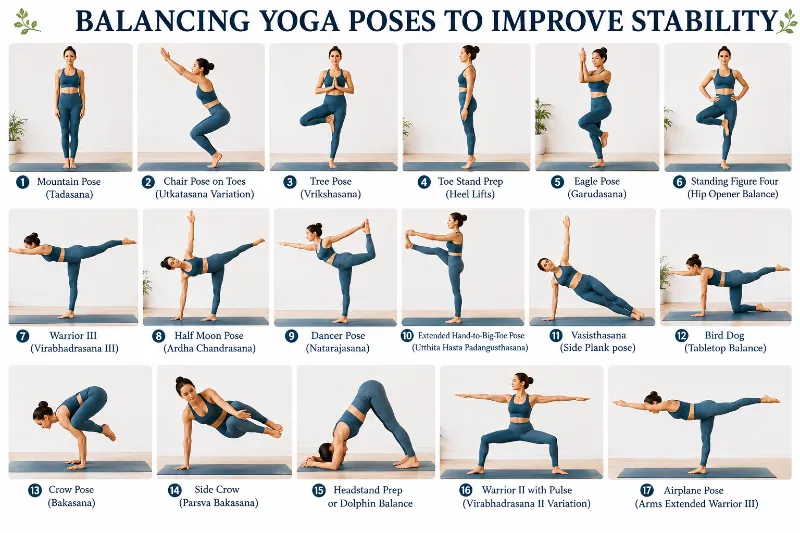
Balancing Yoga Poses to Improve Ankle Stability
These poses develop each system your body uses to remain upright and centered, progressing from basic tasks to more difficult demands.
Mountain Pose (Tadasana)
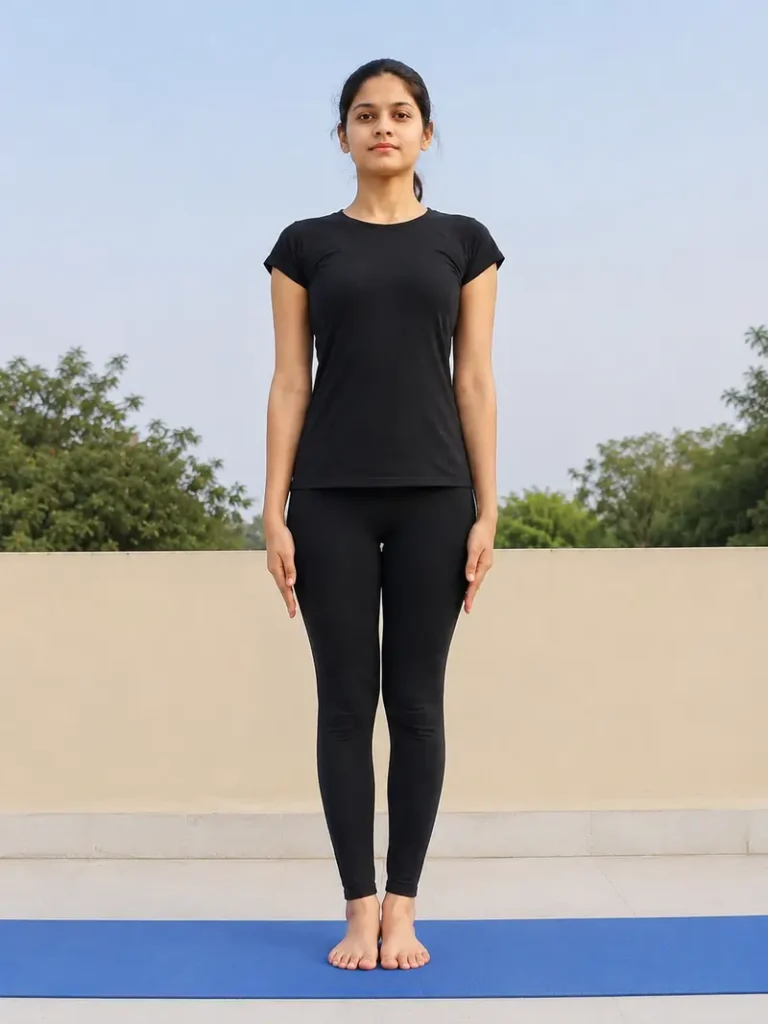
Although it may appear to be only standing, mountain posture serves as the foundation for all balance poses. It teaches you to straighten the spine and softly engage the core while distributing weight evenly through the feet.
- With your arms by your sides and your feet hip-width apart, take a tall position.
- Press evenly through the heel, big toe mound, and tiny toe mound while spreading your toes.
- Keep the knees relaxed and gently engage the thighs.
- Lengthen the spine upward and draw the ribs somewhat inward.
- Breathe softly and maintain a steady focus.
Chair Pose on Toes (Utkatasana Variation)
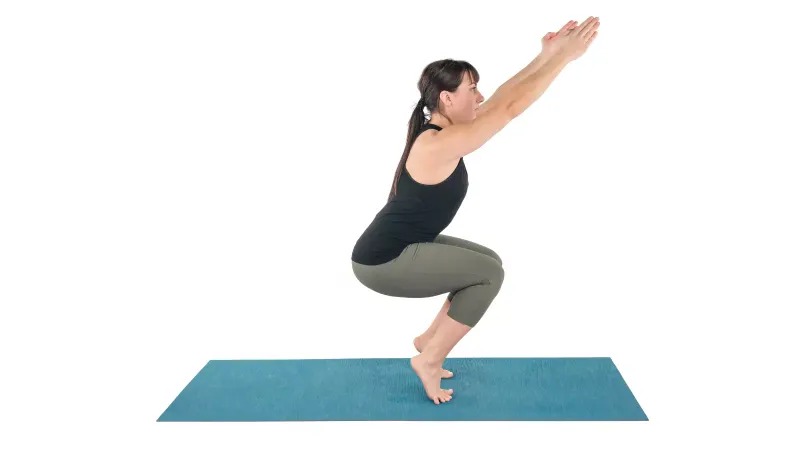
The chair position is significantly more challenging when the heels are raised. Your ankles and calves stabilize the body, and your core manages the shifting center of gravity.
- Bend your knees into Chair Pose while standing with your feet hip-width apart.
- Maintain an elevated chest while extending your arms overhead or forward.
- Lift both heels slowly until you are balancing on the balls of your feet.
- Maintain a uniform weight distribution through the front of your feet while using your core.
- Hold while maintaining a steady focus for a few breaths.
Tree Pose (Vrikshasana)
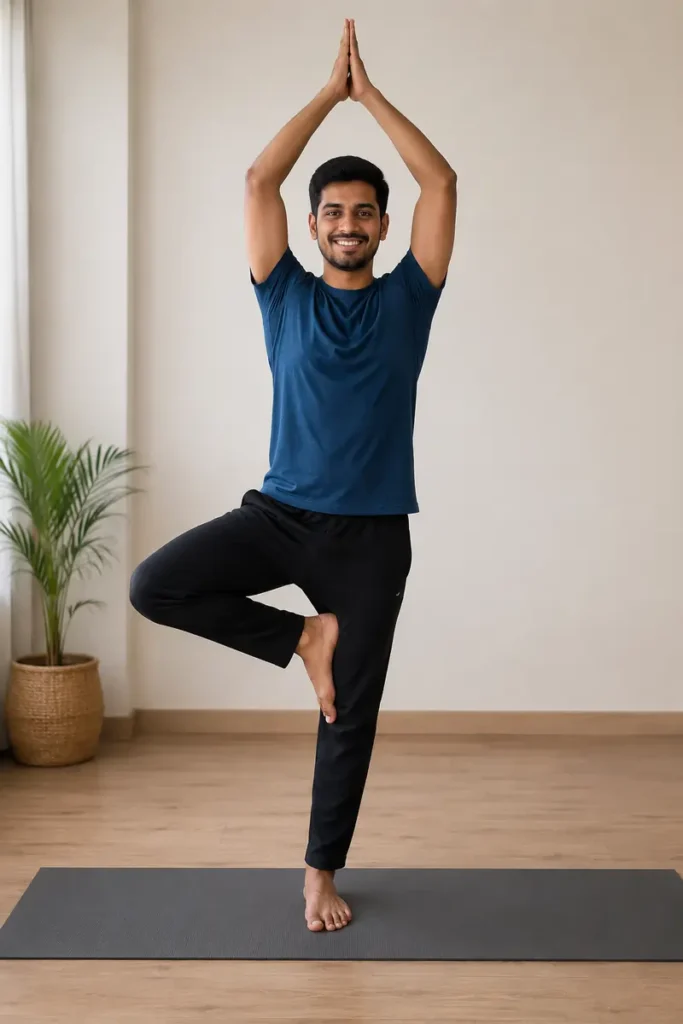
For many people, tree pose is their first attempt at single-leg balance. As the body learns to remain still, it teaches concentration, strengthens the standing leg, and improves hip stability.
- Take a high position and move your weight to one foot.
- Put the other foot’s sole on the inner thigh, calf, or ankle.
- For stability, gently press the standing leg and the foot together.
- Raise your hands over your head or bring them together at the chest.
- Breathe slowly while keeping your eyes fixed on a solid place.
Toe Stand Prep (Heel Lifts)
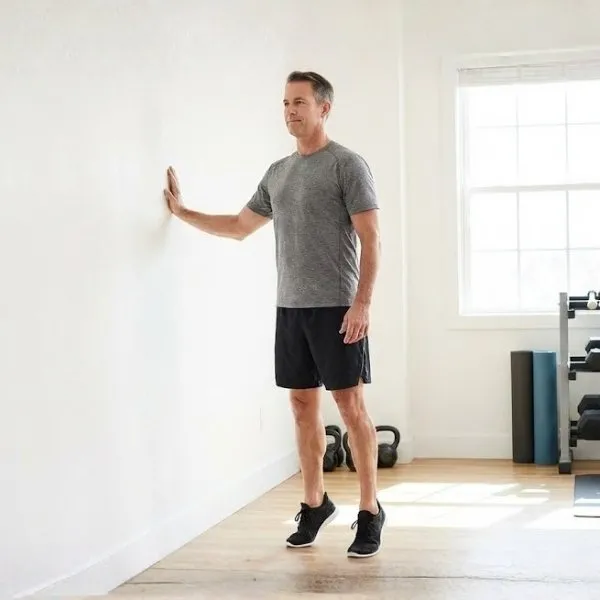
The little muscles in your foot that help stop ankle rolling are strengthened via heel raises. This easy exercise creates a little but powerful balance challenge while improving arch support and body awareness.
- Spread your toes and apply equal pressure through both feet while standing with your feet hip-width apart and your arms relaxed at your sides.
- Lift one heel slowly while maintaining the ball of the foot on the floor, keeping your weight centered and your core softly engaged.
- Lower the heel slowly and repeat on the other side.
Garudasana (Eagle Pose)
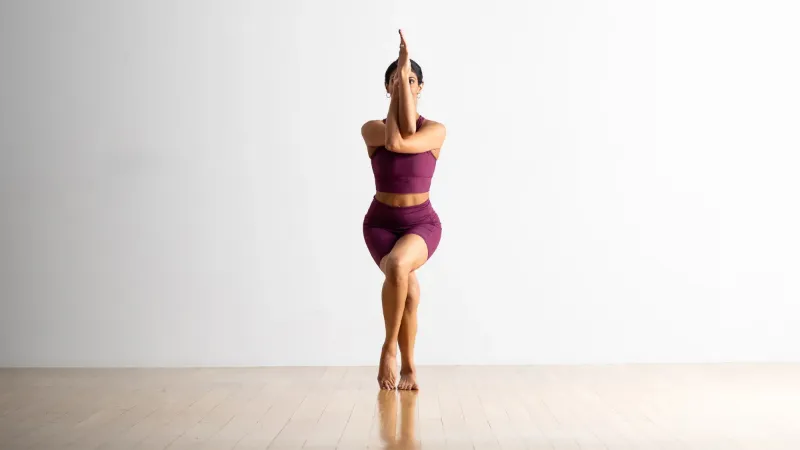
The eagle pose is a powerful test of focus and coordination that involves balancing on one foot while wrapping the arms and legs together. The body is stabilized, and the hips are strengthened by the squeeze through the limbs.
- Take a high position and move your weight to one leg.
- To get ready for balance, slightly bend the standing knee.
- If at all possible, hook the foot behind the calf and cross the opposing thigh over the standing leg.
- Cross one elbow across the other as you extend your arms forward.
- With the shoulders relaxed, bring the palms together.
- Hold steady breaths while sitting a little deeper into the standing leg.
Standing Figure Four (Hip Opener Balance)
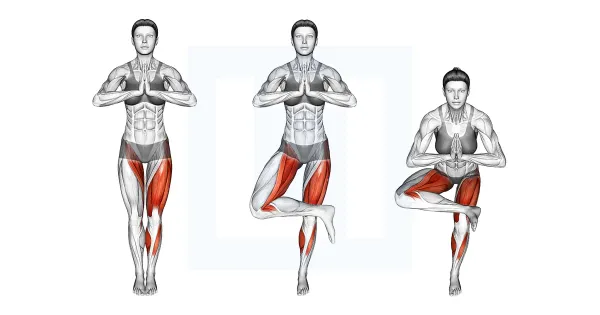
A hip-opening stretch and single-leg balancing are combined in standing figure four. The crossing leg helps reduce stiffness from prolonged sitting by stretching the hips and glutes, while the standing leg builds strength.
- Put your weight on one foot while standing straight.
- Raise the other leg and position the ankle over the standing knee.
- To protect the knee joint, flex the elevated foot.
- Like a shallow squat, sit the hips back a little.
- Maintain a neutral spine and an elevated chest.
- Breathe steadily and slowly while maintaining equilibrium.
Virabhadrasana III (Warrior III)
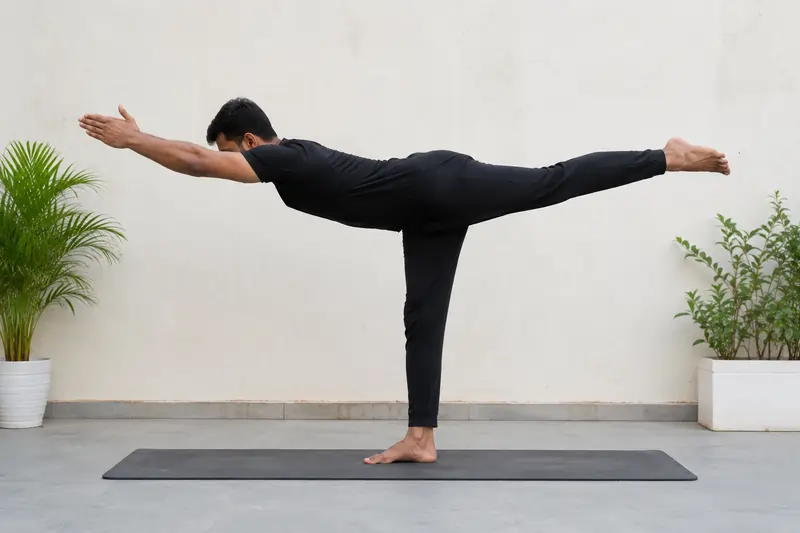
Warrior III improves balance and strength. The hamstrings, core, and ankles are trained to stabilize the body in a long, steady line by hinging forward while balancing on one leg.
- Take a tall step and move your weight to one foot.
- Lift the other leg behind you and slowly hinge forward from the hips.
- Maintain the standing leg slightly bent and the hips toward the floor.
- You can either maintain your arms at your sides or extend them forward.
- Maintain the posture while keeping your eyes steady.
Ardha Chandrasana (Half Moon Pose)
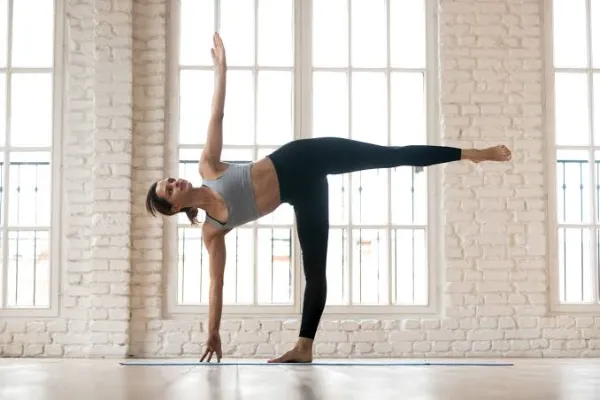
The half moon pose opens the body sideways and tests balance. While the raised leg strengthens the hips and improves control via the core, the standing leg stabilizes the body.
- Place your weight on one leg while you are standing.
- Slightly forward of the standing foot, place one hand on the ground or a block.
- Raise the back leg till it is level with the ground.
- Open your chest and raise your upper arm.
- As you breathe steadily, keep your eyes forward or upward.
Natarajasana (Dancer Pose)
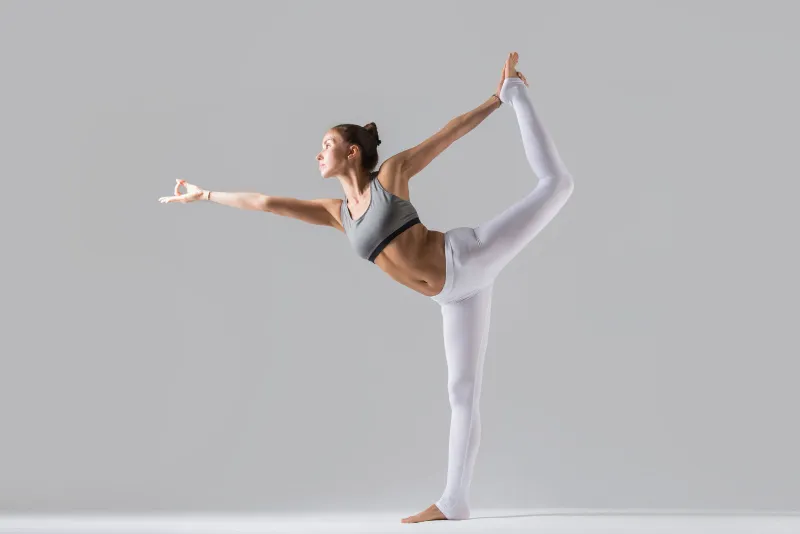
Balance and a soft backbend are combined in dancer pose. While the standing leg tries to stabilize the overall posture, reaching back to hold the raised foot expands the hips and chest.
- Take a high stand and move your weight to one foot.
- Reach back to grasp the inside of the foot or ankle while bending the opposing knee.
- Leaning the body slightly forward, start raising the foot.
- For balance, extend the free arm forward.
- Avoid falling into your lower back and maintain an elevated chest.
- Keep your breathing regular and slow.
Utthita Hasta Padangusthasana (Extended Hand-to-Big-Toe Pose)
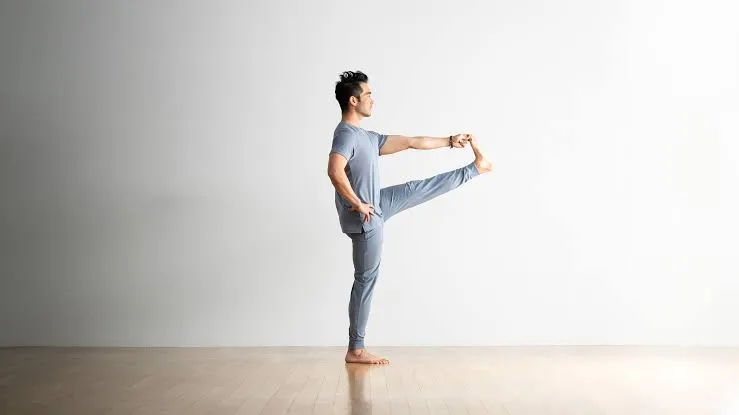
The extended hand-to-big-toe position involves elevating one leg forward while testing slow, controlled balance. While the raised leg tests hip strength and hamstring flexibility, the standing leg stabilizes.
- Take a tall position and put all of your weight on one foot.
- Bring the opposing knee up to your chest.
- Use your fingers to grasp the big toe or wrap a strap around the foot.
- Maintaining an erect posture, slowly stretch the leg forward.
- Maintain an open chest and a firm standing leg.
- Breathe slowly while keeping your eyes fixed on a firm place.
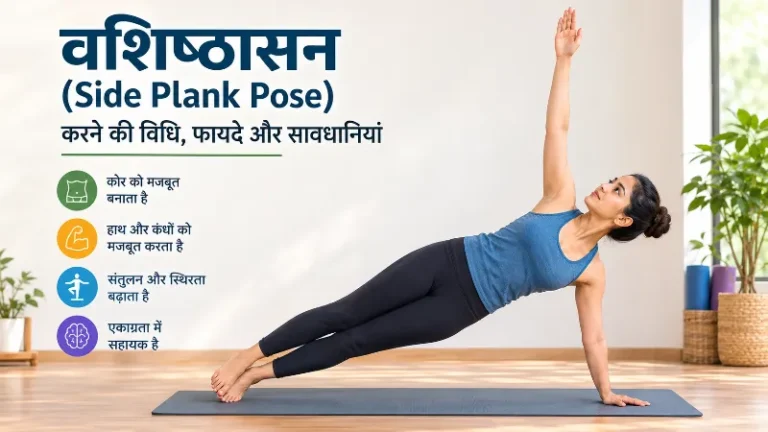
Vasisthasana (side plank pose)
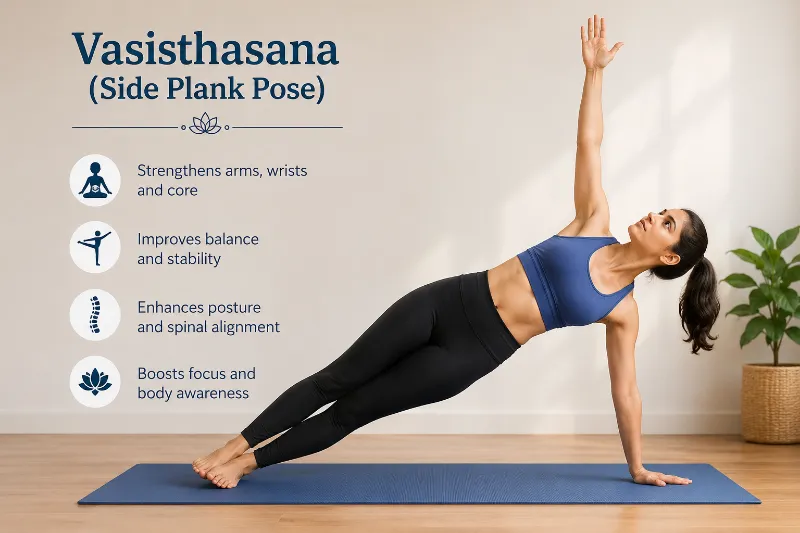
Balance is transferred to the arm and lateral core muscles during a side plank. Holding the body sideways improves stability for standing balance poses and strengthens the hips, shoulders, and obliques.
- Start with your shoulders stacked over your wrists in a plank position.
- Rotate onto the outside of that foot after shifting your weight into one hand.
- Place the upper foot on top of the lower foot.
- Raise the upper arm to the ceiling.
- Raise your hips till your body is in a straight line.
- Hold steady breaths and maintain an active core.
Bird Dog (Tabletop Balance)
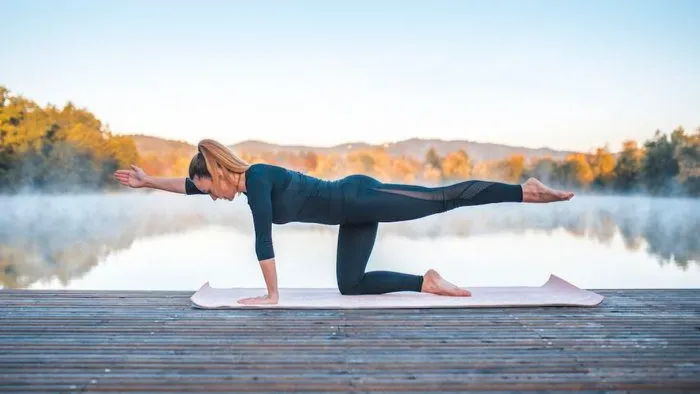
By extending the opposing arm and leg while maintaining body stability, bird dogs improve balance and coordination. The pose teaches the body to resist twisting and strengthens the core.
- Begin on your hands and knees, placing your knees under your hips and your wrists beneath your shoulders.
- To maintain a neutral spine, softly engage your core.
- Straighten one leg behind you.
- At shoulder height, extend the opposing arm forward.
- Make sure your shoulders and hips are level with the ground.
- Hold for a short period, then come back and change sides.
Bakasana (Crow Pose)
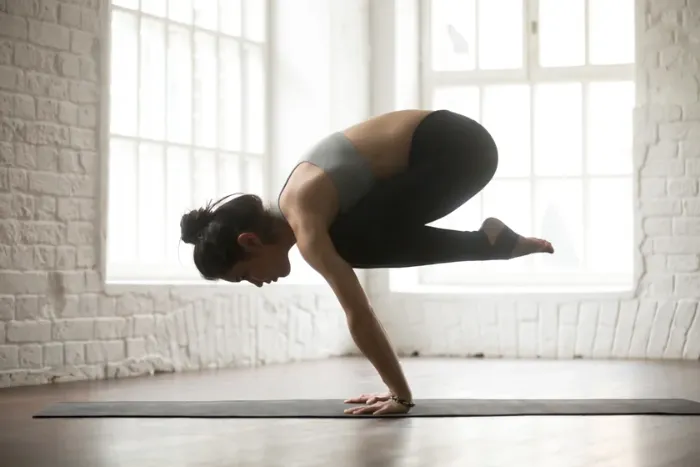
By moving your body weight forward onto your hands, the crow position teaches arm balancing. It teaches balancing confidence and controlled weight transfer while strengthening the wrists, shoulders, and core.
- Start with your feet close together in a low squat.
- Spread your palms shoulder-width apart on the ground.
- Bring your knees onto your upper arms and slightly bend your elbows.
- To transfer weight to your hands, carefully lean your torso forward.
- Raise one foot off the ground, followed by the other.
- Look slightly ahead and engage your core.
Parsva Bakasana(Side Crow)
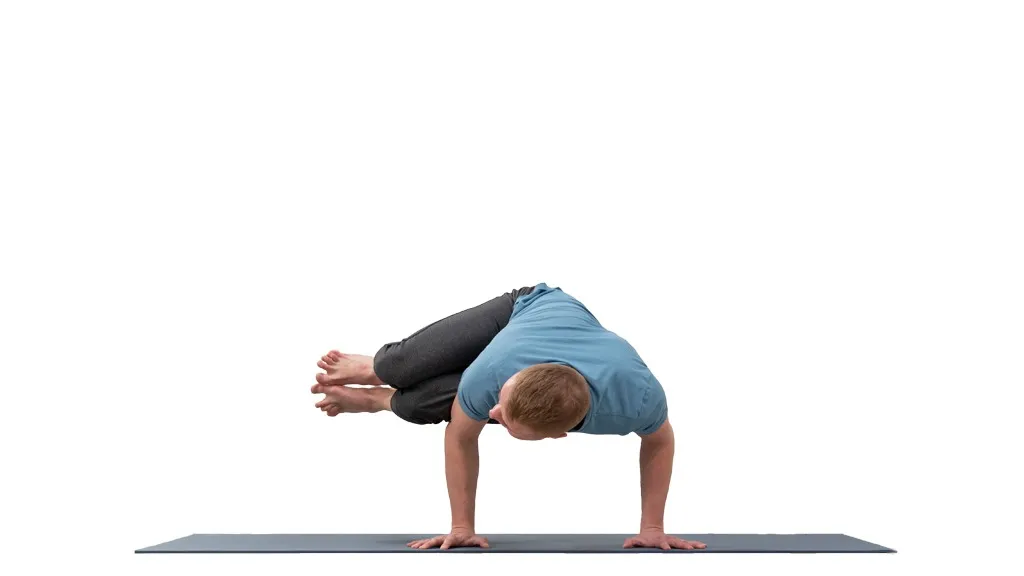
By turning the torso while both legs are resting on one arm, side crow adds rotation to the arm balance. This variation challenges balance through controlled rotation while strengthening the shoulders and core.
- Put your feet together and begin in a squat.
- Bring both knees toward one arm while twisting your torso to one side.
- Firmly place your palms shoulder-width apart on the ground.
- Lean forward and slightly bend your elbows.
- Lift your feet off the ground by shifting your weight into your hands.
- Maintain your balance while keeping your core active.
Headstand Prep or Dolphin Balance
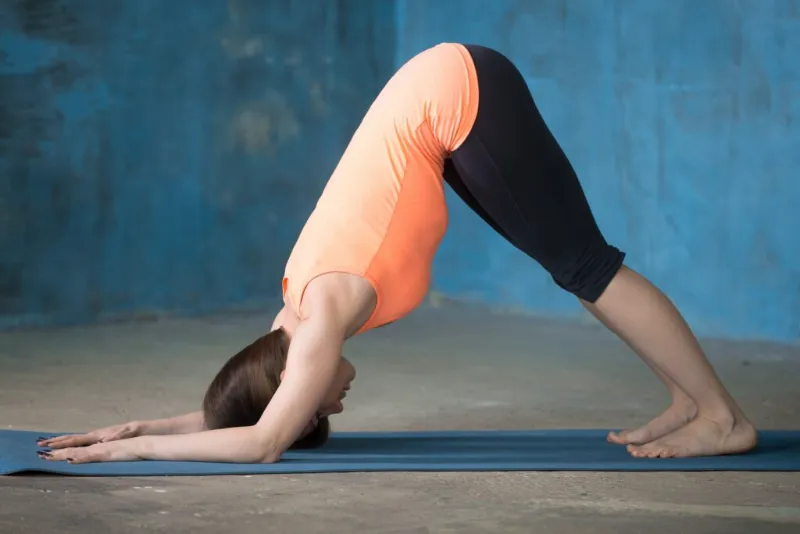
Preparing for headstand poses increases balance awareness and strength for inversions. The pose trains the body to stabilize in an upside-down position while strengthening the shoulders and core.
- Start with your forearms shoulder-width apart on the ground.
- Press your forearms firmly onto the mat while interlacing your fingers.
- Raise your hips so that you resemble a dolphin.
- Bring your feet a little bit closer to your elbows.
- Keeping the majority of your weight in your arms, carefully raise one leg.
- As you hold the position, keep your breathing constant.
Virabhadrasana II Variation (Warrior II with Pulse)
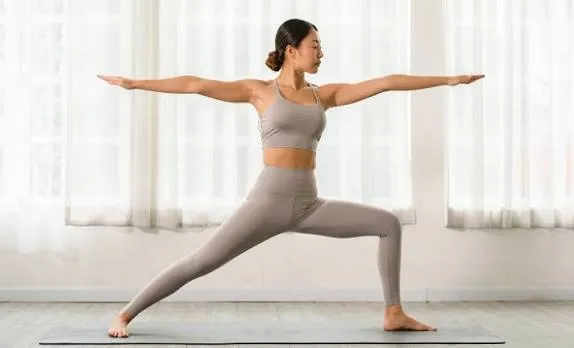
Warrior II’s powerful standing position becomes a shifting balance issue when a pulse is added. The hips, knees, and core are trained to stabilize during movement with this little up-and-down motion.
- Put one foot forward and spread your feet widely.
- To make the front knee stack over the ankle, bend it.
- Raise both arms to shoulder height.
- Rise a few inches after lowering the hips a little further.
- Maintain tiny pulses while maintaining an erect chest position.
- Maintain a constant look at the front hand.
Arms Extended Warrior III (Airplane Pose)
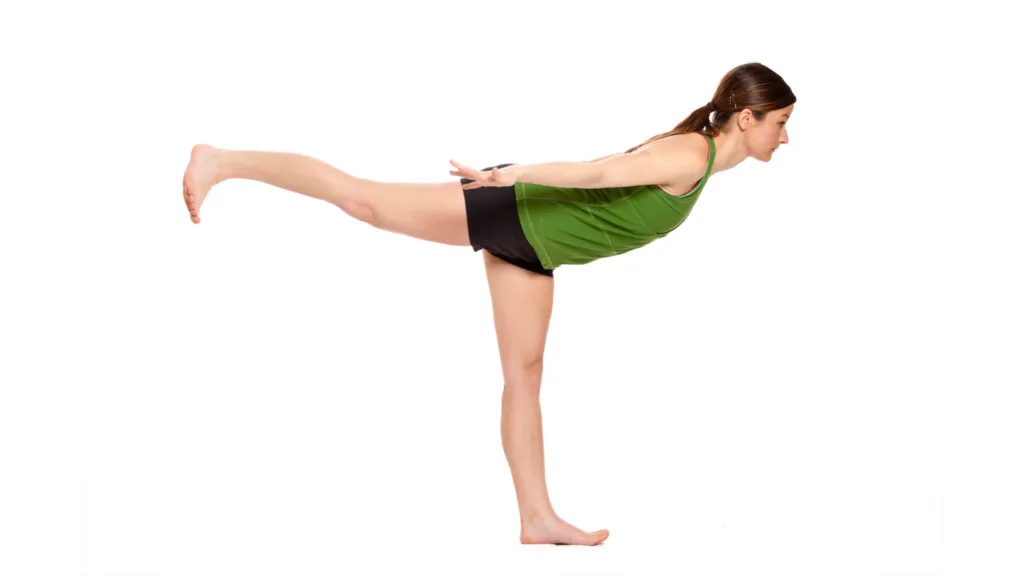
The arms spread out to the sides like wings in airplane posture, a version of Warrior III that alters the center of gravity and puts greater stress on the hips and core.
- Start Warrior III with the body tilted forward.
- Raise the back leg till it is in line with the hips.
- Stretch both arms shoulder-high out to the sides.
- The hips should remain facing the ground.
- To stop rotation, activate your core.
- Maintain the posture while keeping your eyes stable.
How to Improve Your Yoga Pose Balancing
Balance is about teaching your body to recover swiftly and find steadiness via regular, conscious practice, not about never giving up.
Why it matters and where to look: With a stable, gentle look, pick a fixed spot at eye level. Your vestibular system is disrupted when you look down or around because your eyes send stability signals, which can lead to imbalance.
Transitions should be slowed down because most instability occurs in between poses rather than throughout. While hurrying generates speed and hides weak stabilizers, moving slowly from standing to balancing engages muscles. Before performing any balance poses, inhale deeply three times.
Essential cues that are beneficial: Without holding your breath, draw your ribcage toward your hips. Imagine a “zipper up” from the sternum to the pubic bone. Everything above and below is stabilized by an active core.
Walls, chairs, and blocks provide you with feedback as you gain strength, so using props and support isn’t cheating. Make good use of them. As stability gradually improves over several weeks, gently remove the support.
Precautions:
- To lower their chance of falling, beginners should practice balancing postures close to a wall, chair, or other firm support.
- Avoid single-leg balancing poses until the proper rehabilitation has started if the ankle is severely injured, swollen, bruised, or hurts when bearing weight.
- Before moving on to unsupported single-leg postures like Vrikshasana (Tree Pose) or Garudasana (Eagle Pose), start with two-legged standing poses and supported balancing exercises.
- Before more difficult balance exercises, the ankle and lower limb can be prepared with gentle ankle motions, calf mobility, and simple standing positions.
FAQs:
How do I stabilize my ankle?
Use external support, such as a lace-up brace or compression sleeve, to quickly stabilize your ankle; tape the joint with athletic or kinesiology tape; and engage in regular strengthening and balancing activities to create long-term joint support.
Is walking good for ankle strengthening?
Walking strengthens the lower leg muscles, such as the calves, to promote joint stability and improve basal ankle mobility, circulation, and endurance. Regular flat-surface walking, however, offers little resistance and may not be sufficient to considerably increase strength or prevent sprains in extremely weak or previously injured ankles.
Can ankle instability be fixed?
It is possible to correct ankle instability. Most people get better without surgery by strengthening their muscles and improving their balance through physical therapy. In order to heal or tighten the injured ligaments, surgeons may perform surgery if the joint is still loose or continues to roll.
How often should you do balance yoga?
To safely develop ankle strength, core stability, and mind-body focus, you should do balance yoga two or three times a week for 15 to 20 minutes each time.
What are the signs of weak ankles?
Causes, Signs, and Treatment of Chronic Ankle Instability: Chronic pain, poor single-leg balance, and frequent rolling or “giving way” are indicators of weak ankles. This disorder, which is frequently associated with chronic ankle instability, indicates that the supporting ligaments and muscles are not strong enough or stable enough.
What not to do after yoga?
Don’t miss Savasana, drink ice-cold water, consume greasy or heavy foods, take a hot shower right away, or start doing strong, high-impact exercises right away. Giving your body 20 to 30 minutes to adjust helps maintain a calm nervous system and lock in flexibility.
References:
- Chen, K., Tseng, W., Ting, L., & Huang, G. (2007). Development and evaluation of a yoga exercise program for older adults. Journal of Advanced Nursing, 57(4), 432–441. https://doi.org/10.1111/j.1365-2648.2007.04115.x
- Alfieri. (2010b). Functional mobility and balance in community-dwelling elderly: multisensory versus strength exercises. Clinical Interventions in Aging, 5, 181. https://doi.org/10.2147/cia.s10223
- Konecki, K. (2015). Is the Body the Temple of the Soul? Modern Yoga Practice as a Psychosocial Phenomenon. In Wydawnictwo Uniwersytetu Łódzkiego eBooks. https://doi.org/10.18778/7969-819-6