10 Best Yoga for Parkinson’s Disease
Introduction
Parkinson’s Disease is a long-term, gradually worsening disorder that affects the nervous system. It happens when the brain’s cells that produce dopamine begin to break down, leading to a shortage of this important chemical, which helps control movement and emotions.
Parkinson’s can happen to anyone, but it most commonly affects people who are 60 years old or older. This ongoing condition can make it harder for individuals to live independently, raise the chance of falling, and may result in social withdrawal. For people with Parkinson’s, engaging in physical activity, particularly yoga, can help ease their symptoms and enhance their overall quality of life.
How Does Yoga Help Manage Parkinson’s Disease
Yoga is a practice that emphasizes the connection between the body, mind, and spirit. It includes physical postures, breathing exercises, and meditation to enhance overall health and well-being. Studies have found that yoga can help alleviate symptoms of Parkinson’s disease, such as tremors, stiffness, slow movement, poor balance, and changes in speech. A recent study showed that practicing yoga two times a week for 12 weeks can help strengthen muscles and greatly improve movement, balance, and flexibility in individuals with Parkinson’s.
Yoga also involves relaxation methods like meditation and deep breathing, which can reduce stress and anxiety that often come with Parkinson’s. By helping to reconnect the mind and body, yoga can enhance control over movement and improve coordination.
If you have Parkinson’s disease, you might discover that practicing yoga offers more than just relaxation — it can also help you better understand your body and what it can do.
For instance, some yoga poses focus on specific muscles, which could assist in managing tremors.
You may also incorporate your yoga practice to enhance your movement, flexibility, and strength.
Continue reading to find out how these poses can contribute to enhancing your overall quality of life. Remember that both you and your practice are subject to change every day. Letting go of fixed expectations can help you stay focused on the present moment.
Yoga Poses for Parkinson’s Disease
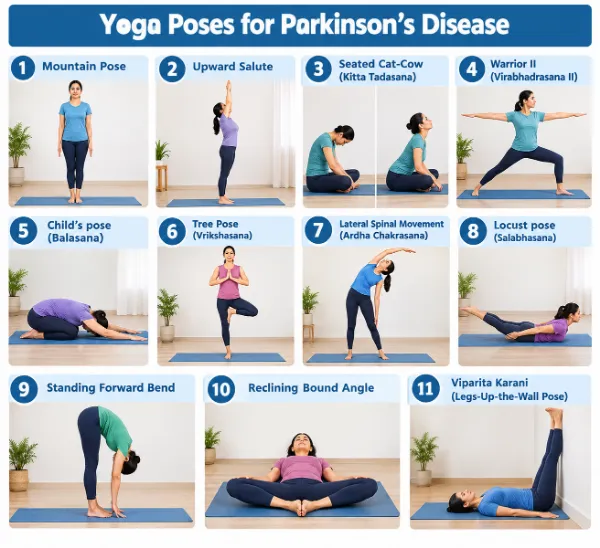
Tadasana (Mountain Pose)
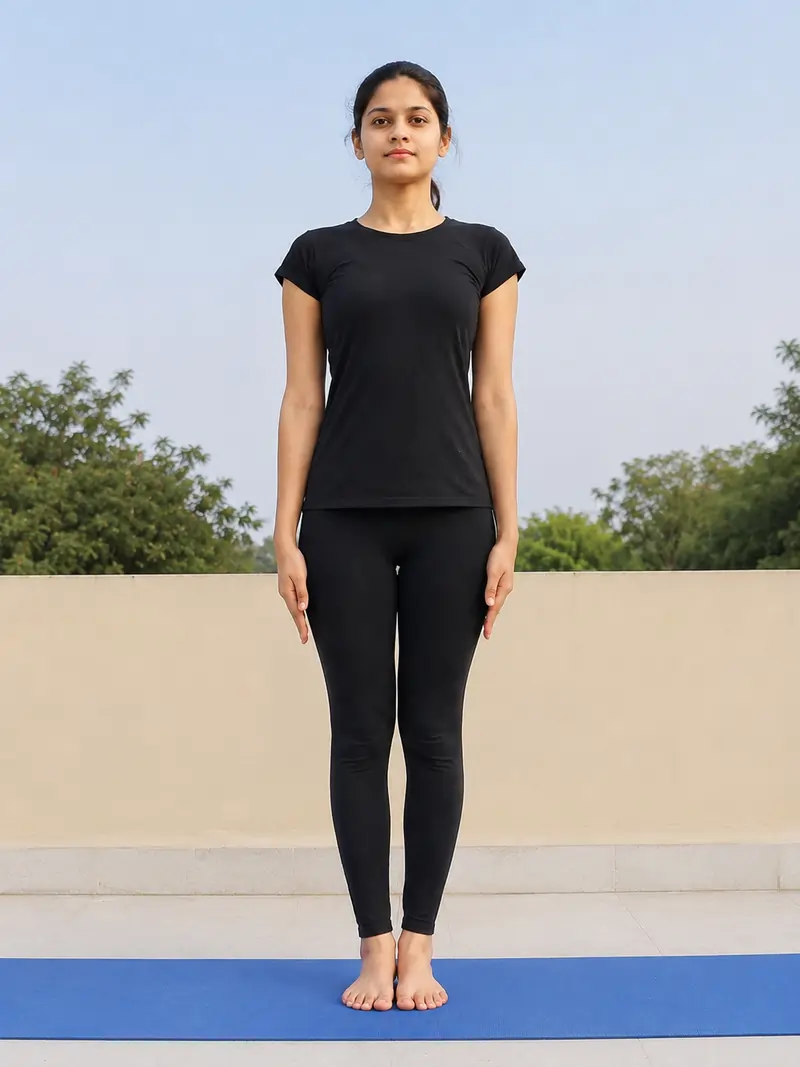
This standing position can help enhance balance and posture. It helps to strengthen the thighs, knees, and ankles and might also offer relief from sciatic pain.
Muscles Worked:
- Quadriceps
- Obliques
- Rectus Abdominis
- Transversus Abdominis
Steps:
- Stand with your larger toes touching and your heels slightly separated. Allow your arms to drape naturally at your sides, with your palms facing forward.
- Position your feet and arms so that you can maintain your balance easily.
- Engage your thigh muscles and gently bend your knees.
- Keep your posture upright — this slight bend activates your thigh muscles and prevents your knees from locking.
- Imagine a line of energy flowing from your ankles up through the top of your head.
- Relax your shoulders and open your heart area.
- You can remain still or shift your weight forward, backward, or side to side.
- Hold this position for up to one minute.
Urdhva Hastasana (Upward Salute)
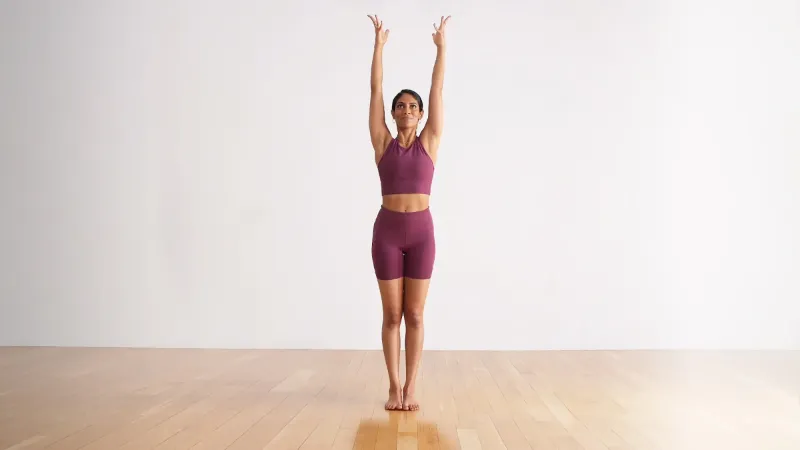
Another standing position that might assist with balance and posture is this one. It may ease back pain by stretching the armpits and shoulders.
Muscles Worked:
Rectus and transversus abdominis, obliques, biceps, and anterior serratus.
Steps:
- Raise your arms over your head from Mountain Pose.
- Raise your arms over your shoulders.
- Bring your palms together to form the above prayer posture if your flexibility permits.
- As you raise your fingers toward the ceiling, allow your shoulders to relax downward.
- A sense of energy should be experienced as it moves from your ankles, up along your spine, and out through the top of your head.
- The back of your neck should be relaxed. If you feel comfortable doing so, look up at your thumbs.
- As you tuck your tailbone under, lengthen your spine.
- For up to a minute, breathe deeply while in this position.
Upavistha Bitilasana-Marjaryasana (Seated Cat-Cow)
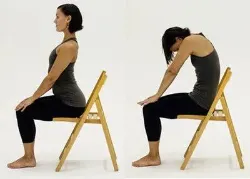
This position aids in enhancing the flexibility of the spine and the strength of the core muscles, which in turn contributes to improved balance and more efficient movement.
- First, take a comfortable position and ensure your back is straight while keeping your feet flat on the floor.
- Place your hands on your knees.
- As you breathe in, curve your spine upward and raise your chest, pulling your shoulder blades together.
- This is known as the cow pose.
- As you exhale, softly curve your spine and bring your chin down toward your chest, making sure to keep your shoulder blades wide apart.
- This is called the cat pose.
- Continue this sequence for 10 to 15 repetitions, moving smoothly from one pose to the other.
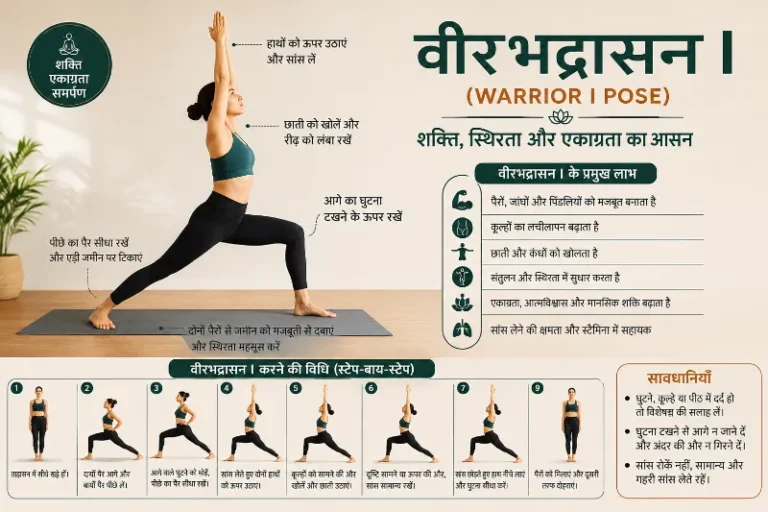
Virabhadrasana II (Warrior II)
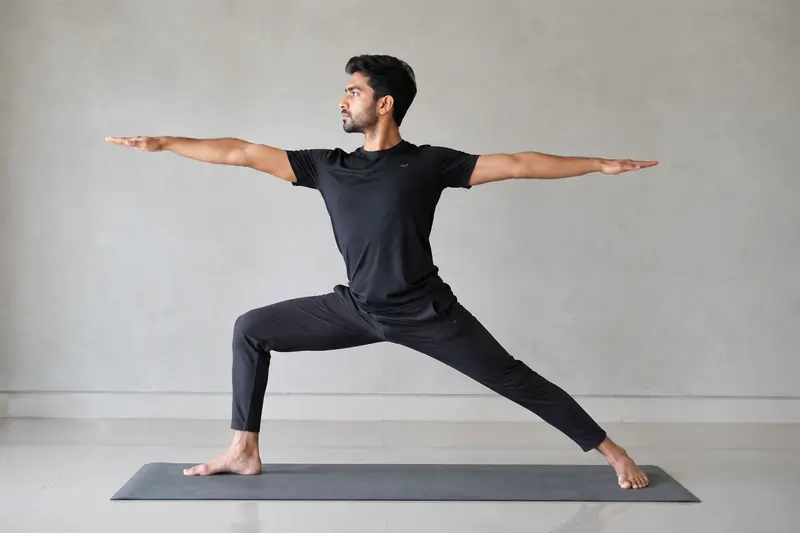
This exercise helps build strength in the legs, hips, shoulders, and chest, which can enhance flexibility and overall movement.
Muscles Worked:
Deltoids, quadriceps, thigh adductors, gluteus medius, rectus, and transversus abdominis
Steps:
- Step your left foot back from Mountain Pose so that your toes are slightly angled outward.
- Your right foot should remain looking forward.
- With your hands palms down, lift your arms until they are level with the ground.
- Bend your right knee forward slowly.
- Ensure that your knee stays below your ankle.
- Press both feet firmly into the ground as you stretch your spine and channel your energy through your front and back fingers.
- Look over your front fingers.
- For up to 30 seconds, hold this position.
- On the other side, repeat.
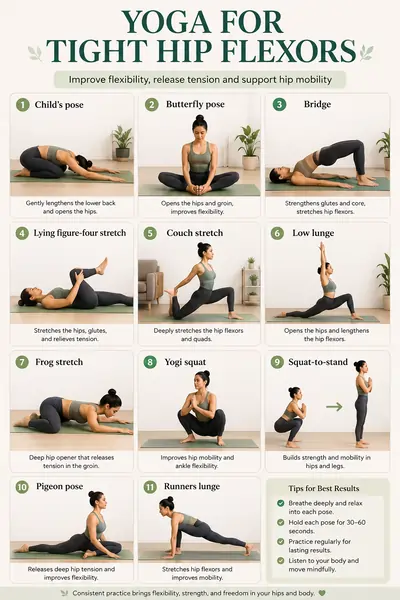
Balasana (Child’s Pose)
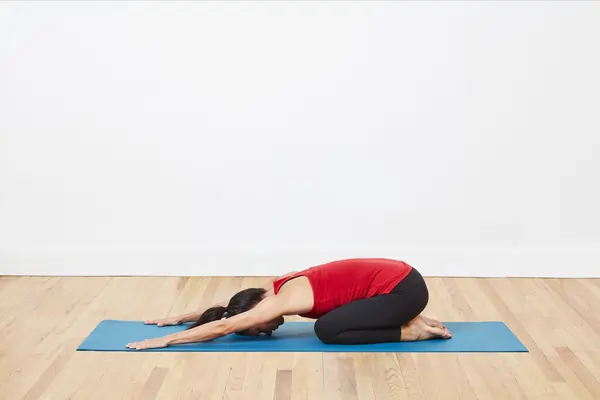
This pose is commonly used to promote relaxation and help decrease stress and tension throughout the body. It also assists in stretching the spine, hips, and thighs, which can enhance flexibility and movement.
Muscles Worked:
Hamstrings, tibialis anterior, trapezius, and spinal extensors
Steps:
- Sit back on your heels.
- Keep your knees either together or slightly apart.
- For support, you could place a pillow under your buttocks.
- Walk with your hands forward in front of you while bending at the hips.
- You have the option to keep your arms extended in front of your body or to position them nearer to your torso.
- Put your forehead down on the ground.
- Breathe in slowly and allow your chest to lower towards your knees.
- Take note of any stress you may be harboring in your body and concentrate on letting it go.
- Spend up to five minutes relaxing in this pose.
Vrikshasana (Tree pose)
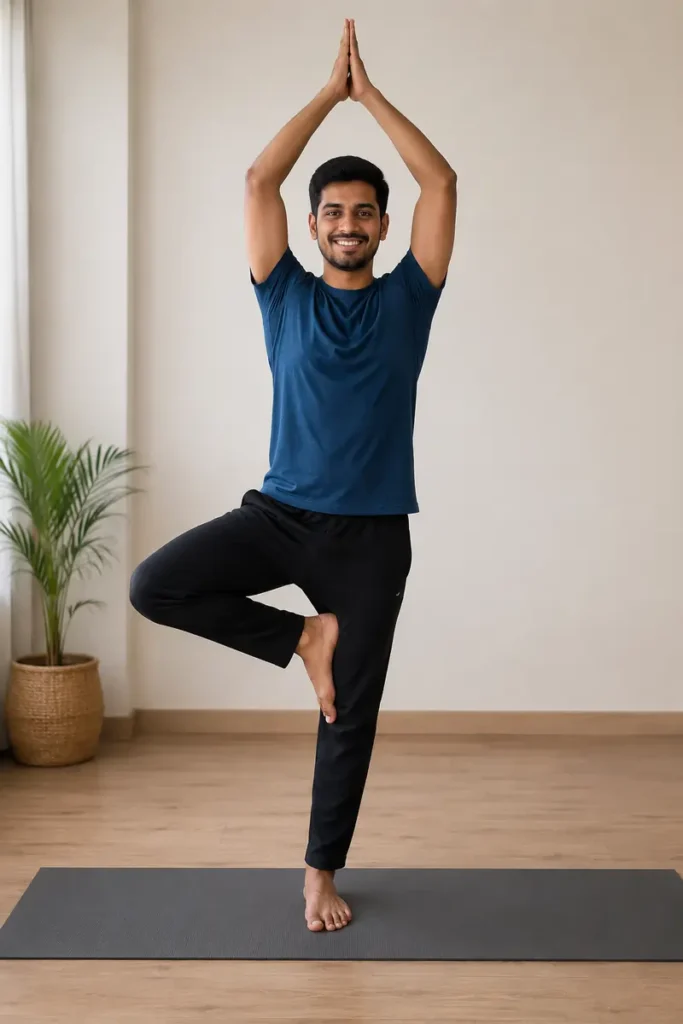
This pose helps improve leg and core strength, which in turn enhances overall balance and stability.
Muscles Worked:
Rectus and transversus abdominis, adductor longus, quadriceps, iliopsoas, and hamstrings
Steps:
- For support and balance, stand close to a chair or wall.
- Put some of your weight on your left foot.
- Place your right foot on your right thigh, calf, or ankle.
- Keep your foot away from your knee.
- Raise your arms upward, bring them down to your hips, or position them in a prayer-like position in front of your chest.
- For additional balance, feel free to raise your hands to your support.
- Keep your focus on a particular point on the ground directly in front of you.
- Hold this position.
- Then Relax.
- On the other side, repeat.
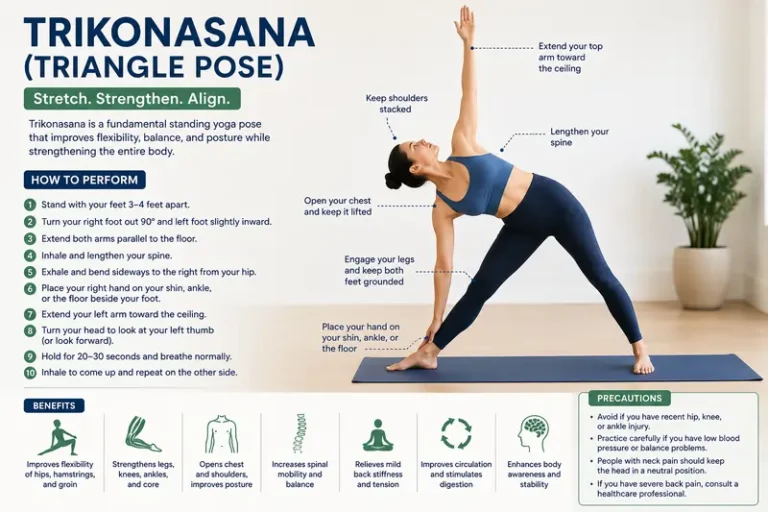
Ardha Chakrasana (Lateral Spinal Movement)
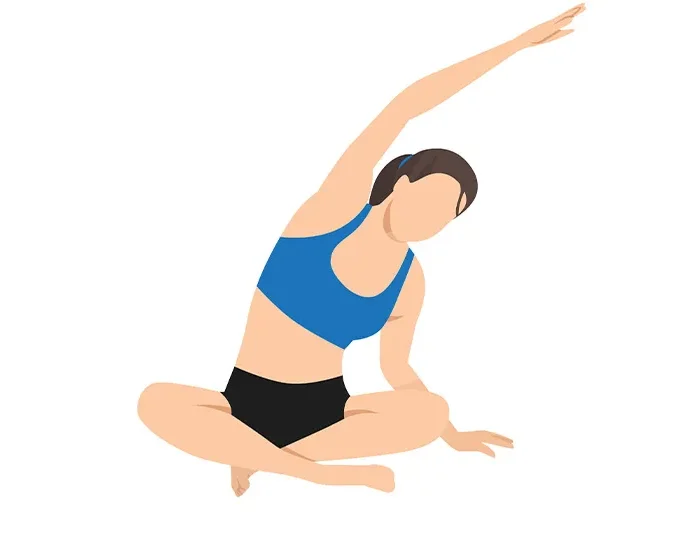
It is a mild yoga pose that helps build core strength and enhances the flexibility of the spine.
- Position your feet flat on the floor.
- Keep your spine straight.
- As you breathe in, lift your left arm overhead and stretch toward the right side.
- As you breathe out, bring your left arm down and stretch toward the left side.
- Perform this movement sequence at least 10 times, ensuring a smooth transition between each side.
Salabhasana (Locust pose)
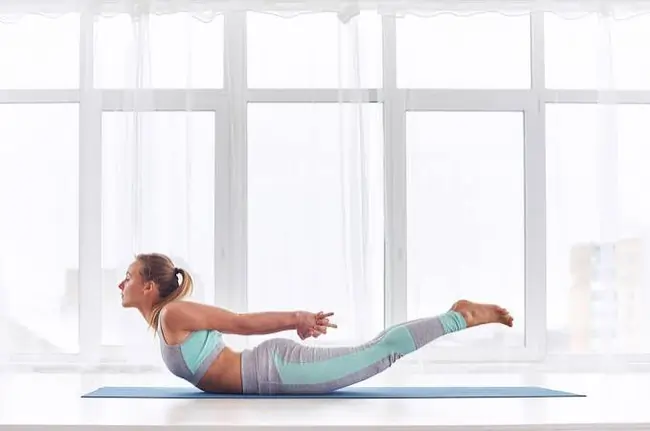
Also called Salabhasana, this yoga pose is a backbend that can help build strength and increase flexibility in the lower back, glutes, and hamstrings. It may ease symptoms of Parkinson’s disease by enhancing blood flow, supporting better posture, and helping to reduce bodily stiffness.
Muscles Worked:
Triceps, gluteus maximus, erector spinae, and trapezius
Steps:
- Lie face down on the floor with your arms extended to the sides and palms facing upward.
- Position your big toes so they touch while keeping your heels slightly apart.
- Gently place your forehead on the ground.
- Raise your arms, chest, and head halfway or fully.
- If it’s comfortable, you can raise your legs.
- Take a seat on your pelvis, stomach, and lower ribs.
- You can sense a stream of electricity leaving your fingertips.
- Maintain a forward or slightly upward look.
- Hold this position.
- Then Relax.
- You can repeat the posture once or twice once you’ve recovered your breath and rested.
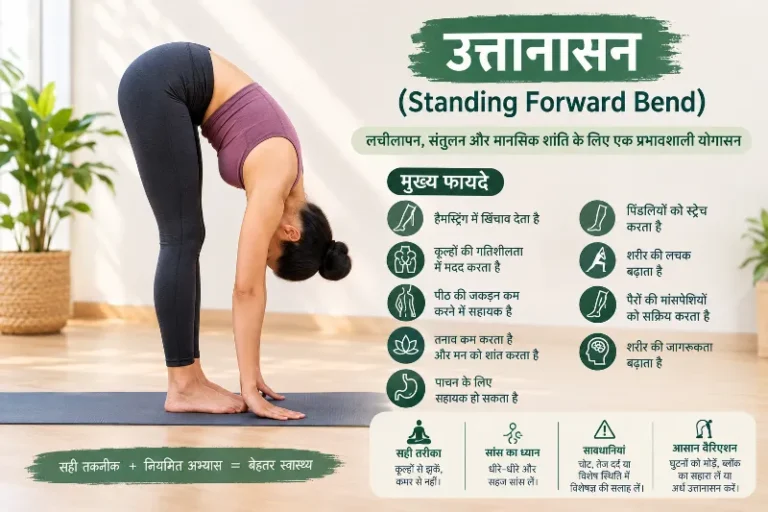
Hasta Padasana (Standing Forward Bend)
This soothing position strengthens your hips, knees, and legs. This pose is also said to reduce stress and anxiety because of its peaceful qualities.
Muscles Worked:
Muscles in the spine
Piriformis, hamstrings, gastrocnemius, and gracilis
Steps:
- Stand with your feet directly under your hips. Bend down by putting your hands on your hips and bending at the hips.
- Keep your spine long as you fold down.
- Lower your hands to a comfortable position.
- If needed, keep your knees slightly bent.
- Make an effort to release the tension in your lower back and hips.
- Slowly lower your head toward the floor, making sure to bring your chin close to your chest.
- Hold this pose.
- Then Relax.
- Then, move your hands back to your hips, straighten your body, and slowly rise to leave the position.
Reclining Bound Angle
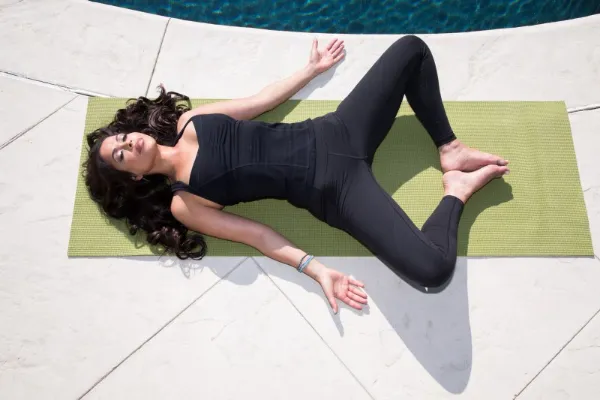
This hip opener works to stretch and improve flexibility in the inner thighs, groin, and knees. It also activates the abdominal organs and the heart, which may aid in improving blood circulation.
Muscles worked:
- Adductors
- Groin muscles
- Pelvic muscles
- Psoas
Steps:
- Lie flat on your back and bring the soles of your feet together, allowing your knees to spread apart.
- Align your body so that your spine, neck, and head are straight.
- You may place a folded towel or a pillow under your knees, shoulders, and feet to provide additional support.
- Let your arms rest in a comfortable position. If you wish to make the pose less demanding, you can adjust your stance by placing your feet a bit farther apart from your hips.
- Relax the muscles around your hips and thighs.
- Concentrate on releasing any tightness or tension in this area.
- Stay in this position for a maximum of 10 minutes.
Viparita Karani (Legs-Up-the-Wall Pose)
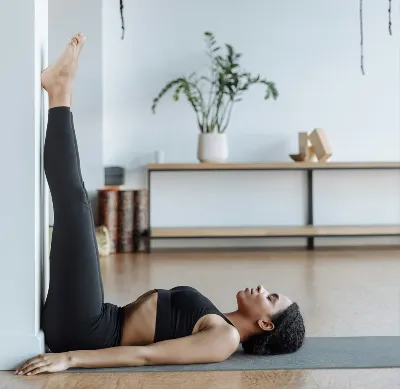
This restorative inversion can help stretch and increase flexibility in the back of your neck, the front of your torso, and the back of your legs. It can assist in easing mild back pain and may also support better digestion.
Muscles Worked:
- Hamstrings
- Neck
- Front torso
- Lower back
- Pelvic muscles
Steps:
- Your right shoulder should face the wall as you sit on the floor. Place your legs up along the wall while lying on your back, forming a 90-degree angle with the wall.
- If possible, keep your sitting bones as close to the wall as you can.
- For extra comfort, you can place a folded blanket beneath your hips.
- Ensure that your spine and neck are aligned in a straight line.
- Rest your arms in any comfortable position.
- Take slow, deep breaths and allow your body to become relaxed.
- Pay attention to releasing any tension you might be holding in your body.
- Remain in this position for as long as possible, up to 15 minutes.
Safety considerations
Seniors and their caregivers should consider the following safety tips when doing yoga.
- Avoid sudden or challenging movements that could lead to discomfort or pain.
- It is important not to skip the warm-up and cool-down stretches, as they help prevent muscle strains.
- Take regular breaks and stay hydrated to prevent excessive tiredness and overexertion.
- Use a yoga mat and other supportive tools like chairs or blocks to help keep the body stable.
- Practice yoga in a bright and clean environment to reduce the chance of slipping or falling.
- Focus on slow, controlled motions and use deep breathing techniques to get the best results.
FAQs:
What is the 5:2:1 rule for Parkinson’s?
Doctors utilize the 5:2:1 rule as a straightforward screening technique to detect severe Parkinson’s disease and determine when therapy has to be modified.
What precautions should people with Parkinson’s disease take?
Individuals with Parkinson’s disease should take care to avoid falls, take their medications as prescribed, and modify their food and living environment.
How can I slow down Parkinson’s naturally?
The most effective lifestyle choices for managing the symptoms of Parkinson’s disease and slowing its development are regular exercise and a balanced diet. Adopting specific natural behaviors maintains brain health and improves everyday performance, even if there is no treatment.
What is the biggest cause of Parkinson’s?
The single greatest risk factor and primary cause of Parkinson’s disease is growing older. The disease itself is directly caused by the gradual degeneration and death of dopamine-producing nerve cells in the brain, even if the precise etiology of the majority of cases is still undetermined (referred to as idiopathic).
What is the best vitamin for Parkinson’s?
Although there isn’t a single “best” vitamin that can prevent or cure Parkinson’s disease, vitamin D and B vitamins—particularly B12 and B6—are the most frequently suggested and researched to treat deficiencies and promote general health.
What worsens Parkinson’s disease?
Physical illness, high stress, missing medication doses, and not enough movement can all lead to a rapid worsening of Parkinson’s disease symptoms.
References:
- EliteCare Health Centers. (2023, August 25). 6 easy yoga poses for managing Parkinson’s. https://www.elitecarehc.com/blog/6-easy-yoga-poses-for-managing-parkinsons/
- Cronkleton, E. (2026, February 11). Yoga for Parkinson’s Disease: 10 poses to try, why it works, and more. Healthline. https://www.healthline.com/health/parkinsons/yoga-for-parkinsons#mountain-pose