Yoga for Multiple Sclerosis
Introduction
Multiple sclerosis (MS) is a complex disease because it can cause severe symptoms such as muscle spasms and weakness, chronic fatigue, vision problems, mental health problems, and more. Patients who have multiple sclerosis can help control their symptoms and enhance their overall quality of life by beginning and consistently practicing yoga.
By strengthening the body, calming the mind, and improving balance, freedom of movement, and coordination, yoga can help reduce a number of MS symptoms. Being extremely exhausted is one of the primary symptoms of multiple sclerosis. Yoga can help people with multiple sclerosis feel less exhausted by increasing their body’s vitality and blood flow. Increased blood oxygen levels from yoga breathing techniques can increase vitality and reduce fatigue.
Another frequent sign of multiple sclerosis is tight muscles and stiffness. Yoga poses help stretch and make your muscles longer, which can ease stiffness and cramping. It’s important to pick soft and suitable poses that fit your body’s movement abilities and how easily you can move.
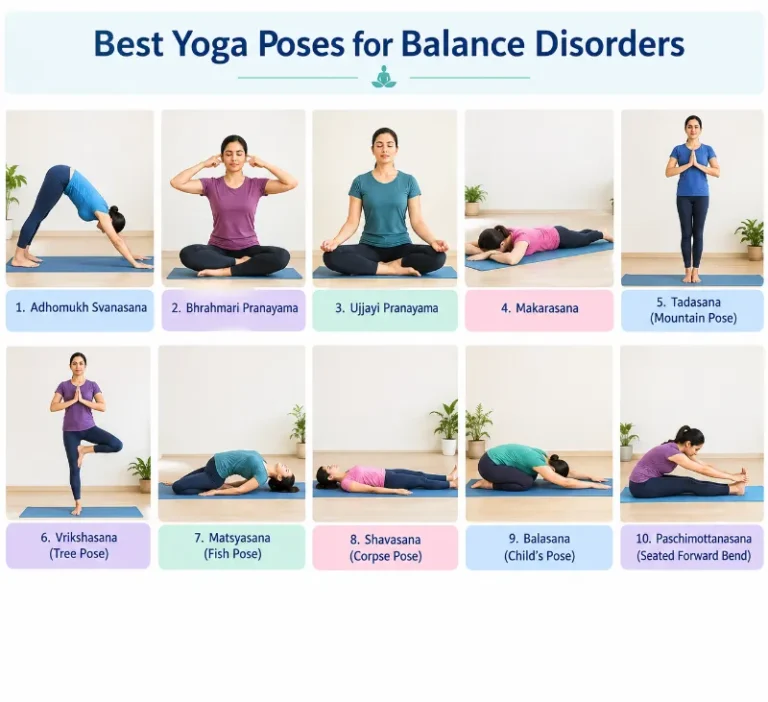
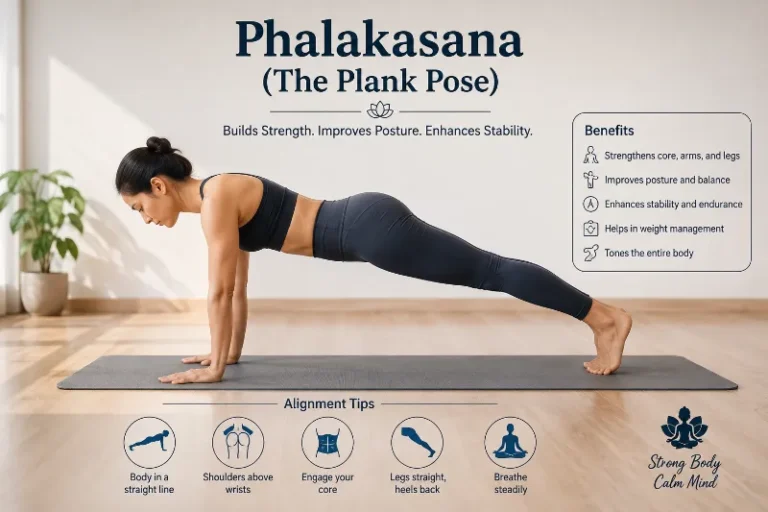
Balance and coordination can also be affected by multiple sclerosis. Balance-challenging yoga positions, including Tree pose, aid in strengthening the muscles involved in balance and coordination. Plank position and other poses that strengthen the core also improve stability and balance.
Yoga can also help your mind and emotions in a big way, making it easier to handle stress and feelings of worry. Yoga’s relaxation and meditation methods can help you feel more peaceful, decrease stress, and make you feel happier. People with multiple sclerosis benefit from mindfulness meditation by experiencing less depression and anxiety. Yoga also helps create a feeling of being part of a group and staying connected, which can be really important if you’re dealing with a long-term illness like multiple sclerosis.
The central nervous system is impacted by multiple sclerosis (MS), a chronic autoimmune illness. Among the symptoms it may cause are fatigue, weakening in the muscles, and issues with balance and coordination. Yoga can help control symptoms and enhance overall health and well-being, even if MS cannot be treated. Before starting a yoga practice, it is essential to see a healthcare provider to ensure safety and effectiveness.
Benefits of Yoga for Multiple Sclerosis
Stress and Fatigue Reduction: Yoga’s calming and relaxing effects on the body and mind can help reduce the physical and mental strains associated with multiple sclerosis. It may result in less weariness and encourage a calmer mental state.
Better Balance and Coordination: MS can lead to problems with balance and coordination, but yoga can assist. Yoga exercises that call for balance and coordination could improve nervous system performance.
Improved Strength and Flexibility: Yoga postures call for the use of muscles that may not be used in daily activities. Regular yoga practice can boost strength and flexibility, which can raise general fitness levels.
Improvement of Respiratory Function: Yoga can assist in enhancing breathing patterns, although MS can have an impact on respiratory function. Deep breathing techniques used in some yoga poses can improve the body’s oxygenation and lung capacity.
Pain Management: Although MS can cause pain and suffering, yoga can help manage these symptoms. Yoga’s mild movements can ease muscular tension and stiffness, which can lessen pain and improve overall well-being.
Improved General Health and Well-Being: Yoga can enhance general health and well-being for people with multiple sclerosis by offering a variety of mental and physical advantages. Frequent practice helps foster inner peace and tranquility, which can have a beneficial effect on many facets of life.
Yoga Poses for Multiple Sclerosis
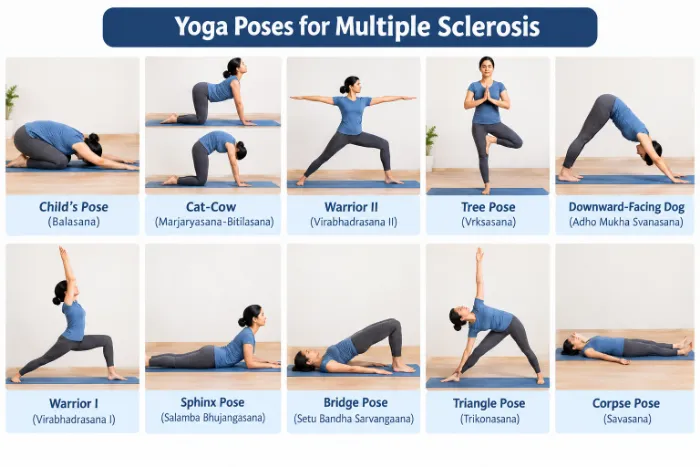
Standing positions are appropriate for people with more mobility, while seated or chair yoga poses are best for people with less mobility. Pay attention to positions that improve flexibility, balance, and coordination, like:
Balasana (Child’s Pose)
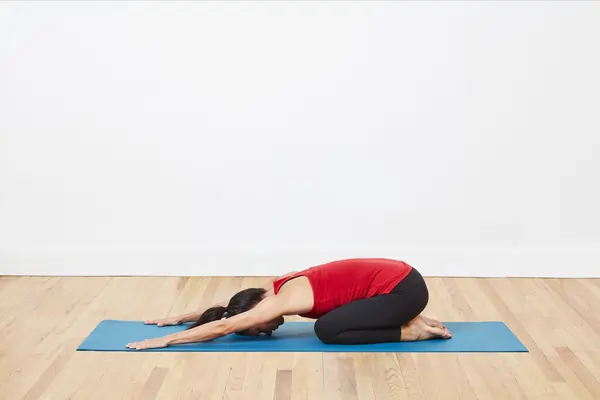
- Place your knees about hip-width apart and position your wrists directly under your shoulders. Point your toes directly backward so the tops of your feet lie comfortably on the mat.
- As you take a slow breath out, gently shift your hips toward your heels. Only go as far as you feel comfortable, paying attention to the sound of your knees and thighs.
- Let your chest drop naturally between or over your thighs and rest your forehead on the mat or a pillow.
- Stretch your arms out in front of you with your palms facing down to help lengthen your spine. Position your hands beside your body with palms up for a deeper sense of relaxation. Recovery options. Breathe in to create a feeling of expansion in your back and sides; breathe out to release any tension.
- Place your chest on the mat and relax your shoulders away from your ears. Inhale deeply to allow your back and sides to expand; exhale slowly to let go of any tension.
- Remain in this position for 30 seconds to a few minutes, depending on your comfort level. Then, walk your hands back toward your knees and slowly lift your torso, keeping your spine straight and elongated.
Marjaryasana-Bitilasana (Cat-Cow Pose)
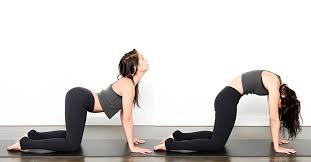
Cat and cow pose is a beneficial posture for people with multiple sclerosis. It helps enhance blood circulation and reduces pain associated with the condition. This pose also promotes awareness of the natural curve of the spine and encourages a state of general relaxation. It further supports improved posture and decreases the likelihood of experiencing falls. Additionally, it may assist in preventing conditions such as osteoporosis, sciatica, and infertility.
Marjariasana improves the body’s flexibility and balance. Additionally, it increases blood circulation and relieves joint pain. People with multiple sclerosis frequently experience stress and worry, which can be lessened by adopting this stance. Marjariasana gently massages the abdominal muscles to support the cardiovascular system. Additionally, it can ease constipation and relieve the tension brought on by prolonged sitting. This position helps with digestion, circulation, and headache relief.
- Place your knees behind your hips and your wrists under your shoulders as you begin on all fours.
- Inhale and lift your chest and tailbone toward the ceiling (Cow Pose) and exhale as you round your spine toward the ceiling (Cat Pose).
- Repeat for 5 to 10 breaths.
Virabhadrasana II (Warrior II)
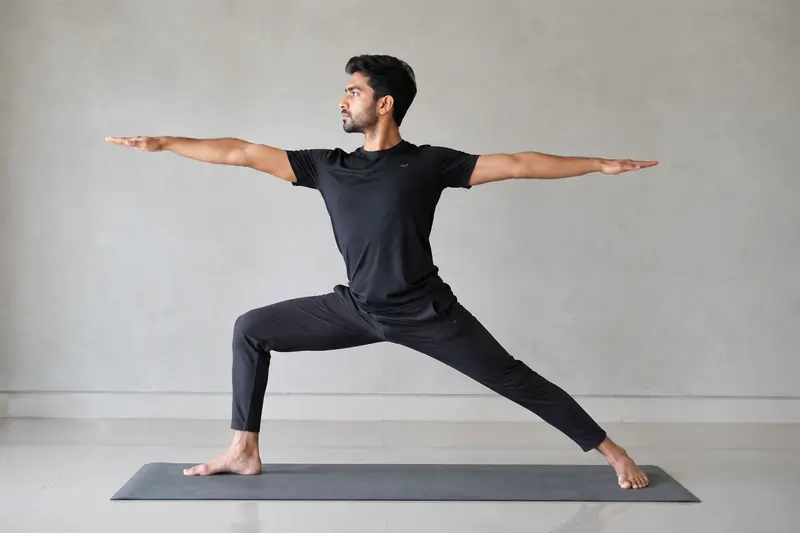
- Place your feet wide apart for Warrior II Pose. Your back foot should be almost parallel to the mat’s short end, with the toes slightly twisted inward, while your front leg’s toes should point toward the mat’s short end. The center of the inside side of your rear foot should be where a line drawn from the heel of your front foot meets.
- Point your face, stomach, and frontal thigh bones in the same direction toward the mat’s long end. Bend your front knee in the direction of the center of your front toes. Make sure the angle between your thigh and shin, or your front knee, is no more than 90 degrees by going as deep as you can.
- Pull the kneecap up to engage the leg after pressing the outside edge of the back foot onto the ground.
- With your hands facing down, stretch your arms out to the side and straighten your body.
- To increase the size of your lungs, take a breath and raise your arms, shoulders, armpits, and ribcage.
- To extend the arms farther away from you, exhale. Maintain a focused look with your face in line with your sternum.
- You may also see over your front hand’s middle finger by turning your head.
- Release the pose while exhaling.
Vrikshasana (Tree pose)
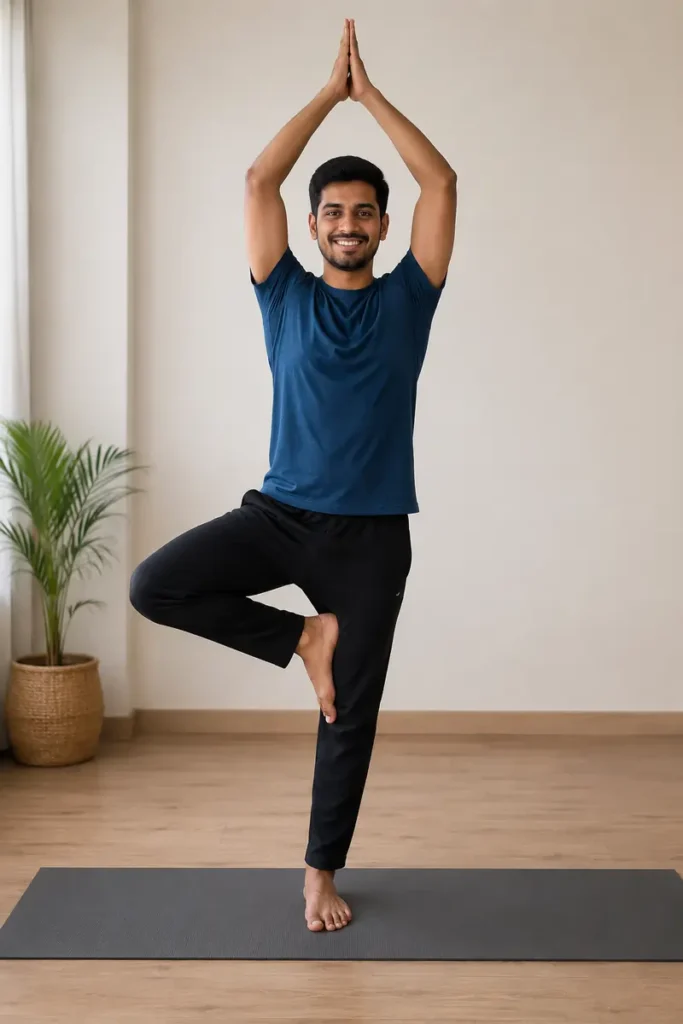
- Place your feet shoulder-width apart to begin Mountain Pose (Tadasana). Plant your heels, outer edges, and big toes evenly. Straighten your back, relax your shoulders, and take 3 to 5 even breaths to calm your mind.
- While standing, shift your weight to your left leg, keeping one knee soft. Feel your legs shift from your feet to your hips, then take a moment to steady yourself.
- Fix your gaze on a stable point in front of you at eye level. This stage is essential for balance, so keep your eyes relaxed but attentive.
- While breathing out, slowly bend your right knee and raise your foot. Rest the sole against the inner side of your ankle, calf, or upper thigh, depending on your comfort. Keep the foot away from the knee joint to avoid pressure on it. Gently engage both legs by pressing them toward each other to help improve balance and stability.
- Position yourself so that your hips are facing forward. Lift your lower abdomen and slowly tighten your core.
- Raise the height to the top of your head while maintaining support for your standing leg. Choose a hand position that supports your balance: hands at your heart center, hands raised above your head, palms together, hands forming a gentle “V,” or one hand resting lightly on the wall.
- Keep your shoulders relaxed and hold the pose while breathing gently. Beginner: 15-30 seconds.
- Medium: 30-60 seconds
- Extension: up to 2 minutes
- If you lose your balance, stay calm and extricate yourself to reset.
- To take a step, first lower your arms and slowly lower your raised leg back to the floor. Return to mountain pose, pause for a few breaths, then switch sides.
Adho Mukha Svanasana (Downward-Facing Dog Pose)
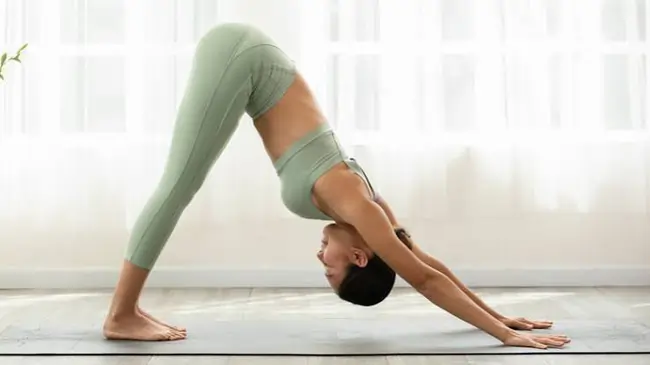
- Begin on your hands and knees, keeping your knees slightly behind your hips and your wrists directly under your shoulders. Spread your fingers comfortably and distribute your weight evenly through both palms.
- Instead of locking the elbows, maintain a little bend. To stabilize the shoulders and widen the upper back, gently twist the upper arms outward so that the biceps face slightly forward.
- As you exhale, tuck the toes under and raise your knees off the mat. To create an inverted V shape, raise and lower your hips. At first, keep the knees bent.
- Focus on building length from the wrists through the hips while pressing the floor away with your hands. Avoid collapsing the shoulders as you softly bring the chest toward the thighs.
- If your hamstrings feel tight, keep your knees bent to maintain correct alignment. Maintain a long spine while progressively straightening the legs if flexibility permits. Heels do not have to come into contact with the ground.
- Avoid flaring the ribs by softly drawing the lower abdomen in. In addition to protecting the lower back, this core support maintains the pose’s equilibrium.
- With the neck relaxed, let the head drop freely between the arms. Don’t try to stare ahead; rather, focus on the navel or thighs.
- Maintain the position while breathing steadily:
- For beginners, take five to ten breaths.
- 10–20 breaths in the middle
- Advanced: one to three minutes
- Every breath gives the spine length, and every breath out lets the body relax.
Virabhadrasana I (Warrior I)
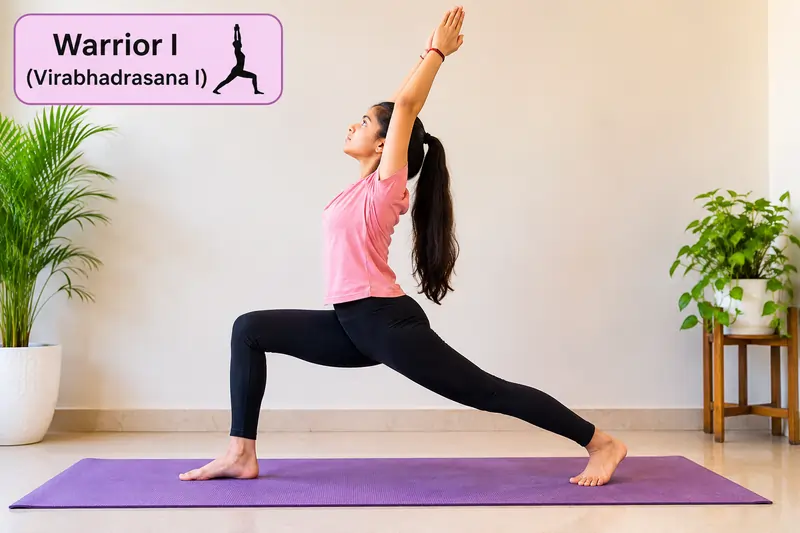
- Stand upright on your mat with your hands resting on your feet and hips. Keep your weight balanced evenly between both feet.
- Begin in Adho Mukha Svanasana (Downward-Facing Dog Pose), step forward with your right foot and move your foot slightly to the right with your toes touching your fingertips.
- With your front foot on the floor, tilt your toes toward the front edge of the mat so your front knee is bent at a 90-degree angle and the thigh of your front leg is parallel to the mat. Also, keep your back legs bent and moving.
- Inhale and raise your arms first over your shoulders and then over your head in Namaste, bending your knees forward and facing forward. Exhale completely at this point. Gently bend your front knee while lifting your arms overhead to create a mild stretch in your lower abdomen.
- Continue breathing in and out deeply for 5 to 10 cycles, ending in a relaxed state. Repeat the movement on the opposite side, following the same steps.
- Inhale: Inhale while raising your arms or your head. Exhale: Exhale when coming out of the pose.
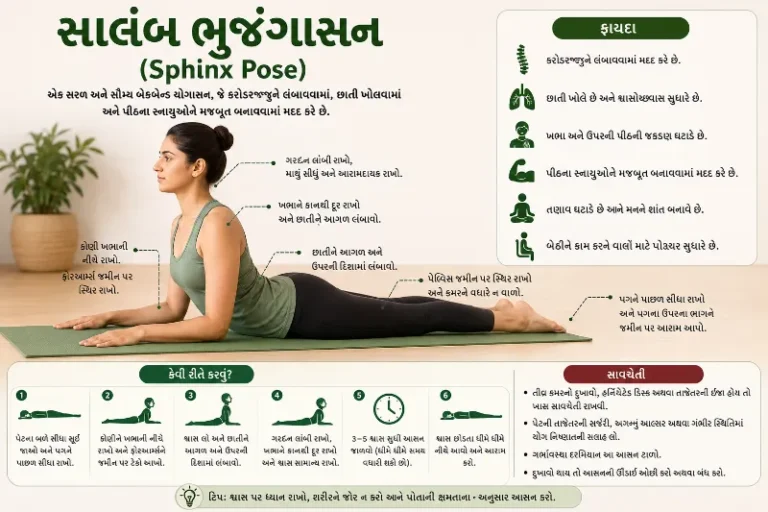
Salamba Bhujangasana (Sphinx Pose)
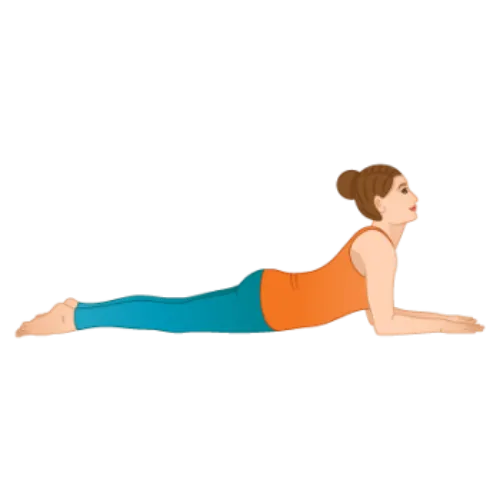
- Please come face down.
- Gently raise your upper body from the mat and position your elbows directly beneath your shoulders, keeping them at a 90-degree angle to the floor. Allow your chest and ribcage to lift while keeping your abdomen, pelvis, and legs resting comfortably on the mat.
- Place your forearms and palms parallel on the mat. Apply pressure to your elbows, forearms, and palms.
- Squeeze your glutes to press your pelvis against the mat.
- Also press down through the tops of your feet.
- Maintain a relaxed, neutral alignment of your head and neck while keeping your eyes directed straight ahead.
- Stay for five to ten breaths.
Setu Bandha Sarvangasana(Bridge Pose)
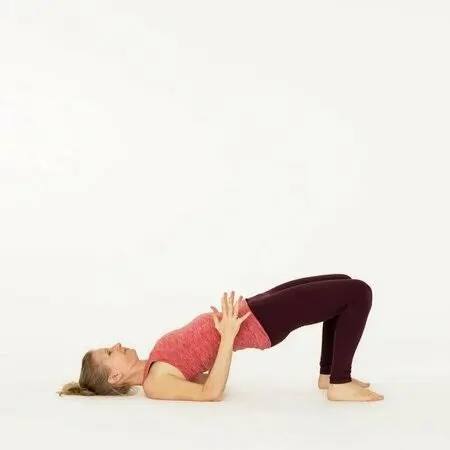
- Lie comfortably on your back with your knees bent and your feet placed flat on the mat, keeping them about shoulder-width apart.
- Keeping your arms at your sides, walk forward on your heels until your fingertips lightly touch your heels. Keep your feet parallel and facing straight ahead. Stack your knees over your ankles. Keeping your palms flat and facing down, gently press the backs of your upper arms and shoulders into the mat.
- Inhale and press evenly with both feet. Gently activate your inner thighs and glute muscles, while drawing your lower ribs slightly toward the mat to help stabilize and support your spine.
- As you breathe out, slowly raise your hips, gradually lifting your spine from the mat one vertebra at a time, beginning at the tailbone. Lift until your thighs are roughly parallel to the floor.
- Roll your shoulders slightly to broaden your chest. You can also press your hands down by interlacing your fingers under your body, or choose a gentler option by keeping your palms flat.
- Hold the pose by breathing evenly, keeping your knees stable, and slightly squeezing your hips. Keep your neck in a neutral position and avoid turning or rotating your head.
- Beginner: 20-30 seconds, 2-3 rounds.
- Intermediate: 30-45 seconds, 3-5 rounds.
- Repair (bridge): Place a block under the sacrum for 3-5 minutes.
- As you exhale, slowly lower your spine. Lower your upper back first, then your tailbone. Gently draw your knees toward your chest and take several slow breaths to help return your spine to a neutral position.
Trikonasana (Triangle Pose)
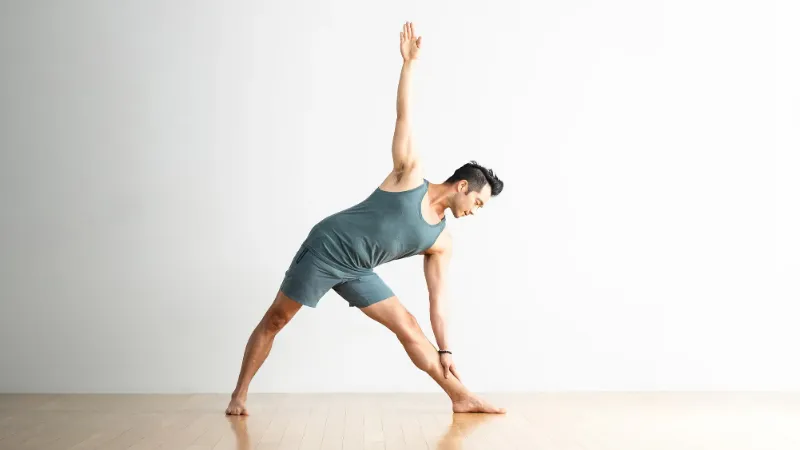
- Stand on your mat in the mountain pose, balance your weight equally on both legs, and let your arms hang loosely by your sides.
- Keeping your back and neck straight, slowly move one leg behind the mat into a wide stance. Next, take a deep breath and lift your arms so they are level with the floor. The structure of this pose is quite similar to the Warrior I pose. Ensure that your shoulders are drawn back and your neck remains loose.
- Distribute your weight evenly between both feet, engage your legs, and ensure that your knees are slightly bent. Position your back foot so that it is aligned with the edge of the mat, and keep your front foot pointing directly forward, in the same direction you are facing. Now, as you release the breath, bend at the hips and place your forward arm’s fingertips on the outside of your front foot.
- Turn your torso gradually and raise your rear arm straight up until it aligns with your left arm’s position, creating a straight line. For three to five complete inhalations and exhalations, maintain this position. First, take a deep breath and release it to exit Prasarita Padottanasana. Return to the Tadasana position gradually, take a few deep breaths, and repeat these steps on the other side.
- Breathe in while keeping your hands flat on the ground. Exhale as you lean to the side.
Savasana (Corpse Pose)
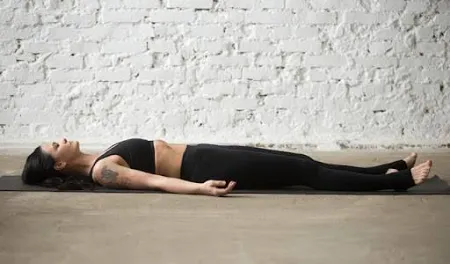
- Lie on your back, feet together but not close together, arms pressed against your body, palms facing up.
- Gently close your eyes, relax your facial muscles, and breathe deeply and slowly through your nostrils. Focus on each part of your body, starting from the top of your head and working your way down to your feet, consciously relaxing before moving on to the next part.
- Stay in savasana for a minimum of three to five minutes. If you feel sleepy while doing Savasana, start breathing a little faster and deeper.
Yoga Breathing and Meditation Techniques for People with Multiple Sclerosis
You can control the symptoms of multiple sclerosis by incorporating these breathing and meditation techniques into your yoga practice.
Deep Breath: Sit comfortably and breathe deeply and slowly through your nose, filling your lungs. Breathe out slowly through your nose, letting all the air out. Repeat for several minutes.
Breathe through alternate nostrils: Take a comfortable seat, seal one nostril with your thumb, and inhale through the other. Next, exhale through the first nostril while closing the other with your ring finger. Continue doing this for a few minutes. Breathe mindfully by paying attention to how the breath feels as it enters and exits your body.
Gently return your attention to your breathing whenever your thoughts stray. Body Scan Meditation: Take a comfortable seat or lie down and pay attention to every area of your body, from your head to your toes. Observe any feelings or tensions as you move through each section, then let them go.
FAQs:
How to reduce MS symptoms?
You can reduce the symptoms of multiple sclerosis (MS) through a combination of medical treatments, targeted lifestyle adjustments, and advice from professional rehabilitation specialists.
Can you live 20 years with MS?
Yes, multiple sclerosis (MS) is not fatal, and most people survive for more than 20 years after diagnosis.
What not to do when you have multiple sclerosis?
If you have multiple sclerosis (MS), you should avoid extreme heat, smoking, excessive exercise, and refrain from taking prescription medications.
What triggers multiple sclerosis?
Multiple sclerosis (MS) is not caused by a single cause. Rather, researchers believe it is caused by a combination of immune system dysfunction, genetics, and environmental factors.
What drink is good for MS?
Water is the best and most important drink for people with multiple sclerosis (MS) because it prevents dehydration, reduces fatigue, and helps manage bladder and bowel symptoms.
What are 5 warning signs of MS?
Five common early warning signs of multiple sclerosis (MS) include extreme fatigue, vision problems, numbness or tingling, muscle weakness, and balance issues.
References:
- Rushali. (2026, August 17). 10 yoga poses to enhance wellness for multiple sclerosis patients. https://myyogateacher.com/articles/10-yoga-poses-for-multiple-sclerosis
- Anand, S. Y. (2026, May 6). 6 best Yoga Poses for Multiple Sclerosis. Adwait Yoga School: International Holistic Institute. https://adwaityoga.com/6-best-yoga-poses-for-multiple-sclerosis/
- Dhayushp, & Dhayushp. (2025, October 12). Yoga for Multiple Sclerosis – Ayush Prana. Ayushprana – Ayushprana. https://ayushprana.in/yoga-for-multiple-sclerosis-ayush-prana/