Yoga For Balance Disorders
What Is Balance?
The inner ear, eyesight, and somatosensory systems physical indicators that tell the brain where the body is in space interact intricately to provide our feeling of balance. Those suffering from vestibular disorders can experience dizziness, vertigo, confusion, and impaired coordination. Fatigue is common, as are postural misalignments caused by either overcompensating to stay upright or holding oneself rigidly.
Vestibular sufferers can improve their balance, concentration, mobility, and coordination by practicing yoga. It can help reduce lightheadedness.
Yoga is one of the few types of exercise that actually enhances balance. It keeps us upright and steady by distributing our weight evenly through a combination of mental concentration and physical postures.
Our feet, ankles, knees, and hips all have microscopic muscles and tendons that are strengthened by this. However, by assisting us in achieving mental and emotional harmony, yoga also enables us to achieve greater spiritual balance.
What Types of Yoga Are Beneficial for People With Balance Disorders?
There are various kinds of yoga postures, known as asanas, which can be categorized into meditative, cultural, and therapeutic types.
Calming the mind and lowering anxiety are two benefits of meditation. Reducing stress can also help lessen symptoms like vertigo and dizziness because stress is a trigger for many vestibular patients. Pranayama, or controlled breathing, is a technique that can help you manage your energy levels, lower stress, boost stamina, and reduce anxiety.
The reason for the moniker “cultural asanas” is that they are essential to creating an all-encompassing physical culture of fitness and overall health. Physical asanas and relaxative asanas are two categories of cultural asanas.
First, let’s examine the signs of a balance disorder
- Dizziness
- Vertigo
- Unsteady walk
- Fear of falling down
- Distorted and disoriented mind
- Foggy vision
- Feeling of floating and fainting
Integration of Vestibular and Yoga Theory
The human balance system is very complex, involving several organs that work together to keep us balanced and prevent dizziness. By coordinating with the brain and the rest of the body, the vestibular system, a component of the inner ear, plays a crucial role in maintaining balance. Three key functions of the vestibular system support balance: the vestibular-ocular reflex (VOR), the vestibular-spinal reflex (VSR), and balance strategies.
The vestibular-ocular reflex (VOR) is a natural reflex that helps keep our vision steady when our head moves in a different direction or at a different speed than the rest of our body.
During yoga practice, focusing on a fixed point while moving the head and body in different directions can help strengthen the VOR.
VSR helps keep the body properly aligned and ensures the head stays in the correct position relative to the body. It also supports the head’s stability as the body moves. Yoga balance poses can enhance this VSR, especially when performed with your eyes closed.
There Are 3 Strategies Needed to Maintain Balance
The ankle strategy involves using the ankle joint to keep your centre of mass stable.
The hip strategy comes into play when your centre of mass shifts forward or backward relative to the hip joint.
The stepping strategy is used when your center of mass moves away from your body.
Advice for Patients with Vestibular
- Practice against a wall:
- To prevent falls, patients with balance issues should work out close to a wall or use a chair for support. They can hold the back of the chair like a ballet bar to maintain stability.
- Breath: Pay attention to your breathing and take it slowly.
- Try to consciously relax the muscles in your neck, jaw, chest, and diaphragm. This can also help ease feelings of anxiety.
- Feet: Improving balance can also be done by focusing on the feet.
- For example, use toe separators, walk barefoot whenever possible to keep the foot muscles strong and flexible, and receive foot massages to stay aware of the feet.
- Be gentle: Show kindness to your body.
- Remember that healing takes time and is often slower than expected. Pushing too hard goes against the idea in yoga that we are already whole and perfect.
- Start where you are.
- Stay attentive. Give your best effort. Acknowledge the limits of your body. This is the essence of yoga practice.
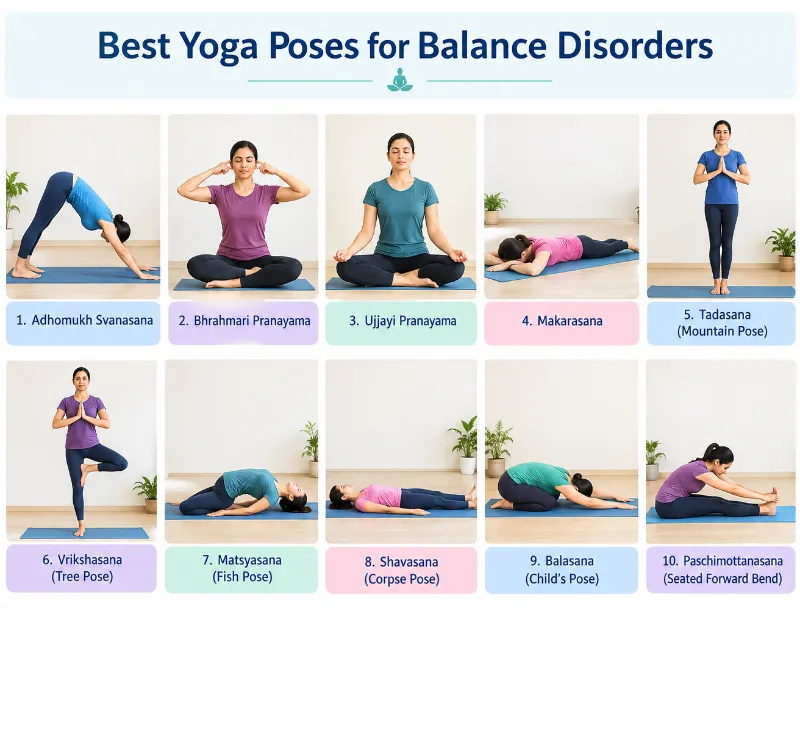
Best Yoga Poses for Balance Disorders
Adhomukh Svanasana (Downward-Facing Dog Pose)
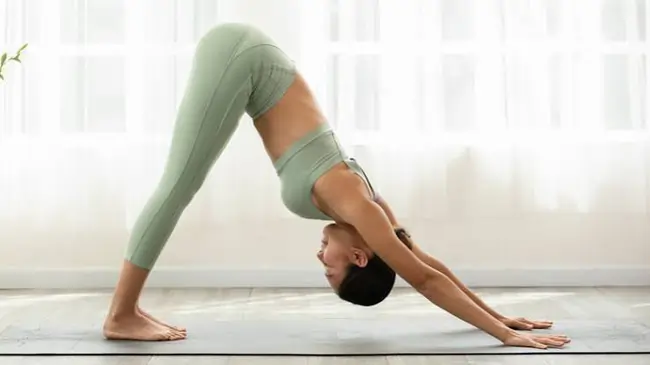
One of the simplest poses to perform to relieve pressure on the inner ears is this one.
Steps:
- On the mat, kneel. Knees should be spaced one hip’s width apart.
- Put your hands on the ground. Palms should be in line with the shoulders.
- Curl your toes and apply pressure to the floor with your palms. Try to maintain the knees straight.
- Additionally, straighten your elbows and make an effort to touch the floor with your heels.
- Return gradually to the beginning after maintaining this position for around six counts.
Bhrahmari Pranayama
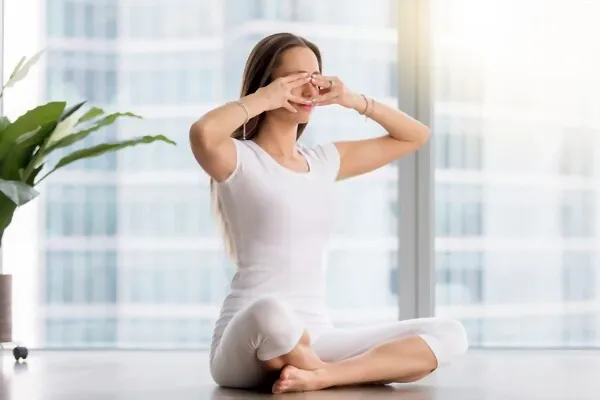
This is the most beneficial kind of pranayama when it comes to the ear, throat, and nasal area. A calming atmosphere is produced when the humming sound travels from the middle ear to the fluid-filled inner ear. The inner ear’s deterioration is aided by the amplification of vibration from air to vibration in fluid.
Steps:
- Sit in sukhasana or padmasana.
- Place your fingers lightly on your eyelids and use your thumbs to close your ears.
- Take a deep breath, then release it while humming like a bee.
- Respecting your body’s ability, repeat the exercise five to ten times.
- Feel your inner peace as you gently open your eyes.
Ujjayi Pranayama
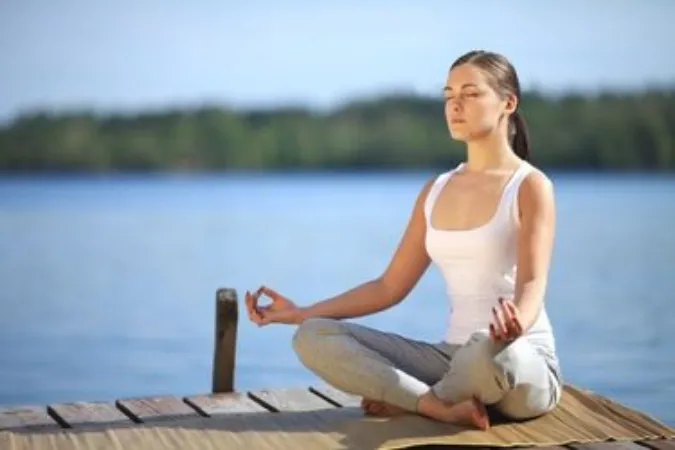
Although this pranayama has many benefits, its main focus is on the muscles and nerves in the face, neck, and eyes. Additionally, it helps the respiratory system’s muscles and nerves.
Steps:
- Sit in either sukhasana or padmasana.
Place your hands on your thighs with the palms facing downward. - Gently constrict the throat.
- Take a deep breath in, allowing the air to pass through the slightly constricted throat, producing a sound similar to fast-flowing river water.
- Exhale slowly, ensuring the air continues to pass through the constricted throat.
- Repeat this process for 5 to 10 rounds, adjusting based on your body’s comfort and capacity.
- General caution: Individuals with heart conditions, high blood pressure, glaucoma, spinal issues, weak or brittle bones, or who are pregnant should avoid practicing these postures.
Makarasana (Dolphin Pose)
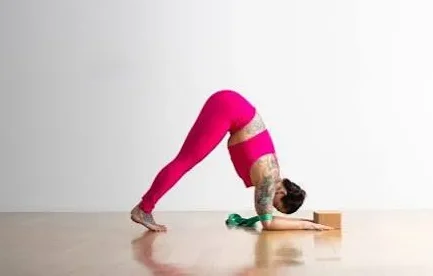
To relieve any acute ear pain and restore your energy, conclude the exercise with a calming pose.
Steps:
- Lie down on your mat with your stomach facing upward.
Let your feet and toes relax, with the toes pointing outward and the heels slightly turned in. - Bend your elbows and bring your hands forward, placing them on the mat. Rest your head on your hands.
- Close your eyes and focus on your breath, allowing your body to relax.
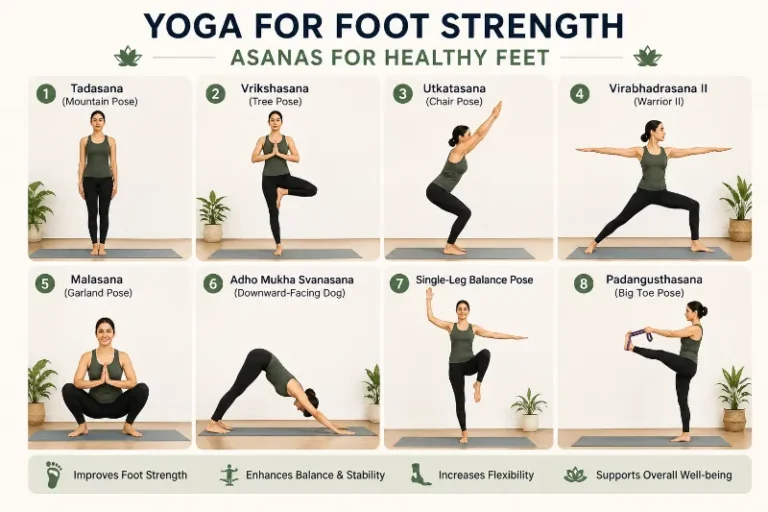
Tadasana (Mountain Pose)
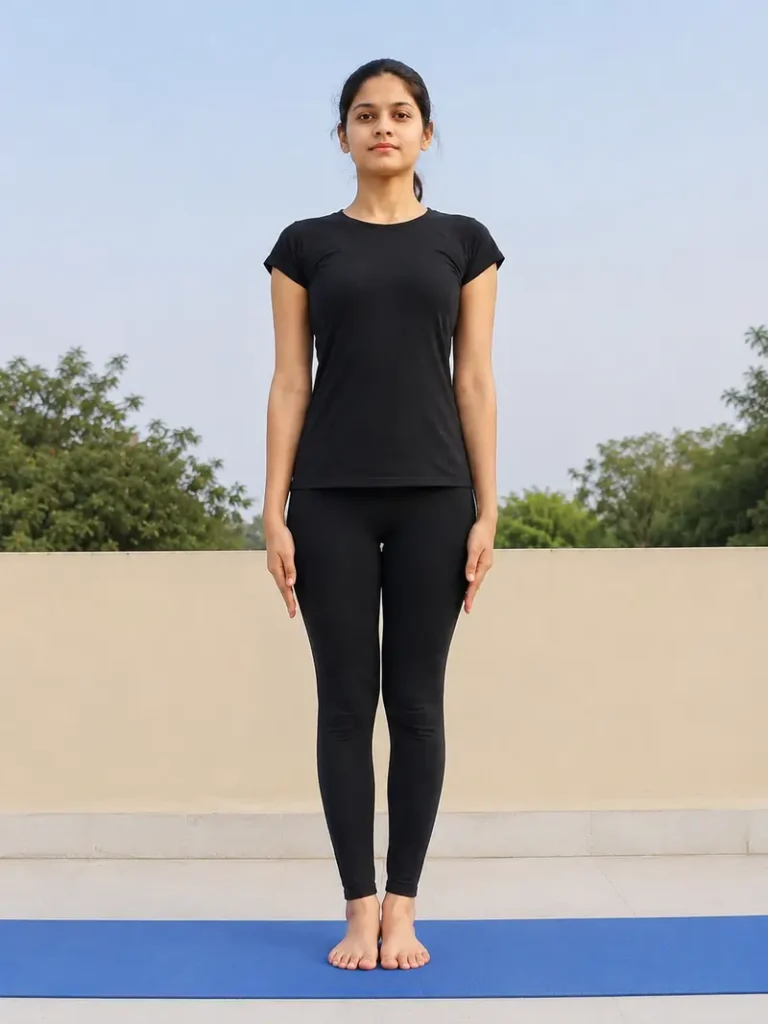
This position improves grounding and posture.
- Stand upright with your feet together.
- Relax your shoulders and keep your body comfortable.
- Imagine yourself standing tall, stable, and grounded like a mountain.
- Take slow, deep breaths for 8–10 cycles.
Benefits: Improves posture, body alignment, and overall balance.
Vrikshasana (Tree Pose)
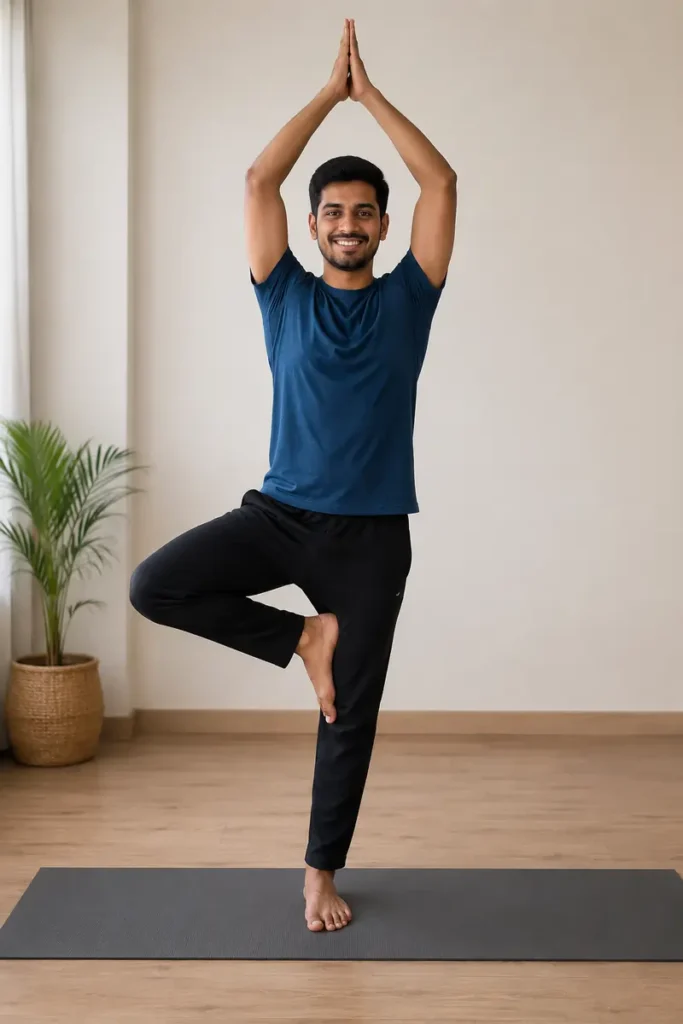
Helps train the brain and body to maintain stability and improve balance.
Steps:
- Stand upright with good posture.
- Put one foot up against the other leg’s inner thigh.
- Maintain your balance comfortably for 10–15 seconds.
- Gently bring the foot down and perform the same movement on the other side.
Benefits: Builds leg strength and supports balance by helping improve vestibular system stability.
Matsyasana (Fish Pose)
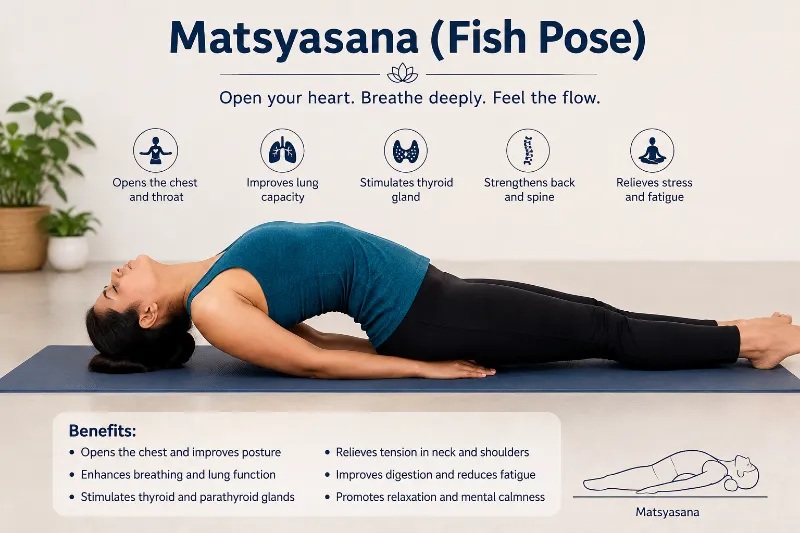
Increases oxygen flow and opens the chest.
- Take a deep breath and begin by sitting in the Lotus or Staff position. Inhale deeply many times.
- Start by completely lowering yourself onto the yoga mat.
- Place your palms on the mat just behind your tailbone and bring your arms under your lower back.
- Keeping the top of your head on the ground, inhale deeply once again.
- With each subsequent breath, keep contracting your chest muscles and slowly raise your chest, neck, and spine off the mat as though a thread were dragging them all up to the ceiling.
- While your elbows and palms press into the yoga mat to support your spine, make sure your back stays curved.
- Holding Fish Pose, take long breaths and exhale to relax your body.
- After a few seconds of holding this position, slowly release your neck, spine, and chest in that sequence.
Benefits: Helps with breathing and reduces stress in the body.
Shavasana (Corpse Pose)
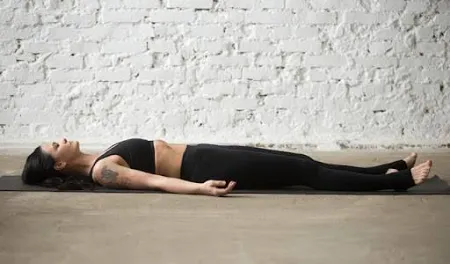
This pose promotes deep relaxation and helps calm the body and mind.
Steps:
- Lie on your back, feet together but not touching, arms pressed against your body, palms facing up.
- Gently close your eyes, relax your facial muscles, and breathe deeply and slowly through your nostrils. Focus on each part of your body, starting from the top of your head and working your way down to your feet, consciously relaxing before moving on to the next part.
- Stay in savasana for a minimum of three to five minutes. If you feel sleepy while doing Savasana, start breathing a little faster and deeper.
Benefits: Helps reduce stress and anxiety, which may contribute to or worsen feelings of dizziness or vertigo.
Balasana (Child’s Pose)
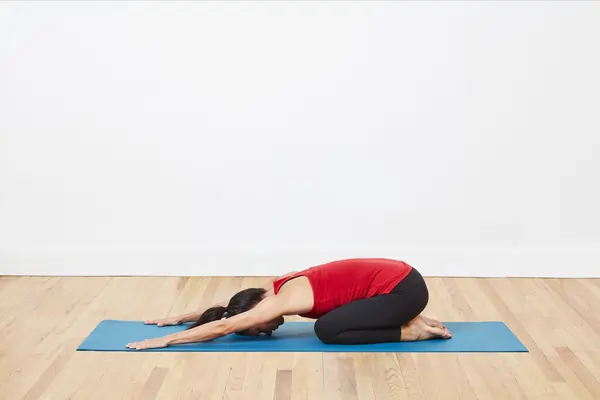
A calming pose that helps relax the mind and promote nervous system relaxation.
Steps:
- With your knees either together or slightly apart, sit back onto your heels.
- You might put a pillow beneath your buttocks for support.
- Bend at the hips and move your hands forward in front of you as you walk.
- You have the option to keep your arms extended in front of your body or to position them nearer to your sides.
- Put your forehead down on the ground.
- Breathe slowly and allow your chest to lower towards your knees.
- Take note of any stress you may be harboring in your body and concentrate on letting it go.
- Spend up to five minutes relaxing in this pose.
Advantages: May help ease feelings of dizziness and reduce stress.
Paschimottanasana (Seated Forward Bend)
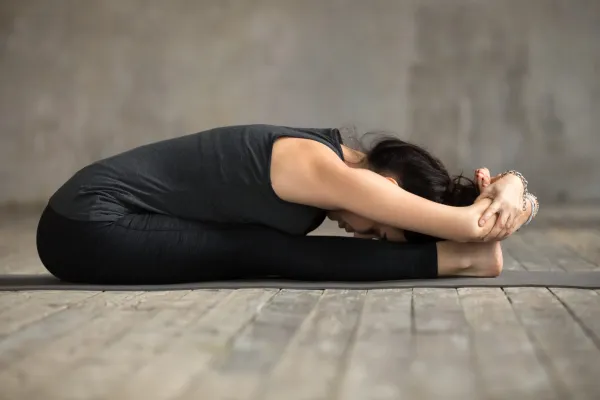
When paired with the enhanced cerebral blood flow of the moderate head-below-heart inversion, a prolonged forward fold that concurrently decompresses the cervical and thoracic spine directly treats the vascular aspects of vertigo.
- With your toes pointed up and your legs extended in front of you, take a seat on the floor. Sit up tall on your sit bones; if you feel yourself slouching backward, sit on a folded towel or blanket.
- Take a slow breath in and raise your arms as high as you can.
- As you breathe out, lean forward from your hips, keeping your back straight and leading with your chest.
- Put your hands wherever they comfortably land, like on your knees, shins, or feet.
- Keep your neck and shoulders relaxed, and look down toward your legs.
- Take slow, steady breaths and stay here for 1 to 3 minutes, letting your body loosen up a bit more every time you breathe out.
Fall-Safety Precautions
Balance issues can induce falls or a sensation of imminent falls. NIDCD advises talking about exercise safety, staying out of dimly lit areas while unstable, and utilizing the proper assistance when necessary.
While doing yoga:
- Utilize a non-slip floor.
- Remove any nearby furniture.
- Avoid practicing next to glass tables, staircases, or unsecured doors.
- Keep a firm chair or wall close at hand.
- Avoid slippery socks and loose rugs.
- Make use of sufficient illumination.
- Do not do this.
- Avoid quick transitions from the floor.
- After lying, sitting, and standing, pause.
- Do not use a mirror as support.
- Stop before your equilibrium is compromised by muscular exhaustion.
- When standing is dangerous, ask a physical therapist to recommend sitting or assisted options.
What Level of Dizziness Is Acceptable During Yoga?
Yoga meant for general relaxation should not trigger excessive spinning. A vestibular therapist should suggest a customized rehabilitation activity that purposefully causes a small, controlled rise in symptoms.
Because vertigo can have many different causes, getting an accurate diagnosis is essential. Home remedies and medications for dizziness may provide temporary relief, but they may not address the underlying cause. Balance testing and other diagnostic methods can help identify the specific cause so that appropriate treatment can be provided.
Antihistamine medications should generally be used only for short-term symptom relief. Prolonged use may interfere with the brain’s natural process of adapting to balance disturbances. Movements and exercises should also be performed slowly, as sudden head movements can increase dizziness.
Repositioning techniques, such as the Epley maneuver, can be effective for treating BPPV. However, they should be performed only after the condition has been properly diagnosed. Using an inappropriate maneuver or performing it incorrectly may worsen symptoms.
Seek immediate medical attention if vertigo is accompanied by:
- A sudden, severe headache
- Blurred or double vision
- Difficulty speaking
- Numbness or weakness in any area of the body
- Sudden difficulty walking or loss of coordination
These symptoms may indicate a serious underlying medical condition and require urgent evaluation.
FAQs:
Can loss of balance be restored?
Yes, the loss of balance can frequently be regained or notably improved, and this depends completely on the specific reason behind it.
What are the treatment options for balance issues?
Treatment choices for balance problems are based on the root cause and may involve physical therapy, changes in daily habits, drugs, or surgical procedures.
How can I regain my balance quickly?
You can swiftly enhance and restore your balance by regularly performing straightforward lower-body and core exercises that test and improve your neuromuscular coordination.
What yoga poses are good for seniors with balance issues?
Chair yoga is a moderate, low-impact training regimen that helps older persons with balance difficulties develop their core muscles, improve their stability, and decrease the chance of falling.
Can bhramari cure vertigo?
Yes, because Bhramari Pranayama (Humming Bee Breath) soothes the nervous system and reduces tension, it may help with vertigo.
What is the root cause of imbalance?
Living with balance disorders entails making modifications to the home environment, modifying daily behaviors, and engaging in particular physical treatment to avoid falls and conduct everyday chores more safely.
References:
- The Yoga Institute. (2022, July 4). Yoga for Ear Balance Disorder and Problems – The Yoga Institute. The Yoga Institute. https://theyogainstitute.org/yoga-ear-balance-disorder-problems
- Nick, N., Petramfar, P., Ghodsbin, F., Keshavarzi, S., & Jahanbin, I. (2015b). The effect of yoga on balance and fear of falling in older adults. PM&R, 8(2), 145–151. https://doi.org/10.1016/j.pmrj.2015.06.442
- Pillai, A., & Pillai, A. (2026b, September 21). 7 Effective yoga poses for vertigo relief: Balance your mind and body naturally. Neuroequilibrium. https://www.neuroequilibrium.in/7-yoga-poses-for-vertigo-relief-natural-balance-dizziness-recovery/