8 Top Yoga for Hand Strength
Introduction
Writing, tying your shoes, and playing the piano are all made possible by the numerous tiny joints in your hands and fingers working together smoothly. Over time, “wear and tear” on the hand’s ligaments and joints from repetitive motions can result in the development of arthritis. Finger joints may swell, stiffen, and hurt, making daily activities challenging. Simple hand yoga poses can help reduce pain and improve range of motion.
The hands are among the most utilized and least maintained areas of the body. Examples include wrists that hurt after typing, fingers that stiffen in the morning, hands that are always chilly and poorly circulated, and the soft fat that builds up around the wrists and fingers due to sedentary living. Until pain demands attention, most people stretch every muscle except their hands and wrists.
All aspects of hand health are simultaneously addressed by daily yoga for hands: strength through weight-bearing poses, circulation improvement through mudras and dynamic movement, wrist flexibility through hand stretch yoga, and systemic fat reduction that lowers hand fat in addition to improving overall body composition.
What is hand yoga?
The term “hand yoga” refers to certain yoga poses that work your fingers, hands, and wrists as well as particular hand motions known as “mudras,” which are meant to encourage the circulation of energy to support the wellness of your body and mind.
The Sanskrit term “mudra” refers to a symbolic hand motion that might provide happiness and joy. Ancient yogis defined mudras as energy-flowing postures intended to link personal force with universal force. A Mudra can be as basic as a hand gesture or as complex as a series of asanas involving the complete body.
Can Yoga Really Help with Hand Health and Fat?
Yes, yoga can improve hand health in a number of ways. The flexibility of the wrists and fingers is immediately improved by hand stretch yoga, which also lessens the stiffness of the joints caused by morning hand discomfort. Adho Mukha Svanasana and Chaturanga are weight-bearing yoga positions that strengthen the wrists and forearms, preventing repeated strain injuries.
Dynamic hand motions and mudras improve peripheral circulation, which lessens chilly hands and inadequate blood flow that lead to hand pain. Although yoga cannot directly reduce hand fat, regular dynamic practice helps reduce body fat generally, which eventually reduces hand and wrist fat. This is how yoga for hand fat works.
What are the benefits of hand yoga?
Regular hand yoga practice has been shown to improve general hand, finger, and wrist health as well as serve as a preventive precaution. Furthermore, hand yoga has the power to affect inner body energy, connect the brain to the body, relieve pain, promote endorphin release, alter mood, and boost vitality. The three main advantages of hand yoga for our physical well-being are given below.
- Improves Flexibility in the Wrists and Fingers with Hand Stretch Yoga: The tight flexor and extensor tendons of the forearm that cause morning hand stiffness and wrist pain from typing are released by doing wrist flexion, extension, and rotation stretches during yoga warm-ups and specific hand stretch yoga sequences. Finger and wrist range of motion is greatly enhanced by regular daily hand yoga. For complete whole-body mobility improvement, combine it with yoga for flexibility.
- Prevents Injuries by Strengthening Forearms and Wrists: Adho Mukha Svanasana, Chaturanga Dandasana, and Bakasana are weight-bearing yoga poses that gradually load the wrist joint and forearm muscles, developing the strength necessary to prevent carpal tunnel syndrome, repetitive strain injuries, and tendinitis that plague heavy keyboard and screen users. The most significant advantage of yoga for hands in terms of preventing injuries is this strength development.
- Improves Circulation and Metabolism to Reduce Hand Fat with Yoga: Yoga for hand fat reduction works through improved peripheral circulation (drawing blood flow into the hands and reducing the cold, poor-circulation appearance) and the overall metabolic rate improvement that consistent dynamic yoga produces, even though spot reduction is not physiologically possible. Combining yoga for weight loss with yoga for hand strength addresses the broader fat reduction that encompasses the hands for practitioners whose main concern is the appearance of soft tissue in the hands.
- Reduces Hand Joint Pain and Arthritis: Circular wrist motions, finger extensions, and mudra-based hand exercises are examples of gentle hand yoga that increases the production of synovial fluid in the tiny hand joints, reduces the morning stiffness associated with hand arthritis, and may help preserve the range of motion that arthritis gradually lowers. For comprehensive hand and joint arthritis care, consider specialized yoga for rheumatoid arthritis.
- Improves Hand Circulation for Dexterity and Warmth: Yoga’s mix of dynamic hand movement and cardiovascular training works well for cold hands caused by poor peripheral circulation, such as Raynaud’s phenomenon, cardiovascular insufficiency, or a plain sedentary lifestyle. Hand yoga poses and mudras increase blood flow to the extremities, increasing warmth, feeling, and dexterity that are made possible by healthy hand circulation.
Best Yoga Poses for Hand Strength
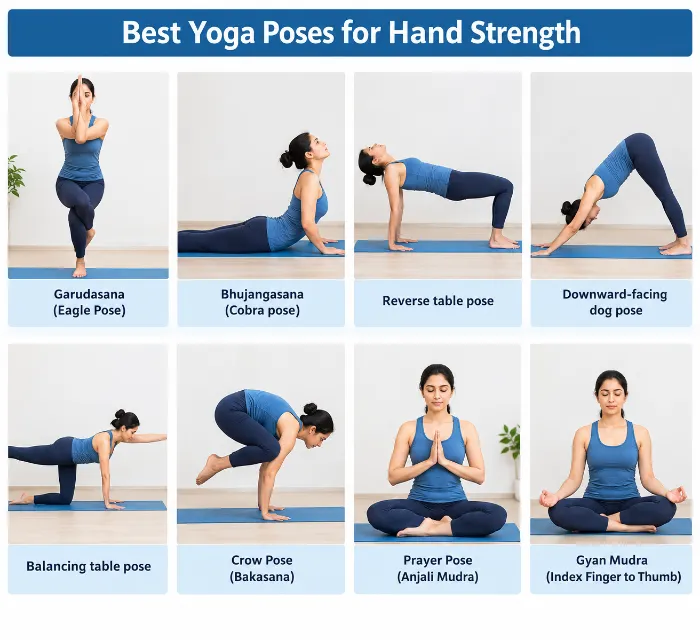
Garudasana (Eagle Pose)
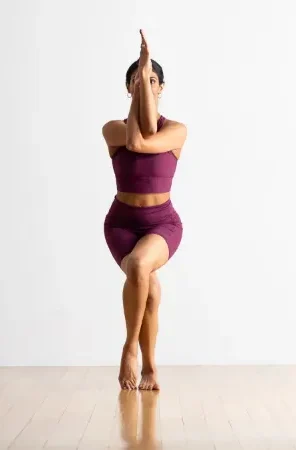
- Transfer your weight to your left foot after starting in mountain pose.
- Cross your right thigh across your left thigh and raise your right foot off the ground.
- With your arms parallel to the floor, extend them in front of you.
- Bend your arms and hook them together at the elbows by crossing your left arm over your right.
- Maintaining your spine perpendicular to the ground, raise your elbows to shoulder height.
- After a few breaths of holding, let go.
Bhujangasana (Cobra pose)
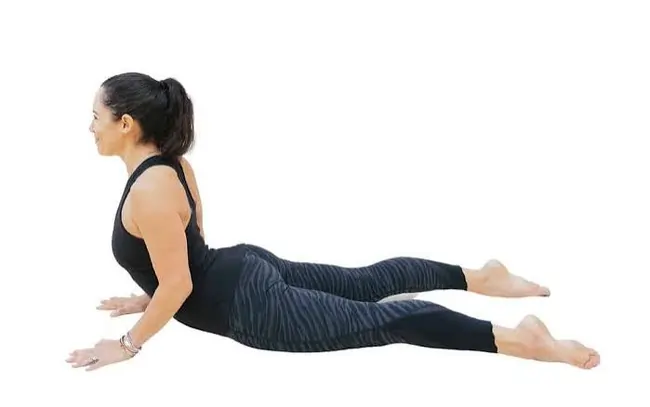
- Start by resting on your stomach with your elbows close to your body and your hands under your shoulders.
- As you take a breath, raise your chest from your back, roll your collarbones up, and firm your shoulder blades into your upper back, slightly lowering your spine.
- With no weight in your hands yet, raise your head last and open your heart.
- As you release your breath, descend once again.
Reverse table pose
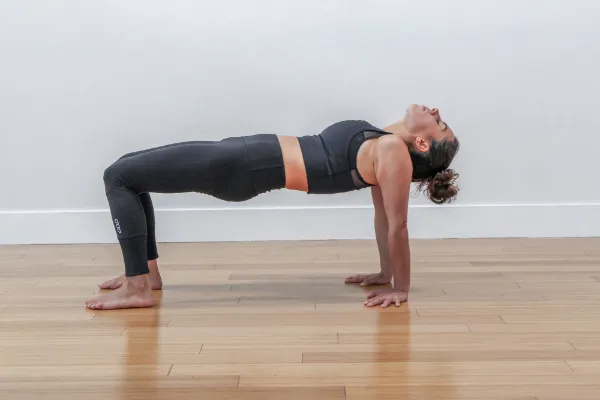
- Sit with your legs straight in front of you to begin.
- Make sure both of your feet are on the ground by bending your knees.
- With your fingers facing in your direction, place your hands shoulder-width apart on the carpet behind you.
- While applying hard pressure to your hands and feet, raise your hips. Straighten your arms until your body is parallel to the floor and your knees are at a 90-degree angle. The most important thing to do is to place your wrists just behind your shoulders.
- Hold for a few breaths while maintaining a neutral neck position, then let go.
Adhomukh Swanasana(Downward-facing dog pose)
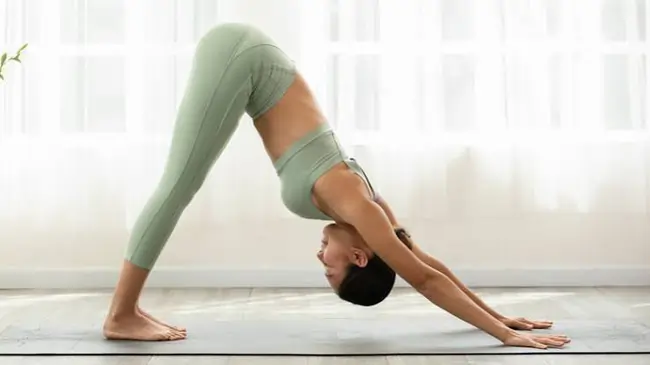
- Lift your hips toward the ceiling by starting from the table position and pressing onto your hands.
- With the middle finger pointing forward and the palms shoulder-width apart, spread your fingers widely apart. Using your fingers and the edges of your hands, press outward.
- To maintain a straight and long spine, raise your hips and rise through your tailbone.
- Feel the backs of your legs expand as you press your heels into the ground.
- In order to maintain a flat back, the legs might be straight or slightly bent at the knees.
Balancing table pose
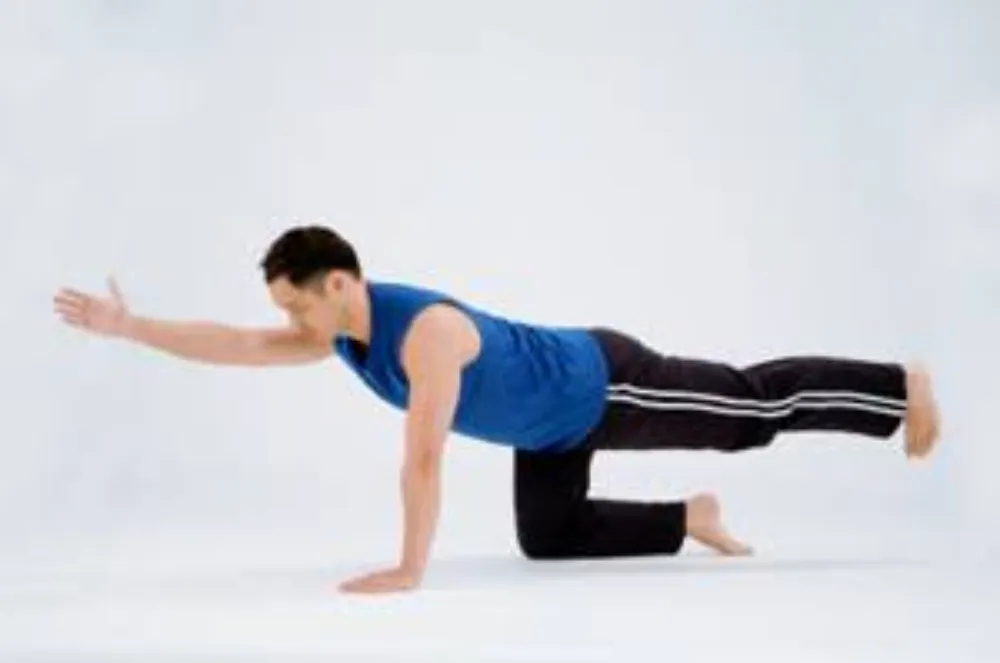
- Get down on your hands and knees and look down.
- Stretch your left arm forward and bring your stomach closer to your spine.
- Reach back with your right leg.
- Repeat on the other side after holding for a few breaths.
Bakasana(Crow Pose)
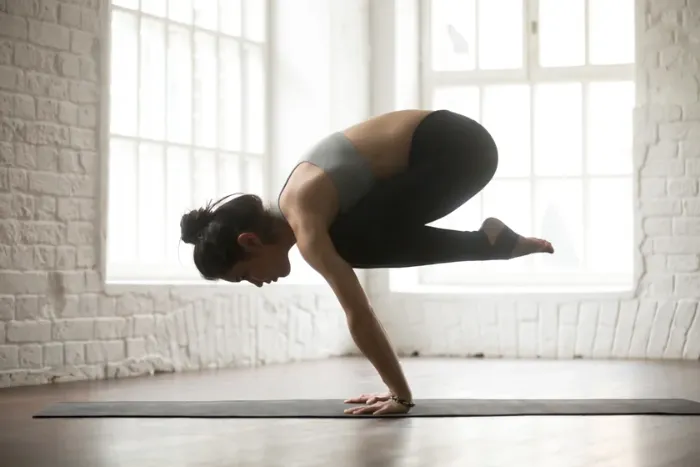
The most difficult yoga pose for hands is Bakasana, which involves balancing the knees on the upper arms with the hands on the floor. By using complete bodyweight loading, this pose maximizes wrist and forearm strength. The majority of practitioners gradually aim for this objective hand strength pose.
- Place your hands firmly on the floor in front of you and begin in a deep squat with your feet hip-width apart.
- Press your palms equally onto the floor while spreading your fingers wide.
- Place your legs close to your armpits or against your upper arms while bending your elbows slightly.
- As you move your body weight onto your hands, lean your shoulders and chest forward.
- Bring your heels close to your buttocks as you slowly raise one foot off the ground and then the other.
- Instead of staring straight down, keep your eyes slightly forward and contract your abdominal muscles.
- Keep your balance and breathe properly while you hold the position.
- Hold for ten to thirty seconds, or as long as it feels comfortable.
Prayer Pose (Anjali Mudra)
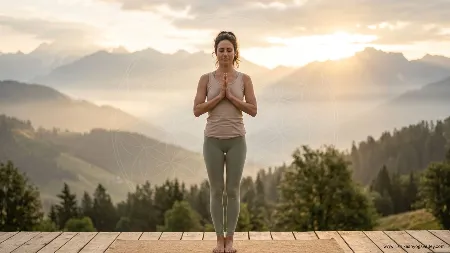
Anjali Mudra, which involves pressing hands together in prayer at the chest, counteracts the chronic wrist flexion caused by typing and phone use by gently extending the wrist, expanding the palmar fascia, and spreading the fingers. The more difficult variation for a deeper wrist extension stretch is reverse prayer, which involves pressing the hands together behind the back and pointing the fingers upward. For a thorough upper body opening exercise, combine it with yoga for proper form.
- Maintain a straight spine and relaxed shoulders while standing or sitting comfortably.
- The palms of both hands should contact when you bring them together in front of your chest.
- Keep your thumbs lightly pressed on the middle of your chest, and your fingers pointed upward.
- Maintain a comfortable elbow position that is somewhat distant from your body.
- Close your eyes if comfortable and take calm, steady breaths.
- For 20 to 30 seconds, or as much time as it feels comfortable, hold the position.
- Relax and slowly drop your hands.
Gyan Mudra (Index Finger to Thumb)
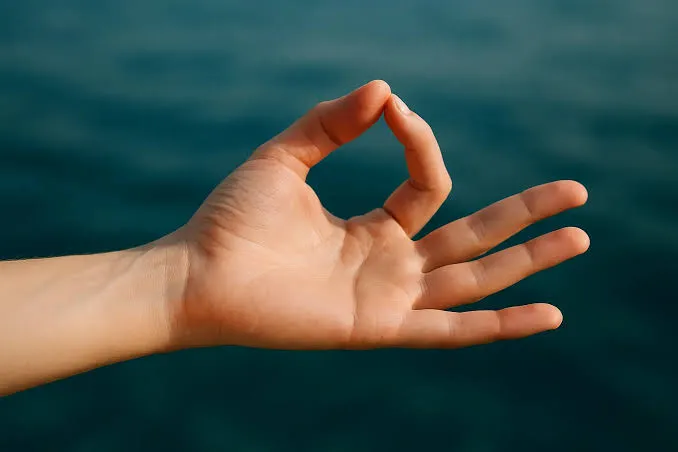
The most popular yoga mudra for hands is Gyan Mudra, which involves extending the remaining fingers while connecting the index fingertip to the thumb tip. It improves fine motor skills, activates the nerve pathways in the fingers, and may increase hand circulation when held for fifteen minutes. Frequent mudra practice also improves joint awareness and finger dexterity, which protects against hand injuries.
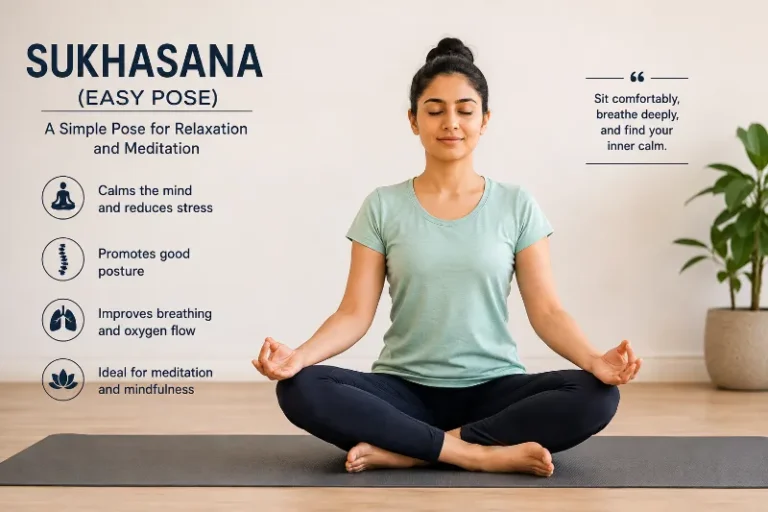
- Sukhasana (Easy Pose) or any other comfortable sitting position with an upright spine is preferable.
- With your palms facing up, lay your hands on your knees or thighs while letting your shoulders drop.
- Gently press each hand’s thumb and index finger tips together.
- The middle, ring, and little fingers should stay relaxed and stretched.
- Avoid putting undue strain on your hands or wrists and maintain a relaxed elbow position.
- Breathe deeply and naturally while closing your eyes.
- As tolerated, hold the mudra for five to fifteen minutes.
- After the exercise is finished, relax your hands and gently release the fingers.
Precautions:
- Don’t push the fingers, wrists, or thumbs into extreme postures; rather, start with light movements and then increase the intensity.
- When performing weight-bearing poses, be sure your fingers and wrists are properly aligned to minimize needless joint tension.
- If you feel severe pain, swelling, tingling, numbness, or noticeable weakening, stop the activity.
- If you experience severe wrist or hand pain, avoid bearing weight through your hands for extended periods of time or repeatedly.
- Adjust or stay away from positions that aggravate nerve compression, tendon damage, or arthritic symptoms.
- When necessary, relieve pressure on the hands by using a wall, yoga block, or other support.
- When extending your fingers, wrists, or forearms, avoid bouncing or making abrupt motions.
- During strengthening activities, don’t hold your breath; rather, breathe normally.
- Start with a low number of repetitions and then increase it based on your tolerance.
FAQs:
How to increase hand strength for yoga?
By actively using the intrinsic muscles of the hands and forearms, hand yoga and weight-bearing yoga poses improve grip, wrist, and finger strength.
How do I strengthen my weak hand?
Daily focused grip and finger exercises, such as wrist curls, towel wringing, and rubber band extensions, can help improve a weak hand.
What are some good hand asanas?
Hand asanas, also known as hasta mudras, are symbolic hand and finger motions used in yoga to improve concentration and guide energy flow.
How to remove hand weakness?
By performing certain strengthening and mobility exercises, changing your daily routine, and relaxing tense muscles, you can improve hand weakness.
How to strengthen hands for yoga?
By actively using the intrinsic muscles of the hands and forearms, hand yoga and weight-bearing yoga postures improve grip, wrist, and finger strength.
References:
- Zehra, S. (2026, August 13). Yoga for Hands – Habuild blog. Habuild Blogs. https://habuild.in/yoga-condition/yoga-for-hands/
- W, H. (2026, March 12). Hand yoga and 6 poses to benefit hands, fingers and wrists. Yooooga. https://www.yooooga.com/hand-yoga-and-6-poses-to-benefits-hands-fingers-and-wrists/
- Yoga for your hands and wrists. (2017, March 27). https://yogainternational.com/article/view/yoga-for-your-hands-and-wrists/?srsltid=AfmBOooHvj9iI816YVlKflyOZIUszpGrArrtZJxveHPKKaaVwegi_OOu