Best Yoga Poses for PCOS
Introduction
Around 70% of women of reproductive age go undiagnosed with PCOS. PCOS is a hormonal and lifestyle condition that affects 6-13% of women. It can cause you to feel low on energy, affecting your emotional health, periods, weight, and fertility. Common symptoms include unwanted excessive hair growth, acne, uncomfortable cramps, irregular periods, weight gain, and anxiety.
Hormone therapies and medications can help manage symptoms but often cause negative side effects and fail to address the root of the issue. A calming, efficient, and natural way to improve hormone balance, fertility, and emotional health is through yoga for PCOS.
What is PCOS & How Yoga Helps
Polycystic Ovary Syndrome (PCOS) is a hormonal disorder that can affect your ovaries and fertility and cause issues with your metabolism. Often, people will experience higher levels of male hormones (androgens), irregular or absent periods, small cysts on their ovaries, and many other physical and mental symptoms.
There are many different causes of PCOS, including:
- Insulin resistance affects up to 70% of PCOS-affected women.
- Hyperandrogenism (excess testosterone)
- Genetics.
- Lifestyle factors such as chronic stress, lack of sleep, and inflammatory foods.
Common symptoms of PCOS include:
Reproductive Symptoms:
- Period irregularities or absence
- Fertility problems or trouble becoming pregnant
- Ovarian tumors
Symptoms of Metabolism:
- Gaining weight, particularly in the abdomen
- Having trouble dropping pounds
- An elevated risk of type 2 diabetes and insulin resistance
Physical signs and symptoms
- Oily skin with acne
- Thinning or excessive hair loss
- Hirsutism, or too much face or body hair
How Yoga Helps with PCOS
Benefits of Yoga:
- Hormonal Regulation
- Decreased levels of cortisol (a stress hormone that worsens insulin resistance and disrupts sleep)
- Increased insulin sensitivity naturally
- Balances Progesterone and Estrogen
- Weight Management
- Assists in managing weight with gentle movement.
- Improves circulation to the whole body, with particular benefits to abdominal and pelvic areas.
- Easier digestion; reduces bloating.
- Mental and Emotional Well-being
- Mindfulness and breathing techniques reduce feelings of anxiety and sadness.
- Improves your confidence and body awareness.
- Creates space for inner stillness and emotional release.
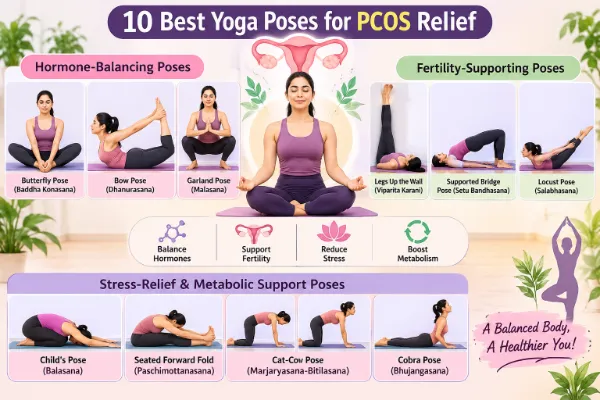
10 Best Yoga Poses for PCOS Relief
These yoga poses for PCOS focus on the main causes of PCOS (stress, hormonal imbalances, and infertility). They’re all therapeutic, versatile, and perfect for beginners. Practicing them regularly can really improve your fertility, get your cycles back on track, and reduce PCOS symptoms naturally:
- Butterfly Pose
- Bow Pose
- Garland Pose
- Legs Up The Wall Pose
- Supported Bridge Pose
- Locust Pose
- Child’s Pose
- Seated Forward Fold
- Cat-Cow Pose
- Cobra Pose
Hormone-Balancing Poses
These poses improve blood flow, reduce tension in the nervous system, and stimulate hormonal glands, helping to balance hormone levels and making them great for reducing symptoms such as tiredness, acne, and irregular periods.
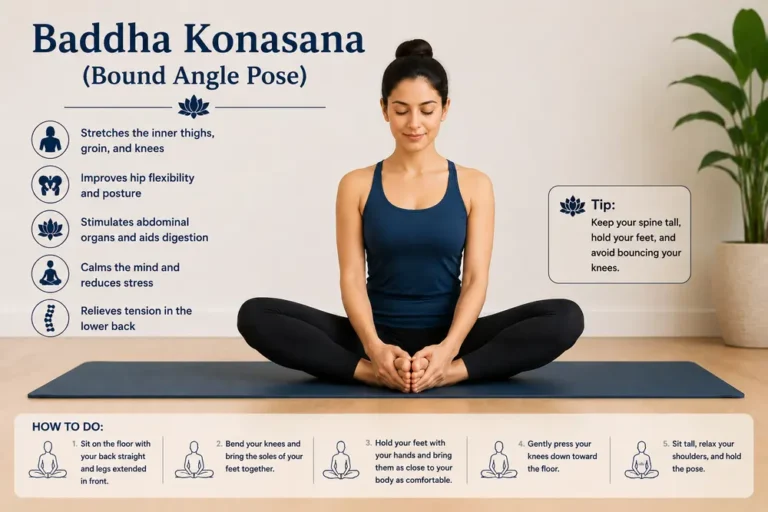
Baddha Konasana (Butterfly Pose)
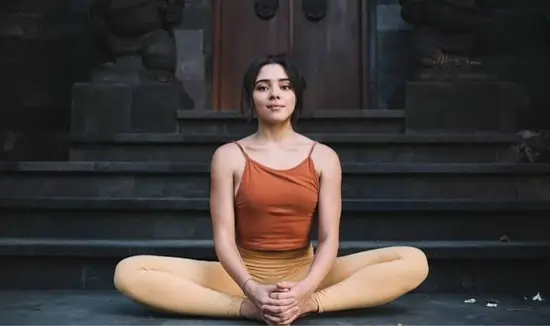
A seated hip opener that targets the reproductive organs to ease stress, increase blood flow through the pelvis, and stimulate the ovaries. A gentle way to improve menstrual health and hormone balance.
Steps:
- Sit with legs stretched out in front of you and back straight.
- Bring your knees down slowly to the side with the soles of your feet together.
- Move your feet closer to your pelvis and hold onto them.
- If you feel comfortable, arch your back and begin to fold forward from your hips, keeping your back flat.
- Gently ease out of the pose after holding for between 1 and 3 minutes.
Modifications:
- Place a cushion or yoga block under your knees
- If you are finding it difficult to bend forward, lean against a wall to help keep your back straight.
Dhanurasana (Bow pose)
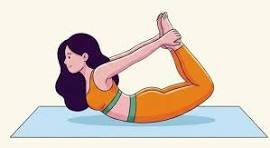
This backbend will help to balance your hormones, improve your metabolism, stretch out your entire front body, stimulate your endocrine glands, and improve your adrenal function and digestion.
Steps:
- Lie down on your front with your arms by your side.
- Bend your knees and bring your hands to your ankles.
- Inhale and lift your knees and chest off the floor; bring your shoulder blades together.
- Keep breathing steadily as you gaze forward.
- Repeat two or three times for 15-30 seconds.
Modifications:
- Use a strap for yoga if you can’t touch your ankles.
- Raise your chest higher than your legs if you have lower back pain.
Malasana (Garland Pose)
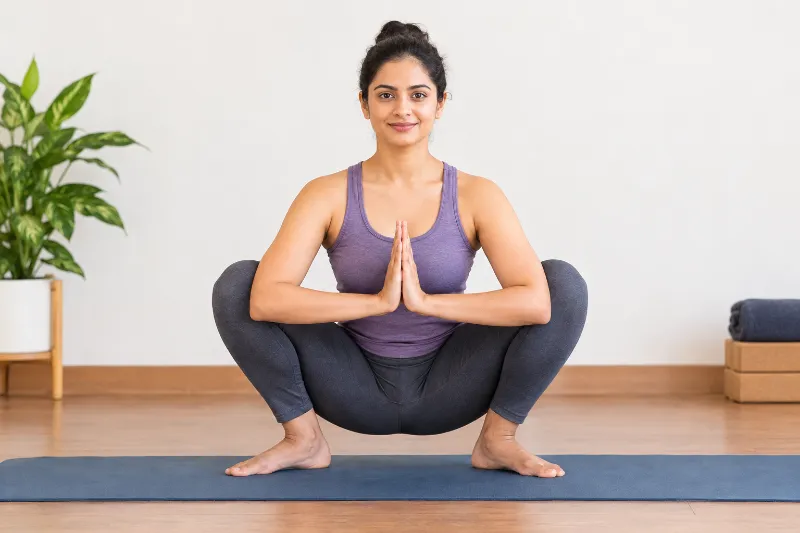
A powerful hip opener to aid digestion, elimination, calm the nervous system, and stimulate the pelvic organs.
Steps:
- Stand with your feet slightly wider than hip-width apart and turn your toes out slightly.
- Lower yourself into a deep squat by bending your knees.
- Press your elbows into your knees and bring your hands together in the centre of your chest to open your hips.
- Hold this pose, breathing steadily for one to two minutes.
Modifications:
- Sit on a yoga block for support.
- Place a rolled-up towel behind your heels for height if required.
Fertility-Supporting Poses
These positions reduce inflammation, increase blood flow to the reproductive organs, and create an environment within your body to support ovulation and conception. Ideal for women with PCOS who want to naturally conceive.
Viparita Karani (Legs Up the Wall)
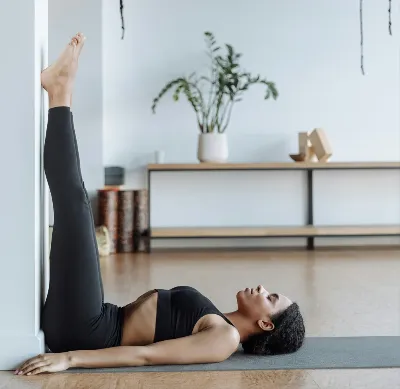
This position will help increase blood flow to your uterus and ovaries, calm your nerves, and reduce any inflammation in the lower half of your body. All of these can help improve your fertility.
Steps:
- Sit sideways so one hip is touching the wall.
- Lie back on your yoga mat and lift your legs against the wall.
- Adjust your position according to how flexible you are. Ensure your bottom is close to or slightly away from the wall.
- Place your hands by your side, facing upwards.
- Stay in this position for 3-5 minutes, ensuring you are breathing deeply into your belly.
Modifications:
- Place a small pillow or bolster under your hips.
- Use a towel to cover your eyes or a pillow to support your neck.
Setu Bandhasana (Supported Bridge Pose)
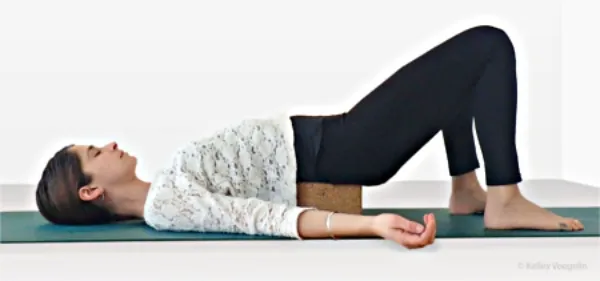
This mild backbend stimulates the reproductive glands, opens the hips, and enhances pelvic circulation. Additionally, it calms the neurological system, reducing tension and promoting serenity.
Steps:
- With your feet hip-width apart and close to your hips, lie on your back with your knees bent.
- Raise your hips and place a block, pillow, or bolster beneath your sacrum, which is the flat spot directly above your tailbone.
- Relax and fully rest your weight on the support.
- Breathe in slowly into your abdomen or chest, then exhale to let go of all your stress and anxiety.
- After two to three minutes of holding, carefully let go.
Modifications:
- Use your thighs and glutes to do this move without any support for an added challenge.
- Your arms can be at your side or lifted above your head.
Salabhasana (Locust Pose)
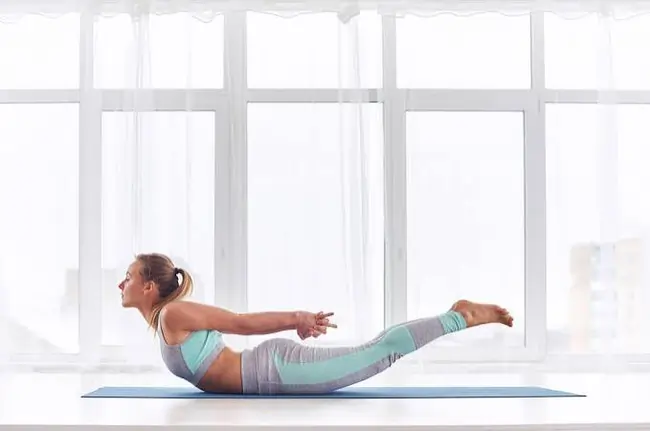
This asana will stimulate your thyroid and adrenals, strengthen your lower back, core, and pelvic floor muscles. It will increase blood flow to your reproductive and abdominal organs. This pose also helps to balance your hormones, improve energy levels, improve posture, and boost metabolism.
Steps:
- Lie flat on your stomach with your arms at your sides and your palms facing upwards.
- Lift your arms, legs, and torso as you inhale.
- Keep your neck in a neutral position and gaze slightly forwards and downwards.
- Squeeze your inner thigh muscles and glutes, whilst pulling your shoulder blades together.
- Breathe deeply for up to 20-30 seconds.
- Release the pose on the breath out.
- Take a break between each of the three repetitions.
Modifications:
- For a more thorough stretch, put your hands under your thighs.
- Start by lifting only your top or bottom half if you find it difficult to fully engage.
Stress-Relief & Metabolic Support Poses
These positions will help with digestion, lower cortisol levels and will cause the body to enter a relaxation state. This leads to hormonal balance and better metabolic health.
Balasana (Child’s Pose)
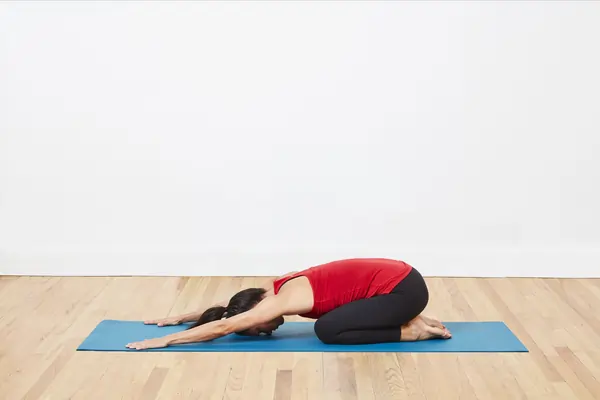
This is a very calming position that will give your body the chance to switch on its parasympathetic (rest and digest) nervous system. This can help to rebalance your adrenals and reduce cortisol.
Steps:
- Kneel on the floor with your legs wide apart and big toes together.
- Sit back onto your heels with your arms at your sides or forwards.
- Place your forehead onto a pillow/block/mat.
- Exhale through the bottom of your belly and back ribs to encourage release.
- Hold for 1-2 minutes and then gently release.
Modifications:
- Place a cushion or bolster under your upper body for added comfort.
- Bring your knees together to provide more support for your lower back.
Paschimottanasana (Seated Forward Fold)
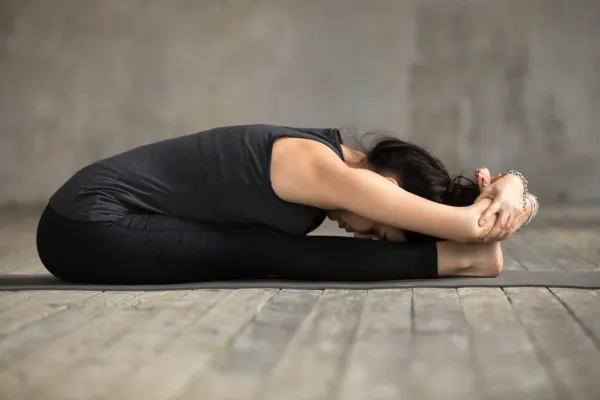
This pose will help relieve stress, encourage healthy digestion, and massage your abdominal organs. This pose will help you focus inwards, allowing you to be more mindful of your body.
Steps:
- Sit with your legs stretched out in front of you.
- Exhale and bend forward from your hips. Inhale and elongate through your spine.
- Try to reach your shins/ankles/feet.
- Hold this position for 1-2 minutes and then release.
Modifications:
- Place a rolled-up blanket under your knees and slowly bend your knees.
- Use a strap around the feet if you cannot reach.
Marjaryasana-Bitilasana (Cat-Cow Pose)
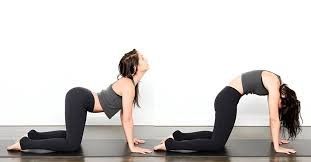
Helps to reduce tension in the lower back and abdominal region, increases spinal mobility, and aids digestion.
Steps:
- Begin with your hands under your shoulders and your knees under your hips.
- Take a breath, raise your chest and tailbone, and drop your abdomen (cow position).
- Exhale and draw in your tummy and tip your chin into your chest, whilst moving your spine in a circular motion (cat pose).
- Repeat, following your breathing pattern for 8-10 times.
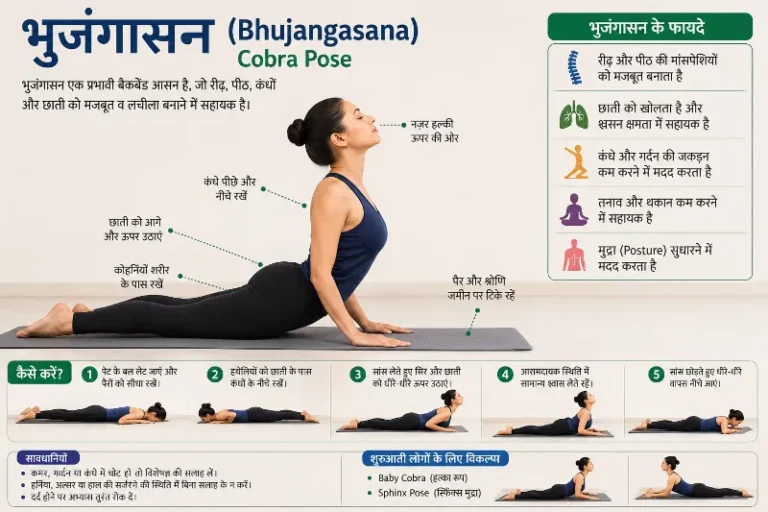
Bhujangasana (Cobra Pose)
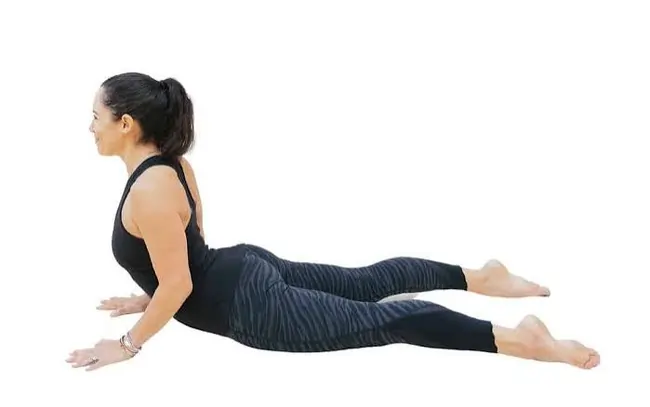
A mild backbend that will activate your adrenal glands and extend your chest. It will also improve the functionality of your thyroid and reproductive system. Great for reducing stress and improving your metabolism.
Steps:
- Place your feet flat on the mat while lying on your front.
- Place your palms under your shoulders with your elbows tucked in.
- Take a breath and gently push down into your palms. Lift your chest.
- Keep your shoulders loose and your elbows bent slightly.
- Hold here for between 30-60 seconds, then carefully release.
Modifications:
- To make it easier, you can just raise your chest off the ground whilst keeping your forearms on the ground.
- Engage your lower abs to protect your lower back.
Safety Tips
- Start at a low intensity; as you feel your body getting comfortable, gradually increase the difficulty of your yoga poses.
- Avoid stretching too far. Avoid putting yourself in any positions that make you uncomfortable. To ensure you are not overstretching your muscles, do not go past your flexibility.
- Listen to your body. If you feel any pain, dizziness, nausea, or strange feelings, stop doing yoga.
- Breathe slowly. Whilst doing yoga, ensure you are breathing slowly and calmly throughout each pose.
- Drink plenty of water. Ensure you are well hydrated by drinking water before and after your yoga.
Conclusion
Yoga can be a really calming and effective way to help manage PCOS symptoms. It helps you to stay balanced, focused, and aware of your health by helping to support your hormones, reduce stress, and get your cycle back into balance. Unlike intense exercise and medication, which can cause unwanted side effects.
FAQs:
What are the 5 signs of PCOS?
Symptoms:
Irregular period
Infertility
Too much hair on the face, chin, and other areas on the body where men usually have hair (hirsutism)
Oily skin and spots on the face, chest, and upper back.
Male pattern baldness.
Is yoga good for PCOS?
Yoga can really help you manage PCOS. Medical professionals are now recommending Yoga more often. It can help regulate your periods, reduce stress-induced cortisol, improve insulin sensitivity, and help balance your hormones. This is because it also stimulates the parasympathetic nervous system, reducing stress, balancing the endocrine system, and reducing inflammation.
Is yoga beneficial for irregular periods and PCOS fertility?
Yes! Yoga can greatly improve your regularity and fertility with PCOS. It will reduce stress levels, help balance hormones, and reduce insulin resistance. Regular yoga practice can improve the functioning of the hypothalamic-pituitary-ovarian axis and help regulate your periods. However, yoga should be paired with a holistic approach including healthy eating and medical intervention.
Can yoga replace medical treatment for PCOS?
Yoga is an excellent complementary therapy for PCOS. However, you should still seek medical advice. Yoga can help to improve the effectiveness of treatment and reduce negative effects. Always look for advice from your healthcare professional before changing any medication or treatments. Whilst yoga can significantly improve quality of life, reduce symptoms and improve overall health, often PCOS will require medical management to achieve the best results. The best approach to managing PCOS will include stress management, eating well, yoga, and making changes to your lifestyle.
Is hot yoga safe for women with PCOS?
Hot yoga is certainly possible to practice, but many women with PCOS will find regular or gentle (non-hot) yoga more sustainable and beneficial. Hot yoga does, however, need extra care; heat can make you feel more tired, cause increased mood swings, and can cause problems for the adrenal glands, which are already delicate. If you do choose to practice hot yoga, then make sure you stay well hydrated. Limit the number of sessions to two or three per week. Listen to your body, and if you begin to feel dizzy or extremely tired, stop.
References:
- Rushali. (2026a, October 26). Yoga for PCOS: 10 Poses for Hormonal Balance & Fertility Support. MyYogaTeacher. https://myyogateacher.com/articles/yoga-for-women-with-pcos
- The Yoga Institute. (2022, July 4). Yoga For PCOS, Overcoming PCOS & infertility – The Yoga Institute. The Yoga Institute. https://theyogainstitute.org/yoga-healing-for-overcoming-pcos-infertility
- Lindberg, S. (2026, July 9). Can yoga relieve symptoms of PMOS? Healthline. https://www.healthline.com/health/yoga-for-pcos#poses-that-help
- 5 effective yoga poses for PCOS Every woman should know. (n.d.). Birlafertility. https://birlafertility.com/blogs/effective-yoga-poses-for-pcos/