10 Best Yoga For Tennis Elbow
Yoga may help support recovery from tennis elbow (lateral epicondylitis) by gently improving flexibility, mobility, and strength in the wrist, forearm, and upper limb.
Gentle poses and stretches should be performed without increasing pain, while avoiding movements that place excessive strain on the affected elbow.
What Is Tennis Elbow?
Lateral epicondylitis is the medical term for tennis elbow. It affects the muscles on the outside of your forearm that extend your fingers, wrist, and elbow (the carpi radialis brevis and longus, extensor digitorum communis, and extensor carpi ulnaris), as well as the tendons that attach to the lateral epicondyle, the outside of the elbow.
Similarly, the medial epicondyle on the inside of the elbow is affected by the less common condition known as golfer’s elbow or thrower’s elbow. Tennis players may also occasionally develop medial epicondylitis from the forehand stroke.
Tendonitis or tendonosis may be referred to as tennis elbow: Small tears to the elbow, wrist, and finger extensor tendons become irritated when tendonitis occurs. When tendonosis occurs, the elbow extensor tendons deteriorate even though there isn’t any inflammation at the moment due to repetitive irritation. Tendonosis is a “reflexive,” or chronic, condition that can last months, whereas tendonitis is an acute injury that lasts days or weeks.
There are about a million new cases of tennis elbow in the US per year, assuming the findings of one recent population study are generalizable. According to the same study, people between the ages of 40 and 60 are most likely to develop tennis elbow (with women having a slightly greater prevalence than men). Repetitive motions like the tennis serve, forehand, and backhand typically cause and aggravate tennis elbow.
If the strings are excessively tight or your racket is too heavy or stiff, these strokes are particularly dangerous. Tennis elbow can also result from poor technique, such as “leading” with your elbow, making a backhand stroke with your wrist flexed rather than stretched, or failing to release your grip quickly enough when the racquet strikes the ball.
Tennis Elbow Is Not Just Caused by Tennis
However, “tennis” elbow may be a misnomer: Tennis players account for only 10% of all cases of elbow pain, despite the fact that 50% of tennis players report elbow pain, of which 75% is “true” tennis elbow.
“Any activity that consistently exceeds a tissue’s physical capacity can cause that tissue to become inflamed.” Thus, the volleyball serve, playing instruments like the violin, guitar, or cello, scanning barcodes, lifting weights, physical labor (such as swinging a hammer or using a chainsaw), cooking, gardening, or working on assembly lines can all cause symptoms. Even playing video games and arcade games can cause tennis elbow.
Wrist and elbow extension (extending an arm straight out in front of you while creating a “stop sign” with your hand) with weight applied is the repeated movement that can cause tennis elbow in any of these situations. The previously discussed backhand swing in tennis, push-ups, and the shift from an upward-facing dog pose in yoga are examples of weight-bearing wrist and elbow extension.
Role of Yoga in Managing Tennis Elbow
Yoga is an age-old discipline that incorporates breathing techniques, physical postures, and meditation. It has been shown to improve musculoskeletal health, relaxation, and general well-being. Yoga can benefit people with tennis elbow by strengthening the forearm muscles, lowering inflammation, and improving blood flow.
Common Mistakes and How to Avoid Them
To prevent typical hazards when practicing yoga with tennis elbow, conscious attention is necessary:
Ignoring Pain: Your body uses pain as a warning to halt. When practicing yoga, never push past pain.
Skipping Warm-Up: In order to prepare your muscles and joints and lower your chance of injury, you must properly warm up.
Overdoing Frequency: Moderate yoga practice is recommended. As your strength increases, start with shorter sessions and progressively increase them.
Benefits of Yoga for Tennis Elbow
May Help Relieve Extensor Tendon Tension: The extensor carpi radialis brevis tendon and the common extensor origin at the lateral epicondyle are the two anatomical structures that are immediately targeted. Tendon strain and the resulting lateral elbow pain are lessened by regular, prolonged stretching.
Supports Tendon Healing Through Circulation: Since tendons have a low baseline blood supply, circulatory improvement is particularly beneficial. In addition to the basic circulatory benefits of regular exercise, yoga poses that mobilize the wrist and elbow boost the blood supply necessary for tendon regeneration.
Maintains Wrist and Elbow Mobility During Recovery: Due to protective guarding, tennis elbow frequently results in secondary elbow and wrist stiffness. Throughout the healing process, yoga’s mild wrist and elbow mobility exercises preserve range of motion, avoiding compounding constriction.
Reduces Pain, Anxiety, and Movement Avoidance: The anticipatory tension that chronic tennis elbow produces around gripping and forearm movements paradoxically worsens the mechanical environment of the tendon. The attentive movement practice of yoga restores self-assured, pain-aware forearm engagement.
Addresses the Full Upper Limb Chain: Tennis elbow is not an independent condition. Lateral elbow symptoms are often caused by shoulder stiffness and tension in the cervical spine. This entire chain is addressed by yoga’s whole-body method, which is a significant benefit over individual elbow stretches.
Best Stretches and Yoga Poses For Tennis Elbow
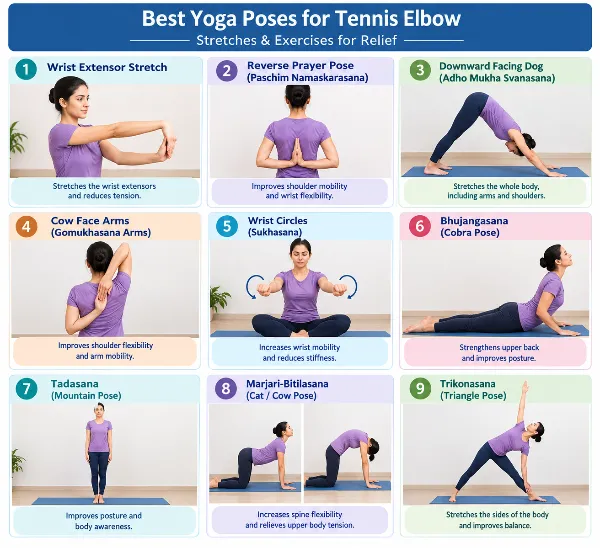
Wrist Extensor Stretch
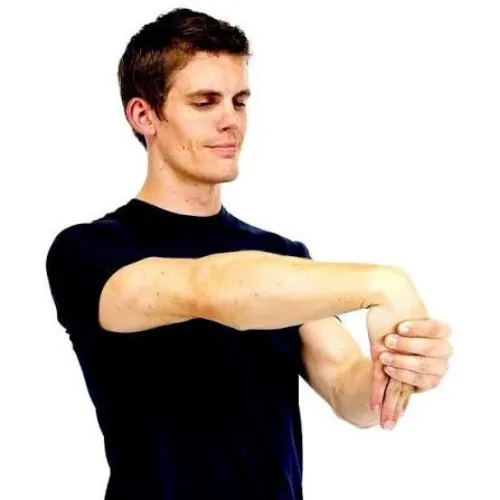
Put one arm out in front of you, palm down. The wrist extensors and common extensor tendon at the lateral epicondyle can be stretched by using the opposing hand to gently flex the wrist down. Hold for 30 to 60 seconds, three times on each side. This is the most straightforward and focused yoga pose for relieving tennis elbow pain; it should be done consistently in the morning and evening.
- Stand or sit with your elbow completely extended and your arm straight in front of you.
- Your palm should remain down.
- To gently bend the wrist, use your other hand to pull the fingers down and toward your body.
- Maintain a straight elbow and a relaxed shoulder.
- The back and outside of your forearm should feel somewhat stretched.
- For 20–30 seconds, hold.
- As permitted, repeat 2–3 times.
How it helps: It directly lengthens the overworked extensor carpi radialis brevis and reduces stress in the lateral epicondyle tendon.
Reverse Prayer Pose (Paschim Namaskarasana)
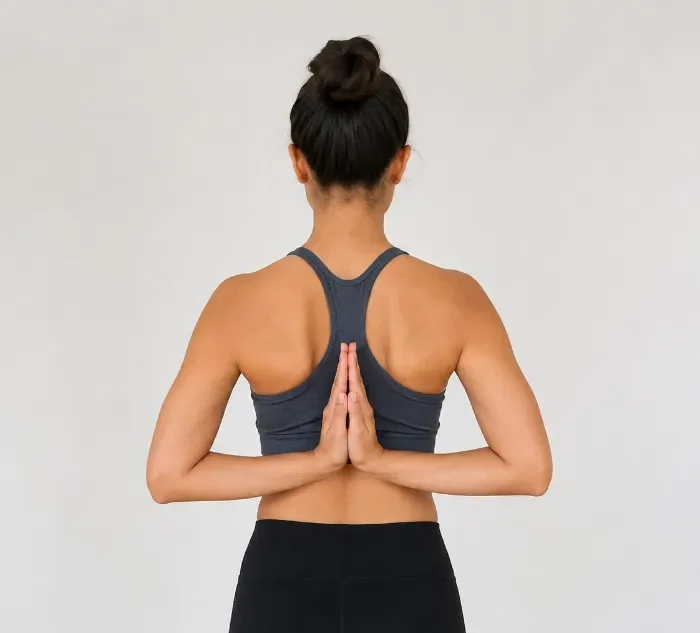
The reverse prayer posture is to place both hands behind the back with the palms together and the fingers pointing up. Hold for ten calm breaths. This is one of the most comprehensive single yoga poses for tennis elbow extensor stretching because it produces a prolonged, deep stretch of the forearm and wrist extensors from the shoulder through the elbow to the wrist.
- Maintain a straight spine and relaxed shoulders whether standing or sitting.
- Bend your elbows while placing both arms behind your back.
- With your fingers pointing up, bring your hands together behind your back.
- Ideally, the palms should be in the middle of your upper back, as close together as is comfortable.
- Without raising your shoulders, slowly bring your shoulder blades back and down.
- Breathe regularly while keeping your chest open.
- For 20–30 seconds, maintain the posture.
- Relax your arms and let go of your hands gradually.
How it helps: It offers a full-chain extensor stretch that is not possible with wrist stretches alone.
Downward-Facing Dog (Adho Mukha Svanasana)
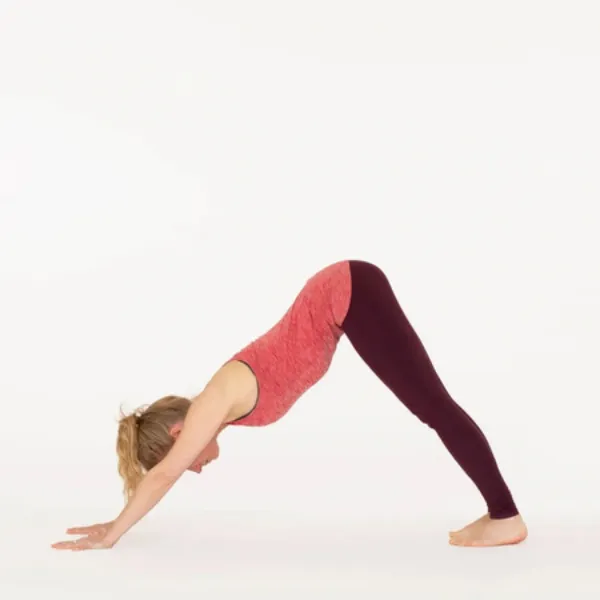
The eccentric loading of the extensor tendon produced by Adho Mukha Svanasana with wrists externally rotated (fingers pointing slightly outward) is the loading pattern supported by rehabilitation studies for tendinopathy recovery. As the pain decreases, start with five breaths and work your way up to ten. When the acute pain starts to subside, introduce this posture; avoid it during the most severe, acute phase.
- Place your hands behind your shoulders and your knees beneath your hips to begin on your hands and knees.
- Press your palms firmly against the ground while spreading your fingers.
- Lift your knees gradually while tucking your toes under and pulling your hips back and up.
- As comfortably as you can, straighten your legs while maintaining your heels pointing downward.
- Relax your neck and keep your head between your arms.
- Maintain a long back while softly pressing your chest toward your thighs.
- Breathe normally while holding the position for 20 to 30 seconds.
- Return to the beginning posture after slowly bending your knees.
How it works: It stimulates tendon change and strengthening by applying gradual eccentric strain through the extensor chain.
Cow Face Arms (Gomukhasana Arms)
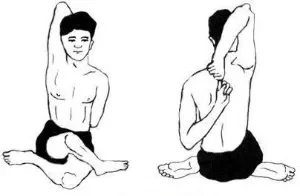
Gomukhasana arms release the whole soft tissue chain that is affected by chronic tennis elbow tightness by creating a full lateral arm chain stretch from the shoulder through the elbow to the forearm. Ten breaths should be held on each side. Given that strain in the upper back and shoulders frequently contributes to arm stiffness, this is a perfect complement to yoga for spinal cord health.
- Maintain a straight spine and relaxed shoulders whether sitting or standing.
- Lift your right arm over your head and bend the elbow so that your hand can reach behind your neck.
- Bend the elbow upward while bringing your left arm behind your back.
- Try putting both hands’ fingers together behind your back.
- Don’t thrust your head forward; instead, keep your chest up.
- Breathe normally while holding the stretch for 20 to 30 seconds.
- Repeat on the other side after slowly releasing your hands.
How it is beneficial relieves the shoulder and elbow restrictions that sustain tendon stress by releasing the whole lateral arm chain.
Wrist Circles

Extend both arms while sitting in Sukhasana, then do ten rounds of slow, complete wrist rotations in each direction. This preserves the range of motion in the wrist and elbow joints that the protective guarding of tennis elbow tends to limit during recovery.
- Sukhasana (Easy Pose) requires you to sit comfortably with your shoulders relaxed and your spine straight.
- Both arms should be extended forward to shoulder height.
- Make soft fists or keep your fingers loose.
- Rotate both wrists slowly in a clockwise direction.
- While breathing normally, do 8–10 circles.
- Rotate your wrists eight to ten times in a counterclockwise motion.
- Drop your arms and let your hands drop.
How it helps: Maintains synovial fluid distribution and joint mobility during the healing process.
Bhujangasana (Cobra Pose)

- Keep your arms at your sides while you lie on your stomach. Your legs should be hip-width apart.
- Now, straighten your hands and press on the floor while arching your upper body from the hips.
- Stretch your body so your head and chest are facing forward. Always keep your stomach expanded and your chest pushed out, your shoulders relaxed and pressed down, and your pelvis touching the floor.
- Take a breath and hold it for five to seven breaths. Breathe out and return to your lying position.
How it helps: Cobra pose benefits your arms, wrists, joints, and nerves. It provides a static and dynamic stretch for your arms. You may reduce the pain and establish coordination between your elbows and wrists by actively practicing it on a regular basis. It also helps improve flexibility, stretch the muscles in the upper and lower back, and even aid in removing excess fat from the abdomen.
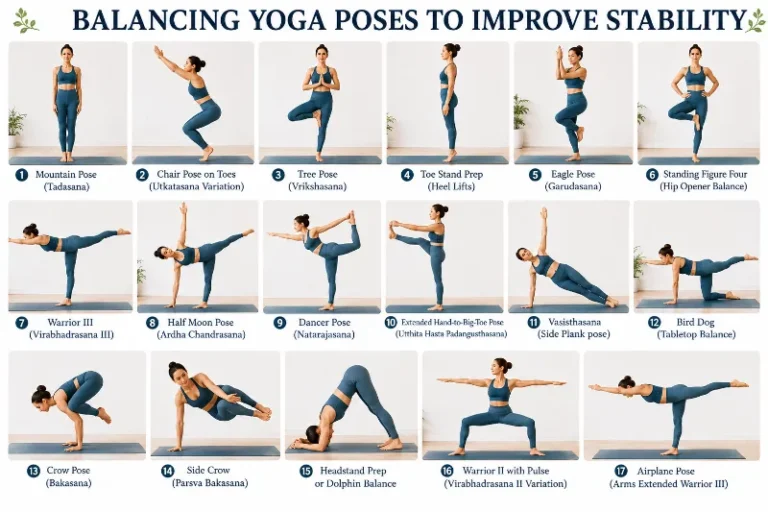
Tadasana ( Mountain Pose)
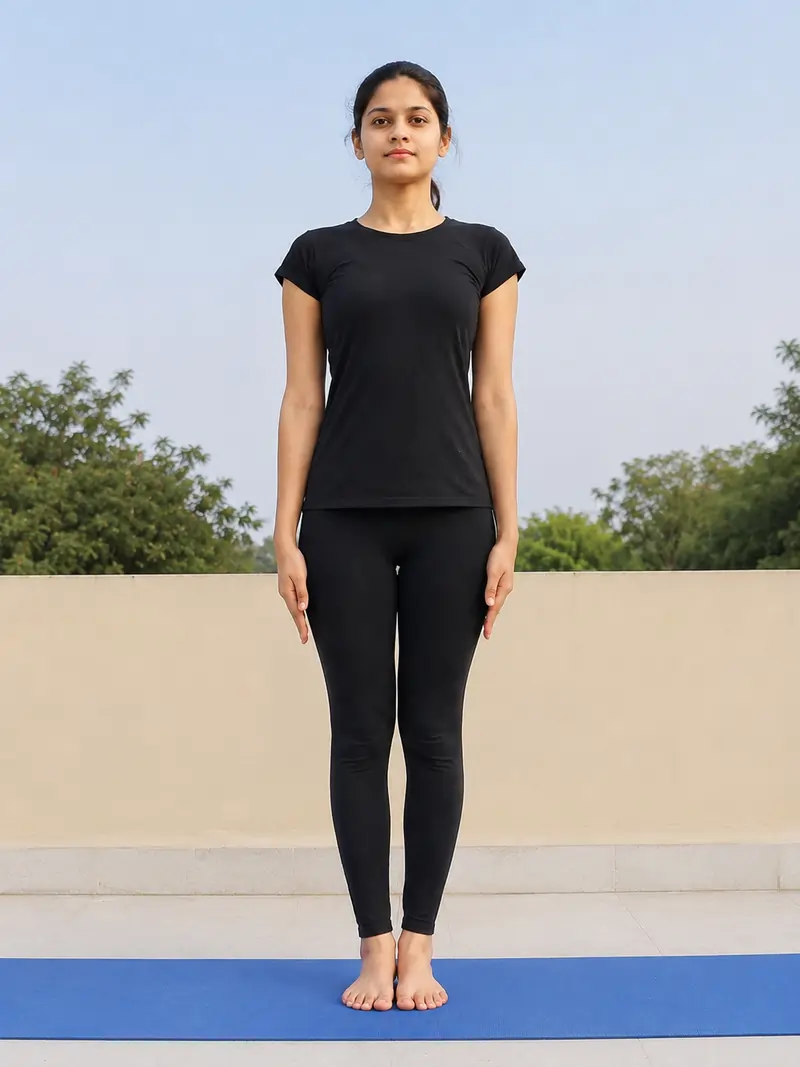
- Raise both arms in front of you to a height equal to your shoulders while standing erect.
- Turn your wrists so that the palms are facing outward and interlock your fingers.
- Extend your arms over your head and straighten them.
- Stretch your fingertips all the way to your shoulders.
- Stretch for 30 to 60 seconds, pause for a minute, and repeat five times.
How it helps: The mountain pose, one of the simplest yoga poses and a key component of the Surya Namaskar, is crucial for extending every region of the body. The stretch or elongation from the hips to the arms causes postural pressure, which reduces elbow pain. Additionally, it strengthens the knees, thighs, and ankles and increases the flexibility of the backbone.
Marjari-Bitilasana (Cat / Cow Pose)
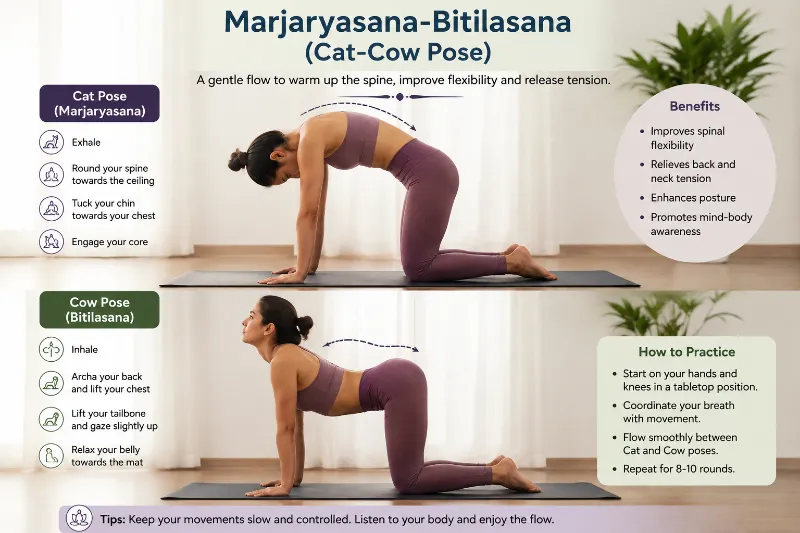
- Keep your head up and go down on all fours.
- Take a deep breath, lift your chin, and push your head slightly.
- Breathe in and out deeply while holding this position for 30 seconds or as long as it feels comfortable, keeping your buttock muscles motionless.
- Exhale and raise your backbone to the heavens.
- As much as you can comfortably arch your back, release your buttock muscles.
- After holding this position for a while, repeat it four more times.
How it helps: The two sides of a yin-yang resemble the Cat-Cow posture. It is essential for increasing circulation, opening up the body’s channels, and reducing uncomfortable sensations throughout the body. Additionally, it causes the body and mind to relax, reducing swelling and inflammation in all of the muscles, tendons, and joints.
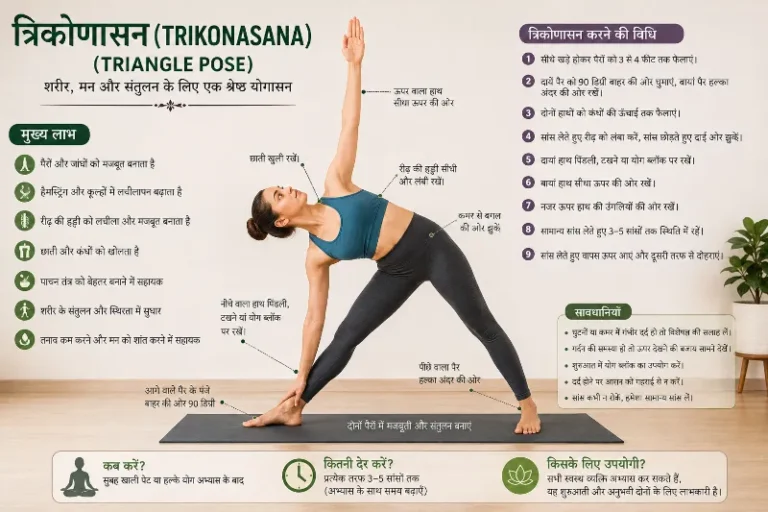
Trikonasana (Triangle Pose)
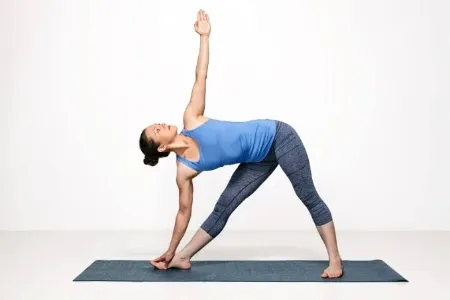
- Keep your feet together and maintain an upright posture.
- Place your arms on each side of your body.
- Now raise your left hand and slowly widen your legs apart. Inhale, bend to your right, and maintain balance by placing your right palm on the ground.
- Raise your head, look at the fingertips of your left hand, and count to twenty. Additionally, repeat the position on the left side.
- After pausing for a minute, repeat the complete pose four more times.
How it helps: The Triangle Pose is a great way to develop your arms, legs, and chest muscles. In addition to improving blood flow in the arms and reducing elbow tendon pain, it also aligns the spine, promotes balance, corrects posture, and relieves general tension.
Precautions:
- Yoga should be mild and avoid making forearm or elbow pain worse. Although loads should be started gradually, exercise is often suggested.
- During yoga, avoid making sudden, repeated motions with your wrist and forearm. Lateral epicondylitis can be worsen by repetitive gripping and wrist movements.
- If pain persists after the workout or symptoms get worse over time, stop the activity and lighten the load.
- To relieve strain on the wrist and elbow, adjust positions with a wall, chair, blocks, or fists or forearms.
FAQs:
Will yoga help tennis elbow?
Yes, by increasing blood flow, decreasing stiffness, and gently extending the forearm muscles, mild yoga can assist with tennis elbow.
How can a tennis elbow be healed the fastest?
Combining early physical treatment, particularly eccentric strengthening exercises, with activity modification and temporary pain relief is the fastest approach to recovering from tennis elbow.
Can tennis elbow heal naturally?
Tennis elbow is able to heal on its own; 80% to 95% of patients recover with at-home, non-surgical treatment.
What not to do with tennis elbow?
Tennis elbow requires you to avoid lifting items with a straight arm, strong gripping, and repetitive wrist extensions.
Why did I suddenly get a tennis elbow?
Repetitive gripping, lifting, or twisting motions created tiny tears in the forearm tendon that is linked to the outside of your elbow, which is why you suddenly developed tennis elbow.
How to tell if a tennis elbow is healing?
When your grip strength increases and you experience less severe pain when performing daily chores like opening a doorknob or raising a coffee cup, you know your tennis elbow is improving.
References:
- Yoga for tennis elbow. (2019, July 15). https://yogainternational.com/article/view/yoga-for-tennis-elbow/?srsltid=AfmBOoog-zqDzlb39S9RZqwMAyF9yBXrL_pjwvnpF69GCzU9O9ksVcov
- Team, T. M., & Team, T. M. (2025, November 4). Yoga for tennis Elbow: Poses to do and avoid. Tenease. https://tenease.com/pub/articles/yoga-for-tennis-elbow-poses-to-do-and-avoid
- Zehra, S. (2026, August 13). Yoga for Tennis Elbow – Habuild blog. Habuild Blogs. https://habuild.in/yoga-condition/yoga-for-tennis-elbow/