Bhekasana (Frog Pose)
What is Bhekasana (Frog Pose)?
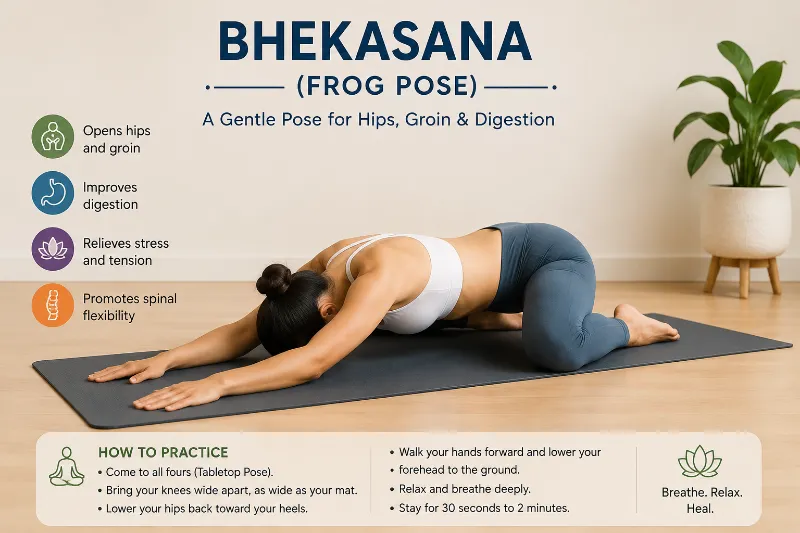
Frog Pose, also known as Bhekasana, is an intermediate-to-advanced yoga pose that improves flexibility throughout your body and activates your spine.
Because both Bhekasana and Bow Pose begin in a prone position, they resemble each other. Frog posture differs from bow pose in that you push your toes toward the floor at the sides of your glutes while pointing your elbows toward the ceiling.
For those with back discomfort, stomach problems, or weakness in their spine, this pose is perfect.
Overview & Etymology
Two terms from the old Sanskrit Hindu language are combined to form Bhekasana. The translations are “Bheka,” which means “frog,” and “Asana,” which means “pose.”
Swami Vishnudevananda originally defined this pose in his 20th-century book Illustrated Book of Yoga. In medieval Hatha yoga books, Bhekasana is not described in length as a yoga practice.
Nonetheless, frogs are said to represent fertility, luck, and awareness in Indian culture.
Sanskrit also refers to frogs as “Manuka,” which is the title of an old Upanishad called “Mandukya.”
The sixth Upanishad contains Mandukya, which primarily addresses the syllable “Om” or “Aum.” It introduces the idea of four levels of consciousness and declares that Aum is a representation of Brahman, a human being who is cognizant of existence and united with the supreme lord.
As Rishi Varuna did when he assumed the form of a frog, the Upanishad teaches us how to easily advance from the first to the fourth phase of self-awareness by consistent meditation.
- Sanskrit Name: भेकासन
- Pronunciation: Bhe-kaa-Suh-nuh
- Pose Type: Lying Backbend, Chest Opener
- Also known as: Frog Pose
- Strengthens: Spine, Neck, Shoulders, Back, Diaphragm, Glutes, and Abdomen
- Spine, Shoulders, Back, Abdomen, Chest, Throat, and Quads Stretches
Muscles Worked in Bhekasana
Bhekasana primarily engages and stretches:
- Quadriceps Muscle
- Hip flexors Muscle
- Hamstrings
- Ankles and feet
- Chest and shoulders
- Lower back muscles
Health Benefits of Bhekasana
Physical Benefits
- Improves flexibility in the thighs and hips
- Provides a deep stretch to the quadriceps
- Supports greater ankle mobility
- Opens the chest and front of the shoulders
- Encourages mobility through the hips
- Helps improve overall lower-body flexibility
- May support better posture when practised with proper alignment
Mental Benefits
Bhekasana requires concentration, controlled breathing, and patience. Regular practice may help improve body awareness, focus, and relaxation. Holding the pose with slow breathing can also create a mindful connection between movement and breath.
When to Avoid Performing Bhekasana?
- Avoid post-surgery.
- Avoid if you have knee or hip arthritis.
- Avoid if you have serious heart problems.
- Avoid if you have chronic lower back pain.
- Avoid temporarily if you are pregnant or menstruating.
- Steer clear if you have any back, neck, shoulder, or spine injuries.
How to do Bhekasana (Frog Pose)
Even though Bhekasana is an intermediate-to-advanced yoga pose, beginners should still attempt it.
We can help you develop the power and flexibility you need to complete Bhekasana flawlessly by following this comprehensive tutorial.
Part 1 – Preparatory Poses for Bhekasana
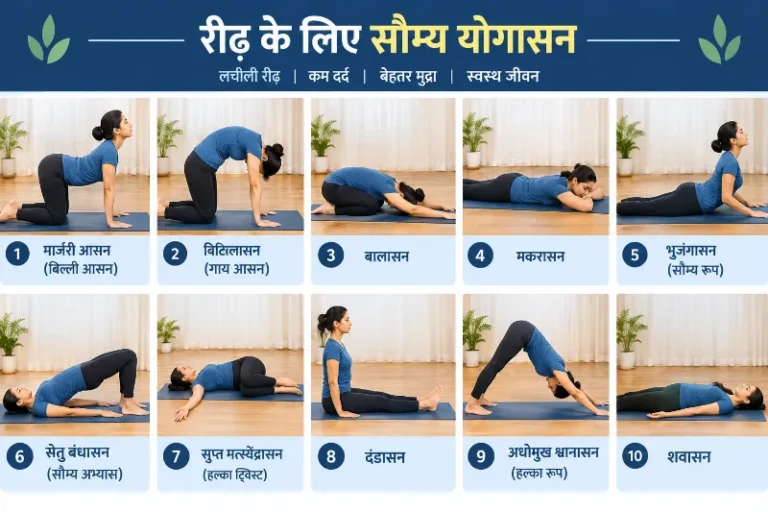
Try these warm-up poses to engage your lower back, legs, and core:
Vajrasana (Thunderbolt Pose)
- Your knees, ankles, and toes should all be in contact with the floor as you kneel. Keeping your spine straight, look ahead while placing your palms on your kneecaps.
Throughout the practice, close your eyes, take ten to fifteen deep breaths, and concentrate on your breathing. Your quadriceps, front thighs, abdominal, glutes, and calf muscles are all activated in this pose.
- Put your chin on the floor while lying on your stomach. Form your palms into a fist and press them beneath your crotch. With your feet touching and your legs straight, raise your legs off the mat as high as you can while taking a deep breath.
Feel your tailbone area softly opening as you hold this stance for several rounds of 30 to 60 seconds. You can improve your core strength and lower back flexibility by doing this pose on a regular basis.
Part 2: Step-by-Step Instructions to Bhekasana
The following are steps to practice the Frog pose:
- Step 1: Stretch your legs straight back while lying on your stomach. Here, inhale a couple of times.
- Step 2: Inhale and exhale, bend your right knee, grasp your right foot with your arm, and slowly bring it forward.
- Step 3: Watch out that your body doesn’t start to sway sideways as you move your right foot forward. Continue to advance your foot next to your glute.
- Step 4: Gently rotate your shoulder forward while keeping your elbow pointed skyward if you can move your foot forward with ease and feel flexible enough.
- Step 5: Take a big breath, raise your chest, and open it as you would in cobra stance.
- Step 6: Feel a strong flex in your front thigh and quadriceps as you simultaneously pull your foot down toward the ground.
- Step 7: Hold this position for a few deep breaths, then release your right leg.
- Step 8: After two to three rounds of this stretch on each leg, you can flex both legs together in Bhekasana after you feel relaxed and warmed up.
- Step 9: Hold the stance while flexing both legs until it is comfortable, then let go.
Breath Awareness:
- Breathe in and out before you begin the exercise and while you bend your legs.
- Inhale: When your back arches into a backbend and your chest needs to rise and expand.
- Breathe out as you release the Bhekasana pose.
- Beginner’s Performance Time: Maintain Frog Pose for 15 to 30 seconds.
- Advanced Performance Time: Maintain the frog pose for sixty to ninety seconds.
Part 3: Things to Keep in Mind
Before beginning Frog Pose, be mindful of the following position cues:
Pay attention to breath control: During the Bhekasana practice, try not to hold your breath at any point. This posture requires a lot of energy, and in order to attain a deep stretch, you must breathe to maintain your energy for a longer period of time.
Avoid overarching your lower back; instead, keep your back flat and your core firm and active. This keeps your lower back from overextending or overhanging.
Avoid overextending your legs: If you experience any knee pain when bringing your legs near to the floor, stop the pose immediately. As you descend farther into the posture, check to see if your knees, quadriceps, or upper legs are hurting.
Part 4: Relaxing Poses After Bhekasana
To avoid injury, perform the following counterpose sequence to relax your back, legs, and spine:
- With your chin, chest, and abdomen in contact with the floor, lie on your yoga mat. Extend your legs to their greatest length. Place one hand below the shoulder of your opponent and firmly grasp it.
On the opposite side, do the same. Place your chin on your upper arms and spread your legs far apart. Hold this position for ten to fifteen deep breaths until your legs and spine are back in a neutral position.
Sasangasana (Rabbit Pose)
- Start by sitting with your knees hip-distance apart. As much as possible, lower the top of your head to your knees. Now raise your glutes toward the ceiling and cup your heels behind your back with your palms.
Hold this counter stance until all of the tension in your body has been released. Feel your neck, spine, and glutes relaxing. When you’re prepared to let go, sit straight in Thunderbolt pose and lower your glutes.
Bhekasana Variations to Consider
When it comes to how yoga practitioners execute an asana, there is no one-size-fits-all strategy. Here are some versions of Bhekasana that you can try to suit your own yoga style and learning rate.
Viparita Salabhasana (Superman Pose):
- Place your forehead on the floor while lying on your stomach. Inhale, extend your arms forward, and raise your chest, thighs, and all four limbs into the air.
In this pose, pay attention to your breathing and maintain mind-muscle coordination while keeping your core focused. Try this variant to develop strength and stability if you’re a novice having trouble finding strength in your back and core muscles for your Bhekasana practice.
Ardha Bhekasana (Half Frog Pose):
- Pull your heel toward your left buttock while bending your left leg to begin in Sphinx posture. Now stretch back and grasp your toes with your left hand.
Pull your left heel inward and slowly move your left finger forward by pointing your elbow toward the ceiling, depending on how flexible you are.
This is a great variation to work on your muscles separately and develop equal strength on both sides for the main practice if you find it difficult to hold Bhekasana without falling to your side.
Gherandasana I (Sage Gheranda Pose)
- Try this variation to elevate your Bhekasana to a new level:
Put yourself in Sphinx position first, then bend your right leg, catch your right foot with your right hand, and rotate your shoulder to lift your right knee off the mat. After that, do the same on your left side.
Now, pay attention to your breathing, bend your left foot near the floor, and raise your right foot toward the ceiling with your right arm. Release the stance gently after holding it for 30 seconds on each side.
Precautions
- Avoid or modify the pose if you have knee, ankle, hip, or lower-back problems.
- Do not force your feet toward the floor.
- A certified yoga instructor should supervise novice practitioners.
- Stop if you experience sharp pain or significant discomfort.
- Before attempting the entire stance, warm up your knees, thighs, and hips.
Beginner Tip
If the full Bhekasana feels too intense, work on one leg at a time or use a comfortable modification rather than forcing both legs simultaneously.
Common Mistakes
Error 1: Forcing the Heel to the Hip Without Enough Planning
Ardha Bhekasana’s reputation for difficulty stems from the possibility of knee strain caused by forcing the heel forcefully toward the hip before the quadriceps have warmed up. Prior to attempting complete bilateral Bhekasana, always warm up with the half form on each side.
Mistake 2: Knee Flaring Outward Excessively
In Bhekasana, the knee normally moves a little laterally, but a noticeable lateral flare suggests that the quadriceps’ maximum flexibility has been reached. Until the knee stays within a tolerable lateral range, lessen the depth of heel-to-hip compression.
Key Principles
Before attempting complete bilateral Bhekasana, start with Ardha Bhekasana (Half Frog). With every exhale, let the quadriceps gradually stretch; never push the heel to the hip. Reduce the depth of the heel-to-hip compression if the knee deviates greatly from the hip line. The knee should not flare outward beyond a comfortable range.
FAQs
What is Bhekasana good for?
Bhekasana is an excellent way to gently activate your shoulders, chest, and front thighs while strengthening your lower back.
Can beginners perform Bhekasana?
Yes, with some beginning conditioning of the legs, back, and core, beginners can accomplish the simple variants and adjustments of Bhekasana.
However, you should avoid this pose if it causes any low back pain or stiffness in your legs.
What are the different preparatory poses in Bhekasana?
Salabhasana, Viparita Salabhasana, Salamba Bhujangasana, and Vajrasana are all excellent yoga positions to warm up or prepare your body’s muscles for Bhekasana.
What are the benefits of Bhekasana?
Here are a handful of the many well-known advantages of Bhekasana:
Great chest and spine opener.
Increases core and lower back strength.
Improves leg and shoulder flexibility.
Improves the organs of the digestive and reproductive systems.
What are the different variations in Bhekasana pose?
Intermediate-to-advanced level yogis can explore a variety of Bhekasana stance variants in their daily practice, including Ardha Bhekasana, Gherandasana I, and Gherandasana II.
What is Ardha Bhekasana?
Ardha means half, while Bheka signifies frog in Sanskrit. A simple backbend form of the full Bhekasana stance is called Ardha Bhekasana, or Half Frog pose. Because only one leg is bent simultaneously in this variation, it is considered a warm-up pose for the Bhekasana.
References
- Allen, W. (2025d, August 26). Bhekasana. https://myyogateacher.com/yoga-asana/bhekasana
- Zehra, S. (2026e, August 11). Bhekasana (Frog pose): Steps, benefits and precautions | HABuild. Habuild Blogs. https://habuild.in/habitology/asana-mudra/bhekasana/
- A sequence to prepare for Bhekasana. (2013, June 10). https://yogainternational.com/article/view/a-sequence-to-prepare-for-bhekasana/?srsltid=AfmBOopEn3_TirrgpSo6wz2HJHw2iSG1K5u8qxOZrBwQvgKHUaD6Al7