Yoga For Finger Flexibility
Introduction
Finger health is something that most people only become aware of when it begins to get worse. Examples include morning finger stiffness that takes thirty minutes to go away, clicking and aching joints when typing, diminished grip strength that makes jar lids difficult to open, and dexterity losses that develop over decades of repetitive finger use. When function starts to deteriorate, yoga finger postures can help restore it by addressing the underlying causes before failure.
Finger yoga postures, such as mudras, individual finger stretches, and hand-based weight-bearing progressions, strengthen the hand’s intrinsic muscles, enhance circulation, which supplies nutrients to finger joints, and preserve flexibility, which keeps arthritis from progressively stiffening. Examine how improving peripheral circulation with yoga for blood circulation promotes finger health.
Can Yoga Really Help with Finger Health?
Yes, there are several ways that yoga finger postures and mudra exercises can improve finger health. The tendon tightness that results in trigger finger, morning stiffness, and decreased range of motion is lessened by finger yoga postures that stretch the flexors and extensors of the fingers. Long-duration yoga finger postures called mudras enhance blood flow to the distal extremities by stimulating the neuronal connections in each finger.
By strengthening the intrinsic hand muscles that support the interphalangeal and metacarpophalangeal joints, weight-bearing yoga lessens the joint loading that accelerates the development of finger arthritis. Additionally, the joint inflammation that causes finger pain and swelling is reduced by yoga’s systemic anti-inflammatory impact.
Benefits of Yoga for Fingers
Improves Finger Flexibility and Joint Mobility: The interphalangeal joint range of motion that stiffness gradually restricts is maintained by finger yoga poses that focus on each particular finger joint, such as mild extension, lateral deviation, and circular rotation. The entire finger flexion and extension needed for writing, typing, playing an instrument, and fine motor activities may be preserved with regular daily practice. For complete whole-body mobility, including distal joints, combine it with specialized yoga.
Strengthens Intrinsic Hand Muscles for Grip and Dexterity: Fine motor control and grip strength are controlled by the hand’s intrinsic muscles, which include the lumbricals, interossei, and thenar and hypothenar muscles. These muscles are rarely developed by traditional exercise, and they atrophy with inactivity. These intrinsic muscles are directly developed by yoga finger poses that call for prolonged finger position retention and individual digit control, enhancing the grip strength and accuracy needed for daily tasks.
Reduces Arthritis Stiffness and Joint Pain: The most prevalent type of arthritis in older persons is finger arthritis, which causes morning stiffness, joint swelling, and pain that seriously hinders hand use. In addition to potentially reducing the inflammatory stiffness that inhibits morning mobility and preserving the range of motion that arthritis gradually reduces, gentle yoga finger poses encourage the generation of synovial fluid in the tiny finger joints. For comprehensive arthritic hand care, combine with yoga for rheumatoid arthritis.
Improves Finger Circulation for Warmth and Nerve Function: The most obvious symptoms of poor peripheral circulation include chilly, pale, or blue fingertips, decreased feeling, and poor wound healing. These symptoms are typical in persons with sedentary lifestyles, low blood pressure, or Raynaud’s phenomenon. Dynamic finger yoga postures and mudra techniques increase blood flow to the distal extremities, enhancing the healing potential, warmth, and feeling that are made possible by healthy finger circulation.
Prevents Repetitive Strain Injuries Through Tendon Conditioning: Carpal tunnel syndrome, trigger finger, and de Quervain’s tenosynovitis are all caused by tendon thickening and inflammation from repeated usage without sufficient stretching. By stretching the finger flexor tendons in extension and the extensor tendons in flexion, finger yoga postures prepare the tendons to withstand repeated strain and lessen the inflammatory buildup that causes these disorders. For complete upper limb tendon health, combine yoga with tennis elbow.
Precautions Before You Start
Preparation is essential, just as in any yoga program.
- Warm Up: Run your fingers under warm water or wiggle them.
- Listen to Your Body: Sharp pain is not typical, although mild tension is.
- Seek Medical Advice: particularly if you are recovering from an injury or surgery.
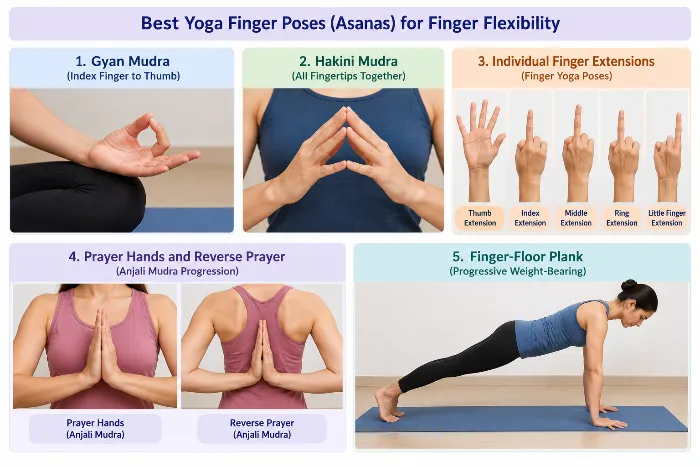
Best Yoga Finger Poses (Asanas) for Finger Flexibility
Gyan Mudra (Index Finger to Thumb)
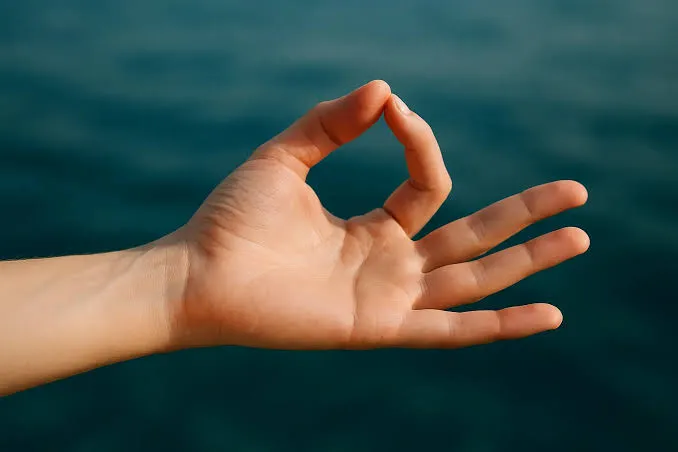
The most basic finger position in yoga is Gyan Mudra, which involves pressing the index fingertip to the thumb while extending the remaining fingers. This pose stimulates the index finger’s brain pathways and improves the fine motor accuracy needed for daily activities. Level of difficulty: beginner. Practice every day to improve your finger health over time.
- Close your eyes, breathe slowly and naturally, and sit comfortably in a cross-legged position or on a chair with your spine straight.
- Place your hands on your knees, palms facing upward, and gently touch the tips of your index and thumb fingers.
- Keep the other three fingers relaxed and extended.
- Hold the position for five to fifteen minutes, or as long as it feels comfortable.
Hakini Mudra (All Fingertips Together)
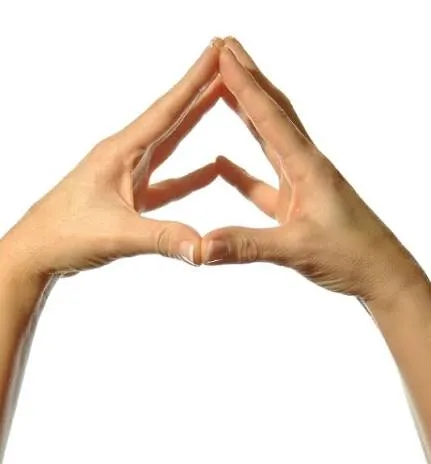
The most complete yoga finger position for bilateral finger coordination, intrinsic muscle activation, and the fine motor accuracy needed for sensitive activities is Hakini Mudra, which involves touching all five fingers of one hand to the corresponding fingertips of the other. The proprioceptive knowledge of finger position that musicians, surgeons, and artisans depend on is concurrently developed. For the special cognitive-motor integration that Hakini Mudra cultivates, combine it with yoga for focus.
- With your shoulders relaxed and your back straight, take a comfortable seat.
- Put both hands up in front of your chest.
- Keeping the palms slightly apart, bring the fingers of both hands together.
- Maintain a comfortable, light contact between your fingertips.
- Put your hands comfortably close to your upper abdomen or chest.
- Shut your eyes and inhale deeply and slowly.
- Hold for as long as is comfortable, five to ten minutes.
Individual Finger Extensions (Finger Yoga Poses)
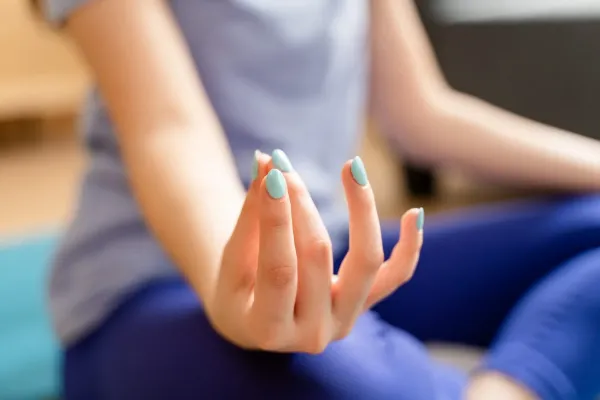
The individual motor control, extensor tendon flexibility, and flexor tendon conditioning that most hand exercises perform collectively rather than individually are developed through a specific sequence of finger yoga poses: extending each finger back while keeping the others relaxed, followed by curling each finger independently into a fist. Every day, do three rounds of individual finger work.
- With the palm facing either forward or upward, extend one hand in front of you.
- Keeping the other fingers loose, slowly straighten each finger one at a time.
- For three to five seconds, keep each finger extended.
- Repeat with the other fingers after relaxing this one.
- For every finger, do five to ten repetitions.
- Don’t push or overstretch your fingers; instead, move gently.
Prayer Hands and Reverse Prayer (Anjali Mudra Progression)
Finger flexors and palmar fascia are stretched by Anjali Mudra (praying position); finger extensors and dorsal tendons are stretched by reverse Anjali Mudra (fingers pointed downward behind the back). When combined, they offer the most thorough stretching sequence for yoga finger poses that targets all of the flexor-extensor tendons in the fingers and wrist at once. For full upper body chain mobility, combine it with yoga for posture.
Prayer Hands:
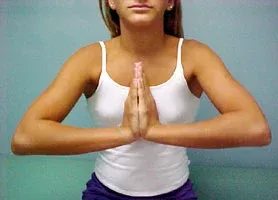
- Maintain a straight spine while sitting or standing comfortably.
- In front of your chest, bring both palms together.
- Keep your thumbs close to your breastbone and your fingers pointed upward.
- Without straining, softly press the palms together.
- Hold for ten to twenty seconds while taking regular breaths.
Reverse Prayer:
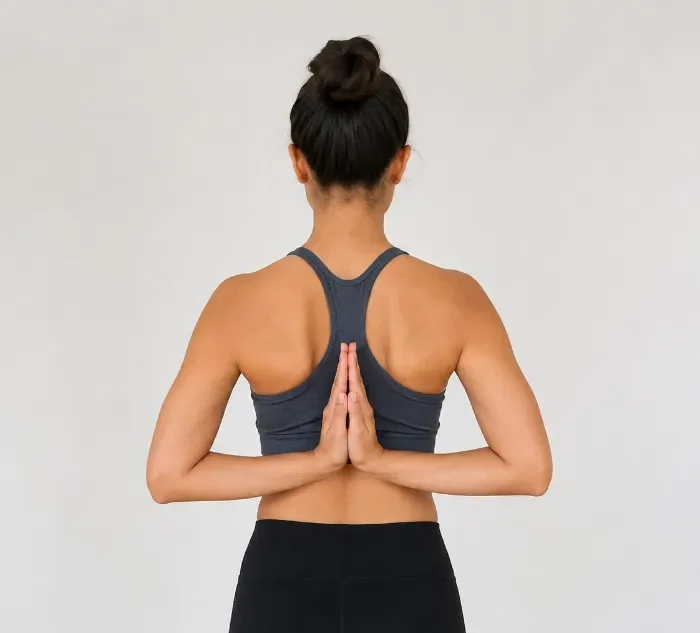
- Put both of your hands behind your back.
- Bring the hands together after turning them to face one another.
- Point the fingers up in the direction of the shoulder blades if it feels comfortable.
- Maintain a relaxed chest and shoulders.
- Release gradually after holding for ten to twenty seconds.
Finger-Floor Plank (Progressive Weight-Bearing)
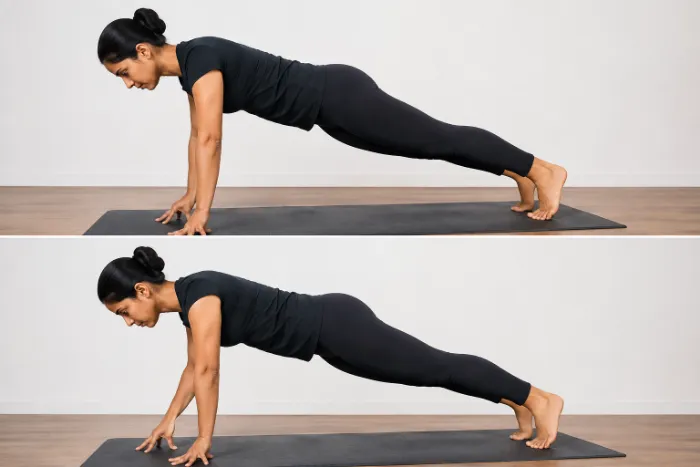
By applying direct stress to the finger joints and intrinsic muscles, the plank posture, which is a development from regular Phalakasana, minimizes joint injury from impact and repetitive strain. Start with 5-second holds; as finger strength increases, increase to 30 seconds.
- Place your fingers comfortably apart and begin on your hands and knees.
- Keeping your fingers relaxed, place your fingertips firmly on the ground.
- Keeping your wrists comfortable, gradually transfer part of your body weight to your fingertips.
- Maintaining a straight body, advance by extending your legs into a plank posture.
- Avoid collapsing through your shoulders and maintain an active core.
- After holding for ten to twenty seconds, slowly drop your knees.
- Repeat three to five times, progressively lengthening the time as your finger strength increases.
Common Mistakes to Avoid
Exercises for finger flexibility are easy, but if done wrong, they can be damaging or unproductive. Keep an eye out for these typical pitfalls:
- Overstretching: Excessive pushing can cause sprains or strains. Stretching should always be done within a comfortable range.
- Skipping Warm-Ups: The danger of injury is increased when workouts are performed without first warming up.
- Inconsistent Practice: To observe results, finger flexibility training requires consistency, just like any other type of exercise.
- Poor Form: Inaccurate technique, such as uneven pressure or jerky motions, could reduce efficacy.
FAQs:
How to gain flexibility in fingers?
By doing regular stretches and active mobility exercises that focus on your hands’ joints and tendons, you can improve the flexibility of your fingers.
What is the fastest way to loosen stiff fingers?
Soaking stiff fingers in warm water, then gently moving and stretching them, is the quickest way to loosen them.
Is finger stretching good?
Yes, extending your fingers helps avoid accidents from repeated work like typing, increases flexibility, and reduces stiffness.
What vitamin deficiency causes finger stiffness?
Deficits in vitamin D and vitamin B12 are most frequently associated with hand weakness, joint pain, and finger stiffness.
How do I build muscle in my fingers?
Using basic equipment like rubber bands and therapeutic glue, you can conduct targeted resistance, extension, and isometric workouts to increase finger strength and muscle control.
References:
- Zehra, S. (2026, August 13). Yoga for Fingers – HaBuild blog. HaBuild Blogs. https://habuild.in/yoga-condition/yoga-for-fingers/
- Range of movement exercises if you have osteoarthritis of the hand – University Hospitals Sussex NHS Foundation Trust. (2025, August 11). University Hospitals Sussex NHS Foundation Trust. https://www.uhsussex.nhs.uk/resources/range-of-movement-exercises-if-you-have-osteoarthritis-of-the-hand/