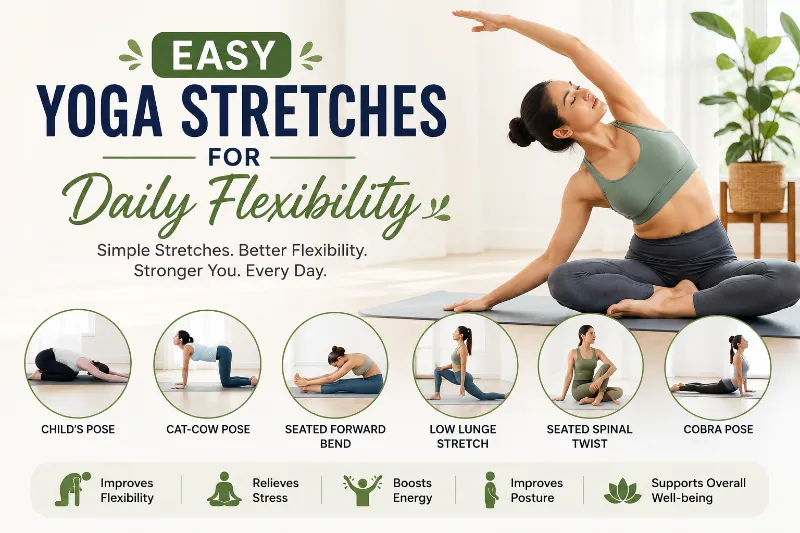
Easy Yoga Stretches for Daily Flexibility
Many times, flexibility is misinterpreted as the capacity to do deep stretches or advanced yoga poses. In actuality, flexibility is just the ability to move the body easily and freely without being constrained or rigid. Flexibility is crucial in day-to-day activities, such as bending down to pick up objects, sitting comfortably for extended periods of time, and moving painlessly.
The body has become more rigid and taut as a result of modern lifestyles that include extended sitting, inactivity, stress, and bad posture. In addition to limiting mobility, tight muscles and restricted joints can cause bad posture, bodily pains, and an elevated chance of injury.
Flexibility may be increased gradually and safely with yoga. Yoga allows muscles to naturally relax and extend over time by combining conscious movement with breath awareness, in contrast to forced stretching.
This blog discusses the importance of flexibility, how yoga increases flexibility, and a full-body stretching exercise that is suitable for beginners and may help you move more comfortably and easily.
Why Flexibility Matters
Preventing Injuries
- A flexible body is less vulnerable to injury and strain. Tight muscles limit mobility and put undue strain on the tissues and joints around them. Muscle pulls, stiffness, and soreness are frequently caused by this imbalance.
- For instance, stiff shoulders might result in postural imbalance and neck tension, while tight hamstrings can impact the lower back.
Increasing adaptability is beneficial:
- Decrease tense muscles
- Boost the effectiveness of movement
- Reduce the likelihood of strain and damage
- Encourage improved body alignment and posture.
- Yoga gently and gradually extends the body, making it simpler to carry out daily tasks painlessly.
Mobility and flexibility work together to enhance movement quality.
- The capacity of muscles and joints to freely move over their whole range of motion is referred to as mobility. When the body is immobile:
- Movements are constrained
- It affects posture
- Everyday chores are painful.
- As one ages, stiffness rises.
- By combining regulated movement, breath awareness, and stretching, yoga enhances mobility. This maintains the body’s functionality, agility, and activity.
How Yoga Improves Flexibility
Extension of Muscles
- Yoga uses intentional, prolonged stretching to progressively lengthen muscles.
- Yoga allows the body to relax into the position with appropriate breathing, as opposed to abrupt or violent stretching. This enables the natural release of muscular tension.
- Frequent practice is beneficial:
- Boost the suppleness of your muscles
- Decrease stiffness
- Make your posture better
- Improve mobility
- The body opens up and becomes more flexible over time.
Healthy joints are just as important to flexibility as muscles.
- Joint health is enhanced by yoga through:
- Improving blood flow around joints
- Enhancing mobility and lubrication
- Diminishing rigidity
- Encouraging a healthy alignment
- Stretches and gentle movements help keep joints flexible and prevent tightness caused by inactivity.
Best Yoga Poses for Flexibility
- Hastapadasana (Forward Fold)
- Yogendra Bhadrasana (Butterfly Pose)
- Hip Circles (Preparatory Movement)
- Adho Mukha Shvanasana (Downward Dog)
- Parsvottanasana (Intense side stretch)
- Janu Sirsasana (Head to Knee)
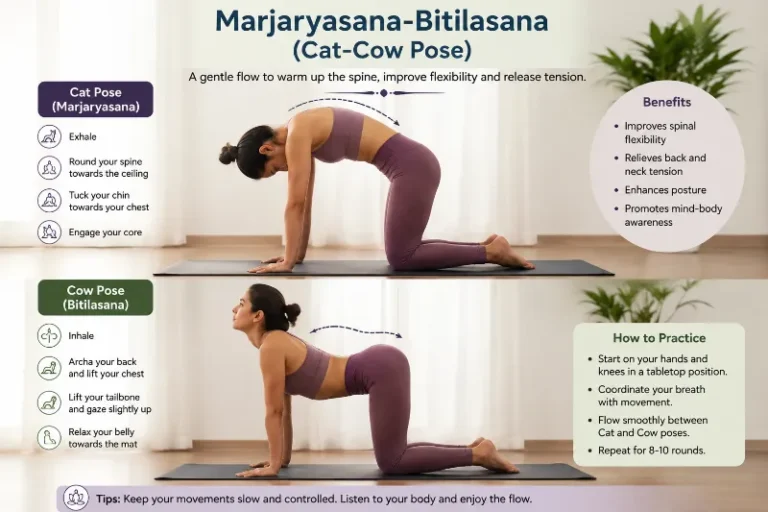
- Bitilasana Marjaryasana (Cat-Cow)
- Dandayamana Bharmanasana (Bird Dog Pose)
- Dhanurasana (Bow Pose)
- Anjaneyasana (Low Lunge)
- Halasana (Plow Pose)
- Upavistha Konasana ( Wide-angle seated forward bend)
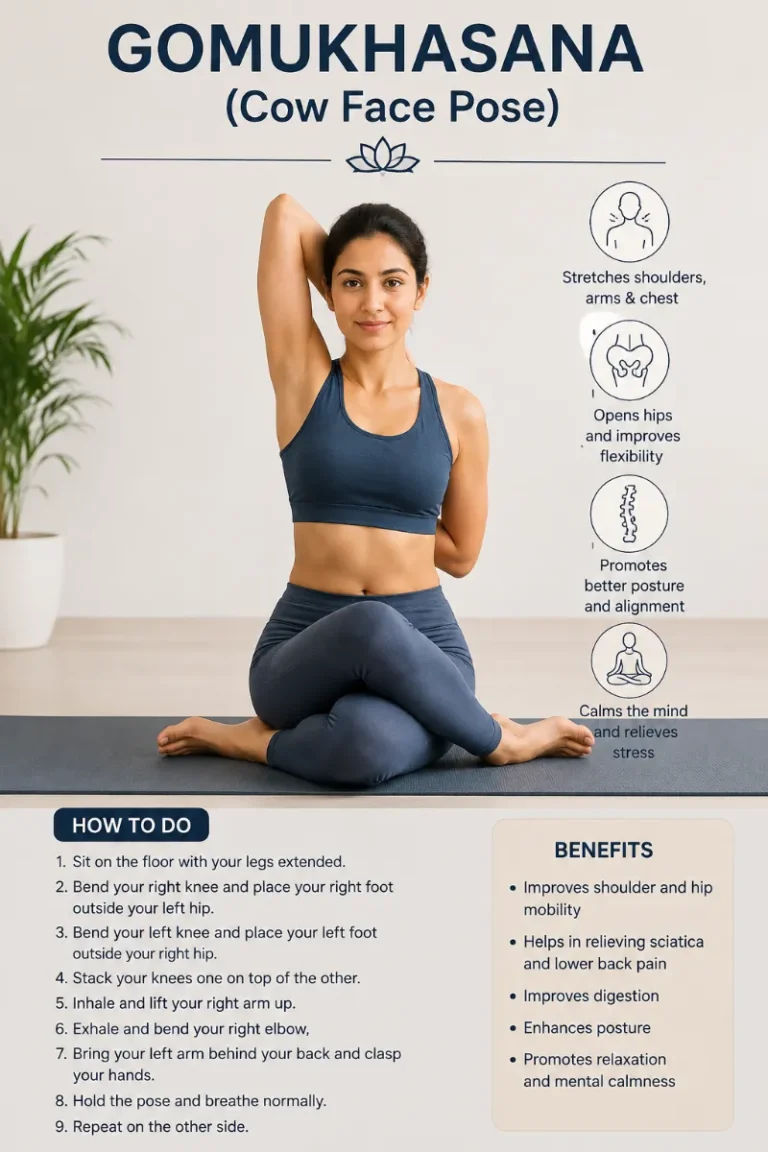
- Gomukhasana (Cow Face Pose)
- Supta Matsyendrasana (Supine Spinal Twist)
Hastapadasana (Forward Fold)
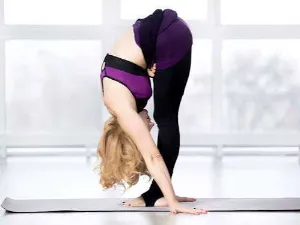
How to do:
- Maintain a straight posture with your arms by your sides and your feet together.
- Evenly distribute your weight over both feet.
- Take a deep breath and raise your arms over your head.
- Exhale, then lean forward and lower yourself to your feet.
- Breathe deeply while maintaining the position for 20 to 30 seconds. Standing Forward Bend Yoga Pose: Hastapadasana
- Maintain an upright posture and place your hands on the floor, next to your feet, or on your legs.
- As you exhale, raise your hips and tailbone, press your heels down, pull your chest toward your knees, let your head drop, and gently slide it toward your feet. Continue taking deep breaths.
- Inhale, extend your arms upward, and gradually rise to a standing posture.
- Exhale and move your arms to your sides.
Yogendra Bhadrasana (Butterfly Pose)
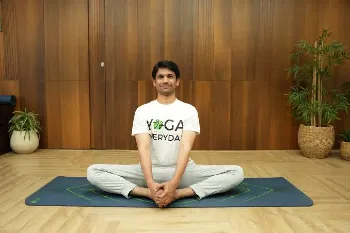
How to do:
- To begin, place your legs straight out in front of you while sitting on the mat.
- Bend Your Knees: Bring your feet closer to your pelvis while bending your knees.
- Join the Soles: Hold your feet with your hands while pressing their soles together.
- Adjust Position: Without creating discomfort, bring your heels as near to your groin as you can.
- Apply pressure on your knees: Open your hips and gently press your knees toward the floor.
- Maintain a Straight Spine: Maintain a straight spine and relaxed shoulders.
- Hold and Breathe: Maintain the posture while taking regular, deep breaths.v
Adho Mukha Svanasana (Downward Dog)
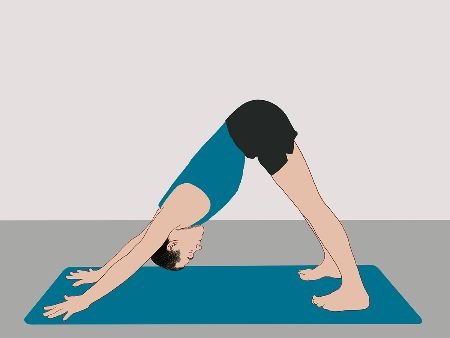
How to do:
- Place your hands slightly in front of your shoulders, fingers spread wide, and begin on all fours with your knees below your hips.
- Make an inverted V with your body by pressing your hands firmly into the ground, tucking your toes, and raising your hips toward the ceiling.
- Draw your heels to the floor or as near to it as you can, then straighten your legs as much as you can.
- Rotate your arms externally while maintaining straight elbows without locking them to prevent shrugging your shoulders.
- Hold for up to a minute, then gradually go back to where you were.
Hip Circles (Preparatory Movement)
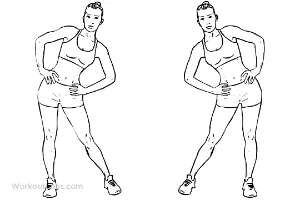
How to do:
- Stand with your feet hip-width apart and your hands on your hips.
- Five to ten times in each direction, softly rotate your hips in circles
Parsvottanasana (Intense side stretch)
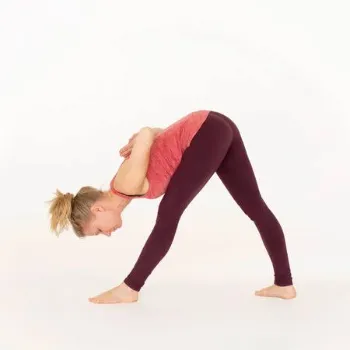
How to do:
- Place your right foot back and turn out your toes at a small angle, while your left foot is in front and looking forward.
- To face forward, square both of your hips.
- Put your hands on your hips.
- Tuck your chin into your chest and fold your body forward by bending at the hips.
- Lower your hands to the floor or place them on a block.
- For 30 to 60 seconds, maintain this stance.
- Reposition your feet and work on the other side.
Janu Sirsasana (Head to knee)
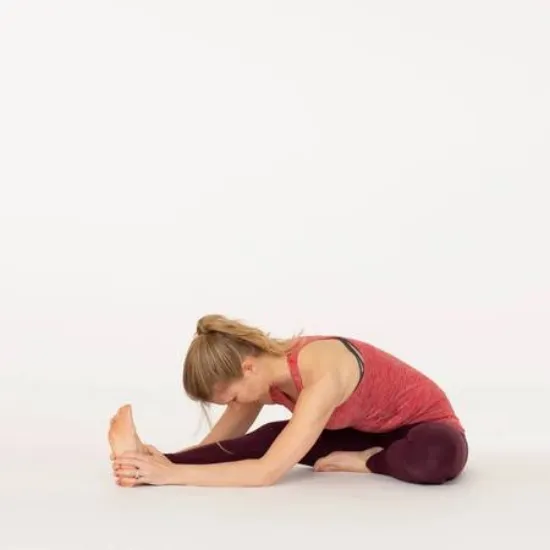
How to do:
- Take a seat on a yoga mat or the ground.
- Press your left foot onto the inside of your thigh while extending your right leg.
- Take a breath and lift your arms over your head.
- Breathe out and fold forward toward your outstretched leg by bending at the hips.
- Put your hands on the ground or cling to your extended foot or leg.
- For one to two minutes, maintain the posture.
- Do the opposite side by switching legs.
Bitilasana Marjaryasana (Cat-Cow)
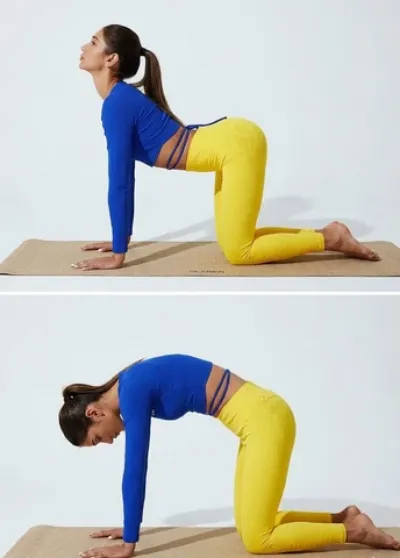
How to do:
- Lying on your right side with your hips and ankles stacked on top of one another, bend your knees while maintaining your heels in line with your spine. Stretch your right arm to the right on the floor, palm facing the ceiling.
- Bring your left hand to your right palm and slowly pull it down your right arm and over your chest as you rotate your upper body to the left.
- Continue spinning until your left knee starts to lift. Hold for five seconds. You can extend your left arm or use your right hand to hold your left knee down.
- Before going back to the starting position, perform the same number of stretches on each side.
Dandayamana Bharmanasana (Bird Dog Pose)
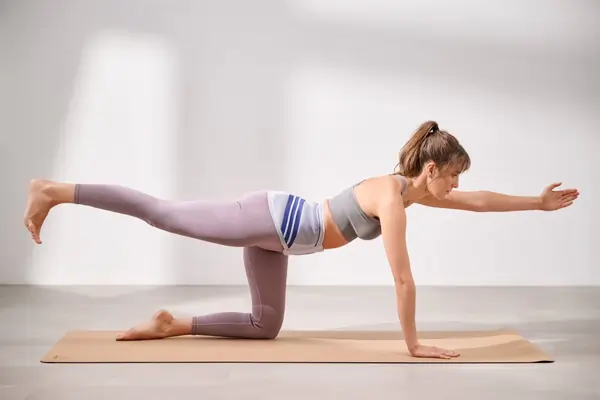
How to do:
- Start in the tabletop position, placing your knees behind your hips and your wrists precisely beneath your shoulders.
- To protect your wrists, spread your fingers wide and provide strong pressure throughout your palms.
- Without rounding your back, move your navel toward your spine to activate your core.
- Take a breath, then gently stretch your right leg straight back while maintaining hip height and pointing your toes downward.
- At the same time, raise your thumb and extend your left arm forward to shoulder height.
- From your extended heel to your fingers, form a single, continuous line of energy.
- Don’t turn open; instead, keep your shoulders and hips straight to the floor.
- Hold while keeping a constant engagement for five to eight breaths.
- Breathe out and carefully return to the tabletop.
- Extend your left leg and right arm and repeat on the other side.
Dhanurasana (Bow Pose)
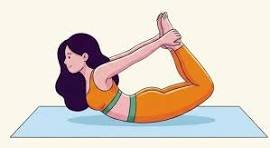
How to do:
- Lie on your stomach (Prone Position).
- Reach back with your hands to hold the outside of your ankles while bending your knees.
- Try to raise your chest and shoulders off the ground if you can, but don’t push yourself too much.
- Keep your head forward and take steady, deep breaths.
- Hold for a maximum of 30 seconds, then let go.
- Do this one or two times.
Anjaneyasana (Low Lunge)
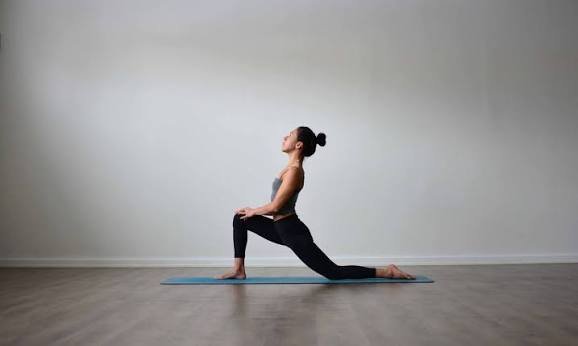
How to do:
- With your toes curled in and the balls of your feet against a wall, kneel on a mat or folded towel.
- Bend your right knee 90 degrees while maintaining alignment with your ankle as you take a step forward with your right foot. Ensure that every plane of your hips is square.
- With your toes pointing toward the ceiling, slide your left knee back a little until the top of your foot rests against the wall.
- To get the most out of the stretch, hold your torso upright and softly drive your hips forward while using your core. Hold for a few breaths.
- Release the position slowly, then repeat on the opposite side, doing the same amount of stretches on each side.
Halasana (Plow Pose)
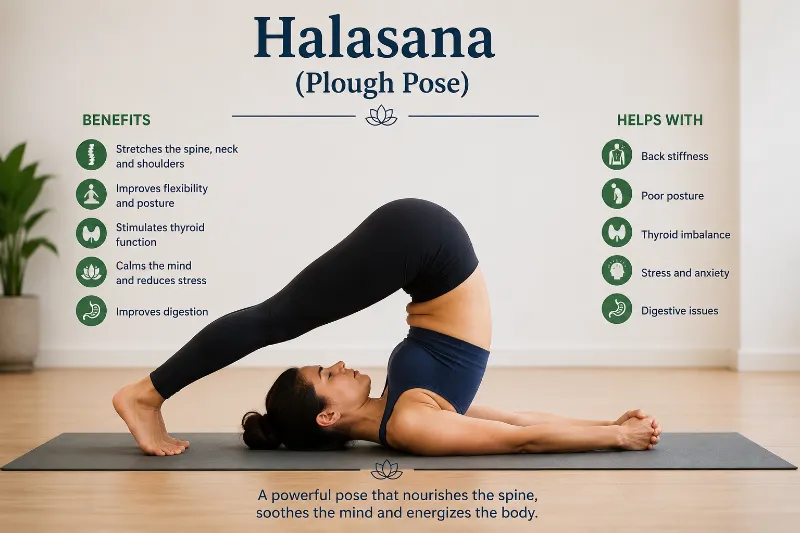
How to do:
- Lying on your back with your arms at your sides, press your palms onto the floor.
- Lift your legs straight up at a 90-degree angle.
- Lift your legs above your head.
- Put your hands on your lower back, with your fingers pointing upward and your pinky fingers positioned on either side of your spine.
- Hold for a minute or two.
- Roll your spine back down to the floor to release tension.
- Do this one or two times.
Upavistha Konasana ( Wide-angle seated forward bend)
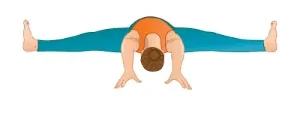
How to do:
- Sit up straight on top of your pelvic bones and begin with the staff position.
- Assume the Staff position by sitting with your arms relaxed at your sides, and your legs outstretched. Here, take a few moments to breathe in and out.
- Now lay your hands flat on the mat and slowly stretch your legs as wide as you can.
- Inhale deeply and raise your back to the top of your head. Breathe out, bend at the waist, and apply pressure on the backs of your legs.
- Stretch your hands forward as far as you can. Stretch your hands forward as far as you can.
- Maintain a straight back and a spine that is parallel to the floor.
- After holding this posture for a few deep breaths, gently release yourself by standing up in the staff stance.
Gomukhasana (Cow Face Pose)
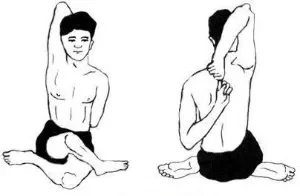
How to do:
- Make sure you are seated comfortably. Let your chest expand, and your spine extend.
- Bend your elbow so that your fingers point down along your spine after extending your left arm above.
- Gently move your left elbow to the right with your right hand so that your left hand may travel farther down your spine.
- Try clasping your left hand by bending your right arm upward along your spine if it seems comfortable.
- For at least thirty seconds, maintain this posture.
- Do it on the opposite side after switching arms.
Supta Matsyendrasana (Supine Spinal Twist)
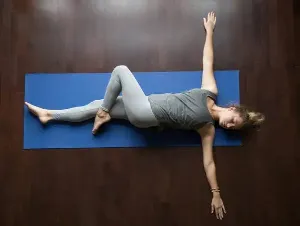
How to do:
- Bend your knees while keeping your heels in alignment with your spine while lying on your right side with your hips and ankles stacked on top of each other. With your palm toward the ceiling, extend your right arm to the right on the floor.
- As you twist your upper body to the left, bring your left hand to your right palm and gently draw it down your right arm and over your chest.
- Until your left knee begins to lift, keep spinning. For five seconds, hold. You can either hold your left knee down with your right hand or reach out with your left arm.
- Do the same amount of stretches on both sides before returning to the beginning position.
Common Mistakes to Avoid
- Bad Form
- The effect of the stretch is diminished, and susceptible joints may be strained if you compensate with the incorrect area of your body, such as sinking your knees inward in a wide-leg position or rounding your lower back in a forward fold rather than hinging from the hips. Once you can clearly feel the desired stretch, slow down, feel the target region functioning, and make adjustments.
- Ignoring the Warm-Up
- Stretching cold muscles is neither safe nor efficient. Every flexibility workout should begin with five to seven minutes of mild movement, such as gradual torso rotations, ankle and wrist circles, and Cat-Cow flows. A quick warm-up increases the temperature of your tissues and primes your nervous system to enable more range of motion in the subsequent postures.
- Excessive training
- When it comes to flexibility, more isn’t necessarily more. Pain and setbacks can result from microtears in connective tissue caused by overstretching or holding poses much beyond your current comfortable range. Before pushing farther, let your body adjust in between sessions. Work to the brink of moderate discomfort, never acute agony.
- Inconsistency
- Frequency has a greater impact on flexibility than nearly all other variables. Three brief, regular stretching sessions a week result in significantly more adaptability than one lengthy, hard session. The best indicator of whether novices will have long-lasting flexibility increases in two to three months is the consistency gap, which is the ability to consistently show up even when motivation is low.
Who Should Try Yoga Poses for Flexibility?
- Young people
- Of all the workout modalities, flexibility yoga offers one of the lowest entrance hurdles. There is no minimum amount of flexibility needed; in fact, you are more likely to see improvement in the first few weeks if you are currently less flexible. There are accessible adjustments for every posture listed here, and improvement may be tracked right from the first session.
- Women
- Yoga offers a distinctively holistic approach that addresses not just physical range of motion but also breath awareness and stress management, and women typically react especially well to flexibility training. In addition to the physical flexibility advantages, many women find that regular morning yoga practice promotes hormonal balance and menstrual comfort. Yoga is a long-term, sustainable practice because its health advantages go far beyond the physical.
- Used Professionals
- Hip flexors, the chest, the neck, and the upper trapezius all develop a predictable pattern of stiffness after spending hours at a computer. Three mornings a week, a concentrated 20- to 30-minute flexibility yoga practice may immediately counteract these habits, enhance your mood throughout the workday, and be done completely at home without the need for any equipment or transportation. Over several months, the total benefit is substantial
- Senior Citizens
- One of the best investments in long-term freedom and quality of life is to maintain flexibility as we age. Mild yoga stretches assist in maintaining hip range of motion, alleviating age-related stiffness, and maintaining a flexible spine. Please see your doctor before starting if you have any pre-existing ailments, such as osteoporosis or joint replacements, and inform your instructor so they can make the necessary accommodations.
Quick 5-Minute Routine
An easy plan to stimulate your body with a daily routine
| Pose | Duration | Benefit |
| Standing Side Stretch (Parsva Urdhva Hastasana) | 30s each side | Lengthens spine, opens chest |
| Cat-Cow (Marjaryasana–Bitilasana) | 5 breaths | Warm up spine |
| Child’s Pose (Balasana) | 1 min | Relaxes back & hips |
| Supine Twist (Supta Matsyendrasana) | 30s each side | Relieves spinal tension |
Simple 10-Minute Practice
For a well-rounded, busy morning.
| POSE | DURATION |
| Forward Fold (Uttanasana – Ragdoll) | 1 min |
| Cat-Cow | 5 breaths |
| Bird Dog (Dandayamana Bharmanasana) | 30s per side |
| Knees-to-Chest (Apanasana) | 1 min |
| Child’s Pose | 1 min |
Holistic 15-Minute Session
This practice combines mindful breathing with all ten morning yoga poses, providing you with increased flexibility, full-body activation, and a peaceful, focused mind to start your day.
| Routine | Duration | Benefits |
| Standing Side Stretch (Parsva Urdhva Hastasana) | 1 min (30s each side) | Opens the rib cage and lengthens the spine |
| Hip Circles (Preparatory Movement) | 1 min | Increases mobility and loosens the hips |
| Standing Forward Fold – Ragdoll (Uttanasana) | 1 min | Increases circulation and eases back tightness |
| Cat-Cow Pose (Marjaryasana–Bitilasana) | 1 min (5 breaths) | Warms the spine and stimulates the nervous system |
| Bird Dog Pose (Dandayamana Bharmanasana) | 1 min (30s each side) | Equilibrium and fortifies the core |
| Child’s Pose (Balasana) | 1 min | Relaxes the mind and stretches the hips and back. |
| Bound Angle Forward Stretch (Baddha Konasana) | 1 min | Increases circulation flow and opens the hips |
| Knees-to-Chest (Apanasana) | 1 min | Helps with digestion and eases lower back pain. |
| Reclined Butterfly (Supta Baddha Konasana) | 2 min ( 1 min each side) | Relieves hip strain and replenishes energy |
| Supine Twist (Supta Matsyendrasana) | 2 min | Spinal stiffness and detoxifies |
Weekly Progression Plan
| Day | Practice | Focus |
| Monday–Wednesday | 5-Minute Quick Routine | A gentle awakening |
| Thursday–Friday | Regular 10-Minute | Mobility & Energy Practice |
| Saturday–Sunday | Extended 15-Minute | Flexibility + Mindfulness |
FAQs
How long does it take to use yoga to increase flexibility?
With consistent practice, flexibility eventually increases. Within a few weeks, the majority of novices report improved mobility and less stiffness.
Can stiff people do yoga?
Yes, yoga is extremely helpful for those who are stiff since it gradually and gently increases flexibility.
How frequently should novices do flexibility yoga?
Flexibility may be efficiently increased by practicing for 15 to 20 minutes a day, or at least 4 to 5 times a week.
Is it meant to hurt to stretch?
No, stretching shouldn’t cause pain, just a little stress. Pain is an indication that the body is being overworked.
When is the ideal time to do yoga to increase flexibility?
While morning is the best time to exercise since the body is more invigorated for the day, evening practice may also assist in relieving stiffness that has built up over the day.
Referances
- Rushali. (2026). Morning Yoga Stretches: 10 Poses to Start Your Day. MyYogaTeacher. https://myyogateacher.com/articles/morning-stretch-routine
- Jordan Burchette. (2025). 13 yoga positions to do every day for increased flexibility. Popular Science. https://www.popsci.com/health/yoga-moves-to-gain-flexibility/
- (n.d.). Yoga for Flexibility: Full Body Stretch Routine for Beginners. The Yoga Institute. https://theyogainstitute.org/yoga-for-flexibility
- Emily Cronkleton. (2025). Yoga for Flexibility: 8 Poses for Your Back, Core, Hips, Shoulders. Healthline Media. https://www.healthline.com/health/exercise-fitness/yoga-for-flexibility#hip-flexibility
- Saniya Zehra. (2026). Yoga Poses for Flexibility: Best Beginner Stretches. Habuild Blogs. https://habuild.in/habitology/strength-and-fitness/upper-body-workout-at-home/