Tadasana (Mountain Pose): The Foundation of Postural Alignment and Spinal Health
Introduction
Tadasana (Mountain Pose) is a simple yet foundational yoga posture that helps improve posture, balance, and body awareness.
- Just standing there – that is what Tadasana appears to be at first glance. Yet within yoga practice and physical therapy, it becomes something deeper: a deliberate stance shaping every upright pose that follows.
- Balance meets attention here, where the body learns its best arrangement under gravity’s steady force. A quiet training ground, really, tuning small signals most ignore into clear alignment. Most days now involve hours bent over screens, head jutting ahead, shoulders caving inward – Tadasana fights that slow collapse.
- What seems like standing still demands quiet strength, awareness pulling each joint into balance. Inside this simplicity hides detailed body knowledge, bone aligning over bone with purpose. Follow clear points one after another, feet to crown, until stance becomes insight. Relief often shows up quietly: less strain across the back, breath finding more room. Each detail matters, not just the outline but how it feels from within.
1. Tadasana Meaning and Thought
From Sanskrit roots comes this word, built of two parts joined long ago
- Tada: Meaning “mountain.”
- A position. Or maybe a place to sit. That is what Asana means.
Up high, a mountain stands firm, solid, reaching skyward without hurry. Doing Tadasana means shaping yourself like that – steady, rooted, tall. Feet press down hard into the floor, holding fast, creating base strength. From there, the top of your head pulls gently up, stretching each bone in turn.
It quietly shows how staying calm inside works, even when everything outside shifts constantly. How you carry weight matters – the pose guides force along bones instead of muscles, easing daily load.
2. Anatomical and Biomechanical Analysis
Start at your feet. How they sit changes everything up the line – ankles, knees, hips stack according to their foundation. This stance shows how one piece pulls another into place. Notice the quiet shift when weight spreads evenly. Bones balance because tension stops fighting itself.
A straighter shape emerges without force. Position alters movement before you even step forward. The Foundation Feet and Ankles: Start by setting up what’s called a “foot tripod.” Balance your weight equally through three spots on every foot
- The first metatarsal head is located near the base of your big toe.
- The fifth metatarsal head is located at the outside edge of the foot.
- These bony areas are located at the big toe and around the edge of the foot. It connects just behind the smallest digit, forming a key part of how weight moves through the outer foot.
The Lower Extremities:
- Up front in your thighs, the quads squeeze short to tug the kneecaps upward. Legs extend smoothly, yet stay loose at the joint – no snapping into place.
- Back of the thighs along with lower legs help hold the knee steady, stopping it from bending too far backward – a move often seen when someone’s joints are extra loose. Knee stability hinges on these muscles keeping alignment in check without letting the joint go past its limit.
The Pelvis and Core:
Most of Tadasana hinges on lining up the pelvis just right.
- That shift pinches the space below the waist. Forward movement of the hip bones tightens tension at the back. The low back feels pressure once the bowl shape tips ahead. Shifting angle up front pulls stress into the lumbar area.
- Should the pelvis tip too far forward underneath, the lower back’s gentle arch fades away. Standing in Tadasana, the innermost belly layer tightens just enough while the base of the torso rises a little. With that, balance settles into the low spine as the front hip points line up vertically with the midline joint below. That alignment holds steady when everything connects without strain.
The Upper Body and Spine: Standing straight?
- That’s your erector spinae at work. They stretch along either side of the backbone, holding you up without slumping. When you pull yourself taller, these fibers activate. Not magic – just steady muscle tension keeping alignment. Lengthwise support comes from their constant quiet effort. Shoulder blade movers – rhomboids plus middle trapezius – pull those bones closer.
- A subtle shift happens when they tighten. Downward shoulder movers – like the lower trapezius – ease tension near the neck by gently guiding the blades toward the back pockets. This shift widens the front of the ribcage while resisting that forward slump many develop over time.
- Front neck muscles pull the head back just enough so ears line up above shoulders. A subtle tug happens here, setting posture right without force. Chin tucks happen quietly through these deep layers beneath the throat.
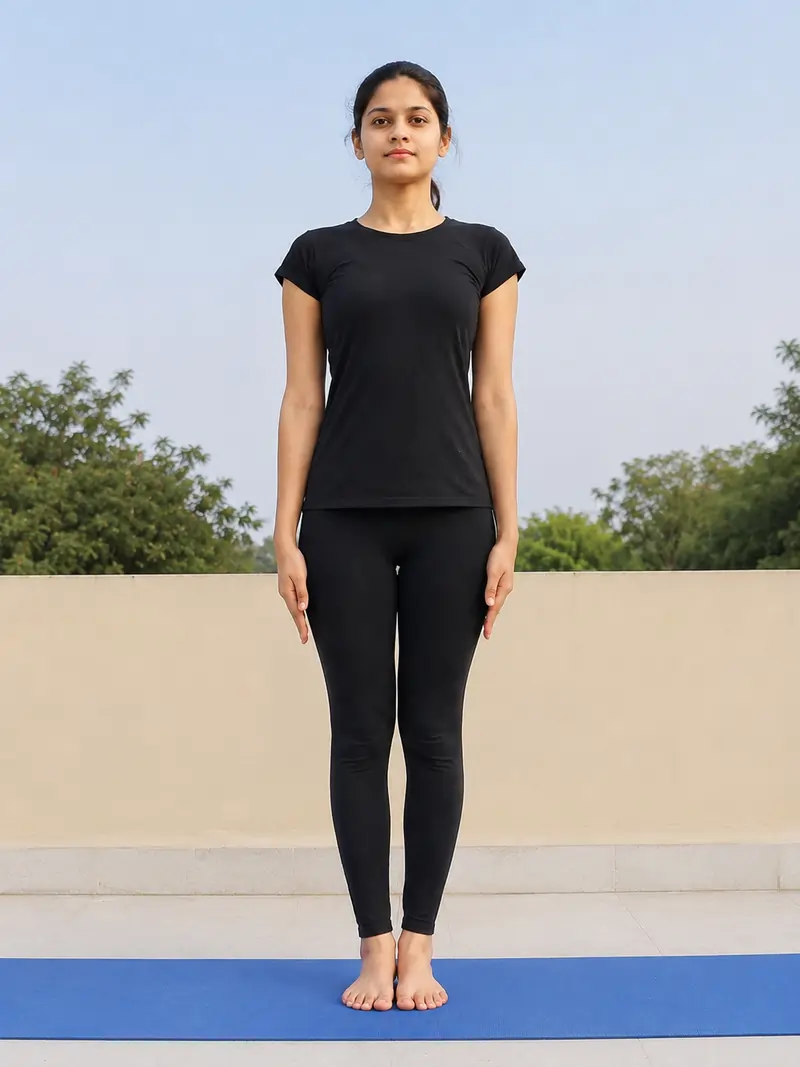
Tadasana Practice Steps:
Feel each part settle into place slowly. Move through the motions without rushing. Let balance come naturally from steady positioning. Stay alert but relaxed throughout the form. From the top of your mat, start here.
- Toes just brushing, heels open a small inch. Should balance feel shaky or your lower back pull, shift it – feet set wide like hips, pointing straight ahead. A tiny change, yet everything adjusts.
Engage the Arches: Start by raising each toe from the floor, spreading them apart like rays. Then set them down slowly, one after another. Feel the shift – how it quietly raises the hollows along the inside soles.
Activate the Legs: Up top, pull your quads tight so the kneecaps rise just a bit. Instead of jamming the knees back into a locked position, leave a tiny curve – especially if they tend to bend too far back. From inside, twist the thighs rearward a touch, spreading the hip points wider apart.
Align the Pelvis: Finding lumbar neutral. Start with a soft drop of your tailbone, guiding it low. As this happens, draw the area below your navel back and up in a slow glide. This quiet adjustment centers the pelvis, removing extra arch. That shift lines up your hips just right, stopping any curve from building in your lower back.
Elongate Spine Open Chest: Reach tall through the spine, let the chest rise. Inhale fully, lift the ribcage from the pelvis – feel the space grow along the waist. Shoulders climb high, brushing the ears, then arc back and melt down the body’s sides. Shoulder blades glide into place, flat and calm against the rear. Breath rests without motion, holding nothing tight.
Arm Placement: Hang your arms down by your sides, relaxed. Palms turned a little outward – this twist in the upper arm bone keeps space across the front of the body. The shoulders stay open, bones held wide without effort. Start by adjusting the head along with the neck. Line up the cervical spine carefully. Settle the position so it matches natural curves. Hold steady without forcing movement. A light pull from above keeps everything aligned without force.
Mind Body Balance in Mountain Pose
Standing tall like a mountain each morning shifts how your body moves through the day. Bent slightly, your knees ease strain on the joint when upright. A tiny softness there helps protect the lower back too. Time spent upright builds resilience few expect. Noticeable changes come not with force but presence.
A. Enhances Proprioception and Balance
Some people call it body awareness – knowing where you are without looking. Standing straight with full attention on each joint wakes up nerve and muscle signals. With practice, sensing small shifts becomes easier, which helps stay steady on your feet; many notice fewer stumbles, especially later in life or after healing leg injuries.
B. Corrects Postural Imbalances
Out of habit, rounding the shoulders makes certain muscles change shape. Chest ones tighten up because they’re stuck shortened. Meanwhile, those across the upper back stretch too far, losing strength slowly. Standing tall like in Tadasana interrupts that routine without warning. The pose asks the frame to wake up, relearn balance. Bones shift into place when muscle groups begin pulling correctly again.
C. Alleviates Back Pain
C. Alleviates Back Pain Starting from the ground up, uneven pressure across the feet often throws off pelvic alignment. When that happens, low back discomfort shows up without clear cause. Standing in Tadasana helps spot the balanced position of the pelvis.
Now the core tightens just enough to shift pressure off the low back. Without extra stress on those bones and cushions between them, weight gets shared across the whole column. The shift comes not from effort but awareness built slowly. Each adjustment refines posture just enough.
D. Optimises Respiratory Mechanics
Most people never notice how a taller posture changes their breath. When shoulders drop back and the neck lifts slightly, room opens below the lungs. That extra space lets the breathing muscle move without restriction during each inhale.
Instead of shallow gasps, air flows farther down, filling the lower lobes. Better airflow means more oxygen reaches tissues quietly. The body picks up on this slow rhythm, then shifts toward calm by easing tension around the gut. A quiet signal spreads through nerves that handle recovery and rest.
E. Supports Joint Health
Gravity moves straight down through each joint – ankle, knee, hip, shoulder – when the body lines up right in Tadasana. Not tugging at ligaments or grinding cartilage. That balanced position inside the joints eases long-term strain. Over years, it adds up.
Slouching Rounded Shoulders Leaning Forward Fix Sitting Standing Habits
Just because Tadasana looks basic doesn’t mean it’s done on autopilot. Be aware of slipping into these typical alignment mistakes:
- Bent slightly, your knees ease strain on the joint when upright. A tiny softness there helps protect the lower back too. Imagine lifting muscle above kneecaps instead of locking downward. Weight settled too far back pushes hips ahead of balance point. Move load a bit forward so body weight rests right above the middle part of the foot. Flared ribs make upper back arch too much, forcing chest outward.
- Let the bottom edge of ribcage settle inward. Gently hug ribs closer while easing belly button toward backbone. Head jutting forward loads extra work onto neck bones and supporting tissues. Slide jaw backward without tilting, aiming for ear holes level with shoulder tops. Toes clenched tightly disturb sole structure and throw off stability. Pick toes upward, spread them apart, then lay flat again lightly. Push down through padded parts behind toenails, never the very ends.
Variations in Rehab and Physical Therapy
- Standing tall might look different here, depending on how someone moves or feels their body. For therapy work, adjustments to Tadasana help meet individual needs. Some may stand with support nearby. Others shift weight gently, finding balance at their own pace. The pose adapts quietly, without strict rules. How it’s held matters more than how it looks. Small changes make space for real movement.
- Wall Tadasana for Postural Awareness: Some people find it easier to learn posture when they can feel the difference. A curved back versus a straight one becomes clearer through touch. This version helps by giving clear physical cues. Without seeing anything, users sense alignment just by how it contacts their body.
- Feedback happens right away, each time they move. What once felt confusing now makes sense slowly. The design responds directly to shifts in position. Each adjustment brings new awareness. Back up until you feel the wall behind you. Start at the floor. The backs of your heels rest just against the surface.
- Above them, your tailbone brushes the wall. Next come the shoulders, where each blade makes contact. Finally, the base of your skull meets it too – a light connection, nothing forced. Should your chin tilt sharply upward when the head meets the wall, try placing a slim rolled towel at the back of the skull.
- This helps keep the neck aligned without strain. The support adjusts posture just enough to prevent overextension. A subtle shift, yet it makes the position more balanced. Head resting gently, spine following naturally.
Tadasana With a Block For Core And Adductors
Hidden within this pose, placing a yoga block between your thighs makes it more intense – gently challenging the inner leg muscles. A small shift, yet the effect deepens without warning.
- Bend lower, letting your elbows meet the inner sides of your knees. The block gives slightly under gentle pressure.
- Doing so turns on the inner thigh muscles, which then quietly switch on both the pelvic floor and the deepest layer of belly muscle. For those dealing with shaky lower backs or weak pelvic muscles, this version works well.
- It helps people whose core support feels unsteady during movement. Some find it eases discomfort when stability is low below the waist. When the pelvis lacks strength, this form offers better control. Weakness down there often improves with this adjusted approach.
Supta Tadasana Reclined Mountain Pose
Lying flat works just as well when standing too long isn’t possible – Tadasana adapts easily. Posture shifts, yet the core idea stays unchanged. Belly down on the floor, toes pressed into the wall like you’re stepping onto it. With gravity out of the picture, learning how body movements connect becomes simpler. That’s why this method works well at the beginning of recovery after surgery.
Conclusion
- Standing tall like a mountain isn’t simply what you do before moving into harder poses. This stillness trains your body to align itself right down to the bones. When done with full attention, each session rewires old patterns held tight by years of sitting too much.
- Over time, posture shifts without force because awareness grows where tension used to live. Tall postures come before progress, no matter if you’re aiming at sharper athletic performance, softening years of back tightness, or guiding someone through posture recovery after harm.
FAQs
What is the Sanskrit name for Mountain Pose?
Tadasana. Tada means mountain, and asana means posture.
Does Mountain Pose help in increasing mental concentration?
Yes, because Tadasana requires you to keep your body perfectly still, it calms the mind and is considered excellent for enhancing mental focus and concentration.
How should the feet be positioned in Mountain Pose?
This pose mainly works on straightening your spine and easing tension in your shoulders and pelvis. It makes your posture way better overall.
Which parts of the body improve with the practice of Mountain Pose (Tadasana)?
It stretches out your spine and takes pressure off it, making your body feel long and properly aligned. Plus, it opens up your chest, which is awesome!
Can practising Tadasana help in increasing height?
For the arms, just keep them relaxed along your sides. You can turn your palms in toward your legs or face them forward. Also, breathe deeply while holding the pose. This not only helps you chill but keeps you steady too.
What should be the position of the arms in Mountain Pose?
In Tadasana, your arms should be kept straight along the sides of your body, with palms facing either inward toward your thighs or forward, helping to keep the chest open.
Which breathing technique is best for Mountain Pose?
You should practice deep, rhythmic breathing while in Tadasana, which helps relax the muscles and maintains stability in the pose.
References:
- Clinic, C. (2025c, October 27). Mountain pose (Tadasana): benefits and how to do it. Cleveland Clinic. https://health.clevelandclinic.org/mountain-pose
- Cronkleton, E. (2024, September 9). The benefits of standing tall in Tadasana (Mountain pose). Healthline. https://www.healthline.com/health/fitness-exercise/tadasana-benefits
- Hebbar, J. V. (2025, December 25). Tadasana – Mountain Pose: How to do, benefits, side effects. Easy Ayurveda Hospital. https://www.easyayurveda.com/tadasana-mountain-pose/
- Gyandev, N. (2023, August 16). Tadasana, the standing mountain pose. Ananda. https://www.ananda.org/blog/tadasana-the-standing-mountain-pose/
- Beck, H. (2021, May 26). Developing the foundation of your yoga practice with Tadasana. YogaRenew. https://www.yogarenewteachertraining.com/developing-the-foundation-of-your-yoga-practice-with-tadasana/
- Yoga With Adriene, LLC. (2026, May 29). Yoga with Adriene. Yoga With Adriene. https://yogawithadriene.com/
- Arroyo, F. (2026b, April 28). Tadasana: the Mountain Pose, the foundation of all yoga – kavaalya. kavaalya. https://kavaalya.com/blog/tadasana-mountain-pose/
2 Comments