
Gentle Yoga for Emotional Relaxation
Introduction
Feeling stressed, anxious, tired, and worried is very common in modern life. Experiencing high levels of stress at work, managing busy family commitments, not getting enough sleep, and general life stressors can cause both physical and mental health issues. Constant stress can lead to tight muscles, headaches, trouble sleeping, tiredness, and trouble focusing.
Gentle yoga can be an excellent way to relax. Performing gentle movements alongside relaxing stretches, deep breathing, and meditation helps you to relax your nervous system and therefore brings greater mind-body balance.
Gentle yoga promotes relaxation, flexibility, controlled breathing, and body awareness. It is an easy option to suit beginners or those wishing to do a low-impact form of exercise.
Throughout this article, we will take a look at the benefits of gentle yoga to aid relaxation and find out 10 simple yoga poses to help create a sense of inner calm, balance, and physical relaxation.
How Does the Body Store Emotions?
If we are feeling stressed, anxious, or overwhelmed, our bodies will react. If this becomes regular, tension may become chronic.
Chronic emotional stress can cause tension throughout the body. This often causes tension through the chest, shoulders, upper back, and neck. We may begin to unconsciously adopt postural changes to protect ourselves. This includes rounding of the back, tightness in the jaw, and shallower breathing. If this continues, it can result in:
- Reduces depth of breath
- Changes posture
- Prevents feelings of openness/connectivity.
- As a result of the connection between the body and nervous system, any emotional stress can be felt in the body. It can be difficult to identify what exactly we are feeling.
Therefore, focusing on physical health to improve an individual’s emotional well-being can be very effective. By creating more space in the body and deepening breathing, we encourage the nervous system to feel safe in releasing tension.
Heart-opening postures in yoga allow us to take advantage of this link between the body and emotions. They create space in areas where we need it most.
How Heart-Opening Yoga Supports Emotional Wellness
Heart-opening postures do not have to be extreme. The best heart openers are easy, slow, and restorative.
Studies have shown that physical postures and breathing patterns can affect our emotions. If we have a tight chest and shallow breathing, this encourages a protective state in the body. However, gently opening the chest and taking deep breaths sends signals of safety to the nervous system.
- Emotional health benefits include:
- Improved breathing: Opening the front of your body allows your lungs to expand more fully in these postures and can have a calming effect on the nervous system.
- Reducing tension: Gentle opening in the chest area can reduce tension caused by stress loads.
- Balanced emotions: These postures allow you to move emotions through your body in a balanced way.
- Feeling light: Creating space in the chest can create a feeling of emotional lightness.
Best Yoga Poses for Emotional Relaxation
All of these poses are gentle. Be comfortable and do not push yourself into any position. You don’t have to be very bendy to do these poses.
Breathe gently and move at your own pace. If anything becomes too much for you, simply stop.
Seated Chest Opener
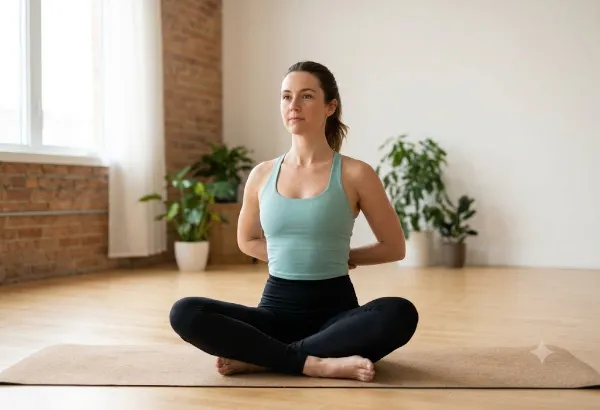
Stretches the front of the body, encouraging deeper breathing and relaxation of the nervous system.
Steps:
- Stand tall.
- Place your hands together at your back, or place your hands on your hips.
- Allow your chest to lift and relax your shoulders.
- Breathe gently and slowly.
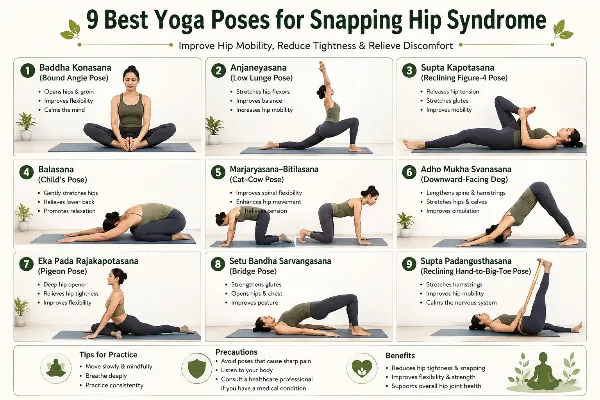
Marjaryasana-Bitilasana (Cat–Cow Pose)
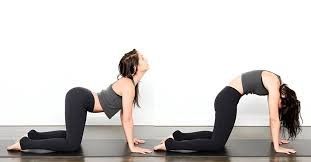
This will help release feelings in your body. It moves your back and chest gently.
Steps:
- Come into a tabletop position. Spread your fingers. Ensure that your spine is in neutral alignment. Take a few deep breaths.
- Inhale.
- Allow the belly to sink, and lift the chest. Move your shoulder blades apart. Bring the shoulders down, away from the ears. Lift your sit bones and gently lift your head (Cow Pose).
- Hold for a moment. Feel the opening in the chest and natural curve in the spine.
- Exhale.
- Press the mat away from you. Round your spine towards the ceiling. Tuck your navel, your tailbone, and your chin towards your chest. Stretch through your back (Cat Pose).
- Repeat, inhaling on Cow, and exhaling on Cat. Move fluidly in time with your breath. Imagine that you are creating a wave from your tailbone to the top of your head.
- Repeat this sequence 5-8 times (1-2 mins), 8-12 times (2-3 mins), or 15-20 times (3-5 mins). If your breathing becomes uneven, stop. It is more important to maintain a steady rhythm than to do lots of repetitions.
- Return to neutral tabletop. Take 2-3 gentle breaths. You can also choose to rest in child’s pose for a few breaths.
Low Lunge (Anjaneyasana) with Chest Lift
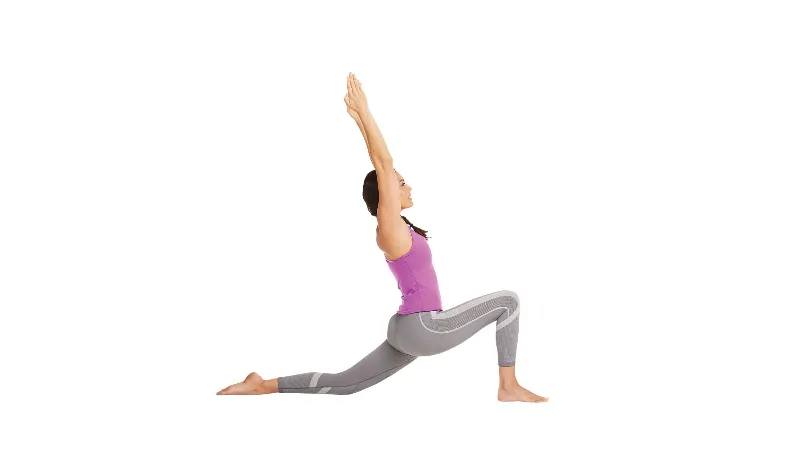
Open your chest and hips to unblock emotions related to Stress.
Steps:
- Bring your right leg forward into a Low Lunge position.
- Place both hands either on your thighs or hips.
- Gently lift your chest and relax your neck.
- Breathe deeply and repeat on the other side.
Setu Bandhasana (Bridge Pose)
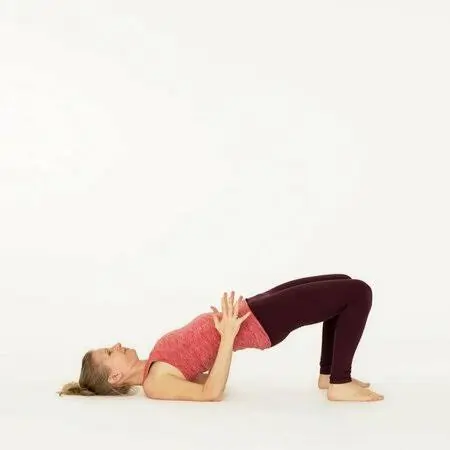
Stimulates opening of the chest. Causes relaxation and a gentle emotional release.
Steps:
- Lie down with knees bent.
- Lift pelvis slightly. Place support under pelvis.
- Let arms hang loosely.
- Breathe gently and slowly.
Bhujangasana (Cobra Pose)
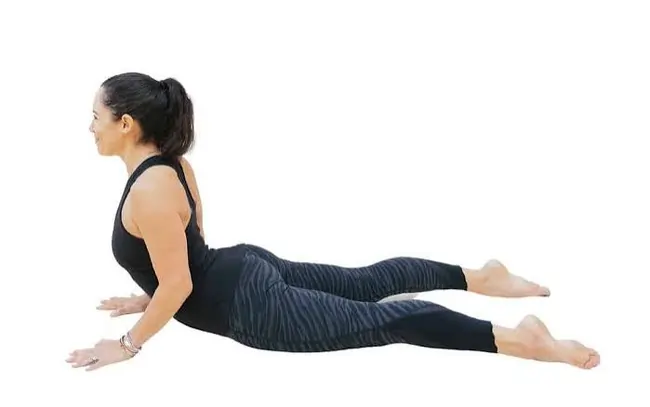
Use a small raise so that it creates a sense of openness in your chest/encourages breathing but does not overwhelm your nervous system.
Steps:
- Lie prone on your mat. Straighten your legs, placing pressure from the balls of your feet onto the mat. Rest your forehead on the mat.
- Gently place your palms on the mat, positioning them directly beneath your shoulders. Spread your fingers out. Bring your elbows close to your body.
- Press your legs, upper legs, and feet into the mat. Gently squeeze your gluteus muscles.
- Inhale and press your pubic bone down, lifting your chest by engaging your back muscles.
- Squeeze your shoulder blades together by pulling your shoulders backwards. Lift your sternum.
- Straighten your arms as much as comfortable. Keep your elbows slightly bent and look slightly forwards/above you.
- Breathe steadily. If you are a beginner, hold this position for 15-30 seconds. If advanced, hold for 1-3 minutes.
- Exhale and slowly lower your chest, shoulders, and forehead to the ground. Turn your head to one side to allow relaxation in the neck.
Child’s Pose (Balasana) with Chest Support
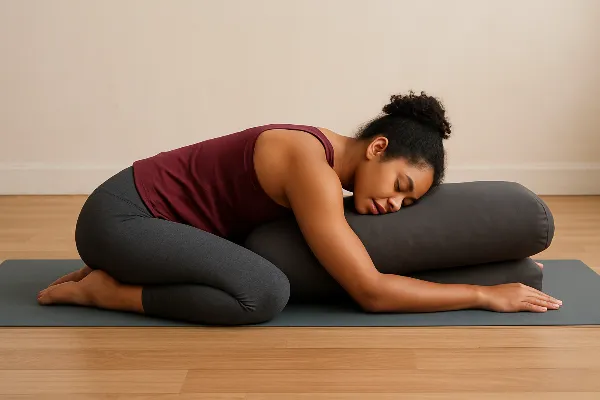
This pose helps emotions calm down by striking a balance between anchoring and openness.
Steps:
- Sit up on your knees
- Rest your upper body on a pillow
- Breathe slowly
- Hold these positions for between five and ten minutes. You could do them separately if you are feeling very stressed.
Eka Pada Rajakapotasana (Pigeon Pose)
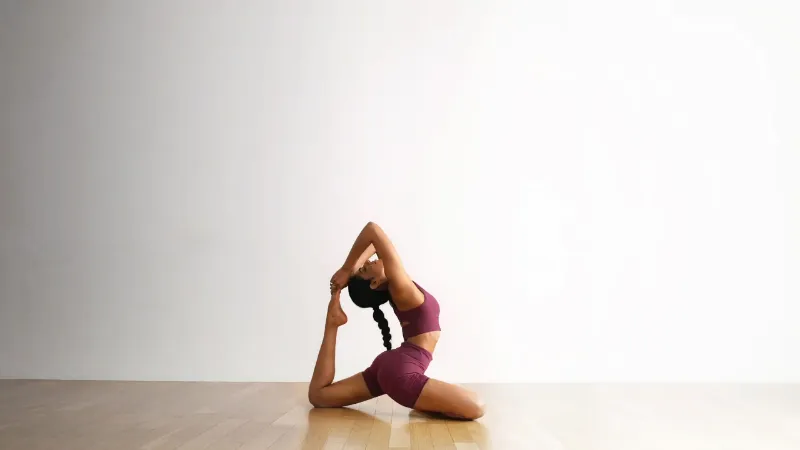
Hips are a common place for emotional tension to be held, so hip-opening poses can be very beneficial in releasing this.
Steps:
- Bring your right knee towards your right wrist. Align the right shin so it is at an angle from the front edge of your mat. Extend your left leg behind you.
- Turn your hips to be square. Fold forward, supporting yourself on your forearms (or block).
- If you have very tight hips, you may want to place a bolster/block beneath your right hip bone so that your pelvis remains in neutral.
- Hold for 5 breaths. Repeat on the other side.
Ustrasana (Camel Pose)
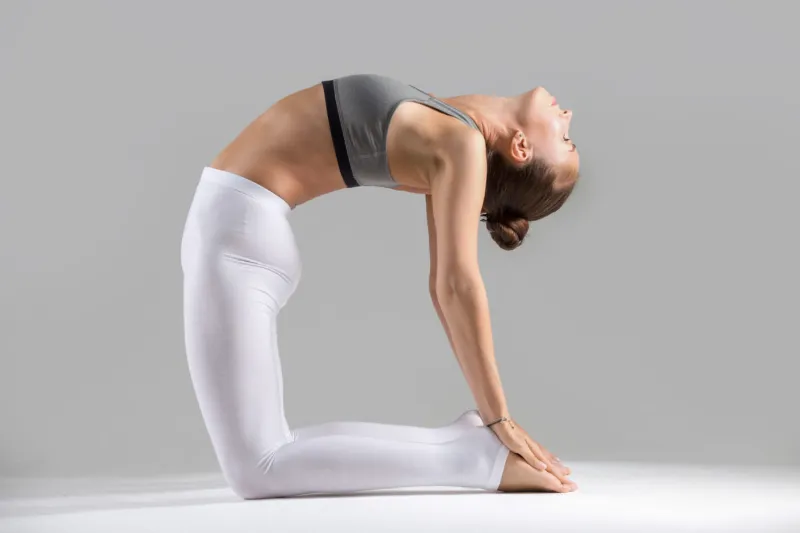
Helps us to be open and vulnerable. Releases trapped sadness and sorrow.
Steps:
- Sit on your mat with knees wide.
- Place your hands on the underside of your back. Gently arch backwards until your fingers touch your heels.
- Allow your chest to open. Keep your neck loose, and bring down your shoulders (so they are not pulled up towards your ears).
- Breathe deeply.
Paschimottanasana (Seated Forward Fold)
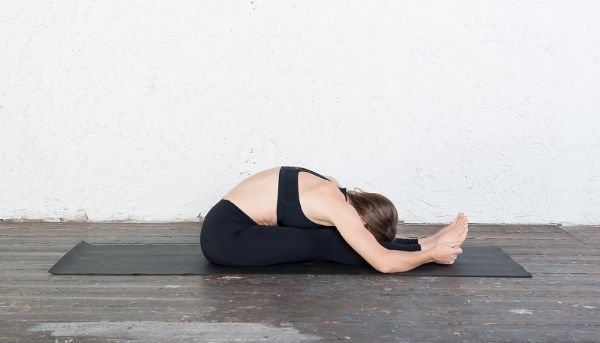
Very relaxing. Releases tension in the mind and emotions.
Steps:
- Straighten your legs, keeping a slight bend in the knees (or keep your knees bent if tight)
- Take a deep breath in, and on the out-breath, fold forward, reaching towards the soles of the feet or shin.
- Stay in this position for 5-10 breaths. On each exhale, allow your body to sink further into relaxation.
Supta Baddha Konasana (Reclining Butterfly Pose)

A restful posture for calming and allowing feelings to be processed.
Steps:
- Lie on your back, bringing your feet together and letting your knees separate. If there is any injury in the knees or groin area, then support the knees with a prop.
- Support the back with a bolster/ pillow.
- Allow your hands to rest on your abdomen or chest and take deep breaths.
Viparita Karani (Legs-Up-the-Wall Pose)
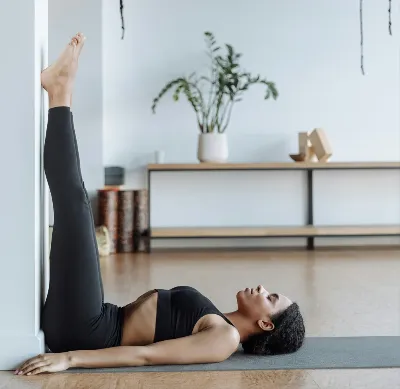
Excellent for calming the nervous system and reducing tiredness due to stress.
Steps:
- Yoga mat against wall. If using a bolster, place this approx. 6-12 inches away from the wall.
- Position the right hip against the wall.
- Lower body to rest on forearms and lift legs.
- Move hips slightly forwards or backwards so that you are comfortable in this pose.
- If using a bolster, ensure that the sacrum is resting on the bolster (not the lower back). If using the wall to support your legs, make sure you do not feel strain in them.
- Rest arms either on the ground with palms upwards or above your head in a relaxed goal post position. Gently tuck your chin to be comfortable in the neck.
- Calm Nervous System
- To further relax in this pose, and to keep warm for longer, add a folded, light blanket over your body.
- Take 5 to 10 deep breaths. Then allow your breathing to return to a natural rhythm.
- Duration:
- Beginner: 5-10 mins
- Intermediate: 10-15 mins
- Restorative: 15-20 mins
Savasana (Corpse Pose)
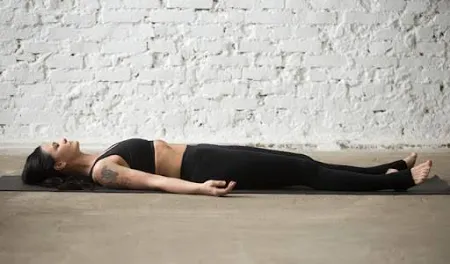
This pose ensures maximum integration of the benefits of your practice.
Steps:
- Lie on your back. Let your legs be straight, and your feet spread.
- With your arms by your side, let your palms face upwards. Let your fingers go limp.
- Gently stretch the back of your neck. Tuck your chin slightly below the level of your forehead. If needed, support your head.
- Close your eyes. Relax facial muscles so that your jaw, tongue, and eye area are relaxed.
- Take a few gentle breaths. Return to natural breathing.
- Let your body be heavy. Let your shoulders, upper body, stomach, pelvis, and legs go limp.
- Hold this pose for between 5 and 20 minutes depending on how long you are practicing. You should be relaxed yet aware.
- To finish your pose, take a few deeper breaths. Wiggle your fingers and toes, bend your knees, and roll onto your side. Wait a moment and slowly move into an upright position.
Tips for maximizing emotional release
- Breathing deeply during will enhance the release within the poses.
- Be consistent with your practice. The release of emotions (as with healing) can be slow.
- Listen to how you are feeling in your body. If your body is pushing you to work harder, then do so, but if it wants to take it easy, then do this. If you push too hard in the session, you may find that you do not get the desired effect. If you do not put in enough effort, you may not get the desired effect either.
- Take some time to reflect after your practice. This can allow you to process how you were feeling and understand more.
- Move gently – try not to strain your body.
- Breathe in and out comfortably during each pose.
- Find a quiet, comfortable place to do yoga.
- If you feel any pain, dizziness, or discomfort, then stop immediately.
- Use props such as rolled-up blankets, yoga bricks, or cushions to get comfortable and stable.
- If you are feeling uncomfortable emotionally in a position, stop and return to comfortable breathing.
- Move slowly, especially in forward folds and twists, to avoid overstretching.
- At the end of your yoga session, try spending 5 minutes doing Shavasana to allow yourself to relax.
Conclusion
A gentle flow yoga sequence helps to preserve the body’s optimal health, even though it is less physically taxing and includes more contemplative elements than other types.
Anyone can improve their flexibility, heal from injuries, manage stress and weight, lessen chronic diseases, and develop a deeper connection between the body and breath with a gentle flow.
Gentle flow yoga appears to last a lifetime every time one sets foot on the mat. Instead of making you perform difficult positions or drench yourself in sweat, it enables you to take care of your body. You may take care of your body, mind, and spirit with a gentle yoga sequence that feels appropriate for you.
FAQs:
How to release emotions trapped in your body?
The secret is to figure out how to let go of that persistent stress and trauma. Relaxation and nervous system regulation can be facilitated by techniques like yoga, meditation, and somatic experiencing. We can begin to feel better both physically and emotionally by removing stress from the body.
What’s the difference between yoga and gentle yoga?
Generally speaking, gentle yoga provides more opportunity to experiment with comfortable movement and a slower tempo. The intensity of Flow Yoga varies every class, but it connects poses and transitions into a more continuous pattern. In general, neither is superior to the other. Your needs, interests, and experience can all influence your decision.
When Is the Ideal Time to Practise Yoga During the Day?
The ideal time to do yoga ultimately relies on your tastes, goals, and way of living. Morning yoga can be perfect if you’re seeking a way to develop consistency and an invigorating start to your day. Evening yoga could provide you with the reset you need if reducing stress and improving your sleep are your top concerns.
What to do immediately after yoga?
Increased sleep speeds up the healing of injured tissue. Try to get seven or eight hours of sleep every night, and if you’re feeling really exhausted after class, don’t be afraid to take a nap. To lessen and avoid muscle tightness and exhaustion, it’s crucial to drink water both before and after class.
Why shouldn’t you shower after yoga?
In general, taking a shower either before or after yoga is not advised. Your blood will be drawn to the skin’s surface from your body’s glands and organs when you take a hot shower. Additionally, it will deplete the fundamental energy you have accumulated from your regular yoga practice.
References:
- Rushali. (2026, November 4). Heart-Opening yoga poses to support Emotional Well-Being. MyYogaTeacher. https://myyogateacher.com/articles/heart-opening-yoga-poses
- Steve & Steve. (2026, October 16). Yoga for Stress Relief & Emotional Well-Being: 7 Poses to Release Tension and Restore Balance. Mindful & Grounded by Yoga | Nervous System & Resilience. https://groundedbyyoga.org/yoga-for-stress-relief-emotional-well-being-7-poses-to-release-tension-and-restore-balance/
- Camille. (2023, September 13). Top 11 yoga poses for emotional release. Everything Yoga Retreat. https://www.everythingyogaretreat.com/yoga-poses-for-emotional-release/
- Ashish, Y. (2021, December 1). Gentle Yoga sequence: 9 gentle poses flow for stretching & relaxation – Fitsri Yoga | Yoga Alliance certified online yoga school. Fitsri Yoga | Yoga Alliance Certified Online Yoga School. https://www.fitsri.com/articles/gentle-yoga-sequence