10- Minute Morning Yoga Routine for Beginners
Introduction
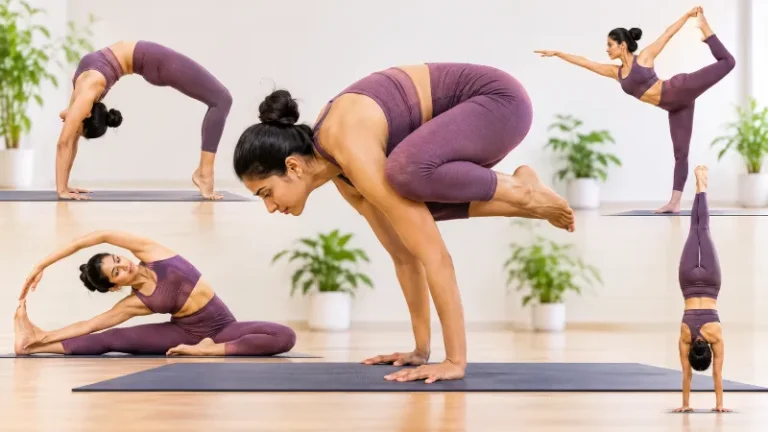
Morning yoga routines are an excellent way to begin the day feeling relaxed. Completing a short routine will help get your body feeling more alert, particularly if you have been sitting down at a desk for long periods of time throughout the day, or have been feeling stressed.
Beginners may find morning yoga beneficial as it may take away some of the pressure of the session. In the evenings, our energy levels tend to be lower. Therefore, completing a quick 10-minute session at home can seem much more achievable, helping you get into a routine.
The Benefits of Practicing Yoga in the Morning
In many Indian cultures, yogis will do some yoga first thing in the morning. However, in the West, yoga classes can be done at any time of day to suit people’s different lifestyles.
Practicing yoga first thing in the morning can have many benefits. Not only will it get you moving, but it can help your breathing and mind, so you won’t be so tired when getting up and making breakfast.
When you practice yoga in the morning, you:
- Establish a healthy regimen
- Control the way you sleep.
- Increase your rate of metabolism
- Boost your concentration
- Increase your awareness throughout the day.
- Develop and strengthen your muscles.
- Cut down on stress
Tips for Practicing Yoga in the Morning
Here are some tips to help you fit morning yoga into your daily routine! Even if you’re not a morning person, doing Sun Salutations first thing in the morning is easier with these tips. It may be tempting to hit snooze on your alarm clock, but try to wake up earlier to give yourself more time.
Get enough rest the night before: If you are scrolling on Insta very late at night, it may be difficult for you to feel fresh and ready to practice on your mat. In order to feel fresh and ready for your flows in the mornings, try to get a good amount of sleep.
To improve the quality of your sleep, try to avoid screens right before bed. If you find that you are negatively affected by coffee in the afternoon, maybe try to avoid consuming it. You may also find it useful to download apps to monitor your sleep.
Prepare the night before: The yoga pants are still in the dryer! You don’t remember where you put your mat, so rolling over and pressing snooze is tempting. To make getting into your practice more straightforward, try to prepare everything the night before. Simply unroll your mat and have your yogi clothes ready so that all that remains to do once you’re out of bed is get changed and begin practicing.
Take a moment for yourself before stepping on your mat: Take a moment to step away from your phone, and just breathe. Give yourself a moment of calm and clarity before starting your practice. Whilst you may be tempted to respond to emails and start surfing the web, you have plenty of time to do this later in the day. Try to take a moment (or two) away from these distractions to bring some calm to your practice.
Hydrate and replenish: It may be tempting to head straight onto your yoga mat from bed; however, some yoga practitioners like to eat a small snack or drink some water first. If you do eat before class, aim to keep it light. Drinking water, having a few almonds or a few spoonfuls of yogurt would all go well with a yoga session. Once you have finished, be sure to replenish your fluids and eat healthy and energising foods to begin your day.
Listen to your body: Even if you do yoga every morning, sometimes you just may not be in the mood. However, it is very important to know how to read your body. If you feel very tired in the morning, it can be perfectly ok to press snooze on your alarm clock and get more sleep.
When Is the Best Time to Practise Yoga: Morning or Evening?
Depending on how your body is feeling, any time of day can be great for yoga practice. If you have a busy working or learning schedule, you may prefer to do yoga in the mornings. Alternatively, doing yoga at the end of the day can help you relax. Find what time suits you best by experimenting with different times during the day. If you decide to do yoga late at night, make sure to slowly bring your energy down within your practice so that you can get to sleep easily.
Some people aren’t very energetic in the mornings, so they prefer to do yoga at the end of their day. Alternatively, some people like to begin their day with some chaturangas and downward dog! Try doing yoga at different times throughout the day to see what works best for you. If you do yoga late at night, make sure to slowly lower your energy level in your practice to ensure that you can fall asleep easily.
What is the Best Type of Yoga to Practice in the Morning?
If you tend to hit snooze 5 times on your alarm before getting out of bed, maybe a more dynamic, sweaty practice will help to get you moving and energized. Practicing yoga in the morning is a great way to get moving and warm up your body.
Different people will suit different types of practices. Some people may enjoy a more athletic practice, while others may enjoy something more slow and mindful. As everyone has different bodies, experiences, and lifestyles, it is very important to consider which practice would suit you best to begin your day.
If you are a morning person and enjoy a slow, calm start to your day with slow breathing and easy poses, then a slower or restorative class would be best. Try Hatha, Restorative, or Yin yoga.
If you want to get moving, pumping blood around your body and working up a sweat, a faster-paced yoga class would be perfect for you. Try Hot yoga, Vinyasa Flow, or Ashtanga.
As always, listen to your body. On some days you may feel like doing a slower practice, and on other days you may enjoy flowing with your breath. When you get up in the morning, ask yourself what feels right for you and do what is comfortable and suitable for your body on that day.
10-Minute Morning Yoga Routine for Beginners
This sequence of 10 poses is perfect for your morning routine. There are 4 parts to this sequence: Warm-Up, Sun Salutations, Wake Up Flow, and Cool Down.
1. Warm-up:
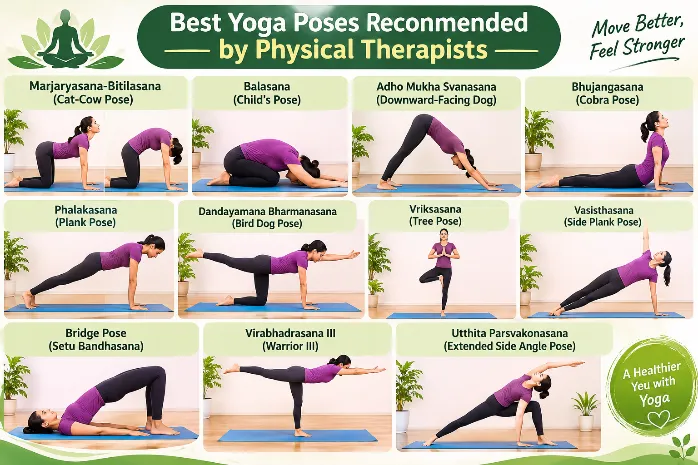
Balasana (Child’s Pose)
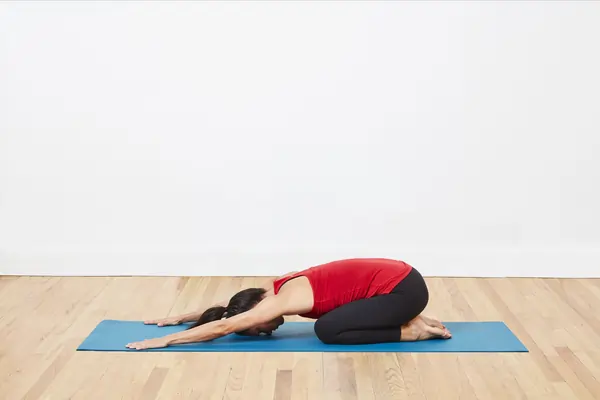
- Place knees hip-distance apart with big toes touching.
- Move your arms so that you are now at the top edge of the mat; place the forehead onto the mat.
- Allow shoulders to drop away from ears, slightly bend elbows, and lower hips so that they are close to heels.
- Hold for 5 breaths.
Side Stretch
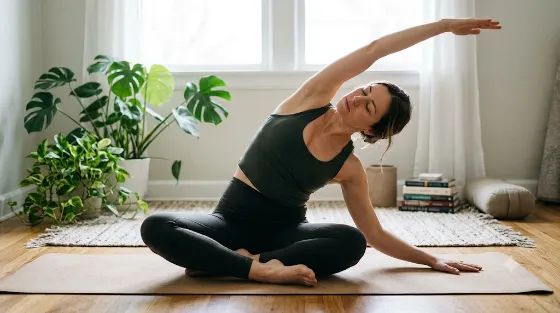
- Ankles crossed on mat with hands on knees.
- Inhale and raise arms above you, then exhale and place your right hand or fingers on the floor. Move your torso to the right.
- Draw the left shoulder blade back and open the collarbone. The shoulders should be away from your ears.
- Lengthen the left arm so that the palm is facing down towards the floor. Your fingers should be reaching to the left.
- Keep your eyes closed or gaze at the left fingertips or floor. Pause for 3 breaths. Repeat on the opposite side.
Adho Mukha Svanasana (Downward-Facing Dog)
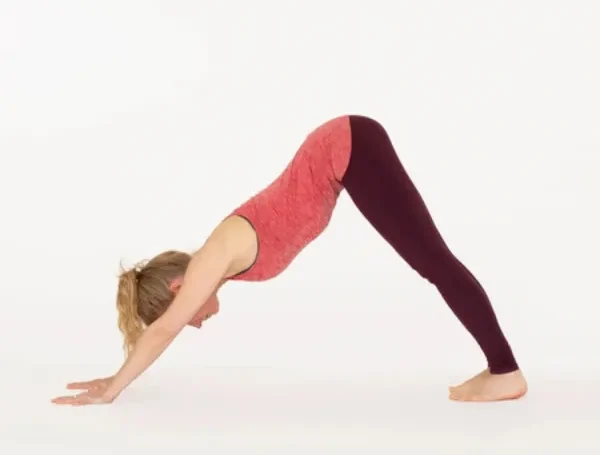
- Walk your arms forward a little way and open your fingers.
- Draw your toes under and lift your knees and hips. Push your hips up towards the ceiling, pushing the mat away from you and lengthening your spine.
- Your knees may be bent here. Allow your heels to lift off the floor; however, try to lengthen down the length of your spine and side body.
- Hold for 5 breaths.
Baddha Hasta Uttanasana (Ragdoll)
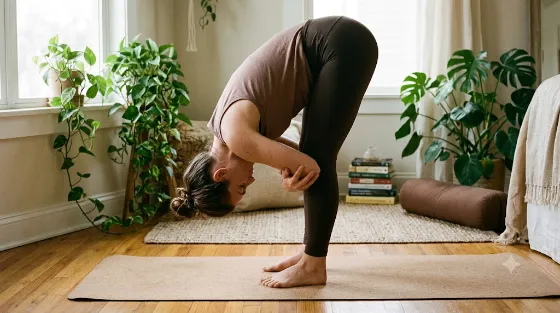
- Bring your feet to the top of your mat, placing them hip-width apart. Let your torso dangle and twist to touch opposite elbows.
- Bend your knees deeply. Allow your head to dangle, and let your shoulders drop away from your ears. Let your tummy rest on your thighs. Allow gentle movement of your head, neck, and shoulders.
- You may continue to hold opposite elbows, or you can interlock your fingers behind your head/ body, or just let your fingertips lightly brush the mat.
- Hold this position for 5 breaths.
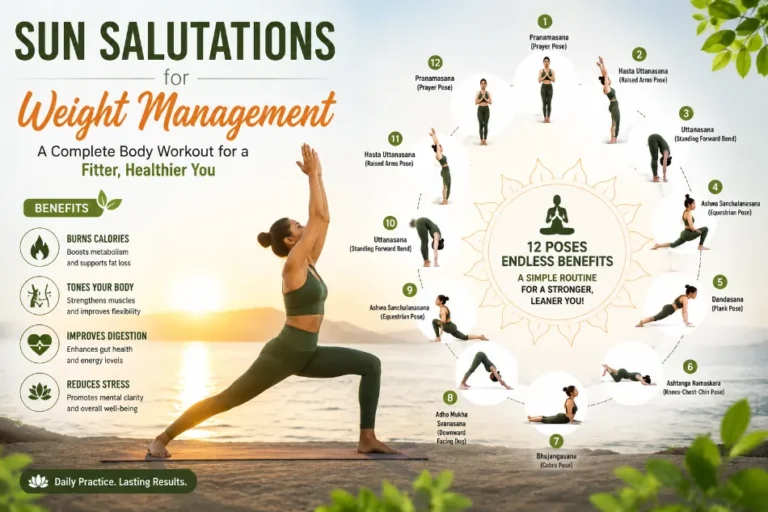
2. Surya Namaskar (Sun Salutation)
Here is an altered version of the Sun Salutation. You can alter these variations as you wish. For a more detailed breakdown of this sequence and variations, please see our full Sun Salutation tutorial.
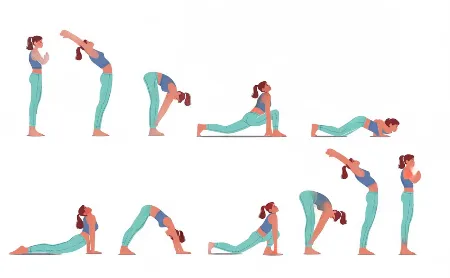
- Straighten your legs to stand in Mountain.
- Inhale and raise your arms high. Exhale and fold forward into a forward fold. Flex your knees if needed; however, make sure you are pulling your navel in and engaging your core muscles.
- Inhale halfway up. Ensure you are looking forward. Place your fingers on your shins or the floor. Engage your long spine and tuck your chin towards the sky.
- Exhale and flex your knees. Press your palms into the floor and step back into Plank pose. In Plank, ensure that your hands are directly under your shoulders, that your core is engaged, and your legs are strong.
- Inhale. Exhale and lower knees, chest, and chin to the floor. Bring elbows in close to your sides.
- Inhale and move into Cobra pose. Ensure your shoulders are not by your ears, and that your elbows are slightly bent. Open your heart.
- Exhale.
- Inhale and rise onto your toes. Bend your knees. Exhale and either step or jump to the top of the mat.
- Inhale halfway up. Exhale, forward fold.
- Inhale and stand up. Exhale and bring your hands to your heart.
- Do one (or 3 if possible) sun salutations.
3. Wake- Up Flow:
Eka Pada Adho Mukha Svanasana (Three-Legged Dog)
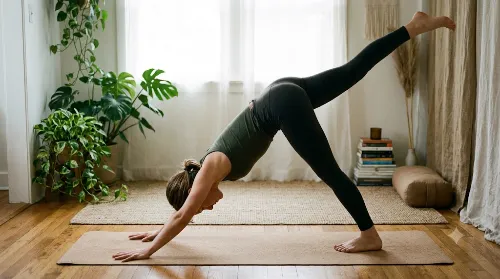
- Breathe and lift your right leg up and back. Try to raise it high, but be careful that you do not put uneven weight on your hips.
- Flex the foot of your raised leg so that your toes point down. Ensure that your hips are square.
Anjaneyasana (Low Lunge)
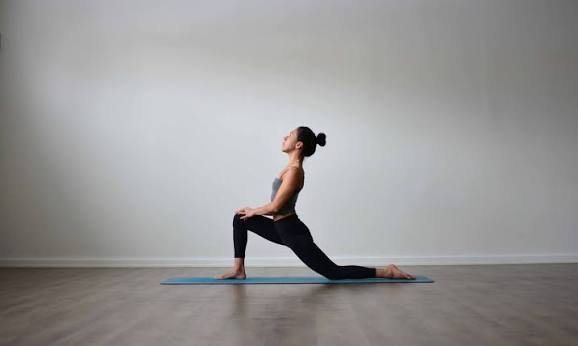
- Exhale and lift the foot.
- Place both hands around the foot. Lift the heel of your left foot and make sure that your right knee is parallel to the floor.
- Use the power in your lower body to lift the back of your knee up towards the ceiling.
Parivrtta Anjaneyasana (Low Lunge Twist)
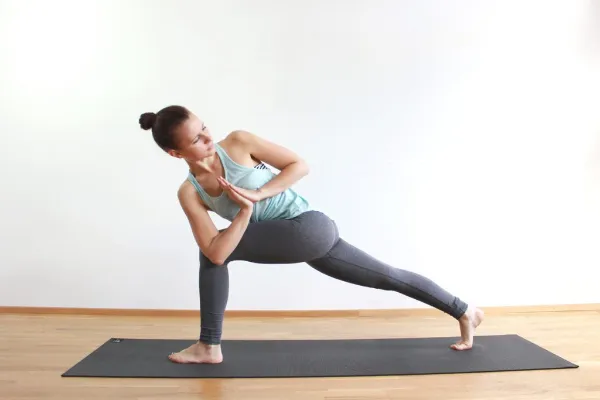
- Bring your right arm overhead with your fingertips upwards. Keep your left fingertips on the floor.
- Roll your right shoulder backwards to create a slight twist in your spine.
- Breathe comfortably for 3 breaths.
Virabhadrasana II (Warrior II)
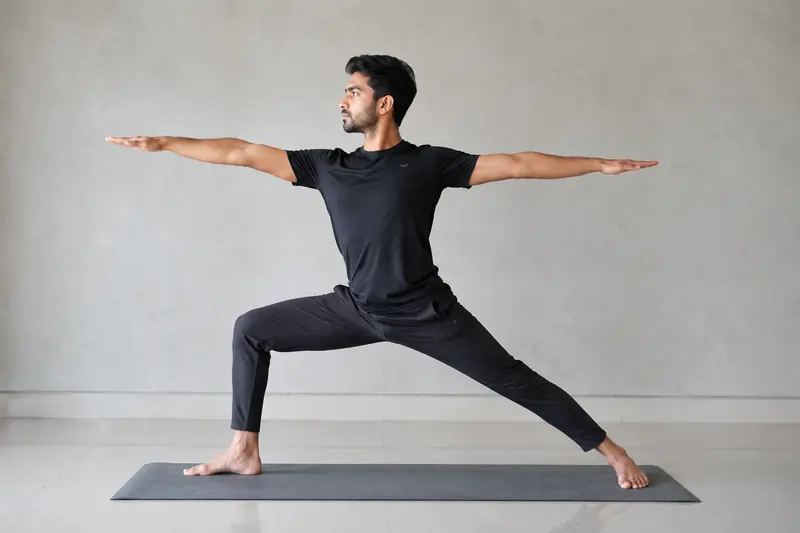
- Place weight on the back heel of your right foot.
- Reach forward with the fingers of your right hand and backwards with the fingers of your left hand.
- Engage your thighs and keep your shoulders relaxed.
- Find a stable centre in your body. Gaze over your right hand for three breaths.
4. Cool Down:
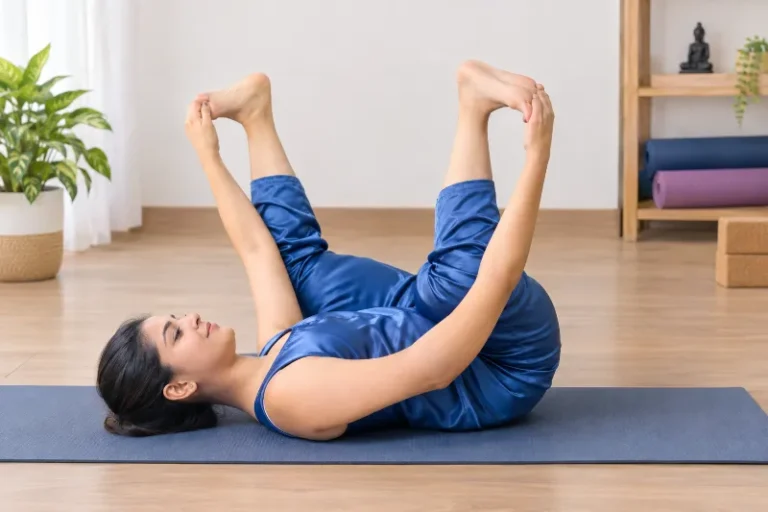
Supta Matsyendrasana (Supine Spinal Twist)
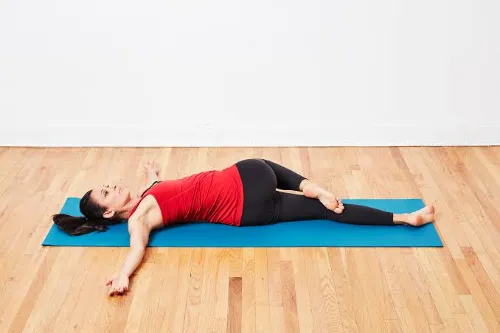
- Lie flat on your back.
- With your left shoulder down, stretch your arms into a ‘T’ shape and bring your knees down towards the right side of your body.
- Hold for 3 breaths on each side.
Savasana (Corpse Pose)
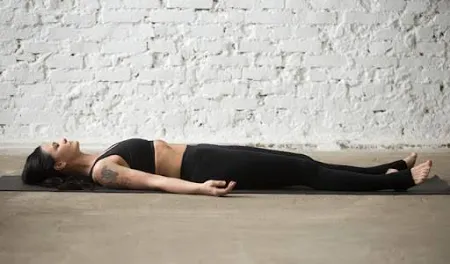
- Lie down on the floor and raise your arms so that your palms are facing upwards.
- Close your eyes.
- If possible, hold for longer than 2 minutes.
Safety Tips
- Do gentle movements
- Warm up first
- Breathe normally
- Don’t overextend
- Use a non-slip mat
- If you begin to feel pain, dizziness, or discomfort, stop straight away.
- Drink plenty of water before and after.
- Ensure that you have good form in the positions (don’t worry about getting it perfect).
Conclusion
Practicing 10 minutes of yoga in the mornings can be a great way to begin your day on a positive note. Doing yoga regularly can improve flexibility, strength, balance, posture, and relaxation. As you don’t need expensive equipment or long periods of exercise, it is very accessible.
Begin with simple basic poses and ensure you are breathing correctly. Gradually increase the amount of yoga that you do as you become more comfortable. To form a healthy and active lifestyle, consistency is key.
FAQs:
What is a good morning yoga routine for a beginner?
Do this easy 5-10 minute routine to loosen stiff joints and improve blood flow. Breathe gently through your nose, and if you feel any sudden pain, stop doing the exercise.
What not to do after yoga?
Do not take a shower, eat heavily, perform a vigorous exercise session, or sit in a cold environment immediately after practicing yoga. To avoid any discomfort and retain your energy, allow your body to cool down.
What not to do before doing yoga?
Do not eat a heavy meal or a meal high in fats, drink excessive fluids too close to the session, or go straight in without calming the body and mind. Practicing yoga without warming up properly, wearing tight clothing, or pushing yourself beyond injury/health limitations may cause discomfort or risk.
How Often Should Beginners Practise Yoga Each Week for the Best Results?
Beginners: 2-3 sessions per week. This will build strength and flexibility in your body and help you develop a routine. It also allows muscles and joints to recover.
Can I eat immediately after yoga?
We recommend waiting between 15 and 30 minutes before eating a full meal. However, you may wish to have fluids such as water, coconut water, and raw fruits straight after your practice.
Is 20 minutes of yoga a day enough?
Yes. As long as you practice regularly, 20 minutes of yoga a day can make a positive difference to your physical and mental health.
References:
- Reyes, M. (2021, June 7). Morning yoga routine for beginners. Yoga Rove. https://yogarove.com/morning-yoga-10-minute/
- Mehta, J. (2026, May 19). Best 10-minute morning yoga for beginners to boost energy. Mindfullyoga. https://www.mindfullyoga.com/10-minute-morning-yoga-for-beginners-at-home/
- McGee, K. (2022, March 30). A 10-Minute morning yoga sequence for beginners. DoYou. https://www.doyou.com/a-10-minute-morning-yoga-sequence-for-beginners/
- Aredidon, M. (2026, November 9). A 10-Minute morning yoga sequence for beginners (With real instruction). Yoga.com. https://yoga.com/practice-sequences/10-minute-morning-yoga-sequence-for-beginners-what-it-does-and-how-to-start