
Yoga for Osteoporosis In Women
What is Osteoporosis?
Osteoporosis weakens the bones and makes them less dense. As we age, our bones can become more brittle as they lose calcium and other minerals. This means it is more common in post menopausal women. Other risk factors include smoking, drinking alcohol, a poor diet lacking in calcium and vitamin D, and lack of exercise.
Osteoporosis usually causes no symptoms and so can be difficult to diagnose without a fracture occurring. Bones that are most likely to be broken are those in the hips, vertebrae, and wrists. Those suffering from osteoporosis will be more likely to suffer from fractures due to small falls or ordinary activities such as lifting and bending. Fractures can lead to further fractures and worse injuries if left untreated.
For those suffering from osteoporosis, falling should be avoided. To remain healthy and independent, you need to stay as active as possible and look after your bones and the muscles that support them. Try your very best to keep your bones as dense as possible.
Benefits of Yoga for Osteoporosis
There are various advantages to practicing yoga for osteoporosis, including:
Better Balance and Coordination to Prevent Injuries: Yoga poses such as Triangle Pose and Tree Pose have been shown to improve your proprioception (awareness of your body), static and dynamic balance, and reduce the risk of falls. Practicing yoga can reduce the risk of injury by improving balance and stability.
Increased Bone Density: Weight-bearing yoga postures encourage new bone growth by putting gentle pressure on the bones. This increases bone mineral density (BMD), which is an important factor in preventing fractures. Those participating in the research who took part in a short daily yoga routine showed measurable gains in bone mineral density (BMD), particularly in the hips and spine areas, which are often fractured.
Reverses Bone Loss: Yoga encourages osteoblast activity (bone-forming cells), which can help with bone repair. This can help to build up bone mass again and is therefore a natural way of decreasing the effects of osteoporosis and helping improve overall bone health.
Minimises Stress: Cortisol is produced by our body during periods of stress. Cortisol is a hormone that causes bone loss, increasing the risk of osteoporosis. Yoga helps us reduce Cortisol and therefore regulate our body’s stress response to create balance and peace within our bodies.
Practicing yoga will improve your overall lifestyle, reduce the effects of osteoporosis, and prevent falls and injuries.
Yoga Poses for Osteoporosis
The following poses are specifically chosen for their bone-strengthening benefits:
- Mountain Pose
- Tree Pose
- Chair Pose
- Warrior I Pose
- Warrior II Pose
- Triangle Pose
- Goddess Pose
- Plank Pose
- Side Plank Pose
- Cobra Pose
- Locust Pose
- Corpse Pose
Tadasana (Mountain Pose)
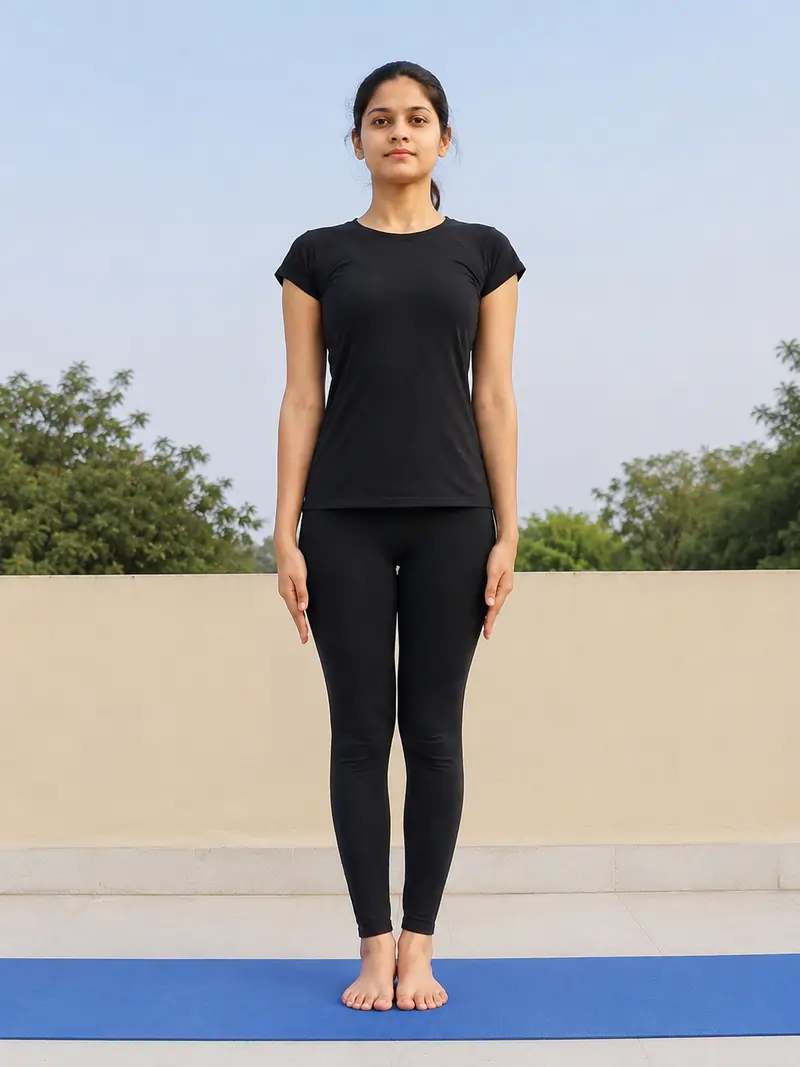
This position helps distribute weight evenly across your body, which reduces pressure on your bones. Plus, it builds strong core and leg muscles to help you stay balanced.
Steps:
- Stand with feet together and arms by your sides.
- Stand up tall with your feet planted.
- Push your chest out and raise your arms.
- Hold for 30 seconds while taking deep breaths.
Modification:
- Stand near a chair or wall for support.
- Keep your knees bent.
Vrikshasana (Tree pose)
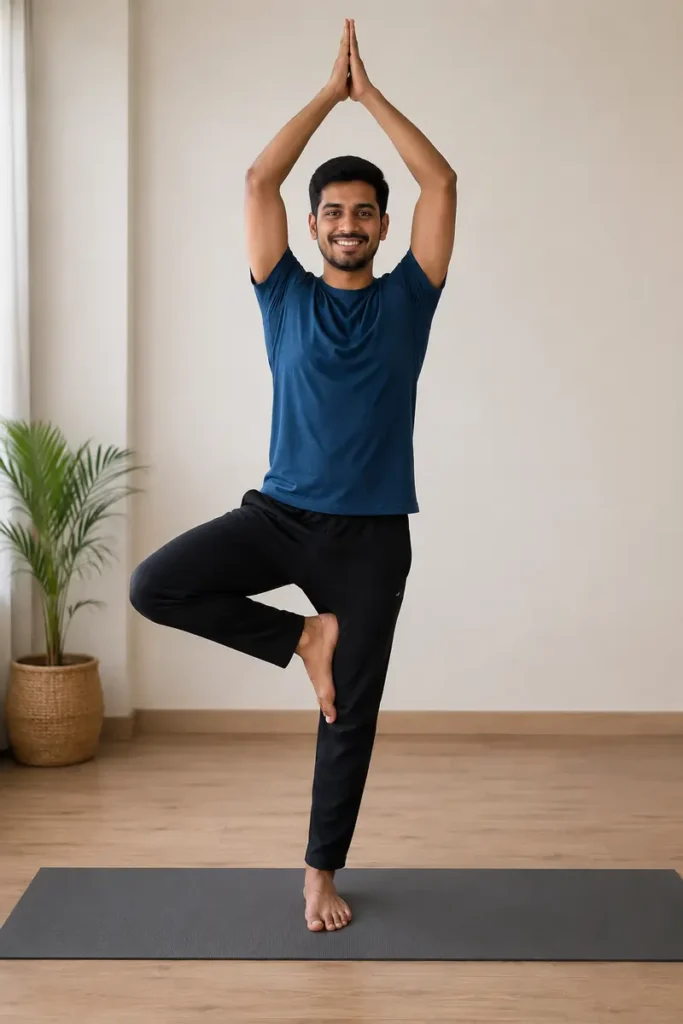
This pose builds strength in your hips and legs by having you balance on one leg, improving your balance and reducing the chance of falling.
Steps:
- Stand on one foot.
- Gently position your other foot against your calf or the inner thigh of your standing leg.
- Raise your palms above your head or place your palms together at your chest.
- Hold this position for 20-30 seconds, then repeat on the other side.
Modification:
- Use a chair or wall for balance if needed
- Avoid if you have recently sustained a hip fracture.
Utkatasana (Chair Pose)

Builds up spine, thigh, and gluteal muscles and helps increase bone density in the lower back and hips.
Steps:
- Stand with feet hip-width apart.
- Inhale and lift arms.
- Exhale and bend knees as if sitting down on a chair.
- Hold for 20-30 seconds, keeping your back straight.
Modification:
- Use a wall for support by backing up against it.
- Make sure that your knees are above your ankles to protect your joints. Don’t bend down too far.
Virabhadrasana I (Warrior I)
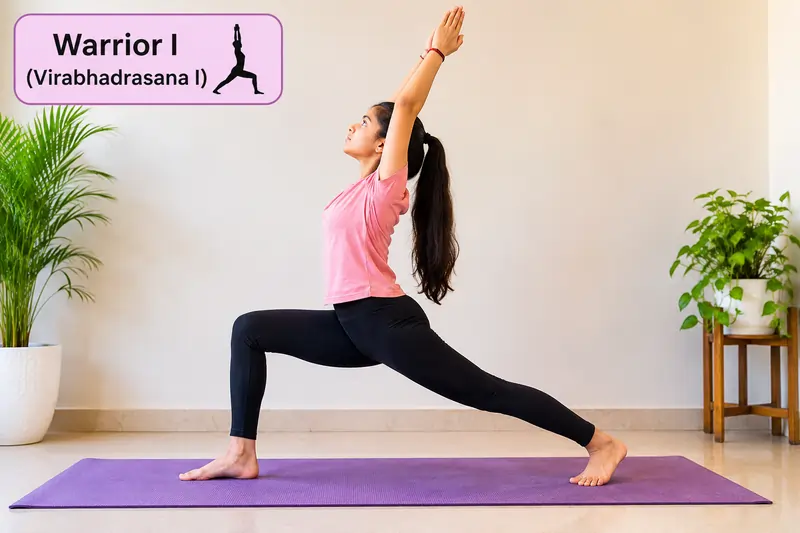
This position will help improve your bone density by strengthening your spine, hips, and legs. It will also help improve your posture by stretching your shoulders and chest.
Steps:
- To make this position more stable and prevent you from falling, you should stand up straight against a wall.
- Take one step back whilst keeping your feet slightly angled outwards.
- Straighten your rear leg. Bend your front leg at the knee.
- Raise your arms overhead.
- Hold for between 20-30 seconds before swapping sides.
Modification:
If you have pain when raising your arms, then shorten your stance and place your hands on your hips/wall.
Virabhadrasana II (Warrior II)
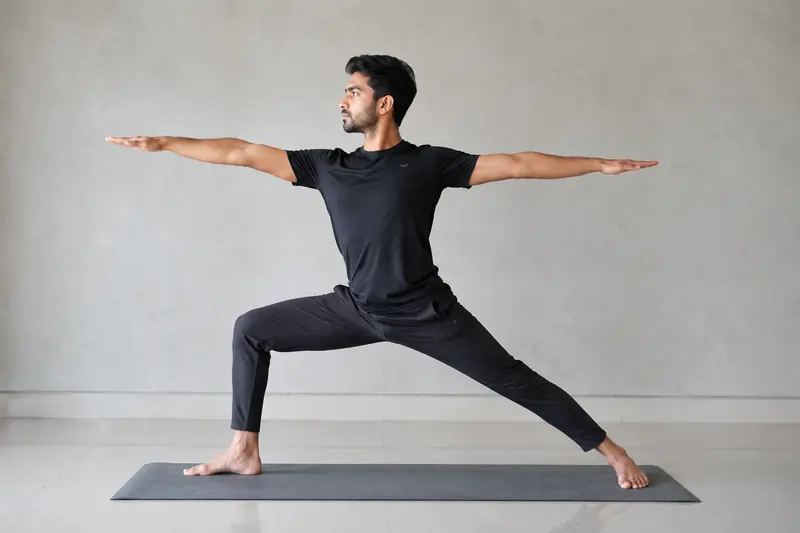
Steps:
- Stand with your legs wide apart and hold onto a chair or wall if needed for extra stability.
- Turn one leg out at a right angle and the other slightly in.
- Raise your arms so they are parallel to the ground and bend the knee of your front leg.
- Look over your front hand and hold for 20-30 seconds before switching sides.
Modification:
- Reduce flexion of the knees to avoid strain.
- Lean the back of your heels against a wall for added balance.
Trikonasana (Triangle Pose)
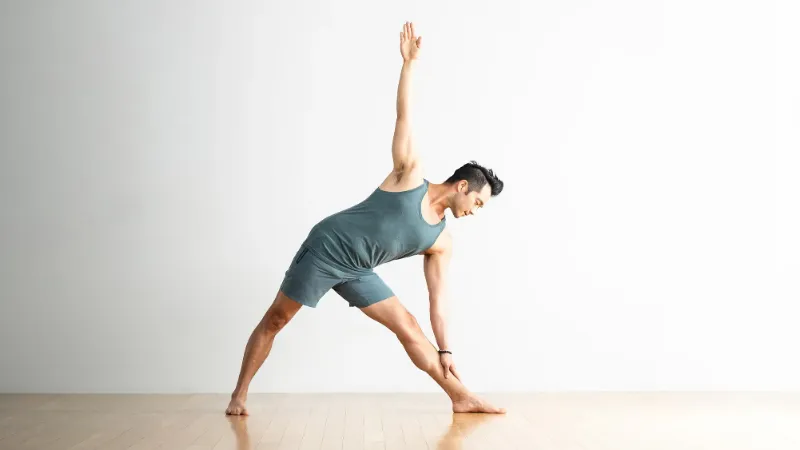
Improved balance, increasing your hip size, and strengthening your leg muscles and spine will reduce your risk of falling.
Steps:
- Place your feet apart.
- One foot should be externally rotated so that your knee is pointing outward at a right angle. The other foot should be slightly internally rotated.
- Raise your upper body so that it is above your front leg while leaning forward. Put your arms out to the side.
- Raise one arm. Place your shin or ankle across the opposite arm.
- If reaching down causes you any pain, place a pillow or a block under your hand.
- Repeat on the other side after 20-30 seconds.
Modification:
- Keep the lower hand on a chair or block rather than reaching it down to the floor.
- Avoid deep twisting.
Utkata Konasana (Goddess Pose)
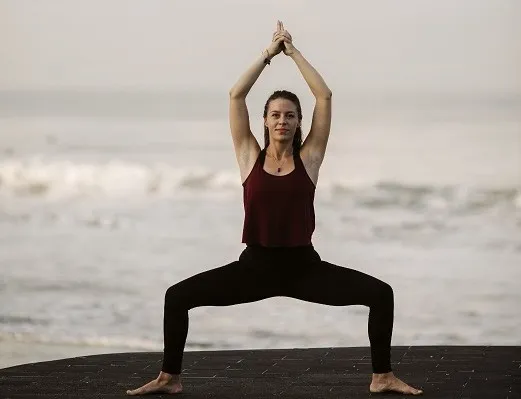
Builds strength in your lower body and gives stability to your pelvis by working your inner thigh, gluteus, and hip muscles.
Steps:
- Stand with your feet slightly wider than your hips and turn your toes out slightly.
- Lower your hips and bend your knees to perform a squat.
- Try to keep your back straight as you lift your arms to shoulder height.
- Hold for 20-30 seconds.
Modification:
- Place your hands on your thighs or sit against a chair.
- Limit knee flexion if there is joint pain.
Phalakasana (Plank Pose)
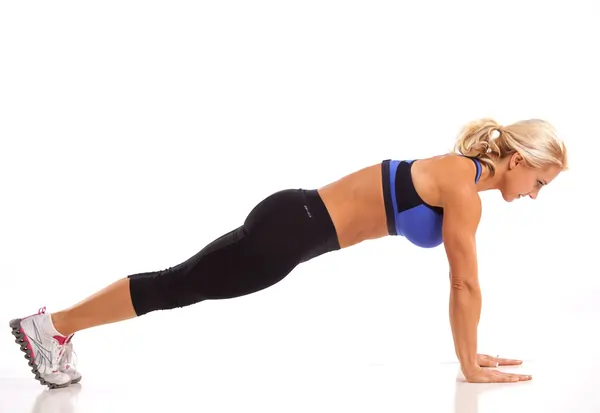
Strengthens your arms and core, helping to keep your posture and spine in check.
Steps:
- Start on hands and knees.
- Put your body into a straight line from the top of your head to the bottom of your heels by stepping your feet back.
- Keep the shoulder joint higher than the wrist.
- Hold for 10- 30 sec.
Modification:
- Kneel and do a plank. This can reduce stress on the spine.
- Avoid if you have a recent shoulder or wrist injury.
Vasisthasana (Side Plank pose)
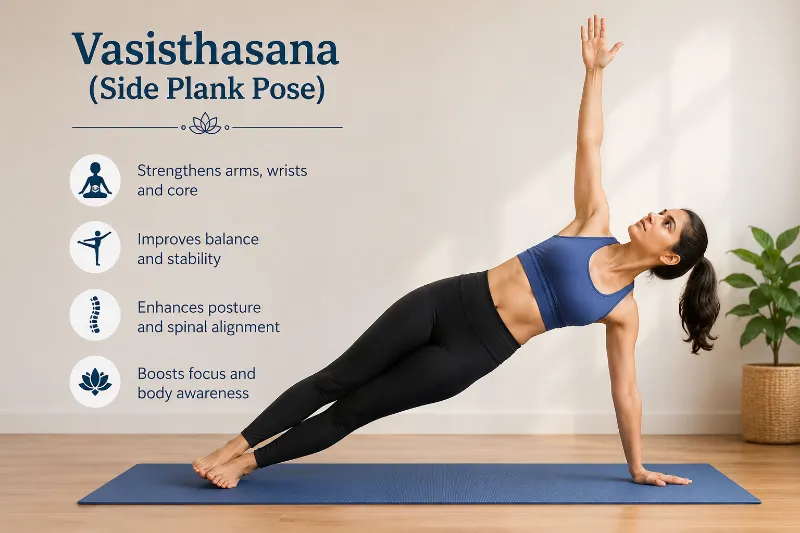
Increases balance, strengthens your hips and arms, wrists, and core.
Steps:
- Start in a plank pose.
- Place weight on one hand and twist so that your feet are stacked.
- Lift your top arm towards the ceiling.
- Hold for between 10-20 seconds, then repeat on the other side.
Modification:
- Lower your bottom knee down and into the floor. Side plank (modified).
- Avoid if you have shoulder instability or any concerns regarding balance.
Bhujangasana (Cobra Pose)
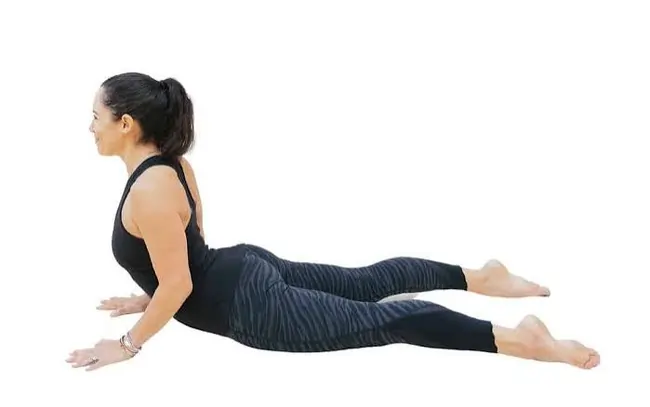
You will strengthen your spine and improve your posture with the Cobra Pose. It will reduce the risk of breaking bones in your upper back.
Steps:
- Place your hands under your shoulders.
- Push your chest up off the floor and press your hands down.
- Relax your shoulders and slightly bend your elbows.
- Hold for 15-20 seconds before lowering down.
Modification:
- Lift your chest slightly, but don’t overdo it.
- Avoid this move if you have a history of spinal compression fractures.
Salabhasana (Locust Pose)
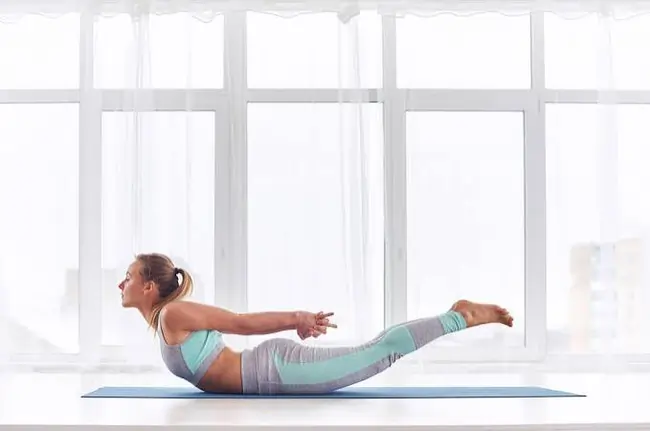
Strengthens the lower back, legs, and hips whilst stretching your spine.
Steps:
- Lie flat with your arms stretched out at your sides.
- Lift your legs, arms, and upper body off the floor.
- Hold for between 15 and 20 seconds whilst keeping a straight line from your neck to your back.
- Lower and rest.
Modification:
- Keep your arms down so that you can lift just your legs or chest (not both).
- Put a folded blanket under your hips.
Savasana (Corpse Pose)
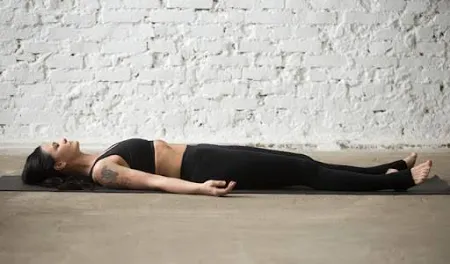
The Corpse Pose can help improve overall bone health by helping you to relax and reduce stress.
Steps:
- Lie on your back with your arms by your sides.
- Close your eyes and take a deep breath.
- Relax your whole body for 5-10 minutes.
Modification:
- Place a rolled-up towel under your knees to help relieve pressure on your lower back.
- Cover your head with a folded blanket if needed.
Chair Yoga for Osteoporosis: Safe Options for Limited Mobility
If you have osteoporosis, it can be tricky to find a balance. On the other hand, chair yoga makes sense and is safe. It will help improve your bone strength, correct poor posture, and increase joint flexibility whilst sitting down.
It especially helps:
- Elderly people and seniors with limited strength/flexibility
- Those recovering from fractures and injuries
- People who are worried about falling or have poor balance; office workers looking to keep their bones healthy throughout the day
4 Gentle Chair Yoga Poses for Osteoporosis
These are low-impact exercises that help to strengthen your bones and improve coordination by targeting key areas of the body such as legs, hips, and spine.
Seated Mountain Pose

This will help you become more aware of your posture and spinal alignment.
Steps:
- Sit up straight with your feet planted firmly on the floor.
- Stretch your arms above your head and tuck your sit bones under.
- Hold this for 20-30 seconds, engaging your core.
Seated Twist
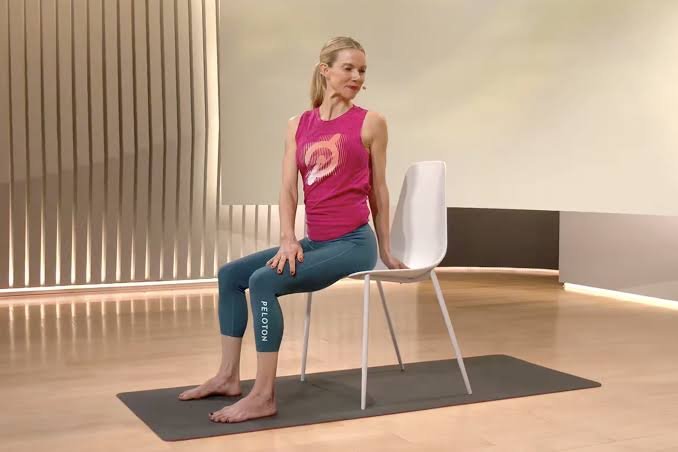
This is an exercise that will strengthen your abdominal muscles and increase movement in your spine.
Steps:
- Sit up straight and gently turn to one side, placing a hand on the opposite knee.
- Keep your back long.
- Hold for between 15 and 20 seconds on each side.
Seated Leg Extensions
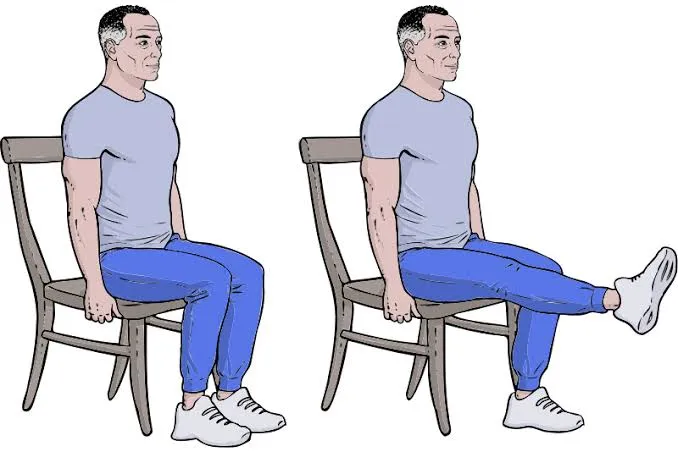
This will strengthen your thigh muscles and quadriceps.
Steps:
- Sit up tall and extend one leg in front of you.
- Hold this position for a short time, then release.
- Repeat on both sides 8-10 times.
Seated Arm Raises
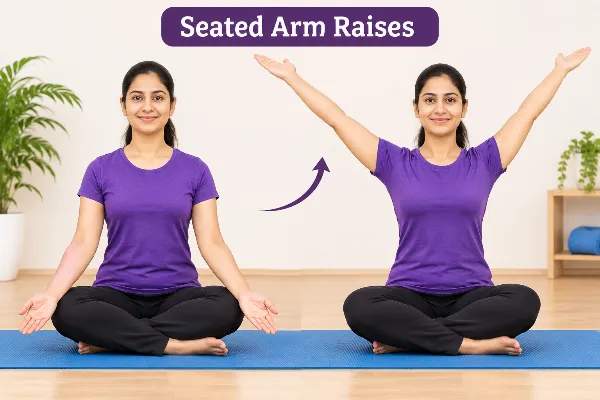
This pose supports the shoulders and upper back.
Steps:
- Take a deep breath and stretch your arms up over your head.
- Exhale to lower your arms.
- Repeat for 5-8 slow breaths.
This is a gentle way to encourage bone health, as it encourages muscle and joint activity with less risk of injury from overstraining. Regular exercise can improve flexibility, circulation, and reduce stiffness, especially within the hips and spine.
Precautions
- Avoid intense twisting movements and deep forward bending.
- Avoid jerky movements.
- Avoid positions that put too much strain on your back.
- Use any chair, cushion, or yoga block for support.
- Do gentle, low-impact yoga poses.
- Avoid balance poses without appropriate support.
- Stop if you feel any pain or discomfort.
- Be mindful of keeping good alignment and posture throughout every pose.
Conclusion
This can be really helpful for those of you suffering from osteoporosis or osteopenia, as it looks at improving both the psychological and physical aspects of your condition.
Research has shown that yoga therapy can really help improve your bone health, balance, and overall wellness.
With the right yoga therapists, you can begin on a journey of self-discovery, learn to embrace your mind-body connection, and start to build a healthy relationship with your body. You may really enjoy the life-changing benefits of yoga by adding it to your daily routine.
FAQs:
Which yoga poses to avoid with osteoporosis?
Avoid spinal flexion. Poses that cause you to round your back are stressful to the lower back. Students with osteoporosis should avoid any pose that requires spinal flexion, such as sit-ups and crunches.
What is the fastest way to increase bone density?
Stay active. You can stop losing bone density and increase bone strength by doing weight-bearing exercises. Some examples include brisk walking, jogging, dancing, climbing stairs, and doing sports such as pickleball, tennis, and soccer. Don’t have too much alcohol or smoke.
Which food should individuals with osteoporosis include more frequently in their daily diet?
The best way to get calcium into your body is through dietary sources. So you want to get as much calcium as possible from food. So what foods have lots of calcium?
Dairy. Milk, yogurt, and cheese are some of the highest sources of calcium. One cup of milk provides around 300mg of calcium.
Can osteoporosis be reversed without medication?
Can Osteoporosis be treated naturally? Whilst there is no cure for osteoporosis, you may be able to prevent further bone loss by making healthy lifestyle choices. This includes having a calcium- and vitamin D-rich diet as well as doing resistance and weight-bearing exercises.
What vitamins help osteoporosis?
Daily intakes of 1200mg of calcium and 800IU of vitamin D have been associated with improved outcomes. Research suggests that calcium (with or without vitamin D) may provide some benefit in reducing the risk of osteoporosis in those over 50 years of age, particularly the elderly and those who are deficient.
Are bananas good for osteoporosis?
Magnesium is another important mineral for building strong bones. This can be found in potatoes, raisins, and tomato products. Potassium, an essential ingredient in strong bones, can also be found in tomatoes. To add some variety to your diet, include bananas, oranges, orange juice, and prunes.
References:
- Yoga Anytime. (n.d.). Osteoporosis-Safe Yoga Poses | Yoga Anytime. https://www.yogaanytime.com/blog/asana/osteoporosis-safe-yoga-poses
- Rushali. (2026a, October 26). Is yoga good for osteoporosis? Science-Backed Poses and guide. MyYogaTeacher. https://myyogateacher.com/articles/yoga-poses-for-osteoporosis
- Christine. (2026, October 19). Reclaiming Bone Health: Yoga Therapy’s Role in Osteoporosis Care. Yoga Therapy Associates. https://yogatherapyassociates.com/yoga-therapy-osteoporosis/