Utkatasana (Chair Pose): A Comprehensive Guide to Strengthening and Stability
Introduction:
Utkatasana (Chair Pose) is a powerful standing yoga posture that strengthens the thighs, hips, glutes, and core muscles while improving balance and stability.
Standing strong begins here – not with ease, but with fire. Utkatasana pulls no strings; it asks everything on the first breath. Often called Chair Pose, though that name barely scratches the surface. Its real weight lies in the roots: utkata, meaning wild, intense, firm. Asana simply stands for seat, stance, being still within motion. So this pose does not mimic furniture – it channels force.
Heat rises fast when thighs burn low, and shoulders roll back against gravity. Mind wavers, legs tremble, spine stays long like a drawn line through a storm. It checks balance not by holding steady, but by resisting collapse. Upper body must open wide even as the pelvis tucks slightly, almost secret.
Feet ground hard, yet energy climbs upward regardless. For teachers adjusting form, or healers tracking joint angles, details matter deeply. Each shift changes what muscles speak, which nerves respond. This walk-through dissects nothing less than how pressure turns to power.
Lineage and Historical Evolution
- Looking at where Utkatasana comes from helps make sense of it. Instead of just saying Chair Pose, think about what you’re really doing – there’s nothing relaxed here. You bend your legs like you’re lowering onto something solid, except there’s no seat below. Balance becomes everything since support isn’t coming from outside but is built within.
- Old writings, such as the Gheranda Samhita, mention forms close to this pose, yet different in shape. Back then, people stood high on their toes while sinking hips near heels – an intense challenge for feet and control.
- Nowadays, across many yoga styles, especially in sequences like Surya Namaskar B found in Ashtanga, the form has shifted. Thighs go nearly level, aligned and bent together, linking basic upright poses with deeper engagement inside the torso.
Muscular Activation and Biomechanics
- This position uses more than leg strength – it asks multiple muscles to fire up while others stretch out deliberately. Force spreads through arms, shoulders, spine, glutes, quads, even down into ankles – all working at once.
- One part tightens; another releases, creating tension that holds the structure steady. It feels strong because every piece adjusts to keep the whole thing balanced.
- This move works like a linked system where your feet stay planted, shifting how pressure moves through the legs. From heels to hips, everything connects.
Lower Body:
- Feet set close or slightly wider than the hips create the base. Front of the shins tighten – tibialis pulls hard – to hold the ankle lift steady under load. Knee bend goes deep, yet stable. Thigh muscles – the quads – resist sinking by slowing the descent while holding position mid-air.
- Glutes engage strongly: Gluteal muscles lock the pelvis in place as both dy lowers. Hip stabilisers in – tiny rotations corrected before they start. Gravity tries to drag you down. Maximus holds back, controlling how far the drop happens.
Core and Spine:
- Midsection stays active throughout. Abs up front fire nonstop – both surface and inner layers gripping to stop pelvic sway. If the core weakens, the pelvis tips forward too much. That shift dumps weight straight onto the lower back bones.
- Spine relies on rear cables – the erector group – to winch the spine upright. These muscles run parallel to the vertebral column, pulling shoulders high so the chest doesn’t cave.
Upper Body:
- Arms rise above head level. Delts at the front lead that motion. Serratus spreads the shoulder blades wide across the back, keeping the movement smooth overhead.
- Back between the shoulder blades does quiet work. Rhomboids and traps pinch blades flat, glued to rib wall beneath. The neck gains space when the shoulders behave correctly. No crunch occurs if alignment holds.
How To Perform Utkatasana?
For best results without risk, build the pose piece by piece slowly. Start precisely.
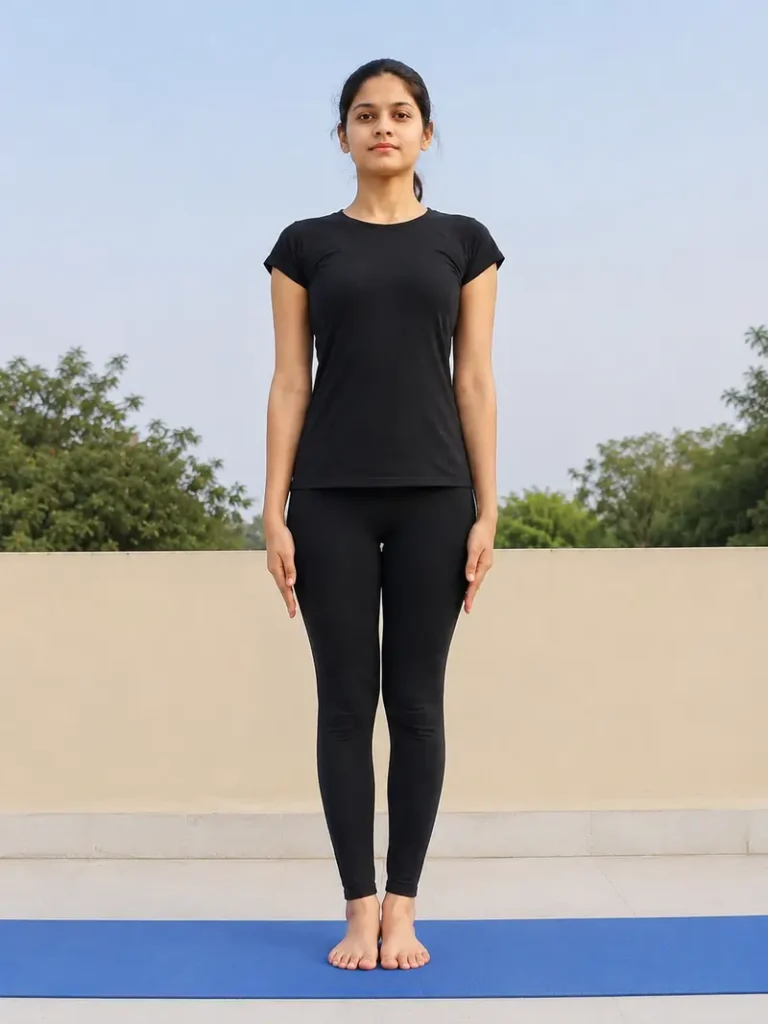
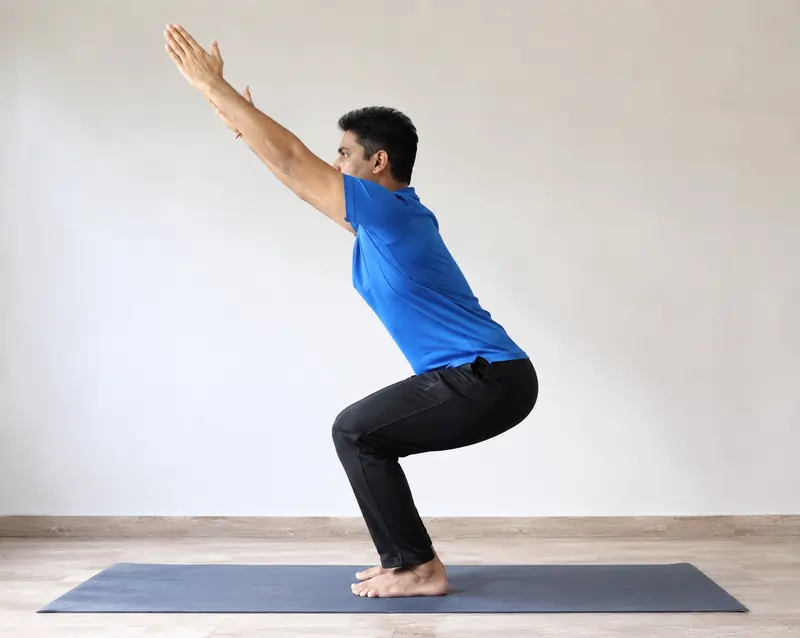
- Stand tall first. Assume Mountain Pose – feet grounded, breath even, posture neutral. Start by touching your big toes while letting your heels spread just a bit, unless your lower back feels off – then line up both feet straight, spaced like your hips. Press each foot firmly into the floor, balancing across every edge.
- Breathe in fully. When you breathe out, let your knees fold gently forward, pushing your hips back like settling slowly onto furniture. Watch that your knees stay behind your toes – you ought to spot your nails when glancing down.
- On the following breath inward, lift your arms high beside your head. Let hands face each other, or bring them close if shoulders permit.
- Let the top edges of your shoulders slide gently backwards along your spine, moving them farther from your ears. Engage the area around your navel by drawing it inward, just enough to feel support, while letting your tailbone extend downward like roots settling into soil. This small shift keeps too much curve out of your lower back.
- Hold space across your collarbones, eyes resting lightly ahead or drifting upward near your hands. Stay in the shape through five slow breaths, maybe ten.
- On an inhale, stretch your legs fully, fingers pulling skyward; on the exhale, bring arms down smoothly, palms brushing past hips, returning to standing rest.
Utkastasana(Chair Pose): How Pressure Turns into Power
Benefits of Utkastasana
Seen through both medical insight and whole-body awareness, this pose serves several quiet healing roles at once.
Strength and Joint Support:
- Every day practice of this pose brings deep gains to several parts of the body. Not just the legs get stronger – balance at the joints improves too. Holding the squat form works muscles like the quadriceps, hamstrings, and glutes through steady tension.
- Because the knee stays under load, it builds support right where it needs it most. One key player? The small inner thigh muscle that keeps the kneecap moving smoothly.
- When feet flex upward, the move stretches calf tissue and eases strain on the heel cord. Over time, that shift may help stop foot pain before it starts.
Core and Posture Improvement:
- Sitting too much weakens the backside muscles along with the inner trunk support. From the first moment in Utkatasana, those areas start working together like they’re meant to.
- Day by day, rounded shoulders fade, lower back fibres grow stronger, upright stance becomes normal even when just moving around or parked in a chair.
Circulation and Endurance:
- When big movers such as quads and rear hips fire nonstop against downward pull, heart activity picks up fast – no delay, no warning. Blood flow adjusts quickly because effort spreads across wide sections below the waist.
- Breathing deeply stirs up motion within the belly and pelvis, quietly pressing against inner organs like a slow wave. Blood moves faster when body heat rises along with the pulse, awakening cells with fresh oxygen.
- Over time, standing strong becomes less effort as endurance builds from steady internal shifts.
Digestive Support:
- Pressure in the core helps digestion flow smoothly by nudging intestines into rhythm. Waste leaves more easily while the kidneys adjust their filtering pace under consistent soft compression.
Common Mistakes and Corrections
Since this pose demands so much, minds often choose easier ways to stand it – leading bodies into harmful patterns without warning.
Mistake One: Knees Caving Inward
- One such pattern shows knees caving inward instead of staying above the feet, straining joints each time the weight dips off balance.
- Knees pressing together can strain the inner knee ligament more than it should handle. That pressure builds when legs turn inward during movement, focusing stress on one spot instead of spreading it out.
- Tight muscles might pull things out of alignment without notice. Awkward stances often go unnoticed until discomfort shows up later.
Correction:
Push your knees out just a bit, as if pressing against something you can’t see, aiming them toward the middle of your foot. Let that move guide everything without forcing it.
Mistake Two: Excessive Lower Back Curve
The back of the back spine sticks out too far. This tilt brings on a stabbing ache near the base. Pressure builds when sitting incorrectly. Mistreatment worsens discomfort over time. Nerves react to the abnormal angle. Pain shows up with simple movement.
Correction:
Start by tightening your belly button area. Imagine drawing the front of your hips up into your ribs. Let your tailbone sink downward slowly.
Mistake Three: Leaning Too Far Forward
Slumping happens when the upper body folds down toward the legs, making what should be a strong seated stance feel weak instead. Instead of power, there’s just droop – ribs diving for knees, back rounding without support.
That shift kills the intensity meant to build in the legs and core. Without the lift, the posture loses shape fast. Strength leaks out through poor alignment. What stays is more stretch than strength.
Correction:
Backward shifts of weight help free the toes from the floor. Lifting the breastbone brings balance through upward motion instead. The heels carry the load whether movement begins there.
Modification and Variations
- From standing tall, slowly bend your knees. Some folks find it hard to squat deep because their bones just fit differently. If you’re new to this movement or healing from a past ache in the legs or back, try leaning into a wall. Let it hold some weight, letting your thighs move toward horizontal without tipping too far forward.
- For others, wobbling at the hips might be the real hurdle. Try gripping a firm block between both thighs halfway down – that squeeze wakes up hidden muscles along the inner leg. Maybe your shoulders feel stiff, worn out from hours bent over screens. Skip raising the arms skyward.
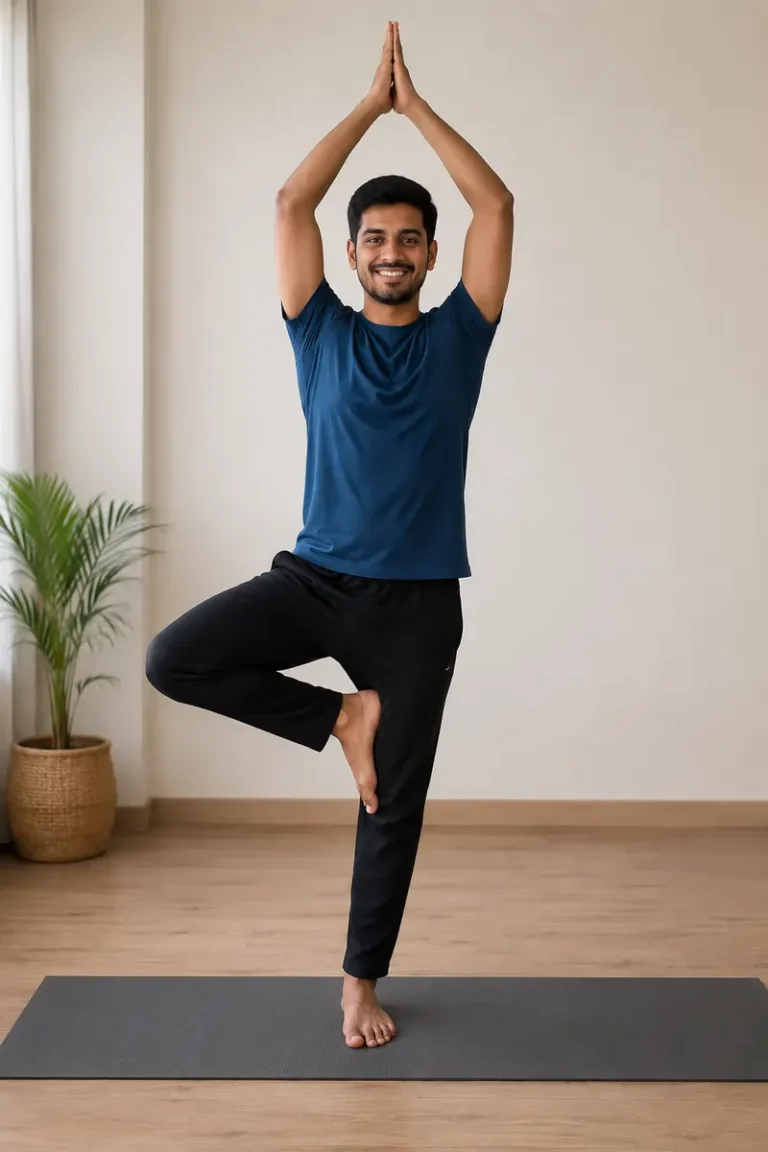
- Instead, rest your hands together like a quiet thank-you at the centre of your chest. Another twist comes when balance becomes the goal. Lift one foot, hooking it high across the opposite thigh, then settle deeper – not to show flexibility, but to meet resistance where it lives.
Mental and Emotional Effects
- Utkatasana isn’t just about muscle and bone. What really matters shows up when the legs start to shake. Fire builds in the thighs – this is normal. The body wants to run before it even thinks, thanks to old survival circuits waking up. That urge to quit? It arrives fast, loud, and automatic.
- Yet staying put becomes a quiet act of clarity. Breath stretches longer, eyes open wider, jaw unclenches – all while power burns below. This clash teaches something rare: composure inside discomfort. Old teachings called it steady ease amid effort. Doing this pose reshapes how stress feels elsewhere – in traffic, arguments, tight spots life brings.
Safety Considerations
- One rule stands firm, though: Skip strong versions if knees are healing, sleep has vanished for months, or dizziness creeps in easily. Respect what the flesh whispers before it shouts.
Conclusion:
Standing strong begins here – not with ease, but with fire. Utkatasana asks everything on the first breath and keeps asking until the body learns how to meet pressure without collapsing.
Feet ground hard, energy climbs upward regardless, and every piece adjusts to keep the whole thing balanced. What starts as effort in the thighs becomes a lesson in stability, endurance, and composure.
This pose does not mimic furniture – it channels force
FAQS:
What is Utkatasana (Chair Pose)?
Utkatasana (Chair Pose) is a standing yoga posture that strengthens the legs, core, and back. It also improves balance and overall body stability.
What are the benefits of Utkatasana (Chair Pose)?
Utkatasana (Chair Pose) helps build lower-body strength and improves posture. It also enhances endurance and body awareness.
Can beginners practice Utkatasana (Chair Pose)?
Yes, beginners can practice Utkatasana (Chair Pose) with proper alignment and guidance. Start slowly and increase the hold time gradually.
How long should I hold Utkatasana (Chair Pose)?
You can hold Utkatasana (Chair Pose) for 20–60 seconds, depending on your comfort level. Regular practice helps improve stamina and strength.
Does Utkatasana (Chair Pose) help with weight loss?
Utkatasana (Chair Pose) engages multiple muscle groups and burns calories. It can support weight management when combined with a healthy lifestyle.
Reference:
- Finserv, B. (2024, November 21). Health benefits of Utkatasana. https://www.bajajfinserv.in. https://www.bajajfinserv.in/insurance/health-benefits-of-utkatasana
- Olaben. (2026, April 14). Utkatasana Chair pose: strength for body and mind. https://olaben.com/blogs/olaben-blog/utkatasana
- Flow, M. (2025, November 12). Chair Pose (UTKATASANA): How To Do It, Benefits & Precautions – Mind Flow Harmony Yoga School In. Mind Flow Harmony Yoga Academy. https://mindflowharmony.com/how-to-do-chair-pose-utkatasana-benefits-and-precautions/
- Winderl, A. M. (1970, January 1). Want a full-body challenge without any weights? Try Chair pose. https://www.onepeloton.com/blog/chair-pose
- Admin. (2026, January 2). Chair Pose (Utkatasana): Benefits, How to Do It Safely & Common Mistakes. Mrityunjay Yogpeeth. https://mrityunjayyogpeeth.com/blog/chair-pose-utkatasana/
- Chair yoga and why seated yoga poses are good for you | Brown University Health. (n.d.). Brown University Health. https://www.brownhealth.org/be-well/chair-yoga-and-why-seated-yoga-poses-are-good-you
- https://www.yogajournal.com/poses/chair-pose-2/