Bakasana (Crow Pose)
What is Bakasana (Crow Pose)?
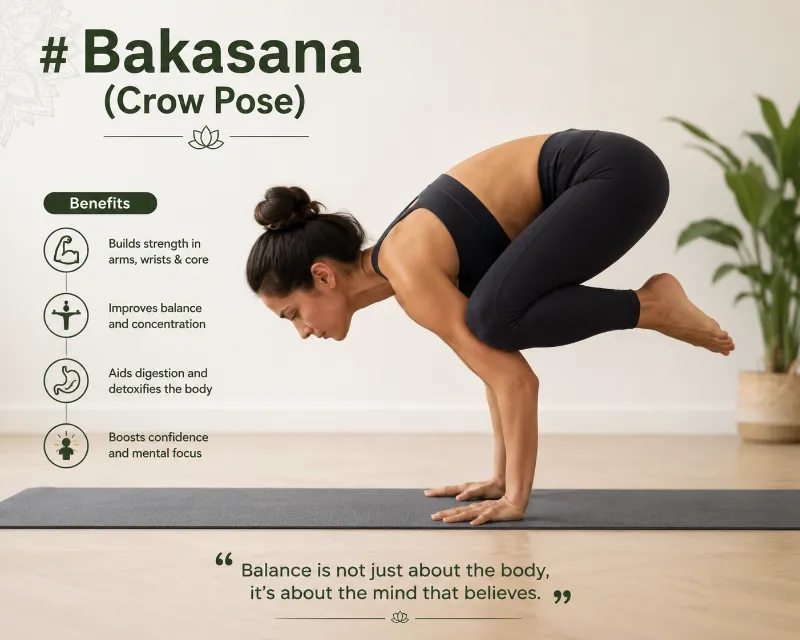
Bakasana (Crow Pose) is an arm-balancing yoga pose that strengthens the arms, wrists, shoulders, and core while improving balance, focus, and body awareness. In this pose, the knees rest near the upper arms as the body is balanced on the hands.
Crane Pose helps to improve mental attention and strengthens your arms, shoulders, and core.
The sole distinction between Bakasana and Kakasana, commonly known as Crow Pose, is how the arms are positioned. In Crane Pose, the arms are kept completely straight (straight arms in Crane Pose represent the crane’s legs), while in Crow Pose, the arms are bent.
Overview & Etymology
The Sanskrit terms “Baka,” which means crane, and “Asana,” which means stance, are the source of Bakasana.
In the ancient scripture Mahabharata, Baka is described as a forest ogre who occupies the place where the Pandavas came to live for their 12 years of exile.
Yudhishthira, the oldest Pandava, discovers after speaking with the ogre that it is actually a cunning nature spirit that is here to try his patience rather than Baka. This tale serves as a metaphor for the strength of composure, kindness, and communication.
Bakasana is listed as the 62nd of Lord Shiva’s 84 yoga poses in the 17th-century Hatha Yoga classic Haṭha Ratnāvalī.
Also, Sritattvanidhi, a 122-hatha yoga posture text from the 19th century, has mentioned details about both Bakasana and Kakasana.
Crane Pose is performed in many ways according to various yoga manuals, lineages, and gurus.
Bakasana, for instance, is described by B.K.S. Iyengar as a straight-arm balance. In contrast, a lot of Western practitioners refer to it as Bakasana and do it with a bent arm.
- Sanskrit Name: बकासन
- Pronunciation: bah-KAHS-ah-nah
- Pose Type: Arm Balance.
- Also known as: Crane Pose or Crow Pose
- Strengthens: Arms, wrists, Shoulders, and Core
- Stretches: Forearms and Upper Back
Muscles Worked in Bakasana (Crow Pose)
- Core muscles: Rectus abdominis, transverse abdominis, and obliques
- Shoulders: Deltoids and rotator cuff muscles
- Arms: Triceps and biceps
- Forearms and wrists: Help support and stabilise the body
- Chest: Pectoral muscles assist with upper-body stability
- Upper back: Trapezius and rhomboids help maintain posture
- Hip muscles: Hip flexors help keep the knees lifted toward the arms
- Leg muscles: Quadriceps and inner thigh muscles help maintain the tucked position
Health Benefits of Bakasana
- Improves core strength.
- Enhances focus and concentration.
- Strengthens and lengthens the spine.
- Tones the muscles in the upper body.
- Improves the function of the digestive and reproductive organs.
- Strengthens the shoulders, forearms, wrists, hip flexors, and traps.
- Enhances the passage of Prana (energy) and activates the Manipura Chakra (Solar Plexus).
When to Avoid Performing Bakasana
- Avoid after surgery.
- Avoid if you have spondylitis.
- Avoid if you have a severe injury.
- Avoid if you have a hiatal hernia.
- Avoid during migraines and vertigo.
- Avoid if you have inflammatory knee arthritis.
- Avoid during pregnancy and the menstrual cycle.
How to do Bakasana (Crane Pose)
Since Crane Pose is a difficult yoga pose, beginners should break up their practice into several parts for easier comprehension and quicker improvement.
The four primary components of this asana practice are as follows: warming up, progressing to the main asana movements, adjusting your posture, and releasing tense muscles.
Finally, we have included position changes and variations for both beginners and intermediates so they can modify their Bakasana practice to suit their comfort level.
Part 1: Preparation for Bakasana
To energise your glutes, core, wrists, and forearms before entering Crane Pose, try these warm-up poses.
- Malasana, or the Yogi Squat, is a deep hip-opening position in yoga. Your pelvis will be swiftly stretched by this pose, which will also enhance blood flow from your tailbone to your toes.
Just squat with your pelvis near the floor and your thighs pointed outward. Maintain the prayer position with your arms while using your elbows to modify the resistance in your hip flexors and thighs. For one to five minutes, hold this posture.
Navasana (Boat Pose)
2. This is a great yoga pose for strengthening and activating the entire core. To begin, sit in Staff Pose, bend your knees, raise your legs off the mat, and shift your body weight onto your tailbone while using your core.
For four or five rounds, hold this position for a few seconds. You’ll be able to maintain Crane Pose for longer with this pose.
Chaturanga Dandasana (Four-Limbed Staff Pose)
- Practice Chaturanga Dandasana before Crane Pose to stimulate key body regions such as the shoulders, wrists, and forearms.
To achieve Chaturanga Dandasana, begin with Downward-Facing Dog, transition to a high plank, and bend your elbows. For five to ten rounds, hold this low plank for a few seconds.
Part 2: Step-by-Step Instructions to Perform Bakasana
To perform Bakasana, also known as Crane Pose, follow these steps:
- Step 1: Squat with your elbows on the inside of your knees in the centre of the mat.
- Step 2: Maintain a straight head, lift your heels off the mat, and place your hands in front of your chest in a prayer position.
- Step 3: To grasp the yoga mat, place your palms down, align them with your ankles, and spread your fingers wide.
- Step 4: Next, keep your eyes on the mat and contract your shoulders and core. Now try to raise your feet off the mat while bending your upper body slightly forward.
- Step 5: Lift each foot off the mat one at a time while focusing on your breath. Lastly, extend your arms as straight as you can and maintain this position for a short while.
Common Mistakes in Bakasana (Crow Pose)
- Placing too much weight on the wrists instead of distributing weight through the fingers and palms.
- Keeping the elbows too wide, which reduces stability.
- Looking down instead of slightly forward, making it harder to maintain balance.
- Rounding the upper back excessively without engaging the core.
- Prior to moving the body weight forward, attempt to raise the feet.
- Holding the breath instead of maintaining slow, steady breathing.
- Practising without properly warming up the wrists, shoulders, and core.
Tips for Bakasana (Crow Pose)
- Keep your fingers spread wide to create a strong, stable base.
- Engage your core and gently draw your knees toward your upper arms.
- Shift your weight forward gradually rather than jumping into the pose.
- Keep your gaze slightly forward to improve balance.
- Press firmly through your fingertips and palms.
- Keep your elbows bent and controlled instead of letting them flare outward.
- Practice near a soft surface or with a cushion in front of you when learning.
Breath Awareness:
- Inhale: While using your core and keeping your palms on the ground.
- Exhale: As you raise your feet off the mat and maintain your body’s balance in this position.
- Beginner Performance Duration: Maintain Crane Pose for 15 to 30 seconds.
- Advanced Performance Time: Maintain Crane Pose for 30 to 90 seconds
Part 3: Things to Keep in Mind
Because Bakasana is so physically and mentally demanding, you need to be extremely aware of your body and mind to maintain balance.
- Even a small alignment problem might result in severe long-term bodily harm and discomfort if you’re not paying attention. Thus, keep an eye out for the following Crane posture cues:
- Work your shoulders and core: You’re not using the proper muscle groups if you’re experiencing extreme shakiness and are unable to raise your legs off the ground.
- For a stable grip during Bakasana, always keep your shoulders, core, and traps taut.
- Take your time: You run the risk of dislocating your knees, elbows, or wrist joints when performing Bakasana pose quickly. Because of this, Crane Pose requires a thoughtful approach.
As you hold the pose with your legs raised, pay attention to your breath, remain composed, raise one foot at a time, and fix your gaze. - Your spine isn’t rounding: This is arguably Crane Pose’s most neglected feature. Many people are unaware that having a rounded back can both lengthen their grips and help them engage their core even more deeply.
- No fingers are holding onto the mat: The foundation of your wrist is another factor contributing to a shaky crane stance. Your fingers must be spread out and pressed onto the mat.
- Your wrists may become seriously damaged if they are weak or if your hands are not holding the yoga mat firmly.
Part 4: Relaxing Poses After Bakasana
After a strenuous Bakasana practice session, try the following calming poses:
- This counterpose helps relax your trapezius, shoulders, and core muscles.
Tuck your tailbone in and arch your lower back softly while kneeling on your mat. Hold your ankles with your hands, gently lower your neck, and hold this position for 30 to 60 seconds.
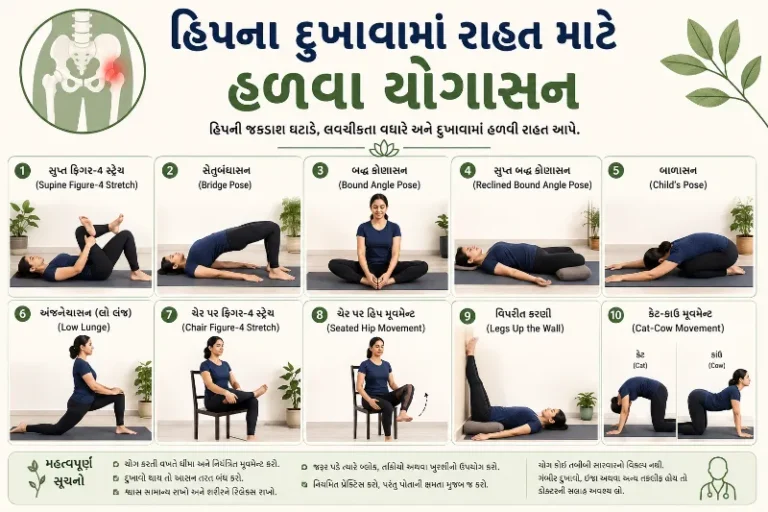
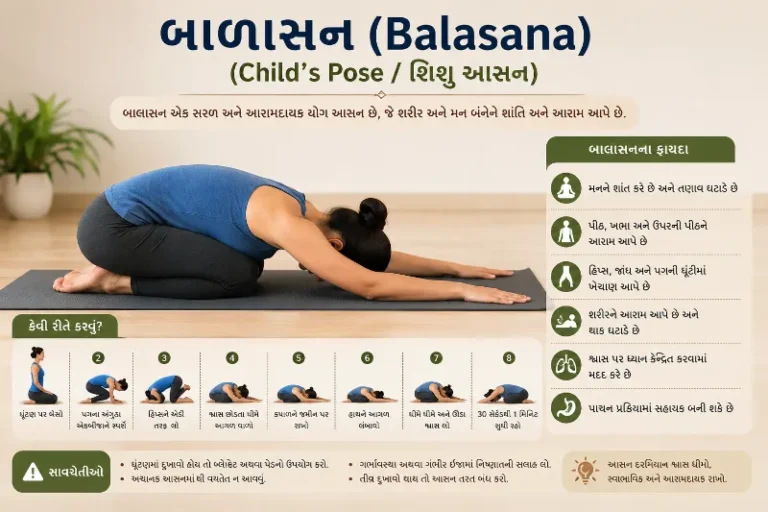
Balasana (Child’s Pose)
- Child’s Pose might help you relax your back muscles from excessive rounding and arching. Bend your upper body in front while sitting back on your shins from Camel Pose.
Maintain a forward-extending spine and a relaxed head. For as long as it takes for your spine to revert to its neutral position, hold this stance.
Bakasana Variations to Consider
You can integrate the following intriguing versions of Crane Pose into your regular arm balancing yoga practice:
Bala Kakasana (Baby Crow Pose):
- For those who are just beginning to learn arm balance, this variety works well. After starting with Malasana, put your forearms on the floor and use your fingers to hold onto the mat.
Put one knee on each triceps at a time, contract your core, move your body weight slightly forward, and raise both legs off the surface.
Kakasana (Crow Pose):
- For intermediates who are still working on their arm balance, this version is ideal. Put your palms on the floor and use your fingers to hold the yoga mat after starting in Malasana.
Place your knees on your triceps while maintaining a generous elbow bend. Lift both of your legs off the mat one at a time by slowly shifting your body weight forward, using your core and maintaining eye contact.
FAQs
Are Bakasana and Kakasana the same?
No, the poses Kakasana (Crow Pose) and Bakasana (Crane Pose) are not the same. Although they both fall under the same category of yoga poses, known as arm balancing, their methods of execution differ slightly.
The torso is balanced fairly close to the ground while the arms are bent in Crow Pose. Crane Pose, however, requires you to balance your body farther away from the ground and maintain a straight arm position.
What are the benefits of Bakasana?
Some essential health advantages of Bakasana are as follows:
Tones the arms and shoulders.
Increases focus and concentration.
Improves wrist and forearm strength.
Improves body awareness and balance.
Increases strength in arms, shoulders, and core.
Can beginners perform Bakasana Pose?
A beginning or intermediate yoga practitioner may find Bakasana to be physically taxing, so beginners should avoid doing it initially. Prior to beginning the Bakasana practice, it is preferable to educate your body and mind to balance in yoga poses.
What is Parsva Bakasana?
A strong arm balance variation of Bakasana is Parsva Bakasana. Side Crane Pose is a combination of the Sanskrit words Parsva (side), Baka (crane), and Asana (posture). This position involves balancing both arms on one elbow before switching to the other.
How can you safely get into and hold Eka Pada Bakasana?
One-Legged Crane stance, or Eka Pada Bakasana, is an advanced arm balance stance for Bakasana. The steps to do the Eka Pada Bakasana yoga pose are as follows:
Put your body in Bakasana first, then keep it there for a short while.
Now slowly transfer your body weight from your left elbow to your right elbow while maintaining an extremely tight core.
As you slowly raise your leg into the air, pay attention to your breathing.
As long as it seems comfortable, hold this stance. Next, let go, unwind, and repeat on the opposite side.
References
- Dr.Manasvi Patel. (2025). Bakasana (Crane Pose) – How to Perform?, Benefits. Physiotherapy Treatment and Exercises at Home. https://homephysiotherapyexercises.com/bakasana-crane-pose/
- Allen, W. (2025b, August 26). Bakasana. https://myyogateacher.com/yoga-asana/bakasana
- Yoga Journal. (2026a, April 10). Crow Pose | Crane Pos. https://www.yogajournal.com/poses/crane-pose/
- Zehra, S. (2026a, August 10). Bakasana Benefits: Steps, Variations & Precautions. Habuild Blogs. https://habuild.in/habitology/asana-mudra/bakasana-benefits/

One Comment