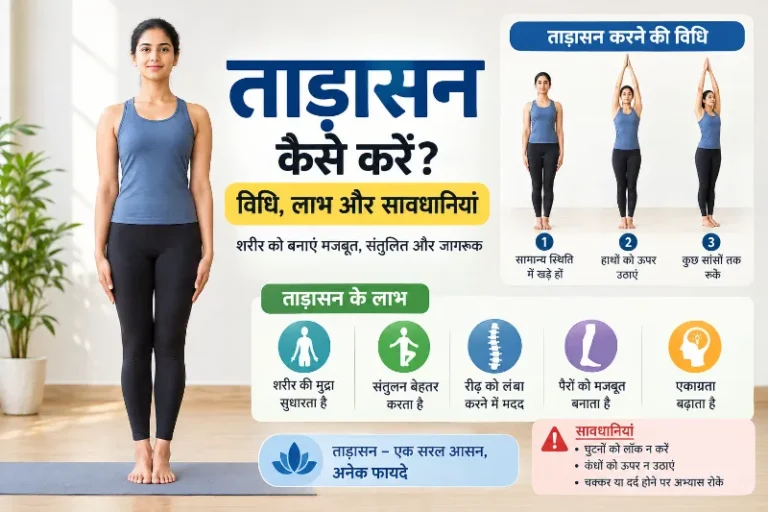
Best Yoga to Prevent Falls
Why Is Fall Prevention Important?
We become more prone to falls as we get older because our balance and coordination start to deteriorate. But don’t worry, there are strategies to increase our body’s stability and prevent falls. Practicing static and dynamic poses regularly is one effective strategy.
Dynamic poses include deliberate movements that test our equilibrium, and static poses include maintaining a stance without moving. By adding these positions to your workout routine, you can strengthen your core, improve your posture, and become more aware of your body. Discover some of the most effective static and dynamic positions with our yoga for fall prevention.
The most common cause of harm among senior citizens is falls. However, with the correct workouts, many of these falls can be avoided. This is the role of fall prevention yoga. It is very good at improving balance, is low-impact, and is gentle on the joints.
- Balance
- Core strength
- Flexibility
- Body awareness
What Is Fall Prevention Yoga?
Fall prevention yoga is a focused yoga practice that improves mobility and coordination while strengthening the muscles that hold you upright, such as your legs, glutes, and core.
This kind of yoga is gentle, purposeful, and suitable for beginners, in contrast to intense practices. No stressful positions, just motions that give you a sense of strength and support.
Benefits of Yoga for Balance and Fall Prevention
Improved Stability: Yoga teaches you how to stabilize your body in various poses and activate your core.
Increased Flexibility: You can move more freely and safely by relaxing tight muscles.
Greater Confidence: You will perform daily tasks with greater confidence if you feel more balanced.
Stress Relief: Anxiety can be relieved and mental clarity strengthened by deep breathing and mindfulness.
Fall Prevention Yoga Warm-Up
Balance Test
- You can either stand beside the wall or balance yourself by placing one hand on the wall for this exercise.
- Start this fall prevention yoga by standing up straight and placing your feet hip-width apart while keeping your head, shoulders, hips, and legs in proper alignment.
- Next, keep your arms by your sides or in front of your body.
- To bring awareness to the triangle base of support in your feet, first engage your core and then press through your heels, small toes, and big toes.
- Shut your eyes, then focus on your feet. After that, softly swing your body back and forth or side to side for a few seconds.
- Keep your feet firmly planted while paying attention to your breathing.
Breaths
- Maintaining proper alignment with your head, shoulders, hips, and legs, start standing upright with your feet hip-width apart.
- Place one hand on your stomach and the other on your chest.
- Next, pay attention to your heartbeat and develop awareness in your current practice.
- Finally, close your eyes and inhale deeply through your nose and exhale through your mouth many times.
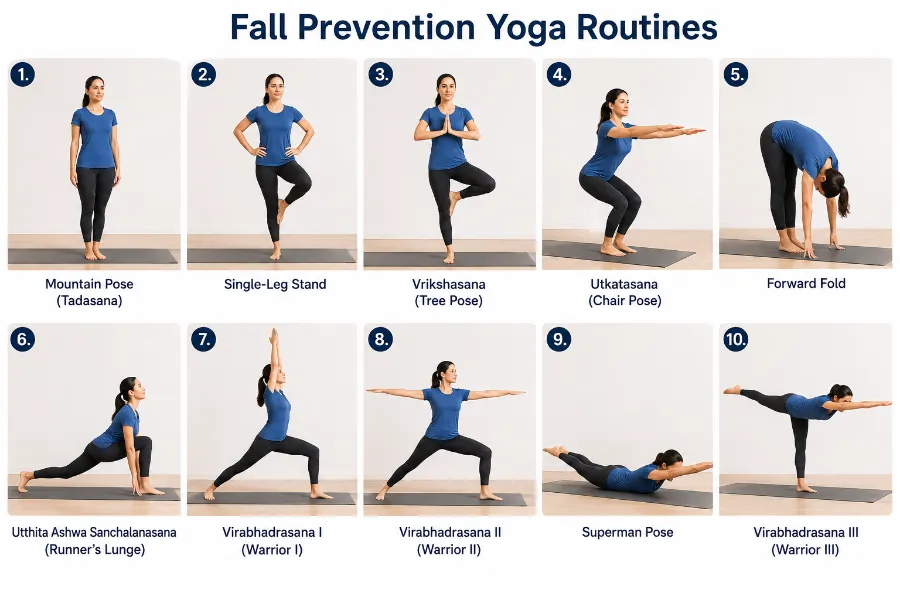
Fall Prevention Yoga Routines
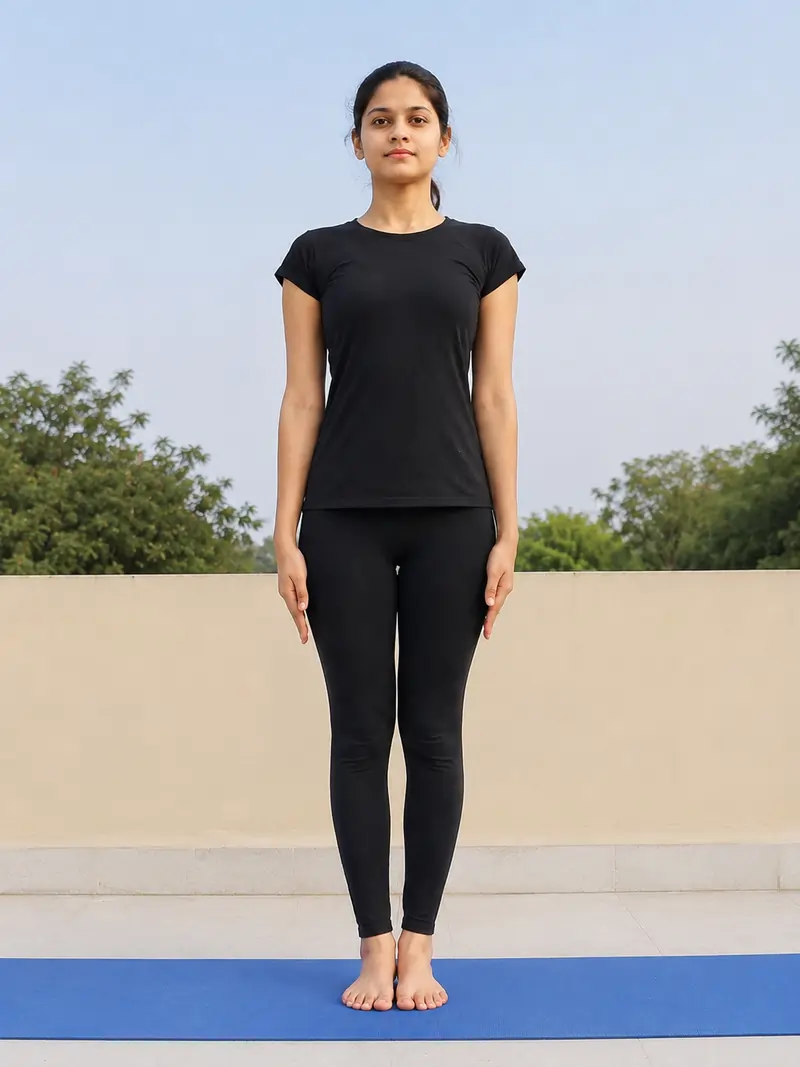
Mountain Pose (Tadasana)
- You can either stand by the wall or use one hand for balance when performing this fall prevention yoga.
- Maintaining proper alignment with your head, shoulders, hips, and legs, start standing upright with your feet hip-width apart.
- Next, extend your arms at your sides, palms facing out.
- To bring awareness to the triangle base of support in your feet, first engage your core and then press through your big toes, tiny toes, and heels.
- Next, inhale through your nose and exhale through your mouth for three deep belly breaths.
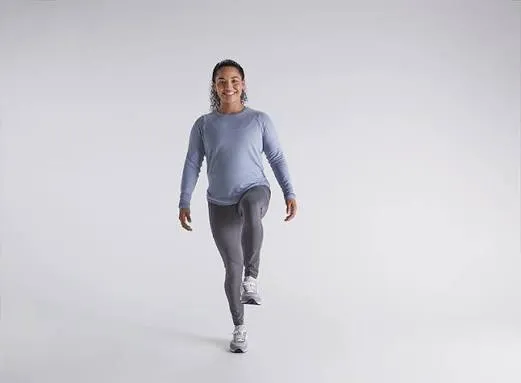
Single-Leg Stand
- You can stand next to a wall for this exercise or, if necessary, rest one hand on the wall for balance.
- Maintaining proper alignment with your head, shoulders, hips, and legs, start by standing upright with your feet hip-width apart.
- With your palms facing front, place your arms by your sides. To help with your equilibrium, concentrate your eyes on a focal point.
- Next, elevate your opposing foot one or two inches off the ground while using your core to shift your weight to one foot.
- Hold this posture for a few deep belly breaths, inhaling through your nose and exhaling through your mouth.
- Lastly, relax and go back to where you were before.
- On the other side, repeat the action.
Vrikshasana (Tree Pose)
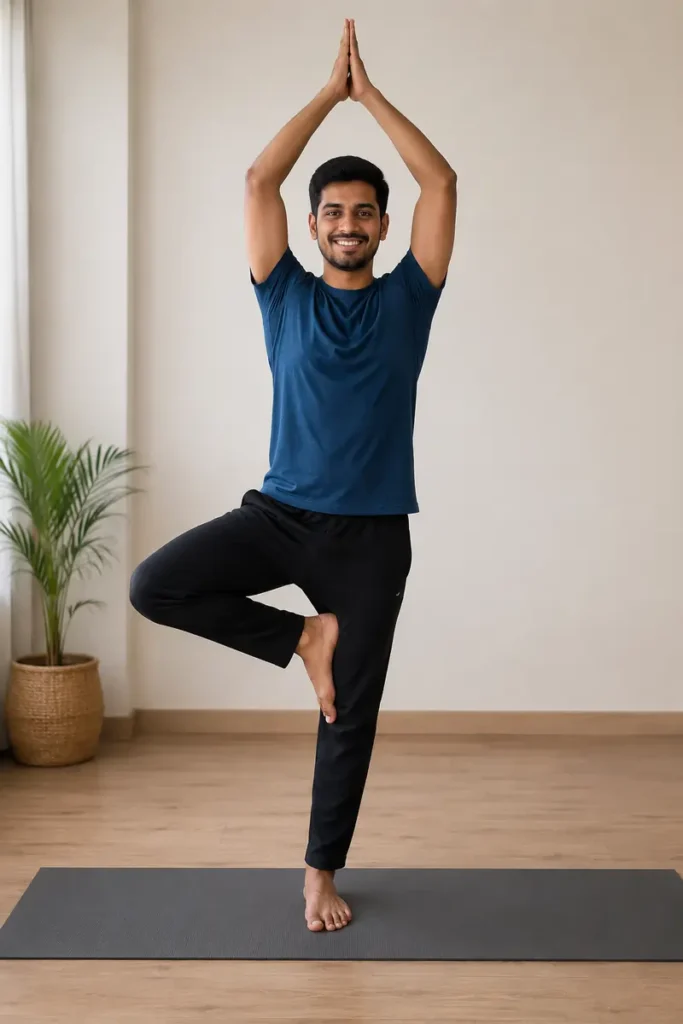
- You can stand near the wall or, if necessary, place one hand on the wall to maintain your balance while performing this exercise.
- Do yoga while standing straight and keeping your feet hip-width apart, while keeping your head, shoulders, hips, and legs in proper alignment.
- To help you stay balanced, concentrate your attention on a single area. Lift your right foot and plant it on your inner left thigh while contracting your core.
- With your right knee pointed out to the side, keep your hips looking forward.
- Next, for stability, stretch your arms at your sides into a T shape.
- Then, if you are unable to maintain a straight standing leg, bend your knee for comfort.
- Next, maintain this posture while inhaling deeply through your nose and exhaling through your mouth.
- Lastly, let go and do it again on the other side.
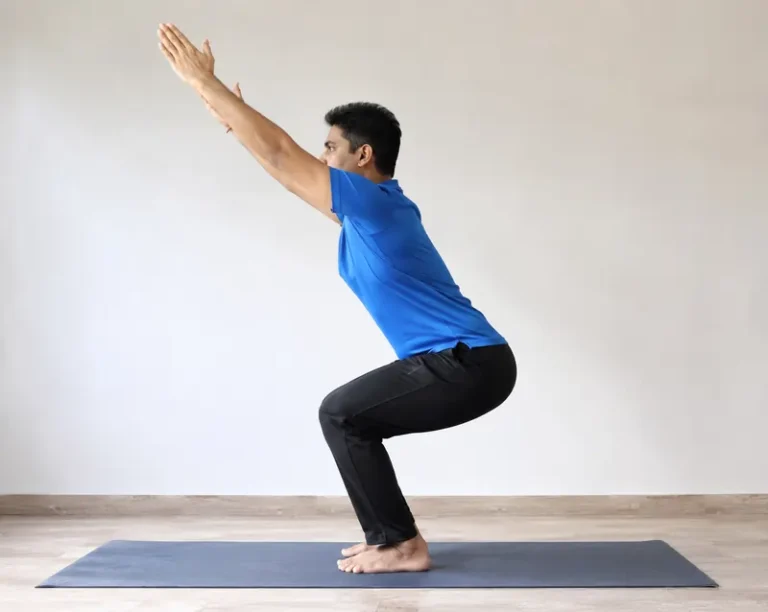
Utkatasana (Chair Pose)
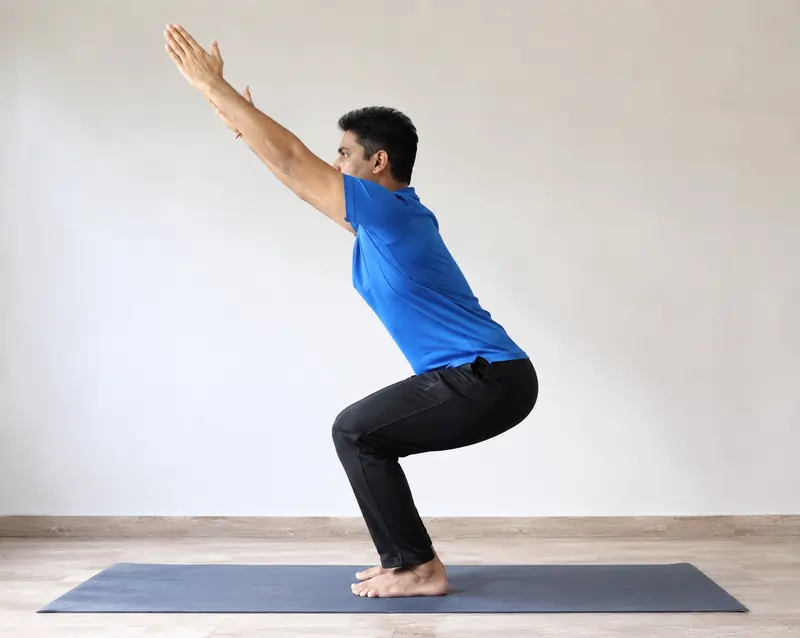
- You can either stand by the wall or balance yourself by placing one hand on the wall.
- Maintaining proper alignment with your head, shoulders, hips, and legs, start standing upright with your feet hip-width apart.
- Concentrate your eyes on a focal point.
- Tap your fingertips on the floor after using your core; flex through your hips, and bend both knees to lower your hips as though you were sitting on an invisible chair.
- Maintaining a straight spine and palms facing each other, elevate both arms at a 45-degree angle toward the ceiling while applying pressure to your heels.
- After that, maintain this posture while taking several deep belly breaths through your mouth and nose.
- Next, bring your arms down to your sides and slowly rise back up while pressing your palms together. Lastly, relax and stand up straight again.
- Try bringing your knees together for greater comfort.
- Additionally, to evaluate your knee balance, place your hands together at chest height and repeatedly raise one foot back toward your seat.
Uttanasana (Standing Forward Bend)
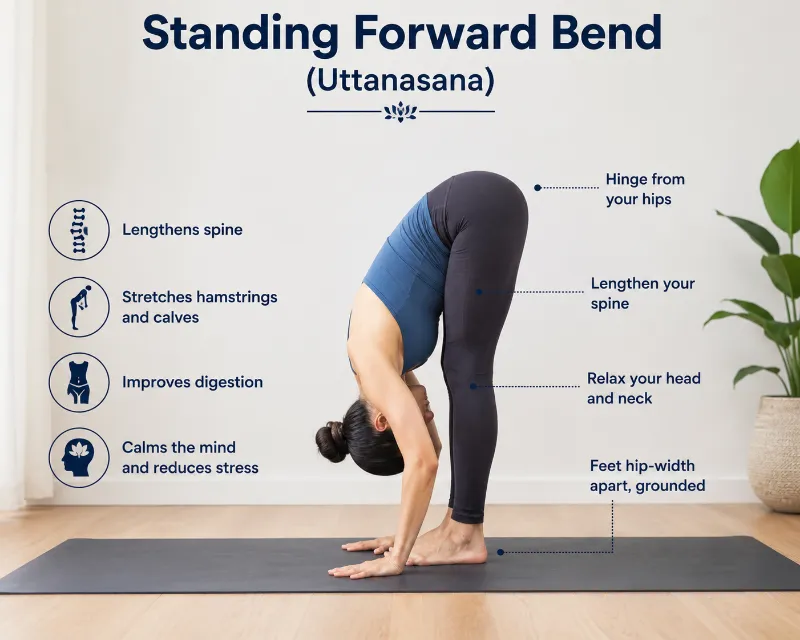
- You can use yoga blocks as assistance for this fall-prevention yoga.
- Maintaining proper alignment with your head, shoulders, hips, and legs, start standing upright with your feet hip-width apart.
- Next, plant your fingertips on the floor and bend your upper body forward by tightening your abdomen and bending through your hips.
- After a few seconds of holding this position, switch to the runner’s lunge pose.
Utthita Ashwa Sanchalanasana (Runner’s Lunge)
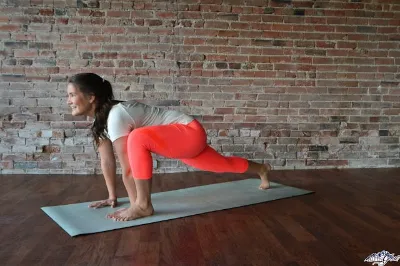
- You can use yoga blocks as assistance for this exercise.
- Maintaining proper alignment with your head, shoulders, and hips, take a large stride with your left foot toward the rear of the mat from the forward fold position.
- Next, maintain your right knee in alignment with your right ankle while tucking your toes on the floor.
- After a few seconds of holding this pose, switch to the Warrior I pose.
Virabhadrasana I (Warrior I)
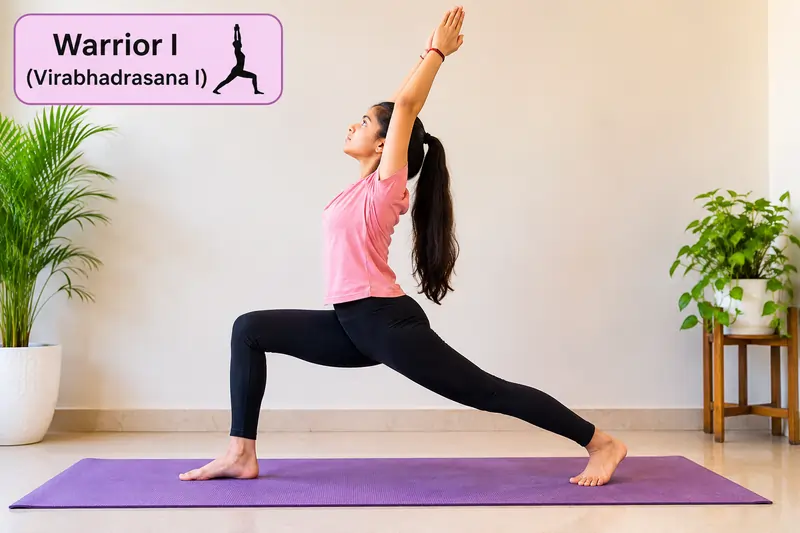
- From the runner’s lunge pose, plant your back heel to the floor as you raise your upper body with your arms extended overhead, palms facing each other.
- Then, use your core and shift your hips forward as you gently press your front heel toward the mat’s midline, adjusting the distance of your back foot to maintain balance, with both feet facing the same direction.
- After a few seconds of holding this position, let go. Finally, repeat the movement to the opposite side.
Virabhadrasana II (Warrior II)
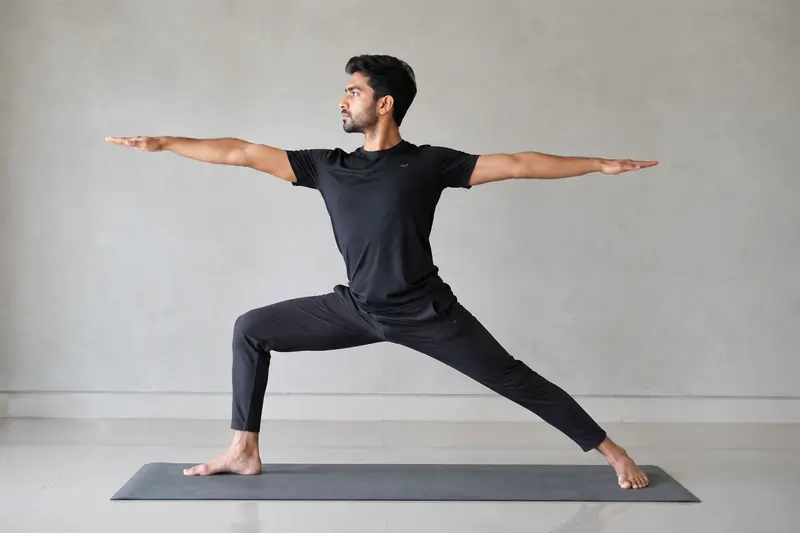
- Turn your upper body to the left gently.
- Next, twist your left foot such that your toes point to the left while extending your arms out at shoulder height.
- Keep your shoulders, hips, and head in proper alignment.
- Then lower your shoulders and look straight ahead. Maintain a bent right knee and forward-facing hips.
- After that, firmly place your heels on the mat and adjust the distance of your back foot for comfort and balance.
- After holding this pose for a few seconds, let go. Lastly, perform the exercise on the other side by going back to the Warrior I position.
Superman Pose
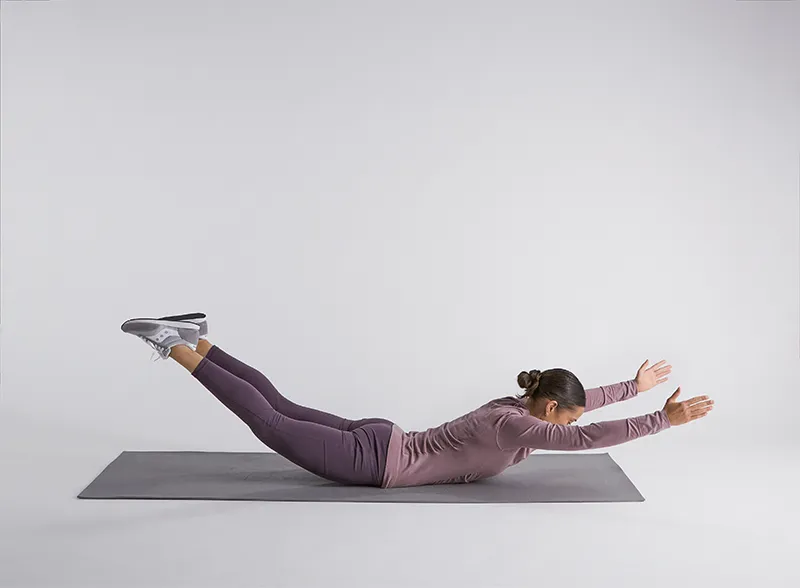
- Return to the Warrior I position from the Warrior II end position, maintaining your arms aloft while bending your upper body forward at a 45-degree angle.
- Next, elevate your back foot lightly and tuck your toes against the floor while aligning your arms, shoulders, hips, and left leg in a slanting position.
- After a few seconds of holding this pose, switch to the Warrior III pose.
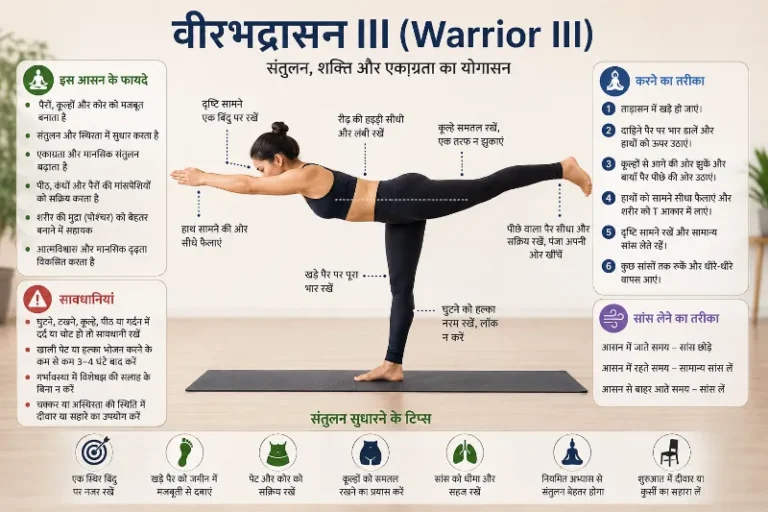
Virabhadrasana III (Warrior III)
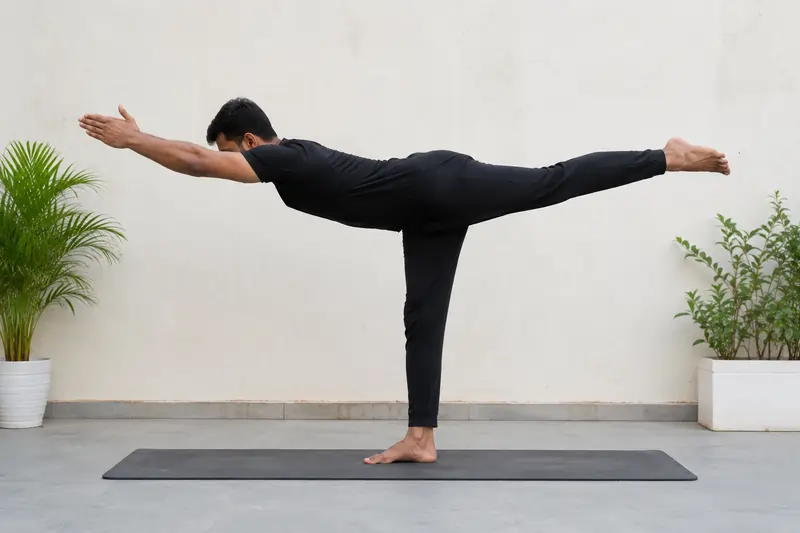
- You can stand next to a wall or place one hand on the wall for balance when performing this fall-prevention yoga.
- From the Superman pose, stretch your arms at your sides or place your palms together in a prayer position in front of your chest.
- With your toes pointing toward the floor, steadily raise your rear leg until it is parallel to the floor after shifting your entire weight onto your right leg.
- After that, bend your right knee slightly for comfort and stability if you are unable to maintain a straight right leg.
- After a few seconds of holding this posture and letting go, switch to the other side.
- You can flex or point your raised foot in the direction of the floor for this exercise.
Precaution
- Before trying standing balance poses, start with basic seated, lying, or supported postures.
- Avoid rushing, jumping, or making sudden changes between poses.
- To modify poses to your level of ability, use a chair, wall support, yoga blocks, or straps.
- Take a moment to regain your balance after the last pose before leaving the mat.
- Muscle fatigue and poor focus can impair balance and increase the risk of falling.
FAQs:
What are 5 ways to prevent falls?
Staying active with balance exercises, removing tripping hazards from your house, reviewing your medications with a doctor, keeping your living areas well-lit, and wearing sturdy, flat shoes are all ways to reduce falls.
What are the 5 P’s of fall prevention?
The five P’s of fall prevention—Pain, Potty (or Personal Needs), Periphery (or Placement), Position, and Pump (or Prevention)—are frequently employed by nurses and caregivers during routine patient check-ins. By addressing these five fundamental areas, people’s risk of falling is decreased, and they are prevented from attempting to get up in an unsafe manner.
Can vitamin D help prevent falls?
Vitamin D is mostly ineffective for generally healthy individuals with normal vitamin levels, although it does assist in reducing falls in elderly folks who are deficient or dwell in residential care facilities. High or mega-doses don’t provide additional protection and can even make falls more likely.
What are three common causes of falls?
Lower body muscular weakness, unsteady walking or poor balance, and environmental risks like loose carpets or low, bright light are three typical causes of falls.
What are the four methods of fall protection?
Fall elimination, fall prevention (including guardrails and restraint devices), fall arrest, and administrative controls/warning systems are the four main approaches or types of fall protection. Together, these systems protect the safety of workers at heights.
What are two interventions to prevent falls?
Participating in focused strength and balance activities (like Tai Chi or physical therapy) and altering the home environment by eliminating trip hazards, installing grab bars, and improving lighting are two important fall prevention strategies.
References:
- LeBoff, M. S., Greenspan, S. L., Insogna, K. L., Lewiecki, E. M., Saag, K. G., Singer, A. J., & Siris, E. S. (2022). The clinician’s guide to prevention and treatment of osteoporosis. Osteoporosis International, 33(10), 2049–2102. https://doi.org/10.1007/s00198-021-05900-y
- Sherman, K. J. (2012). Guidelines for developing yoga interventions for randomized trials. Evidence-based Complementary and Alternative Medicine, 2012, 1–16. https://doi.org/10.1155/2012/143271
- Rubenstein, L. Z. (2006). Falls in older people: epidemiology, risk factors, and strategies for prevention. Age and Ageing, 35 (suppl_2), ii37–ii41. https://doi.org/10.1093/ageing/afl084
- Colón-Emeric, C. S., McDermott, C. L., Lee, D. S., & Berry, S. D. (2024). Risk assessment and prevention of falls in older community-dwelling adults. JAMA, 331(16), 1397. https://doi.org/10.1001/jama.2024.1416