7 Best Yoga for Achilles Tendinitis
What Is Achilles Tendinitis?
When your Achilles tendon gets inflamed, you get Achilles tendinitis. This tendon is the thick band of tissue that connects your heel bones to the calf muscles at the back of your legs. The terms “Achilles tendonitis,” “Achilles tendinitis,” “Achilles tendinosis,” and “Achilles tendinopathy” are frequently used to describe this condition.
What Causes Achilles Tendinitis?
Yoga is very useful for treating Achilles tendonitis, reducing pain, and preventing its recurrence. A potent combination of techniques like pranayama (breathing exercises) and asanas (yoga poses) stretches and strengthens muscles while calming the nervous system to aid in healing.
You can take steps to relieve the tightness in your Achilles tendon if you know why. In addition to strengthening and stretching the surrounding muscles, you may want to think about gradually increasing your level of physical activity or replacing your old shoes. Achilles tendon pain is frequently caused by:
Tight calf muscles: Your calf’s two primary muscles, the gastrocnemius and soleus, are connected to the Achilles tendon. Tension or discomfort in your Achilles tendon may be caused by tightness in one or both of these muscles.
Increase in activity: Achilles tendon pain can occasionally result from rapidly increasing any exercise, from walking to cycling, especially if your body isn’t ready for it. Allowing yourself to progressively increase your strength allows your body to adjust, which improves the comfort and enjoyment of activity.
Footwear: As your feet and legs adjust to variations in support and comfort, wearing worn-out shoes or changing shoe styles can cause Achilles tendon pain. If you experience heel or tendon pain, it could be beneficial to determine whether your shoes need to be replaced or whether a new pair requires some time to adjust.
Relieving Pain
Yoga can help people with Achilles tendinitis in a number of ways. The most obvious is that yoga provides a variety of mild exercises that target your calf muscles without aggravating the Achilles tendon. This may eventually lessen your pain.
Further alleviation can be obtained by strengthening the muscles that support your Achilles tendon through yoga. Generally speaking, yoga promotes the rest-and-digest state that can aid in pain management by helping you control your nervous system’s reactions.
Soothing Your Nervous System
Pain frequently sets off your nervous system’s fight-or-flight reaction. Turning off that reaction and encouraging the rest-and-digest response can be accomplished with yoga. You may help your body transition from a state of tension to one of rest and restoration by regularly engaging in relaxing yoga poses, breathing techniques, and meditation.
According to studies, yoga can also lessen anxiety and stress, both of which can make you feel more pain. By encouraging relaxation, lowering stress hormones, and creating a calming environment that promotes healing, yoga can help your body access its natural healing mechanisms.
Targeted Muscle Strengthening
Targeted muscular strengthening is one of the advantages of yoga. The muscles surrounding the Achilles tendon, particularly the calf muscles that support and stabilize the ankle, can be strengthened with a variety of yoga poses.
Targeting particular muscle groups helps people with Achilles tendonitis avoid stressing their tendon, which is important for healing. Additionally, you might engage in foot arch-forming exercises.
Can Yoga Cause Achilles Tendonitis?
Tendonitis can result from relying too much on one joint without engaging the surrounding muscles, which puts undue strain on the tendons. If you don’t know how to use your foot muscles, yoga positions like planks, downward dog, chaturanga, and others that require you to keep your weight in your lower leg can raise your risk of developing Achilles tendonitis.
The Achilles tendons are activated by several yoga poses, such as downward dog, which stretches the heels. Yoga positions will help you strengthen your calves and tendons to avoid any damage if you don’t already have a tendon issue. However, these positions may worsen a damaged tendon by placing more strain on the tissues. This issue is also more likely to occur in those with weak or tight calf muscles.
You should stop doing yoga if you have any soreness thereafter. If you have a tendon injury, you can still practice yoga, but you’ll need to adjust the poses. To prevent making your injury worse, you should refrain from stretching your heel. You must practice yoga in a chair while you heal if you have a torn tendon. You can start with seated poses on a mat and work your way up to standing poses once you’re healed.
Warm Up with Yoga
Yoga is a great way to warm up your muscles and tendons before stretching or strengthening exercises. If you have Achilles tendonitis, one of the most crucial things to remember is to avoid overstretching these tendons, which means warming up before beginning to stretch or exercise.
The body can be gradually heated by gentle motions, which can improve the suppleness of your connective tissues and lower your risk of injury. Focusing on gradually warming up with yoga can guarantee that the tendon and the muscles supporting it are more flexible and less prone to additional tension, especially for individuals treating Achilles tendinitis.
Breathing Exercises
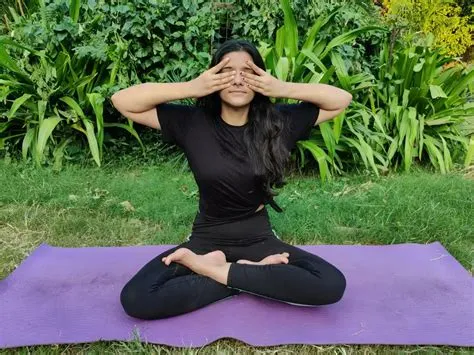
One of the most prevalent misconceptions about yoga is that it consists solely of physical poses and movements. In actuality, yoga encompasses a variety of techniques, such as breathing exercises, or pranayama.
Your nervous system can be relaxed by learning to breathe correctly from your diaphragm, which aids in healing. When used with yoga poses and sequences, diaphragmatic breathing is particularly helpful. You can perform these exercises more safely and successfully by relaxing the muscles to which your Achilles tendon is attached by calming your nervous system.
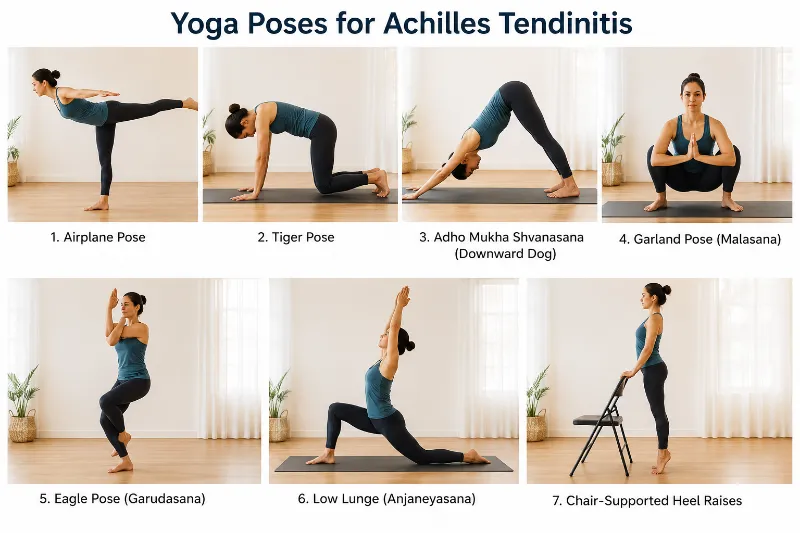
Yoga Poses for Achilles Tendinitis
Tough fibers called tendons connect muscles and bones, especially at joints. The Achilles tendon, which connects the calf muscle to the heel bones, is situated in the rear of your lower leg. It is essential to leg function, and tendon damage may limit the foot’s range of motion. Performing repetitive tasks that require flexing the tendons can result in this kind of injury.
Achilles tendonitis can also result from stress or weakness in the tendon, which can be overwhelming when suddenly overworked. Such a condition can also occasionally be caused by weak foot arches or flat feet, excessively tight arches, and tight calves. Increasing strength, flexibility, and range of motion enables appropriate heel dropping and prevents damage during strenuous activity.
These yoga poses for flexing feet and ankles can be performed by those who have rested for at least six weeks following an accident or who want to gain strength to prevent injuries.
Dekasana (Airplane Pose)
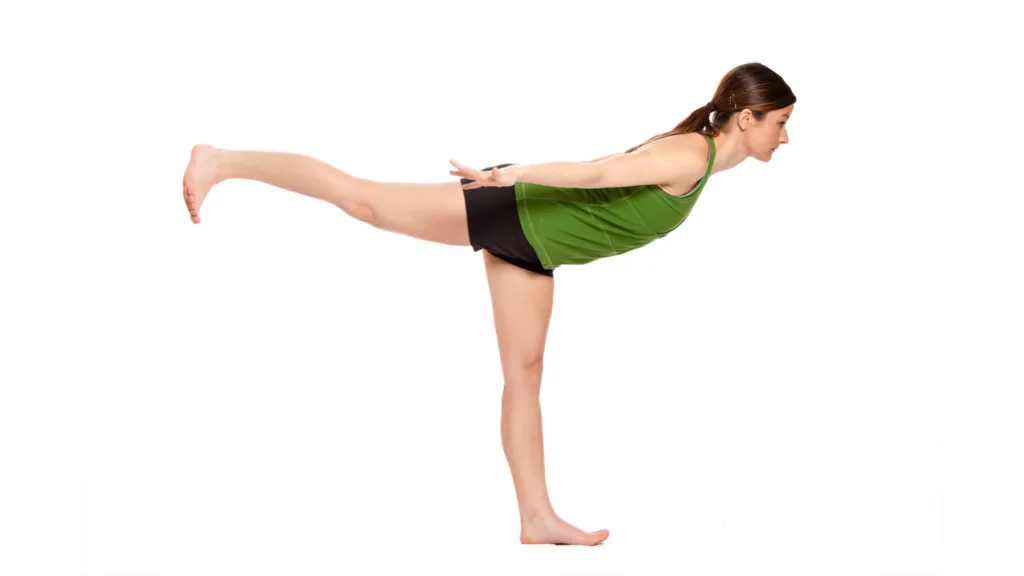
This advanced balancing pose calls for forward bending while balancing on one foot. The leg supporting the position tightens the calves and hamstrings, toning and strengthening the muscles.
- Take a tall position with your feet hip-width apart.
- Put all of your weight on one leg.
- Extend the opposite leg straight backward slowly.
- Maintain a straight back while bending forward from your hips.
- Extend your arms like wings on an airplane.
- Hold for 15 to 30 seconds while keeping your hips level.
- Repeat on the opposite side after slowly getting back up on your feet.
Vyaghrasana (Tiger Pose)
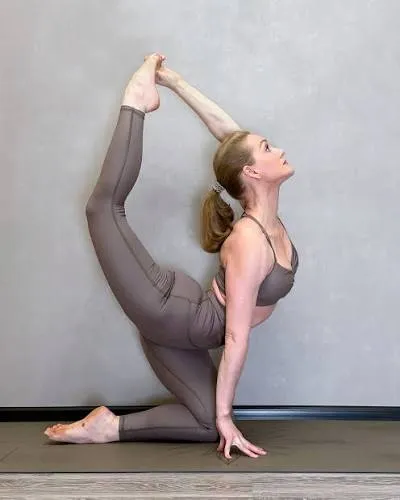
The body is extended deeply in this pose, much like a tiger does when it awakens. While on your hands and knees, keep your thighs and hips open and extend your spine as far as possible. It’s an excellent balancing position that keeps the tendons and joints supple and awakens the entire body.
- Place your wrists under your shoulders and begin on your hands and knees.
- Reach back with your right leg.
- Lift the leg up and slowly bend the right knee.
- Gently look ahead while raising your chest.
- Hold while breathing normally for ten to twenty seconds.
- Return to the starting position after lowering the leg.
- On the other side, repeat.
Adho Mukha Svanasana (Downward Dog)
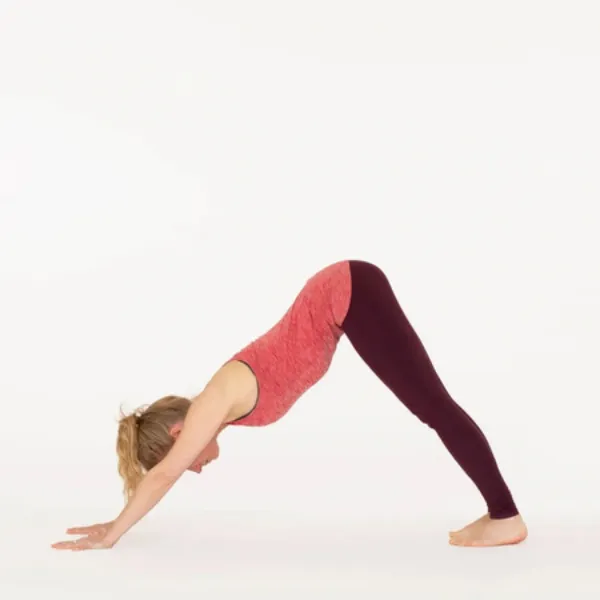
Adho Mukha Svanasana, often known as downward dog, is a great stretch that awakens and strengthens the entire body while concentrating on the Achilles tendons. In order to perform this yoga pose, place your hands on the floor, extend your legs comfortably, and draw in your tummy to form an inverted “V” with your body.
You may not be able to get your feet flat, but that shouldn’t be an issue. After that, you can take the dog for a stroll while stretching their hamstrings and calves with alternating knees. The calves, hamstrings, and Achilles tendons are all wonderfully stretched in this pose. You can strive harder to bring your feet level on the floor as your flexibility increases, but don’t strain yourself.
- Put your knees under your hips and your wrists under your shoulders to begin on your hands and knees.
- Firmly press your palms onto the mat while spreading your fingers.
- Breathe out and raise your knees while pulling your hips backward and upward.
- Extend your spine and straighten your legs as much as is comfortable.
- Look at your feet while keeping your head loosely between your arms.
- Do not push your heels down; instead, gently press them toward the floor.
- Hold with normal breathing for 15 to 30 seconds.
- Return to the beginning posture after bending your knees slowly.
Garland Pose (Malasana)
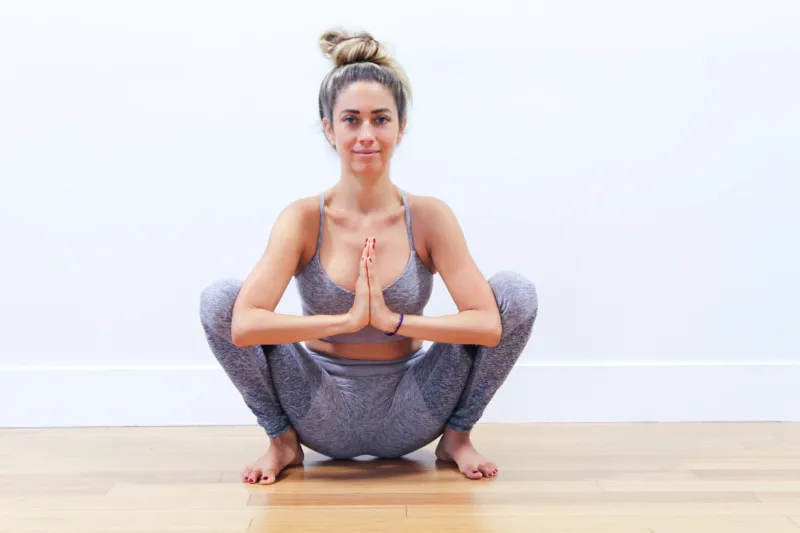
This pose, often called the yogi squat, is a great way to stretch your ankles, groin, Achilles tendon, and back. To perform this posture, place your feet shoulder-width apart or to the side of the mat, keeping your heels in line and your toes out. Then, while maintaining a straight back and a solid torso, slowly kneel and bring your palms together close to your chest. As you advance, you can press the elbows into your inner thighs to intensify the posture. During the position, breathe in and out to ease into flexibility.
- Keep your feet slightly wider than hip-width apart in the standing position.
- Toes should be turned slightly outward.
- Slowly drop your hips into a deep squat while bending your knees.
- Bring your palms together.
- Gently press your elbows toward the inside of your knees.
- Maintain an erect spine and an elevated chest.
- Hold while breathing normally for 15 to 30 seconds.
- Return to standing by slowly straightening your legs.
Eagle Pose (Garudasana)
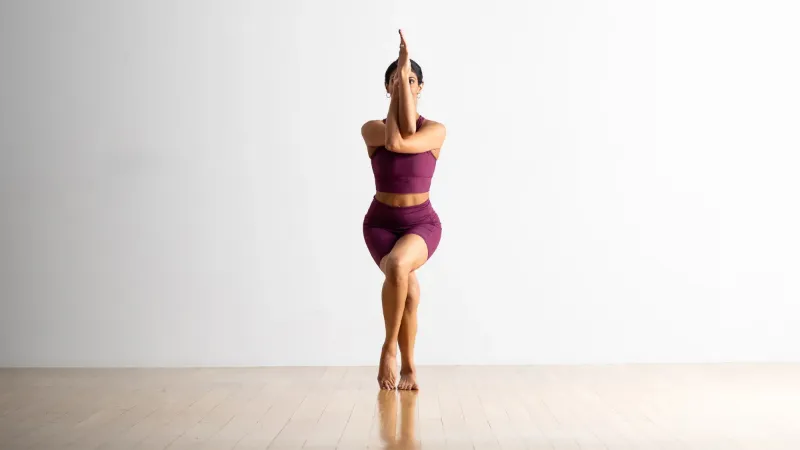
This stretch is beneficial for the strength and flexibility of the Achilles tendons. The weight-bearing leg’s ankle works hard to maintain muscle balance in this pose, strengthening the Achilles tendons and small lower leg muscles.
- Place your feet together and stand straight.
- Put your weight on your right leg and slightly bend your knees.
- Cross your left thigh over your right thigh and raise your left foot.
- Wrap the left foot behind the right calf if you can.
- Cross your left arm under your right as you extend your arms forward.
- Bring your palms together and bend your elbows.
- Keep your chest up and look straight ahead.
- Hold while breathing normally for 15 to 30 seconds.
- Loosen slowly, then switch to the other side.
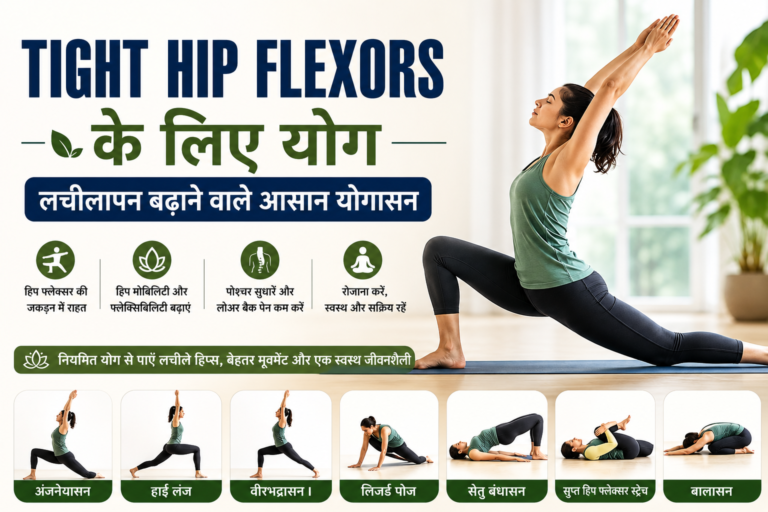
Low Lunge (Anjaneyasana)
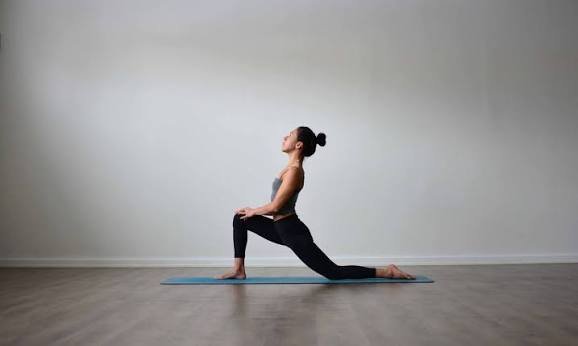
- Lower the back knee to the mat after doing a lunge with one foot forward.
- To extend the calf and Achilles tendon of the back leg, tuck the back toes and softly press the back heel toward the floor.
- The hip flexors, which affect how you load the lower leg, are also opened by this position.
Chair-Supported Heel Raises
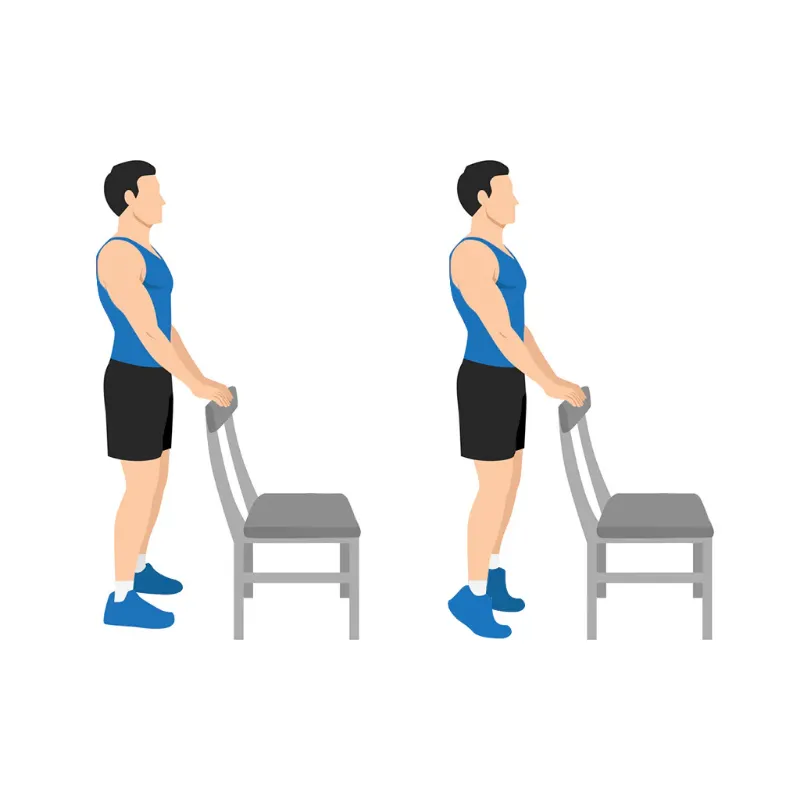
- Holding a chair for balance, take a tall position.
- Take three to four seconds to lower yourself after rising onto the balls of both feet.
- The most research-proven exercise for Achilles rehabilitation is this eccentric heel raise.
- Make gradual progress starting with two sets of 10.
Care for Prevention
Yoga can help you create arches in your feet and strengthen the muscles that support your Achilles tendon to reduce the chance of further injury if your Achilles tendinitis is caused by straining or damaging this tendon. Additionally, yoga can help you avoid overstretching your Achilles tendon in the future by providing you with mild warm-up activities.
However, Achilles tendinitis can sometimes have a connection to other muscles. The connecting fascia that extends from the soles of your feet to the top of your head along the back of your body is referred to as the superficial back line. Since the Achilles tendon is a component of the superficial back line, you may have Achilles tendon pain as a result of stiffness or strain in another area of your body, such as your lower back, hamstrings, neck, or buttocks, or vice versa. You may be able to avoid Achilles tendinitis in the future by doing forward bends and other back-line-focused yoga poses.
Stretching too much and expecting quick results is the most frequent mistake. Recovery is delayed by ballistic bouncing, forcing deep dorsiflexion through heel pain, and forgoing strengthening exercises in favor of stretching alone. Stopping as soon as the pain subsides is another error. As opposed to stopping at the first sign of relief, reduce your practice gradually because the tendon requires ongoing loading to fully repair. Lastly, do not practice barefoot on cold, hard floors until you have warmed up.
FAQs:
Is it okay to do yoga with Achilles tendinitis?
You can practice yoga even if you have Achilles tendinitis, but you’ll need to adjust how you do it. Avoid poses like downward-facing dog, long-held lunges, and deep calf stretches that significantly strain or compress the tendon. However, reduce your postures, keep your heels supported, and quit right away if you experience severe pain.
Does Achilles tendonitis ever fully heal?
Achilles tendonitis can heal completely, but it seldom goes away on its own or rapidly. Recovery is very slow and usually requires six weeks to six months of regular care and training because tendons have less blood supply than muscles.
What worsens Achilles tendonitis?
When you overuse the tendon with high-impact activities, abrupt increases in exercise, or bad footwear, Achilles tendonitis gets worse. Microtears and inflammation will increase if you train through pain or don’t give the tissue enough time to heal.
Why have I suddenly got Achilles tendonitis?
A sudden increase in physical stress or a change in routine that overloads the tendon are common causes of Achilles tendonitis. Even though the pain seems abrupt, it usually results from tiny microtears that occur when the tissue is not given enough time to heal.
What are two signs of Achilles tendonitis?
Pain and stiffness at the back of the leg around the heel are the two main symptoms of Achilles tendonitis, and they usually get worse after physical activity or exercise. Tenderness or swelling when touched is another common symptom.
References:
- Onlineoptimism. (2024, June 14). Yoga for Achilles Tendonitis: Tips for Relief & Healing. Breathing Deeply. https://breathingdeeply.com/yoga-achilles-tendonitis/
- Egger, A. C., & Berkowitz, M. J. (2017). Achilles tendon injuries. Current Reviews in Musculoskeletal Medicine, 10(1), 72–80. https://doi.org/10.1007/s12178-017-9386-7
- Jackson, S., & Jackson, S. (2026, February 23). The best yoga poses to help heal your student’s Achilles tendonitis. beYogi. https://beyogi.com/yoga-poses-for-achilles-tendonitis/
- Nunez, K. (2025, August 26). Achilles tendon stretches and strength exercises. Healthline. https://www.healthline.com/health/achilles-tendon-stretch#strength-exercises