
Yoga For Children: Simple Poses and Activities
In addition to exercise, yoga can help children develop good balance, self-awareness, and manage their feelings. Below is a list of enjoyable and simple poses that are perfect for children. This is suitable for parents, teachers, and yoga practitioners.
Why Are Yoga Poses for Kids Important?
Modern children are often exposed to excessive screens and are also highly stressed. Children can benefit from yoga as it can enhance their physical mobility, concentration, and emotional well-being and furthermore boost their confidence. What is great is that yoga can be practiced at any time and place and does not require specialist apparatus.
Alongside the benefits that adults gain from practising yoga, there are also added benefits specifically for children.
As parents will appreciate, physical activity is great at helping children to release energy and can instantly transform bad temperaments to good ones – even a quick stroll round the park can do wonders! Children can also further develop their ability to self-regulate by learning and practising relaxation techniques such as controlled breathing and yoga postures.
Increased body awareness is another significant area of benefit. Many children (particularly those who are older) often find it difficult to recognise where their bodies are in relation to their environment. Adhering to guidance on postural alignment can therefore further enhance a child’s mind-body link.
Furthermore, in addition to physical benefits, yoga can also positively affect a child’s mental wellbeing. It can alleviate worries and enhance concentration. Again, basic breathing and mindful movement promote a relaxed feeling.
Lastly, family yoga can be a great unifying activity. However, try not to be too fixated on the results in order to maintain an informal and enjoyable atmosphere.
Given that (often) children, particularly younger children, have limited attention spans, it is advisable to be adaptable in your approach and allow children to make decisions to maximise their involvement.
Best Yoga Poses for Children
Mountain Pose (Tadasana)

Imagination and Introduction
The Mountain pose makes for an excellent initial yoga pose. Kids can visualise themselves as a large, solid and calm mountain. Being in this pose enables children to feel rooted and stable. It can be very beneficial for kids to learn to ‘be still’ as this can be just as effective as physical exercise. Furthermore, it can help children feel powerful from within.
How to Do the Pose
- Have the child stand up with their feet together or slightly apart.
- Let the arms rest naturally and comfortably by their sides.
- They should then maintain good posture with their shoulders back and head slightly raised.
- Advise them to breathe deeply through their nose and picture their feet firmly attached to the earth.
- The child can keep their eyes open and relaxed, and concentrate on a fixed object.
Benefits for Children
Mountain Pose can help to develop good posture, body awareness and balance. Children can also learn to become still and relaxed – key components of mindfulness. Being one of the easiest postures to perform, Mountain Pose enables children to explore their breath, feel grounded and to become more body aware. It then develops a subtle inner strength, aiding concentration and emotional regulation.
Vrikshasana (Tree Pose)

Imagination and Introduction
In Tree Pose, children are encouraged to visualise themselves as a tree. As well as moving gracefully with the wind, the children also remain connected to the ground. Children can imagine extending their limbs high above them to create sturdy boughs.
Children enjoy this imaginative element, which in turn maintains their concentration. Just as an actual tree, the child has to be both firmly planted and able to bend and move. Tree Pose is particularly effective in boosting a child’s self-belief and concentration in all the yoga poses.
How to Do the Pose
- Stand erect.
- Then place your foot upon the inside of the opposite leg, either on the calf or thigh (never the knee).
- You may hold your hands in a prayer-like position at chest height or extend them outwards as though they are branches.
- Children should also fixate on a point ahead of themselves to aid their balance.
- Assure them that it is perfectly acceptable for them to sway or even to stumble – this is all part of the learning process.
Benefits for Children
Tree pose is great for developing leg strength, improving balance and concentration. Children also learn to be patient and strong-willed by holding the pose. As with many children’s yoga postures, it promotes good self-control but in an enjoyable manner. Children can often report that they concentrate, feel more stable, and are pleased with their increasing strength when they regularly practise Tree pose.
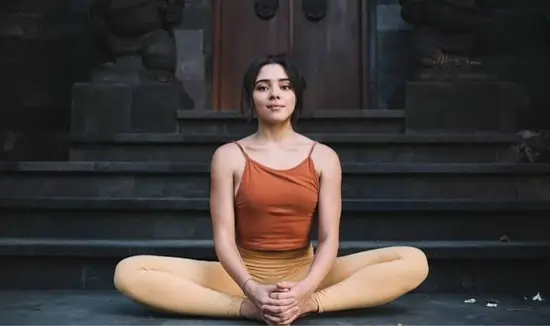
Baddha Konasana (Bound Angle Pose)
Imagination and Introduction
Children can easily visualise that they are butterflies lying in a bright garden. They can then move their knees as if they were butterflies’ multi-coloured wings and fly just above the ground. Butterfly Pose is relaxing, fun, and encourages imagination. It is a light and relaxing pose and is commonly used in both school and bedtime yoga sessions. It is also one of the most tranquil yoga poses for children.
How to Do the Pose
- Sit on the floor and bring the feet together, allowing the knees to open out.
- The child may then hold their feet and move the knees slowly up and down.
- Sit upright and keep the back straight.
- Ask them to breathe slowly and deeply and picture themselves flying.
- Either hold this posture for several breaths or continue to move the knees slightly.
Benefits for Children
Butterfly pose stretches and calms leg muscles and opens the hips. It can also aid postural control and has a calming effect which helps to ease hyperactivity. Alongside other calming yoga postures, Butterfly promotes self-awareness and emotion management. Furthermore, the gentle flowing nature of the posture is itself highly calming and enables the mind to transition into more sedate pursuits such as reading and sleeping.
Bhujangasana (Cobra Pose)
Imagination and Introduction
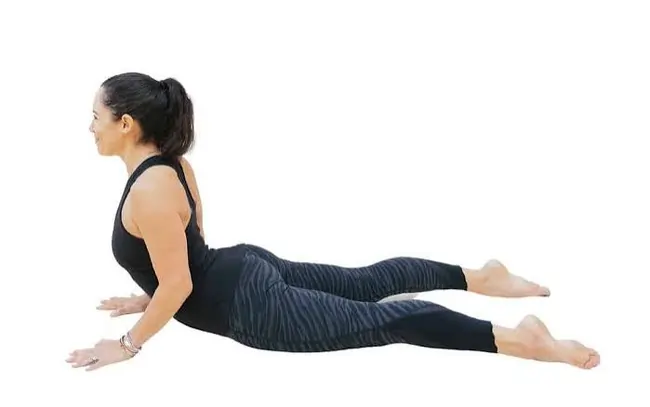
Children can imagine themselves to be a powerful, sun-basking snake in this posture. It is a mild backbend that inspires children to stand tall and enlarge their hearts. Children can also make cobra sounds and move about on their tummies in a snake-like motion. Children especially enjoy this posture as it promotes both confidence and a sense of fun, so it is often included within children’s yoga poses.
How to Do the Pose
- The child lies on their tummy, with legs straight and hands under shoulders.
- They then push up using their hands and raise their upper body.
- The elbows should be slightly flexed.
- Children should be encouraged to stare ahead and to perform a gentle stretch.
- Shoulders must remain loose.
- Inhaling when pushing up and exhaling when returning to the original position provides good timing and concentration.
Benefits for Children
The Cobra pose is great for strengthening the back and opening up the chest and shoulders. Children also gain confidence and bravery by bringing their heart upwards. Alongside being one of the most motivating postures for children, this pose effectively shows how to be strong and confident (both in body and mind) effortlessly.
Balasana (Child’s Pose)
Imagination and Introduction
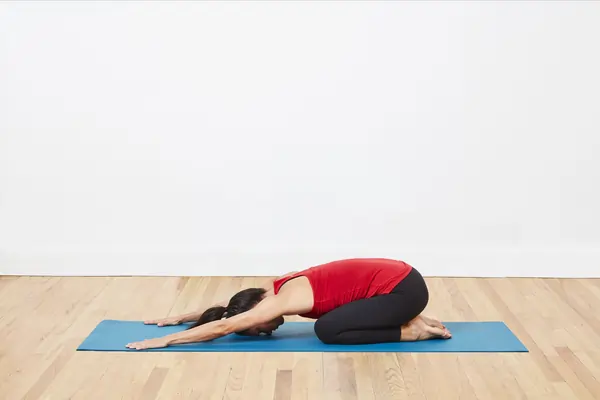
This is similar to being curled up in a ball or to lying down like a sleeping dog. Children frequently refer to this pose as ‘the little turtle’ as they feel protected and calm within their own personal shell. It is a great place to pause during a yoga session so that children can relax and compose themselves. Within both play and yoga, it calms the heart and mind.
How to Do the Pose
- Have the child sit comfortably on the yoga mat with their legs crossed.
- Sit down on the heels of the feet, with the toes still together.
- Lean forward so that the chest moves towards the thighs.
- Extend the arms in front of the body, and allow the palms to lie on the mat.
Another option is to gently lower both arms and rest them alongside the body. - Place the forehead on the mat.
- Ask the child to breathe at a slow and easy rate.
- Maintain this posture for 15-30 seconds (or as is comfortable).
- Gradually raise the top of the body and return to the cross-legged sitting position.
Benefits for Children
Child’s Pose is great for calming and relaxing. It also offers a gentle back, hip, and shoulder stretch. Being one of the most rejuvenating poses for children, it encourages them to recognise and appreciate the importance of rest and contemplation. It can be utilised as a more sedate interlude within a session or as a suitable end pose.
Adho Mukha Svanasana (Downward-Facing Dog)
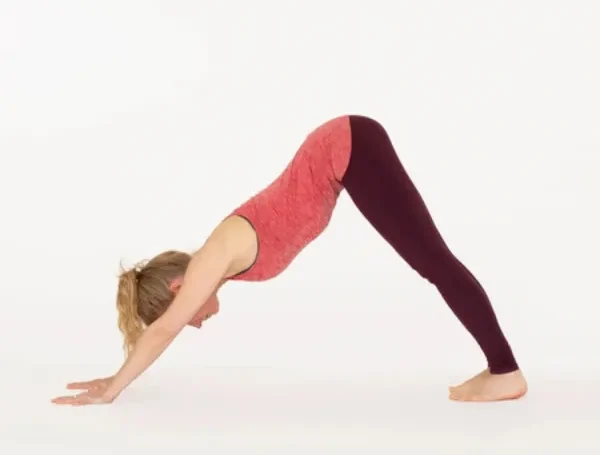
Imagination and Introduction
Down Dog is both playful and strong. Much like a contented puppy, children can ‘shake a leg’, make puppy noises, or simply revel in the inversion. Down Dog stimulates the body and also provides a good level of entertainment. It introduces a nice sense of novelty and thrill to a child’s yoga flow.
How to Do the Pose
- Get into a crawling position.
- Fully extend your fingers and pull your toes underneath you.
- Then slowly raise your hips to the ceiling so that your legs form an inverted ‘V’.
- Ask the child to subtly push their heels into the mat.
- They can also gaze between their legs or at their feet.
- Deep breathing will assist in maintaining balance.
Benefits for Children
This pose works out the whole body – it is good for the back, hamstrings and shoulders. Downward dog also develops upper body strength and stimulates blood flow to the brain, so that children are more awake. Alongside promoting self-belief and body awareness, this invigorating yoga pose helps to co-ordinate and balance a child.
Utthita Tadasana (Star Pose)

Imagination and Introduction
In Star Pose, we visualise ourselves as bright and expansive stars.
We gently expand our bodies, creating space for energy to flow freely throughout. Although uncomplicated, this pose has a big impact, leaving us feeling expanded, long, and linked. It is a happy and liberating pose and adds an uplifting element to any yoga practice.
How to Do the Pose
- Have the child stand with legs wide apart and arms also outstretched.
- Their body should create an ‘X’ shape.
- They may choose to keep their eyes level or upwards.
- Invite them to extend their awareness outwards through their fingers so that they become aware of their energy being dispersed throughout space.
- The child can then remain in this position for a couple of deep breaths.
Benefits for Children
Star Pose is good for building leg strength and for improving both posture and body awareness. It can also enhance a child’s sense of both freedom and self-assurance. Being one of the most inspiring and expressive postures, it promotes confident and happy exploration.
Ananda Balasana (Happy Baby Pose)
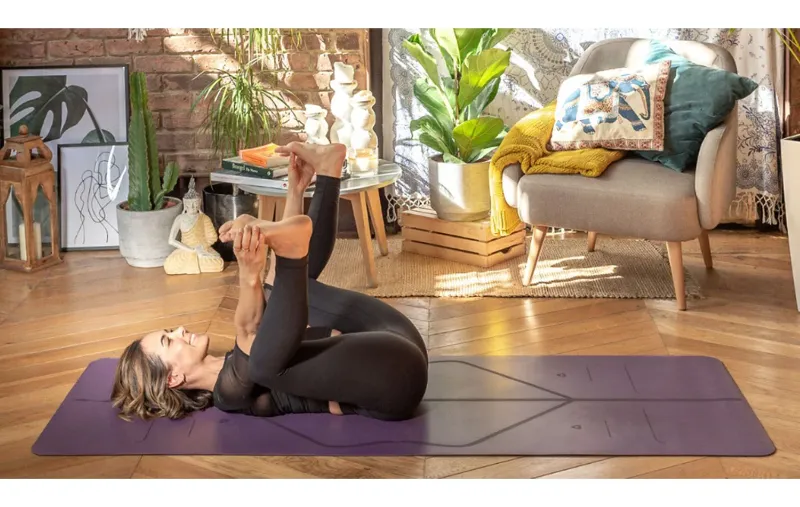
Imagination and Introduction
Happy Baby Pose recalls a child’s first memories. Children curl up, smile, and are very comfortable in this pose. They can move their toes and sway from side to side and have fun, as if they are a baby exploring their toes. It is consistently a popular pose for children as it always causes them to laugh and exudes a soothing atmosphere.
How to Do the Pose
- Lie flat on your back and gently bring both knees toward your chest.
- Wrap hands around the feet and ensure arms are still within the legs.
- Guide the child to rock slightly and breathe slowly.
- They can ease into this position as much or as little as they wish and should also try to smile.
Benefits for Children
Happy Baby is a great pose which opens the hips and stretches the spine. It also relieves lower back pain and has a soothing and mindful effect on the nervous system. This pose encourages children to become more relaxed, centred and mindful.
Mandukasana (Frog Pose)

Imagination and Introduction
Frog Pose encourages children to act like small frogs ready to jump. Children can picture themselves sitting by a pond and making gentle croaking noises. They can also ‘jump’ in this position. It brings a sense of fun, animal-themed activity, and some light movement into a child’s yoga practice. As one of the livelier yoga poses for children, it is a fantastic method of allowing children to let off extra energy in an enjoyable and concentrated manner.
How to Do the Pose
- Have your child sit down on the floor with their feet slightly splayed and knees apart.
- Their hands should be on the floor either side of their knees.
- They may raise or maintain their heels depending on their flexibility.
- Ask them to slowly bring their elbows into contact with their knees and then raise their upper body.
- For extra fun, they can also make a ‘ribbit’ noise and/or hop about as if they are about to leap like a frog.
Benefits for Children
Frog pose works the hip area, inner thighs, and groin. It also tones the lower body. It can enhance both balance and co-ordination. Being one of the most active postures, it naturally and pleasurably promotes children’s mobility and flexibility. It is particularly good for posture and for releasing stiffness which often develops as a result of children spending too much time sitting down.
Bhujangasana Variation (Snake Pose)

Imagination and Introduction
Snake pose is a fun variation of the Cobra Pose. It enables children to move and wiggle just like snakes in the wild. Children can use their imaginations and picture themselves as a sleek snake basking in the sun. They may gently turn their heads from one side to the other. This form of yoga for children encourages children to play and associate stretching with stories.
How to Do the Pose
- Get onto all fours.
- Rather than raising the body in the classic Cobra Pose, move forward by using palms to lightly push against the floor and, at the same time, move your head from side to side as if you are a snake.
- Promote that the person keeps their legs loose and their shoulders lowered.
- They should also make soft hissing sounds as they lengthen their neck and top back.
Benefits for Children
This pose is great for developing and strengthening a child’s back and neck muscles. Children are also encouraged to be creative and think about their body. Much like many of the other yoga poses for children, snake pose combines both physical and creative elements. It works well for both less physically confident and more creative children.
Simhasana (Lion Pose)

Imagination and Introduction
Lion pose allows children to become lions. Children can then snarl, contort, and make funny faces and effectively vent both their emotions and sounds. This is a highly effective method of emotional expression. Compared to other yoga postures, it successfully enables even more reserved children to come out of their shell and also enables more vocally expressive children to safely and healthily discharge their energy.
How to Do the Pose
- Have the child sit on the floor with their hands on their knees.
- They then inhale deeply, open their mouth, and protrude their tongue.
- They should make a loud roaring noise as they then exhale.
- The child’s eyes should also be wide open, and their hands can be clenched into fists.
- Encourage them to do this a number of times so that they are able to fully embrace their lion persona.
Benefits for Children
Lion’s pose can be used to relax a child’s facial muscles and jaw. Children can then use it to both recognise and healthily express their feelings and relieve stress. It is particularly good for children who struggle to control their levels of anger and/or worry. In addition, it also increases a child’s voice volume and confidence.
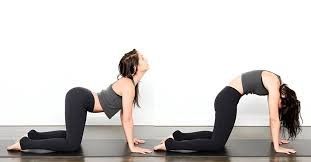
Marjaryasana–Bitilasana (Cat-Cow Pose)
Imagination and Introduction
In Cat-Cow Pose, you are able to playfully move like a cat and then a cow. You can also make cat and cow sounds. This pose adds a nice sense of rhythm and fluidity. It works well as a warm-up and allows children to synchronise their breathing with their body – which is fundamental to yoga.
How to Do the Pose
- Children can get down on all fours, with their hands below their shoulders and knees beneath their hips.
- They then arch their backs, raise their heads and allow their stomach to sag (Cow).
- Upon exhaling, children round their backs, pull their chin to their chest and push down into the ground (Cat).
- Children should be encouraged to vocalise and to become aware of how their spine is moving.
- Perform these movements at a gentle pace.
Benefits for Children
The Cat-Cow stretch (Marjaryasana-Bitilasana) is good for children as it increases a child’s spinal suppleness and promotes correct posture. It also helps to build up a child’s core and back muscle strength and can ease tightness. Linking a child’s breath to their body movement further aids their balance, co-ordination and body perception.
Tadasana Urdhva Hastasana (Dynamic Mountain Pose)

Imagination and Introduction
The volcano pose enables children to visualise themselves as a volcano. Children can then picture lava being formed within them and shooting out of their fingers and into the atmosphere. This is a fun pose to use at the beginning of a yoga class and can be used to bring more lively energy into a session. These engaging yoga poses are particularly useful in group classes and also for warm-up activities.
How to Do the Pose
- Have the child stand with feet together and arms by their sides, in Mountain Pose.
- They should then place their hands together in front of their chest and slowly lift them above their head, imagining that they are creating ‘lava energy.’.
- The child can then scream ‘Boom!’ and spread their arms to simulate an eruption.
- This can be carried out several times, each time generating varying amounts of energy.
Benefits for Children
The volcano pose encourages children to express themselves. Alongside this, it develops upper and lower body strength and enhances coordination. It is also an enjoyable, playful pose which exercises the heart. Being one of the more lively yoga positions, it is great for allowing children to discharge extra energy and to concentrate in preparation for more relaxing postures.
Warrior III Variation (Airplane Pose)

Imagination and Introduction
Children can imagine themselves flying with big wings and travelling through the clouds and wind in Airplane Pose. As well as being a good balancing exercise, this pose is also playful and allows for children to use their imaginations. Children frequently enjoy ‘flying’ yoga poses, and so Airplane Pose is no exception.
How to Do the Pose
- Have the child balance on one leg and lean forward from the hips.
- The other leg should then be raised behind.
- The child should also open their arms outwards, as if they are wings.
- They should gaze straight ahead or just below this and attempt to maintain good posture.
- Advise them to breathe in and out slowly and then swap the leg they are balancing on after a couple of seconds.
Benefits for Children
Airplane pose is good for improving balance and is great for core and leg muscles. It can also enhance concentration. Of the yoga postures suitable for children, it is useful for both refining motor skills and stimulating a child’s creativity.
Setu Bandhasana (Bridge Pose)
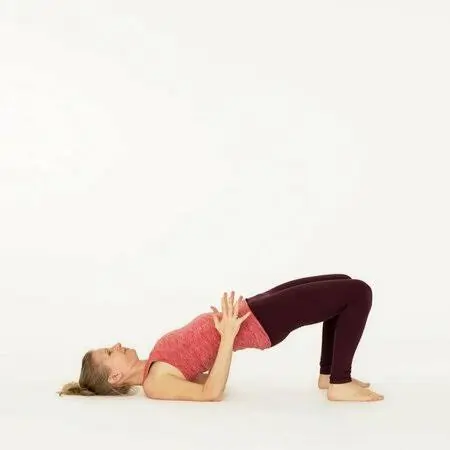
Imagination and Introduction
This pose allows children to become little arched bridges. As they lift themselves, they can visualise a train or even a car driving along their backs. Bridge pose is enjoyable, secure, and also good for building muscle strength. It is one of the most beneficial lying-down yoga poses for children.
How to Do the Pose
- Lie flat on your back, bend your knees, and place your feet firmly on the floor directly beneath your hips.
- Hands are placed by the sides, facing down.
- Tell the person to engage their feet and then slowly raise their hips so that they form a bridging pose.
- They can then remain in this position and breathe deeply.
- After a couple of breaths, they can ease themselves back down.
Benefits for Children
Bridge pose is great for building leg, back,k and bottom muscles. It also stretches the chest and shoulders. It can realign the spine and also help to alleviate physical tension. Bridge pose can be used within children’s yoga to either invigorate or calm a childdepending onto when it is performed.
Paschimottanasana (Seated Forward Bend)
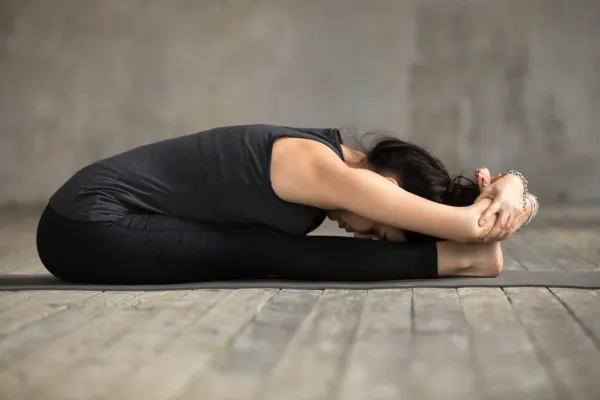
Imagination and Introduction
Seated forward bend allows children to become ‘treasure hunters’ searching for ‘gold’ at toe level. It is a meditative posture which encourages children to lengthen and to breathe. It is a relaxing pose which can be particularly beneficial following more vigorous activities. Alongside other relaxing postures, it can be used to help children slow their pace and relax.
How to Do the Pose
- Have the child sit with their legs outstretched.
- With arms raised, they should then slowly bend forwards from the hips so that they attempt to make contact with their toes or shins.
- They must maintain a long spine and allow their head to become loose.
- The child should then lie in this position and breathe deeply.
- Encourage them to try to extend further with each exhalation.
Benefits for Children
Seated forward bend is great for the hamstrings, back, and lower back. It also soothes the nerves. Being one of the more relaxing postures, it can assist with alleviating stress and also aid the digestive system. Furthermore, it can heighten a child’s sense of body and promote tolerance.
Uttana Shishosana (Extended Puppy Pose)
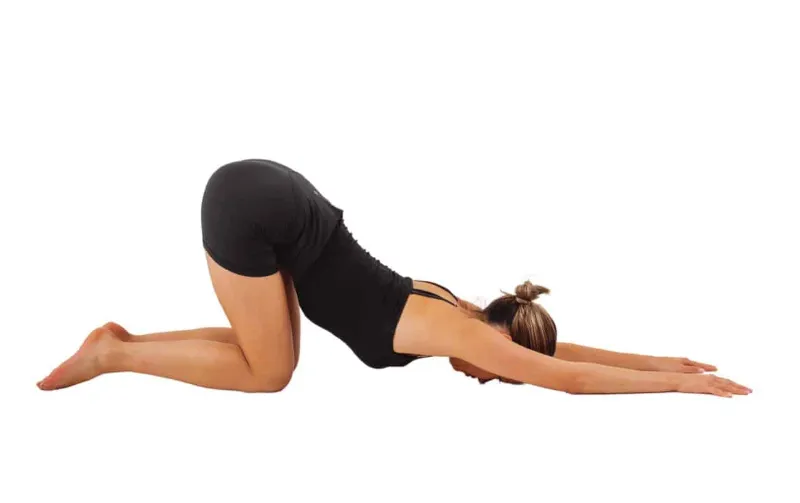
Imagination and Introduction
This pose is both a fun and snuggly position. Children can visualise themselves as puppies who have just awoken from their sleep and are happily stretching. It is a soothing and mild pose. Often it is used within children’s yoga programmes as a transition from active to more passive positions.
How to Do the Pose
- Get into a hands-and-knees position.
- Then move the child’s hands forwards so that their hips are higher than their knees.
- Allow the child to bend their chest and forehead down towards the floor.
- Similarly, extend the arms to a long doggy stretch.
- Guide the child to breathe slowly and gently and to ease back their tummy and shoulders.
Benefits for Children
Puppy Pose is a great gentle back, shoulder, and arm stretch. It has a calming effect on both the heart and mind. Within children’s yoga poses, which are designed to be both relaxing and meditative, Puppy Pose is particularly good for before bed and also for meditation.
Precaution
- Select suitable yoga positions for children.
- Make sure a responsible adult remains present and provides continuous supervision throughout the activity.
- Never push a child into any position.
- Ensure that the mat used for yoga is both clean and provides good grip.
- Children should wear loose-fitting clothing.
- Do not attempt complex or highly demanding yoga positions.
- Promote relaxed and smooth respiration.
- Immediately discontinue practice should a child experience pain, light-headedness,s or any other form of discomfort.
- Also refrain from carrying out yoga soon after eating.
Conclusion
Children can greatly benefit from participating in yoga. Alongside basic postures, there are fun-based activities which can all aid children in developing good flexibility, balance, muscle power and co-ordination. Furthermore, it can even be beneficial to children’s emotional health, helping them to manage stress and to instil self-confidence and mindfulness from a young age.
Parents can encourage good behaviour in children by introducing yoga into family life. Regardless of whether this is done at home, school, or within a class setting, yoga is a fantastic method of enabling children to lead an active lifestyle and to unwind. Therefore, it is important that the yoga sessions remain fun and that basic postures are used so that children can partake at their own speed.
FAQs:
What are the best yoga poses for children?
Recommended child-friendly yoga postures include Tree (Vrikshasana), Butterfly (Baddha Konasana), Cat Cow (Marjaryasana-Bitilasana), Cobra (Bhujangasana), Child’s Pose (Balasana), and Downward-Facing Dog (Adho Mukha Svanasana). They can be used to enhance a child’s balance, flexibility, coordination, and body knowledge.
What are the benefits of yoga for children?
Alongside flexibility, balance and muscle development, yoga can also aid children and allow them to improve their ability to concentrate. Furthermore, it allows them to unwind and can promote confidence, mindfulness and good behaviour.
At what age can children start practising yoga?
From the age of around 3, under suitable instruction and supervision, children can take part in basic yoga. Children can also enjoy fun physical activity. Children can then be introduced to initial yoga postures together with some fundamental yoga breathing techniques.
How long should children practise yoga each day?
Children can do between 10 and 15 minutes of yoga each day. This can then be extended according to a child’s age, enthusiasm and ease. Short and fun sessions will help to sustain a child’s motivation.
Is yoga safe for children?
Generally, it is safe for children to do yoga, provided that they are taught suitable moves. Never push a child into contortions, complex positions, or breath-holding. Always enable children to practise yoga in a manner that is comfortable and suitable for them.
How can parents encourage children to practise yoga regularly?
Parents can also enjoy their child’s yoga sessions. They could play yoga-related games and/or tell ‘story yoga’. Children can often maintain a long-term interest in yoga if it continues to be an enjoyable and non-competitive activity.
References:
- Nemai. (2026, November 16). 25 fun and easy yoga poses for kids with a step-by-step guide. KIDSgraphy. https://kidsgraphy.com/25-fun-and-easy-yoga-poses-for-kids-with-step-by-step-guide/
- Lcsw, M. V. (2026, April 14). 50 yoga poses for kids for strong bodies and calm minds. Mental Health Center Kids. https://mentalhealthcenterkids.com/blogs/articles/yoga-poses-for-kids
- Yogant Foundation. (2026, November 22). Yoga Poses for Kids: Easy Way to Bring Calm & Joy. Yogant Foundation. https://www.yogantfoundation.com/blog/yoga-poses-for-kids/