Yoga for Muscle Recovery
What is muscle recovery?
The complex procedure of muscle healing involves the rebuilding of your muscle fibers after stress and physical activity cause microscopic damage that results in “muscle soreness.” These muscle fibers connect stronger during muscular recovery, strengthening your muscles.
Additionally, your body needs fluids to deliver the nutrients your muscles and essential organs need as you recover from exercise. Another important part of this is protein synthesis, which promotes muscle growth and makes your muscles stronger.
Why do muscles get sore?
When you exercise, you are straining your muscles and using up all of your body’s stored energy. Muscles that are overused develop waste products and small tears. This can cause pain. Your muscles have the ability to completely heal, even though it may sound a little intimidating.
You may have DOMS if you start a new fitness routine and increase the duration or intensity of your workouts. Exercise of various kinds, particularly strength training, causes muscle fibers to regularly shorten and lengthen during movement. Running or cycling can tighten the quadriceps, hamstrings, and lower back.
Research indicates that DOMS usually manifests 12 to 24 hours following exercise, and the best way to control pain is to keep moving. Hitting the sofa may be more harmful than beneficial, even though it’s normal to be motivated to increase rest and restrict mobility whenever you’re experiencing tight and aching muscles taking over.
In actuality, mobility is what enables you to heal more quickly. Naturally, the key is to perform any low-intensity exercises that are easy on your aching muscles. Yoga, moderate walking, or even some low-intensity swimming and jogging are recommended by experts. Let’s learn more about it!
What helps muscles recover faster?
Let’s discuss a few things you may do right now to speed up your muscles’ recovery:
Hydrate:
Sweat is released by your sweat glands due to the sympathetic nervous system responding to physical activity. By generating moisture on the body’s surface, this function aids in controlling the body’s internal temperature.
Water and vital minerals may be lost as a result of perspiration during physical activity. Failure to refill them may result in fatigue and delay your recovery. Drinking enough water helps your muscles function properly, supports the repair process after intense workouts, and helps your body recover more effectively.
Eat well:
There are a few simple food recommendations that can help your muscles heal and recover after a workout. If you eat protein, your body will get the building blocks it needs to heal any muscle injury you may have sustained throughout your workout.
Your body will receive the building blocks it needs to repair any muscular injuries you may have received during your workout if you consume protein. By eating a balanced diet, you can improve your pre- and post-exercise performance. Click here to find out all about healthy eating and how it can improve your performance.
Lifestyle and activity:
Ultimately, a lot of aspects of healing depend on your lifestyle and the amount of exercise you get used to. A healthy lifestyle involves more than just eating and drinking well; it also includes obtaining adequate sleep and participating in other blood-flow-promoting activities.
To acquire the abilities and strength necessary to enhance their performance, professional athletes also space out their regimen to alternate between conditioning and training.
The Science Behind Muscle Recovery
You can understand how yoga promotes muscle regeneration and recovery if you are aware of how your muscles recover following exercise. Your muscles sustain small injuries, inflammation, and exhaustion during a strenuous workout. Your muscles get stronger and more durable as your body heals these microscopic fractures, reduces inflammation, and restores energy during recovery.
This process will be accelerated by improved circulation and relaxation. More blood flow means more nutrients and oxygen will be transported to your muscles, which helps them recover and remove toxins such as lactic acid. Furthermore, relaxation helps lower stress molecules like cortisol, which may prevent muscle healing if levels stay high.
Both of these levels are impacted by yoga. Yoga improves circulation by combining attentive breathing with mild stretching, which speeds up the delivery of nutrients to your muscles. Yoga facilitates mental and physical relaxation, allowing you to heal after physical activity. It makes you feel calm and refreshed while progressively promoting muscle recovery.
Yoga for muscle recovery
So, is yoga beneficial for healing muscles? Can someone with painful muscles still practice yoga? The answer is straightforward: it is.
Even if you’re new to yoga, you can start building a routine that will help your muscles recover. In the past, many people thought yoga was only for those who followed a particular lifestyle or philosophy, but today, it’s open to everyone. By saying “everyone,” we also mean professional athletes like LeBron James, Conor McGregor, Pete Sampras, and many others who include yoga in their fitness and recovery routines.
Besides helping with recovery, yoga offers many other benefits that make it a great addition to any workout routine. When used in athletic training, yoga helps prevent injuries in high-impact sports like basketball, tennis, and running. Practising yoga regularly can help athletes recover after intense workouts while making rest and relaxation part of their routine, supporting both physical health and mental well-being.
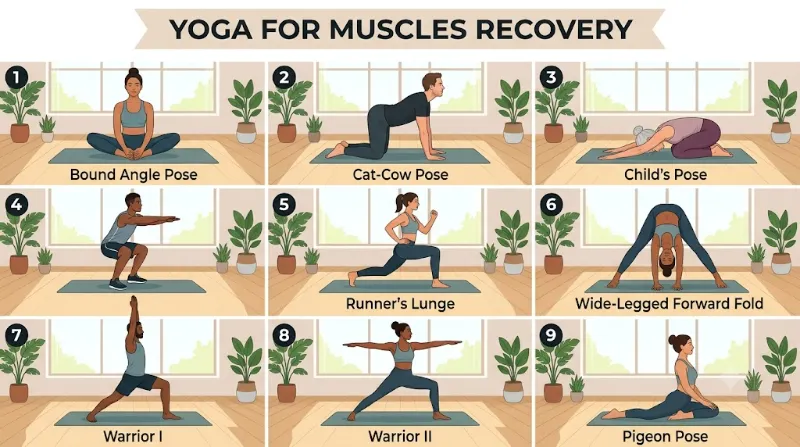
Best Yoga Poses For Muscle Recovery
Baddha Konasana (Bound Angle Pose)
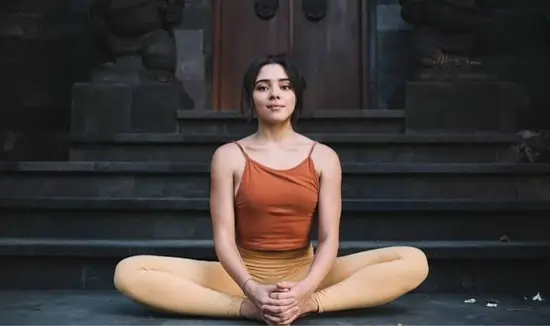
- Begin by sitting on the floor with your legs extended straight in front of you.
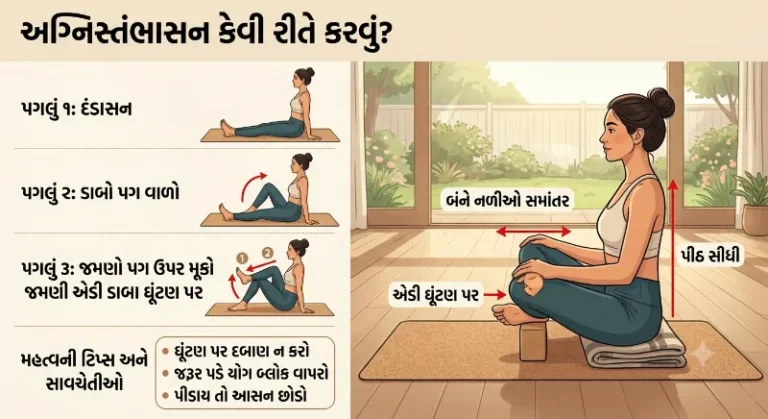
- Next, bring your foot soles together and bend your knees outward.
- Reach down to hold your feet or gently grip your toes.
- As the stretch gets more comfortable, slowly lean your upper body forward and let your knees come closer to the floor while taking six deep, continuous breaths.
Cat-Cow Pose (Marjaryasana-Bitilasana)
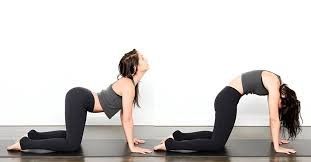
- Begin the exercise by lifting your tailbone, gently arching your back, expanding your chest, and looking upward as you inhale.
- As you exhale, bring your chin toward your chest, slowly round your back one vertebra at a time, and gently tuck your tailbone inward.
- Repeat this for six breaths, making sure to tuck and round your chin on each exhalation and arch and lift on each inhale.
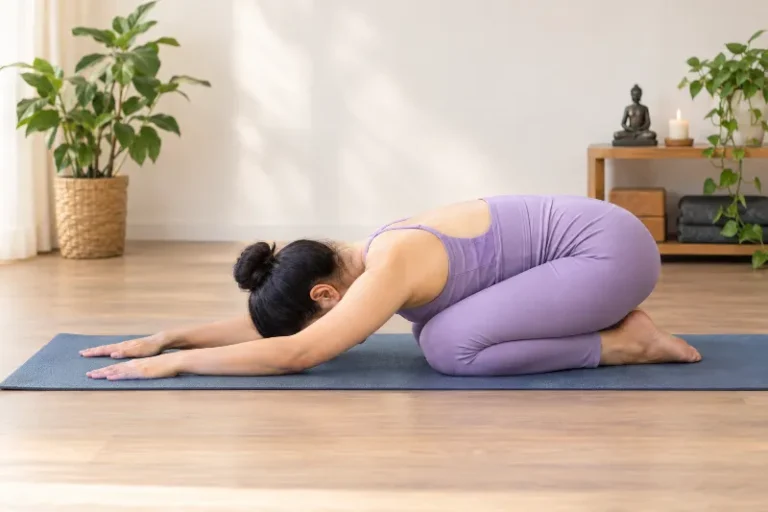
Balasana (Child’s Pose)
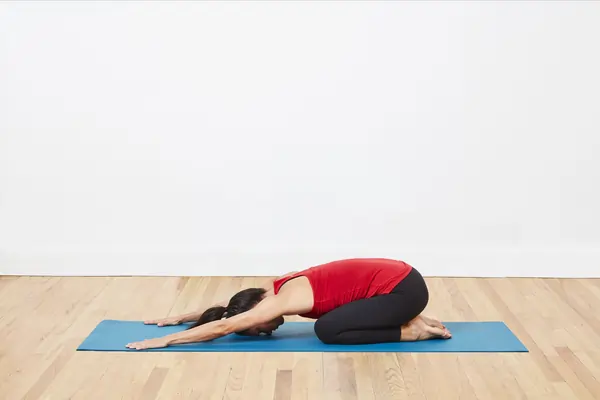
- Move your hips back onto your heels while kneeling, untuck your toes, let your forehead drop to the floor, and then rest.
- Child’s Pose primarily helps relax the muscles and encourages you to become more aware of your body and how it feels.
- Take a deep breath and maintain this position for as long as it feels comfortable.
Squat
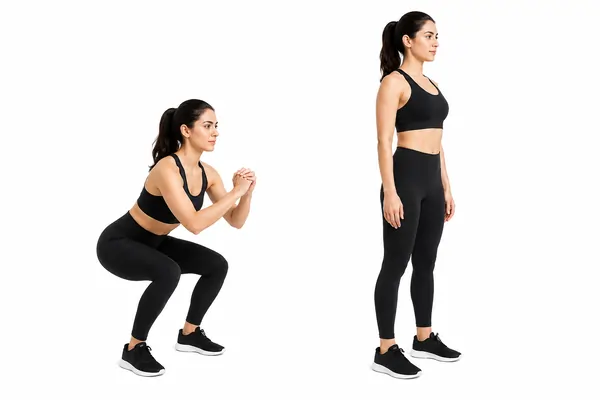
- Bend both legs and enter a deep squat from a standing position with your feet hip-distance apart.
- Keep your knees pointing upward, bring your calves close to your thighs, and lower your hips as near to the floor as possible.
- Keep your chest open, use your upper body, and make sure your heels stay firmly planted on the ground.
Utthita Ashwa Sanchalanasana (Runner’s Lunge)
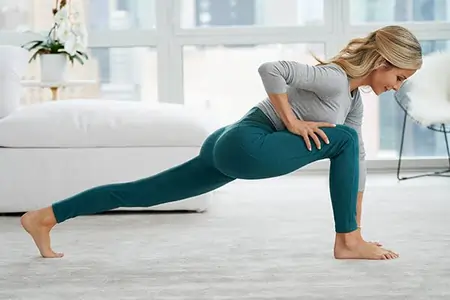
- To perform the runner’s lunge, begin in a high plank position and step your foot between your hands.
- Make sure your toes and knees are pointed forward and that your knee does not go past your ankle.
- As you progressively straighten your back leg and plant your left heel on the ground, maintain a steady breathing pattern.
Prasarita Padottanasana (Wide-Legged Forward Fold)
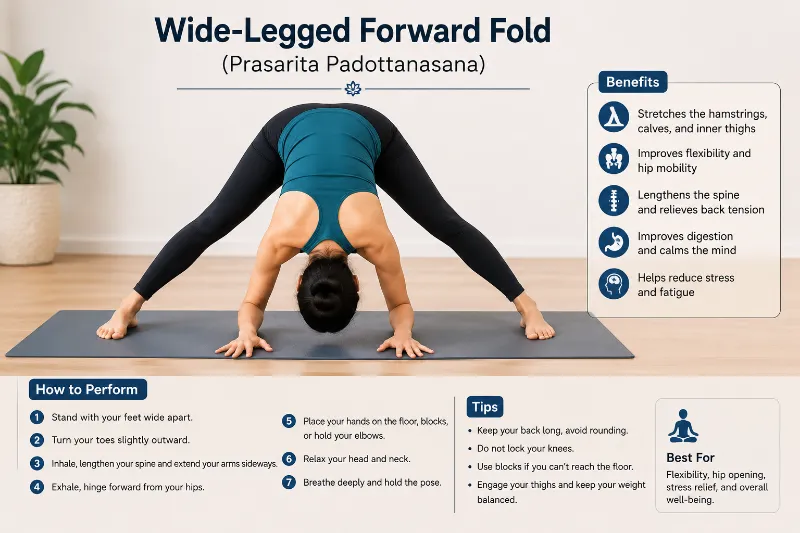
- Stand up straight, then slowly spread your legs apart to stretch your thighs and quadriceps.
- Take a deep breath, extend your body, bend forward from your hips, and then slowly bring your upper body down to the floor.
- Stay in this position for a few slow, deep breaths, gently bending forward a little more with each exhale as your body allows.
Virabhadrasana I (Warrior I)
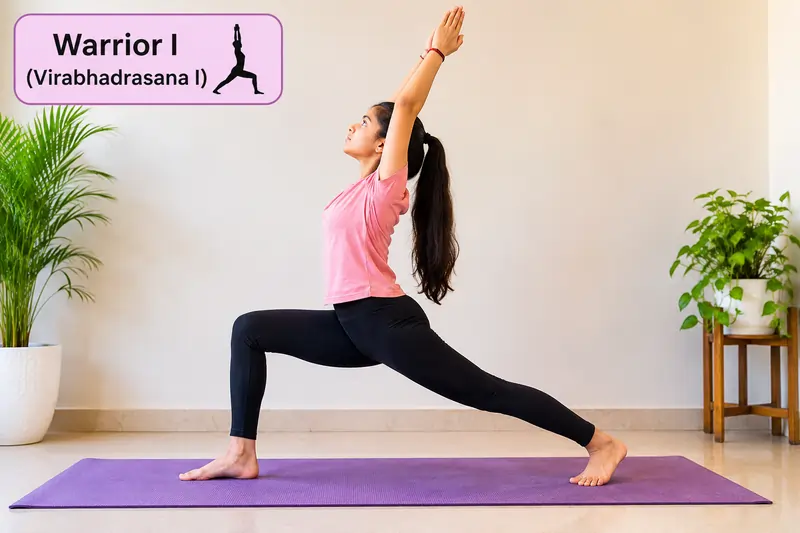
- Face forward while maintaining a wide-legged position, and make space between your feet.
- Turn your back foot outward at a 45-degree angle while keeping your front foot facing forward, with your toes aligned straight along the mat.
- Lower yourself onto your front leg until your knee is exactly above your ankle and your thigh is parallel to the floor.
- Face forward and raise both arms straight.
Virabhadrasana II (Warrior II)
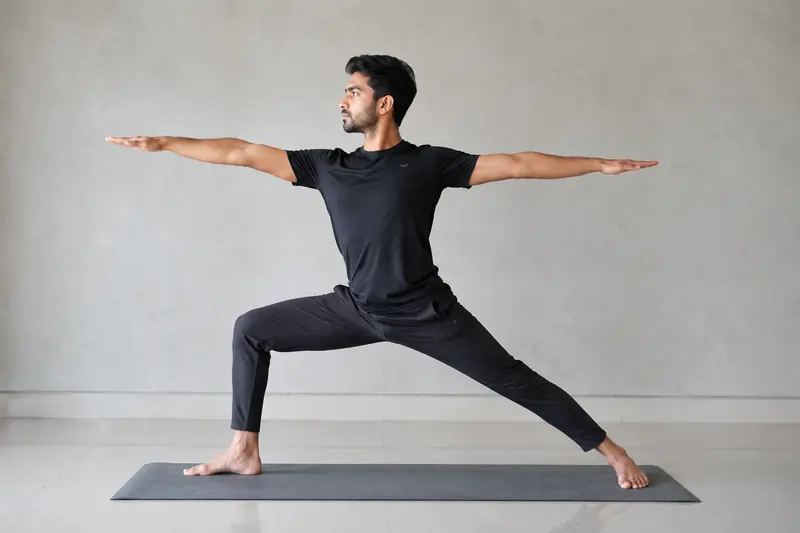
- Stay in Warrior I, open your chest, raise both arms to the sky, and inhale.
- Look forward or up at your hands.
- As you go deeper into the position, keep your chest open and relaxed while lowering your hips gradually with each breath.
- Stay in Warrior II for a few breaths or until your hips and legs feel well stretched.
- On the opposite side, repeat.
Eka Pada Rajakapotasana (Pigeon Pose)
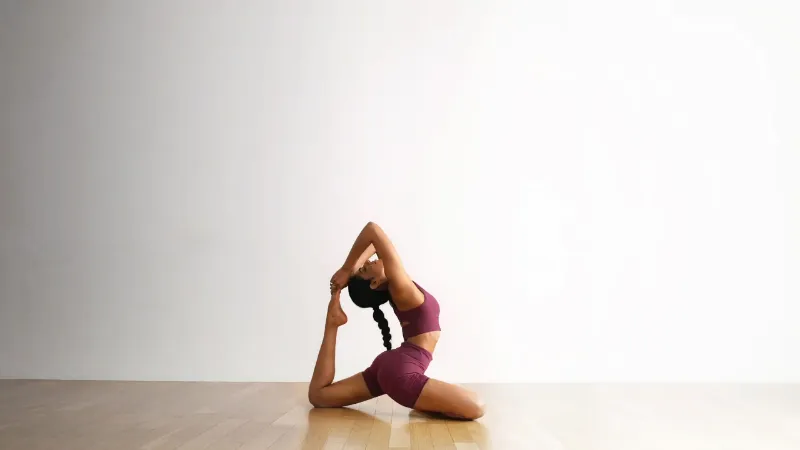
- Perfect for stretching the quadriceps and legs.
- From a high plank position, bring one leg forward and place your foot near your hands while keeping the other knee on the ground.
- Gently move into Pigeon Pose by curling your toes under, bringing your back knee down to the floor, and bending your front leg into position.
- Lower your elbows to the ground and take deeper breaths for a grounded pigeon.
- Continue on the opposite side.
Tips for Maximizing Yoga for Recovery
Yoga helps people improve their alignment and posture both inside and outside of the gym by promoting body awareness, which eventually reduces their risk of injury. Here’s how to successfully include yoga in your practice:
Yoga After Intense Training: Try spending between 10 and 15 minutes on some gentle poses such as Downward-Facing Dog, Cat-Cow, and Pigeon Pose. These stretches can help ease muscle tightness, improve blood circulation, and support your body’s recovery.
Include Restorative Yoga in Your Relaxation Days: To aid in your body’s relaxation and healing on days when you take a break from exercise, select a calming, gentle yoga practice. Your body may fully rest in poses like Child’s Pose or Reclined Butterfly, which promote healing without increasing stress.
Focus on Deep Breathing: As you execute each yoga position, take calm, deep breaths.
Pay Attention to Your Body: Since each person’s recovery is unique, modify your yoga routine according to any sore or restricted areas. Feeling refreshed rather than overworked is the aim.
Remember to be consistent: Yoga for healing doesn’t have to be long or challenging. Regular, brief workouts can create a habit that maintains your muscles prepared for the next challenge.
Yoga as a preventative measure
Yoga supports muscle recovery and flexibility while helping reduce the likelihood of injuries. By enhancing flexibility and improving joint mobility, it helps athletes reduce the risk of overuse injuries that may result from repetitive movements or insufficient warm-ups. Regular yoga practice strengthens ligaments, muscles, and tendons, making them more resistant to stress.
Yoga also enhances coordination, balance, and alignment, all of which are necessary for proper motion and position patterns. To avoid injury, athletes must practice and compete with good technique. By promoting body awareness, yoga helps individuals develop better alignment and posture in their daily lives as well as during exercise, ultimately reducing the risk of injuries.
Conclusion
Beyond only stretching, yoga offers a comprehensive method of repairing muscles. By integrating physical postures, breathing techniques, and mindfulness, yoga serves as an effective approach to injury prevention and recovery from physical strain. Its capacity to promote circulation, increase flexibility, and lower stress levels helps fitness enthusiasts and athletes sustain optimal performance while promoting long-term muscle health.
Yoga’s comprehensive benefits make it a wonderful adjunct to any fitness or rehabilitation program, whether it is used as a preventative strategy or as a cool-down after a workout. Beyond only stretching, yoga offers a comprehensive method of repairing muscles. Yoga is a helpful tool for preventing injuries and recovering from physical activity because it combines physical positions, breathing techniques, and mindfulness.
FAQs:
Is yoga good for muscle recovery?
With advantages that go beyond flexibility, yoga is revolutionary in the field of sports recovery. Your performance would improve, and your body would stay in shape if you included yoga in your recuperation regimen. Yoga increases range of motion and reduces pain in the muscles.
How to recover muscles after yoga?
Supplementing a balanced diet with a daily vitamin is the best method to make sure your body has access to the nutrients it needs for healing after yoga. Your body needs rest to heal. Increased sleep speeds up the healing of injured tissue.
Does 20 minutes of yoga count as exercise?
Yes, practicing yoga for even 20 minutes a day can improve your health and well-being. Regular brief sessions can enhance stress levels, flexibility, muscle tone, and mental focus.
Is yoga good for weak muscles?
Physical function: To strengthen muscles, increase flexibility, and encourage proper posture and balance, yoga therapy can be used in conjunction with occupational therapy or physical therapy. Pain treatment: Yoga is a useful complement to pain management techniques because it has been demonstrated to be effective in lowering stress and pain.
What muscles recover the fastest?
As previously mentioned, the calves and quadriceps are the muscular groups that recover from injurious training the fastest, but it’s crucial to remember that the quadriceps play a significant role in exercises like lunges and squats.
References:
- Sameen. (2021, June 21). Yoga for Muscle Recovery: The 10-Step Flow for Sore Muscles. Skill Yoga. https://skill-yoga.blog/yoga-for-muscle-recovery/
- https://www.longdom.org/open-access/harnessing-the-power-of-yoga-for-muscle-recovery-a-holistic-approach-to-healing-1102008.html. (2024). Harnessing the Power of Yoga for Muscle Recovery: A Holistic Approach to Healing. Longdom. https://doi.org/10.35248/2157-7595.24.14.413