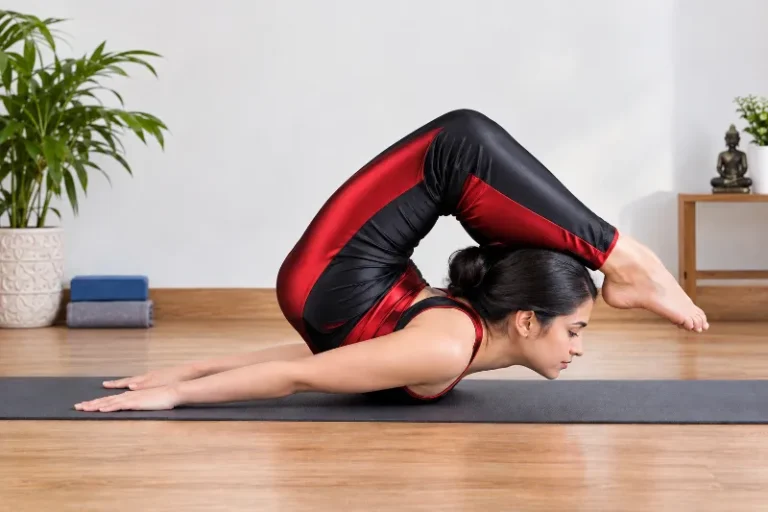
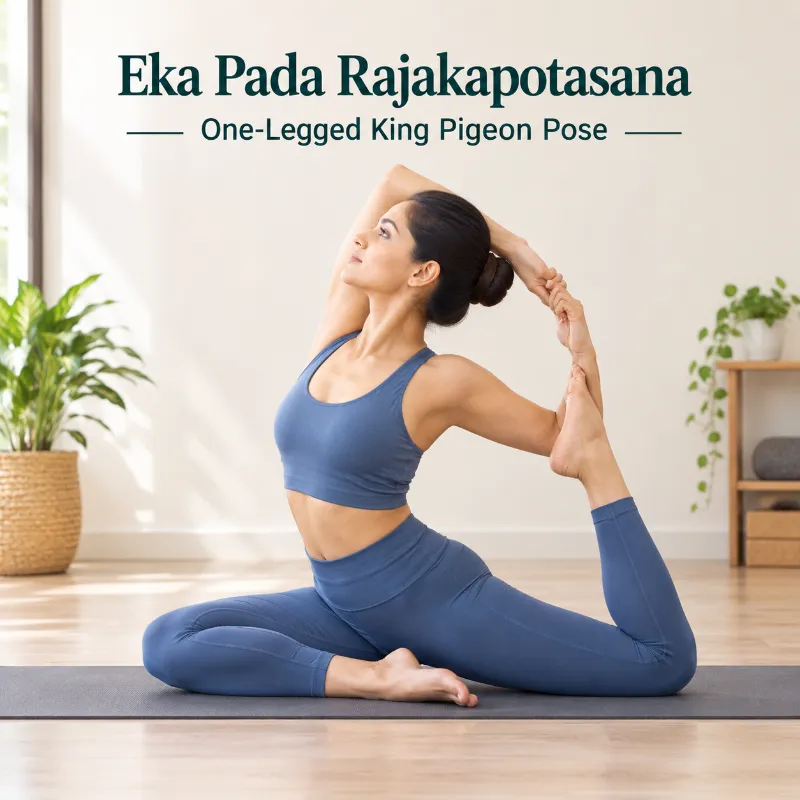
Eka Pada Rajakapotasana (One-Legged King Pigeon Pose)
What is Eka Pada Rajakapotasana?
One-Legged King Pigeon Pose, also known as Eka Pada Rajakapotasana, is a sophisticated sitting yoga pose that can enhance your backbend technique and increase your lower body and spine flexibility.
This complex yoga pose combines hip-opener and backbend poses. It will target your lower back, flex your lower body, and simultaneously strengthen your shoulders, neck, and core.
Overview & Etymology
“Eka” means one; “Pada” means foot; “Raja” means king; “Kapota” means pigeon; and “Asana” means position in Sanskrit.
There is no old Hatha yoga literature that mentions the One-Legged King Pigeon Pose.
Pattabhi Jois and B. K. S. Iyengar first formally detailed this position in their separate yoga publications in the 20th century.
- Sanskrit Name: एक पाद राजकपोतासन
- Pronunciation: Ea-KAH pah-DAH rah-JAH-cop-poh-TAHS-anna
- Pose Type: Backbend and Seated Hip Opener
- Alternatively known as: King Pigeon Pose with One Leg
- Strengthens: Shoulders, pelvis, lower back, and core muscles.
- Stretches for the abdomen, hip flexors, inner thighs, shoulders, thorax, and spine.
Muscles Worked and Stretched
Eka Pada Rajakapotasana primarily works on:
- Hip flexors
- Psoas Muscles
- Piriformis muscle
- Gluteal muscles
- Quadriceps
- Hamstrings
- Groin muscles
- Spinal extensor muscles
- Chest and shoulder muscles
- Upper back muscles
Health Benefits of Eka Pada Rajakapotasana
- Improves one’s posture.
- Engages the lower back.
- Lengthens and stretches the flexors of the hip.
- Opens the shoulders, chest, abdomen, and back.
- Expands the hip and tailbone joints’ range of motion.
- Stimulates the sacral, muladhara, and throat chakras.
- Increases the groin and inner thighs’ strength and flexibility.
- Has therapeutic benefits such as decreased fatigue, tension, anxiety, and back pain.
- Stimulates breathing, digestion, and reproductive organs to ensure optimal operation.
When to Avoid Performing Eka Pada Rajakapotasana
- Avoid during menstruation.
- Stay away after any operation or injury.
- Avoid throughout the last trimester of pregnancy.
- If you suffer from persistent neck or back pain, avoid it.
- If you have inflammatory arthritis or osteoporosis, stay away.
How to do Eka Pada Rajakapotasana (One-Legged King Pigeon Pose) step-by-step with guidance
There are four distinct components to the One-Legged King Pigeon Pose technique:
Part 1: Eka Pada Rajakapotasana Preparation Poses
The One-Legged King Pigeon is a yoga pose that ranges from intermediate to expert. The key muscles needed for the main practice must be prepared to prevent sprains or injuries.
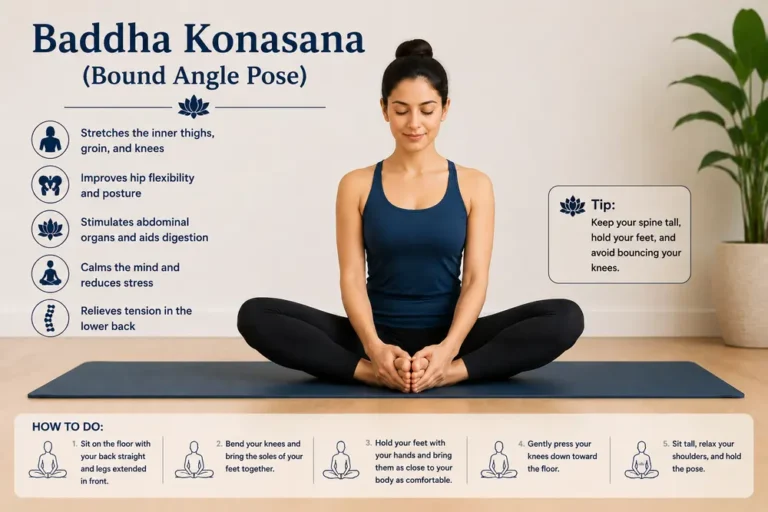
Baddha Konasana (Bound Angle Pose)
- Sitting in staff posture, bend your knees and use your legs to form butterfly wings. In order to prevent your knees from rising above the floor, your feet must be in contact with one another, and your hands should be holding both of your feet together.
Feel the bending of your pelvis and inner thighs while sitting with your back straight. Hold this posture for one or two minutes. For a few minutes, you can also improve circulation by flapping your legs up and down.
Salamba Bhujangasana (Sphinx Pose)
- The Sphinx stance, sometimes referred to as the Baby Cobra pose, is a backbend warm-up that stimulates blood flow to the lower back, tailbone, and spine.
To begin, lie on your stomach with your arms bent slightly at your sides and toward your chest. Lift your upper torso like a newborn cobra’s raised hood and take a gentle breath. Feel your lower back activating and your core contracting. For two to five minutes, hold this stance.
Revolved One Leg King Pigeon Pose Prep
- Enter the Lizard Pose to prepare your arms and legs for the main asana. Place your knee on the mat and bend it while keeping one leg behind you.
Hold the foot of the same leg with your hands, gently rotate your spine, and look back. After a minute of holding this position, switch to the other leg.
Part 2: Step-by-Step Instructions
To perform Eka Pada Rajakapotasana, follow these steps:
- Step 1: To begin, adopt the Downward-Facing Dog stance and rest your spine and core while taking a deep breath.
- Step 2: Take a breath while in the Downward Dog stance, raise your right leg, release the breath, and lower your right leg between your wrists.
- Step 3: Verify that your right foot is near your left wrist and your right knee is near your right wrist.
- Step 4: With your heels facing the ceiling and your toes pointed, extend your left leg behind you. Square your hips while sitting comfortably on the mat.
- Step 5: As you extend your spine, contract your core muscles, and open your chest, take another breath.
- Step 6: Bend your neck back and softly arch your lower back by exhaling. Your pelvic, tailbone, and chest muscles will all become even more open as a result.
- Step 7: Take a breath, bend your left leg behind you, and use your left hand to grasp the ankle until you are comfortable.
- Step 8: Twist your elbows toward the sky while holding your left toe with both hands once you’re comfortable enough. Ensure that your arms are aligned overhead.
- Step 9: Take a breath and use your foot to try to contact your head. After holding this stance for a short while, release your left foot and return to the conventional Pigeon stance by exhaling.
- Step 10– Once you feel relaxed, repeat the same on the other side.
Breathe Awareness:
- Breathe in and out while you’re in the Downward Facing Dog pose.
- Inhale as you elevate your leg in the Downward Dog position.
- Breathe out while placing one leg between your wrists on the floor.
- Lengthen your spine and contract your core as you take a breath.
- Exhale and arch your lower back.
- Breathe, twist your elbows overhead, bend your leg behind you, and rest your head on your foot.
- Lastly, release the pose and settle into a resting position by exhaling.
- Beginner’s Performance Duration: Hold the One-Legged King Pigeon stance for ten to thirty seconds on each side.
- Advanced Performance Time: Maintain the One-Legged King Pigeon stance for 60 to 90 seconds on each side.
Part 3: Things to Keep in Mind
If you are just beginning to practice One-Legged King Pigeon Pose, pay attention to the following crucial alignment cues:
- Keep your stomach active: The secret to performing Eka Pada Rajakapotasana flawlessly is a firm core, which helps you open your chest and arch your back. Before entering the main position, make sure to take a breath and draw your navel inside.
- Maintain a neutral rear leg: Make sure your head is facing the ceiling and your back leg is pointing backwards. Steer clear of any knee bending or foot curling.
- Square your hips: Do you not know how to square your hips? Your body weight shouldn’t affect the balance in your glutes when you are flexing your pelvis in Pigeon Pose.
- When you flex in Pigeon Pose, be sure that both hips are evenly pressured. Make sure your body is balanced in the centre and that your glutes are fully touching the ground. Try placing a rolled towel beneath your pelvis if you are unable to square your hips.
Part 4: Relaxing Poses After Eka Pada Rajakapotasana
Try the following post-practice relaxation positions to help your lower body relax and return to its neutral shape:
Resting Pigeon Pose:
- From the One-Legged King Pigeon Pose, shift into a resting position. Take a few deep breaths while bending your upper body forward on the floor.
Your upper body and lower back will be reenergized by this stance. To ease tension in your shoulders and upper back, you can also extend your arms forward. Hold the stance for one minute by taking deep breaths, then switch to the opposite side.
Adho Mukha Svanasana (Downward-Facing Dog Pose):
- Your hamstrings, upper body, tailbone, and core will all be totally relaxed in this pose.
For greater relaxation in the hamstrings, calves, and glutes, you can also bend one leg at a time. After a minute of holding this pose on either side, transition into a standing forward bend.
Eka Pada Rajakapotasana Variations to Consider
Here are some simple and difficult variations of various levels, depending on your comfort level:
Resting One-Legged King Pigeon Pose:
- Sitting in the One-Legged Pigeon position, raise one leg from Downward-Facing Dog. Gently lower your head, arch your back slightly, and contract your core muscles.
Until you feel comfortable going deeper, beginners can practice this pose on both sides. This stance can also be done before switching to a different side.
Mermaid Pose:
- Proceed with the previous variant, bend your back leg, and point your toes toward the ceiling to achieve Mermaid posture. Clasp both hands behind your head, raise both arms upward, and bend your elbows.
Now insert your back foot into the elbow next to it. For a few seconds, maintain this position on each side. In order to execute the main position, this variant will help you develop arm twisting strength and stability in your back leg.
Beginner Modification
If the hip of the front leg does not comfortably reach the floor, place a folded blanket, cushion, or yoga block under the hip for support. Beginners should first become comfortable with basic Pigeon Pose before attempting the deeper backbend and foot-grabbing portion.
Precautions
Avoid or modify the pose if you have:
- Knee injury
- Hip injury
- Ankle injury
- Sacroiliac joint problems
- Groin or pelvic injury
- Significant lower-back problems
Common Mistakes
- Forcing the front shin into a particular angle
- Allowing the front knee to become painful
- Collapsing the pelvis to one side
- Forcing the back foot toward the head
- Overarching the lower back
- Holding the breath
- Trying the full pose before developing adequate hip and shoulder mobility
Preparatory Poses
Useful preparatory poses include:
- Baddha Konasana – Butterfly Pose
- Virasana – Hero Pose
- Bhujangasana – Cobra Pose
- Gomukhasana – Cow Face Pose
- Paschimottanasana – Seated Forward Bend
- Anjaneyasana – Low Lunge
These can help prepare the hips, thighs, spine, and shoulders for the deeper position.
FAQs
Can beginners perform Pigeon pose?
Yes, beginners can definitely perform Pigeon pose to open their hip and back muscles.
Your lower body’s range of motion will grow with Pigeon pose, which also lays the groundwork for more difficult yoga poses.
For novice yogis who want to gain greater strength while practising the Eka Pada Rajakapotasana or Kapotasana positions, this pose is ideal.
What kinds of variation stretches are there for pigeon pose?
Pigeon pose has a variety of modification stretches that yogis of all skill levels can attempt:
King Pigeon Pose
Flying Pigeon Pose
Classic Pigeon Pose
Reclining Pigeon Pose
Pigeon Pose with Spine Twist
One-Legged King Pigeon Pose
Resting Pigeon Pose with Forward Bend
Bound Revolved One-Legged King Pigeon Pose
What is a Reclining Pigeon Pose?
Dead pigeon stance, also known as reclining pigeon pose, is a relaxing pose for your legs and back.
Next, perform a deep lower body opening stretch by holding your lower leg and pulling it toward your chest. You may relieve all of the tension in your lower body by doing this on both sides for four to five minutes. This pose relieves tense muscles in your hamstrings, lower back, quadriceps, and groin.
Why is Pigeon pose painful?
Beginners with tight inner thighs, glutes, and hamstrings may find pigeon pose unpleasant. If you practice the posture frequently, the pain usually subsides after a few days as your muscles become accustomed to the stretch and eventually become stronger.
What are the benefits of Eka Pada Rajakapotasana?
Some key health advantages of the Eka Pada Rajakapotasana are as follows:
Helps improve seated body balance.
Opens the legs, thighs, pelvis, chest, and shoulders.
Therapeutic for stress at work and mild lower back pain.
Lengthens and strengthens the chest, shoulders, and spine.
Increases the body’s range of motion, agility, and flexibility.
References
- Allen, W. (2025g, August 26). Eka pada rajakapotasana. https://myyogateacher.com/yoga-asana/eka-pada-rajakapotasana
- Yoga India Foundation. (2026b, August 31). Eka Pada Rajakapotasana – Alignment, Benefits & Cautions|YTT. Yoga India Foundation. https://yogaindiafoundation.com/eka-pada-rajakapotasana/
- Hewitt, I. (2026, August 14). Pigeon Pose (Eka pada Rajakapotasana): Complete Pose guide. We Are Form Fitness. https://weareformfitness.com/training/yoga/pigeon-pose/